
S05.17: Catherine Coulter: Trailblazer
We’re thrilled to share our next Trailblazer episode this week—we had a great time talking with Catherine Coulter about her place in romance history as one of the earliest authors of the Signet Regency line—and the author who many believe revolutionized the Regency…by making them sexy.
She tells a million great stories here, and we talk about writing historical romance, about sex in romance, about the way she thinks about plot vs. story, about the way she’s evolved as a writer, and about revisiting her old books. All that, and Catherine has a lot to say about heroes. Thank you to Catherine Coulter for making the time for us.
Next week, we’re back with more interstitials, but our first read along of 2023 is Tracy MacNish’s Stealing Midnight—we’ve heard the calls from our gothic romance readers and we’re delivering with this truly bananas story, in which the hero is dug out of a grave and delivered, barely alive, to the heroine. Get ready. You can find Stealing Midnight (for $1.99!) at Amazon, B&N, Kobo, or Apple Books.
Show Notes
People Mentioned: publisher Peter Heggie, agent Robert Gottlieb, publisher Robert Diforio, editor Hilary Ross, editor Leslie Gelbman, publisher Phyllis Grann, editor May Chen, editor David Highfill, and marketing consultant Nicole Robson at Trident Media.
Authors Mentioned: Georgette Heyer, Rebecca Brandewyne, Janet Dailey, LaVyrle Spencer, Linda Howard, Iris Johansen, Kay Hooper, Debbie Gordon and Joan Wolf
Catherine Coulter Novels




Sponsors
Cara Dion, author of Indiscreet.
get it at Amazon, free on Kindle Unlimited,
and
Lumi Labs, creators of Microdose Gummies
Visit microdose.com and use the code FATEDMATES
for 30% off and free shipping on your order.


Catherine Coulter 00:00:00 / #: At that point in time, Signet had sort of developed as kind of the classiest of the Regency romances, and there were some other little attempts, but with Signet, even their print runs, which were considered quite healthy, then were like, for the Regency, they were like 60,000. Then on the second book, I remember having, I got the plot idea and I told Hilary, we were down in Wall Street at a restaurant and we were having lunch. I said, well, Hilary, I said, the only thing is there was no sex in Regency.
00:00:49 / #: Absolutely zippo, nada. I said, I've got a plot, Hilary, but I want sex in it. It was at that point, which rarely happens, but it was an utter lack of noise in the restaurant, and everybody was on point, and we got a good laugh out of that. I told her what I wanted to do and she grinned and she said, go for it. As a result, the print run jumped up to like 130,000.
Jennifer Prokop 00:01:26 / #: That was the voice of Catherine Coulter, author of more than 80 novels, including some of the earliest Signet Regencies. We'll talk with Catherine about her time at the beginning of the Signet Line, her work, adding sex to Signet Regencies, and how she evolved into historical romances, and then of course into her longstanding career as a thriller writer. This is Fated Mates. I'm Jennifer Prokop, a romance reader and editor.
Sarah MacLean 00:01:59 / #: I'm Sarah MacLean. I read romance novels and I write them.
Jennifer Prokop 00:02:04 / #: You're about to hear a great conversation with Catherine Coulter. We're not going to spend a whole lot more time introducing it. We'll talk more on the back end. Without further ado, here is our conversation with Catherine Coulter.
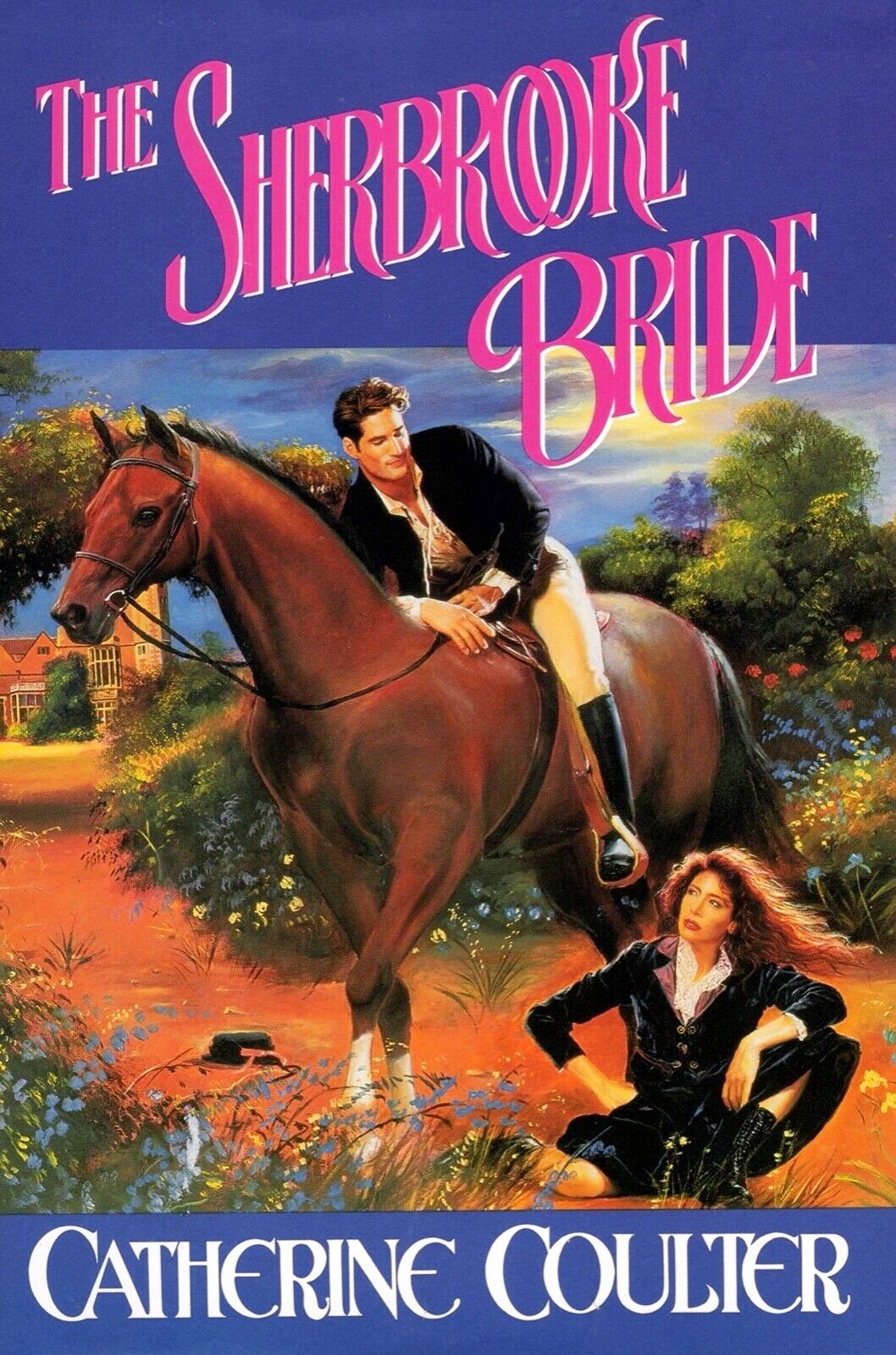
Sarah MacLean 00:02:17 / #: We try really hard not to do all the fangirling, but I have to say The Sherbrooke Bride was like the Greatest Joy of my Life when I read that book, right when it came out. I'm really very delighted to be talking to you today. Thank you so much for making time for us.
Catherine Coulter 00:02:37 / #: Well, thank you for asking me, and I'm so delighted that you like The Sherbrooke Bride. It seems to be everybody's favorite, and it's an 11 book series.
Sarah MacLean 00:02:47 / #: Well, we're going to get into why and why you think it is. We are in our fourth season of this podcast, because we really love romance novels a whole lot. Over the last year, we have been interviewing the people, many of the people who we believe built the house of romance, so to speak. Part of the reason why we're doing that, and I'm sure you've noticed this, is that romance doesn't get a whole lot of attention from the world at large.
00:03:18 / #: We feel like it's really important to collect the history of the genre as much as we possibly can. These conversations, these, what we're calling Trailblazer recordings are really conversations that are very far-reaching. We want to talk about all things you. I know that you have a book out next week, so we want to talk about that too. But hopefully, you'll give us a sense of your life through writing and through romance. But we are both really thrilled to have you.
Catherine Coulter 00:03:52 / #: Well, thank you very much. Those were lovely things to say. It's true, it's true. I'll never forget when I was started writing, "Oh yes, I'm a writer." "What do you write, children's books?" That was the most regular. Then, I think romance was next. You were almost embarrassed to say, "Well, yeah, you idiot." I want to make some money. Women are 85% of the retail market, so, excuse me.
Sarah MacLean 00:04:27 / #: Yeah.
Jennifer Prokop 00:04:27 / #: Yeah.
Catherine Coulter 00:04:27 / #: Anyway.
Sarah MacLean 00:04:28 / #: Yeah.
Catherine Coulter 00:04:29 / #: I think you guys are doing a wonderful thing and getting the history down. That's very good.
Sarah MacLean 00:04:35 / #: Catherine, can you tell us about how you started reading romance?
Catherine Coulter 00:04:42 / #: Well, my mother would read aloud to me when I was like three years old, and she read everything, everything. But my very, very favorite author is Georgette Heyer, and I believe she died in 1972. She was the one who started the Regency genre. You've read her right?
Sarah MacLean 00:05:09 / #: Yes.
Jennifer Prokop 00:05:10 / #: Yes. Yes. We know Heyer.
Catherine Coulter 00:05:11 / #: Okay. Yeah, I still think she's the class act, and I've always in teaching always say, you're allowed three exclamation points a book. Okay, that's it. She uses exclamation points after nearly every sentence.
Sarah MacLean 00:05:29 / #: Exactly.
Catherine Coulter 00:05:30 / #: But it's okay. It's the weirdest thing. She does everything that you shouldn't do, and it's wonderful, which goes to show there really are no rules.
Sarah MacLean 00:05:41 / #: Right.
Catherine Coulter 00:05:41 / #: But I don't think many people are on her level of just delight. Sheer delight. What was your favorite Georgette Heyer?
Sarah MacLean 00:05:51 / #: Well, my favorite is Devil's Cub.
Catherine Coulter 00:05:55 / #: Gotcha. That was a good one.
Sarah MacLean 00:05:57 / #: Which probably tracks very well with, you'll be unsurprised that then I really fell in love with The Sherbrooke Bride and lots of other books with similar heroes to her.
Catherine Coulter 00:06:10 / #: We call them assholes or someone we deem not all that much.
Sarah MacLean 00:06:17 / #: Yeah. Well, romance in many ways has not changed all that much. Right?
Jennifer Prokop 00:06:24 / #: What about you, Catherine? What was your favorite Heyer?
Catherine Coulter 00:06:28 / #: The Grand Sophy.
Jennifer Prokop 00:06:29 / #: Oh, of course. A classic.
Catherine Coulter 00:06:31 / #: Yeah. I just love The Grand Sophy. She was such a go-getter and Sylvester or The Wicked Uncle, talk about the classic asshole. It's wonderful.
Jennifer Prokop 00:06:43 / #: Okay, so you are reading Heyer and you're reading sort of voraciously. Tell us about your life at this point. Where are you living in the world? How do you start thinking about actually putting pen to paper?
Catherine Coulter 00:06:59 / #: Well, as you know, everybody has a talent, and it just depends if you, A, find the talent, B, if you try to do something with it. My talent was writing, but I never really recognized it. I just thought everybody could write a paper the night before and get an A. It was just very natural. It was just very natural. You really didn't understand why your classmates hated your guts, but they could do that. They could do their own thing.
00:07:30 / #: Anyway, I never really thought about it. Then, I went to University of Texas and then got a master's degree at Boston College. At that point, my husband was in medical school in Columbia Presbyterian in Manhattan. One thing, I've been extraordinarily lucky, you know how when you don't know if you should go one direction or another?
Jennifer Prokop 00:08:00 / #: Mm-hmm.
Catherine Coulter 00:08:01 / #: Then you might go the one direction and you think, "Well, what would've happened if I had... Well..." Anyway, it's at the same time, I was offered an assistant professorship at a college in New Jersey, and then the other was a speech writing job on Wall Street in Manhattan. I got to weigh both of them.
00:08:22 / #: My dad had been a professor at UT, and he would tell me that academia is the most, it's a viper pit. He said, "I've never seen anything like it. They cannot compare, businesses cannot compare to the viper pit that is academia.
Sarah MacLean 00:08:40 / #: Even Wall Street?
Jennifer Prokop 00:08:42 / #: Yeah, wow.
Catherine Coulter 00:08:43 / #: I chose Wall Street and I wrote speeches and for a guy who was the president of an actuarial firm, and your eyes are already glazing over, mind did. But I'll never forget in the interview, he was this kind of desiccated little old guy. He was very nice, and he was the president and he said, "I have to speak a lot." He says, "I don't know why people ask me to speak, because I'm not very good." He said, "Can you make me funny?"
00:09:12 / #: I said, "Sure, sure." Then at that time, my husband, as I said, was at Columbia Presbyterian. I saw him maybe 30 minutes a day over spaghetti. I was reading, oh, 10 to 15 books a week in the evening. Then one night I threw the book across the room and said, "I can do better." I thought that I was so, I thought that I was a trailblazer, that nobody had ever done that.
Sarah MacLean 00:09:42 / #: Now look.
Catherine Coulter 00:09:42 / #: Well, it turns out that maybe 60% of writers started that way. "I can do better." I went in and told my husband and I have heard from so many women and I just want to take them out and shoot them. "Oh, well, my husband won't let me do blah, blah, blah." I go, "Oh, shut up." Kick the jerk to the curb. He said, "Sure." He took the next weekend off and together we plotted the first and last book, but that was the last one he helped plot.
Jennifer Prokop 00:10:16 / #: Yeah.
Sarah MacLean 00:10:16 / #: Oh, my gosh.
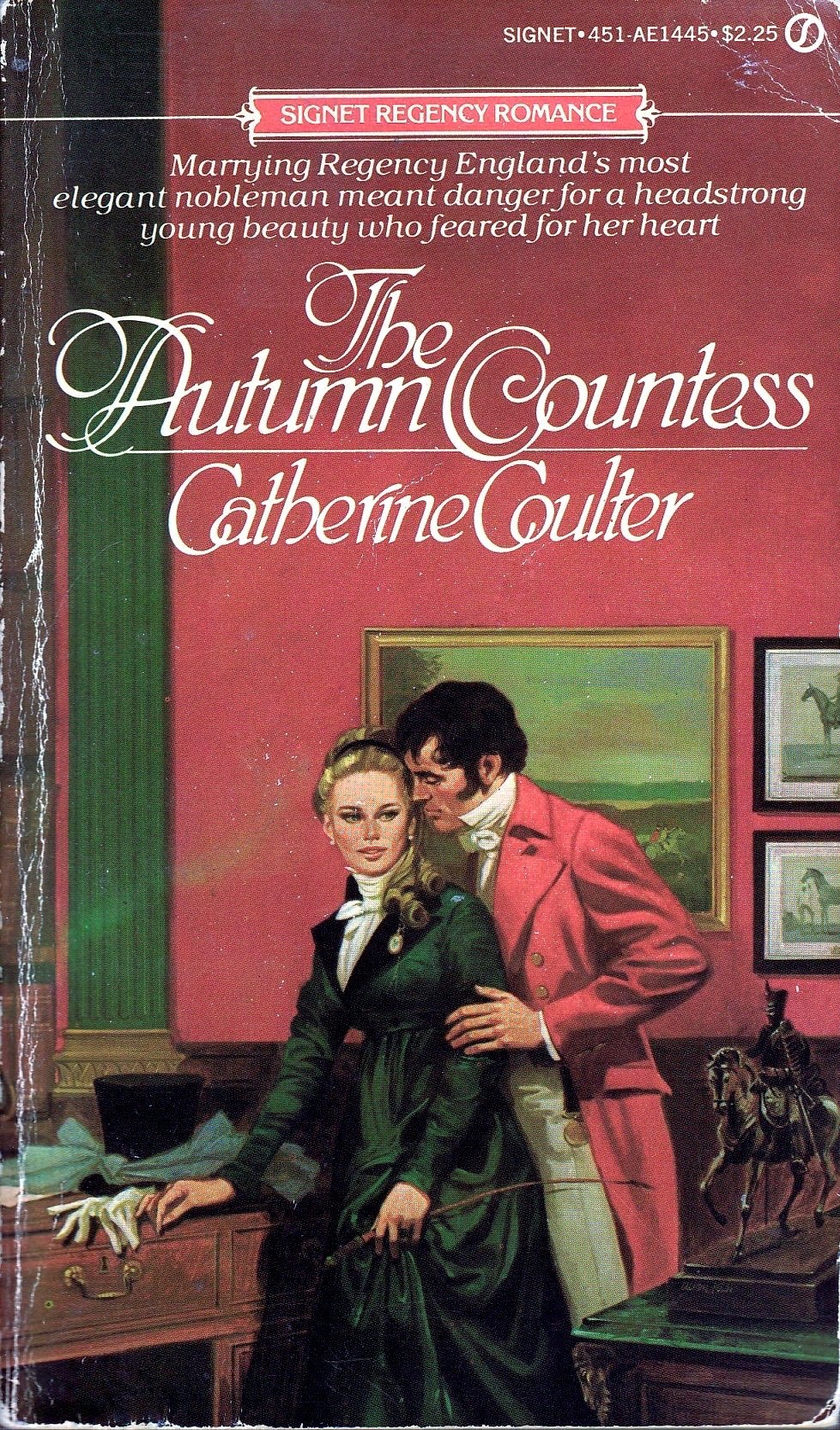
Catherine Coulter 00:10:18 / #: That was, what was the name of that? The Autumn Countess, which I later rewrote and made it into The Countess, which is much, much better, because it's funny. That's how it started.
Sarah MacLean 00:10:30 / #: That book was published in 1979. Were you read, is that right around, was it very quickly published?
Catherine Coulter 00:10:37 / #: Well, what happened was is since I was working full time, I would get up and write at like 4:30 and then get ready for work at 6:30. I've always been a morning person, so that worked for me. I took about a year. I'll never forget, I rode the A train, it's the express, down to Wall Street. There was this guy who worked at William Morrow.
00:11:03 / #: I said, "Oh, I'm writing a book." "Yeah right, honey." I think at the time, he wanted to get in my pants, and so he was all sorts of encouraging and nice. What he did was he gave me the name of a freelance editor in the city, and she was also a model. Of course at that time, nobody knew anything and nobody knew anything until RWA was founded-
Jennifer Prokop 00:11:33 / #: Right.
Catherine Coulter 00:11:33 / #: ... in the early 80s.
Sarah MacLean 00:11:34 / #: Right.
Catherine Coulter 00:11:35 / #: And that's when things started opening up. But at that time, it was a black hole, publishing, but I was at least in the center of it.
Jennifer Prokop 00:11:43 / #: You were reading romance novels at this point? So you-
Catherine Coulter 00:11:46 / #: Well, I read that, but I don't know if you know this, but I would say that a good 90%, maybe more, of all of my books have mysteries in them.
Jennifer Prokop 00:11:57 / #: Right.
Sarah MacLean 00:11:57 / #: Right. Yes.
Catherine Coulter 00:12:00 / #: I love mysteries. It was just a natural thing to have mysteries in it. I read tons of mysteries and I read, and there were the early bodice rippers, which were a hoot. We have the 18-year-old virgin at the beginning, she loses her virginity, he's the hero. They're separated for 500 pages and then they get together at the end. Oh, I love you. They were wonderful. They were absolutely incredible.
00:12:29 / #: This editor said, "Well, let's go for it." What she had was the top Regency publishers and the top editors. At the time it was New American Library, they had the class act with Signet Regencies, and they were the only really class act in publishing. You can now take courses on writing query letters, you know 101.
Jennifer Prokop 00:12:58 / #: Yeah.
Catherine Coulter 00:12:58 / #: I like, well, dear boss, this is my book. I hope you like it. It's so stupid. Again, you never know. There are usually three reasons why you're bought in a house, back then and now. Number one is a whole lot of writers, the majority of writers are always late. The writers under contract are always late turning in manuscripts. They're going, "Ah, what are we going to do? What are we going to do?"
Jennifer Prokop 00:13:32 / #: You just called out Sarah real hard and it's pretty amazing.
Catherine Coulter 00:13:35 / #: Sarah, come here and let me smack you.
Sarah MacLean 00:13:39 / #: I'm sorry, I'm sorry, Catherine. I'm sorry.
Jennifer Prokop 00:13:42 / #: Meet your deadline, Sarah.
Catherine Coulter 00:13:43 / #: Oh, well, you drive a house crazy, because then they're having to do this, that and the other. Or they might buy a book because they really, really love it. But those are the two main reasons. I really don't know which one I was.
Jennifer Prokop 00:13:59 / #: Oh, I know.
Catherine Coulter 00:14:01 / #: Well, Hilary Ross called me three days later, asked me out to lunch and offered me a three book contract. I was very, very lucky. She loves to tell the story how she pulled me up by my bootstrap son of a bitch. That could have been true, I guess. She still lives on the West Side of New York.
Jennifer Prokop 00:14:25 / #: Oh, that's great.
Catherine Coulter 00:14:26 / #: She was a character, and so it was very strange. But she loved my book, so what can I do, but love her back?
Jennifer Prokop 00:14:33 / #: Of course.
Catherine Coulter 00:14:34 / #: I didn't have an agent. When the three book contract was coming up, because I was such an idiot and didn't know anything, I asked my editor if she could recommend an agent. She recommended a very good friend of hers. I realized that I could have negotiated myself a better contract. That's how it all started.
Jennifer Prokop 00:15:00 / #: Hilary Ross, did she found the New American Library. For people who don't know, New American Library became Signet, correct?
Catherine Coulter 00:15:08 / #: No, no, no. New American Library was subsumed by Putnam.
Jennifer Prokop 00:15:13 / #: Okay.
Catherine Coulter 00:15:14 / #: Okay?
Jennifer Prokop 00:15:15 / #: Yep.
Catherine Coulter 00:15:16 / #: Then Putnam, of course, was subsumed by Random House. There used to be the big seven sisters in New York, and I think now we're down to four.
Jennifer Prokop 00:15:24 / #: Yeah, right.
Catherine Coulter 00:15:24 / #: We won't go into Amazon who just did wonderful things.
Sarah MacLean 00:15:28 / #: I am currently holding up an original copy of the Rebel Bride. Look down at your app right now, and you'll see the covers of the original Signet Regency. Could you talk a little bit about Signet as a line, because we talk a lot here about category romance, but we haven't talked really at all about Signet, which is one of the reasons why we were so excited to have you come on, because we want to talk obviously about your historicals and how much of a powerhouse you had become. But in those early days at Signet, what was the vibe? What were people thinking there?
Catherine Coulter 00:16:03 / #: Well, at that point in time, Signet had sort of developed as kind of the classiest of the Regency romances. There were some other little attempts by other houses, and I cannot remember any other imprints at this-
Sarah MacLean 00:16:25 / #: Sure.
Catherine Coulter 00:16:25 / #: I just can't remember. But with Signet, even their print runs, which were considered quite healthy then, for the Regencies, they were like 60,000. Then what happened was on the second book, I remember having, I got the plot idea and the second book, was that The Rebel Bride?
Jennifer Prokop 00:16:51 / #: Yes.
Catherine Coulter 00:16:52 / #: Okay. I told Hilary, we were down in Wall Street at a restaurant and we were having lunch. I said, "Well, Hilary," I said, "The only thing is," there was no sex in Regencies. Absolutely zippo, nada.
Jennifer Prokop 00:17:10 / #: Right.
Catherine Coulter 00:17:10 / #: I said, "I've got a plot, Hilary, but I want sex in it." It was at that point, which rarely happens, but it was an utter lack of noise in the restaurant and everybody was on point, and we got a good laugh out of that. I told her what I wanted to do and she grinned and she said, "Go for it."
Sarah MacLean 00:17:39 / #: Oh, great.
Jennifer Prokop 00:17:39 / #: Wow.
Catherine Coulter 00:17:39 / #: As a result, the print run jumped up to like 130,000.
Sarah MacLean 00:17:45 / #: Oh, look at that.
Catherine Coulter 00:17:46 / #: They were like, because everybody loved it. Then Joan Wolf, who's a friend now, always, always, and she was at Signet at that time, and so she stuck her toes in. But that was really the start of putting sex in Regencies. It was not discreet. In those days, they truly were bodice rippers. The sex could be extraordinarily explicit. I did extraordinarily explicit sex, I think through The Sherbrooke Bride series.
00:18:23 / #: Even toward the end of that, I just kind of lost interest in it and really spent much more time on the plot and the characters, because I'd read so many books. I go to conferences where editors would say, "Now, you want to have a sex scene every three chapters," or every 20 pages, or whatever. It was like it was gratuitous. That's when I realized you don't want anything gratuitous in a book, because it pulls the reader out of the book, which it did me, and I'm a reader, big reader.
00:18:59 / #: I said, "What are you doing? Who cares? These are just parts and it doesn't mean anything." In other words, most of the time, the sex scenes did not forward the plot. They detracted, they were just blah, they were just thrown in. I just kind of lost interest in it. That's when I just kind of went down, down, down, down, down, and stopped with explicit sex. Most people didn't.
00:19:27 / #: In fact, today, again, I wish that people writing romance would not depend so heavily on this really, really explicit sex, because it's not necessary. If you're going to do a sex scene, you want to have humor in it. It shouldn't be body part A, and body part B, and oh, this is so serious, and blah, blah, blah. No. Blah. Anyway, all right. I'm now off my bandwagon.
Jennifer Prokop 00:19:54 / #: That's okay.
Sarah MacLean 00:19:54 / #: I love a bandwagon.
Jennifer Prokop 00:19:58 / #: This week's episode of Fated Mates is sponsored by Cara Dion, author of Indiscreet.
Sarah MacLean 00:20:04 / #: All right, here we go. Are you ready?
Jennifer Prokop 00:20:06 / #: I'm ready.
Sarah MacLean 00:20:07 / #: On her 21st birthday, our Heroine Min is stood up at the opera by some jerk, but there just happens to be somebody in the seat next to her.
Jennifer Prokop 00:20:18 / #: Very handsome. I'm sure.
Sarah MacLean 00:20:19 / #: So handsome. They have an instant attraction. They bond over their love of music and opera and they have a one night stand, as one does. They leave the opera immediately. Have a one night stand, Moonstruck style.
Jennifer Prokop 00:20:33 / #: Moonstruck style. I love it.
Sarah MacLean 00:20:35 / #: Exactly. Except, Jen, what do you think happens the next day when Min goes to her university opera program?
Jennifer Prokop 00:20:46 / #: Is he her professor, Sarah?
Sarah MacLean 00:20:47 / #: Oh my God. He's totally her professor. Totally. It gets-
Jennifer Prokop 00:20:51 / #: You could not be more delighted by this, and I love it.
Sarah MacLean 00:20:53 / #: My favorite, this is my favorite, I cannot wait to read this. This one is for anybody who, like me, loves a professor-student romance. This is very forbidden. It's all about secrets. There's a little bit of an age gap in here, if you like an age gap romance. All I have to say about this is, it sounds frickin' great.
00:21:14 / #: There's a secret dark shadow from Mins past, makes their entanglement even more complicated. This is my favorite part. The music that drove them both forward and bound them together could also be the thing to tear them apart.
Jennifer Prokop 00:21:31 / #: Amazing. You can find Indiscreet in print, ebook and on KU. You can find out more about the author at CaraDion.author on Instagram. Thank you to Cara Dion for sponsoring this week's episode of Fated Meets.
Sarah MacLean 00:21:49 / #: You wrote seven Signets and seven Regencies, and then you moved to what you call historicals.
Catherine Coulter 00:21:58 / #: Well, no, I call them hystericals.
Sarah MacLean 00:22:02 / #: Oh, you're amazing.
Catherine Coulter 00:22:03 / #: Yes. I wrote long hystericals. That was interesting, because at that point, after I finished that contract, I had the brain to say, "I think I need a real agent and not the editor's best friend." I had met Peter Heggie, who was the Secretary of the Authors Guild in New York. I gave him a call. We had moved to San Francisco, because my husband was doing his residency here at the University of California San Francisco.
00:22:40 / #: Of course, a writer is totally portable. At that time, my company, I was kind of the golden lass. They even moved me out here to do a job that I had no knowledge, that I couldn't do, because it was installing a computer system on the West Coast. Okay.
Jennifer Prokop 00:23:00 / #: Right.
Catherine Coulter 00:23:00 / #: Honey, I can't even do Zoom. All right? Anyway, that's neither here nor there. But so I called Peter Heggie from San Francisco and told him I wanted a female agent. He gave me the name of two women and then he gave me one man. When I came back to New York on business and so forth, I met these people, and I swear to you, I do not even remember the women's names. I went to William Morris, they're a great big agency in New York.
00:23:36 / #: I met with the guy he recommended. His name was Robert Gottlieb, and he'd been out of the mail room, and that is still spelled male. He was in kind of this closet with no window. He'd been out of the mail room for like six months and we talked and I said, "What do you want to do when you grow up?" He said, "I want to be on the board of directors of William Morris by the time I'm 45."
00:24:10 / #: I never forgot that. Anyway, he became my agent. He absolutely enraged Hilary, absolutely enraged. The head of the house, of New American Library had to get involved to calm things down. My darling, this is over a 10,000 book advance, a $10,000 book advance. Because we're back in 1980.
Sarah MacLean 00:24:36 / #: Sure.
Catherine Coulter 00:24:37 / #: Okay. 1981. That worked out. Robert and I have been together longer than all of his marriages, but I give great gifts. I give great gifts.
Sarah MacLean 00:24:50 / #: You are the reason why.
Jennifer Prokop 00:24:51 / #: Yeah.
Catherine Coulter 00:24:53 / #: Oh, boy. I'll never forget this, just to aside. I'll never forget, he called me in 1987 and he was hyperventilating. He was so excited. He was on the board of directors of William Morris when he was 37.
Sarah MacLean 00:25:11 / #: Oh, that's great news.
Jennifer Prokop 00:25:12 / #: Oh, look at that news.
Catherine Coulter 00:25:12 / #: Yeah. It's a great story. Then he got out sharked by Michael Ovitz in 2000 and then started Trident Media. That started a new chapter of his life. He also married Olga, who was an orienteer at Olympic in Russia.
Sarah MacLean 00:25:33 / #: Wow.
Catherine Coulter 00:25:33 / #: He's a Russian fanatic. Anyway, and so they're still married. They have two grown kids, well almost grown kids now. Everything is good with him. As I say, we've been together for how long? Years and years.
Sarah MacLean 00:25:46 / #: That's a long time.
Catherine Coulter 00:25:46 / #: Well over 30 years. In the mid-80s, Bob Diforio, who was on the sales team for New American Library, he became the President. He and I met, and I really didn't know who he was, but we just had an immediate relationship. He was in part, he started pushing me immediately. I'll never forget, it was a Fire Song.
00:26:21 / #: It was the first, yeah, it was the book in the medieval series. They decided, you're going to love this. He decided that they were going to have a Fire Song perfume. They attached these little bottles of perfumes to all the books and shrink wrap them. The problem was...
Sarah MacLean 00:26:45 / #: Oh, my gosh.
Catherine Coulter 00:26:49 / #: They were shipped and were shipped in trucks and whatever. The perfume turned horrible.
Sarah MacLean 00:26:51 / #: Oh, no.
Catherine Coulter 00:27:00 / #: I must have gotten 2000 emails saying, not emails, letters saying, "Blech, ew."
Jennifer Prokop 00:27:08 / #: Oh, no.
Catherine Coulter 00:27:10 / #: Oh, that was so fun.
Jennifer Prokop 00:27:12 / #: Still you survived it, Catherine. The books must've been great.
Catherine Coulter 00:27:17 / #: Oh, things just. There's so many just cute little things that happened through the years.
Sarah MacLean 00:27:23 / #: That Song series. I think I read every one of those books a dozen times. I would get one and then just read them straight through-
Jennifer Prokop 00:27:32 / #: Read them all.
Sarah MacLean 00:27:32 / #: ... and then immediately start again. I wonder if you could talk a little bit, just in general, about what it was like writing. When we talk now about, when we look back on the 70s, the 80s, the early 90s, that period of time really felt like the heyday of romance. It's never been like that since.
Catherine Coulter 00:27:54 / #: It was the golden age, I call it. It really was the golden age.
Sarah MacLean 00:27:57 / #: Do you feel like you knew at the time what you were a part of?
Catherine Coulter 00:28:04 / #: Oh, no. You never do. No, no, no, no. I look back now and realize it was the golden age. Of course, this was pre-Amazon and everybody was just, the print runs were outrageous. They were over a million copies, and it was-
Jennifer Prokop 00:28:25 / #: That's wild.
Catherine Coulter 00:28:27 / #: Yeah. It was a wild time. But you really, you're writing and then a book comes out and it does like this. When we negotiate a contract and we're going to conferences and you just don't think, "Wow, I'm a part of the golden era." Because at the time, you are still a part of it and you're not looking back. You're not looking back. You're looking forward, always, always forward.
Sarah MacLean 00:28:56 / #: Tell us a little bit about what the readers are like at this point. What are these conferences like?
Catherine Coulter 00:29:01 / #: I think the last one was an RWA, but when I compare it to the ones throughout the years, they're not that different at all. They're really not. I will tell you, the big writers, like Janet Daly was huge then. Absolutely huge. I remember she would travel to a conference with her handlers. Okay. There'd be her personal handler, and then there'd be somebody from the publishing house, and then they would answer most of the questions.
00:29:42 / #: In the other workshops by the unsuperstars had then, as you had now, is people will stand up and say, "Okay, you want to do this, this, this, and this, and don't do that and don't do this." People are out. They want to get published. That's what they want more than anything in the universe. They're taking wild notes. I can remember thinking then, "This is nuts. What you want to do, darling, is to write a good story. Forget the rest of the shit." Okay?
Jennifer Prokop 00:30:15 / #: Yeah.
Catherine Coulter 00:30:17 / #: I just had a few do's and don'ts, but mainly even back then, I'd say, "Sit your butt in a chair and write. You cannot edit a blank page. It doesn't matter if you write crap, it really doesn't, because now you have something to work on." But people, they would preach. There was a lot of preaching, because I'm published and you're not. I don't know if it's still like that today.
00:30:51 / #: It was, the last time I was at a conference, it was more or less like that. These were kind of superstars, like what's her face? Oh, she retired and stopped writing. LaVyrle Spencer. You had, again, a huge disparity between the superstars and the people who desperately wanted to be published. This has been true forever. Forever.
Sarah MacLean 00:31:18 / #: While we're talking about authors, other authors, could you give us a sense of who was your community? You obviously, you're very busy, you have a day job, a high power day job, your husband is studying.
Catherine Coulter 00:31:31 / #: No, I quit my job in 1981, because I could no longer afford to work.
Sarah MacLean 00:31:39 / #: Right. It's the dream. Right?
Jennifer Prokop 00:31:40 / #: Right.
Sarah MacLean 00:31:41 / #: Of course.
Catherine Coulter 00:31:42 / #: Yeah. I was full-time writer from 1981, got a computer in 1981. It was $10,000. It was a Vector and it had a five-inch floppy disk. It took a week to learn how to do it. But I expected that knew it, but it got rid of all the crap, because if you made mistakes before on an electric typewriter, you had to retype a page.
Sarah MacLean 00:32:02 / #: Retype, right. Mm-hmm.
Catherine Coulter 00:32:06 / #: But you just press a little button and crap's gone.
Sarah MacLean 00:32:08 / #: Sure.
Catherine Coulter 00:32:08 / #: It was an amazing, amazing thing. Graham Greene, another writer. I'll never forget, he said in the mid-80s, "You're not a real writer if you use a computer." And I was thinking, "You idiot."
Jennifer Prokop 00:32:19 / #: Oh, Graham.
Sarah MacLean 00:32:21 / #: Oh, Graham. That's cute. That's cute. Graham.
Catherine Coulter 00:32:24 / #: Oh, lord. In 1985, I was in Houston. I had a couple of medical writer friends who sort of dropped out a little bit later, dropped out of the picture. But in 1985, I was in Houston, and this is when Rebecca Brandewyne was really big.
Sarah MacLean 00:32:45 / #: Of course.
Jennifer Prokop 00:32:45 / #: Oh, yeah.
Catherine Coulter 00:32:48 / #: Her mother, she really wanted to have lunch with me. I said, "Well, this will be fun to see what she has to say." She was an agent, Rebecca's mom. Then I'll never forget, she kissed me off for somebody else to have lunch with. I was kind of looking around and I see an empty chair at this table, and I go up and I say, "Can I sit here?" We met, and this was Linda Howard and Iris Johansen and Kay Hooper.
Sarah MacLean 00:33:21 / #: Oh, the whole crew.
Catherine Coulter 00:33:22 / #: We became best friends at that point. We have stayed that way forever.
Jennifer Prokop 00:33:26 / #: That's nice. That's great.
Catherine Coulter 00:33:29 / #: Yeah.
Sarah MacLean 00:33:29 / #: My gosh, and all four of you have just, you're still all writing. That's rare when you make a group of friends when you're young at the job and that you're all still there.
Catherine Coulter 00:33:41 / #: Yeah. Everybody became successful, everybody, all four of us, which was very good to happen, because you wouldn't want one or two people not as successful as you when we'd go on trips and stuff together. It worked out very, very well. I don't think there was no jealousy. Everybody was very supportive of everybody else, so it worked.
Sarah MacLean 00:34:06 / #: Around this time, one of the things that's interesting is you really had a productive period in the 80s where you were writing historicals. You wrote a few Silhouette Intimate Moments. You were clearly starting to transition into doing mystery thriller. Did you feel like you got guidance through this process? Or was this something that you just really were like, "These are the things I want to write?"
Catherine Coulter 00:34:30 / #: Well, that's a good question. I remember, I think it was in 1985, and we were in Europe on a train in Switzerland, and this entire plot came into my brain, which had never happened before, and it was contemporary. I said, "Go away. I don't want to watch contemporary go away." It didn't. I wrote it when I got home and I realized it was a short contemporary romance, and I had no idea what to do with it.
00:35:00 / #: I called a friend, Debbie Gordon, who's no longer writing, but she was very big at that time at Silhouette. She said, "Okay." She said, "This is what you tell Robert, this is what he wants to ask for." I did it, and he did, and I was with Leslie Wenger, and so it was a three book series, Aftershocks, the Aristocrat and Afterglow. She said, "Okay, now I've got the A's. What are the B's going to be?"
00:35:33 / #: I said, "Honey, there ain't no more water in this well." So it was just those three, but they were fun. They were like a little dessert, a little dish of sorbet. Because they're only about 65,000 words, as opposed to 100, 110,000. No, there was no guidance. In 1988, it was, the idea came to me. It wasn't a plot then. It was just an idea. Just to back up one second.
00:36:07 / #: This was False Pretenses, and it was my very first hardcover. It was a romantic suspense, not a suspense, a romantic suspense. The heroine was a concert pianist. When you change genres, the most important thing you want to do is to eliminate as many unknowns as you can. I picked the piano, because I'm a pianist. My Mother was a concert pianist, organist, and I knew everything about it. I knew all the music, so I knew-
Jennifer Prokop 00:36:44 / #: Interesting. Yeah.
Catherine Coulter 00:36:44 / #: ... what I was talking about. We're in New York City, and then it was of course a mystery, but it was a romantic suspense, because you can't be a romance unless there's a central core that's a man and a woman getting together in a relationship. Then, everything else can be around it. It doesn't matter. It can be Mars, it can be murders or can be anything you want, but to be a romance, you have to have the central core being the relationship.
00:37:16 / #: That's what it was. They wanted to push it as this. I don't even remember. I said, "No, it's a romantic suspense." They said, "Okay." That was the first hardcover. Then I wrote probably four or five more contemporary romantic suspense, which were a lot of fun to do. Anyway, I was writing probably three or four books a year. It was easy. Now, of course, I write, never mind, because now I'm an elder.
00:37:48 / #: But anyway, I was writing a whole lot of books a year, and I'll never forget. Then Putnam and Putnam had bought, as I said, New American Library. The head of Putnam was Phyllis Grann. She's Probably the best woman publisher, she was, in the world. I absolutely would kill for her. She would call me up and say, "Catherine, I need a quote." I said, "What would you like me to say?" Whatever she wanted from me, she got, because she was absolutely wonderful.
00:38:27 / #: They went back to New York and there was this big round table at the plaza in the tearoom there in the court, and I was introduced to my new editor, and they made an offer that was just outrageous, absolutely outrageous. I'll not tell you what it is, but it was outrageous. I went there, and what they wanted was the hysterical romances.
Jennifer Prokop 00:38:58 / #: The hysterical romances.
Catherine Coulter 00:39:03 / #: Well, I try to make them funny. I really do. Oh, one thing I wanted to add, talk about luck, those first six or seven Regencies, I went back and rewrote them.
Sarah MacLean 00:39:17 / #: Yeah, I want To talk about that.
Catherine Coulter 00:39:20 / #: I made them so much better. I turned them into historical romances and I made them funny. Then they hit the New York Times, because they were no longer Regencies.
Jennifer Prokop 00:39:33 / #: This week's episode of Fated Mates is sponsored by Lumi Labs, creators of Microdose gummies, which deliver entry-level doses of THC that help you feel just the right amount of good. You know what I needed to feel just the right amount of good recently, Sarah?
Sarah MacLean 00:39:47 / #: Tell me.
Jennifer Prokop 00:39:48 / #: When I was getting on a plane.
Sarah MacLean 00:39:50 / #: Oh, yeah.
Jennifer Prokop 00:39:51 / #: I think, right, airports are just sort of stressful places now. I found that I took a gummy before we got off at O'Hare and went through security, and it just was a nice experience for me. I just felt like sort of my anxiety about the plane and all of the hustle bustle of the airport was just a little, took the edge off ever so slightly. It was delightful.
Sarah MacLean 00:40:16 / #: I love it.
Jennifer Prokop 00:40:17 / #: If you are interested in hearing more about microdosing, go to microdose.com and you can learn all about Microdose gummies. They deliver a perfect entry level dose of THC that help you feel just the right amount of good. You can use the code Fated Mates to get free shipping and 30% off of your first order. Links can be found in show notes as always. But again, that's Microdose.com code Fated Mates, and thanks to Lumi Labs for sponsoring the episode.
Sarah MacLean 00:40:50 / #: Did you go to Putnam and say, "I want to rewrite these?"
Catherine Coulter 00:40:53 / #: Yeah. Yeah. I said I really would like them because I think that they're kind of a bummer to me now, and I don't think I can make them 1000% percent better and make them longer and richer and funnier and all that. They said, "Sure, go for it."
Sarah MacLean 00:41:10 / #: That's incredible. What is that process like? This is the mid-80s, so it's only five or six years. It's not even a decade, since they came out. What was that process like as a writer to revise essentially yourself-
Jennifer Prokop 00:41:31 / #: Right.
Sarah MacLean 00:41:32 / #: ... at a distance?
Catherine Coulter 00:41:33 / #: It was easy. It was very, very easy, because the book was already there. I didn't have to worry about, oh dear, is that plot going to work here and there? No, no, no. I didn't have to worry about it. All I had to worry about was let's make this really, really fun.
Sarah MacLean 00:41:49 / #: Was it driven by, I'm a better writer now. I've had more practice?
Catherine Coulter 00:41:56 / #: Yes, yes.
Sarah MacLean 00:41:57 / #: Or the rules don't apply to me in the same way anymore, or both?
Catherine Coulter 00:42:00 / #: Both. Both. Of course, Regencies, ever since Joan and I were big at Signet, Regency started changing.
Sarah MacLean 00:42:10 / #: Well, they got sexier.
Catherine Coulter 00:42:11 / #: Yeah. That was because of Joan and Me, which was, and I can take credit for that and so did she.
Sarah MacLean 00:42:18 / #: Good.
Catherine Coulter 00:42:18 / #: That was fun.
Sarah MacLean 00:42:19 / #: You're at the Plaza, they want historicals?
Catherine Coulter 00:42:23 / #: They wanted historicals. In a period of three and a half years, I wrote three trilogies.
Sarah MacLean 00:42:30 / #: Wow.
Catherine Coulter 00:42:31 / #: The Wyndham Legacy, the Legacy Trilogy, the Fire Trilogy, and another trilogy that escapes my brain at the moment. But it had never happened in my life, but I was burned in my toes.
Jennifer Prokop 00:42:44 / #: Yeah, I'm sure.
Catherine Coulter 00:42:46 / #: Absolutely burned in my toes. It was in 1995, and I was at family reunion in Texas, and my sister, who has never done this before or since, walked up to me and said, "Have you ever heard of a little town on the coast of Oregon called The Cove? They make the world's greatest ice cream and bad stuff happens." I just went on point.
Sarah MacLean 00:43:17 / #: What?
Catherine Coulter 00:43:17 / #: I said, "Oh my heavens, my heavens." I told my editor, and of course, I understood their position. If it ain't broke, why fix it?
Sarah MacLean 00:43:31 / #: Sure.
Catherine Coulter 00:43:32 / #: But I really dug in my heels.
Jennifer Prokop 00:43:33 / #: Well, they'd milked to you for nine books in three years.
Catherine Coulter 00:43:38 / #: But at that point, I had enough power. I said, "Give me a chance." Then, that's when I wrote The Cove. Then when they got it, they wanted to make it into a hardcover. I said, "No, no, no, no, no, no, no, no, no." I said, "Failure is well and good, but you don't want to fail in hardcover. Who knows how this book will be received?" They brought it out in paperback in 1996, I believe, and it really did extraordinarily well.
00:44:11 / #: I was very happy for that. Then the publisher called and I said, "Well, when's the next one in the series?" I said, "What series? What are you talking about?" I kid you not, this will happen. It happened. There was this voice in the back of my head, and he said, "Catherine, what about me?" It was Dillon Savage. Then, The Maze was basically Sherlock's book, and this is the book they got together.
00:44:45 / #: Then after that, you had The Target, which is one of my all-time favorite books with The Hunt, Ramsey Hunt, and Emma. I'll never forget, I wrote international thrillers with JT Ellison, six of them. I'll never forget, JT told me, he said, "Well, a series isn't really a series until book four." I was kind of laughing at her. She was perfectly right. She was totally right.
00:45:14 / #: The fourth book, The Edge, started that series, and then it just went from there. At that point, I was writing one historical a year and one FBI thriller a year. It worked very, very well, because they're such disparate genres and your brain gets unconstipated. You know what I mean?
Jennifer Prokop 00:45:39 / #: Mm-hmm. Yeah.
Sarah MacLean 00:45:39 / #: Yeah, sure.
Catherine Coulter 00:45:41 / #: Then it's just been about, I guess about four or five years ago, I could just do one book a year, and that was fine. That was perfectly fine. It's been wonderful. I feel blessed, very, very blessed, and very, very lucky and have met so many fascinating writers and publishers over the years. As I say, Robert and I are still together.
Jennifer Prokop 00:46:10 / #: Amazing.
Catherine Coulter 00:46:10 / #: He'll come up and talk about, yada, yada, it's wonderful.
Jennifer Prokop 00:46:15 / #: Can we return maybe to The Sherbrooke Bride for a second?
Catherine Coulter 00:46:19 / #: Sure.
Jennifer Prokop 00:46:20 / #: Sarah talked about it being one of her favorites. You mentioned that so many readers still talk about it.
Catherine Coulter 00:46:27 / #: Yeah.
Jennifer Prokop 00:46:29 / #: When we're talking about romance, why do you think this is the book that so many romance readers connected to? Is it the primordial Catherine Coulter book? What made it the one?
Catherine Coulter 00:46:41 / #: I think that everybody, women, I think that women respond visually to a real alpha male who's an asshole, basically. But he's a real alpha male, and it's how the woman, he ends up worshiping her toenails. I think women, it's on a visceral level, they love that. They're just fascinated by the alpha male. That's my own feeling.
Jennifer Prokop 00:47:14 / #: I also think, I was speaking to a friend of mine earlier today about how we were interviewing you, Catherine, and my friend Sophie Jordan, who also writes historicals was saying that, we talked about how you really mastered the grovel in your books. You put them through the ringer at the end, because they've been such assholes.
Sarah MacLean 00:47:38 / #: That is a great joy.
Catherine Coulter 00:47:39 / #: You're not going to find an Alan Alda character as a woman's hero. Let's get real here. A beta male is of no interest to anybody, except fixing your computer.
Jennifer Prokop 00:47:55 / #: But truthfully, I think that the magic of a Catherine Coulter book is that sort of sense, as you said, worshiping her to her toenails only once he has been clubbed over the head with how terrible he's been to her. It's that punishment too.
Catherine Coulter 00:48:12 / #: It's discipline. Men love to be disciplined, even if they don't admit it. They just love it. They love it. On the other hand, the youngest brother, Tysen, who starred in The Scottish Bride, that's probably my favorite, because he evolved. He evolved so much, and he was such a good man. I take it back about the alpha male, because Tysen was absolutely amazing to me. I loved him.
Jennifer Prokop 00:48:55 / #: Was it a challenge to write someone who then was really different?
Catherine Coulter 00:48:58 / #: Oh, no. No. I loved him from the moment that book started when he was dealing with his three children, and he didn't know what to do with them. He evolved so much and turned into such a kind wonderful person who was never an asshole. He was just stupid. He wasn't stupid, that's the wrong word. He was just caught up in this view, in this world view of himself that was so limiting.
00:49:39 / #: It was so very limiting. His brothers always made fun of him. I'll never forget in the beginning of Sherbrooke Bride, when they're having their quarterly bastard meeting. That just came out of my fingertips. I said, "What are you doing?" Then Tysen goes, "Ah," and runs out. He wants none of that. But that was great sport.
Jennifer Prokop 00:50:09 / #: As you think about your career, as you sort of look back, and obviously forward as well, you show no signs of stopping. Are there moments that you can sort of pinpoint of particular challenge as a writer or from the genre? Is there some lesson that you were sort of hard-learned that you can share with us?
Catherine Coulter 00:50:36 / #: Let me just say, I do not believe in writer's block, and I never have. What I believe in is a bad plot. It happened one time, and it was an FBI thriller. I don't even remember which one, but I got to page 85 and it had been a bear. Then all of a sudden it stopped cold and I realized, "Okay, this is a shitty plot." I threw the 85 pages in the garbage can and started over. Because if you're a writer, you have to be honest with yourself and what you're producing.
00:51:14 / #: When a book stops in its tracks and the characters look at you and say, "Please go away," it's a bad plot. It's up to you not to try to keep forcing it. The trick is you have to trust that there's another plot in the parking lot in your brain that's going to come driving out, and it will. It did. That was really the only time. But no, I'll never forget, this might be interesting to writers.
00:51:51 / #: With The Cove when I first wrote it, and my editor was the head of Berkeley, Leslie Gelbman, wonderful, wonderful editor and leader. When I first wrote The Cove, it was a brand new genre for me. I wrote the entire plot out in the first 50 pages. You know how she dealt with it? She called me up, she says, and she wanted to see what I was doing. She called me back and she was saying, "Catherine, okay, now, you know what the plot is. Tell me the story."
Jennifer Prokop 00:52:35 / #: Oh, I love that.
Catherine Coulter 00:52:36 / #: That's what she said.
Jennifer Prokop 00:52:36 / #: That's a good piece of advice.
Catherine Coulter 00:52:38 / #: I had written the whole thing out in the first 50 pages so the reader would know everything. Then she was just so matter of fact, "Now, tell me the story." So, I did.
Jennifer Prokop 00:52:49 / #: Amazing.
Catherine Coulter 00:52:50 / #: A good editor, you've got to be lucky in your editors too. I know some authors who have had nine editors at the same house, and this is never good. This is always sucky. I've been very, very lucky in my editors.
Jennifer Prokop 00:53:06 / #: Who is your editor now, Catherine?
Catherine Coulter 00:53:08 / #: My editor now is a brand new person. I'm with William Morrow, and her name is May Chen. She's fairly hands-off. Actually. I'd had David Highfill. He had the absolute gall to retire and move to Tuscany.
Sarah MacLean 00:53:24 / #: How dare.
Jennifer Prokop 00:53:25 / #: That's terrible.
Catherine Coulter 00:53:27 / #: I was just cursing him, "Don't you dare go anywhere." He said, "I promise that I have spoken to May, and she will do very good by you. Please trust me, Catherine, and don't shoot her." She's very kind. To be very honest, my husband is basically my editor on the FBI thrillers. He can't write his way out of a paper bag, but he's an incredible editor.
Sarah MacLean 00:53:56 / #: That's great.
Catherine Coulter 00:53:57 / #: Since I've become an elder, I've slowed down. I had decided with Reckoning, the book that's coming out next week, I don't want to be under contact anymore. I want to just write what I want to write, and then I'll sell it. Then they said, "Oh, please, please. Dah, da, da, da, da." I said, "Okay, but I don't want, make it two years." "Okay. Anything you want. Not a problem. Not a problem." I'm on page 80, and the outline is due a year from this month.
Jennifer Prokop 00:54:27 / #: There you go.
Sarah MacLean 00:54:29 / #: Well, so there you go. You can't stop.
Catherine Coulter 00:54:31 / #: You can't stop. You can't stop. But I guess five years ago, I was asked if I was a pantser or a plotter, and I didn't know what they were talking about, but I'm definitely a pantser, are you?
Sarah MacLean 00:54:44 / #: Yes. Yeah. Yeah.
Catherine Coulter 00:54:46 / #: Which means you're always rewriting and rewriting and changing.
Sarah MacLean 00:54:51 / #: Constantly.
Catherine Coulter 00:54:51 / #: [inaudible 00:54:52 / #] build up, we call it. Constantly, constantly, constantly.
Sarah MacLean 00:54:54 / #: Which is why it terrified me that you rewrote The Rebel Bride. I was like, "Oh God, I can never go back. I'll throw it all out and start over."
Catherine Coulter 00:55:04 / #: No, no, no. You don't understand. The book was there and the plot was there.
Sarah MacLean 00:55:08 / #: Yes, right.
Catherine Coulter 00:55:09 / #: So there were no hurries. Now, you're just putting on different tree ornaments.
Sarah MacLean 00:55:13 / #: Nice.
Catherine Coulter 00:55:13 / #: Different lights. It was wonderful.
Sarah MacLean 00:55:15 / #: I bet, I bet. Catherine, tell us a little bit, I want to just talk a little about the shift from Catherine Coulter, romance trailblazer, to Catherine Coulter, real powerhouse in thrillers. Was it an easy transition in the world? Meaning did thrillers welcome you? I know that it's tough to be a woman writing thrillers in the thriller world. I'm wondering, did you have that experience or was it very generally welcoming?
Catherine Coulter 00:55:51 / #: That's a very good observation and the absolute truth is I never thought about it.
Sarah MacLean 00:55:56 / #: That's good.
Catherine Coulter 00:55:57 / #: The first time when they put, it took a while, they put the second book, The Maze in Hardcover, and it made the times, but it wasn't in the top five. But then they just kept getting stronger and stronger. By the time I went to, actually, I've never been to [inaudible 00:56:22 / #], I was just not interested. All my friends said they didn't like it. But anyway, ThrillerFest in New York City was a different matter.
00:56:32 / #: By the time I started going to ThrillerFest, the FBI series was really well grounded and was doing well. It wasn't like the third, fourth, or fifth book. It was like the eighth or ninth book in that series. There was never a problem. It was very welcoming. I really liked Lee Child. I just met a whole bunch of really, really nice people, men as well as women, like Lisa Gardner, who was such a sweetheart.
00:57:08 / #: I can't remember other names at the point, because I haven't been in three years, but it was just very, very welcoming. Well, the first year I went, it wasn't because I was interested. They had made me the interview of the year or something, I can't remember what they called it, where you're in front and you're interviewed by somebody, whatever. Anyway, so I just never experienced that. But again, a lot of people, men and women who go to ThrillerFest who are either unpublished or still in like the B rung, I do not know what their experiences are.
00:57:59 / #: Anybody I ever met was wonderful, and I'm not a jerk. I'll talk to everybody. It didn't matter. It was just never an issue. At the very beginning, "Oh, do you write children's books?" That kind of crap, but it just didn't matter. People would say, "Oh, you wrote romance?" I said, "Yes, yes, yes, yes." Because I'm not ashamed of them at all. I love them. I wish I could still write two books a year. One, a hysterical. When couldn't write two books a year, that's when I went to the novellas with Grace and Sherbrooke.
Sarah MacLean 00:58:38 / #: Right.
Catherine Coulter 00:58:39 / #: Are you familiar with those at all?
Sarah MacLean 00:58:41 / #: Yes. Yes. I've read them all.
Catherine Coulter 00:58:43 / #: Oh, well, you're so wonderful. Well, the sixth one will be out in October, because Nicole, who is God, and she heads up a digital division at Trident, which is Roberts agency. Oh, she's incredible. She is absolutely incredible. If you ever, her name is Nicole Robson. R-O-B-S-O-N.
00:59:11 / #: If you ever need anything to do, she's at the Trident Media Group in New York City, and she is smart. She's kind. She knows everything. She would help you without a problem. Anyway, she likes to put them near Halloween, because they're whoo-whoo.
Sarah MacLean 00:59:37 / #: Yeah. Well, that is the piece of the Coulter puzzle that I think is so fascinating as a writer, just looking at your career, you really have told so many different kinds of stories. For writers who are often told in a genre where we are often told, "Stay in your lane." I think part of the reason why The Sherbrooke Brides shattered everything I had thought historical was is because there was that ghosty piece.
Catherine Coulter 01:00:11 / #: The Virgin Bride, yeah.
Sarah MacLean 01:00:12 / #: Yeah, you'd never expect it. But I really feel like one of the-
Catherine Coulter 01:00:18 / #: And she lives in the past, I love it. She found her happy ever after.
Sarah MacLean 01:00:24 / #: Right. I think that there is, if you've never read Catherine Coulter's romances, I think there are so many different avenues to take, and that's really remarkable. You're a trailblazer. There's a reason why we reached out.
Catherine Coulter 01:00:44 / #: Well, you are so sweet. If you're kissing up, you're doing it very well.
Sarah MacLean 01:00:49 / #: Thank you. I'm really not. I really do think your books are great.
Jennifer Prokop 01:00:52 / #: Yeah, and we love the genre, and we love... God, we love romance so much. We just love romance.
Catherine Coulter 01:00:59 / #: Well, if you love romance so much still, I very rarely read contemporary romances because, I have found them still to be, we call it topping dicks. You tell a story and get rid of the stuff that's extraneous. It's like people are using horrible language. I stopped about 12 books ago. I never use bad language anymore, because it's gratuitous. You don't need it.
01:01:34 / #: There's always another way to say it without saying fuck. There is another way to say that. Sometimes that's appropriate, and I have to grind my teeth not to do it. But again, so many books, you have gratuitous bad language, you've read them, and you have gratuitous sex scenes. Stop it. Just stop it. Tell a good story.
Sarah MacLean 01:01:57 / #: Can I ask you a question? Do you think that there is a similar issue with gratuitous violence and thrillers?
Catherine Coulter 01:02:03 / #: Of course. Anything that's unnecessary is gratuitous. If you want to talk about ripping somebody's guts out and eating them, well, good luck. I'm not going to read your frickin' book. I'm not going to. Why do I care. You killed this person because of this, that, and the other reason, get on with the story. Yeah. Gratuitous violence, those three things are the major three.
01:02:31 / #: You hit it on the nail, it hit the nail on the hammer there, hit the nail on the head with a hammer. Okay, love that. I just hate gratuitous stuff. In the romances, it's still rife. I don't know why this is. I don't understand. It would seem to me that the genre would have weeded this out over the years, but it has not. Anyway, my soap box is now in the closet again.
Jennifer Prokop 01:03:01 / #: Catherine, I wonder, we end all of our conversations this way, so I hope you'll humor us. When we talk about trailblazers, we often come to the table with a preconceived idea of the answer to this question, but what is the hallmark of a Catherine Coulter novel? What is the thing you leave on the table every time?
Catherine Coulter 01:03:29 / #: Oh, you guys are just full of good questions. Let me just do the, address the FBI series.
Jennifer Prokop 01:03:37 / #: Yeah.
Catherine Coulter 01:03:38 / #: My promise to the reader is there is always justice at the end, and I will not kill off a major character. But there has got to be, it's always a good ending. Justice. We always have justice at the end, so there's no, what's the word, existential crap going on that leaves the reader wanting to streak. No, no, it's done. This chapter now is done, handled, although I do bring characters back a lot.
Sarah MacLean 01:04:12 / #: What about the romances?
Catherine Coulter 01:04:14 / #: The romances, I would say that after I rewrote those first six books, I realized that the trick really is to have as much humor as you can. If you are dialogue driven, which I hope most writers are, because after a page and a half, and this is another thing romance novels do wrong, page and a half of introspection, and you're already lost. You can't even remember what the character asked.
01:04:45 / #: The character asks a question, and we have a page and a half of introspection. What are you doing? Anyway, if you can say something allowed, you say it aloud, and if you can do it, have humor. If you have humor, just about anything will fly. I didn't do it in all the books, but there is humor whenever I can do it, and they're going to end well.
Jennifer Prokop 01:05:10 / #: Yeah. Wow.
Catherine Coulter 01:05:14 / #: But everybody's going to say that they're going to end well because a romance novel, because that's what the reader expects. These two people are going to go through the wringer, and then they're going to end out on the other side, and they're going to be mated for life. That is why women really like romance, because it's filled with hope. It's filled with hope. No matter what you endure in all of this, it's going to work out Well.
Sarah MacLean 01:05:39 / #: Well, thrillers too.
Jennifer Prokop 01:05:40 / #: Right, justice is served.
Sarah MacLean 01:05:41 / #: People often comment on, "Oh, so many romance novelists end up writing thrillers." The reality is, it makes perfect sense to us that that's a possible career arc. Because justice and hope being served are, they're both happily ever afters, in a certain sense, right?
Catherine Coulter 01:05:59 / #: They are. They're happily ever afters for that one plot. Okay. There are other things going on, of course, but no, you're perfectly right. You're perfectly right. There's hope and there's justice, and things are going to be okay. I promise you that. No matter what I do to those characters, it's going to be okay. Did you happen to get an ARC of Reckoning?
Sarah MacLean 01:06:25 / #: No. No, but I'm going to ask for one.
Jennifer Prokop 01:06:27 / #: We can ask Karen for them.
Catherine Coulter 01:06:29 / #: Well, I prefer that you bought it.
Jennifer Prokop 01:06:32 / #: I'll do that too.
Sarah MacLean 01:06:33 / #: Fine. We'll do that too.
Jennifer Prokop 01:06:35 / #: I'll take those orders. That's fine.
Catherine Coulter 01:06:38 / #: Well, there's a surprise at the end because readers have been bugging me about this for a long time, and I'm not going to tell you what it is.
Jennifer Prokop 01:06:45 / #: Okay.
Sarah MacLean 01:06:46 / #: Great.
Catherine Coulter 01:06:48 / #: I don't know if it's great, but we'll see.
Sarah MacLean 01:06:51 / #: I'm sure it will be. So Catherine, one last question. As you think about your more than 80 books, I think we're at now.
Catherine Coulter 01:07:01 / #: I'm on 88.
Sarah MacLean 01:07:03 / #: Number 88.
Jennifer Prokop 01:07:04 / #: Wow, yeah.
Sarah MacLean 01:07:05 / #: In 88 books, we've talked about books that your readers have really loved that have resonated. Is there a book that you think back on and think, "That was really fabulous? That's the one I wish everybody could read forever?"
Catherine Coulter 01:07:27 / #: Yes, indeed. My own personal favorite is Beyond Eden. I wrote it in the 90s, and it's my very, very own personal favorite. That book moved me profoundly.
Jennifer Prokop 01:07:39 / #: Why?
Catherine Coulter 01:07:39 / #: The heroine Lindsay. Her attitude on life and how she deals with what she goes through, which is a whole lot. Have you guys read it?
Jennifer Prokop 01:07:53 / #: I don't think I have read this one.
Sarah MacLean 01:07:55 / #: No, I don't think so.
Catherine Coulter 01:07:56 / #: Okay. Well, again, it's a contemporary and it's got a mystery in it. But again, it's a romantic suspense, and we have the hero in it is what you want every hero to be down to his toenails, which he buffs. Well, I don't know if he does. But it will move you, I hope, profoundly. It ended up right. It ended up right.
Sarah MacLean 01:08:33 / #: Wow. You know what's amazing?
Jennifer Prokop 01:08:35 / #: A lot of that was amazing.
Sarah MacLean 01:08:37 / #: Aside from that whole conversation, what's amazing is a lot of these interviews, it's as though no one has ever asked these women to talk about their life in romance. A lot of people have not been asked about that.
Jennifer Prokop 01:08:53 / #: Right.
Sarah MacLean 01:08:53 / #: And so the stories are just wild.
Jennifer Prokop 01:08:57 / #: One of the things that is really persistent in this generation of authors that we've interviewed is kind of their success feels really predicated on whether or not they were lucky enough to find good people. It was really clear from talking to Catherine Coulter that she felt really lucky and found a lot of really good people, not just friends, author friends, not just her husband, but in publishing itself.
Sarah MacLean 01:09:22 / #: Yeah, an agent who she felt supported by, editors who she felt were really doing the best work for the books. I loved that story about The Cove about when she, the first book, I love the whole story about her sister giving her the idea, et cetera. But also, I loved that she went to Leslie Gelbman, who we've talked about before, because Leslie was Nora Roberts's editor and was J.R. Ward's editor Jayne Ann Krentz's editor. Somebody who is in the ether as an important voice in romance, but when she talked about Leslie Gelbman responding and saying, "Okay, so this is the plot, but where's the story."
Jennifer Prokop 01:10:03 / #: Yeah, tell me the story.
Sarah MacLean 01:10:04 / #: It's so remarkable when, you're right, an editor just could have easily said, "This is not going to work for you," and then, right, she doesn't get to travel down that path.
Jennifer Prokop 01:10:19 / #: I think that part, I was really interested in because it feels like, and I think this is, you obviously are in publishing in a way I'm not, it is clear to me when I talk to people, to other authors now that there's still a real sense of it takes a village to be a successful author in publishing and who is that village and who's supporting you or your awareness of them as people that have helped you along the way and how long-standing. Her talking about Robert Gottlieb's many, his kids and his wife and the way that she knows people.
Sarah MacLean 01:10:57 / #: She's outlasted so many people in his life and these relationships, it feels different in a lot of ways. Obviously, I'm a writer, so I don't know what it's like to be other things, but I did for many years have a job in corporate America and the relationships don't feel quite so personal in those jobs. But this long-standing editorial relationship, long-standing agent relationships, these relationships where somebody knows your kids and knows your family, and we talk about books being orphaned, authors being orphaned by their editors, and it really does feel that way.
Jennifer Prokop 01:11:36 / #: We now are smart enough and record these kind of right after we're done.
Sarah MacLean 01:11:41 / #: Immediately after the conversation.
Jennifer Prokop 01:11:42 / #: Just got off the, and so it's interesting, because the first thing you think of is sometimes, not necessarily, but I was really interested in her talking about the golden age of romance. Of course you wouldn't realize it at the time, but looking back that she could say, "Of course."
Sarah MacLean 01:11:59 / #: Well, just the way the story goes. Where she went to a lunch at the Plaza with sales and they offered her a giant deal for more historicals at this lunch at the Plaza.
Jennifer Prokop 01:12:14 / #: Right. That doesn't happen anymore?
Sarah MacLean 01:12:16 / #: Gone are the days, maybe it happens for someone else.
Jennifer Prokop 01:12:20 / #: Colleen Hoover probably gets lunch at the Plaza. I actually don't know if you can have lunch at the Plaza anymore, but the point is...
Sarah MacLean 01:12:27 / #: It really does feel like there was this moment in time when so many writers were just powerhouses. Now what's interesting is I was thinking as she was talking, "Oh, well there is something going on right now." There are writers who are powerhouses right now.
Jennifer Prokop 01:12:48 / #: Yes.
Sarah MacLean 01:12:49 / #: But it feels like many, many fewer, she talked about getting letters from her readers, but powerhouses now sometimes are grassroots, right? Like readers-
Jennifer Prokop 01:13:00 / #: Like from TikTok.
Sarah MacLean 01:13:02 / #: Yes, right.
Jennifer Prokop 01:13:02 / #: The readers have decided that this person is a powerhouse, but she didn't talk very much about readers.
Sarah MacLean 01:13:08 / #: No, no, no. For her, it was very much, she seemed to feel as though it was a top-down kind of-
Jennifer Prokop 01:13:17 / #: She was part of the publishing ecosystem, right?
Sarah MacLean 01:13:20 / #: Mm-hmm.
Jennifer Prokop 01:13:21 / #: I thought that was also just really interesting to consider the way our relationship with authors have changed, but at the same time, she's really plugged into Facebook. She updates it every day. This is not someone who isn't disinterested in the reader's experience-
Sarah MacLean 01:13:35 / #: No, not at all.
Jennifer Prokop 01:13:37 / #: That's one big thing that seems very clearly different.
Sarah MacLean 01:13:39 / #: Yeah. I was grateful to hear you talk about burnout, because it's something that I think a lot of us are thinking about right now, nine books in three years in the early 90s.
Jennifer Prokop 01:13:52 / #: That was a lot. That is a ton of work, and it feels like that was a huge ask from her publisher. I'm glad that she talked about just like her brain kind of just fizzing out and needing to have a moment of something completely different to rejuvenate herself.
Sarah MacLean 01:14:11 / #: I loved a lot of that conversation, because I think that she is one of those people who made a career of writing as a writer and has evolved by virtue of luckily, her own passions and the way the market demanded.
Jennifer Prokop 01:14:29 / #: Then that was interesting because we see the clear evolution from romance to romantic suspense to kind of thrillers. Some of that had to do with, now I can just write one book a year or one book every two years. But I was also really interested in what would drive her to go back and then rewrite books.
Sarah MacLean 01:14:47 / #: Oh, yeah.
Jennifer Prokop 01:14:48 / #: That was fascinating because she's a writer, right? She's a craftsman. We've talked about this before that, and I don't want to put words in her mouth, because we didn't ask her this, but we've talked about this sort of, some people think of themselves as artists, and some people think of themselves as craftsmen. It feels like a true craftsman's choice to say, "That book bums me out," which is what she said.
01:15:13 / #: I think there further evidence of that is the discussion of you can't revise if there's nothing on the page, the first draft does not matter. That's just the raw material. That's the thing, the artist is like, "Okay, I've got one shot with this huge block of clay to make my sculpture," but writers are different. I thought that was also really interesting to hear her process, and it doesn't surprise me at all. It's a bit of a segue that someone who herself is so funny and so sharp and so observationally on point would think that humor is a really key ingredient of making a book.
Sarah MacLean 01:15:51 / #: Oh my god, the hystericals.
Jennifer Prokop 01:15:54 / #: Oh yeah, that's perfect.
Sarah MacLean 01:15:56 / #: Hilarious. The fact that right away when I called out The Sherbrooke Bride at the very jump, she was like, "Yeah, we call those heroes assholes." We totally do, but things are different, but they are also the same. I think that there's so much about what she said, especially when she spoke about conferences and the craft workshops, and this is the only way you can do it and throw everybody else's book out. You only use mine.
01:16:24 / #: The one thing that seems to run through all of these conversations, I think to a person is don't let other people's rules impact your book. Your story is your story. I hear so often, and you do too. We see it constantly on Twitter and in writing groups and all over the place, these kind of hard and fast. You must do it this way. You must traditionally publish this way. You must independently publish this way. None of these people followed.
01:17:00 / #: I don't think one single person we've talked to for this series has followed the bouncing ball. They've all had some moment where they've of deviated. I love, "I had lunch with Hilary Ross and I told her I wanted to put sex in a Regency, and she said, go with it." It made me think so much of Vivian Stephens and how Vivian just kept saying, "Yeah, do you, and that's what makes the books good."
Jennifer Prokop 01:17:26 / #: What a conversation. That was pretty awesome. Life goals, it's great. It's great.
Sarah MacLean 01:17:35 / #: Catherine's latest book is Reckoning. It came out in August, so it is on shelves now. We will put in show notes all the books that Jenn and I have loved by her over the years, or some subset of the books that I have loved over the years by her, because I've loved so many of them. Obviously, with the caveat that these are older historicals, so enter with caution, they're going to be bananas. I can promise that.
Jennifer Prokop 01:18:04 / #: Look, if the author was calling them hystericals as she was writing them, then the amplification of that can only be more amazing.
Sarah MacLean 01:18:11 / #: Well, I said with her that I spoke with Sophie Jordan this morning and we talked about the grovel. She really does it. She knows the job. When it comes to a grovel, these heroes have to be broken or what did she say? Disciplined.
Jennifer Prokop 01:18:25 / #: They like it though.
Sarah MacLean 01:18:26 / #: The other thing Sophie said to me was talk about taking the finger, and I think that's true. I think anybody, when you dip your toe into these old Catherine Coulter historicals, that's what you're going to get every time. A real take the finger experience.
Jennifer Prokop 01:18:40 / #: Perfect.
Sarah MacLean 01:18:41 / #: I'm Sarah MacLean. I'm here with my friend Jen Prokop. This is Fated Mates and you can find us every Wednesday. Thank you as always. To our sponsors, Lumi Labs and Cara Dion, be sure to check out Indiscrete, Cara's book, right now in KU or print.
S04.29: Nora Roberts: Trailblazer
The Trailblazer episodes continue this week with the Queen herself! Nora Roberts joins us today to talk about her longstanding career in romance—from her extremely relatable roots as a mom going mad in a snowstorm, to her deep rooted work ethic, to the plagiarism that rocked the publishing world. We talk about her place in the romance pantheon, about the reasons she thinks her books are so beloved, and about that one time her publisher called to tell her she was writing too much.
It was an absolute pleasure to have Nora Roberts personally explain things to us; we’re beyond grateful to her for making time for Fated Mates.
For more Nora Roberts content, Listen to our Born in Ice deep dive episode from Season 2!
Full transcription now available.
Thanks to Piper Rayne, authors of Sneaking Around With #34, and Kenya Goree-Bell, author of California Love, for sponsoring the episode.
Our next read along is Diana Quincy’s Her Night With the Duke, which was on our Best of 2020 year-end list! Get it at Amazon, Barnes & Noble, Apple Books, Kobo, or at your local bookstore. You can also get it in audio from our partner, Chirp Books!
Show Notes
We are thrilled to have Nora Roberts on the podcast today. Take a moment to read this 2009 New Yorker profile about Nora and her career. This 1982 article from the Washington Post, Sharpsburg Writer Turning Romance into Profits, is one of the earliest mentions of her career in the mainstream media.
Nora’s bookstore Turn the Page is located in Boonsboro, Maryland. She hosts a community of readers at her website Fall into the Story, which includes a definitive list of things Eve and Roarke will never do.
Nora Roberts is a staunch defender of writers who have been victims of plagiarism, starting in 1997 when Janet Dailey stole from several of her books. In December 1997, Romantic Times wrote about the plagiarism scandal, and the previous month there were several letters to the editor from romance readers. More recently, Nora sued a Brazilian writer who plagiarized the work of more than 40 romance novelists authors.
Nora Roberts took some time to explain the process to Debra.
Listen to our deep dive episode of Nora Roberts's Born in Ice.
Authors mentioned: Violet Winspear, Anne Mather, Phyllis Whitney, Victoria Holt, Mary Stewart, Janet Dailey, Kathleen E. Woodiwiss, Rosemary Rodgers, Ruth Langan, Dixie Browning, Patricia Gaffney, Mary Kay McComas, Elaine Fox, Mary Blayney.
Other people on Nora's team: Publisher Phyllis Grann, Silhouette editor Nancy Jackson, agent Amy Berkower, editor Isabel Swift, editor Leslie Gelbman, and publicist Laura Reeth.
Books Mentioned This Episode


Sponsors
This week’s episode of Fated Mates is sponsored by:
Piper Rayne, authors of Sneaking Around With #34,
available free at Amazon, Apple Books, Kobo & Nook or wherever you get your ebooks, and
in audio at Audible, Apple, Chirp Books and wherever you get your audiobooks.
Get signed books from Piper Rayne’s Etsy shop!
Visit piperrayne.com
and
Kenya Goree-Bell, author of California Love, available free in KU.
Follow Kenya on Instagram; Visit kenyagoreebell.com


TRANSCRIPT
Nora Roberts 0:00 / # I got my first royalty check for Irish Thoroughbred, which was my first published Silhouette. And I didn't understand. And I called her and I said, "I got this check and it was, I never had this much money." I said, "They already paid me, because they've given me, you know, $3,000." That was my advance for my first book. And she said, "Nora, they keep paying you." Maybe that was the moment, "Oh! I'm Nora Roberts, and they keep paying me!"Sarah MacLean 0:30 / #
That was the voice of Nora Roberts. Whoo! It's happening.
Jennifer Prokop 0:37 / #
Yes, it is happening. And you know what, I'm going to say we have been blessed to have amazing people on, but I think you and I both, when we sent the email, when you sent the email to Nora Roberts, were like, what's going to happen? (laughter)
Sarah MacLean 0:55 / #
My favorite is that I texted you and I was like, "Hey, Jen, do you have time to interview Nora Roberts?"
Jennifer Prokop 1:04 / #
Here's the other thing that happened last night. So Mr. Reads Romance said, "What are you doing tomorrow?" And I was like, well, we're going to be recording an interview with this author. And you know, he has no idea who anyone is, bless you all. And I said, "Yeah, with Nora Roberts." And he was like, "Oh, I know that name." I was like, Okay, now I'm nervous. Everyone knows her name.
Sarah MacLean 1:27 / #
Yeah. My in-laws are here this week, because, you know, we're still renovating this house or, you know, putting up bookshelves. And I literally this morning was like, you all need to leave this house. I can't have you in here.
Jennifer Prokop 1:39 / #
Goodbye.
Sarah MacLean 1:42 / #
Welcome, everyone to Fated Mates. I'm Sarah MacLean. I read romance novels, and I write them.
Jennifer Prokop 1:48 / #
And I'm Jennifer Prokop, a romance reader and editor and you're about to hear our conversation with Nora Roberts.
Sarah MacLean 1:54 / #
Do we need to explain who Nora Roberts is for people who are not Mr. Reads Romance?
Jennifer Prokop 2:02 / #
Actually, go do your homework, and know your betters and come back and listen then. Fine. Here we go. Nora Roberts.
Sarah MacLean 2:13 / #
Okay, so let's get started. I think we should begin, if it's okay with you, at your beginning. How did you come to romance? There's sort of a legend about your romance, your first book.
Nora Roberts 2:27 / #
It's a true legend.
Sarah MacLean 2:28 / #
So good.
Nora Roberts 2:28 / #
It's a true legend.
Sarah MacLean 2:32 / #
Would you tell us?
Nora Roberts 2:33 / #
Yeah, well, first, I was really lucky to grow up in a family of readers. Everybody read in my house. So books were everywhere. So I grew up with stories. My father was a movie projectionist. So those kind of stories do and so I always read, and I always thought everyone made up stories in their head. So I never really thought about being a writer until the blizzard of 1979. But I lived in the country, back, a lane about a quarter of a mile. I didn't have four wheel drive. I had a kindergartener and a preschooler.
Sarah MacLean 3:12 / #
Oh my gosh!
Nora Roberts 3:13 / #
Three feet of snow. And I'm walking to kindergarten day after day, and during the period after I had kids, I started reading Harlequins because I could chain the kids down for a nap, and read a book. So I'm really you know, these are great by Violet Winspear and Anne Mather and all of that, and the Gothic romances, Phyllis Whitney and Victoria Holt. Mary Stewart, my absolute favorite. So then I thought, well, I'm, I'm going crazy, going crazy. This is, you know, day six -
Sarah MacLean 3:53 / #
Totally understandable!
Nora Roberts 3:54 / #
Of not being able to leave the house. And so I got a notebook, and I just started writing a story down. A notebook, because first, I didn't have a typewriter at that point. And because I couldn't leave my kids. I had to be there or the older one would have murdered the younger one. And I just fell in love. I mean, it's like, this is so much fun! Why didn't I ever think of doing this before? And that, that was it. And I just never looked back.
Sarah MacLean 4:23 / #
Was that your first book? That notebook book?
Nora Roberts 4:26 / #
No, it was my first book, but not the first that I sold.
Sarah MacLean 4:30 / #
So at that point, I mean, so this is 1979, where do you go from there with a notebook full of story?
Nora Roberts 4:39 / #
Well, exactly. There was no Silhouette at that time. There was only really Harlequin. I think Dell had Candlelight Romance, if I remember correctly, it's a long time ago. So I sent things off, you know, cheerfully, to Harlequin, and the rejections, many of them, because I would just start another book and keep going. So that the news was good. And I showed a lot of promise, but they already had their American writer.
Sarah MacLean 5:12 / #
Gosh, we've heard that story again and again. We've already got our American.
Nora Roberts 5:17 / #
Yeah, it was Janet Daily, which you know is a whole nother story.
Sarah MacLean 5:22 / #
Maybe we'll get there.
Nora Roberts 5:23 / #
Yeah, but then Silhouette opened up in 1980 and they were looking for new American writers. And I fit. I was new. I was American. And so I started and sent a book off to them, and I got a phone call. I know it was hot. So it had to have been in the summer. The kids were screaming in the other room. Then Nancy Jackson, with her British accent was on the phone from New York, said they wanted to buy my book. And it was, "What?" (laughter) It was the best moment of my life. And I had just hired Amy Berkower with Writers House as an agent. I mean, like, like the day before.
Jennifer Prokop 6:15 / #
Oh, wow.
Nora Roberts 6:16 / #
And so when I told Nancy, I just hired an agent. (Huffs) "You should have told me that right away. I need to talk with her." And hung up! I didn't know then that Nancy Jackson never said goodbye. That was just her way. (laughter) And I thought, I've screwed myself. Totally. But no, it all worked out.
Sarah MacLean 6:39 / #
And that's, I'm sorry, you said Nancy Jackson?
Nora Roberts 6:42 / #
Nancy Jackson.
Sarah MacLean 6:43 / #
You're still with Amy, all these years later, right?
Nora Roberts 6:46 / #
Oh, yeah. Mmmhmm.
Sarah MacLean 6:47 / #
Nancy was with you for a long time? Or -
Nora Roberts 6:51 / #
Yeah, several years. And then she shifted to Young Adults. I think they, did Silhouette started Young Adult, with some other line.
Sarah MacLean 7:02 / #
Mmmhmm.
Nora Roberts 7:03 / #
And they passed me to Isabel Swift, who is phenomenal. I've been very lucky. And I was with Isabel until I stopped writing for Harlequin.
Sarah MacLean 7:15 / #
So let's talk about that. You write very quickly. And I think everybody who's listening probably knows that. But were you a fast writer, even then in the early days?
Nora Roberts 7:26 / #
It's just my wiring, I'm, I have a fast pace.
Sarah MacLean 7:29 / #
One of the things on my list that I'd like to talk about, and I think this is a good place for us to talk about it, because it probably comes from the early days, too, is you have, I think, when I think as a writer about protecting the work, and making space for the work and for the writing, you are often the first person I think of because you are so focused and so committed to making space for writing and protecting that space. Could you talk about that? Does it come from, you know, having kids screaming outside in the hallway and just insanity?
Nora Roberts 7:58 / #
I can still write, I like the quiet, but I can still write in any situation because I started writing with two kids in the house, but we had rules. We had rules. And when they were little guys, the rule was when I was writing and I was right there. Don't bother me unless there's blood or fire. (laughter) And sometimes there was blood. We never had any fire. But sometimes it was blood and stuff and you deal with it. When they got older and more responsible, it was arterial blood and active fire.
Jennifer Prokop 8:38 / #
These are book titles. Have you ever called a book Blood or Blood or Fire? Because missed opportunity? (laughter)
Nora Roberts 8:45 / #
No, I'm working here. So this was my job, what would they have done? I would have a sitter or daycare, or something. If I've worked in an office outside the home. This is my writing time. This is my job. Now I did write when they were in school, and when they came home from school, I stopped because you got homework, you got snacks, you know you got kids. And I would go back to work when they finally went to bed. And I did that for a lot of years. I was a single parent for a while, so it was just me and them. They outnumbered me. You know, your kids are your first responsibility. But when you've got to work to pay the bills, so the kids don't starve and don't go naked. So you make work.
Sarah MacLean 9:39 / #
Now your kids are grown and one of the things when we were emailing about this time you said you know can we do it on a weekend because the weekdays are my writing days. And I said to Jen, "I think this is something that, you know, I need to internalize as a writer too." It's a job. You sit in the desk and you do the work.
Nora Roberts 9:56 / #
It's a job. It's a really great job, but it's a job,
Jennifer Prokop 9:59 / #
So it's interesting, you talked about starting off in writing in longhand. So how did that change? I mean, obviously, are you a person now who can write on your phone?
Nora Roberts 10:10 / #
Oh, my phone. My God, I don't do anything on my phone.
Jennifer Prokop 10:13 / #
Okay. Well, because I feel like there's a movement now to younger writers who are like, yeah, I wrote this book on my phone. I feel like it's a weird new longhand. Like I just did it where I could. That's where I was, when I could write.
Nora Roberts 10:26 / #
Whatever process works for you is the correct process. There's no one way.
Sarah MacLean 10:31 / #
So at this point you're writing, it's the '80s, and you're writing Silhouettes, and you're writing Harlequins?
Nora Roberts 10:38 / #
No, I never really wrote for Harlequin.
Jennifer Prokop 10:41 / #
Oh, okay.
Nora Roberts 10:42 / #
They bought Silhouette.
Nora Roberts 10:44 / #
I forget when, but I really wrote for the Silhouette imprint.
Sarah MacLean 10:49 / #
Is this the time when you start to really feel like romance is coming? We know the '80s is when the romance world just sort of exploded. And at what point did it really feel like, oh, this is happening. This, this romance is real, the readers are showing up, and this is a big deal.
Nora Roberts 11:09 / #
I don't know that I ever had a like, come to Jesus moment on that. It was all gradual. And I'm, again about the work. So I don't know that I noticed so much. I mean, I went to conferences, and that sort of thing. And I had a local chapter. But I didn't really go to meetings because -
Sarah MacLean 11:34 / #
Of RWA.
Nora Roberts 11:34 / #
Yeah. I mean I went to one meeting of Washington Romance Writers, way, way back. I think my first book was out, and I had sold two more. And I went to my first meeting, and there was some controversy at the time about the Silhouette contract. And most of these women, I'm gonna say, right off, were not published. A couple were, and they're all bitching and whining and carrying on about Clause 19B, I still remember. And one of them turned to me at one point, I didn't know what the hell they were talking about. And she said, "Nora, what do you think about Clause 19B?" And I said, "Oh," because I really didn't know, "I don't read contracts, I sign them." (laughter) And that was the end of that. And it's absolutely true. I have an agent. She reads the contracts.
Nora Roberts 12:35 / #
If she told me not sign, I wouldn't sign it. You know, so it was, it's my community. It was my community. And RWA offered so much support and the local chapters so much support, and information and networking opportunities. And I met a lot of my friends there. People I'm still very good friends with today, but I never really, I mean, it all just sort of built and, and happen. So I couldn't say that I had this, "Oh, my God, look at all this." It was just, I was just writing books.
Sarah MacLean 13:12 / #
So you have a bookstore, in Boonsboro, Maryland. You have several things in Boonsboro, Maryland. But you have a bookstore in Boonsboro, Maryland, and you're so welcoming to new and established writers to come and you do signings every time you have a book out in Boonsboro. And I've been there twice and both times, it's just an amazing experience, because people come from all over the country and world to Boonsboro to meet you and to and to get books signed by you at these book signings. And they stand in line for hours, they wrap around the building. It's an incredible experience. And you also have this very rich reader community online, that you clearly built when the internet arrived. So I'm curious about your relationship with readers and how this community, how you built this community and then the work as you think of it through readers.
Nora Roberts 14:14 / #
I think it's really important to be accessible. And I like being accessible through the internet because you don't have to put makeup on. (laughter) Worry, you know, you haven't had your hair done, so your roots are showing, stuff like that. But I'm happy to hear from readers most of the time. Now, Laura, Laura Reeth is my publicist. She handles social media. If I were to try to do the social media, I wouldn't be writing.
Sarah MacLean 14:47 / #
I would much rather be and she's much better at it anyway. But in the early days, you know, there were message boards on AOL, stuff like that, and I would, I'd go on here and there and it was fascinating. Just fascinating. And you did build relationships. Problems started with some people, and now you've got a target on your back. So they, they just can't help themselves. And we have some problems with that certainly in the social media that Laura does. We just had to put up another post yesterday, you know, knock it off with the, I love that it's the In Death books in particular. I love, love, love these books, but you need to do this, this, this, this, this, this, this. You need to do this, this, this! No. I don't. Read them or don't. Like them or don't. Don't tell me how to do my job. I know you used to ghost writer on that last one, because it didn't sound like you. Oh, fuck you. Just completely. Because I've been very clear about that. I work really hard. And I love my work. That's the downside.
Sarah MacLean 16:11 / #
Mmmhmm.
Jennifer Prokop 16:11 / #
Yeah.
Nora Roberts 16:11 / #
If I had to do it myself, I wouldn't do it at all, at this point, but Laura is so good at it. That we've got a really nice community on Facebook, on both pages, and I do the blog. And I handle things like I'm wearing my, "I have personally explained the process to you Deborah" sweatshirt. (laughter)
Jennifer Prokop 16:35 / #
We all love that.
Nora Roberts 16:36 / #
Because I will, I'm very patient, I think. And I try to be very gracious, because some people don't know they're being offensive. So you give them chances, because, and you try to explain. But then when you just keep at it, you're gonna piss me off. That's really a mistake.
Nora Roberts 17:04 / #
A big, big mistake.
Sarah MacLean 17:06 / #
Well, let's talk about that. One of the hallmarks, I think, of your place in romance and in publishing in general is your intense and important advocacy around the issue of plagiarism because you've experienced it multiple times.
Sarah MacLean 17:23 / #
And I wonder if you could talk a little bit about how that experience shaped your work, your writing, your life, and then it feels like it happens more in romance or in genre in a really interesting way. And I wonder if you have thoughts on that.
Nora Roberts 17:41 / #
I still remember exactly, I was on a message board. Again, and there's that connection with the readers. And I read this on a message board that this reader had read, Notorious by Janet Dailey, shortly after she had read a reissue, because my book was six, seven years prior to Notorious, Sweet Revenge, and said, they're big chunks that are the same, word for word. And I'm thinking she's wrong. Because I knew Janet. That, that has to be wrong. But my younger son was working in the bookstore that day, and I said, "Bring a copy of Notorious," it was out in paperback, "home with you." And I opened it up to one of the pages that she had cited. And I couldn't believe it. I mean, I literally just lost my breath. There, it was obvious, it was word for word, not just a sentence, but a chunk. And then you look on and there's another chunk, and there's a scene, and on and on and on. And I, it was on a weekend, I called my agent, you know, we started dealing with it, and it was ugly, and hurtful. And I knew her. So then I'd never experienced anything like this. And a lot of the advice was we'll just keep it quiet.
Nora Roberts 19:17 / #
We'll just keep it quiet. She will, you go through, her agent said, go through the manuscript. Go through them, I think they sent me the manuscript, and just take out whatever is in question.
Nora Roberts 19:36 / #
And I actually started to do that.
Nora Roberts 19:39 / #
And I sit was sitting on my deck. And I was doing that and thinking, "this is crazy!" There are pages, and it's like, you take this and I called my agent again. And I said, "Amy!" She was so hot because Janet's agent had just called her to tell me to hurry up, because the publisher wanted to go to a second printing.
Sarah MacLean 20:05 / #
Oh, so they were gonna just take out all of that stuff and reprint?
Nora Roberts 20:09 / #
Oh, you don't back an Irish woman into the corner! And that was it. That was all, that was over. I wanted her blood in my throat after that. That was just, uh-uh.
Jennifer Prokop 20:21 / #
Yeah.
Nora Roberts 20:21 / #
There was an RWA thing coming and she, we agreed that we would keep it quiet and deal with the lawyers, that I would not go to the press. She would not go to the press. We would see, without pulling the book, and then I, I went down to speak to a library, a Friends of the Library thing, the day before an RWA conference in Orlando. And she broke it. She broke the story. So she's a liar, on top of being a thief, and put me in a really big, terrible spot.
Sarah MacLean 20:59 / #
How did she spin it?
Nora Roberts 21:00 / #
Oh she had -- it was inadvertent. It was unconscious.
Jennifer Prokop 21:06 / #
Oh, right.
Nora Roberts 21:06 / #
She was so sorry.
Sarah MacLean 21:08 / #
Ohhh, feel bad for me.
Nora Roberts 21:09 / #
Yes, feel bad for me. I'm the victim here.
Sarah MacLean 21:12 / #
I made a mistake.
Jennifer Prokop 21:12 / #
I don't know how it happened. Boy, I just must have read that thing.
Sarah MacLean 21:15 / #
I don't know how I copy and pasted.
Nora Roberts 21:17 / #
Then I was I was going down the elevator the next morning to get the paper because I'd spent I don't know how many hours dealing with reporters after it broke. and I'm riding in the elevator and I'm reading this article, and it said that, you know, her brother had been sick and this was Janet speaking -
Sarah MacLean 21:43 / #
Oh, the the full banana here.
Nora Roberts 21:45 / #
And her dog died. And I love dogs. I've always loved dogs. I have dogs. I just laughed hysterically and there's some strange woman and I punched the woman you know, not like, "POW", but like, "her dog died!" (laughter) "Oh, no, I'm so sorry." I said, "No, no, you don't get it. That's why she had to steal from me." And she told me it was only the one time because they finally convinced me to talk with her on the phone.
Sarah MacLean 22:17 / #
Oh, and you were friends.
Nora Roberts 22:20 / #
She told me, she swore, she swore to me it was only the one time. And I went up and I got another one of her books, because I had collected them, opened it up and immediately found another book with my work in it.
Nora Roberts 22:37 / #
So two years of court battles, and just bullshit from her lawyer until we settled.
Sarah MacLean 22:45 / #
And why do you think, I mean, do you think there's a reason why you were told to keep it quiet?
Nora Roberts 22:49 / #
Because that's what they want you to do. That's what everyone wants you to do, basically, because it's ugly. And it's hard.
Sarah MacLean 22:57 / #
It really became a conversation in romance writ large. There were factions, right?
Nora Roberts 23:05 / #
And a lot of people were really, really pissed at me.
Sarah MacLean 23:11 / #
Shocking.
Nora Roberts 23:11 / #
A lot of writers were really angry with me. RT did this, Romantic Times did this whole article on, on how I should have left her alone. She's an icon.
Sarah MacLean 23:23 / #
It's really interesting, because it, of course makes you think if these were men, would we be having this conversation?
Jennifer Prokop 23:30 / #
Right.
Sarah MacLean 23:31 / #
Do you feel like that's part of it?
Nora Roberts 23:33 / #
Oh, absolutely. The press was all, "See? We told you romance was all the same." They made fun of it.
Jennifer Prokop 23:40 / #
Oh, yeah.
Nora Roberts 23:41 / #
And that was, you know, so there you go. But I didn't make fun of it. And, and she lost. So -
Jennifer Prokop 23:49 / #
Right. To me when I think about this, I think this is Nora Roberts saying this is a business and this is not just fun and games and a cute thing we do.
Nora Roberts 24:00 / #
No. This was my my career. This was my work and she stole it. I remember one writer coming up to me at the conference and saying, you know, it's really a form of flattery. Instead of punching her in the face, (laughter) I just said, "You know, if you compliment my earrings, I'm flattered. If you steal them. I'm calling the cops."
Jennifer Prokop 24:26 / #
Yeah.
Sarah MacLean 24:27 / #
Yeah. And what's shocking about this, is that it's not the only time it's happened to you. So, it's really, it is something that we see rise up again and again in romance. And I mean, I'm sure it happens in other genres too. But -
Nora Roberts 24:44 / #
Oh yeah.
Sarah MacLean 24:45 / #
Personally, you and I have had many conversations about plagiarism, and I'm really grateful for all of your guidance.
Nora Roberts 24:52 / #
The Brazilian woman really does take the cake. I mean she stole from so many.
Sarah MacLean 24:57 / #
Nora and I were both plagiarized by a woman who pla
Sarah MacLean 25:00 / #
giarized, I think, it was in total, almost 60 authors.
Nora Roberts 25:04 / #
Yeah, almost 60. Just amazing.
Sarah MacLean 25:07 / #
That was fun times. We'll put links in show notes to all of this. So -
Jennifer Prokop 25:11 / #
What I kind of as a reader, more on the reader side struggle with, is this seems like something Amazon could easily cross check. You know, documents against other documents. So -
Nora Roberts 25:23 / #
Oh yeah! Could not agree more.
Jennifer Prokop 25:24 / #
You know turnitin.com exists for students, so why couldn't it exist for Amazon?
Jennifer Prokop 25:29 / #
So I'm curious about your opinion, if you have one about why can't the gatekeeping be to stopping this before it gets out? And then you guys are all stuck trying to sue this woman in Brazil?
Nora Roberts 25:40 / #
Well, I will say that it's difficult for the publishers, although I got a lot of, with um, is it Surya or whatever her name was
Sarah MacLean 25:53 / #
Serruya.
Nora Roberts 25:54 / #
A lot of support from my publisher on that one, but the copyright's in the author's name, not in the publisher's name. So copyright infringement is the author's problem.
Jennifer Prokop 26:05 / #
I see.
Nora Roberts 26:06 / #
And when I when I sued Janet, I got a lot of support from my publisher. There were two. I had more than one at that time. In fact, Silhouette sent me a manuscript that they were going to publish of hers and asked me to look and yeah, she had plagiarized me and then they dropped the book.
Sarah MacLean 26:32 / #
In that one too! Oh, my gosh! You would think she would have pulled everything back at that point and said, "I want everything back."
Sarah MacLean 26:42 / #
Thank you for talking to us about that. Let's move on to more fun conversation. [AD BREAK]
Sarah MacLean 26:50 / #
We talked about your category work. Let's start there with the move from category to single title. How did that happen? Was it you moving as an author? Was it the publisher saying you know Nora, you're so fabulous. We need bigger books, more books.
Nora Roberts 28:50 / #
I always wanted to write romantic suspense. Always, always always, but there just wasn't a market for it, unless you were Mary Stewart or Victoria Holt or Phyllis Whitney. And I remember my agent telling me way back in the day, build a good foundation. That's the first thing you do. So not only did I take that to mean the work and the quality of the work, and your relationship with the readers and everything else and the business, but category, which I respected a great deal or I wouldn't have written them gave me a foundation. How to write an entire story with character, plot, setting, subplots, themes, description. A friend of mine once said, "A book is Swan Lake on the stage with the costumes and the lights, and the choreography, and category is Swan Lake in a phone booth." And that's perfect.
Jennifer Prokop 30:00 / #
Yeah.
Nora Roberts 30:00 / #
You have to learn how to tell a story briefly and still make it good. And I wanted to do something bigger. I knew that I wanted to write suspense. So when I felt like I had an idea and I had built my foundation, I tried with Hot Ice. And yeah, Bantam bought that. And that was the next step to doing, you know, mass market paperback, bigger, romantic suspense sort of books.
Jennifer Prokop 30:41 / #
And you also seem to have a real affinity for a certain kind of fantasy?
Nora Roberts 30:47 / #
Yeah, I love writing fantasy and magics, and fairies and dragons and -
Jennifer Prokop 30:54 / #
You know you really are a triple threat. You know you write straight, kind of contemporary romance, but then as time evolved, there's the romantic suspense, but even the In Death books are futuristic. As you then enter the '90s, where you have kind of more of an opportunity to write single title. How did you balance, I guess, the needs of the market versus your own interest as a writer?
Nora Roberts 31:20 / #
Never think about the market.
Sarah MacLean 31:22 / #
That's good advice.
Nora Roberts 31:23 / #
Think about what I want to write. What interests me, well, the idea that's there, and pulling at me, is much more important to me than the market, but that was after I built my foundation. And then, you know, if I write this book that I really want to write, and it's crap, or nobody wants it, I'm writing another one. Because the market changes. It changes. So by the time I'm going to write this because this is really hot right now, but by the time you write that, and it gets published, it may not be hot anymore. So write what pulls at you. Write what you need to write.
Sarah MacLean 32:06 / #
So let's talk about that, because what pulled at you was the In Death series at some point, and you changed your name for it. So can we talk about that?
Nora Roberts 32:16 / #
Oh, yeah. That. Phyllis Whitney. Oh my God, what a brilliant, the most brilliant woman in publishing. She was CEO of Putnam, when I went there. And she called me one day in that New York accent, "Nora, you need a hobby."
Sarah MacLean 32:37 / #
"You need a hobby!" (laughter)
Nora Roberts 32:38 / #
"You need a hobby." "Phyllis, I don't want hobby. I just want to write." And my agent and Phyllis had both been nudging me to take a pseudonym. Oh, no, I don't, wah wah wah, I don't want to take a pseudonym. Those books have to have my name on it. Blah, blah, blah. And then Amy said to me one day when we're talking about it, after Phyllis and the hobby, she said, "Nora, there's Pepsi, there's Diet Pepsi, and there's caffeine free Pepsi." And I thought, oh, it's marketing. And I can be two popular brands. Let me, I have this idea, this weird idea. Let me play with it. And we'll see. 'Cause I had had this idea for the Eve Dallas character, and, and this setting in New York and all of that. I sort of had all of that, but I thought, I don't know what to do with that. I don't know what to do with that. She's so dark and difficult. You know, I know, I'm not sure what I would do. And then this is like, all right. They want something. I said I would do it, but I would have to do something completely different than what I do. And I started writing Naked In Death, and really, really fell hard. It was a three book contract. I started it thinking it would be a trilogy. So I sort of structured it that way. And by the time I was into the second book, I was really hoping I could, they would do well.
Nora Roberts 34:30 / #
Write 50 more? (laughter)
Nora Roberts 34:30 / #
Yeah. 'Cause I'm loving this. These are so much fun. And I, a lot of people, since we're on this one, think I took the JD so people wouldn't be sure, would think I was a man, and that is not true. They're my son's initials. I just thought that would be fun. I didn't, yeah, they're my son's initials and they wanted me to use a last name that would be close to where people would look for me in the bookstore shelves, so -
Sarah MacLean 35:03 / #
Sure. At the time was it public that you were both?
Sarah MacLean 35:07 / #
Some people keep that a secret.
Nora Roberts 35:09 / #
Yeah. My agent felt it was really important for the books to build on their own. If they were going to build, let them build on their own, and then you'll be two popular brands. And she was right again. As you see, you might understand why I've been with Amy for decades.
Jennifer Prokop 35:31 / #
How is writing a long running series with the same main characters different from writing other trilogies? How does that, as a writer, how do you plan for, okay, it's even work again?
Sarah MacLean 35:46 / #
How do you keep that fresh for yourself, too?
Jennifer Prokop 35:49 / #
Yeah, exactly.
Jennifer Prokop 35:50 / #
How does that interact then with the other stories that might be, you might think, oh, this is a three book series. I can conceive of this at the same time.
Nora Roberts 35:58 / #
With the In Death, I know that world and those characters really, really well. I should by this time, 50 odd books. So it's, it's more when I, when I think about what am I going to do with them next? It's what, what will drive them? Usually I'm going to think of the murder. You know, people, a lot of the readers think of them more as relationship books, because they're very attached, as I am, to the people in them, but they're murder books. The murder is the core of it, because if she didn't have a murder to solve, what would she be doing? You know? So I have to think of what, what's around that, and I might have to think, or try to think, what secondary characters might I bring in this time. Sometimes that just, I don't think about them, it just flows with the story. Oh, this is good, Nadine's coming in, because it just makes sense. I enjoy them a lot. I don't have to think about the world. Like when I'm starting a trilogy, I have to build a whole new world again. With the In Death, that world is built. And I just have to follow the rules I set up in 1995 or whenever it was. And I want the characters to evolve and change because people do and their relationships evolve and change. So we're, where are we here, and I then, I just sit down and get started and see what happens. With a trilogy, I have to, I have to have an idea that will work in three parts. A big story that I will tell in three parts, but each has to be self-contained enough. So it has an ending of some sort, but some thread that is going to continue through into the next book and the next for the resolution. And with the trilogies I've been doing the last few years, that means a lot of world building. With Year One, I have to build that whole. And who knew that there would be a global pandemic? At least billions that, and hasn't wiped us all out yet. So there's that. I just had that idea and I have to do that. Even though it's different than, you know, because it wasn't a romance.
Sarah MacLean 38:44 / #
Right. Well, that's what I'd like to talk about. I mean, it really feels to us, you know, when we were talking, before we we started talking with you, it feels to us that there was a kind of significant shift in the way that you wrote or you write and it came, in our mind, somewhere around the Bride Quartet. Are we in the right area?
Nora Roberts 39:07 / #
It might be. It's so not analytical.
Sarah MacLean 39:14 / #
But now, I mean, the difference between the Bride Quartet say and -
Nora Roberts 39:18 / #
Oh, yeah. completely different.
Sarah MacLean 39:18 / #
The Chronicles of The One, right.
Jennifer Prokop 39:21 / #
Right.
Sarah MacLean 39:21 / #
Exactly. And I wonder if you could talk a little bit about how you have, how you are changing as a writer, how because it seems a lot of times people get to a certain point in their career and they you know, just coast and they write the same book over and over again and you are definitely not doing that.
Jennifer Prokop 39:40 / #
Not doing that.
Nora Roberts 39:41 / #
Well, I get accused of that, though, all the time, by some readers.
Sarah MacLean 39:45 / #
Well, we would never!
Nora Roberts 39:47 / #
And I don't think it's true because I do write in different areas. Many -
Sarah MacLean 39:52 / #
No, it feels like people are not paying attention.
Jennifer Prokop 39:56 / #
Right.
Nora Roberts 39:57 / #
I think that goes back to I have to write what interests me. When the idea comes on, they're not all good ideas. So you have to work on how you're going to articulate that idea and do a story on paper. So with the Bride Quartet, I liked the idea of using the whole wedding thing and have each one of those women, that have their own place in it, yet interact. And of course, you know, the romances. And I think those were the last straight relationship books that I've written. I can't think of anything I've -
Sarah MacLean 40:41 / #
Where the relationship is the primary driver.
Nora Roberts 40:43 / #
Yeah. Where the relationship is the reason. It's the reason. So those were probably the last romances I wrote. The books that come out in the summer in hardcover are generally, they're going to have a relationship in them, because that's what I like to read too. I like books with relationships in them. But the relationship often doesn't start, as it would in most romances, pretty much in the first quarter. even sooner. So they're more thrillers with romantic elements or suspense with romantic elements,
Jennifer Prokop 41:26 / #
Or fantasy with romantic elements. I've just read book two of a series that is kind of more fantasy.
Nora Roberts 41:32 / #
Oh it's The Awakening and then The Becoming.
Jennifer Prokop 41:34 / #
Yes. Yeah, clearly relationships are at the core of the story, but definitely the romance is not the core of the story.
Nora Roberts 41:40 / #
Yeah. Lots of relationships.
Jennifer Prokop 41:41 / #
But it's still so satisfying.
Nora Roberts 41:43 / #
I like writing about family. I like writing about friendships, the family you make, the family you're born with, that sort of thing. I mean, it's the world we live in and those relationships are a part of who we are. So if you're gonna write about people, you write about relationships,
Sarah MacLean 42:01 / #
Do you feel like, appreciating that you don't think about the market, do you feel like the readers have come with you really readily?
Nora Roberts 42:10 / #
Some don't. Some do. Some drag their feet. I had a comment the other day, this woman has read all my books under Roberts, but she just didn't think she would like the Robb books, so and then, I guess a lot of people picked up more books during the pandemic, I don't know what I'm gonna do. I'm gonna read, so. And you know, she loved them. But she, no, I don't think I want to read something that's set in the future. So and I get that a lot. Or you get men who will read the Robb books, because they think it's a guy. They just automatically think that and then you know, their wife or girlfriend or whatever, haha, you just read Nora Roberts. (laughter) That's a hard one for some men to take.
Sarah MacLean 43:04 / #
Well, with that in mind, it sounds like, I mean between Amy and your publisher and your editor, you know, you have such an incredibly supportive community helping you publish, but I wonder is there ever, has there been over the course of your career, the book that you, the fight you had to fight in order to tell the story you wanted to tell, to make the change to -- has there been a challenge or have you ever had to really, really push for something?
Nora Roberts 43:34 / #
Not for, not to write something now. No, no. No one's ever told me that won't work, or that won't do. Plus, I don't talk about it before I start it.
Sarah MacLean 43:47 / #
Oh and that helped, right?
Nora Roberts 43:48 / #
Never like go I'm thinking of and who would I say that to? My editor? Oh no. She can read. Yeah.
Jennifer Prokop 43:56 / #
Right.
Nora Roberts 43:56 / #
Now she will often ask, "You know, so what are you working on? You know, can you tell me anything?" And I'll, I'm really bad at it. She knows I'm really bad at it. But I'll try to, you know, walk her through the basics. You know, I'm setting it in, and the one that's coming out, Nightwork in May. When you said it's all over the place because he travels, so it doesn't have until the last part of the book where he settles, you know, she's thinking covers and stuff too. Give me, give me something.
Jennifer Prokop 44:36 / #
Right.
Nora Roberts 44:37 / #
And names and things like that, but I I don't and never did. Now I'll tell you an early story which may explain some of this. After I started selling to Silhouette, I'd sold several books to them, my agent called me up, bearing please, you no longer have to submit a completed manuscript for their contract, you can just submit an outline. And I said, "Great!" Hung up the phone and like, oh, shit. I don't know how to do an outline. (laughter) I don't know what I'm writing until I'm writing it. So what I did, I did three times. I wrote the book, and then I wrote an outline and I sent it in.
Sarah MacLean 45:25 / #
Oh my gosh! (laughter) They gave you more work!
Nora Roberts 45:29 / #
We were together somewhere, I think it was on the Queen Mary, some RWA thing at the bar, and I confessed and she thought that was the funniest. Never mind, Nora, never mind. You don't have to write them. (laughter)
Jennifer Prokop 45:42 / #
That's, oh that's really funny.
Nora Roberts 45:46 / #
A synopsis, I guess is what it was. You can, you can sell them synopsis. I still couldn't write a synopsis if you held a gun to my head.
Sarah MacLean 45:53 / #
Oh, no, they're the worst. (laughter) Nora, this one is, some people feel awkward about answering it, but I hope you won't, and that is you are Nora Roberts. And when people talk about romance in the world, you forever will be associated, you know, you are the first name many people think and I wonder if you can speak to, when did you realize that you were something bigger than all of it? (laughter) In many ways. I mean when did you realize that you were, you know this is a Trailblazer episode, this is the Trailblazer series. Let me rephrase it. When did you realize that you were kind of a legend?
Jennifer Prokop 46:36 / #
Nora Roberts!
Sarah MacLean 46:38 / #
You're Nora Roberts!
Nora Roberts 46:38 / #
I think a lot like how romance just, you know, kept rolling and exploding. It just, it was a gradual thing. I think one of the milestones for me was hitting the Times list the first time. That was huge. And that was -
Jennifer Prokop 47:02 / #
Was that Hot Ice or was it something later?
Nora Roberts 47:04 / #
No, that was Geunuine Lies.
Jennifer Prokop 47:06 / #
Oh, okay.
Nora Roberts 47:07 / #
Genuine Lies was the first one to hit and so that sort of thing. And I started this business so naive, another story, which Amy laughed at quite a bit, is I got my first royalty check for Irish Thoroughbred, which my first published Silhouette. And I didn't understand. And I called her and I said, "I got this check." And it was for like, I never had this much money. I said, "They already paid me."
Nora Roberts 47:45 / #
Because they'd given me you know, $3,000. That was my advance for my first book. And she said, "Nora, they keep paying you." (laughter) Maybe that was the moment -
Sarah MacLean 47:56 / #
And you were like this is a good job!
Nora Roberts 47:59 / #
I'm Nora Roberts and they keep paying me! (laughter)
Jennifer Prokop 48:05 / #
Well, and you know what, if people buy enough Irish Thoroughbred after this, you're going to see that return on your royalty statement again. (laughter) [AD BREAK]
Jennifer Prokop 49:44 / #
So you were in romance from the beginning and how have you seen the genre changing? Do you think it has changed?
Nora Roberts 50:04 / #
Oh my god, yeah. It's always changed and if you don't change you stagnate. When I first started, the big part of romance was the historicals. Kathleen Woodiwiss, who was the -
Nora Roberts 50:19 / #
Rosemary Rodgers
Nora Roberts 50:20 / #
Yes, that's the name that wouldn't come to me. That was, that was the thing, and I didn't want to write those. I read some and I enjoyed them, but it wasn't like what pulled at me. So what gradually category romance became really big over the course of the '80s, and then contemporary romance became really big. Before that, then, you know, there was gothics, which I did love, you know they had the woman running away and the light in the window.
Jennifer Prokop 50:51 / #
(laughter) Right.
Nora Roberts 50:52 / #
All the covers.
Jennifer Prokop 50:52 / #
Woman running away. A night gown. That house is coming to get me! (laughter)
Sarah MacLean 50:57 / #
Well, you said Victoria Holt. I mean that labels you as a gothic lover from the beginning.
Nora Roberts 51:03 / #
The beauty of romance was always that you could, I will absorb elements from any other genre, from any other area of fiction, as long as you have that core relationship. The two person love story, and emotional commitment, sexual tension, happy ending. You have that, you can do anything, absolutely anything. Use any spoke on the umbrella. Over the course of time, it seemed to me that the two person evolved a bit, so that the sex wasn't about sexual tension and emotional commitment, but is more about 50 Shades of Grey. Let's just have lots and lots of sex. And when I read books like that, and I'm not dissing that particular book, but that sort of thing, I didn't feel the heart. And for me, romance, always had heart, because it was about emotion and commitment. And it seemed to me pieces of the genre were changing again, which you know, things change. And that's not the direction I wanted to go. So I went my direction, and the genre sort of took a different one. Not that there aren't still books that are about two people falling in love and having that sexual tension before they jump into bed and, and then having really good sex is a great part of romance, if it's articulated well. And that commitment again. And that upbeat ending. You've got to give me the upbeat ending. I don't, no. Anna Karenina. She throws herself in front of a train. Why do I want to read that? I don't want to read that. I want to read Jane Eyre. She, everything -
Nora Roberts 53:07 / #
All the horrible things that happened to her but she wins! She wins in the end. That's what I want.
Jennifer Prokop 53:13 / #
Right.
Sarah MacLean 53:14 / #
When we had Jayne Ann Krentz on, we talked a lot about core story, and is there something that you feel like when you sit down, there's just no way you're going to avoid?
Nora Roberts 53:23 / #
I think one of the most important elements to me, is character. So the characters are key for me. Character is plot to me. If I don't love the characters, or hate them if it's a villain and I'm supposed to. I can't write them well. I can't write their dialogue well if I don't know how they speak. I need to know, whether I put it in the book or not, what they want to eat for breakfast and what they have in their top drawer. Where they come from, why they left there, why they stayed there, what they do for a living, why they do it, and where they do it. So I think most of the readers from feedback, it's the characters that pull them in. And for me as a writer and a reader, it's the characters that pull me in.
Jennifer Prokop 54:23 / #
One of the things for me, I've always really respected about your characters, especially that women always have really interesting jobs. You know, she's an arson investigator or or you know, she's a sculptor. When I talk about how I imprinted on romance, I often talk about that sense that every woman had a cool, interesting job, or was doing something she loved.
Nora Roberts 54:43 / #
Doing something you love. Yeah. Whatever. You were someone's administrative assistant, but you loved being that, that's all great and good. I like writing about strong women or women who find their strength over the course of the book. That's key. I certainly don't want to write about weak men, either, but I'm a woman, and I want to write about women who find, who stand up for themselves or finally stand up for themselves.
Jennifer Prokop 55:18 / #
Do you have books of yours that you consider your favorites? Or that you're most proud of?
Nora Roberts 55:24 / #
No. My favorite book is the one on sale now, because I never have to think about it again. (laughter)
Jennifer Prokop 55:31 / #
We hear that a lot.
Nora Roberts 55:33 / #
The least favorite is usually the one I'm working on because it's giving me all the trouble. (laughter)
Jennifer Prokop 55:42 / #
Fair.
Sarah MacLean 55:43 / #
There must be books that you feel just landed in the world in a really special way. Do you have books that you hear the most about from readers?
Nora Roberts 55:53 / #
I don't think so. What I try to tell the readers, because it's absolutely true, when they say, "But you need to do this, this and this." I said, "If I listen to you, and I did this, this and then, Reader B over here is going to say, "Why the hell did you do that, that, that? I hate that."" Listening to readers, that way lies madness.
Sarah MacLean 56:19 / #
I'm writing this down. Take note.
Jennifer Prokop 56:20 / #
Yeah, take note.
Sarah MacLean 56:22 / #
Put this on my wall.
Nora Roberts 56:23 / #
You cannot write with a reader over your shoulder. You cannot do it.
Jennifer Prokop 56:26 / #
One of my favorite things on your website is a definitive list of things that Eve and Roarke will never do, and half of them are like get pregnant, have a baby, be pregnant, be worried about being pregnant, babysit. And I was like she must be hearing from readers who really want this and she's like, look, no.
Nora Roberts 56:43 / #
It never stops. No matter how many ways I say no, but, but, but cops have babies. Yes. This cop isn't having one. The changes they don't understand.
Jennifer Prokop 56:56 / #
Right.
Nora Roberts 56:57 / #
Because they're not writers, it would change the direction of the series. And they love the series. But it would be so funny. Babies are, it would be so funny to see Eve pregnant. Yeah, for the next five years, ten years.
Sarah MacLean 57:14 / #
But then she has a baby! (laughter)
Nora Roberts 57:15 / #
And then what is she going to do? Oh, she can give it to Summerset, he'll, he'll - why would you have a baby and then say, "Here. Take care of my kid." (laughter)
Sarah MacLean 57:26 / #
She just gives it to Summerset! (laughter)
Nora Roberts 57:28 / #
She could have a kid, she could adopt one. What's the difference between a biological and adopted child? They're children.
Sarah MacLean 57:35 / #
They still need to eat.
Nora Roberts 57:36 / #
Yes, they need love and they need your attention. They need to be the center of your world. They're entitled to that.
Jennifer Prokop 57:42 / #
Not the murder of the week. It's interesting to me because it feels like that exact push-pull that sometimes what readers want is not really what readers want.
Nora Roberts 57:53 / #
That's exactly right.
Jennifer Prokop 57:55 / #
I said it first. (laughter)
Nora Roberts 57:57 / #
They think they want it, and then they would be like, oh, but she, they're not having sex. Well, no, because the baby's crying! Or you know she's not about getting her face beat in, yeah, 'cause you know, you gotta change the baby's diaper. (laughter)
Jennifer Prokop 58:14 / #
That's funny. That sounds grim. Nobody wants that.
Sarah MacLean 58:18 / #
Nora, one of the questions that we always ask is, is there anybody who we should make sure that we've talked about or thought about or names that people should know from the early days? People who maybe still aren't with us, or stopped writing, or writers, designers, editors. You've named a number of people but -
Nora Roberts 58:41 / #
Well, there's my good friend, Ruth Langan. Ruth Ryan Langan. She writes as RC Ryan too. She has many names but Ruth Langan, who I met at the very first RWA conference in Houston in 1981. Ruth and I have been friends ever since. Dixie Browning. Ruth and Dixie and I did a lot of Silhouette: How to Write a Romance workshops when Silhouette used to send us around like this little dog and pony show. It was amazing and great fun. Patricia Gaffney doesn't write any more. She's still with us, but she doesn't write anymore, but oh, she had some marvelous books. Just marvelous books. Mary Kay McComas doesn't write anymore but she wrote for Bantam Loveswept. She wrote a lot of books for Loveswept. These are good friends of mine. Elaine Fox. Mary Blayney. They're all pals of mine. Mary wrote Regency type historicals and Elaine wrote a lot of romcoms. Those are off the top of my head.
Sarah MacLean 59:54 / #
No, that's great. We want to fill these episodes with just as many names as we can. So that's great. Patricia Gaffney. My gosh!
Jennifer Prokop 59:55 / #
I know. That name. I remember those. Yeah.
Nora Roberts 59:58 / #
Yeah, and Ruth, she's still writing. She's like the Energizer Bunny. She never quits.
Sarah MacLean 1:00:14 / #
This was really fabulous. Thank you so much for joining us, Nora.
Nora Roberts 1:00:19 / #
Well, thanks for asking me.
Sarah MacLean 1:00:20 / #
Oh, we loved having you, and we know that all of our listeners are going to just be over the moon when they hear it.
Jennifer Prokop 1:00:28 / #
Whoooo (laughs). Listen -
Sarah MacLean 1:00:35 / #
Well, that was delightful.
Jennifer Prokop 1:00:36 / #
That was amazing. Yeah, that was amazing.
Sarah MacLean 1:00:38 / #
Listen, the thing that I liked the most about having conversations with Nora Roberts, and I have had three in my lifetime. No, that's not true. A few more. Well, let me start over. The thing that I liked the most about when you talk to Nora Roberts is that there's nothing she won't talk about, because she's Nora Roberts.
Jennifer Prokop 1:00:38 / #
Right!
Sarah MacLean 1:00:38 / #
So what are you gonna do?
Jennifer Prokop 1:00:40 / #
I mean, we talk every time about how different the Trailblazer episodes were. One of the things I found myself thinking was to be a woman who started off not really knowing what royalties were, right? Which is a charming story, of course!
Sarah MacLean 1:01:21 / #
But I don't think that's -- I think that's real.
Jennifer Prokop 1:01:23 / #
Of course!
Sarah MacLean 1:01:23 / #
I think a lot of women who were selling books in 1979 were -- thank god for Amy Berkower!
Jennifer Prokop 1:01:31 / #
Yes.
Sarah MacLean 1:01:31 / #
It sounds like Nora really, she made such a good decision in that, the earliest days. And we've talked about agents before, and how important an agent is, but the idea that she had somebody who could really help her move through this industry, with purpose and confidence, is amazing. But also, I do think that speaks to a large number of women mostly, in those early days signing contracts, and just sort of on a wing and a prayer,
Jennifer Prokop 1:02:05 / #
I think this still happens. I still think that there are authors -
Sarah MacLean 1:02:09 / #
1000 percent.
Jennifer Prokop 1:02:09 / #
Who sign their first contracts, not really knowing what's going on. But I also think it really speaks to her professionalism, that 15 years later, she is the person who understands entirely that it is not okay for someone to steal from her, and that she is willing to essentially take on publishing, in a way a lot of people probably would not have been. And that I think, that arc really is important to me, because one of the things we're doing is talking about who built the house, and kind of how romance became romance as a genre, but romance is also a business. And one of the things I really appreciate about Nora Roberts is how clear she is that that is what -- she loves telling stories and she loves writing, but she also realizes that it's a business. And I found that I was just really fascinated with that whole part of the conversation.
Sarah MacLean 1:03:09 / #
Yeah, I just, I'm so glad we got to talk about a number of things. I'm really glad we got to hear her talk about, you know, the, the work as a job. I think that is a thing that over the years I have struggled with personally, and a lot of writers struggle with, particularly women writers who are in relationships and have families.
Jennifer Prokop 1:03:36 / #
Yeah.
Sarah MacLean 1:03:36 / #
Because there is a sense that if you are home and you are writing, then that is fluid work -
Jennifer Prokop 1:03:43 / #
Yes.
Sarah MacLean 1:03:43 / #
And you have time to run and take care of the kids or do the laundry or whatever the thing is. And I mean it felt really kind of life changing when I got that email from her, and she was like, "Can we do it on a weekend?"
Jennifer Prokop 1:03:49 / #
Yes.
Sarah MacLean 1:03:55 / #
"Because the weekdays are for work."
Jennifer Prokop 1:03:59 / #
Yeah.
Sarah MacLean 1:04:02 / #
And those kinds of things, there are so many lessons embedded in this interview, I think for all of us, not just writers, but people.
Jennifer Prokop 1:04:12 / #
Right.
Sarah MacLean 1:04:12 / #
Take ownership of yourself. Hold the space that is yours. Prioritize your joy and your work and the things that make you feel most you. I feel like there were a lot of moments in this particular conversation that made me feel like oh, that's not just writing advice, that's -
Jennifer Prokop 1:04:34 / #
Life advice.
Sarah MacLean 1:04:40 / #
Everything advice. Yeah.
Jennifer Prokop 1:04:42 / #
Yeah.
Jennifer Prokop 1:04:43 / #
And I mean, I think that's the part too about protect that work. But you know, that's the thing I think -
Sarah MacLean 1:04:50 / #
Don't think about the market.
Jennifer Prokop 1:04:51 / #
Right. Right.
Sarah MacLean 1:04:54 / #
Don't talk about your projects before you're ready to talk about them, which is obviously a slightly more complicated than when you're early in your career, but -
Jennifer Prokop 1:05:02 / #
Sure, and also be willing to stand up for your work and what's right in a lot of different ways. And I think that's the part that I mean, again, I think anyone could apply that to what they do. I think there's so many ways in which we're willing to collectively kind of give up space. And it's tricky, because our work does define us in a lot of ways, regardless of what that work is, that do what you love mentality. Do what you love, but then be really good at it or -
Sarah MacLean 1:05:37 / #
Yeah.
Jennifer Prokop 1:05:38 / #
Protect it. Or -
Sarah MacLean 1:05:39 / #
Well, I thought it was interesting, because we talked about jobs. Was it Elda Minger who talked about giving women interesting jobs, because you wanted them to see that they could have, be, live however they wanted, and in happiness and success?
Jennifer Prokop 1:05:58 / #
Yeah.
Sarah MacLean 1:05:58 / #
But I thought it was fascinating that what Nora's heroines do, she doesn't give them interesting jobs, because they're interesting jobs. She gives them jobs they would love.
Jennifer Prokop 1:06:09 / #
Yes.
Sarah MacLean 1:06:10 / #
Right?
Jennifer Prokop 1:06:11 / #
Right.
Sarah MacLean 1:06:12 / #
This bedrock concept of happily ever after is embedded in the characters too, in a Nora Roberts novel. You know, maybe this is an urban fantasy. Maybe this is high fantasy. Maybe this is a contemporary romance. Maybe this is something else, but the characters have joy.
Jennifer Prokop 1:06:36 / #
RIght.
Sarah MacLean 1:06:37 / #
They get joy from their lives and their work. And I love that.
Jennifer Prokop 1:06:44 / #
Well I was really inspired, I think too, by thinking about, (sighs) I mean, obviously I love romance, right? That's what I want to read, happily ever after, but I think what she's saying is these characters still win at the end. I might not be writing a romance, but I am still writing characters, who at the end, have come out with a win. And that to me, makes a lot of sense, right? And it makes a lot of sense why readers, for a long time now, have been really drawn to her books,. She can do anything. She's really willing to take big risks with the kinds of stories that she tells. But in the end, if it's Eve and Roarke, or if it's a fantasy or magic, you're still going to have that. You're going to get what you need from a Nora Roberts book, even if it's not -
Jennifer Prokop 1:07:34 / #
Straight romance anymore, right?
Sarah MacLean 1:07:36 / #
And so many love letters in these Trailblazer episodes to category. To the way category not just built the genre, not just exploded the genre in the '80s, not just brought the genre to the US, all of that.
Jennifer Prokop 1:07:53 / #
Yeah.
Sarah MacLean 1:07:53 / #
But in the way that writing category teaches us storytelling.
Jennifer Prokop 1:07:59 / #
Yes.
Sarah MacLean 1:08:00 / #
And I've said that a thousand times because I really believe that category writers do it better -
Jennifer Prokop 1:08:08 / #
Yeah.
Sarah MacLean 1:08:08 / #
Than all the rest of us. (laughs) And I think they get a real bum rap. I think about this. I think about Jayne Ann Krentz. I think about Elda Minger. I think about many, many people who we have not, I don't know when this one is running. I'm not going to give all the other names that we've interviewed.
Jennifer Prokop 1:08:29 / #
Right.
Sarah MacLean 1:08:30 / #
But so many of the Trailblazers have just nailed that. That idea that category is doing the storytelling in a different way, and in a more distilled, in a more refined way.
Jennifer Prokop 1:08:45 / #
It's a really good example of the phrase, "learning on the job."
Sarah MacLean 1:08:49 / #
Yeah.
Jennifer Prokop 1:08:50 / #
Right? I mean that's the thing, I think we don't often see that necessarily in action and as clearly as we do. Although I think now with self-publishing we do, where you can really see an author's growth arc as you read their books. And that is something that I think is really cool about romance, but I also think a lot about, I think it's Julia Quinn who says, "Romance is the only genre where people are graded on the quote unquote worst writing as opposed to the best." But we want authors to be getting better on the job. I'm not interested in -
Sarah MacLean 1:09:30 / #
You don't have a choice.
Jennifer Prokop 1:09:32 / #
That's how it should work. Right?
Sarah MacLean 1:09:34 / #
Yeah. I mean, if you think about, it's the only job, aside from maybe comedy? (laughs) Right? Where we have to get better by virtue of putting our product into the world not knowing, right? We can't focus group it. We can't practice. I mean, we can practice but we can't practice over and over and over again to run the mile slightly shorter. We have to put our work into the world and then see if it lands and then try again.
Jennifer Prokop 1:10:09 / #
But at the same time, I was very interested in Nora Roberts saying, "I can't think about the market either."
Jennifer Prokop 1:10:16 / #
I have to write what I want to write, and readers are going to go with me or they're not. There's a way in which it's also madness to try and chase the market maybe, right?
Sarah MacLean 1:10:32 / #
I think that's the key, right?
Jennifer Prokop 1:10:33 / #
Yeah.
Sarah MacLean 1:10:34 / #
Chasing the market is just -- and again I mean there's something slightly -- look -
Jennifer Prokop 1:10:35 / #
It's Nora Roberts.
Sarah MacLean 1:10:40 / #
There's a lot different, right?
Jennifer Prokop 1:10:42 / #
Right.
Sarah MacLean 1:10:42 / #
I mean, Nora Roberts doesn't have to think about the market anymore.
Jennifer Prokop 1:10:46 / #
Right.
Sarah MacLean 1:10:46 / #
And when you were writing category in 1980 it was the Wild West.
Jennifer Prokop 1:10:51 / #
Sure.
Sarah MacLean 1:10:52 / #
If you could just deliver 60,000 solid words that was good. We were all eating it up.
Jennifer Prokop 1:11:00 / #
Yeah.
Sarah MacLean 1:11:01 / #
I will say that I think that the challenge now is that, for a lot of romance writers, production, writing fast, being able to write the stepbrother romance at the stepbrother romance time -
Jennifer Prokop 1:11:15 / #
Right.
Sarah MacLean 1:11:16 / #
Is a way to survive as a romance writer. I think what's interesting here, and it's something that I wish that we had talked a little bit more about, or maybe the whole conversation is this conversation, but that kind of quick turnaround, chasing the market, making sure that when X is popular you're writing X, is a way to survive in the market. But is it a way to create a legacy? As in the market? And I don't I don't know the answer to that. Because I think we are so early. We're just now what, six or seven years out from that kind of writing in romance. So I will be interested to see how that progresses.
Jennifer Prokop 1:12:04 / #
Right. I mean that's the thing. Self-publishing makes it possible for people to get something out, that's really responsive, that's really fast.
Sarah MacLean 1:12:14 / #
Yeah.
Jennifer Prokop 1:12:15 / #
And at the same time, and that's the thing people maybe don't understand, the Nora Roberts pipeline. She's writing books that are going to be published two years from now, probably.
Sarah MacLean 1:12:27 / #
Nora is an incredibly fast writer.
Jennifer Prokop 1:12:30 / #
Yes.
Sarah MacLean 1:12:31 / #
So when we talk, when you point to the people who are writing six, seven, eight books a year in independent publishing, in self-publishing, you're talking about Nora Roberts's, right? As she said, Phyllis Whitney said, she called her up and said, "You need a hobby." Because she was just writing too much. (laughter) Quote, "Too much."
Jennifer Prokop 1:12:53 / #
Sure. Sure.
Sarah MacLean 1:12:55 / #
You need a hobby.
Jennifer Prokop 1:12:56 / #
She's like, okay, JD Robb is a hobby
Sarah MacLean 1:12:58 / #
The publisher of HarperCollins should call me and say, "Sarah, stop with your hobbies." (laughter) "We need you to write some more books." (laughter)
Jennifer Prokop 1:13:05 / #
There's so much pressure on authors now to be on TikTok or Twitter or Instagram, and at some point, I am like, what about the books? Right?
Jennifer Prokop 1:13:21 / #
What about the books? What is it costing you?
Sarah MacLean 1:13:23 / #
She said that, right? If she had to do it, she wouldn't do any of it. She's lucky enough, she has her PR person who manages the boards at Nora Roberts headquarters. And I will say that is a thing that a lot of us are asking. How much of this do we, I hate to use the word "have" to do, but I mean, how much of this is a requirement for the job? And how much of this is selling books? Is actually in service to the books? And how much of this time could be better used writing?
Jennifer Prokop 1:14:05 / #
And I think that's the part that every individual author is sort of answering for themselves. I think it's clear from the outside that publishing houses are kind of, "Okay, PR is on you. So make that happen." And that becomes something that feels really -- I can only be sympathetic. This is not me shaming people for being on TikTok by any means. This is me saying, "I just hope that it's not costing you something. Right? I just hope it's not costing you something." And that's the part where I think people have to figure out.
Sarah MacLean 1:14:42 / #
Well, you know what? I hope that it's giving people the joy.
Jennifer Prokop 1:14:47 / #
Yeah.
Sarah MacLean 1:14:48 / #
That writing gives Nora Roberts.
Jennifer Prokop 1:14:51 / #
Right.
Sarah MacLean 1:14:52 / #
Right. That's what I really took away. I'm not sure that's what she was aiming for us to take away, but my takeaway really was if there's no joy in it, then is it even worth it? And I really think that's so important. And last season we talked so much about joy and romance and the work of romance being about joy. And I don't know. Choose joy. Choose joy and maybe you'll end up like Nora Roberts, which wouldn't be so bad.
Sarah MacLean 1:17:22 / #
And that is all pretty great.
Sarah MacLean 1:17:25 / #
You are listening to Fated Mates. This is the Trailblazers Series. You can go to trailblazers.fatedmates.net to listen to all of the incredible interviews that we have done with other writers who built the house in many many ways. And you can find us on fatedmates.net or on Twitter @FatedMates or on Instagram @fatedmatespod.
Jennifer Prokop 1:22:28 / #
Thanks to this week's sponsors and we'll see you next time.