
S05.30: Christine Feehan: Trailblazer
This week, we’re sharing our fantastic conversation with trailblazer Christine Feehan, an undeniable force in the rise of paranormal romance in the early 2000s. We discuss the genesis of her work, the way she builds her far-reaching worlds, her relationship to readers, her heroes, her sex scenes, and the long and winding path of her career.
Our conversation covers a lot of ground—personal, professional, paranormal and powerful, and we’re so grateful to Christine Feehan for making time for Fated Mates. You’re going to love this one, Firebirds.
Next week, our first read along of 2023 is Tracy MacNish’s Stealing Midnight—we’ve heard the calls from our gothic romance readers and we’re delivering with this truly bananas story, in which the hero is dug out of a grave and delivered, barely alive, to the heroine. Get ready. You can find Stealing Midnight (for $1.99!) at Amazon, B&N, Kobo, or Apple Books.
Show Notes
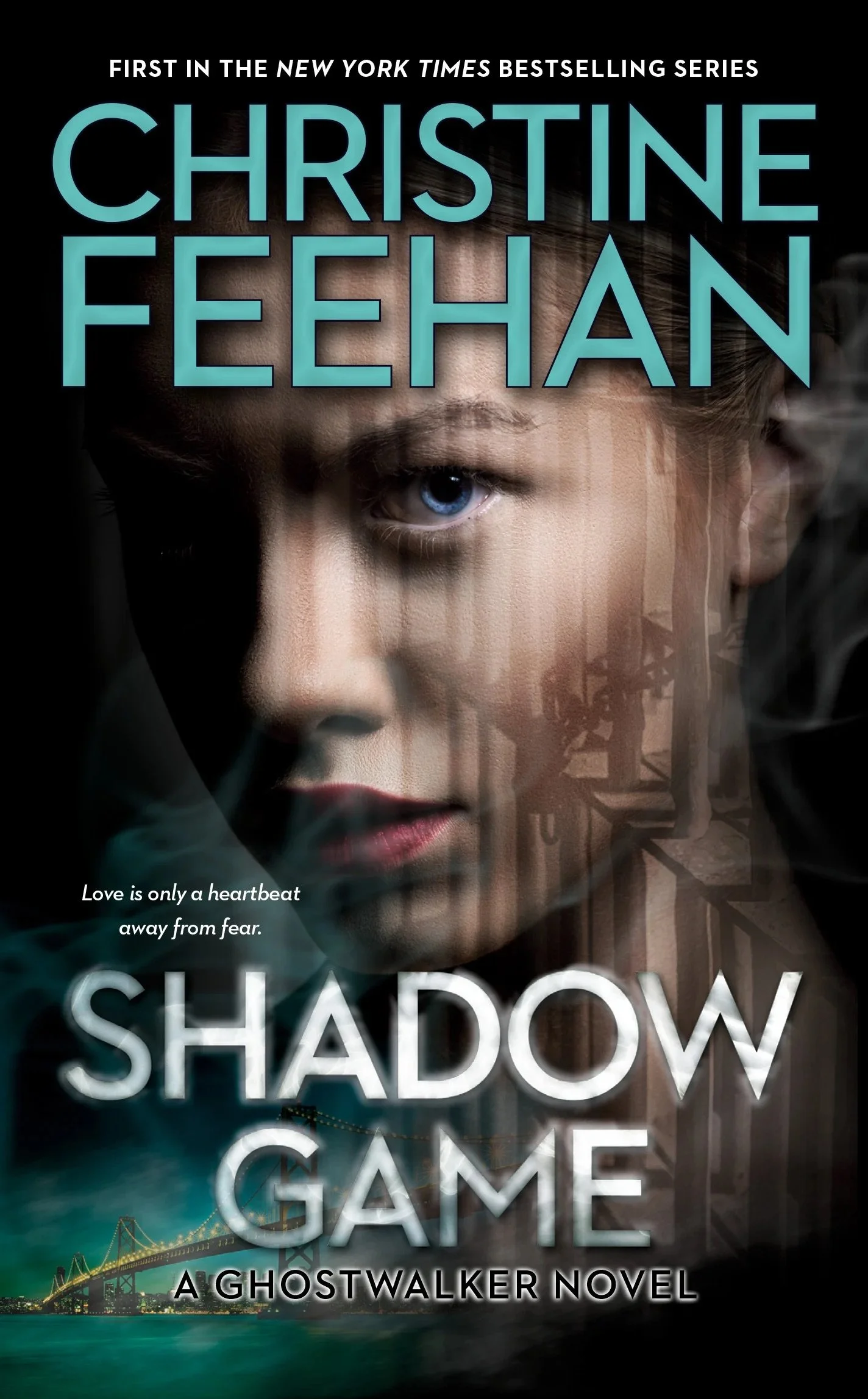
Welcome to Christine Feehan, author of almost 100 romance novels. Her next book, Ghostly Game, is part of the Ghostwalker series and will be released May 2, 2023.
PEOPLE : editor Alicia Condon at Dorchester and now Kensington, and editor Cindy Hwang at Berkley.
BOOKS: Freckles and The Harvester by Gene Stratton Porter, Louisa May Alcott, The Bourne Identity by Robert Ludlum, Mary Janice Davidson, Gift of Fire and Gift of Gold by Jayne Ann Krentz, The Adventures of Sherlock Holmes, The Beekeeper’s Apprentice by Laurie R. King.
Books Mentioned This Episode




Sponsors
Goldie Thomas, author of The Rake and the Fake
Available now from Amazon, Barnes & Noble, Kobo, or Apple Books
and
Lumi Labs, creators of Microdose Gummies
Visit microdose.com and use the code FATEDMATES
for 30% off and free shipping on your order.


Christine Feehan 00:00:00 / #:
I'm not somebody who will ever cut and paste a love scene. It's a different couple and so, they react differently to each other and to whatever situation is going on. And I don't get embarrassed. It's just part of life, and I put that in. And part of the reason for that, and I know this is going to sound crazy, but so many girls that had had these terrible things happen to them would be very promiscuous, but they never felt anything. And I would say it's because you don't have a good partner. You're not in love with your partner. He's not doing anything for you, so I wanted them to know what good sex was. And writers should realize that the words they put down touch people. And you don't know who you're going to touch and you don't know what you say, what it's going to do to somebody.
Jennifer Prokop 00:01:11 / #:
That was the voice of Christine Feehan, paranormal author, extraordinaire, author of over 100 books and just a superstar of the genre and has been for decades.
Sarah MacLean 00:01:26 / #:
Her first book, Dark Prince, came out in 1999, right at the very beginning of the paranormal boom that we talk about. So, we talk to Christine about her life, how she came to romance, how she came to writing paranormals, and how she continues to write in this subgenre that we all love and wish there was more of.
Jennifer Prokop 00:01:50 / #:
Welcome to Fated Mates, everyone. I'm Jennifer Prokop, a romance reader and editor.
Sarah MacLean 00:01:55 / #:
And I'm Sarah MacLean. I read romance novels and I write them.
Jennifer Prokop 00:02:00 / #:
And without further ado, here's our conversation with Christine Feehan.
Sarah MacLean 00:02:06 / #:
Perfect. So thank you so much, Christine, for joining us. We're very excited, in large, part because it feels like you really came to romance in an interesting time and place and way. And so, I wonder if you could talk a little bit about how you found romance as a reader and then, again as a writer, or was it simultaneous?
Christine Feehan 00:02:32 / #:
Actually, it wasn't simultaneous at all. I started reading when I was very, very young, at a very young age and started writing when I was very young. The minute I could put sentences together, I started making up stories and I would write them down the minute I could, when I could put sentences together. And I think the first time I ever read a romance, I found these old, old books by Gene Stratton Porter, The Harvester and Freckles and those. And I realized there was kind of this romance thing going, and I found it really intriguing. I was probably 10 or even younger. I read books way over my head-
Sarah MacLean 00:03:32 / #:
Us too.
Jennifer Prokop 00:03:32 / #:
Us too. No problem.
Sarah MacLean 00:03:32 / #:
One of us.
Christine Feehan 00:03:37 / #:
And then, I started looking for anything I could read that might have some sort of a connection between a girl and a guy, because I wanted a happy ending or a happy anything involved in it. And so, that sort of started me down that path of looking for something happy in the book all the time, so that was sort of my intro to romance. And I found Louise May Alcott, of course, and read everything that she wrote, and I would read that to my grandmother whenever she was ill. I would sit and read to her, and then later, different ones that kind of inspired me for different reasons. Actually, The Bourne Identity, I liked the fact that they worked together. They were equal partners. People I think mostly saw the movie. They didn't really read that book the way it should have been read, but without her, he wouldn't have made it. She really was his equal partner in that book and I loved that. I really read that a couple of times to see how he made that happen and I really liked that. That was one of them.
Sarah MacLean 00:05:12 / #:
That doesn't surprise me at all, that the Bourne Identity is a text for you. I mean, it makes perfect sense now as a Feehan reader.
Christine Feehan 00:05:22 / #:
Yeah. And then, one really made an impact on me, probably that opened up the whole paranormal world for me, and I read it very early on was a Gift of Fire and Gift of Gold by Jayne Ann Krentz. And I forget how old I was when I read that, but all of a sudden, it was like it opened this whole world to me and I thought, "This is really what I want to write." Plus, I realized that my hero could be flawed and my villain could... I really like that the villain was rounded out so much.
00:06:11 / #:
And so, I started studying villains to figure them out. How did they write these villains and how did they become... You liked them and you didn't like... I mean, there were good things about them as well as bad things. How did they get to be who they were? So, I think they all had such an impact on me. One of the biggest impacts on me for all of my writing was Sherlock Holmes. I read Sherlock Holmes so many times that I literally could quote pages of Sherlock Holmes, of his work. And then, another writer was Laurie R. King, the Beekeeper's Apprentice. I thought that was such a fabulous take on... What she did, you would never expect her to put heroin with him and how she managed to make that work. That was an interesting pairing for me.
Sarah MacLean 00:07:24 / #:
So, at what point during this kind of reading, obviously, you've been an avid reader forever, did you start thinking, "I think I can maybe do this?"
Christine Feehan 00:07:36 / #:
I never did. I always wrote. I always wrote. I had hundreds of manuscripts under my bed. I'd write them and throw them, write them and throw them. I just wrote all the time. It was sort of a compulsion for me. I could not write, I had to write. I had so many stories in my head, I did not think about publishing them. Other people had movie stars and rock stars that they would scream and yell and, "Oh, my God. They're so wonderful. No, for me, it was writers. And so, I never looked at myself and thought I could ever be a writer like they could be, because I kind of worshiped those writers. They were amazing. My first job was in a library, and I would just read every book that I could in that library.
Jennifer Prokop 00:08:28 / #:
Living the dream. Well, it's, the other thing that's interesting though about that kind of list of books you named is I think one of the hallmarks of your style is an interest in the paranormal, but not necessarily... Even though the Carpathian series is very much about vampires, but like Jayne Ann Krentz, actually. Like telepathy and what the brain is capable of, so has that also always been interesting to you?
Christine Feehan 00:08:59 / #:
Absolutely. I research so much, and my belief really, is even with vampires, if you look at every society all over the world, you look at what their beliefs are going back hundreds of years, and all of them have something like that in their background. And where does it come from? You have to start thinking if every culture has something like that in it, where does it come from? And if every country pretty much has done these experiments with telepathy and with all these other things, why are they doing them? And after a while, you start getting these answers. You start hitting on things that, "Oh, this did work for somebody. This did work here. This did work there." And after so much research, you're catching up with the future things that they're already doing. Like my Ghost Walker series, I have a hard time keeping ahead of the game, and I research very hard to do that. And I always have primary sources, but it looks, when you write it, like it's way out there, but it isn't.
Sarah MacLean 00:10:29 / #:
Publishing wasn't even on the horizon, it sounds like. And I've done my research, I know you have a large family. So, can you give us a sense of Christine's world, at this point? How does it all fit together?
Christine Feehan 00:10:42 / #:
I taught martial arts for years and women's self-defense. Well, not just women's, I mean, I taught men too, but that was my world. I surrounded myself with that 26, 27 years of that. And I took in a lot of abused children, which you can see in my books and worked with unwed mothers and I had a complete whirl there. Writing was my escape, and when I took my kids to their gymnastics and their sports, I lived out in the country. I lived way out, away from things. So, I had to drive them and I would sit at their practices and write. That's what I did.
Sarah MacLean 00:11:40 / #:
Anybody with kids in sports has done exactly this.
Christine Feehan 00:11:43 / #:
Yeah. I didn't own a computer, I didn't own a laptop. There was no R.W.A., there was none of that. I didn't even know about R.W.A., I just wrote my stories and I did them for me. That was my escape. That was the one thing that I did for myself. And if the kids watched television at night, that's what I did, is I wrote. I wasn't interested in television. We played Dungeons and Dragons, and I told stories to the kids. That was our pastime and our fun together.
Sarah MacLean 00:12:26 / #:
So, at what point did it become... How did it happen? I mean, how did you become Christine Feehan published author?
Christine Feehan 00:12:36 / #:
The thing was that there came a time when I became very ill and my doctor said to me, "You cannot do martial arts anymore." And unfortunately, children want food.
Sarah MacLean 00:12:56 / #:
They do. Generally.
Christine Feehan 00:12:58 / #:
I convinced the, especially the boys, that they did not need to eat and the girls still wanted clothes. So, I had to find a way to feed them and to keep clothes on their back and to pay the bills. And I was working a couple of jobs, but it was minimum wage, and I was like, "Okay, this is not going to work." And my girlfriend said to me, "Send one of your books in." And I said, "It doesn't work like that." One, it was kind of terrifying. I didn't think I really wanted to send... The thought of giving away one of my stories was not a good idea to me, and I also told her they aren't taking anything with vampires in it. And at that point, I had been writing my Carpathian stories.
Sarah MacLean 00:13:56 / #:
That's so true. A paranormal was unsellable, we were told, in the nineties. And so, I guess I have two questions. One is, was it just that you thought, "I'm writing vampires and I'm not reading vampires? There are no vampires to be read. There was Anne Rice and now there is no one else?" Or did somebody tell you, "Oh, you can't sell vampires?"
Christine Feehan 00:14:23 / #:
Yes. I was told that... My friend, a girl girlfriend of mine was writing to sell, and she wanted to go to this thing in San Francisco that later I found out was an R.W.A.
Sarah MacLean 00:14:41 / #:
Sure.
Jennifer Prokop 00:14:42 / #:
Oh, Okay.
Christine Feehan 00:14:44 / #:
Which I didn't know. And she didn't want to go alone, so she asked me to go with her. And I said sure. And there were all these people in there, and I was a little embarrassed because they would say things like, "Well, I've been working on my office for four months, no book." And then somebody else said, "I've been working on my book for 14 years, and I've been working on my book for... I don't know how many..."
Sarah MacLean 00:15:12 / #:
God, this is the entire experience of R.W.A., honestly.
Christine Feehan 00:15:16 / #:
And this went on and on. And then, they get to me and I'm like, "I don't know. I have 300 manuscripts [inaudible 00:15:24 / #]." And a woman who was running the whole thing, later, she came up to me and she's like, "You need an agent." And I, at that time, was not interested in selling and I told her that. And I said, "Well, the latest thing I'm writing are..." She asked me what I was writing and I said romance. And I said, "But they have vampires in them." And she goes, "Oh, those aren't selling. You can't get an editor to even look at them."
Sarah MacLean 00:16:04 / #:
This week's episode of Fated Mates is sponsored by Goldie Thomas, author of the Rake and the Fake.
Jennifer Prokop 00:16:10 / #:
Sarah, this is a historical romance and it's a debut and the first in The Husband material series. This is a book that's really going to appeal to all of our listeners who love Tessa Dare and Joanna Shupe. And so, we have Charlotte, a seamstress employed at London's most renowned [inaudible 00:16:28 / #], and she is very aware of the class differences between her and the people that come in and partake of her services. And she runs a foul of Nicholas, a charming but badly behaved viscount, and his parents are insisting that he marry as soon as possible. After a maiden Manhattan mix up Nicholas's mother mistakes Charlotte, for this woman who she thinks Nicholas should marry, and there's just all of these shenanigans that happen. This book really deals with big class issues head on. And so, Charlotte, rather than being enamored with the excessive wealth that she is now seeing in real life is, instead like, "Wait, we really need to fix this." So Nicholas, Charlotte have to really figure out how they can be together given this huge difference between them.
Sarah MacLean 00:17:24 / #:
First of all, this sounds like a terrific read. I love it when historical romances really tackle class differences. And you can read The Rake and the Fake by Goldie Thomas right now in print or ebook, wherever you get your books. Thanks as always to Goldie Thomas for sponsoring the episode. Are the 300 manuscripts under your bed also paranormal adjacent?
Christine Feehan 00:17:53 / #:
No. They weren't at that time. No.
Sarah MacLean 00:17:56 / #:
So, how did we get to dark prints?
Christine Feehan 00:17:59 / #:
Well, at that time, I had quite a few children. My oldest son was in the Navy, and he came home to visit. I had two daughters who were pregnant, and he was helping out, building a little apartment for one of them. And he came home. He was with a friend, and he came home for lunch. He had a motorcycle, and I made him lunch and we were laughing and talking, and he went out the door and I said, "Did you put on sunscreen?" And he said, "Oh, mom, you're going to be saying that to me when I'm 90." And I laughed and said, "You bet I will." And he walked out the door, and five minutes later, maybe it was five minutes later, no more than that, the phone rang and my future son-in-law gets this call. He was on for if there was an accident. And his brother called him and said, "We've got a call. I'm coming to pick you up." And then, the neighbor called me and said, "I think your son was hit." And I said, "That's impossible."
00:19:26 / #:
But it was him and he didn't make it. And one of my daughters was... Both of them were due, and there was a birthday party I'd been planning the next day for my youngest child and a wedding I was planning. And it's a very interesting thing when you lose a child, and this is for any trauma that people suffer, life goes on all around you, it just keeps going. There's no way to stop it. You can't put the brakes on, and I had to keep planning a wedding. I had to keep two girls who were giving birth. I had a very small child who expected to have a birthday, and I didn't feel anything. I couldn't remember people talking to me, conversations.
00:20:45 / #:
And it lasted forever. It went on forever. I mean, I did everything I was supposed to do. I went to my kids' schools, I participated in everything that I was supposed to do, but I didn't feel anything. And it went on for so long and I thought, "I have to find a way back." And we always played Dungeons and Dragons together, and I always talked to him about vampires, made-up stories. And one of the things we talked about was, why would somebody want to give up your soul? And the more I thought about it, the more I thought, "If you have no feelings, if you can't feel anything and nothing can touch you..." And I honestly felt like I couldn't see in color anymore. Everything felt so dull. And I thought, "I have to find a way back to the people I love."
00:21:54 / #:
And that's when I started writing dark prints, and I started coming up with this idea that these men had to find that person that could make them feel again and see in color again. And that was my way back to... You never get over it. There's no way to get over it. But I've spoken to many, many people who've had many losses or had much trauma, and everybody has their own way of dealing with it. And that was mine. We shared something, it was Calvert's and I, we shared that. And my youngest son... He's not my youngest, but Brian, he always played Dungeon Masters with a Dragon. Anyway, he played with us and we would talk a lot about it together and eventually, it really helped me. And so, developing that world became very therapeutic for me. And so, that's how that world came about. And it's surprising when people read it. Some people have that, it has that same effect on them. They feel that same way, which I find interesting, that some people get it this, that have suffered loss, where other people have no idea.
Sarah MacLean 00:23:44 / #:
Yeah, but I imagine when a book comes like that and from such a place, it's impossible to imagine. First of all, it's all packed in there because when you write, that's how it goes, whatever you're living is in there. But also, I'm so moved by this story because the Carpathians are... That series is never-ending, right? It's 38 books now. And so, do you feel like every time you go back to them, that you're going back to a similar place you're mining that same love, that same world?
Christine Feehan 00:24:28 / #:
Sure. It's funny how grief will hit you at times, where it comes out nowhere. I mean, it's been a long time for my son. I've lost a granddaughter, I've lost a grandson and all of that is very difficult. You try very hard to, I don't know how to explain it, keep going as the world keeps going. But anybody who's lost parents, anybody, at times it just suddenly comes out of nowhere, and you don't know when it's going to happen.
00:25:23 / #:
But when I write, I can feel that connection, especially in the Carpathian world with Calvert, and it makes me feel very close to him again. And also, there's so many issues in those books, women's issues, miscarriages that women have. And over the years, with so many different friends and so many different young women that have had terrible things happen to them that I've dealt with through martial arts or through other things, I've been able to talk about those things. And then, had women be able to read about them, and then that helps them in their lives. So, I've been grateful to be able to have that opportunity when I no longer can do hands-on help.
Jennifer Prokop 00:26:32 / #:
So it's interesting to me too... Probably one of my favorite of your series is Torpedo Ink, and those are characters that are really steeped in trauma. And I mean, that's another thing that sort of ties your books together. People experience terrible loss or grief or trauma, and then this connection is like, how do they survive? Especially can they, through this, access almost parts of themselves, they didn't know that existed. So, when you talk about readers contacting you, is this something that... Like they write you letters, you get emails, how do you connect with readers who are also experiencing this world? Like the emotional... Your worlds are kind of terrible worlds, but people find each other in them. So, how do your readers come to you?
Christine Feehan 00:27:38 / #:
Well, okay, Torpedo Ink is actually my most difficult series to write. When I took in children, I found that boys were treated way differently than girls. When they're molested, they oftentimes are not given counseling. Sometimes they're rejected from their family. The fathers don't want them, and they often are like, especially if they're a little bit older, it's like, "Oh, hey, you should be happy," instead of... It's traumatizing for them, but nobody wants to even talk about it with a boy. And so, I promised myself that someday I was going to address that issue. And I didn't honestly realize when I started looking at files, what I was really getting myself into. Because you have to talk with professionals and you're looking at some file and you're reading this horrible thing that you don't even want to look at anymore. And then, you talk to a professional and you say, "All right, this happened to them.
00:28:59 / #:
What's going to happen to them as an adult?" And he's like, "Oh, he's not going to be normal. His sexual life is not going to be normal." So now, you're going to have to write about this and try to find a happy ending for him. Because to me, I want to make whoever's had anything close to that experience feel hope. That's what you're trying to do, is say, "There's hope for you. Don't give up." And most of the time I get letters. There's been a few times when somebody has come personally to me, when I'm at a convention or something, they've asked to meet with me, and I've talked to them. Most of the time it's a letter and 99% of the time, and it will start out, "Please continue to read this, but I was going to kill myself. And then, I read this book." And oftentimes, especially Torpedo Ink, I think, "I can't write another one of these. I just can't do it." And then, I don't know why I get a letter like that, and I think, "Oh, my God, Christine, now you're going to have to write..."
Jennifer Prokop 00:30:22 / #:
Keep doing it.
Christine Feehan 00:30:23 / #:
"Now you're going to have to write another one." And it's interesting because not everyone gets that those books are about trauma. They don't see it. They don't. And that's always interesting to me, that not everyone gets what the book is actually about. I try to put on there to be careful about reading it. There's triggers for people... But people sometimes just don't see that.
Sarah MacLean 00:30:55 / #:
One of the things that I keep coming back to as you're talking is Jen and I talk a lot on the podcast about how we bemoan the way paranormal has faded over the last decade. And one of the reasons why is because it feels like there seems to be so much more anger and confusion and frustration, and all the things that are happening in the world right now. Paranormal, in so many ways, makes us look at those traumatic or those dangerous or angry or wicked things and face them.
00:31:41 / #:
You said this is about hope, and we always talk about romance as the literature of hope. That is the promise. So, I wonder if you could talk a little bit about, as somebody who we really do think is without you, paranormal would not be here in the way that it is. How does paranormal... How did coming to paranormal and writing paranormal and building the sub-genre happen during that time? I mean, obviously, you told the remarkable story about how the Carpathians came to be, but you've never gone away. You've never left that paranormal world. Even when you do leave it, there's always a vibe, right?
Christine Feehan 00:32:29 / #:
Yeah. Well, because for me, I know that other people don't really believe so much in all those things, but I think the world is so big and there's so many interesting unsolved mysteries in it, and I can't stop doing research. I'm like the research nut, and I find everything so fascinating. And I don't necessarily... I know we use the word paranormal, but I always think there's so much out there. And so, to me, I just think maybe it's really all true, and we haven't caught up with it yet. So, to me, it's just extending my imagination and then, trying to find reality in it. And I try to put the book at least 80% facts. I mean, twisting those facts into my fictional world. And then, just a small amount of the paranormal so that when people read it, they're like, "Oh, this could happen. This could be." When I did Lightning Game, most of that was reality. I mean, it's amazing what they're doing with lightning, and you look at it and go, "Holy moly."
Sarah MacLean 00:34:07 / #:
So, could you talk a little bit about that paranormal? I mean, I'm using paranormal now, respecting what you just said, but at paranormal as a subgenre of romance. During that boom, where it just felt... I mean, it just felt like everyone was writing these kind of big, expansive worlds with these heroes who were just larger than life and these heroines who just could match them step for step. What was going on there? Are you able to look back on that time and go, "Oh, this is why we were all doing this thing together." Or, "This was why readers were really drawn to us?"
Christine Feehan 00:34:59 / #:
I think that different times call for different things. People are, at times, they need certain things in their lives, and they're looking for heroes and they're looking for things that make them happy. Unfortunately, I don't honestly know what's happening right now, where everybody seems so angry and weird with each other. It's so strange to me. I don't understand that, but I'm getting kind of old. But I think everybody's imagination was really big and everybody at that time really accepted it. And they went all out and readers were like, "Hey, what do you have for me? I'm willing to read it." And they went for it. So, I think that was a really good time, and people were in a good place. And as things started to crumble, the economy and whatever, then I think that things sort of went downhill. And also, when you get too many people doing the same thing, it runs out. You can only do so many of the same types, and then it gets... There's a lot of repetition. And maybe towards the end, there might have been, I don't know.
Sarah MacLean 00:36:50 / #:
Were there other writers who you were friendly with, who you were in your group, were inspiring you during that time?
Christine Feehan 00:37:02 / #:
Not in my group. I had a very core group, but I will tell you, I read Mary Janice Davidson, and she made me laugh so hard. I am not the best at writing humor. When I read her, I would laugh so hard and I would just about die. She made me laugh so much. There were certain ones that you'd pick them up and to be honest, I didn't read much in my own genre because I didn't want to step on somebody's voice, but I couldn't help it with her. Every time she had a book come out, I'd go get it, because she just was so funny. But like I say, I don't write very humorously, and I try, but my humor falls flat.
Jennifer Prokop 00:38:01 / #:
So, did you join R.W.A., you mentioned, sort of not knowing what it was? Was that something that-
Christine Feehan 00:38:09 / #:
I had to, at one point, because my house... I was with Dorchester at the time when I first... They were the only ones who would read my book and then they bought it.
Sarah MacLean 00:38:19 / #:
Who was your editor there?
Christine Feehan 00:38:21 / #:
Alicia Condon. Alicia Condon. Okay. Okay. And she was wonderful. She was.
Sarah MacLean 00:38:26 / #:
And she acquired you at Dorchester?
Christine Feehan 00:38:28 / #:
She did, yes. And people always said things about Dorchester, but they gave new authors a chance when nobody else would.
Sarah MacLean 00:38:37 / #:
And took such risk in terms of the content of the books. I mean, I was saying to Jen before we started that one of my very favorite... I write historicals, and one of my very favorite historicals is The Madness of Lord Ian Mackenzie, which, the hero... It's such a different kind of historical, and I just can't... I think it benefited from Dorchester.
Christine Feehan 00:39:03 / #:
I think that they did a really good job at getting people seen when nobody else would even look at them. Not one other house would've... Well, they wouldn't...
Sarah MacLean 00:39:17 / #:
Sure. Vampires, right?
Christine Feehan 00:39:19 / #:
Right, they wouldn't look at it. And she did, and she picked it up, so that was pretty amazing of her to do that.
Sarah MacLean 00:39:29 / #:
And then, you were with Dorchester until Dorchester folded?
Christine Feehan 00:39:34 / #:
I was already being looked at by Berkley. Cindy Wong had already made an offer for me, and I've been with her ever since. She's been my editor for years and years and years. So yeah, I was already with Berkley at that point, but they had a bunch of my books still.
Sarah MacLean 00:39:58 / #:
Because you're such a fast writer. Now, were you build... Now, how was that working? Were you pulling things out from under the bed or...
Christine Feehan 00:40:06 / #:
No, no.
Sarah MacLean 00:40:07 / #:
The bad manuscripts are still under the bed.
Christine Feehan 00:40:09 / #:
No, because the ones under the bed were not polished and they weren't that good.
Sarah MacLean 00:40:15 / #:
I don't believe it, but okay.
Christine Feehan 00:40:16 / #:
No, they're not that good.
Sarah MacLean 00:40:20 / #:
So, because you're so prolific as well, what is it? Almost a hundred books, is that right?
Christine Feehan 00:40:27 / #:
Yes, very close to a hundred books.
Sarah MacLean 00:40:30 / #:
And so, you are really... I mean, you still writing really quickly. You're writing at a self-published pace.
Christine Feehan 00:40:39 / #:
I actually am slowing down a little bit so I can go visit occasionally. Go see my mom, and not my mom, my sisters, occasionally. I have a lot of sisters.
Sarah MacLean 00:40:53 / #:
And do you feel like... You have a big fam... You have a large number of children, a lot of sisters. Do you feel like that those kinds of relationships are part of why you have been drawn so much to Pax? I mean, big communities of characters.
Christine Feehan 00:41:13 / #:
Yeah, I've always loved being in a big family.
Jennifer Prokop 00:41:18 / #:
This week's episode of Faded Mates is sponsored by Lumi Labs, creators of microdose gummies.
Sarah MacLean 00:41:24 / #:
So Lumi Labs, our old friends, you've heard us talk about microdosing and the concept of microdosing before on the podcast. It's commonly associated with psychedelics, with wellness, performance enhancement and creativity. If you're looking to consider microdosing, you can do a quick Google search or you can go to microdose.com and learn more about how taking a microdose gummy might help you just with a little bit of mood enhancement with maybe helping you sleep, which is what they do for me.
Jennifer Prokop 00:41:57 / #:
For me too.
Sarah MacLean 00:41:58 / #:
Pain, anxiety. Eric takes them for creativity and a general kind of joyfulness across the day. He said to me the other day, "You know what the thing is about these gummies? You take one and you just like, an hour and a half later, just feel like, "I feel like I'm in a good mood."
Jennifer Prokop 00:42:17 / #:
Yes. And listen, we all need that these days. If they didn't put me to sleep, they would definitely help me feel like I was in a good mood. Anyway, microdosing is available nationwide, and we have all tried these gummies, and we think you might enjoy them too, if they're something you're interested in.
Sarah MacLean 00:42:37 / #:
So, you can go to microdose.com and use the code Fated Mates to get 30% on your first order. They have all different kinds of flavors you can try. I'm a particular fan of cotton candy. Lately, I also like one that's orange flavored, so you should try, check it out, give it a try. And thanks, as always, to Lumi Labs for sponsoring this week's episode. Another interesting hallmark of your career is that you have several, very long-running series that you're essentially writing concurrently. And so, this is unusual. A lot of people will start and finish a series and you have a bunch that just are kind of continuing. So, what's your process for deciding what's next, keeping it all straight? That seems like a huge job.
Christine Feehan 00:43:40 / #:
It's very strange, my brain, how it works. A character will come to me and say, "I want my story told." And I can't write... I couldn't write two Carpathian stories in a row because I'd be bored with that world. So, I write that story and then, while I'm writing that story, all of a sudden, another character from another world will jump into my head and start pushing at me. And I have tell it to be quiet. Like, "It's not your turn yet. Wait till I'm finished." And then, that one will will... A lot of times now, because I'll have a contract and they'll want the stories in a certain order order. And so, I had to train my brain to say, "It's going to be like this." And if they mess up the order on me, it's actually difficult now, because my brain would be like, "We have to do it this way."
Jennifer Prokop 00:44:48 / #:
I'm not going to get the titles right, but the head of Torpedo Ink was the husband of the end of the series with all the sisters?
Christine Feehan 00:45:00 / #:
Right, yeah. Mm-hmm.
Jennifer Prokop 00:45:00 / #:
So, when characters intersect in that way, is that a surprise to you?
Christine Feehan 00:45:07 / #:
Because I wasn't planning on publishing Torpedo Ink. I wasn't going to. And when I had that in there, Cindy said to me, "Do you have these other characters..."
Sarah MacLean 00:45:21 / #:
We have this guy.
Christine Feehan 00:45:23 / #:
And I said, "Well, yeah, but I don't think they're something that I could publish because it's a pretty raw, edgy series." And she said, "Well, let me read it." And that's kind of how that ended up getting published.
Sarah MacLean 00:45:40 / #:
We've had several people on who are edited by Cindy, and it sounds like she is one of those editors who is willing to just again, take the risk with you and trust you to move forward.
Christine Feehan 00:45:55 / #:
She will take a risk. Yeah, she will. She's not-
Sarah MacLean 00:45:56 / #:
That's amazing.
Christine Feehan 00:45:57 / #:
She's pretty fearless, and she's not afraid. If I went to her and said, "I'd like to publish this." And it's like out there, she would say, "Go ahead and write it. Let's take a look at it."
Jennifer Prokop 00:46:14 / #:
Have there been other editors, publishers, I don't know, art directors?
Sarah MacLean 00:46:21 / #:
Oh, wait, can we talk about those early covers, first of all?
Jennifer Prokop 00:46:24 / #:
Oh, yeah.
Sarah MacLean 00:46:25 / #:
So, I'm so fascinated but... Listen, I could talk about romance novel covers all day every day. In fact, Jen will tell you, I kind of do, but those early covers, so that first cover of Dark Prints is a clinch. It's like a historical clinch, presumably because no one knew what the heck to do with these books, right?
Christine Feehan 00:46:45 / #:
Right.
Sarah MacLean 00:46:45 / #:
And then, can you walk us through... Are you able to remember or recall how paranormal became... How it started to look the way it did? Why we moved away from those clinches?
Christine Feehan 00:47:01 / #:
Well, there were funny, funny things that happened with some of them.
Sarah MacLean 00:47:05 / #:
I love it.
Christine Feehan 00:47:07 / #:
It was Jacque's book and they put him on the cover, and I said, "Well, this cover his spine." Except that he had, or she had red hair. It was a clinch cover, so they washed the cover red.
Sarah MacLean 00:47:32 / #:
Oh, my gosh. The whole cover?
Christine Feehan 00:47:34 / #:
The whole cover. So he is like sunburned. I called him Lobster Boy after that.
Sarah MacLean 00:47:41 / #:
What book is this?
Christine Feehan 00:47:44 / #:
It was Dark Desire.
Sarah MacLean 00:47:45 / #:
I'm looking it up right now.
Christine Feehan 00:47:48 / #:
So, he literally has... He's red and so-
Sarah MacLean 00:47:53 / #:
I think I know what this is.
Christine Feehan 00:47:55 / #:
I did. I called him Lobster Boy. So, every time anybody would refer to him, I would think, in my head, I'd turn it around and he'd be Lobster Boy.
Sarah MacLean 00:48:03 / #:
Oh, no.
Christine Feehan 00:48:06 / #:
And my girlfriend, one of my friends, she just loved him. She called him Pooky face. She'd be like, "Don't you call my-"
Sarah MacLean 00:48:14 / #:
He's orange.
Christine Feehan 00:48:16 / #:
Yes. He is.
Sarah MacLean 00:48:19 / #:
Everybody look down in your podcast right now. We'll show it to you. Yeah, he's orange.
Christine Feehan 00:48:24 / #:
Yeah.
Sarah MacLean 00:48:26 / #:
How funny.
Christine Feehan 00:48:27 / #:
Yeah. And here's the other thing that happened with that book. This is just a little... So, it starts off with, there was blood in the River of It Running or something, the first sentence. And I had worked on that first chapter a million ways, and he's insane. I mean, when he comes awake, he's totally insane. And if you don't know what happened to him, you would hate that guy because he's an ass. So, you have to start out with him and knowing what happened to him. And I think I wrote that first chapter 40 Different Ways. Well, when they got the book, they're like, "We have to change this first chapter because they have to know that it's a romance, and you can't start out this way." I'm like, "No, I'm not changing it."
Sarah MacLean 00:49:25 / #:
How funny.
Christine Feehan 00:49:27 / #:
I go, "Toss the book." "We're not tossing the book."
Sarah MacLean 00:49:36 / #:
Amazing. No. And then, when we first got on with you and you said, "Well, I don't know. Am I a trailblazer?" Christine, Christine...
Christine Feehan 00:49:43 / #:
Here's why.
Sarah MacLean 00:49:44 / #:
This is how paranormals begin, now with the heroes in trauma and then, you just sort of ride the wave until you get to the kissing parts.
Christine Feehan 00:49:54 / #:
I finally just said, "You know that Clinch cover? They're going to know it's a romance."
Sarah MacLean 00:50:00 / #:
Right, exactly. I think they'll know. So, at what point did it feel like... I mean, this is obviously a market thing. This is how the sausage is made a little, but when does everybody realize, "Oh, paranormals need a different look"? Is that just because it started to become... So the market just became more exciting?
Christine Feehan 00:50:21 / #:
I really think when I moved over to Berkley, I think that the marketing people at Berkley kind of-
Jennifer Prokop 00:50:32 / #:
Figured that out.
Christine Feehan 00:50:33 / #:
Yeah, they were the ones. For me, for my team, they were the ones who kind of said, "Okay, we're going to do this differently." Interesting enough, in Germany, my books, all of them, even the Ghost Walkers, all of them have bats on the cover.
Jennifer Prokop 00:50:57 / #:
Okay. Sure, sure.
Sarah MacLean 00:50:57 / #:
It's a can of soup, right?
Jennifer Prokop 00:51:00 / #:
I know. I'm like, "Does Saphian mean Bat and German?" I don't know.
Sarah MacLean 00:51:03 / #:
That's funny.
Christine Feehan 00:51:04 / #:
Maybe. What else?
Sarah MacLean 00:51:05 / #:
Yeah.
Christine Feehan 00:51:07 / #:
They do very well but...
Sarah MacLean 00:51:10 / #:
Hey, listen. If it ain't broke, right?
Jennifer Prokop 00:51:14 / #:
You can tell I really love your books, but one of the things Sarah and I have talked about a lot is romance comes and goes, right? The way that what's popular as a trope, what kind of sub-genres are popular, what kinds of hero archetypes are popular. These things change over time. And right now, the romance hero has changed a lot, but I don't necessarily think that your romance heroes has have changed a lot. So, how do you... I don't know. Do you feel the push of market forces, or it doesn't matter, your readers are...
Christine Feehan 00:51:57 / #:
I don't look at trends and I don't look at that kind of thing at all. I have to go with whatever I'm passionate about and I have to go with whatever character's in my head, and I just hope my readers will love the story and love the characters. I write the best book that I can. I try every single book to improve and give a better story and sometimes, I succeed. I do my best, but there is no way that I can write a story to the market. It's not going to happen. And I know that, so I don't even try.
Sarah MacLean 00:52:41 / #:
Well, what's amazing is you've made a career out of arguably not writing to market. You wrote vampires before vampires were cool. You moved to shifters before everyone else moved to shifters and it's amazing, the inspiration that you give writers is write your truth.
Christine Feehan 00:53:03 / #:
Well, the series that I'm doing, I know it's a bad thing to call it the murder series. I really shouldn't-
Sarah MacLean 00:53:10 / #:
Not for me.
Jennifer Prokop 00:53:13 / #:
I think that might be more to market than we'd like to admit, honestly.
Christine Feehan 00:53:17 / #:
Well, I got into that one because one of my daughters does a lot of climbing. She used to live in Bishop, which is up in the mammoth area near Yosemite. And she knows these women and all of them have these incredible stories. And they all became friends, and they would go climbing together, and I would listen to their stories of where they came from. And then, they have these insane jobs. And I was thinking, "Wow, this is amazing." And one day, they were telling me about this hike they'd gone on, and I thought, "what a perfect place for a serial killer." I'm like, "Okay..." They were all going to go on a hike together and camping. And I said, "Okay, girls, I really want you to start looking around for a place where a serial killer might be hanging out, ready to-"
Jennifer Prokop 00:54:20 / #:
Just report back.
Sarah MacLean 00:54:20 / #:
It's totally fine.
Christine Feehan 00:54:24 / #:
So, after that, I started having the girls, every time they go someplace, do that for me. And the next thing I know, they're taking tasers with them.
Sarah MacLean 00:54:34 / #:
I was going to say they stop hiking. They're done with that now.
Christine Feehan 00:54:38 / #:
I kind of ruined it for them. We're talking murder every time we go to the restaurants.
Sarah MacLean 00:54:48 / #:
So, one of the questions that we often ask is, what's the hallmark of a Christine Feehan romance? When a reader picks up a Christine Feehan novel, one of your nearly-100 of them, what do they know they're going to get?
Christine Feehan 00:55:06 / #:
Well, for sure, they're going to get a happy ending. Absolutely sure they're going to get happy ending. I write, always, about, I think, hope and about finding your own version of family. It doesn't matter what the setting is or what the drama that has been... It's about... Or what I want to say genre, but of course, it's romance, but it could be military, it could be suspense, it could be anything. But set in that, there has to be that hope and the finding of family and that happy ending. That's what you're going to get. That's what you're going to find.
Sarah MacLean 00:56:04 / #:
And we didn't talk about this, but it's also going to be super sexy.
Jennifer Prokop 00:56:08 / #:
Oh, yeah.
Sarah MacLean 00:56:09 / #:
And I feel like we should sort of touch on this because I do feel like for me, those early Feehans were-
Jennifer Prokop 00:56:20 / #:
And the late ones.
Sarah MacLean 00:56:21 / #:
No, no. I mean, for me though, Sarah, when I stumbled upon Christine Feehan in the bookstore, it felt like I'd never read anything like this before. And I wonder, can you talk a little bit about that, about really bringing sex to the genre in a lot of ways? I feel like there was, not that it didn't exist before, but there's something about the Feehan sensuality that is different.
Christine Feehan 00:56:53 / #:
Well, to me, the characters are really real. People have asked me that before. I'm not in the book at all. When I'm writing that book, it really is the characters. I don't plot out the book. So the characters are so real to me that I know everything about them from the time they were little. And so, when they're moving through that story, it's all about them. And they're the ones that are having sex or not having sex or whatever's happening to them.
00:57:33 / #:
And so, I'm not somebody who will ever cut and paste a love scene. You're not going to get the same one because they're always... It's a different couple. And so, they react differently to each other and to whatever situation is going on. And I step back so far when I'm writing that I'm not there, and really, it's almost plays out like it's reality for them. And so, to me, it's just part of life. I don't get embarrassed. It's just part of life, and I put that in. And part of the reason for that, and I know this is going to sound crazy, but so many girls that had had these terrible things happen to them would be very promiscuous, but they never felt anything. And I would say, "It's because you don't have a good partner. You're not in love with your partner. He's not doing anything for you." So, I wanted them to know what good sex was, and if you have a book that you can read when no one's around and you can see what good sex is, then it's... When you have a partner, and I can tell you, this is another thing I get lots of letters.
Sarah MacLean 00:59:16 / #:
Oh, interesting. I believe that.
Christine Feehan 00:59:20 / #:
I even had letters from guys who told me they would not cheat on their wives, military guys, because they realized that their wife was too important to them. And I mean, it's amazing. And writers should realize that the words they put down touch people. And you don't know who you're going to touch, and you don't know what you say, what it's going to do to somebody. I mean, when I write something, I don't know who it's going to affect. But I deliberately did put sex in my books for that reason, because I wanted people to know there is good sex. No, that there is, and you should feel something.
Sarah MacLean 01:00:19 / #:
And I love the way you talk about it, as you are so distant from the book itself, you are just writing the book. And I think that's really what a Feehan... That's why it feels so different as a reader or did. In those early books, they felt transcendent because they did feel intense and passionate in that way, that sort of private way.
Christine Feehan 01:00:46 / #:
Yeah. Now, when I started the Leopard series, that was kind of my nod to erotica. Yeah, erotic wasn't a huge, huge thing then. Now, it kind of is, but it wasn't at the time. And so, I was like, "Okay, I'm going to just do a little bit of that." And that was before to Torpedo Ink. And so, I thought, "Oh, I'll put that in my leopard one because it made sense to go there." But then, I started writing Torpedo Ink and I'm like, "Uh-oh, now I've got two."
Jennifer Prokop 01:01:23 / #:
Yeah. That's hot, everybody. I'm okay with it.
Sarah MacLean 01:01:29 / #:
No, the Leopard series. I mean, I remember coming to the Leopard series and just feeling like nobody had ever done anything like that before.
Jennifer Prokop 01:01:38 / #:
Yeah. So, I think the question we love to end with is... So, it's kind of a two-part question, I guess. One is, there a book that you hear about over and over again from readers? And then, the question we have for you is there a book of yours that's your favorite, the one that you are most proud of?
Christine Feehan 01:01:58 / #:
Well, the one I hear about all the time from Readers is Dark Celebration. Every single person wants me to write that book over and over and over.
Jennifer Prokop 01:02:11 / #:
They can just reread it. They can reread it. Reread it, everybody.
Sarah MacLean 01:02:13 / #:
It slaps every time.
Christine Feehan 01:02:16 / #:
It's so funny.
Sarah MacLean 01:02:17 / #:
And why do you think that is?
Christine Feehan 01:02:19 / #:
I think because it revisits characters they love.
Sarah MacLean 01:02:22 / #:
Yes.
Christine Feehan 01:02:24 / #:
I think that's it.
Sarah MacLean 01:02:25 / #:
It's reader Karen Feeding, right?
Christine Feehan 01:02:28 / #:
So, I think that that's it. What book would I be the most proud of?
Sarah MacLean 01:02:35 / #:
Or the one that's most special to you? People take it in different ways.
Christine Feehan 01:02:41 / #:
Probably the one that's the most special to me is Dark Prince, for obvious reasons. That would probably be the one, I would say.
Sarah MacLean 01:02:49 / #:
Well, thank you for being with us today.
Jennifer Prokop 01:02:51 / #:
This was incredible. Thank you so much. Thank you for joining us and it's really an honor.
Christine Feehan 01:02:59 / #:
I really enjoyed being with you. Thank you for inviting me.
Sarah MacLean 01:03:06 / #:
Every single one of these goes differently.
Jennifer Prokop 01:03:10 / #:
Yeah, it's amazing. I think the thing I liked about our conversation with Christine is how personal it felt. I mean, obviously, not just the stories that she shared, but just you can really feel how reading and writing and thinking about hope and happily ever afters is really something she spent her entire life on. And there's a way that I think that just really came through in that conversation. It was so fascinating.
Sarah MacLean 01:03:39 / #:
Absolutely. She talked a few times about how readers have approached her and talked to her about how special her books are to them and how moving they are and how inspirational and important they are to readers. And every time she told them, I had the same thought, which was, "I think it must be really wonderful to have a conversation, a personal conversation with Christine." She feels like she's present in the moment the whole time, and it was really special.
Jennifer Prokop 01:04:14 / #:
I get very distracted by people. I feel like even in my classroom, I'm kind of constantly doing 800 things at once, but you really feel that she probably is such a great mom and a grandma. You know what I mean? Like the attention that she really gives and the way that she talks about... I mean, I'm fascinated too by people who say, "I am a writer. I've always been a writer. I love writing. There's 300 books under the bed."
Sarah MacLean 01:04:41 / #:
A Compulsive Writer. I love that. The sort of, "I would've written with or without publishing." I loved that story about how she got dragged up to an R.W.A. meeting and everybody was like, "Well, I've been working on the same thing for a while." And she's like, "I have 300 books, but I never intended to do this."
Jennifer Prokop 01:05:00 / #:
I also think that that goes hand in hand then with not really worrying about "the market". So, when you are writing in that way and you've had success writing in that way, and you've had readers respond to you in that way, then I think it's really powerful to see someone stay the course.
Sarah MacLean 01:05:24 / #:
I feel like if you are out there right now and you are looking at a manuscript and you think it won't sell you because of the market, hearing Christine talk must be so important and inspirational for you, because we've talked a lot about... We've talked to people like Jayne Ann Krentz, I loved, as she mentioned, Jayne. We've talked about Jayne... When we talked to Jayne, when we talked to J.R. Ward, we've heard the story of people who change genres because, as J.R. Ward puts it, they were fired or it just wasn't selling, so they pivoted. And we've talked so much about how writers have to be nimble to thrive in the genre. And I think what's fascinating is that Christine is nimble and she is full of ideas and shifting and changing, but she stays really true to her brand and to her point of view. And I think that's a really valuable thing to hold onto right now, especially, as we see romance really grappling with those big questions about what comes next and have we oversaturated and these kind of big issues.
Jennifer Prokop 01:06:40 / #:
We didn't have a chance to ask her. She has re-released some of her romances.
Sarah MacLean 01:06:45 / #:
Oh, we meant to ask.
Jennifer Prokop 01:06:46 / #:
I know, as a sort of-
Sarah MacLean 01:06:48 / #:
And then, we got distracted.
Jennifer Prokop 01:06:49 / #:
Author's cuts. With the rise of self-publishing, I think there's a way in which... There's always a market for something. There's always a small dedicated group of readers who are looking for whatever it is that you are selling. It's traditional publishing that has... It can't quite have that leeway to just be like, "Yes." And so, it's really interesting to hear her talk about that Dorchester imprint taking a chance on her and the difference that made. And it's funny because that is not a... I mean, Dorchester, I feel like is not a name I've even ever heard spoken about before in romance.
Sarah MacLean 01:07:36 / #:
I mean, it's really fascinating because I hadn't thought of Dorchester until-
Jennifer Prokop 01:07:42 / #:
We were prepping.
Sarah MacLean 01:07:42 / #:
I was doing research. We were prepping for this episode. You guys, these are the only episodes we actually prep for. We do actually do research before we talk to these people because we are trying to get them to think we're intelligent and so, we know what we're doing. But no, I mean, Dorchester... And now, of course, I want to go back and look a little more at Dorchester. But I was thinking about our conversation with Radcliffe, when we were talking about how these small presses were really the places where big adventures were happening in romance. And obviously, for Radcliffe and for E.E. Ottoman, that was a different kind of thing, that was happening because queer presses had to publish queer books because traditional publishers weren't doing that. But paranormal, I think about those digital-only presses, again, those kind of Ellora's Cave and Sam Haynes and those places that were taking big risks. And so, it doesn't surprise me that one of the mothers of paranormal came up through a place that doesn't exist anymore.
Jennifer Prokop 01:08:56 / #:
This is something I don't... I don't know that I've ever heard any author explicitly state as clearly, which is when you write from a place... When she told that, I mean, heartbreaking story of her son's death, that somehow there are some readers who can plug into that and see a, I don't know, see themselves in that too. And I think that's one of the things, we talk so much about romance being about the genre of hope, about feelings. Romance is about feelings, but it's our feelings as readers too. And I think that this is something that I was really impressed at how clear-eyed it felt like she was about that relationship. If I'm writing from this place, it's going to find the readers in that place.
Sarah MacLean 01:09:55 / #:
And I also think there is... Talk about a fearlessness in terms of character and theme, because she really does write about trauma. And maybe we'll put in the show notes a link to the discussion that Jen and Adriana Herrera have had about writing trauma and how romance and trauma kind of do go hand in hand a lot. But it's interesting because I think writing trauma is a thing that we are talking about a lot in the industry without talking about it, really having conversations about how you put these things on the page so that characters and writers and readers can see it in a raw way. I think she even used that word, raw. And these books are not for the faint of heart. They are rough reads, and she is writing into that space in a way that I think a lot of us are afraid to do. And I think it's because she clearly has seen it, she's faced it. And I loved every minute of that conversation.
Jennifer Prokop 01:11:19 / #:
Romance gives me so much. But when I kind of interact with someone who has the same root causes, and I've talked about this before. I started reading romance after my parents got divorced. The pain of that was the only thing that made me feel hope and better, was reading romance, that there are people out here who have also gone through painful things and they find a way to love each other. And so, it really is interesting, I think, for me, when you talk to someone who, I don't know, talk about the branches of the romance tree. It feels like we were planted in the same ground.
Sarah MacLean 01:12:01 / #:
Yeah. Yeah. Gosh, that was a very cool conversation. I mean, I should have expected it to be, but...
Jennifer Prokop 01:12:10 / #:
A lot of our trailblazers were really pushing for, "Tell us the story of publishing. Tell us your story through that journey." And that's not what her story was about, and I loved hearing it. It was amazing.
S05.22: Trailblazer K.J. Charles
Today, we’re welcoming KJ Charles to Fated Mates for our next Trailblazer episode! Known for her work helping to bring queer historical romance to the modern genre, KJ joins us to discuss historical romance, how it remains relevant in the modern world, her work centering queer characters and communities in romance, and the start of her romance career as an editor of Mills & Boon medical romances. We also talk about the arc of her career through early small press publishing, indie publishing, and now, as a traditionally published author.
We hope you enjoy this conversation as much as we did, and we are so grateful to KJ Charles for joining us.
Thanks to Kylie Scott, author of End of Story, and Lumi Labs, creators of Microdose Gummies, for sponsoring the episode. Visit microdose.com and use the code FATEDMATES for 30% off and free shipping on your first order.
Notes
K.J. Charles is a RITA nominated author of over 25 historical romance novels. You can preorder her upcoming novel, The Secret Lives of Country Gentlemen, which will be released on March 7, 2023. KJ worked as an editor at Mills and Boon, and her blog is an excellent source for romance readers and writers.
If you're looking for the "romance with a body count" infographics, click here.
Authors mentioned: Mills & Boon author Alison Roberts, Mills & Boon author Marion Lennox, author Jordan L. Hawk, author Alexis Hall, author Talia Hibbert, author May Peterson, author Jackie Lau, author EE Ottoman, author Penny Aimes, author Kris Ripper, author Therese Beharrie, author Jeannie Lin, editor Anne Scott.
Don’t miss our Band Sinister episode from last December.
Books Mentioned


Sponsors
Kylie Scott, author of End of Story
Get it at Amazon, Barnes & Noble, Apple Books,
Kobo or at your local indie bookstore
visit Kylie Scott at kyliescott.com
and
Lumi Labs, creators of Microdose Gummies
Visit microdose.com and use the code FATEDMATES
for 30% off and free shipping on your order


KJ Charles 00:00:00 / #:
There's historical romance that just have only the vaguest relationship to the actual history of Britain. There's historical romance that gets really down and dirty, intimate, and where the author has really delved into it. And although I prefer the second kind, but I don't think the first kind should be dismissed, because it is doing something else. I don't think every historical romance needs to go, "But there was only 28 Dukes, and most of them had syphilis and no teeth, and everyone's got lice." I don't want to read books where everyone's got lice. If I want lice, I'll have young children again.
00:00:34 / #:
I would rather read a book where they just sort of throw their hands up and just go, okay, we're Heyer-ing the hell out of this. Because actually, Georgette Heyer, although she did loads of research and everything, when she actually did the bits that are really historically grounded, which is to say An Infamous Army and the other... But they're awful. They're so boring. They're dreadful. Nobody reads them. Nobody wants to read them.
00:00:54 / #:
The sort of glittery, ball-y, wonderful, romance-y ones, we love them. And it is good that people do that. And I think there is space for both. This is actually something I'm struggling with at the moment, because, like a fool, I've been trying to write a duke book. Fundamentally, my problem is, and this really does cut quite deep into the fact that I write historical romance, is that I sort of feel like the entire aristocracy should have been executed.
Sarah MacLean 00:01:22 / #:
That was the voice of KJ Charles, an author who helped establish a place for queer historical romance in the modern genre. Writing, as she describes her work, "Heyer, but gayer." In this trailblazer episode, we talk about KJ's writing, about the way she views the historical romance genre, about building communities of queer people on page, and about her work as a romance editor back in the day for Mills & Boon.
00:01:49 / #:
You are listening to Fated Mates. I'm Sarah MacLean. I read romance novels and I write them.
Jennifer Prokop 00:01:54 / #:
And I'm Jennifer Prokop, a romance reader and editor. Although I might not want to call myself that today because KJ Charles was a real romance editor, and I'm just going to be like, okay, well, I-
Sarah MacLean 00:02:04 / #:
Listen, you just have 19 more years to go.
Jennifer Prokop 00:02:09 / #:
Hire me, Mills & Boon, so I can feel real.
Sarah MacLean 00:02:11 / #:
Oh, my God, imagine. What a good job. What a fun job.
Jennifer Prokop 00:02:16 / #:
Just editing presents all the time.
Sarah MacLean 00:02:18 / #:
The dream.
Jennifer Prokop 00:02:20 / #:
The literal dream. Yes.
Sarah MacLean 00:02:21 / #:
Anyway, but before we get there, we have something else. We have a little housekeeping for everyone. In case you didn't download our quick six-minute episode last week, Fated Mates Live is happening in person in Brooklyn, New York.
Jennifer Prokop 00:02:37 / #:
The best borough of New York City, obviously.
Sarah MacLean 00:02:41 / #:
March 24th at 7:00 PM. We suggest you call up all your romance loving friends and make a weekend of it. The 24th is a Friday. March is a great time to come to New York City because it's maybe a little gray but not super cold, and it'll be very fun. You can go to a museum, you can go to a show, you can come see us. The tickets include a gift certificate to the romance book table sponsored by WORD bookstores in Brooklyn. There will be a bar, there will be lots of other Fated Mates listeners to make friends with. And Jen, and me, and a really delightful spate of special guests, many of whom you all know already.
Jennifer Prokop 00:03:25 / #:
It's been really exciting to see people on Instagram and Twitter talking about getting their friends together and buying tickets, and arranging to come into the city for the weekend.
Sarah MacLean 00:03:35 / #:
Put on a mask, get on an airplane or a train, and come see us. Fatedmates.net/live
Jennifer Prokop 00:03:42 / #:
And now that, that's off the table. Without further ado, here is our conversation with KJ Charles.
Sarah MacLean 00:03:51 / #:
Well, thank you so much for joining us. I'm so excited. I don't think we've ever met.
KJ Charles 00:03:56 / #:
Not in person. I think we've been on panels, but this is a proper face to face, so that's nice.
Sarah MacLean 00:04:02 / #:
It's great. It's nice to meet you. It's nice to see your face.
KJ Charles 00:04:06 / #:
Yes, you too.
Jennifer Prokop 00:04:07 / #:
So everybody, as we've mentioned, I'm really excited about our conversation today because I have also hosted a few panels with KJ, and I love listening to you talk about romance. And I'm really excited because you were also an editor, which is a personal interest to me. Not that it's about me, everybody. So we are really excited to have you today on as a trailblazer. And really, one of our first questions, just because we love hearing about it, is, what was your journey to romance?
KJ Charles 00:04:38 / #:
Well, my mother had a complete set of Georgette Heyer's, which is basically, you know-
Sarah MacLean 00:04:43 / #:
That'll do it.
KJ Charles 00:04:44 / #:
Yeah, I'm an immensely fast reader and a voracious one, and I always have been. One of those kids who just sat in the library all summer, and I read extremely quickly. So I was planning to read all of my parents books. They had to remove all the inappropriate ones from the shelves, kind of thing. And so yes, I'd read through the entirety of Georgette Heyer, and obviously formative. I was thinking about it and, basically, Cotillion and These Old Shades pretty much sum up the two strands of my writing. In Cotillion, you've got Freddy, who is this wonderfully... Yeah, not too bright, wonderful, generous hearts, immensely kind, and also the superpower of really, really good manners to be deployed accurately. And then you've got Avon in These Old Shades, who's basically just a completing amoral son of a so-and-so. So yeah. And those two basically sum up most of my writing. Although, I was also reflecting that Georgette Heyer, or her era, and with the proviso of the kind of person she was and the many prejudices she had. But there's an awful lot of queerness in Georgette Heyer's historical romances.
00:05:56 / #:
In The Reluctant Widow, the actual hero, who isn't the guy who marries the heroine, is very, very heavily queer-coded. In the Corinthian, you've got the heroine who is masquerading as a boy, and the fact that the bad guy effectively hints that he's going to blackmail the hero for having taken off the boy in private, et cetera, et cetera. So there's very strong awareness of non-conventional sexuality. And then The Masquerades is just the most ridiculous cross-dressing, gender-bending. So there's a lot of that in Heyer. So yeah, it's [inaudible 00:06:31 / #], definitely. And then I kind of didn't follow up my intro. I was more of a fantasy reader, to be honest. But when I was, gosh, about 28 or so, I got a job at Mills & Boon. Which to be honest, I took because I was working at an absolute disastrous company for a lunatic, and I needed to get out of there, and Mills & Boon happened to be advertising.
Sarah MacLean 00:06:55 / #:
Take the rope that comes.
KJ Charles 00:06:57 / #:
It was very much take the rope that comes. I wanted a job that would mean not having to go into that snake pit, and they wanted an editor. And I stayed there for years. And everything I learned about editing really came from there.
Sarah MacLean 00:07:11 / #:
When you started at Mills & Boon, aside from Heyer, did you have any frame of reference for what was going on in romance?
KJ Charles 00:07:19 / #:
Not really, no. I hadn't been reading any romance at all. Well, the thing is, because of being an editor, I actually mostly concentrated on reading what I was working on. So when I worked at a travel guide company, I would be reading non-fiction, or fiction, but set in the country for the travel guide I was working on. And then I moved to a house that was doing politics and history, which I read an awful thought of that. So I wasn't actually reading romance at that time. So Mills & Boon came as a complete change of track, but it was just so much more fun. So much more fun.
Sarah MacLean 00:07:58 / #:
What did you begin with at Mills & Boon?
KJ Charles 00:08:00 / #:
They plunge you right into it. Basically, I was on the medical team, the medical romance team.
Sarah MacLean 00:08:06 / #:
And we haven't talked a ton about medical romances on the podcast.
KJ Charles 00:08:10 / #:
Oh see, I love that.
Sarah MacLean 00:08:12 / #:
It's a very English world, the medical romance.
KJ Charles 00:08:15 / #:
A lot of our top authors were Australians.
Jennifer Prokop 00:08:18 / #:
They seem Australian to me more than-
KJ Charles 00:08:19 / #:
Yeah. Well no, it pretty much divided English, Australia. I can't, offhand, think of an American, in fact.
Sarah MacLean 00:08:24 / #:
I did not grow up with medical Romances. And, I mean, I read all of them.
KJ Charles 00:08:29 / #:
They were not the big one, but it was a good team. I like working on it.
Jennifer Prokop 00:08:35 / #:
Listen, Sarah, we grew up with George Clooney on ER though.
Sarah MacLean 00:08:38 / #:
I know.
KJ Charles 00:08:38 / #:
Well, yeah.
Sarah MacLean 00:08:40 / #:
I mean, that's not to say that I don't love a doctor romance, and that's a separate episode.
KJ Charles 00:08:44 / #:
But we had some fabulous... So we had Alison Roberts, who was actually a paramedic, who wrote such exciting story, really exciting. She did one, which is set, there was a big earthquake and then there were full stories set round. It was a wonderful sort of linked series, all starting from the earthquake. Terrific. So good to work on. And she did another trilogy that basically tracked over the progress of one person's pregnancy, for which I had to do the worst Excel spreadsheet in the world. We had to make sure, these three books, every single incident all tracked this one pregnancy. Ah, well, shoot me. But it had Marion Lennox as well, who is a wonderful one. She divided between what we called, we called it tender romance then, which I think is just... What do you call it? harlequin romance?
Jennifer Prokop 00:09:26 / #:
Heartwarming?
KJ Charles 00:09:27 / #:
Yeah, it was just harlequin romance.
Jennifer Prokop 00:09:28 / #:
Just harlequin romance.
KJ Charles 00:09:29 / #:
Yeah. Opposed to harlequin presents. They've probably changed the name about 15 times since then. But Marion Lennox, she was one of my favorite authors to work with. But she wrote the... And this has become kind of quite formative for me because it was a book of hers, I actually looked it up yesterday, it's called Bushfire Bride. And it's one of those, the heroine's got a husband who is in a coma, and has been in a coma for eight years. And there's a sequence where she basically says goodbye to him. And yeah, I'm literally editing this manuscript-
Jennifer Prokop 00:09:58 / #:
I'm crying already.
KJ Charles 00:09:59 / #:
Well, this is back in the day when you edited by hand. You literally had a printout and you made the edits by hand to be input by the copy editor, because that's how old I am.
Sarah MacLean 00:10:09 / #:
Me too.
KJ Charles 00:10:10 / #:
I was literally crying so hard while I was reading this, that the copy editor was like, "You're going to have to redo this page."
Jennifer Prokop 00:10:19 / #:
Your tear stained pages.
KJ Charles 00:10:20 / #:
Literally tear stained. I mean, God, she absolutely [inaudible 00:10:23 / #]. I can't. In fact, I didn't have to look it up too much. I was thinking, what was that book called? And Bushfire Bride came into my head. And that was 20 years ago, easy 20 years ago. Amazing. So yeah, that was it. But it was formative because I delved a lot. We did a lot of books. The turnover there was absolutely crazy. Although I was mainly on medical team, everyone worked across all four. So this historical, harlequin presents, medical, and tender. That's right. So you worked across them and you got given... And if an editor or author got absolutely sick of one another, you might get them switched in.
00:11:06 / #:
Plus, I was very fast. So people tended to give me an extra manuscript when there was a panic on, which there almost always was.
Jennifer Prokop 00:11:12 / #:
Sure.
KJ Charles 00:11:12 / #:
Well, you couldn't have a book come in late, because of the nature of the publishing. And then if everything did fall apart, you had to delve into the slush pile and actually pull out a finished manuscript, and find out a way to make it publishable within the next week.
Sarah MacLean 00:11:26 / #:
Amazing.
KJ Charles 00:11:28 / #:
Well, you learn to edit. I tell you what, you learn to edit like that, it's the most fantastic grounding and structural editing. Because you have to be able to pretty much look at the slush pot manuscript and say, "Okay, it's got totally good bones, the writing's a bit junky, but if the author will agree to basically let me do a really massive edit on it, this will work." Or alternatively, "This isn't working at all, but here is a thing that I can tell the author to do. And if they do it, that will work." But you've got to be able to pretty much x-ray the book, and look at the structure, and identify what will work and what won't.
Sarah MacLean 00:12:02 / #:
Well, especially because in category there's no flab. I mean, you don't have any space to mess up.
Jennifer Prokop 00:12:10 / #:
It's all bones and muscle. Yeah.
KJ Charles 00:12:11 / #:
Yeah. It's really something. There was weeks when I did six manuscripts in a week, kind of thing, which is insane. But like I said, if you were publishing eight presents in a month, you can't publish seven presents. It doesn't work like that.
Sarah MacLean 00:12:27 / #:
Right.
KJ Charles 00:12:28 / #:
You have to deliver eight presents.
Sarah MacLean 00:12:30 / #:
People have signed up for their box. Right.
KJ Charles 00:12:32 / #:
Well, yeah, exactly. It's completely nonnegotiable. So I honestly think I couldn't have had a better training in fiction editorial. Because it was so fast and so relentless, and you had to be really super practical.
Sarah MacLean 00:12:47 / #:
So at what point during that process did you think, "I'm going to start doing this myself?" Is that how it went?
KJ Charles 00:12:57 / #:
So when I was there... Well, see, I didn't really. I've always had it vaguely in mind that it would be nice to write, or indeed to have written a book. When I was there, they very kindly let me go off for four months and work from home in Japan. And this is, as I said, 20 odd years ago. So that was a really pretty advanced thing for them to do. My husband, my then boyfriend, was doing stuff in Japan, and we lived there for four months. So I did use some of my free time to start writing then, but it wasn't a romance. I wrote a fantasy novel, which has never been published, nor should it be. And then I wrote a thriller, which was picked up by Samhian, and sold about 12 copies, properly, deservedly. But it didn't occur to me to write a romance at all. I mean, it just never... Partly, I think, actually trying to write romance while you are working at Mills & Boon might actually be a really, you really bad idea.
00:13:54 / #:
Your head might explode. Yeah, I couldn't recommend that, I don't think. So it was quite a long time, actually, after I had left. And then I got married about a year later. And then about a year after that I had a baby. And I started writing when the baby was quite small, because you're trying to stay sane. It was supposed to be a fantasy novel. But at that point, with all the years I'd worked with Mills & Boon, basically, romance had coded... My neural pathways are like valleys. My neural pathways are carved so deeply into my brain. But it just turned into a romance. And that was The Magpie Lord, which was my first published book, my first romance. And once I just leaned into it, it just felt like the most natural thing in the world to do it. So there we are.
Jennifer Prokop 00:14:51 / #:
It sounds like you mostly edited contemporary romance. So what was the draw for you to historical romance or queer romance? Did one of those come first in your brain in terms of the kind of story you wanted to write?
KJ Charles 00:15:04 / #:
I'm always more interested in historical. The thriller that I wrote was an attempt at contemporary, and I hated everything about it. Because I'd live under a rock, I don't like modern technology, and it dates so badly, so quickly. And mobile phones ruin everything, because you set up this whole drama, and all [inaudible 00:15:26 / #] just phone up and go, "Oh yeah, this is what's going on." And you've ruined everything. And then you've got to find a reason for them not to have a mobile. So yeah, historical, obviously where it's at. And also, I like the differences. I like doing the research, and I like writing about different times and different people in different places. The similarities and differences are just much more interesting to me. So although I didn't read many, I didn't edit, rather, many historicals at Mills & Boon, because we only did four a month, and they had a historicals team. So I had one or two authors. But no, it's always been what I wanted to write. And the other thing is I'm very pulp focused. A lot of what I write is sort of riffing off the pulp of the Victorian, and Edwardian, and sort of 1920s period, because I just really enjoy that. And I enjoy picking that up, and running with this, and messing about with it. And often, queering it, because as anyone who plays with Victorian to 20th century pulp will tell you, it's just absolutely ripe for that. There's a fun, it's fun. Yeah.
Jennifer Prokop 00:16:37 / #:
Gosh, it's so fun. I feel like that's the thing I really love about your books. There was one, and I'm terrible with titles, where he was a taxidermist. Is that right?
KJ Charles 00:16:50 / #:
Yes. An Unseen Attraction.
Jennifer Prokop 00:16:52 / #:
Yes. And I was seriously like, "Why am I really interested in this right now? Why is this such a great time?"
KJ Charles 00:16:58 / #:
I loved doing that though. It wasn't actually what it was meant to be. I pitched the publisher something completely different, but then I couldn't write the thing I pitched to the publisher, it turned out to be a terrible idea. And I can't even remember now why taxidermist struck me as a good idea. It's one of the most fun books I've ever read. I did this deep dive into Victorian taxidermy. I've got the most extraordinary books on my bookshelf. But I had a whole sequence where he actually taxidermy's a canary just because it was so fascinating to me. I was about inches, literally inches, from going and finding someone who would teach me to do it myself.
Sarah MacLean 00:17:33 / #:
Well, that's the best part, that you can convince yourself. I always feel like writing historical also gives you... It's really best for procrastinators, because then we can sort of go off and convince ourselves that learning how to taxiderm is actually work.
KJ Charles 00:17:47 / #:
It's totally what you should be doing.
Jennifer Prokop 00:17:49 / #:
You had to learn to pick a lock to write that book, Sarah.
Sarah MacLean 00:17:51 / #:
I learned to pick a lock to write a lock pick.
KJ Charles 00:17:53 / #:
That's so cool.
Sarah MacLean 00:17:53 / #:
I mean, it did become very useful when I had to open my mother's cheap safe.
KJ Charles 00:17:58 / #:
Okay, that's fantastic.
Sarah MacLean 00:17:59 / #:
And I'd never felt more powerful.
00:18:05 / #:
This week's episode of Fated Mates is sponsored by Kylie Scott, author of End of Story, a new book out this week.
Jennifer Prokop 00:18:12 / #:
We love Kylie Scott here at Fated Mates, and this one sounds like a banger.
Sarah MacLean 00:18:17 / #:
Ugh. She's so great.
Jennifer Prokop 00:18:19 / #:
So here's the story. Susie Bowen inherits a charming fixer up from her aunt. And so she is really excited. She's going to do the whole HGTV scene and revamp the whole thing.
Sarah MacLean 00:18:30 / #:
Perfect.
Jennifer Prokop 00:18:31 / #:
The book starts with a knock on her door. Her contractor has arrived and-
Sarah MacLean 00:18:35 / #:
Is he hot?
Jennifer Prokop 00:18:37 / #:
He's hot. His name's Lars. That's real hot. Unfortunately, Lars is her ex's best friend. And her ex is a real dirt bag. And Lars saw their whole humiliating, public breakup. And Susie just is like, oh God.
Sarah MacLean 00:18:53 / #:
No. What am I going to do?
Jennifer Prokop 00:18:55 / #:
This is awful.
Sarah MacLean 00:18:55 / #:
But she needs a contractor.
Jennifer Prokop 00:18:57 / #:
She does. And Lars is available, thank goodness. So I think she's just going to have to lean into it.
Sarah MacLean 00:19:02 / #:
Even if it's pity contracting.
Jennifer Prokop 00:19:04 / #:
It's fine, whatever. Here's the part that's great. He is tearing down some wall, and they find a divorce certificate hidden in the wall that is dated 10 years in the future and has both of their names.
Sarah MacLean 00:19:19 / #:
What?
Jennifer Prokop 00:19:20 / #:
Right. What's going to happen?
Sarah MacLean 00:19:21 / #:
Wait, why? What?
Jennifer Prokop 00:19:23 / #:
You, and Lars, and Susie are going to have to discover it all together by downloading and reading this book.
Sarah MacLean 00:19:29 / #:
I mean, as though I wasn't going to download and read this book anyway.
Jennifer Prokop 00:19:32 / #:
Of course.
Sarah MacLean 00:19:33 / #:
No matter what it was about. Because Kylie's amazing. But this is such a cool idea. I'm going to read it immediately.
Jennifer Prokop 00:19:39 / #:
Exactly. Have a great time, everybody. You can find End of Story anywhere eBooks are sold, in audio or in print.
Sarah MacLean 00:19:46 / #:
Thanks to Kylie for sponsoring the episode.
00:19:51 / #:
One of the things that Jen and I have been talking about a lot recently, there's a woman who is on TikTok and also Twitter, and her handle is baskinsuns. And she's been talking a lot about how, in her mind, historical is really more like speculative fiction than it is...
Jennifer Prokop 00:20:11 / #:
Historical fiction.
Sarah MacLean 00:20:12 / #:
Historical fiction. Historical romance is more like speculative fiction than historical romance is like historical fiction. And I think this is a really fascinating way of thinking about the genre. And I wonder how that strikes you.
KJ Charles 00:20:25 / #:
I think there's very definitely strands of it. I mean, you've got the Bridgerton, the TV series, for example.
Sarah MacLean 00:20:33 / #:
Right.
KJ Charles 00:20:35 / #:
But I mean, why not? Well, okay, actually, we could debate this one for hours, and people already have. So I'm not going to go into that. But on the face of it, you could look at that and literally just go, okay, this is a fantasy version where a large number of the aristocracy are people with color, and why should you not do that? Why is that not a good thing to do? Then there's historical romance that just does have only the vaguest relationship to the actual history of Britain. And there's historical romance that gets really down and dirty, intimate, and where the author has really delved into it.
00:21:16 / #:
And although I prefer the second kind, but I don't think the first kind should be dismissed, because it is doing something else. But maybe looking at the historical fantasy without magic would almost resolve that argument. If you see what I mean. Because it is trying to do something else. I don't think every historical romance needs to go, "But there was only 28 Dukes, and most of them had syphilis and no teeth, and everyone's got lice." I don't want to read books where everyone's got lice. If I want lice, I'll have young children again.
Jennifer Prokop 00:21:49 / #:
Yeah, I don't want to read any books where there's any lice, actually.
KJ Charles 00:21:52 / #:
Exactly. I would rather read a book where they just sort of throw their hands up and just go, okay, we're Heyer-ing the hell out of this. Because actually, Georgette Heyer, although she did loads of research and everything, when she actually did the bits that are really historically grounded, which is to say An Infamous Army and the other... They're awful. They're so boring. They're dreadful. Nobody reads them. Nobody wants to read them.
Sarah MacLean 00:22:13 / #:
No. It's much more fun to read her making things up.
KJ Charles 00:22:15 / #:
Yeah. Well, the sort of glittery, ball-y, wonderful, romanc-y ones, we love them. And it is good that people do that. I suspect that's kind of what that person might have been getting at, or at least, that's how I feel about it. And I think there is space for both, very definitely. But this is actually something I'm struggling with at the moment, because, like fool, I've been trying to write a duke book. And my problem with the duke book... I mean, fundamentally, my problem is, and this really does cut quite deep into the fact that I write historical romance, is that I sort of feel like the entire aristocracy should have been executed. Usually, I sort of hand wave this one. And then I started writing a duke, and I've got 60,000 words, and I'm just sitting there going, "You haven't got any problems that cannot be solved by your money, which you have."
Sarah MacLean 00:23:11 / #:
Exactly.
KJ Charles 00:23:11 / #:
I hate it.
Sarah MacLean 00:23:12 / #:
Money, power, title. Exactly.
KJ Charles 00:23:14 / #:
Yeah. I mean, seriously, you don't have any problems. So I have not in fact squared that circle yet. And if I've wasted 60,000 words, I'm going to be banging my head against a wall. But currently, I feel like I've wasted 60,000 words, because I cannot, for the life of me...
Sarah MacLean 00:23:29 / #:
It's poor little rich boy, right?
KJ Charles 00:23:31 / #:
It is. And that's not...
Sarah MacLean 00:23:32 / #:
[inaudible 00:23:32 / #].
KJ Charles 00:23:32 / #:
It's something I struggle with. No.
Jennifer Prokop 00:23:35 / #:
And that's not your brand.
Sarah MacLean 00:23:36 / #:
He didn't like his dad, KJ.
KJ Charles 00:23:40 / #:
Yeah. And the things that could be a problem... Oh, anyway, I won't bore you with my struggles, because I'm boring myself with my struggles. But it's a real problem for me.
Sarah MacLean 00:23:48 / #:
It's interesting that you bring this up, because I actually think this is a push-pull that's happening. This did not happen in historical romance 20 years ago. Nobody worried about this.
Jennifer Prokop 00:23:58 / #:
Even 10 years ago.
Sarah MacLean 00:23:59 / #:
Or even 10 years ago. But now, those of us... I mean, I've written a thousand dukes. And you can see it in my writing, that I've gone from poor little rich boy to now it's time to burn down the dukedom entirely. Right? Let's set it on fire.
KJ Charles 00:24:14 / #:
It's really hard not to, isn't it?
Sarah MacLean 00:24:16 / #:
Yeah, I don't do it anymore.
KJ Charles 00:24:18 / #:
Exactly. And because apart from [inaudible 00:24:21 / #], I don't know about you, but how often do you just sit there and think, "So where does this guy's money come from?"
Sarah MacLean 00:24:25 / #:
Oh, well, yeah. And what's interesting is in the eighties or nineties, you could wave it away. He has plantations, but he pays his workers.
KJ Charles 00:24:34 / #:
Or you don't even mention the plantation, he's just rich.
Sarah MacLean 00:24:37 / #:
Right.
KJ Charles 00:24:37 / #:
Okay. It's fine. He's rich, he's got land. We don't talk about the English people working for him, still less, anyone outside... Make it Victorian, and how much of his money is coming from empire, which is say colonialism, say theft.
Sarah MacLean 00:24:51 / #:
Yeah. And there are only so many times that you can sort of accept, well, this one got his title when he was 35 because he did something good.
KJ Charles 00:25:04 / #:
And if they do that, and steal money, where does that come from?
Sarah MacLean 00:25:07 / #:
It's probably in a war. There's a lot. It's hard.
KJ Charles 00:25:11 / #:
There is a lot. Yeah. No, there is a lot.
Sarah MacLean 00:25:14 / #:
Which is why there's something to this. Like you said, historical fantasy, but no magic. Because it does feel like, in a lot of ways, the work that these books are doing, the social work that these books are doing is not about... Obviously, it's very difficult to handle where did the power come from, where did the money come from. But in many cases, in your books especially, the work of your books is very important, currently. For the world that we live in now, for 2023. And I wonder if you could talk a little bit about that, about how you think about the job, the work of the books in a world where, right now, queer people and books about queer people are under attack across the United States and around...
00:26:03 / #:
... and books about queer people are under attack across the United States and around the world. So how do you reconcile the work with the world, I guess, is the question?
KJ Charles 00:26:10 / #:
Oh, Lordy.
Sarah MacLean 00:26:13 / #:
I'm asking for a friend who is me.
KJ Charles 00:26:18 / #:
Do you mean in the sense of the guiding principles, as it were?
Sarah MacLean 00:26:24 / #:
Yeah.
KJ Charles 00:26:24 / #:
I mean I feel like fundamentally the purpose of romance, I mean it's twofold, isn't it? You want to give hope and you want to give connection. So the hope is ... romance gives us a portrayal of a better world where people are loyal and people are loving and someone stands up for you and you've got family. And it's not just hope. It's fulfilled hope because you pick up a book thinking, "I hope this ends well," and it does because it's a romance novel. And then I think you've got connection in the sense of you're writing a book that depicts people connecting in a real way, but also there's a romance community and there's a fact that people see a romance novel with someone who looks like them and behaves like a queer person and black person or whoever on the cover, and that romance novel is being sold and it's on the shelves of the bookshop, that's really, really important. And it's all the more important if they're taking the books out of the schools and the libraries, which I have to say is [inaudible 00:27:34 / #] terrifying. I don't know what your policy on swearing is, but-
Jennifer Prokop 00:27:40 / #:
No, please go for it. We're-
KJ Charles 00:27:43 / #:
I mean when it comes down to it, I want my books to be ones that people ... that they're a place of safety where things work out, even if things don't look like they're going to work out. Which I think is important because there is absolutely a place of very, very low angst romance where everything is totally okay. And I don't write that. I'm really glad it exists because people sometimes need to go there. But I think people also sometimes need to have the drama or the angst or whatever but still with the guarantee of everything being okay. We use fiction to tell ourselves that the world could be a better place fundamentally. That is what fiction is for. It's to try things out and explore them and say, "Look, here's this thing, this is the way the world could be." And I write the books how the world should have been and how I would like it to be.
Sarah MacLean 00:28:47 / #:
I keep thinking about what we were talking about about the Dukes situation and I think part of the reason class is so hard to deal with in romance is we all know that many people have found happiness even in the throes of financial instability like of course, right?
00:29:08 / #:
But at the same time, we all also know that financial instability does make so many problems go away. And I think romance really hasn't quite figured out how to grapple with some of that. I know that's, I'm sorry, I'm bringing that back but I was thinking as you were talking too about how the world should be. And I think so much of what romance is trying to do when it's found family and this is the way the world should be, is we shouldn't have people that are like, "Well, I can't really have the life I want to live right now because I have to work 800 hours a week," or whatever. Or, "I can't have the life I want to live because I live in Florida and these books are being banned and what's that like for my family or my children?" And I think so much of what romance is about is saying we don't have to live like that.
KJ Charles 00:30:01 / #:
Yeah. And I think addressing problems through a fictional lens is a great way of helping people deal with them. I mean I remember one absolutely lovely bit of mail I got that was from a reader who was going through something like quite rubbish, I think it might have even been chemo, but she basically said that ... And this is going to sound, actually, it's going to ring a bell because you all could have done it, but she basically was reading this book of mine where the hero is kidnapped and he's basically trapped in this room and he's just doggedly doing sit-ups with a chain on his leg because he's not going to sit there and do nothing. So he does a thousand sit-ups and she pretty much said, "I was just going through it thinking, well, I'm like Darling, I'm like Will darling doing his sit-ups and if he can do a thousand sit-ups, then I can do this thing kind of thing. And actually that's-
Sarah MacLean 00:30:53 / #:
Nice. It is.
KJ Charles 00:30:56 / #:
So it's not just about romance providing an escape. Well, it does provide an escape. I think we can all use this, we can all think of characters and almost model ourselves.
Sarah MacLean 00:31:06 / #:
Yes.
KJ Charles 00:31:07 / #:
This is why sex positivity is important or depicting sexual relationships at work, I'm not going to necessarily say healthy because another thing romance does which is a big matter of discussion. But you can show people starting from quite an unhealthy place, but you can actually show them starting from an unhealthy place and improving. You can model all sorts of behavior and people can try them out and apply those ideas to their own situation while they're also reading a highly entertaining book that doesn't feel didactic.
Jennifer Prokop 00:31:39 / #:
Well, and I think for me it's always been love is worth it. Even when you've been hurt. We've all been hurt. I know it's very old school, but those old '90s romance heroes who were like, "I've been hurt once, I can never love again," that means something to me because we all have, right? I don't think there's anything more brave than putting your heart on the line again. And I think romance every single time is really saying you might not be called to some big act of bravery in your life, regular people of the world, but you will be called upon to make these small commitments to the people in your lives in my community or the people ... I mean I don't know. I know that's really cheesy maybe, but that really means something to me.
KJ Charles 00:32:25 / #:
But I mean it does. This is the thing. I get quite a few letters and people discover the most ... If they really see themselves in a character, if they see a dyspraxic character and they've not read one before and it means something to them to be seen, or people who read an absolute shedload of queer romance and then they go, "Actually, it turns out I might not be a success after all," which happens. Yeah, it happens. And some people who've never been aware that there was an option discover that. I think that is the power of romance. It's the power of showing how things could be and they work out, they guarantee work out. They don't do the little life on you.
Sarah MacLean 00:33:18 / #:
And I think that, to that point, we've really been very lucky as romance readers and people in the community for the last however long decade because it feels like there was so much less of that representation before. And obviously we've tried really hard for these particular episodes to bring people in who have been working on representation of all forms from the beginnings of the modern genre. But I think about it was so rare to see characters who were anything other than cis white, thin, rich-
Jennifer Prokop 00:34:05 / #:
Rich people.
Sarah MacLean 00:34:05 / #:
... et cetera, before. But now it feels like part of the reason why we asked you to join us is because it does feel like when you came onto the scene there was a shift, not that you brought the shift-
KJ Charles 00:34:21 / #:
No, it's [inaudible 00:34:23 / #] but yeah.
Sarah MacLean 00:34:22 / #:
... but you were a part of something that was happening. It was firing on all cylinders, right?
KJ Charles 00:34:28 / #:
Zeitgeist.
Sarah MacLean 00:34:31 / #:
Yeah. So I wonder if you could talk, was there an awareness of that for you as somebody who had come up through ... I mean one of the most classic romance avenues was the sort of Harlequin Mills & Boon pathway, right? So what you were working on when you were there was almost like the purest of romance.
KJ Charles 00:34:53 / #:
Very much the old school.
Sarah MacLean 00:34:54 / #:
Yeah. So did you have an awareness at the time that you started writing or you started being published that something was shifting?
KJ Charles 00:35:05 / #:
It's actually quite interesting because I sold The Magpie Lord to Samhain.
Sarah MacLean 00:35:10 / #:
And Samhain was doing so much of that too.
KJ Charles 00:35:14 / #:
They were doing a shedload, but even they basically went, "Look, this is Victorian queer fantasy and Victorian queer fantasy romance. And they pretty much said expected to sell 12 copies because it's not even regency. People don't like historical that much. It's got fantasy which can put a bunch of people off. They were doing quite a lot of queer romance, but you were really very much looking at contemporaries mostly with two [inaudible 00:35:42 / #] on the cover kind of thing.
00:35:45 / #:
And I did actually go out looking. The only other one I could find was Widdershins by Jordan L. Hawk who was also 19th century queer so same area, fantasy, and I go, "That's exactly the right ... Well, how dare you say there isn't one of them? Of course there is." There's one of them. Well, that's always the way, isn't it? There can be only one but Jordan's self published, so my expectations were extraordinarily low basically. They didn't expect it to sell a lot, but they still wanted to do it. And although it didn't end well, I really respect what they were doing. And then it did sell well. I mean it sold extremely well.
Sarah MacLean 00:36:29 / #:
Yeah. Do you know why? I mean obviously it's fantastic and that's why, but was there something that happened? Was there somebody who-
KJ Charles 00:36:36 / #:
There was a good reader who I've always ... I don't know if I'm right, but I've always attributed it to this one personal good ... You know how some people, good readers, some of them just seem to have 40 zillion connections? Well, one of them got an ARC and just left this absolutely phenomenal review and then it just went boom.
Sarah MacLean 00:36:54 / #:
Because it also feels like fantasy. You scooped up a world of readers who were not being served by romance at all.
KJ Charles 00:37:03 / #:
Yeah. People love ... I mean, yeah, look at how much historical fantasy and even queer historical fantasy there is now. It's just this wonderful, wonderful cornucopia because I think everyone's always loved this. I don't know why people ... One of the most depressing things for me about working with publishers, and I've really experienced this as an editor, is they just sit there going, "That won't sell. Oh no, that won't sell." "Well, how do you know it won't sell? We haven't published one." Well, somebody else did one and it didn't sell."
Jennifer Prokop 00:37:35 / #:
We've tried nothing, KJ.
KJ Charles 00:37:36 / #:
We've tried nothing and we're out of ideas and it's actually along the lines of I've heard people say variants on, "If it sold, we'd have already published something like it."
Jennifer Prokop 00:37:47 / #:
Sure. Nobody has new ideas.
KJ Charles 00:37:50 / #:
Yeah, no. We'd already know if this kind of thing would sell. There isn't loads of this on the market already, therefore it doesn't sell. And you go, "Well, why don't we start it?" It is genuinely infuriating.
00:38:03 / #:
And then you get through that and then you go through there can be only one phase, which we have lived through in which they will absolutely publish a Black author but one Black author. Or we can have one Indian, or we can have one queer person on our books but, goodness me, not more. Because one is plenty and then, oh my God, if it doesn't sell, [inaudible 00:38:26 / #].
Sarah MacLean 00:38:28 / #:
Beverly Jenkins, Forever.
KJ Charles 00:38:31 / #:
Well, I mean Beverly Jenkins is like this amazing ... I really hope someone's done a PhD because she sold so much. And then you look back and you think, "Why weren't they scooping up other Black historical romance authors when she was selling and selling and selling?" And why wouldn't they be going, "This is a trend, this is a trend that we can cash in on?" And they don't. They highlander it, they say, "There can be only one Beverly Jenkins."
00:39:02 / #:
And then, of course, it tips and then suddenly they go, "Oh my God, gold rush." But then they're scooping up everyone they possibly can because finally they have worked out they can make some money on it. Which obviously, as we know, is a publisher's sole reason for being, and it's maddening to observe. So my experience with especially queer fantasy historical romance was pretty much that all my [inaudible 00:39:32 / #] out there is there's a whole bunch of people writing it and a whole bunch of publishers just going, "No, that's not going to sell. That's not going to sell." Samhein told me it wasn't going to sell even while they published it so it was presumably an act of charity or something. And then, oh my God, now they'll [inaudible 00:39:46 / #] all the manuscripts that I will absolutely bet you people have been sending in for years and years.
Jennifer Prokop 00:39:51 / #:
Sure.
Sarah MacLean 00:39:51 / #:
Right. And what's fascinating about that is Samhain is one of those publishers. So let's talk about that piece of romance history because it was so fleeting, it feels like, and it was so important at the same time because there was this moment, this crest of a moment where eBooks had just hit, people had just started accepting eReaders into their lives. There were so many of these small presses that were taking on authors who larger publishers were saying, "Nobody buys that. There's no market for it." Samhain was one. Elora's Cave was doing it in erotica. There were a number of other queer presses. And I wonder if you could talk a little bit ... We've never had anybody on who published with Samhain, so I wonder if you could talk a little about that world, who it was there, what was going on in the Samhain world and then that didn't last for very long.
KJ Charles 00:40:58 / #:
It didn't last for very long. It was very, very unstable. If you look at it, they've all imploded, haven't they?
Sarah MacLean 00:41:03 / #:
All of them.
KJ Charles 00:41:05 / #:
[inaudible 00:41:06 / #], that's gone.
Sarah MacLean 00:41:06 / #:
Except for Radclyffe's. But it's different because Bold Strokes is like Radclyffe running the show, right?
KJ Charles 00:41:12 / #:
No, well, Bold Strokes, I think there's a couple of ones where it's basically people who publish themselves and possibly their friends and it's very, very specific. But also lesbian romance kind of is differently siloed. But for the sort of more general thing that was going on that I was part of, so you had [inaudible 00:41:33 / #] that was I mean they were doing some really weird things with covers that were very difficult and I think it ended poorly. And then Samhain who they did a lot of exciting stuff and they really put a lot of heart into it ended poorly. And then you've got Dreamspinner who are still going but-
Sarah MacLean 00:41:54 / #:
But don't pay their authors.
KJ Charles 00:41:56 / #:
But don't pay their authors and I have very strong views on that.
Sarah MacLean 00:41:59 / #:
My constant asterisk about Dreamspinner. They don't pay their authors, don't publish with them.
KJ Charles 00:42:04 / #:
But do not publish with them because they still owe large amounts of back royalties they should never have touched. And then you have Riptide who imploded in such a spectacular way that there was a whole page article about it in The Guardian, which is a UK newspaper, about a small American press going under because of the spectacular nature of their inflation.
Sarah MacLean 00:42:23 / #:
Well, it was so horrifying that.
KJ Charles 00:42:26 / #:
Well, it was horrifying and I was one of the people who ... I had a book coming out with them literally at that time and it was one of those ones where it was so close to publishing and I didn't want to publish with them, but it was like a couple of days before and there was an audio book. So I basically wrote to them and said, "I'm very dubious about this." And they literally reversed my rights without asking because I think they were just automatically [inaudible 00:42:51 / #].
Jennifer Prokop 00:42:51 / #:
They were just doing it. Yeah, they were just doing it.
Sarah MacLean 00:42:53 / #:
For everybody listening, we'll put a link in show notes to the Riptide story, but essentially sort of very broad strokes, there were allegations and screenshots of an editor sexually harassing authors.
KJ Charles 00:43:08 / #:
Yeah, and there was a bunch more to it. There was another scandal. Anyway, the whole ... Without delving any further into that because, to be honest-
Jennifer Prokop 00:43:17 / #:
We'll never get back out.
KJ Charles 00:43:17 / #:
No and-
Sarah MacLean 00:43:18 / #:
And it's not what today is about.
KJ Charles 00:43:20 / #:
But pulling my hair out. But that was actually quite a large part of it. It was a very [inaudible 00:43:27 / #] time. There was a great deal of hope and a great deal of people who were in some ways throwing everything at the wall to see what would stick because nobody knew, because nobody had been doing it before.
Sarah MacLean 00:43:38 / #:
Right. It literally hadn't existed.
KJ Charles 00:43:41 / #:
Yeah, suddenly, yeah, queer presses had been these very tiny outfits probably operating out of New York and doing a paperback for like $20 or something because of the cost. And suddenly you can back it out there and get it on ebook. And the numbers were pretty startling because so many people who were around the whole world who had been unable to get these books were able to get these books.
00:44:05 / #:
But of course what happened, and which happened with much of romance, is the realization that you could then self publish on Amazon and get 70% instead of 25%. And people started questioning what a lot of those presses ... [inaudible 00:44:21 / #] and they put an absolutely shocking generic cover on it and didn't give you any editorial support or you get your mates to knock up a cover and put it on Amazon and it wasn't really a debate. So I think that very heavily lies behind why so many of them didn't survive.
Jennifer Prokop 00:44:39 / #:
I just was doing a library thing and I was talking about a lot of people who self-publish will trade services with each other as a way to get books to market. As you said, I have a friend who can do a cover and I can do a copy edit. I mean it feels like people are recreating the work of the publisher in smaller groups in order to put out good products.
KJ Charles 00:45:03 / #:
That does exist. I definitely know of people who do it and there's lots of sort of horse trading with newsletters and mutual supports and so on and so forth, which I think, yeah, can be great. I'm always a bit dubious about putting the words community and authors in the same sentence because like cats in a sack and also ... but there are clearly people who do work together to help one another and recommend and lots of people who will just email me or DM me and sort of say, "Can you help with this? Can you tell me somebody who might ... Who did you use for?" And I think that is important. Well, for any marginalized community, but especially when you're trying to build it.
Sarah MacLean 00:45:53 / #:
This week's episode of Fated Mates is sponsored by Lumi Labs, creators of Microdose Gummies. So you've all heard us talking about microdosing and the concept of microdosing, which is commonly associated with psychedelics, wellness, performance enhancement and creativity. And we've been talking about Microdose Gummies for a while on the podcast and we've talked a lot about how we use them ourselves. Jen uses them for sleep. I have used them in the last few months as sort of a way to just take the edge off and calm down off of a rough time or a stressful time over the holidays. People use them for creative boosts. We've heard about people who listen using them for pain and anxiety. It's a great product that's going to fit into your lifestyle. So I really love ... I was like the whole idea of just chilling out in this really stressful time of year has been one way lately than I have found them helping me.
00:46:55 / #:
So if you search around the internet, have a Google search on microdosing, you'll learn more and you'll learn about all the ways that people are using them out there in the world. Our show today is sponsored by Microdose Gummies, which deliver the perfect entry level doses of THC that help you feel just the right amount of good. And you can find Microdose available nationwide. It'll be shipped directly to your doors at microdose.com. You can use the code Fated Mates for 30% off your first order and free shipping. Thanks as always to Lumi Labs and Microdose for sponsoring the episode. Did you have a community coming up, cats in your sack?
KJ Charles 00:47:39 / #:
I'm not a very good community person. I tend to be fairly ... There's a reason I work on my own in the shade, but I've had-
Sarah MacLean 00:47:49 / #:
Or editors or anybody who you felt was helping you to shape the road?
KJ Charles 00:47:55 / #:
Yeah, no, definitely. I mean resources like I talked a lot with Alexis Hall, obviously, queer romance British. That's been really, really interesting. Jordan Hawk, who I co-wrote a book with and E.E. Ottoman as well. And that's actually been really important I think. Probably I talk to Brits because it is actually a bit separate. Romance is so American dominated that it's actually nice so Talia Hibbert, for example, was great and Alexis and I've also got May Peterson who is an author of mostly trans, also non-binary romance including fantasy romance, but who's also a really good editor and a book doctor and she's like book doctored three books for me and saved them effectively. So having someone like that at your back is absolutely invaluable. Yeah, I think establishing relationships just with people who will actually give your book a read and tell you to calm down and take a deep breath if you're being given hassle is very important to anyone.
Jennifer Prokop 00:49:10 / #:
Do you think the perception of romance has changed over your career? I mean coming up from Mills & Boone to where we are now, how has it changed and do you have a crystal ball like where are we going?
KJ Charles 00:49:25 / #:
It's probably how do people seek romance and all that, it's such a massive genre that it's really hard. I see people say things about romance and I'm thinking but you're looking at Kindle Unlimited that's full of [inaudible 00:49:40 / #] books and toxic, I don't know what my God the hell people are doing in there. And then you're looking at the kind of books which are, lots of the kind of books which are getting on the shelves at the moment, which there's much more diversity and there's a much stronger sense of sex positivity and body positivity and all these great things. And then you've also got this huge strand of there's always a Fifty Shades or a Colleen Hoover, isn't there?
00:50:09 / #:
And how can we say what do people think of romance when you're simultaneously talking about Talia Hibbert and Colleen Hoover and whatever godforsaken thing is at the top of the Kindle Unlimited charts? I have different perceptions of those things.
00:50:27 / #:
That said, so the thing that actually is really striking me at the moment, so you're getting a lot more romance of the kind that I like and read is hitting the bookshelves, Boyfriend Material and Red, White and Blue and [inaudible 00:50:42 / #]. People like Jackie Lau who's set out to write romance with Chinese leads because she couldn't get them published and she just sort of doggedly said, "I'm going to self-publish these because no publisher will take them." And now she's being traditionally published because she just dug in and did it. So you're getting all those on the shelves, and I don't know if it's the same in the US, but I went into the Waterstones, the only big book chain we've got left and there's a table covered in romance novels and the label on it says new adults. It doesn't say romance anywhere. The word romance doesn't come up.
Jennifer Prokop 00:51:17 / #:
No, they don't like that word. No.
KJ Charles 00:51:22 / #:
Yeah, well [inaudible 00:51:24 / #], those are not new adult books. That's complete rubbish. But they don't ... and this is why the cartoon covers bothers me, not because I don't like them excessively but because it seems to me part of the big branding effort to go, "This isn't romance." It looks like chick lit or it looks like lit fic. I mean there's a book that's come out recently whose name I probably shouldn't say but it's okay because I can't remember it, but the blurb is one of those that looks like it belongs on Kindle Unlimited. It's one of those ones of he looks at me with his dark eyes and I see myself falling into the prison of his yada yada yada like black verse. There's black verse-
Sarah MacLean 00:52:00 / #:
And there's no name and it's so frustrating when you're trying-
Jennifer Prokop 00:52:03 / #:
And there's no names, and it's so frustrating when you're trying to get information.
KJ Charles 00:52:06 / #:
There's no names and it's just all this sort of vague, "she is my doom, she is my destiny" et cetera. So, the blurb is all that. But the cover really is this absolutely beautiful thing, where it looks like it belongs on a book about a Hungarian countess in the 1940s whose family is slowly decaying during the war.
Sarah MacLean 00:52:28 / #:
She's trying to keep that castle together. It's hard work.
KJ Charles 00:52:30 / #:
But it's the most lit-bit cover you've ever seen. And the blurb is the most horrible KU thing you've ever seen. And the book, I have no idea what the book is. I completely [inaudible 00:52:41 / #]
Jennifer Prokop 00:52:40 / #:
What is in there?
KJ Charles 00:52:43 / #:
Actually clashing... I don't know.
Jennifer Prokop 00:52:47 / #:
Maybe that's the strategy.
KJ Charles 00:52:49 / #:
Well, if the strategy is to confuse anyone who knows anything about romance, then they have absolutely nailed it.
Sarah MacLean 00:52:56 / #:
I saw a book the other day that is absolutely not romance, just contemporary fiction and it had a very generically vector art cover. And I just thought, this is not a romance-only problem now. This is a publishing problem.
KJ Charles 00:53:11 / #:
It is a massive publishing problem.
Sarah MacLean 00:53:12 / #:
It's just all one big bin to them, I guess. It's a book.
KJ Charles 00:53:16 / #:
The last two romantic comedies I have bought, both of which had cartoon covers or drawn covers-
Sarah MacLean 00:53:22 / #:
Were they funny?
KJ Charles 00:53:23 / #:
Both of which said rom-com on the blurb, neither of them has been romance. And actually, neither of them was a comedy. One of them was all about the heroine was being stalked by her toxic, abusive ex. It's not comedy. Why is that funny?
Sarah MacLean 00:53:36 / #:
No.
KJ Charles 00:53:36 / #:
What's going on here? And there's no romance. The other one, it's a very good book, but it's literally a book about this woman having this really difficult relationship with her family, and her faith, or whatever, and she gets engaged to this other guy. Then at the end, she thinks she might start dating the other guy who's really nice. "I think I might start dating him in a couple of months" is not a happy ending. You can't call that a romantic comedy, but they are.
Sarah MacLean 00:54:02 / #:
Right.
Jennifer Prokop 00:54:03 / #:
Yeah.
KJ Charles 00:54:03 / #:
So, where do I think romance is going? If the publishers are in charge-
Jennifer Prokop 00:54:08 / #:
Down the drain!
Sarah MacLean 00:54:09 / #:
Yeah, exactly.
00:54:11 / #:
Well, I feel that way, right? They're like, "Well, it would be great if this would just go away. Can we just make money off of you without giving you what you want? That's what we would like."
KJ Charles 00:54:21 / #:
Yeah, it is kind of baffling to me because my experience as an editor was very much simply that publishers will do basically anything for money. And I don't understand why it's the asterisk exception romance.
00:54:40 / #:
Especially the Mills have been, they were such a good publisher to work for in a lot of ways and they were completely led into what they were doing. We had an internet forum that where readers were encouraged to come on and talk to editors. We were literally so encouraged at work to sit there and chat with readers on the forums. That was a part of my job. I got paid for that and it's amazing. But they were groundbreaking and things like that.
Sarah MacLean 00:55:06 / #:
Well, it is interesting that you bring that up because it feels like those publishers, again, so you were editing for Mills & Boon in the 90's? No.
KJ Charles 00:55:17 / #:
Yeah, got to have been 20 years ago. Yeah.
Sarah MacLean 00:55:20 / #:
So at that time there were so few places for readers to find authors and publishers. Romance has always felt to me, the community of romance readers is so active and so eager to find each other because, I think, of the perception from the outside world that we're all like 'cat ladies' or sex-crazed. It's one or the other and there's both ends, the "listen, stop judging me". And so the idea being that because the outside world has this really negative perception of us as readers, when we find each other, we are so grateful to find each other. And the interaction, I think, speaking to my friends and colleagues who write, not right outside of romance, their relationship with readers is incredibly different than my relationship with readers. And I think that is something that's very special to romance. And so I'm sort of curious about how that world has shifted in your perception.
00:56:35 / #:
Because I remember before I was writing, Avon was doing similar things. Like there were boards, Tessa Dare and Courtney Milan and others came up through the Avon boards as they were writing Bridgerton fanfic essentially on the Avon boards. And then Avon had a fan-lit contest where Julia Quinn judged the finals.
Jennifer Prokop 00:57:02 / #:
Yeah.
KJ Charles 00:57:02 / #:
I mean that kind of thing was amazing. It was wonderful. I basically, I would be talking to people that I remember giving the call to somebody who was a regular on the Nelson Boone boards. And when we announced, it was wonderful because I got to do it in person, it was one of the best days of my life. I told that in person, she burst into tears. We were at a conference, she burst in into tears and she cried so hard that people were rushing up thinking she'd had news of her family's death.
Jennifer Prokop 00:57:27 / #:
I love it when they cry.
KJ Charles 00:57:30 / #:
Oh, it's great when they cry. Then we announced it on the Harlequin boards and they just exploded, the sheer joy. But it was also, and I had done it because it was a great book and she was a great writer and I loved doing it. But somebody described it as the best piece of PR Nelson Boone ever had. And it was because all of those people literally saw in real time that one of them, it could happen to you.
00:57:52 / #:
Because it did happen to her.
Sarah MacLean 00:57:55 / #:
Exactly.
KJ Charles 00:57:55 / #:
And it was joyous. It was absolutely joyous.
Sarah MacLean 00:57:59 / #:
And now I feel like the readership is binding us in so many different ways there, there's a constant sense of them being able to touch us on Twitter, on Goodreads, in all these different places. And I wonder if that's changed the way you think about writing.
00:58:20 / #:
I often wonder that about myself. Do I write differently because I'm interacting so much with readers? And this is a different question from the one that's going around on Twitter right now, which is, "What the purpose of reviews?" I don't want to talk about that.
KJ Charles 00:58:37 / #:
No, no.
Sarah MacLean 00:58:39 / #:
But I'm, I think a lot do think a lot about readers when I write.
KJ Charles 00:58:43 / #:
Well, you can't not.
Sarah MacLean 00:58:45 / #:
But I think a lot of writers don't at all. Jen and I have talked to however many and there is so many who are like "I don't think about them at all. I write for myself." I want to say for everyone out there, that's not me being, I'm not judging that, that's a way.
KJ Charles 00:58:59 / #:
No, it's an approach.
Sarah MacLean 00:59:02 / #:
Yeah.
KJ Charles 00:59:03 / #:
I totally get it. Because I know people who just, they don't want anything to do with social media, it's a time suck.
Sarah MacLean 00:59:08 / #:
Heads down.
KJ Charles 00:59:09 / #:
And I get people who say I couldn't write, I don't write, I don't write like messy, I don't have, it's one of the reasons I'm so firm on the reviews of readers. I'm not sitting here finding out what Blob 27 wants to say about, I don't care.
Sarah MacLean 00:59:24 / #:
Your mental health. I don't know how people survive that. Yeah.
KJ Charles 00:59:28 / #:
But yeah, no, I have absolutely. It's not a committee. Okay. Yeah. It's a benevolent dictatorship.
Sarah MacLean 00:59:36 / #:
Sometimes not even benevolent.
KJ Charles 00:59:37 / #:
It's [inaudible 00:59:39 / #] dictatorship, let's be real.
00:59:44 / #:
And yet, I have learned so much from readers' comments and really insightful things, which are not for me, but they are things I have seen because they scroll past on my timeline. And when you see someone who is really putting the work in to say, okay, here's this historical romance and this is why this was a misstep and this hit really badly and this hurt really badly. And you think, yeah, that is a misstep and it's potentially a misstep I could very easily have made and I'm really glad I didn't make it and I don't want to make it. And the world is full of missteps I could make. I feel like it's, on the one hand you could paralyze yourself. And on the other hand, I would rather not hurt somebody than hurt them. I don't want to hurt anyone. I don't want to say something stupid and crass if I can avoid it. I can say stupid crass things, but I'd rather not. So I think, I guess it's a fine line, isn't it?
Jennifer Prokop 01:00:43 / #:
I think strictly from a reader point of view, one of the ways I think romance has changed is that I grew up in a time of, I hid my romance novels. I think a lot of us did. Or I didn't have a community of romance readers because I grew up in a time where there was like, how was I going to find those people?
01:01:01 / #:
And so I do think one of the ways that romance has changed is that romance readers are no longer buying into the narrative of "this is something we should be ashamed of". And I often wonder if that doesn't trickle out in ways that say, as you've said, this hurt me and I don't come to romance to be hurt. There is an avenue for that to be heard. Not in a personal way like "this book isn't good", but in a right? And I do think that maybe that's what Sarah's talking about, writ large. You're more in touch with readers in a way. We didn't have that. I mean if you've been around long enough, you knew that this was a secret shame. You sulked down the library aisle or the bookstore aisle and got your books or you've got them sent to your house, there's a reason there's not send the thrillers to your house package.
01:01:57 / #:
Nobody needs that. Right. And I just think a lot about-
KJ Charles 01:01:59 / #:
Like a secret political science book.
Jennifer Prokop 01:02:02 / #:
The reader is more, we're more aware of the reader because readers are more aware of ourselves. I don't know.
Sarah MacLean 01:02:08 / #:
Yeah, I think that's true.
KJ Charles 01:02:10 / #:
But I also think people in general have just developed a much stronger idea that they can talk to creators and be talked back. I mean, you just look at that sort of powerful genre of memes. Where you've got some absolute idiots explaining to the creator of a TV show, what the TV show is about. I, so I think Twitter has almost given people this world idea possibility that you know, you can talk to your favorite author and they might interact with you and you say anything to, and yeah, quite often people are at me and I will reply and then they'll go, "I didn't think you'd reply!" It's like, but you literally talked to me!
Jennifer Prokop 01:02:50 / #:
I'm not rude.
KJ Charles 01:02:51 / #:
I'm British!
Sarah MacLean 01:02:54 / #:
Yeah. I mean one day you might talk to that person and then have a podcast with them. It's crazy.
KJ Charles 01:02:59 / #:
But I mean, this is not a binding guarantee that I will reply if someone at's me on Twitter.
Sarah MacLean 01:03:06 / #:
Oh my God.
KJ Charles 01:03:06 / #:
But I think the possibility of being sucked into the worlds of that is immensely strong. And especially if you don't have a fairly strong sense of self and a fairly, you need a tough hide for that kind of thing. I think if you are the kind of person who's always looking for feedback and who's devastated by a three star review or whatever, my only recommendation will be, stay the hell off social media altogether because it'll kill you. That's unfortunately just the way it is.
Jennifer Prokop 01:03:39 / #:
Are there books of yours that are fan favorites? Are there books that you hear about from your readers more than others?
Sarah MacLean 01:03:47 / #:
I mean, we obviously have our favorites here at Fated Mates, but.
KJ Charles 01:03:51 / #:
Yeah, there are. I mean the Magpie trilogy, which is my first ones, obviously they've been out the longest, but they also seem to have a place in library hearts that nothing will match.
Jennifer Prokop 01:04:03 / #:
It's always those first ones. And you're like, "I've written so many others!"
KJ Charles 01:04:07 / #:
I've got so many. Yeah, I've got more translations in those than anything else, it's now in 8 languages, which is nice. And tattoos, when people get tattoos, it's usually Magpie Lord. Tattoos. The first tattoo was really Terrifying. Yeah, it's amazing. It's just-
Sarah MacLean 01:04:24 / #:
See all the more reason for you to be worried about Twitter because then you're afraid, oh God, I'm going to say something someday.
Jennifer Prokop 01:04:29 / #:
And then these people have tattoos of my books.
Sarah MacLean 01:04:31 / #:
My only tattoo is of a James Joyce quote and he is not alive to really appreciate that about me.
KJ Charles 01:04:37 / #:
Yeah, but you know, he's also not going to get canceled then he'll feel dreadful. You have to strike it out and get canceled up wrong.
Sarah MacLean 01:04:44 / #:
I'd be like, god dammit.
KJ Charles 01:04:45 / #:
No, I think it's incredible. I see that and I still just sit there in white jaw, gob-smacked awe that this thing could possibly be happening.
Sarah MacLean 01:04:54 / #:
Amazing.
KJ Charles 01:04:55 / #:
Someone could react like that. Yeah. I think those are the ones that strike. Although, well, in fairness, there's three books in the tragedy and then there's two books in the extended world. So also I think people have a real opportunity to take a deep dive and roll around in the world, which is nice.
Jennifer Prokop 01:05:13 / #:
So to the same extent or a similar question, but from the other side, is there a book that you've written that you feel is the one, this is the one that 50 years from now, this is the KJ Charles book I wish everyone would read.
Sarah MacLean 01:05:29 / #:
When we talk about you, the way people talk about Georgette Heyer, like "this was the good one"-
KJ Charles 01:05:33 / #:
Oh, gosh, that's such a hard one, isn't it? Most of them have different things that I'm proud of. I mean, look, if you're asking me sort of which book am I proudest of? It's probably book three of my Will Darling series, solely because there was literally no way I was able to write that book because I published book one just at the start of the pandemic. And I had just finished writing book two when I was publishing one because it was it's self-pub and you can do that. And book three, I'm trying to write it in the pandemic, plus it's a book three of the same couple trilogy, and I put all that work in and I couldn't do the plot at all. It was really plotty. And there was another, and they couldn't decide on the, I mean you know what it was like writing in the pandemic - flipping mad.
01:06:20 / #:
But it had a murder mystery. And I wrote to the beginning with the same character. First he was the victim and then he was the murderer, and then he was the key witness and I had to write this over and I forget and I just couldn't write this bloody book.
Sarah MacLean 01:06:35 / #:
Plot is the worst.
KJ Charles 01:06:37 / #:
It took me 10 months. I cannot, I normally write a book in four months. It took me 10 months to write this. I had to stop and write a different book in the middle just to take my mind off things. So the fact that I finished it and the fact that lots of people, some people would, it's been reviewed as "her best book" kind of thing. I think, yeah, I will eternally be proud I did that.
01:06:59 / #:
I'm also actually incredibly proud of the Secret Lives as Country Gentleman, which is one that is coming out in March with Sourcebooks because that-
Sarah MacLean 01:07:08 / #:
It is tremendous. I was very lucky to be able to read it early.
KJ Charles 01:07:14 / #:
Well, I'm proud of it as a book. But I'm also immensely proud because I've published with Samhain and then I had six books with Love Swept, which were only published in E, which is an experience. [inaudible 01:07:31 / #] 2017 I basically switched to self-publishing and decided I didn't want anything to do with publishers ever again as long as I lived. And while, started looking to change that a few years later, so Secret Lives of Country Gentleman is now my first book that is coming out, coming primarily in print, this is obviously coming out in E, but Sourcebooks is print-led. Yeah, it's going to be on bookshelves, it's being promoted, it's had reviews in all the big journals, which is not something you'd get when you are self-published as a rule. And it is actually out there going, look, there is queer historical is on the shelves to buy being promoted by a publisher and being part of a tiny part, but a part of that wave of actually getting some representation out there. So I'm just hugely proud of that.
Sarah MacLean 01:08:23 / #:
Everyone, you can pre-order it now.
01:08:25 / #:
So one last question that we really like, because we feel like the history of romance is so unwritten. And we sort of mentioned this earlier, but when you think about the people that you've worked with that maybe are not, the unsung heroes of romance, are there people you worked with at Mills & Boon or people that you've worked with even as you self-published or at Samhain? We like to put the names in show notes just so that they show up in Google searches. These are people that we can sort of say, "hey, these people were an important part of making romance happen."
KJ Charles 01:09:05 / #:
Oh, it's hard isn't it, to sort of define.
Jennifer Prokop 01:09:10 / #:
It's giving an Oscar speech. Just get in the mood.
KJ Charles 01:09:15 / #:
So some of the authors I would think of, I named some of them before, but the people who have just dug in and written the books about, written the books that publishers weren't taking. So again, Jordan L Hawk and E.E. Ottoman, who were writing Trans Romance, and Jackie Lau and Talia Hibbert, who are writing diverse romance and who have driven through and become really successful.
01:09:46 / #:
And then you've got the authors of Trans Romance who are getting published now because that's happening in Karina. So you've got Penny Aimes and Kris Ripper and May Peterson and who are just leading the charge and pushing forwards. And I want them to explode, not literally I want them.
01:10:06 / #:
And actually also the people, because I mean Mills & Boon for a long time, Harlequin certainly when I came into romance, very white basically. It was pretty much very, very heavily white when I was there as an editor.
01:10:24 / #:
And then you've got people like Therese Beharrie and Jadesola James, Jeannie Lin was with them. People who were actually getting in there and changing things and being very visibly, writing books about, the price is an actual Nigerian prince, not the kind who sends emails, but your actual Nigerian price. And Teresa Harris writes, she's black, South African, and she writes books and yeah, she's also moving to traditional publishing out of category. But all those people, they fought so hard to be seen. And I want them all to be huge successes because they're also all wonderful writers. So that matters.
01:11:05 / #:
And then in terms of editors, the one who actually really leaps to mind, I wish I knew what she was doing now, is Anne Scott who was my editor at Samhain, and I say this because she gave me the single best piece of editorial advice I had ever received in my life. And one which I still think about and still becomes relevant every time I write a book. Cause I keep doing the same thing over and over again. But she basically just highlighted this passage and said, this reads like you are explaining the plot to yourself. And I've never been so seen in my life. Now I can see your face there. Yeah, exactly.
Jennifer Prokop 01:11:41 / #:
Oww.
KJ Charles 01:11:42 / #:
Yeah, but actually-
Jennifer Prokop 01:11:44 / #:
Also, yes, absolutely.
Sarah MacLean 01:11:46 / #:
Yeah. I'm going to write that down. That's a good thing to tell people.
Jennifer Prokop 01:11:49 / #:
Man, that happens in every book.
KJ Charles 01:11:52 / #:
But have an editor who will actually just sit there and say that to you and it as genuinely, every manuscript. And why is this so, period. Yeah. Why is this whole passage so slow and boring? Oh right, I'm doing it again.
Jennifer Prokop 01:12:05 / #:
I'm just recapping for myself because I took a little break.
KJ Charles 01:12:11 / #:
Yeah, exactly. It's shockingly easy to do, but when you get that kind of [inaudible 01:12:16 / #], you will never forget it. And I actually, I did a book called The Secret Casebook of Simon Feximal, which is framed as, the hero is a kind of Watson who writes stories about his lover, who he works with and is framed as letter to the editor. And I actually named the editor Henry Scott after Anne Scott because she just deserved to be immortalized.
01:12:37 / #:
But yeah, no, that kind of thing you just can't forget.
Sarah MacLean 01:12:41 / #:
That's a great piece of advice. Great advice.
Jennifer Prokop 01:12:44 / #:
We did a deep dive read along of Band Sinister so hopefully all of our readers have read a KJ Charles book, but if they haven't, I wonder if you could talk a little bit about what makes a KJ Charles book? Because you've written, so you've written all over the place in terms of, there's magic sometimes, there isn't magic, sometimes there's more, sometimes there's more romance, sometimes there's a murder, sometimes there's three books with the same couple. So I wonder, is there something that when you think about yourself and the way you write that you always get from KJ Charles?
KJ Charles 01:13:22 / #:
I have basically two taglines or taglines which have been bestowed on me. And one of them is romance with body counts, which is completely fair. Somebody did an infographic of deaths in my book and it's just horrifying.
Sarah MacLean 01:13:37 / #:
I'm going to find that.
KJ Charles 01:13:38 / #:
[inaudible 01:13:38 / #] and the different animals that people have been killed by and that kind of thing. So yeah, romance with body count, high murder levels, definitely. And the other one is HEA [inaudible 01:13:50 / #].
Jennifer Prokop 01:13:49 / #:
[inaudible 01:13:50 / #]
KJ Charles 01:13:49 / #:
It sums up everything I aspire to.
Jennifer Prokop 01:13:57 / #:
Oh my gosh. Put it on your tombstone.
KJ Charles 01:14:00 / #:
Oh totally.
Sarah MacLean 01:14:01 / #:
Tattoo worthy, I'll say it.
KJ Charles 01:14:02 / #:
Band Sinister is absolutely HEA BGA and the Will Darling Adventures is romance with body counts kind of thing. So those sort of sum up the kind of things I write, albeit over different time periods. But if I had to identify one element that was most present, it is probably the theme of a lonely person finding an alliance, friendships, loyalty, not just from their loved one, but in a larger group.
Jennifer Prokop 01:14:31 / #:
That's the right answer.
KJ Charles 01:14:32 / #:
And I toted it up because when I looked at your thing before, and as far as I can tell out of approximately 27 books, so far, 23 have [inaudible 01:14:45 / #]. So that's quite a lot. But it's so important because you've got, especially I'm A), I'm writing historicals about a time where there was no social safety net whatsoever. And if you didn't have a supportive family or a supportive community, you know, you were in so much trouble. And B), I'm writing about queer people who are, take that what I just said and multiply it by a factor of about 50. And it seems to me that a happy ending very often requires, you know, it takes a village fundamentally. So I seem to have a drive to give people their best friends and the new best friends and their group and the place where they feel at home. And it's not just with one person. Its got to be bigger than that. So I think that would be me.
Jennifer Prokop 01:15:34 / #:
We'll think about how to make that into something catchy like HEA BGA, not sure I'm up to the task, but that then you'd have three romance with a body count, HEA BGA and I'll keep working on it.
KJ Charles 01:15:46 / #:
I actually, one of, I did a series called Society of Gentlemen set in, it's a very realistic type regency world in that it's politics like cats in the sack and people like, being informed on and sent prison for their political views and revolution and so on. And one of the heroes who's a seditionist, and one of the things he repeats throughout the book is, "I don't inform". Its his catchphrase. He does not inform, it doesn't matter what he do to him, he's going to be absolutely loyal to his friends.
Jennifer Prokop 01:16:20 / #:
That's A Seditious Affair, right?
KJ Charles 01:16:22 / #:
That's A Seditious Affair. Yes.
Jennifer Prokop 01:16:23 / #:
That's my favorite of that series.
KJ Charles 01:16:25 / #:
Yeah, I enjoyed writing that so much.
Jennifer Prokop 01:16:27 / #:
Silas and Dominic, and they're perfect in all ways.
KJ Charles 01:16:32 / #:
I really enjoyed writing that one because it's got a lot of the things that I write about a lot, like class difference, which is absolutely huge there and money difference. But also what to do when you've got genuinely opposing points of view. Because I really feel that most of the time a conflict isn't one person who's right and one person who's wrong. There's people who came at it from a completely different point of view and have to reconcile those points of view. And one of them going, I'm sorry, I was totally wrong. It's easier. But it's not how it works. Yeah. So I'm very proud of that one.
Sarah MacLean 01:17:09 / #:
We are pro-conflict here at Fated Mates. So on the record.
01:17:14 / #:
KJ, this was wonderful. Thank you so much.
KJ Charles 01:17:17 / #:
Pleasure. Thank you for asking me.
Jennifer Prokop 01:17:18 / #:
And talking about your life in romance and your thoughts. We, I'm, I love every time you write along a long form piece about what's wrong with writing in romance. Well, and I will say mean, we didn't mention it, but KJ's blog is, if you want to write romance and you are not reading it, you are doing it wrong. And as an editor, if you are an editor and not giving people, I'm often read this, read this because it's so great. I mean that's the thing I feel like your editor's eye, you can see in the things that you write yourself, but also in the way that you talk about books you've read. I just, we're lucky to have you.
KJ Charles 01:18:00 / #:
Well I'm, I've really scratched my itch I missed being an editor. I loved being an editor.
01:18:03 / #:
Well, I really scratched my itch because I miss being an editor. I loved being an editor. And if they would only pay me enough, I would still be an editor. But it's the way I scratch my itch to talk authoritatively about books these days is in large part by blogging. And plus, I also find that if I blog on a subject that I'm sort of noodling about in my own writing, I often find... My granddad used to say it, say, how do I know what I think 'til I hear what I say? And I feel that may be what I'm doing.
Jennifer Prokop 01:18:29 / #:
That's perfect. No, we do that too. I feel like whenever I'm in deep in a book, I'm like, "Jen, can we do an interstitial about this thing that I'm working on?"
KJ Charles 01:18:37 / #:
Yeah, exactly.
Jennifer Prokop 01:18:38 / #:
So that I can read a bunch of books and then noodle it.
KJ Charles 01:18:41 / #:
Yeah. And you talk about it, but you're not talking about yourself. You're just talking about the problem abstractly. And lo and behold, it turns out that, you know?
Jennifer Prokop 01:18:48 / #:
Yeah, right. That's when the solution appears.
KJ Charles 01:18:50 / #:
That's what I think. Thank God, I knew it was something.
Jennifer Prokop 01:18:56 / #:
Well, thank you so much for being with us. What an amazing conversation. And we wish you the best of luck with the Secret Lives of Country Gentlemen, which is, as I said, tremendous.
KJ Charles 01:19:07 / #:
Thank you.
Jennifer Prokop 01:19:08 / #:
And you should all go read it immediately. I had a whole lot of joy reading it. March 7th.
Sarah MacLean 01:19:14 / #:
March 7th. Thanks, KJ.
KJ Charles 01:19:16 / #:
Excellent. Well, thank you very much for having me. That was lovely.
Sarah MacLean 01:19:21 / #:
What a delight.
Jennifer Prokop 01:19:23 / #:
Oh, she's the greatest.
Sarah MacLean 01:19:24 / #:
She's so fun.
Jennifer Prokop 01:19:26 / #:
Yeah, yeah. So during the pandemic, Joanna Shupe has a Facebook group. If you love historical romance, the League of Extraordinary Historical Romance Writers, and readers can be in that space too. And so it's a really fun group. And during the pandemic, I hosted a bunch of Zoom chats. Remember how desperate we were to just talk about things? And KJ was on once and I was like, "Oh, wow, this is great." And so, one of the things, can we talk about her working at Mills and Boon Stories? So awesome.
Sarah MacLean 01:20:04 / #:
I know. And so, one of the things that I just realized before we started recording the intro and the outro for this episode is we didn't say this, but I'm sure most of that Mills and Boone is Harlequin.
Jennifer Prokop 01:20:20 / #:
Right.
Sarah MacLean 01:20:20 / #:
It's just called Mills and Boon in the UK, Australia, Canada. Although I think now in Canada it's Harlequin. I don't know. Don't quote me on that. But Mills and Boon and Harlequin are crossover publishers. So presents that are published by Mills and Boon can be published by Harlequin, et cetera. I wish I'd thought to push her more on talking more about medicals because I would really like to know why medicals aren't an American thing. Don't really sell over here because I love a doctor, as you know.
Jennifer Prokop 01:20:54 / #:
I really honestly do feel like it maybe... I joked about ER, but I do think that maybe it's a different... I think maybe American TV has trained us to expect a different kind of medical thing happening.
Sarah MacLean 01:21:07 / #:
Interesting. See, what I immediately thought of was does this have something to do with insurance?
Jennifer Prokop 01:21:13 / #:
Well, sure. Nothing... Yeah.
Sarah MacLean 01:21:15 / #:
Because medical issues are so much more stressful for Americans than they are for people in all the rest of the world because we have to worry about costs.
Jennifer Prokop 01:21:23 / #:
Yeah, maybe. Maybe.
Sarah MacLean 01:21:25 / #:
But I don't know that. That just went to a bleak place. Anyway, I get universal healthcare, everybody. Vote for politicians who want to give you healthcare.
Jennifer Prokop 01:21:35 / #:
A whole new romance world will open up to us.
Sarah MacLean 01:21:37 / #:
Imagine. Imagine if that happened, if we go universal healthcare and an entire new world of contemporary romance.
Jennifer Prokop 01:21:44 / #:
What a world.
Sarah MacLean 01:21:45 / #:
Listen, that's what they should do. They should put out commercials like that in election season.
Jennifer Prokop 01:21:50 / #:
Yeah. I think the thing that also, when I think of if, look, I love KJ Charles's books. Obviously we've talked about Band Sinister's my favorite, but there are writers who have different strengths. And one of the things about KJ Charles's books is they are impeccably plotted and the pacing is perfect and all of the emotional beats. KJ Charles, as we like to say, really knows the job. And so it was really fascinating to hear her talk about learning the neural pathways literally being retrained, right?
Sarah MacLean 01:22:26 / #:
Yeah. Spending years writing, spending years editing category has to hone that skill better than really anything else, I would think.
Jennifer Prokop 01:22:37 / #:
Absolutely.
Sarah MacLean 01:22:39 / #:
I talked about this when we did the Band Sinister episode, but there's just no, there's nothing extra in those books. Every word is placed intentionally. Every plot point is intentional. I was really fascinated, I was truly incredibly fascinated by her talking about Heyer and how Heyer has really influenced her work. And that, of course, is because when we think about Heyer now, when we look back on it, Heyer's sort of a problematic antecedent, right?
Jennifer Prokop 01:23:10 / #:
Yeah.
Sarah MacLean 01:23:10 / #:
And for all of us, and I think what was really interesting to me when she talks about Heyer is how much she acknowledged queer coding in hair.
Jennifer Prokop 01:23:19 / #:
Yes.
Sarah MacLean 01:23:20 / #:
Which is not a thing I have ever thought about. Obviously when we talk about cross-dressing heroines and a lot of those things that were so essential to romance and continue to be really constant in historicals, it's never really given... I've never thought about them... I've thought about them coming from Heyer, but I've never thought about them coming from Heyer and being possibly intentionally coded in Heyer. And it made me think, gosh, I wish KJ would write the introductions to a bunch of these Heyers. So if you're a publisher out there, now You know who to talk to.
01:24:05 / #:
Planning to republish Heyers.
Jennifer Prokop 01:24:09 / #:
Yeah.
Sarah MacLean 01:24:10 / #:
Hit up KJ to write some of them, the introductions.
Jennifer Prokop 01:24:12 / #:
I think that this is something, and again, we are two straight ladies talking about this, so I don't want to-
Sarah MacLean 01:24:18 / #:
Yeah, of course.
Jennifer Prokop 01:24:19 / #:
-misstep, but I have thought a lot about what she was talking about. These books have existed for a long time, but in small press runs, and with Vincent Avera in specific bookstores, knowing, so how to get those books into your life was charged. And so I think a lot about how angry I am that people are realizing, oh, this is dangerous. And these movements to remove queer coded... Not queer coded books, queer books. Doesn't have to be coded anymore.
Sarah MacLean 01:24:56 / #:
We don't have to queer code anymore, although I think we are going to start seeing it.
Jennifer Prokop 01:25:00 / #:
I just can't get over... I don't know, I'm so upset about us going backwards and I'm so upset about the kids who had to look for queer coding because queerness explicitly didn't exist. And it's just so wrong to be taking that back from young readers, from any readers.
Sarah MacLean 01:25:21 / #:
Absolutely. I want to pause in our KJ discussion to just say to everyone, if you have not listened to our book banning episode, and I know there were lots of reasons why people maybe skipped that episode, but it is so important to hear the voices of those people who are being impacted directly by book banning. And so we have it, we'll put links and show notes to it. It sits now on the main page of fatedmates.net so that everybody can access it, but I encourage you to go listen to that episode so that you can get more informed about what is actually happening in the world right now, in the United States especially.
01:26:05 / #:
I thought that was really interesting. I really thought, I was interested in the way that, in the way she talks about historicals. We talked about this too, that there are two schools of historicals, the historicals that are maybe more historical fantasy without magic, as she said. And then what she writes, which is more historical romance purely. And I think that she threaded a really interesting needle there. And I do think there are really interesting things happening on both sides of that line.
Jennifer Prokop 01:26:42 / #:
Right. And I think I love historical, God, I love historical so much, and I feel like there's such refuge for me, and it sounds like for KJ too, in thinking about who we are now through the lens of who we were then, that's such a powerful way to think about the differences. And also what I really loved is I think one of the things you and I is romance is fun. Romance is fun.
Sarah MacLean 01:27:09 / #:
It should be fun, yeah.
Jennifer Prokop 01:27:11 / #:
It should be fun. And it doesn't always have to be fun. That's not the only mood that romance kind of can be in, but I really loved, because that's one of the things I think about KJ's books, is you are in for a good time reading those books.
Sarah MacLean 01:27:26 / #:
Yeah, they rollick.
Jennifer Prokop 01:27:27 / #:
Yes, exactly. And I think that that's part of the... It's nice to hear a author who is so committed to romance being fun, talk about what that means and what that looks like and how you get there. And then to hear that readers respond to it is so powerful. Right?
Sarah MacLean 01:27:47 / #:
I think she wasn't giving herself enough credit when she talked about how readers interact with her texts because I think reading KJ's remarkable books with her communities of supportive communities of characters, and the way love is just so beautifully represented in all of these books. She just does it so, so well. She's one of the best of us undeniably. And I think for readers, there is such power in that.
01:28:26 / #:
And I imagine back in the day when Samhain was producing some of the only eBooks that you could find that were romance KJ must have been incredibly transformational for a lot of readers.
Jennifer Prokop 01:28:46 / #:
Yeah. I think a lot about it because one of the things I feel is sometimes romance authors develop secondary characters only as bait for later books. And look, God, trust me, I love it. But that is not what KJ Charles is doing. And I think it's really important in terms of from a writing standpoint to really state that. Every single character in her books is there to be themself, not there to just be like, "I'm here to support the other characters," or, " I'm here to be background," or, "I'm here for a future book." And I really think that that's a hallmark of her style to me, is how well-developed it all is. No one's there just for a reason. And I think if you're interested as a writer yourself about how to do good secondary character work, you should be reading KJ Charles.
Sarah MacLean 01:29:53 / #:
Oh, a thousand percent. You should be reading KJ Charles for a lot of reasons. Her incredible plotting.
Jennifer Prokop 01:30:04 / #:
Yes.
Sarah MacLean 01:30:05 / #:
And this sounds like you're explaining the plot to yourself, is like, oh, yes, I felt harmed by that, but the truth is that her plotting is so clean. And I don't know if it happens on the first draft or if it happens later, but the way her plots come together is so tidy. And we talked about this, we're sort of rehashing the deep dive that we did, but hearing her talk about process in that way was really valuable.
01:30:37 / #:
And I think also one of the things that she seemed to be able to do, she seems to have been able to do with her career, is really write all around. You really get the sense from her that as difficult as it has been in terms of it sounds like her publishing journey has been not great all the time, and certainly losing your publisher, your publisher closing, having a terrible relationship with your publishers can really impact what you end up writing. It sounds like for her, it has also been really, it allowed her to really explore.
Jennifer Prokop 01:31:18 / #:
Is this the first predominantly self-published author we've had on?
Sarah MacLean 01:31:22 / #:
Well, we had E.E. on.
Jennifer Prokop 01:31:23 / #:
As a trailblazer? Oh, and E.E. Ottoman. And that's probably not a mistake, right?
Sarah MacLean 01:31:30 / #:
And Radcliffe. If you think about our queer-
Jennifer Prokop 01:31:32 / #:
Oh, yeah. Right.
Sarah MacLean 01:31:33 / #:
-guests. With the exception of Vincent, but that's just because it didn't exist probably when-
Jennifer Prokop 01:31:38 / #:
Sure.
Sarah MacLean 01:31:39 / #:
It definitely did not exist when Vincent was writing.
Jennifer Prokop 01:31:42 / #:
And I think that this is the thing where we haven't really... I think we are agnostic. When we talk about books, we're just like, "This is a good book." We're not really talking about necessarily the pipeline that brought it to your Kindle or to your door. I think that when we think about this time in romance, the ability to self-publish, the gatekeeping that exists that then people can circumvent is going to bring us books like KJ Charles, like E.E. Ottoman, like May Peterson. These are books that... And then because of the success of these authors, then we can see how traditional publishing is like, "Oh, there is a market for this." That whole discussion of the ways publishing is like, "Well, if this sold already, we'd already be selling it."
01:32:32 / #:
And I think that the only, in that way, self-publishing has been such a gift, not just to the romance community, but just to all readers. I can read books now that I didn't know I would love because publishing didn't think I would buy it. And I think that that part, talking about the journey from traditional, a kind of traditional independent publisher Samhain, down to the Riptide dream spinner, this has been a circuitous route. And it's hard to see, I don't know how to say this, the whole story until it's later, but I think that we're going to really look back on self-publishing as it gives and it takes.
Sarah MacLean 01:33:25 / #:
You and I come at romance with a very keen sense of we have to know the past in order to understand what's going on. I don't think everybody comes to romance that way, and I don't think everybody has to. But I think for you and me, there is a very real sense of the history informing the present. Right?
Jennifer Prokop 01:33:44 / #:
Right.
Sarah MacLean 01:33:46 / #:
And I think people like KJ teach us that... I just don't believe that indie publishing would be where it is if not for those small presses at the beginning. And I think that that is because those small presses, they rode that line between traditional publishing and the structure of traditional publishing and the timeline of traditional publishing and where we are now. And so I think that we are very lucky to have had authors like KJ come up through those publishers because I don't think that if we'd sort of immediately gone into what we are, where we are now with a giant pool and everybody just throws their stuff into it, we would have the kind of discoverability that we do.
Jennifer Prokop 01:34:45 / #:
Well, and I think that this is also, I'm thinking a lot about what she was talking about in terms of her readers, the letter she gets from readers, and everyone, you couldn't see her, right? But it was like this is clearly something that moved her deeply. It moved me to hear her talk about it. And I think that this is the part where what has in many seasons of Faded Mates, I hope what people really understand is reading has made me who I am. If you're a reader, the things you read are changing, are making you who you are, realizing who you are at all kinds of levels. And I just found it really beautiful to think that self-publishing, cutting out those gatekeepers has just made room in the world for people who in romance, in the readership in the world, who they are.
01:35:43 / #:
I don't know. I just get on my high horse about romance, how beautiful it is, how much it means to me to know that, I don't know, there's nothing more important about who you are in the world than how you feel about yourself and who you are allowed to love. Right?
Sarah MacLean 01:35:59 / #:
I don't know.
Jennifer Prokop 01:36:01 / #:
Yeah. And I just was very moved by the idea that people who have, we've talked about letters, people, authors get from readers who are like, "I don't like it when you swear." But you know what? Maybe that's worth it. Who cares about those letters in comparison to...
Sarah MacLean 01:36:19 / #:
Yeah. And I do think we are living in a really fascinating age of romance, and you and I talk about all the different ways that that is true, and it's not all good, but the thing that is good is how easy it is to find yourself in the books now.
01:36:43 / #:
I also think we didn't say this with her, and I wish we had, because I do believe that she herself may be responsible for a lot of how historical romance is tackling queerness.
Jennifer Prokop 01:37:00 / #:
Oh, yeah.
Sarah MacLean 01:37:02 / #:
And I mean that as the difference, the sheer difference between even the nineties and early thousands and the way historicals would use queerness as a weapon versus now you do see characters in romance in historical more. You don't see them as protagonists all the time, but you see them as secondary characters more, tertiary characters more. And I think KJ is a big, big reason why, I think so many of us have looked to her books as remarkable texts and also a brilliant model for how to try to do this right.
Jennifer Prokop 01:37:51 / #:
Yeah.
Sarah MacLean 01:37:52 / #:
And I think that's why we wanted her on. Well, we're rethinking the way we think about trailblazers. We want very much to be collected. The theory of this batch of episodes, the series, is that we wanted to make sure we had a lot of these voices. And of course, for us, we want to make sure we get the older voices as quickly as we can for lots of reasons. But that doesn't mean that... But KJ is a perfect example as of somebody who has transformed the genre.
Jennifer Prokop 01:38:29 / #:
Yes, right. As a reader. It's funny because we've been talking, this is not related necessarily to exactly to KJ Charles, but I had this moment this week where I was kind of like, "What is it I value as a romance reader, a longtime romance reader?" We see so many new readers. It's really exciting in so many ways. But I had this moment where I just realized what I really value is people who have a lot of interesting ideas. I just want to read your books if you have interesting ideas. And I joked about the book about the taxidermist, because if you had told me that I would love a book about taxidermy, I don't think I would've believed you. And yet, obviously it's just a set piece in some ways.
01:39:15 / #:
But her interests, I'm kind of glad I brought up to her talking about how interested she became in it. And I think that that's the thing about KJ. When she said, "I have 27 books," or whatever it is, they're not all the same. Not even close, none of them to them. And I think that that's one of the reasons I think of her as one of my favorite authors, is obviously she just does romance so well, but also she is always doing something interesting herself. I can see her challenging herself, and that is challenging and exciting to me.
Sarah MacLean 01:39:49 / #:
And what's fascinating is when she listed the authors who she thought were important for us to name, almost all of those authors also do different things every time.
Jennifer Prokop 01:40:02 / #:
Yes, right.
Sarah MacLean 01:40:03 / #:
Right?
Jennifer Prokop 01:40:04 / #:
Right.
Sarah MacLean 01:40:04 / #:
Alexis Hall has never written the same book twice. So there's a fascinating... She is drawn to other authors who are doing, who exploring.
Jennifer Prokop 01:40:16 / #:
Yeah.
01:40:18 / #:
And that's the thing I feel like when I think about trailblazers, to me, I think when we first started, it was kind of you were the first, obviously these are the people who are the first to do something or riding the wave of being the first to do something. But I also think as our thinking has changed, it's kind of like, who has figured out a way to write 27 books and keep it fresh? Who has figured out the way? And that is valuable to me because I think that's how we talk about, as she said, it's a huge big tent, right? Romance is huge. So who are the people that are out there pushing on the corners? I'm interested in how they just think about their work and what they do.
Sarah MacLean 01:41:04 / #:
All right, well, another trailblazer in the can, as they say. Everyone, this is Faded Mates. Don't forget Faded Mates Live is March 24th in New York City. We would love to see you, bring your friends. Tickets and more information at fadedmates.net/live. Next week, we've got an interstitial for you.
Jennifer Prokop 01:41:28 / #:
Yeah. And I would like to just say quick shout out and thank you to Lumi Labs and Kylie Scott for sponsoring this week's episode.
Sarah MacLean 01:41:37 / #:
We're thrilled to have you all. I'm Sarah MacLean I'm here with my friend Jen Prokop. You can find us every week at fadedmates.net, on Twitter @fadedmates, on Instagram @fadedmatespod. We will see you next week.
S05.17: Catherine Coulter: Trailblazer
We’re thrilled to share our next Trailblazer episode this week—we had a great time talking with Catherine Coulter about her place in romance history as one of the earliest authors of the Signet Regency line—and the author who many believe revolutionized the Regency…by making them sexy.
She tells a million great stories here, and we talk about writing historical romance, about sex in romance, about the way she thinks about plot vs. story, about the way she’s evolved as a writer, and about revisiting her old books. All that, and Catherine has a lot to say about heroes. Thank you to Catherine Coulter for making the time for us.
Next week, we’re back with more interstitials, but our first read along of 2023 is Tracy MacNish’s Stealing Midnight—we’ve heard the calls from our gothic romance readers and we’re delivering with this truly bananas story, in which the hero is dug out of a grave and delivered, barely alive, to the heroine. Get ready. You can find Stealing Midnight (for $1.99!) at Amazon, B&N, Kobo, or Apple Books.
Show Notes
People Mentioned: publisher Peter Heggie, agent Robert Gottlieb, publisher Robert Diforio, editor Hilary Ross, editor Leslie Gelbman, publisher Phyllis Grann, editor May Chen, editor David Highfill, and marketing consultant Nicole Robson at Trident Media.
Authors Mentioned: Georgette Heyer, Rebecca Brandewyne, Janet Dailey, LaVyrle Spencer, Linda Howard, Iris Johansen, Kay Hooper, Debbie Gordon and Joan Wolf
Catherine Coulter Novels




Sponsors
Cara Dion, author of Indiscreet.
get it at Amazon, free on Kindle Unlimited,
and
Lumi Labs, creators of Microdose Gummies
Visit microdose.com and use the code FATEDMATES
for 30% off and free shipping on your order.


Catherine Coulter 00:00:00 / #: At that point in time, Signet had sort of developed as kind of the classiest of the Regency romances, and there were some other little attempts, but with Signet, even their print runs, which were considered quite healthy, then were like, for the Regency, they were like 60,000. Then on the second book, I remember having, I got the plot idea and I told Hilary, we were down in Wall Street at a restaurant and we were having lunch. I said, well, Hilary, I said, the only thing is there was no sex in Regency.
00:00:49 / #: Absolutely zippo, nada. I said, I've got a plot, Hilary, but I want sex in it. It was at that point, which rarely happens, but it was an utter lack of noise in the restaurant, and everybody was on point, and we got a good laugh out of that. I told her what I wanted to do and she grinned and she said, go for it. As a result, the print run jumped up to like 130,000.
Jennifer Prokop 00:01:26 / #: That was the voice of Catherine Coulter, author of more than 80 novels, including some of the earliest Signet Regencies. We'll talk with Catherine about her time at the beginning of the Signet Line, her work, adding sex to Signet Regencies, and how she evolved into historical romances, and then of course into her longstanding career as a thriller writer. This is Fated Mates. I'm Jennifer Prokop, a romance reader and editor.
Sarah MacLean 00:01:59 / #: I'm Sarah MacLean. I read romance novels and I write them.
Jennifer Prokop 00:02:04 / #: You're about to hear a great conversation with Catherine Coulter. We're not going to spend a whole lot more time introducing it. We'll talk more on the back end. Without further ado, here is our conversation with Catherine Coulter.
Sarah MacLean 00:02:17 / #: We try really hard not to do all the fangirling, but I have to say The Sherbrooke Bride was like the Greatest Joy of my Life when I read that book, right when it came out. I'm really very delighted to be talking to you today. Thank you so much for making time for us.
Catherine Coulter 00:02:37 / #: Well, thank you for asking me, and I'm so delighted that you like The Sherbrooke Bride. It seems to be everybody's favorite, and it's an 11 book series.
Sarah MacLean 00:02:47 / #: Well, we're going to get into why and why you think it is. We are in our fourth season of this podcast, because we really love romance novels a whole lot. Over the last year, we have been interviewing the people, many of the people who we believe built the house of romance, so to speak. Part of the reason why we're doing that, and I'm sure you've noticed this, is that romance doesn't get a whole lot of attention from the world at large.
00:03:18 / #: We feel like it's really important to collect the history of the genre as much as we possibly can. These conversations, these, what we're calling Trailblazer recordings are really conversations that are very far-reaching. We want to talk about all things you. I know that you have a book out next week, so we want to talk about that too. But hopefully, you'll give us a sense of your life through writing and through romance. But we are both really thrilled to have you.
Catherine Coulter 00:03:52 / #: Well, thank you very much. Those were lovely things to say. It's true, it's true. I'll never forget when I was started writing, "Oh yes, I'm a writer." "What do you write, children's books?" That was the most regular. Then, I think romance was next. You were almost embarrassed to say, "Well, yeah, you idiot." I want to make some money. Women are 85% of the retail market, so, excuse me.
Sarah MacLean 00:04:27 / #: Yeah.
Jennifer Prokop 00:04:27 / #: Yeah.
Catherine Coulter 00:04:27 / #: Anyway.
Sarah MacLean 00:04:28 / #: Yeah.
Catherine Coulter 00:04:29 / #: I think you guys are doing a wonderful thing and getting the history down. That's very good.
Sarah MacLean 00:04:35 / #: Catherine, can you tell us about how you started reading romance?
Catherine Coulter 00:04:42 / #: Well, my mother would read aloud to me when I was like three years old, and she read everything, everything. But my very, very favorite author is Georgette Heyer, and I believe she died in 1972. She was the one who started the Regency genre. You've read her right?
Sarah MacLean 00:05:09 / #: Yes.
Jennifer Prokop 00:05:10 / #: Yes. Yes. We know Heyer.
Catherine Coulter 00:05:11 / #: Okay. Yeah, I still think she's the class act, and I've always in teaching always say, you're allowed three exclamation points a book. Okay, that's it. She uses exclamation points after nearly every sentence.
Sarah MacLean 00:05:29 / #: Exactly.
Catherine Coulter 00:05:30 / #: But it's okay. It's the weirdest thing. She does everything that you shouldn't do, and it's wonderful, which goes to show there really are no rules.
Sarah MacLean 00:05:41 / #: Right.
Catherine Coulter 00:05:41 / #: But I don't think many people are on her level of just delight. Sheer delight. What was your favorite Georgette Heyer?
Sarah MacLean 00:05:51 / #: Well, my favorite is Devil's Cub.
Catherine Coulter 00:05:55 / #: Gotcha. That was a good one.
Sarah MacLean 00:05:57 / #: Which probably tracks very well with, you'll be unsurprised that then I really fell in love with The Sherbrooke Bride and lots of other books with similar heroes to her.
Catherine Coulter 00:06:10 / #: We call them assholes or someone we deem not all that much.
Sarah MacLean 00:06:17 / #: Yeah. Well, romance in many ways has not changed all that much. Right?
Jennifer Prokop 00:06:24 / #: What about you, Catherine? What was your favorite Heyer?
Catherine Coulter 00:06:28 / #: The Grand Sophy.
Jennifer Prokop 00:06:29 / #: Oh, of course. A classic.
Catherine Coulter 00:06:31 / #: Yeah. I just love The Grand Sophy. She was such a go-getter and Sylvester or The Wicked Uncle, talk about the classic asshole. It's wonderful.
Jennifer Prokop 00:06:43 / #: Okay, so you are reading Heyer and you're reading sort of voraciously. Tell us about your life at this point. Where are you living in the world? How do you start thinking about actually putting pen to paper?
Catherine Coulter 00:06:59 / #: Well, as you know, everybody has a talent, and it just depends if you, A, find the talent, B, if you try to do something with it. My talent was writing, but I never really recognized it. I just thought everybody could write a paper the night before and get an A. It was just very natural. It was just very natural. You really didn't understand why your classmates hated your guts, but they could do that. They could do their own thing.
00:07:30 / #: Anyway, I never really thought about it. Then, I went to University of Texas and then got a master's degree at Boston College. At that point, my husband was in medical school in Columbia Presbyterian in Manhattan. One thing, I've been extraordinarily lucky, you know how when you don't know if you should go one direction or another?
Jennifer Prokop 00:08:00 / #: Mm-hmm.
Catherine Coulter 00:08:01 / #: Then you might go the one direction and you think, "Well, what would've happened if I had... Well..." Anyway, it's at the same time, I was offered an assistant professorship at a college in New Jersey, and then the other was a speech writing job on Wall Street in Manhattan. I got to weigh both of them.
00:08:22 / #: My dad had been a professor at UT, and he would tell me that academia is the most, it's a viper pit. He said, "I've never seen anything like it. They cannot compare, businesses cannot compare to the viper pit that is academia.
Sarah MacLean 00:08:40 / #: Even Wall Street?
Jennifer Prokop 00:08:42 / #: Yeah, wow.
Catherine Coulter 00:08:43 / #: I chose Wall Street and I wrote speeches and for a guy who was the president of an actuarial firm, and your eyes are already glazing over, mind did. But I'll never forget in the interview, he was this kind of desiccated little old guy. He was very nice, and he was the president and he said, "I have to speak a lot." He says, "I don't know why people ask me to speak, because I'm not very good." He said, "Can you make me funny?"
00:09:12 / #: I said, "Sure, sure." Then at that time, my husband, as I said, was at Columbia Presbyterian. I saw him maybe 30 minutes a day over spaghetti. I was reading, oh, 10 to 15 books a week in the evening. Then one night I threw the book across the room and said, "I can do better." I thought that I was so, I thought that I was a trailblazer, that nobody had ever done that.
Sarah MacLean 00:09:42 / #: Now look.
Catherine Coulter 00:09:42 / #: Well, it turns out that maybe 60% of writers started that way. "I can do better." I went in and told my husband and I have heard from so many women and I just want to take them out and shoot them. "Oh, well, my husband won't let me do blah, blah, blah." I go, "Oh, shut up." Kick the jerk to the curb. He said, "Sure." He took the next weekend off and together we plotted the first and last book, but that was the last one he helped plot.
Jennifer Prokop 00:10:16 / #: Yeah.
Sarah MacLean 00:10:16 / #: Oh, my gosh.
Catherine Coulter 00:10:18 / #: That was, what was the name of that? The Autumn Countess, which I later rewrote and made it into The Countess, which is much, much better, because it's funny. That's how it started.
Sarah MacLean 00:10:30 / #: That book was published in 1979. Were you read, is that right around, was it very quickly published?
Catherine Coulter 00:10:37 / #: Well, what happened was is since I was working full time, I would get up and write at like 4:30 and then get ready for work at 6:30. I've always been a morning person, so that worked for me. I took about a year. I'll never forget, I rode the A train, it's the express, down to Wall Street. There was this guy who worked at William Morrow.
00:11:03 / #: I said, "Oh, I'm writing a book." "Yeah right, honey." I think at the time, he wanted to get in my pants, and so he was all sorts of encouraging and nice. What he did was he gave me the name of a freelance editor in the city, and she was also a model. Of course at that time, nobody knew anything and nobody knew anything until RWA was founded-
Jennifer Prokop 00:11:33 / #: Right.
Catherine Coulter 00:11:33 / #: ... in the early 80s.
Sarah MacLean 00:11:34 / #: Right.
Catherine Coulter 00:11:35 / #: And that's when things started opening up. But at that time, it was a black hole, publishing, but I was at least in the center of it.
Jennifer Prokop 00:11:43 / #: You were reading romance novels at this point? So you-
Catherine Coulter 00:11:46 / #: Well, I read that, but I don't know if you know this, but I would say that a good 90%, maybe more, of all of my books have mysteries in them.
Jennifer Prokop 00:11:57 / #: Right.
Sarah MacLean 00:11:57 / #: Right. Yes.
Catherine Coulter 00:12:00 / #: I love mysteries. It was just a natural thing to have mysteries in it. I read tons of mysteries and I read, and there were the early bodice rippers, which were a hoot. We have the 18-year-old virgin at the beginning, she loses her virginity, he's the hero. They're separated for 500 pages and then they get together at the end. Oh, I love you. They were wonderful. They were absolutely incredible.
00:12:29 / #: This editor said, "Well, let's go for it." What she had was the top Regency publishers and the top editors. At the time it was New American Library, they had the class act with Signet Regencies, and they were the only really class act in publishing. You can now take courses on writing query letters, you know 101.
Jennifer Prokop 00:12:58 / #: Yeah.
Catherine Coulter 00:12:58 / #: I like, well, dear boss, this is my book. I hope you like it. It's so stupid. Again, you never know. There are usually three reasons why you're bought in a house, back then and now. Number one is a whole lot of writers, the majority of writers are always late. The writers under contract are always late turning in manuscripts. They're going, "Ah, what are we going to do? What are we going to do?"
Jennifer Prokop 00:13:32 / #: You just called out Sarah real hard and it's pretty amazing.
Catherine Coulter 00:13:35 / #: Sarah, come here and let me smack you.
Sarah MacLean 00:13:39 / #: I'm sorry, I'm sorry, Catherine. I'm sorry.
Jennifer Prokop 00:13:42 / #: Meet your deadline, Sarah.
Catherine Coulter 00:13:43 / #: Oh, well, you drive a house crazy, because then they're having to do this, that and the other. Or they might buy a book because they really, really love it. But those are the two main reasons. I really don't know which one I was.
Jennifer Prokop 00:13:59 / #: Oh, I know.
Catherine Coulter 00:14:01 / #: Well, Hilary Ross called me three days later, asked me out to lunch and offered me a three book contract. I was very, very lucky. She loves to tell the story how she pulled me up by my bootstrap son of a bitch. That could have been true, I guess. She still lives on the West Side of New York.
Jennifer Prokop 00:14:25 / #: Oh, that's great.
Catherine Coulter 00:14:26 / #: She was a character, and so it was very strange. But she loved my book, so what can I do, but love her back?
Jennifer Prokop 00:14:33 / #: Of course.
Catherine Coulter 00:14:34 / #: I didn't have an agent. When the three book contract was coming up, because I was such an idiot and didn't know anything, I asked my editor if she could recommend an agent. She recommended a very good friend of hers. I realized that I could have negotiated myself a better contract. That's how it all started.
Jennifer Prokop 00:15:00 / #: Hilary Ross, did she found the New American Library. For people who don't know, New American Library became Signet, correct?
Catherine Coulter 00:15:08 / #: No, no, no. New American Library was subsumed by Putnam.
Jennifer Prokop 00:15:13 / #: Okay.
Catherine Coulter 00:15:14 / #: Okay?
Jennifer Prokop 00:15:15 / #: Yep.
Catherine Coulter 00:15:16 / #: Then Putnam, of course, was subsumed by Random House. There used to be the big seven sisters in New York, and I think now we're down to four.
Jennifer Prokop 00:15:24 / #: Yeah, right.
Catherine Coulter 00:15:24 / #: We won't go into Amazon who just did wonderful things.
Sarah MacLean 00:15:28 / #: I am currently holding up an original copy of the Rebel Bride. Look down at your app right now, and you'll see the covers of the original Signet Regency. Could you talk a little bit about Signet as a line, because we talk a lot here about category romance, but we haven't talked really at all about Signet, which is one of the reasons why we were so excited to have you come on, because we want to talk obviously about your historicals and how much of a powerhouse you had become. But in those early days at Signet, what was the vibe? What were people thinking there?
Catherine Coulter 00:16:03 / #: Well, at that point in time, Signet had sort of developed as kind of the classiest of the Regency romances. There were some other little attempts by other houses, and I cannot remember any other imprints at this-
Sarah MacLean 00:16:25 / #: Sure.
Catherine Coulter 00:16:25 / #: I just can't remember. But with Signet, even their print runs, which were considered quite healthy then, for the Regencies, they were like 60,000. Then what happened was on the second book, I remember having, I got the plot idea and the second book, was that The Rebel Bride?
Jennifer Prokop 00:16:51 / #: Yes.
Catherine Coulter 00:16:52 / #: Okay. I told Hilary, we were down in Wall Street at a restaurant and we were having lunch. I said, "Well, Hilary," I said, "The only thing is," there was no sex in Regencies. Absolutely zippo, nada.
Jennifer Prokop 00:17:10 / #: Right.
Catherine Coulter 00:17:10 / #: I said, "I've got a plot, Hilary, but I want sex in it." It was at that point, which rarely happens, but it was an utter lack of noise in the restaurant and everybody was on point, and we got a good laugh out of that. I told her what I wanted to do and she grinned and she said, "Go for it."
Sarah MacLean 00:17:39 / #: Oh, great.
Jennifer Prokop 00:17:39 / #: Wow.
Catherine Coulter 00:17:39 / #: As a result, the print run jumped up to like 130,000.
Sarah MacLean 00:17:45 / #: Oh, look at that.
Catherine Coulter 00:17:46 / #: They were like, because everybody loved it. Then Joan Wolf, who's a friend now, always, always, and she was at Signet at that time, and so she stuck her toes in. But that was really the start of putting sex in Regencies. It was not discreet. In those days, they truly were bodice rippers. The sex could be extraordinarily explicit. I did extraordinarily explicit sex, I think through The Sherbrooke Bride series.
00:18:23 / #: Even toward the end of that, I just kind of lost interest in it and really spent much more time on the plot and the characters, because I'd read so many books. I go to conferences where editors would say, "Now, you want to have a sex scene every three chapters," or every 20 pages, or whatever. It was like it was gratuitous. That's when I realized you don't want anything gratuitous in a book, because it pulls the reader out of the book, which it did me, and I'm a reader, big reader.
00:18:59 / #: I said, "What are you doing? Who cares? These are just parts and it doesn't mean anything." In other words, most of the time, the sex scenes did not forward the plot. They detracted, they were just blah, they were just thrown in. I just kind of lost interest in it. That's when I just kind of went down, down, down, down, down, and stopped with explicit sex. Most people didn't.
00:19:27 / #: In fact, today, again, I wish that people writing romance would not depend so heavily on this really, really explicit sex, because it's not necessary. If you're going to do a sex scene, you want to have humor in it. It shouldn't be body part A, and body part B, and oh, this is so serious, and blah, blah, blah. No. Blah. Anyway, all right. I'm now off my bandwagon.
Jennifer Prokop 00:19:54 / #: That's okay.
Sarah MacLean 00:19:54 / #: I love a bandwagon.
Jennifer Prokop 00:19:58 / #: This week's episode of Fated Mates is sponsored by Cara Dion, author of Indiscreet.
Sarah MacLean 00:20:04 / #: All right, here we go. Are you ready?
Jennifer Prokop 00:20:06 / #: I'm ready.
Sarah MacLean 00:20:07 / #: On her 21st birthday, our Heroine Min is stood up at the opera by some jerk, but there just happens to be somebody in the seat next to her.
Jennifer Prokop 00:20:18 / #: Very handsome. I'm sure.
Sarah MacLean 00:20:19 / #: So handsome. They have an instant attraction. They bond over their love of music and opera and they have a one night stand, as one does. They leave the opera immediately. Have a one night stand, Moonstruck style.
Jennifer Prokop 00:20:33 / #: Moonstruck style. I love it.
Sarah MacLean 00:20:35 / #: Exactly. Except, Jen, what do you think happens the next day when Min goes to her university opera program?
Jennifer Prokop 00:20:46 / #: Is he her professor, Sarah?
Sarah MacLean 00:20:47 / #: Oh my God. He's totally her professor. Totally. It gets-
Jennifer Prokop 00:20:51 / #: You could not be more delighted by this, and I love it.
Sarah MacLean 00:20:53 / #: My favorite, this is my favorite, I cannot wait to read this. This one is for anybody who, like me, loves a professor-student romance. This is very forbidden. It's all about secrets. There's a little bit of an age gap in here, if you like an age gap romance. All I have to say about this is, it sounds frickin' great.
00:21:14 / #: There's a secret dark shadow from Mins past, makes their entanglement even more complicated. This is my favorite part. The music that drove them both forward and bound them together could also be the thing to tear them apart.
Jennifer Prokop 00:21:31 / #: Amazing. You can find Indiscreet in print, ebook and on KU. You can find out more about the author at CaraDion.author on Instagram. Thank you to Cara Dion for sponsoring this week's episode of Fated Meets.
Sarah MacLean 00:21:49 / #: You wrote seven Signets and seven Regencies, and then you moved to what you call historicals.
Catherine Coulter 00:21:58 / #: Well, no, I call them hystericals.
Sarah MacLean 00:22:02 / #: Oh, you're amazing.
Catherine Coulter 00:22:03 / #: Yes. I wrote long hystericals. That was interesting, because at that point, after I finished that contract, I had the brain to say, "I think I need a real agent and not the editor's best friend." I had met Peter Heggie, who was the Secretary of the Authors Guild in New York. I gave him a call. We had moved to San Francisco, because my husband was doing his residency here at the University of California San Francisco.
00:22:40 / #: Of course, a writer is totally portable. At that time, my company, I was kind of the golden lass. They even moved me out here to do a job that I had no knowledge, that I couldn't do, because it was installing a computer system on the West Coast. Okay.
Jennifer Prokop 00:23:00 / #: Right.
Catherine Coulter 00:23:00 / #: Honey, I can't even do Zoom. All right? Anyway, that's neither here nor there. But so I called Peter Heggie from San Francisco and told him I wanted a female agent. He gave me the name of two women and then he gave me one man. When I came back to New York on business and so forth, I met these people, and I swear to you, I do not even remember the women's names. I went to William Morris, they're a great big agency in New York.
00:23:36 / #: I met with the guy he recommended. His name was Robert Gottlieb, and he'd been out of the mail room, and that is still spelled male. He was in kind of this closet with no window. He'd been out of the mail room for like six months and we talked and I said, "What do you want to do when you grow up?" He said, "I want to be on the board of directors of William Morris by the time I'm 45."
00:24:10 / #: I never forgot that. Anyway, he became my agent. He absolutely enraged Hilary, absolutely enraged. The head of the house, of New American Library had to get involved to calm things down. My darling, this is over a 10,000 book advance, a $10,000 book advance. Because we're back in 1980.
Sarah MacLean 00:24:36 / #: Sure.
Catherine Coulter 00:24:37 / #: Okay. 1981. That worked out. Robert and I have been together longer than all of his marriages, but I give great gifts. I give great gifts.
Sarah MacLean 00:24:50 / #: You are the reason why.
Jennifer Prokop 00:24:51 / #: Yeah.
Catherine Coulter 00:24:53 / #: Oh, boy. I'll never forget this, just to aside. I'll never forget, he called me in 1987 and he was hyperventilating. He was so excited. He was on the board of directors of William Morris when he was 37.
Sarah MacLean 00:25:11 / #: Oh, that's great news.
Jennifer Prokop 00:25:12 / #: Oh, look at that news.
Catherine Coulter 00:25:12 / #: Yeah. It's a great story. Then he got out sharked by Michael Ovitz in 2000 and then started Trident Media. That started a new chapter of his life. He also married Olga, who was an orienteer at Olympic in Russia.
Sarah MacLean 00:25:33 / #: Wow.
Catherine Coulter 00:25:33 / #: He's a Russian fanatic. Anyway, and so they're still married. They have two grown kids, well almost grown kids now. Everything is good with him. As I say, we've been together for how long? Years and years.
Sarah MacLean 00:25:46 / #: That's a long time.
Catherine Coulter 00:25:46 / #: Well over 30 years. In the mid-80s, Bob Diforio, who was on the sales team for New American Library, he became the President. He and I met, and I really didn't know who he was, but we just had an immediate relationship. He was in part, he started pushing me immediately. I'll never forget, it was a Fire Song.
00:26:21 / #: It was the first, yeah, it was the book in the medieval series. They decided, you're going to love this. He decided that they were going to have a Fire Song perfume. They attached these little bottles of perfumes to all the books and shrink wrap them. The problem was...
Sarah MacLean 00:26:45 / #: Oh, my gosh.
Catherine Coulter 00:26:49 / #: They were shipped and were shipped in trucks and whatever. The perfume turned horrible.
Sarah MacLean 00:26:51 / #: Oh, no.
Catherine Coulter 00:27:00 / #: I must have gotten 2000 emails saying, not emails, letters saying, "Blech, ew."
Jennifer Prokop 00:27:08 / #: Oh, no.
Catherine Coulter 00:27:10 / #: Oh, that was so fun.
Jennifer Prokop 00:27:12 / #: Still you survived it, Catherine. The books must've been great.
Catherine Coulter 00:27:17 / #: Oh, things just. There's so many just cute little things that happened through the years.
Sarah MacLean 00:27:23 / #: That Song series. I think I read every one of those books a dozen times. I would get one and then just read them straight through-
Jennifer Prokop 00:27:32 / #: Read them all.
Sarah MacLean 00:27:32 / #: ... and then immediately start again. I wonder if you could talk a little bit, just in general, about what it was like writing. When we talk now about, when we look back on the 70s, the 80s, the early 90s, that period of time really felt like the heyday of romance. It's never been like that since.
Catherine Coulter 00:27:54 / #: It was the golden age, I call it. It really was the golden age.
Sarah MacLean 00:27:57 / #: Do you feel like you knew at the time what you were a part of?
Catherine Coulter 00:28:04 / #: Oh, no. You never do. No, no, no, no. I look back now and realize it was the golden age. Of course, this was pre-Amazon and everybody was just, the print runs were outrageous. They were over a million copies, and it was-
Jennifer Prokop 00:28:25 / #: That's wild.
Catherine Coulter 00:28:27 / #: Yeah. It was a wild time. But you really, you're writing and then a book comes out and it does like this. When we negotiate a contract and we're going to conferences and you just don't think, "Wow, I'm a part of the golden era." Because at the time, you are still a part of it and you're not looking back. You're not looking back. You're looking forward, always, always forward.
Sarah MacLean 00:28:56 / #: Tell us a little bit about what the readers are like at this point. What are these conferences like?
Catherine Coulter 00:29:01 / #: I think the last one was an RWA, but when I compare it to the ones throughout the years, they're not that different at all. They're really not. I will tell you, the big writers, like Janet Daly was huge then. Absolutely huge. I remember she would travel to a conference with her handlers. Okay. There'd be her personal handler, and then there'd be somebody from the publishing house, and then they would answer most of the questions.
00:29:42 / #: In the other workshops by the unsuperstars had then, as you had now, is people will stand up and say, "Okay, you want to do this, this, this, and this, and don't do that and don't do this." People are out. They want to get published. That's what they want more than anything in the universe. They're taking wild notes. I can remember thinking then, "This is nuts. What you want to do, darling, is to write a good story. Forget the rest of the shit." Okay?
Jennifer Prokop 00:30:15 / #: Yeah.
Catherine Coulter 00:30:17 / #: I just had a few do's and don'ts, but mainly even back then, I'd say, "Sit your butt in a chair and write. You cannot edit a blank page. It doesn't matter if you write crap, it really doesn't, because now you have something to work on." But people, they would preach. There was a lot of preaching, because I'm published and you're not. I don't know if it's still like that today.
00:30:51 / #: It was, the last time I was at a conference, it was more or less like that. These were kind of superstars, like what's her face? Oh, she retired and stopped writing. LaVyrle Spencer. You had, again, a huge disparity between the superstars and the people who desperately wanted to be published. This has been true forever. Forever.
Sarah MacLean 00:31:18 / #: While we're talking about authors, other authors, could you give us a sense of who was your community? You obviously, you're very busy, you have a day job, a high power day job, your husband is studying.
Catherine Coulter 00:31:31 / #: No, I quit my job in 1981, because I could no longer afford to work.
Sarah MacLean 00:31:39 / #: Right. It's the dream. Right?
Jennifer Prokop 00:31:40 / #: Right.
Sarah MacLean 00:31:41 / #: Of course.
Catherine Coulter 00:31:42 / #: Yeah. I was full-time writer from 1981, got a computer in 1981. It was $10,000. It was a Vector and it had a five-inch floppy disk. It took a week to learn how to do it. But I expected that knew it, but it got rid of all the crap, because if you made mistakes before on an electric typewriter, you had to retype a page.
Sarah MacLean 00:32:02 / #: Retype, right. Mm-hmm.
Catherine Coulter 00:32:06 / #: But you just press a little button and crap's gone.
Sarah MacLean 00:32:08 / #: Sure.
Catherine Coulter 00:32:08 / #: It was an amazing, amazing thing. Graham Greene, another writer. I'll never forget, he said in the mid-80s, "You're not a real writer if you use a computer." And I was thinking, "You idiot."
Jennifer Prokop 00:32:19 / #: Oh, Graham.
Sarah MacLean 00:32:21 / #: Oh, Graham. That's cute. That's cute. Graham.
Catherine Coulter 00:32:24 / #: Oh, lord. In 1985, I was in Houston. I had a couple of medical writer friends who sort of dropped out a little bit later, dropped out of the picture. But in 1985, I was in Houston, and this is when Rebecca Brandewyne was really big.
Sarah MacLean 00:32:45 / #: Of course.
Jennifer Prokop 00:32:45 / #: Oh, yeah.
Catherine Coulter 00:32:48 / #: Her mother, she really wanted to have lunch with me. I said, "Well, this will be fun to see what she has to say." She was an agent, Rebecca's mom. Then I'll never forget, she kissed me off for somebody else to have lunch with. I was kind of looking around and I see an empty chair at this table, and I go up and I say, "Can I sit here?" We met, and this was Linda Howard and Iris Johansen and Kay Hooper.
Sarah MacLean 00:33:21 / #: Oh, the whole crew.
Catherine Coulter 00:33:22 / #: We became best friends at that point. We have stayed that way forever.
Jennifer Prokop 00:33:26 / #: That's nice. That's great.
Catherine Coulter 00:33:29 / #: Yeah.
Sarah MacLean 00:33:29 / #: My gosh, and all four of you have just, you're still all writing. That's rare when you make a group of friends when you're young at the job and that you're all still there.
Catherine Coulter 00:33:41 / #: Yeah. Everybody became successful, everybody, all four of us, which was very good to happen, because you wouldn't want one or two people not as successful as you when we'd go on trips and stuff together. It worked out very, very well. I don't think there was no jealousy. Everybody was very supportive of everybody else, so it worked.
Sarah MacLean 00:34:06 / #: Around this time, one of the things that's interesting is you really had a productive period in the 80s where you were writing historicals. You wrote a few Silhouette Intimate Moments. You were clearly starting to transition into doing mystery thriller. Did you feel like you got guidance through this process? Or was this something that you just really were like, "These are the things I want to write?"
Catherine Coulter 00:34:30 / #: Well, that's a good question. I remember, I think it was in 1985, and we were in Europe on a train in Switzerland, and this entire plot came into my brain, which had never happened before, and it was contemporary. I said, "Go away. I don't want to watch contemporary go away." It didn't. I wrote it when I got home and I realized it was a short contemporary romance, and I had no idea what to do with it.
00:35:00 / #: I called a friend, Debbie Gordon, who's no longer writing, but she was very big at that time at Silhouette. She said, "Okay." She said, "This is what you tell Robert, this is what he wants to ask for." I did it, and he did, and I was with Leslie Wenger, and so it was a three book series, Aftershocks, the Aristocrat and Afterglow. She said, "Okay, now I've got the A's. What are the B's going to be?"
00:35:33 / #: I said, "Honey, there ain't no more water in this well." So it was just those three, but they were fun. They were like a little dessert, a little dish of sorbet. Because they're only about 65,000 words, as opposed to 100, 110,000. No, there was no guidance. In 1988, it was, the idea came to me. It wasn't a plot then. It was just an idea. Just to back up one second.
00:36:07 / #: This was False Pretenses, and it was my very first hardcover. It was a romantic suspense, not a suspense, a romantic suspense. The heroine was a concert pianist. When you change genres, the most important thing you want to do is to eliminate as many unknowns as you can. I picked the piano, because I'm a pianist. My Mother was a concert pianist, organist, and I knew everything about it. I knew all the music, so I knew-
Jennifer Prokop 00:36:44 / #: Interesting. Yeah.
Catherine Coulter 00:36:44 / #: ... what I was talking about. We're in New York City, and then it was of course a mystery, but it was a romantic suspense, because you can't be a romance unless there's a central core that's a man and a woman getting together in a relationship. Then, everything else can be around it. It doesn't matter. It can be Mars, it can be murders or can be anything you want, but to be a romance, you have to have the central core being the relationship.
00:37:16 / #: That's what it was. They wanted to push it as this. I don't even remember. I said, "No, it's a romantic suspense." They said, "Okay." That was the first hardcover. Then I wrote probably four or five more contemporary romantic suspense, which were a lot of fun to do. Anyway, I was writing probably three or four books a year. It was easy. Now, of course, I write, never mind, because now I'm an elder.
00:37:48 / #: But anyway, I was writing a whole lot of books a year, and I'll never forget. Then Putnam and Putnam had bought, as I said, New American Library. The head of Putnam was Phyllis Grann. She's Probably the best woman publisher, she was, in the world. I absolutely would kill for her. She would call me up and say, "Catherine, I need a quote." I said, "What would you like me to say?" Whatever she wanted from me, she got, because she was absolutely wonderful.
00:38:27 / #: They went back to New York and there was this big round table at the plaza in the tearoom there in the court, and I was introduced to my new editor, and they made an offer that was just outrageous, absolutely outrageous. I'll not tell you what it is, but it was outrageous. I went there, and what they wanted was the hysterical romances.
Jennifer Prokop 00:38:58 / #: The hysterical romances.
Catherine Coulter 00:39:03 / #: Well, I try to make them funny. I really do. Oh, one thing I wanted to add, talk about luck, those first six or seven Regencies, I went back and rewrote them.
Sarah MacLean 00:39:17 / #: Yeah, I want To talk about that.
Catherine Coulter 00:39:20 / #: I made them so much better. I turned them into historical romances and I made them funny. Then they hit the New York Times, because they were no longer Regencies.
Jennifer Prokop 00:39:33 / #: This week's episode of Fated Mates is sponsored by Lumi Labs, creators of Microdose gummies, which deliver entry-level doses of THC that help you feel just the right amount of good. You know what I needed to feel just the right amount of good recently, Sarah?
Sarah MacLean 00:39:47 / #: Tell me.
Jennifer Prokop 00:39:48 / #: When I was getting on a plane.
Sarah MacLean 00:39:50 / #: Oh, yeah.
Jennifer Prokop 00:39:51 / #: I think, right, airports are just sort of stressful places now. I found that I took a gummy before we got off at O'Hare and went through security, and it just was a nice experience for me. I just felt like sort of my anxiety about the plane and all of the hustle bustle of the airport was just a little, took the edge off ever so slightly. It was delightful.
Sarah MacLean 00:40:16 / #: I love it.
Jennifer Prokop 00:40:17 / #: If you are interested in hearing more about microdosing, go to microdose.com and you can learn all about Microdose gummies. They deliver a perfect entry level dose of THC that help you feel just the right amount of good. You can use the code Fated Mates to get free shipping and 30% off of your first order. Links can be found in show notes as always. But again, that's Microdose.com code Fated Mates, and thanks to Lumi Labs for sponsoring the episode.
Sarah MacLean 00:40:50 / #: Did you go to Putnam and say, "I want to rewrite these?"
Catherine Coulter 00:40:53 / #: Yeah. Yeah. I said I really would like them because I think that they're kind of a bummer to me now, and I don't think I can make them 1000% percent better and make them longer and richer and funnier and all that. They said, "Sure, go for it."
Sarah MacLean 00:41:10 / #: That's incredible. What is that process like? This is the mid-80s, so it's only five or six years. It's not even a decade, since they came out. What was that process like as a writer to revise essentially yourself-
Jennifer Prokop 00:41:31 / #: Right.
Sarah MacLean 00:41:32 / #: ... at a distance?
Catherine Coulter 00:41:33 / #: It was easy. It was very, very easy, because the book was already there. I didn't have to worry about, oh dear, is that plot going to work here and there? No, no, no. I didn't have to worry about it. All I had to worry about was let's make this really, really fun.
Sarah MacLean 00:41:49 / #: Was it driven by, I'm a better writer now. I've had more practice?
Catherine Coulter 00:41:56 / #: Yes, yes.
Sarah MacLean 00:41:57 / #: Or the rules don't apply to me in the same way anymore, or both?
Catherine Coulter 00:42:00 / #: Both. Both. Of course, Regencies, ever since Joan and I were big at Signet, Regency started changing.
Sarah MacLean 00:42:10 / #: Well, they got sexier.
Catherine Coulter 00:42:11 / #: Yeah. That was because of Joan and Me, which was, and I can take credit for that and so did she.
Sarah MacLean 00:42:18 / #: Good.
Catherine Coulter 00:42:18 / #: That was fun.
Sarah MacLean 00:42:19 / #: You're at the Plaza, they want historicals?
Catherine Coulter 00:42:23 / #: They wanted historicals. In a period of three and a half years, I wrote three trilogies.
Sarah MacLean 00:42:30 / #: Wow.
Catherine Coulter 00:42:31 / #: The Wyndham Legacy, the Legacy Trilogy, the Fire Trilogy, and another trilogy that escapes my brain at the moment. But it had never happened in my life, but I was burned in my toes.
Jennifer Prokop 00:42:44 / #: Yeah, I'm sure.
Catherine Coulter 00:42:46 / #: Absolutely burned in my toes. It was in 1995, and I was at family reunion in Texas, and my sister, who has never done this before or since, walked up to me and said, "Have you ever heard of a little town on the coast of Oregon called The Cove? They make the world's greatest ice cream and bad stuff happens." I just went on point.
Sarah MacLean 00:43:17 / #: What?
Catherine Coulter 00:43:17 / #: I said, "Oh my heavens, my heavens." I told my editor, and of course, I understood their position. If it ain't broke, why fix it?
Sarah MacLean 00:43:31 / #: Sure.
Catherine Coulter 00:43:32 / #: But I really dug in my heels.
Jennifer Prokop 00:43:33 / #: Well, they'd milked to you for nine books in three years.
Catherine Coulter 00:43:38 / #: But at that point, I had enough power. I said, "Give me a chance." Then, that's when I wrote The Cove. Then when they got it, they wanted to make it into a hardcover. I said, "No, no, no, no, no, no, no, no, no." I said, "Failure is well and good, but you don't want to fail in hardcover. Who knows how this book will be received?" They brought it out in paperback in 1996, I believe, and it really did extraordinarily well.
00:44:11 / #: I was very happy for that. Then the publisher called and I said, "Well, when's the next one in the series?" I said, "What series? What are you talking about?" I kid you not, this will happen. It happened. There was this voice in the back of my head, and he said, "Catherine, what about me?" It was Dillon Savage. Then, The Maze was basically Sherlock's book, and this is the book they got together.
00:44:45 / #: Then after that, you had The Target, which is one of my all-time favorite books with The Hunt, Ramsey Hunt, and Emma. I'll never forget, I wrote international thrillers with JT Ellison, six of them. I'll never forget, JT told me, he said, "Well, a series isn't really a series until book four." I was kind of laughing at her. She was perfectly right. She was totally right.
00:45:14 / #: The fourth book, The Edge, started that series, and then it just went from there. At that point, I was writing one historical a year and one FBI thriller a year. It worked very, very well, because they're such disparate genres and your brain gets unconstipated. You know what I mean?
Jennifer Prokop 00:45:39 / #: Mm-hmm. Yeah.
Sarah MacLean 00:45:39 / #: Yeah, sure.
Catherine Coulter 00:45:41 / #: Then it's just been about, I guess about four or five years ago, I could just do one book a year, and that was fine. That was perfectly fine. It's been wonderful. I feel blessed, very, very blessed, and very, very lucky and have met so many fascinating writers and publishers over the years. As I say, Robert and I are still together.
Jennifer Prokop 00:46:10 / #: Amazing.
Catherine Coulter 00:46:10 / #: He'll come up and talk about, yada, yada, it's wonderful.
Jennifer Prokop 00:46:15 / #: Can we return maybe to The Sherbrooke Bride for a second?
Catherine Coulter 00:46:19 / #: Sure.
Jennifer Prokop 00:46:20 / #: Sarah talked about it being one of her favorites. You mentioned that so many readers still talk about it.
Catherine Coulter 00:46:27 / #: Yeah.
Jennifer Prokop 00:46:29 / #: When we're talking about romance, why do you think this is the book that so many romance readers connected to? Is it the primordial Catherine Coulter book? What made it the one?
Catherine Coulter 00:46:41 / #: I think that everybody, women, I think that women respond visually to a real alpha male who's an asshole, basically. But he's a real alpha male, and it's how the woman, he ends up worshiping her toenails. I think women, it's on a visceral level, they love that. They're just fascinated by the alpha male. That's my own feeling.
Jennifer Prokop 00:47:14 / #: I also think, I was speaking to a friend of mine earlier today about how we were interviewing you, Catherine, and my friend Sophie Jordan, who also writes historicals was saying that, we talked about how you really mastered the grovel in your books. You put them through the ringer at the end, because they've been such assholes.
Sarah MacLean 00:47:38 / #: That is a great joy.
Catherine Coulter 00:47:39 / #: You're not going to find an Alan Alda character as a woman's hero. Let's get real here. A beta male is of no interest to anybody, except fixing your computer.
Jennifer Prokop 00:47:55 / #: But truthfully, I think that the magic of a Catherine Coulter book is that sort of sense, as you said, worshiping her to her toenails only once he has been clubbed over the head with how terrible he's been to her. It's that punishment too.
Catherine Coulter 00:48:12 / #: It's discipline. Men love to be disciplined, even if they don't admit it. They just love it. They love it. On the other hand, the youngest brother, Tysen, who starred in The Scottish Bride, that's probably my favorite, because he evolved. He evolved so much, and he was such a good man. I take it back about the alpha male, because Tysen was absolutely amazing to me. I loved him.
Jennifer Prokop 00:48:55 / #: Was it a challenge to write someone who then was really different?
Catherine Coulter 00:48:58 / #: Oh, no. No. I loved him from the moment that book started when he was dealing with his three children, and he didn't know what to do with them. He evolved so much and turned into such a kind wonderful person who was never an asshole. He was just stupid. He wasn't stupid, that's the wrong word. He was just caught up in this view, in this world view of himself that was so limiting.
00:49:39 / #: It was so very limiting. His brothers always made fun of him. I'll never forget in the beginning of Sherbrooke Bride, when they're having their quarterly bastard meeting. That just came out of my fingertips. I said, "What are you doing?" Then Tysen goes, "Ah," and runs out. He wants none of that. But that was great sport.
Jennifer Prokop 00:50:09 / #: As you think about your career, as you sort of look back, and obviously forward as well, you show no signs of stopping. Are there moments that you can sort of pinpoint of particular challenge as a writer or from the genre? Is there some lesson that you were sort of hard-learned that you can share with us?
Catherine Coulter 00:50:36 / #: Let me just say, I do not believe in writer's block, and I never have. What I believe in is a bad plot. It happened one time, and it was an FBI thriller. I don't even remember which one, but I got to page 85 and it had been a bear. Then all of a sudden it stopped cold and I realized, "Okay, this is a shitty plot." I threw the 85 pages in the garbage can and started over. Because if you're a writer, you have to be honest with yourself and what you're producing.
00:51:14 / #: When a book stops in its tracks and the characters look at you and say, "Please go away," it's a bad plot. It's up to you not to try to keep forcing it. The trick is you have to trust that there's another plot in the parking lot in your brain that's going to come driving out, and it will. It did. That was really the only time. But no, I'll never forget, this might be interesting to writers.
00:51:51 / #: With The Cove when I first wrote it, and my editor was the head of Berkeley, Leslie Gelbman, wonderful, wonderful editor and leader. When I first wrote The Cove, it was a brand new genre for me. I wrote the entire plot out in the first 50 pages. You know how she dealt with it? She called me up, she says, and she wanted to see what I was doing. She called me back and she was saying, "Catherine, okay, now, you know what the plot is. Tell me the story."
Jennifer Prokop 00:52:35 / #: Oh, I love that.
Catherine Coulter 00:52:36 / #: That's what she said.
Jennifer Prokop 00:52:36 / #: That's a good piece of advice.
Catherine Coulter 00:52:38 / #: I had written the whole thing out in the first 50 pages so the reader would know everything. Then she was just so matter of fact, "Now, tell me the story." So, I did.
Jennifer Prokop 00:52:49 / #: Amazing.
Catherine Coulter 00:52:50 / #: A good editor, you've got to be lucky in your editors too. I know some authors who have had nine editors at the same house, and this is never good. This is always sucky. I've been very, very lucky in my editors.
Jennifer Prokop 00:53:06 / #: Who is your editor now, Catherine?
Catherine Coulter 00:53:08 / #: My editor now is a brand new person. I'm with William Morrow, and her name is May Chen. She's fairly hands-off. Actually. I'd had David Highfill. He had the absolute gall to retire and move to Tuscany.
Sarah MacLean 00:53:24 / #: How dare.
Jennifer Prokop 00:53:25 / #: That's terrible.
Catherine Coulter 00:53:27 / #: I was just cursing him, "Don't you dare go anywhere." He said, "I promise that I have spoken to May, and she will do very good by you. Please trust me, Catherine, and don't shoot her." She's very kind. To be very honest, my husband is basically my editor on the FBI thrillers. He can't write his way out of a paper bag, but he's an incredible editor.
Sarah MacLean 00:53:56 / #: That's great.
Catherine Coulter 00:53:57 / #: Since I've become an elder, I've slowed down. I had decided with Reckoning, the book that's coming out next week, I don't want to be under contact anymore. I want to just write what I want to write, and then I'll sell it. Then they said, "Oh, please, please. Dah, da, da, da, da." I said, "Okay, but I don't want, make it two years." "Okay. Anything you want. Not a problem. Not a problem." I'm on page 80, and the outline is due a year from this month.
Jennifer Prokop 00:54:27 / #: There you go.
Sarah MacLean 00:54:29 / #: Well, so there you go. You can't stop.
Catherine Coulter 00:54:31 / #: You can't stop. You can't stop. But I guess five years ago, I was asked if I was a pantser or a plotter, and I didn't know what they were talking about, but I'm definitely a pantser, are you?
Sarah MacLean 00:54:44 / #: Yes. Yeah. Yeah.
Catherine Coulter 00:54:46 / #: Which means you're always rewriting and rewriting and changing.
Sarah MacLean 00:54:51 / #: Constantly.
Catherine Coulter 00:54:51 / #: [inaudible 00:54:52 / #] build up, we call it. Constantly, constantly, constantly.
Sarah MacLean 00:54:54 / #: Which is why it terrified me that you rewrote The Rebel Bride. I was like, "Oh God, I can never go back. I'll throw it all out and start over."
Catherine Coulter 00:55:04 / #: No, no, no. You don't understand. The book was there and the plot was there.
Sarah MacLean 00:55:08 / #: Yes, right.
Catherine Coulter 00:55:09 / #: So there were no hurries. Now, you're just putting on different tree ornaments.
Sarah MacLean 00:55:13 / #: Nice.
Catherine Coulter 00:55:13 / #: Different lights. It was wonderful.
Sarah MacLean 00:55:15 / #: I bet, I bet. Catherine, tell us a little bit, I want to just talk a little about the shift from Catherine Coulter, romance trailblazer, to Catherine Coulter, real powerhouse in thrillers. Was it an easy transition in the world? Meaning did thrillers welcome you? I know that it's tough to be a woman writing thrillers in the thriller world. I'm wondering, did you have that experience or was it very generally welcoming?
Catherine Coulter 00:55:51 / #: That's a very good observation and the absolute truth is I never thought about it.
Sarah MacLean 00:55:56 / #: That's good.
Catherine Coulter 00:55:57 / #: The first time when they put, it took a while, they put the second book, The Maze in Hardcover, and it made the times, but it wasn't in the top five. But then they just kept getting stronger and stronger. By the time I went to, actually, I've never been to [inaudible 00:56:22 / #], I was just not interested. All my friends said they didn't like it. But anyway, ThrillerFest in New York City was a different matter.
00:56:32 / #: By the time I started going to ThrillerFest, the FBI series was really well grounded and was doing well. It wasn't like the third, fourth, or fifth book. It was like the eighth or ninth book in that series. There was never a problem. It was very welcoming. I really liked Lee Child. I just met a whole bunch of really, really nice people, men as well as women, like Lisa Gardner, who was such a sweetheart.
00:57:08 / #: I can't remember other names at the point, because I haven't been in three years, but it was just very, very welcoming. Well, the first year I went, it wasn't because I was interested. They had made me the interview of the year or something, I can't remember what they called it, where you're in front and you're interviewed by somebody, whatever. Anyway, so I just never experienced that. But again, a lot of people, men and women who go to ThrillerFest who are either unpublished or still in like the B rung, I do not know what their experiences are.
00:57:59 / #: Anybody I ever met was wonderful, and I'm not a jerk. I'll talk to everybody. It didn't matter. It was just never an issue. At the very beginning, "Oh, do you write children's books?" That kind of crap, but it just didn't matter. People would say, "Oh, you wrote romance?" I said, "Yes, yes, yes, yes." Because I'm not ashamed of them at all. I love them. I wish I could still write two books a year. One, a hysterical. When couldn't write two books a year, that's when I went to the novellas with Grace and Sherbrooke.
Sarah MacLean 00:58:38 / #: Right.
Catherine Coulter 00:58:39 / #: Are you familiar with those at all?
Sarah MacLean 00:58:41 / #: Yes. Yes. I've read them all.
Catherine Coulter 00:58:43 / #: Oh, well, you're so wonderful. Well, the sixth one will be out in October, because Nicole, who is God, and she heads up a digital division at Trident, which is Roberts agency. Oh, she's incredible. She is absolutely incredible. If you ever, her name is Nicole Robson. R-O-B-S-O-N.
00:59:11 / #: If you ever need anything to do, she's at the Trident Media Group in New York City, and she is smart. She's kind. She knows everything. She would help you without a problem. Anyway, she likes to put them near Halloween, because they're whoo-whoo.
Sarah MacLean 00:59:37 / #: Yeah. Well, that is the piece of the Coulter puzzle that I think is so fascinating as a writer, just looking at your career, you really have told so many different kinds of stories. For writers who are often told in a genre where we are often told, "Stay in your lane." I think part of the reason why The Sherbrooke Brides shattered everything I had thought historical was is because there was that ghosty piece.
Catherine Coulter 01:00:11 / #: The Virgin Bride, yeah.
Sarah MacLean 01:00:12 / #: Yeah, you'd never expect it. But I really feel like one of the-
Catherine Coulter 01:00:18 / #: And she lives in the past, I love it. She found her happy ever after.
Sarah MacLean 01:00:24 / #: Right. I think that there is, if you've never read Catherine Coulter's romances, I think there are so many different avenues to take, and that's really remarkable. You're a trailblazer. There's a reason why we reached out.
Catherine Coulter 01:00:44 / #: Well, you are so sweet. If you're kissing up, you're doing it very well.
Sarah MacLean 01:00:49 / #: Thank you. I'm really not. I really do think your books are great.
Jennifer Prokop 01:00:52 / #: Yeah, and we love the genre, and we love... God, we love romance so much. We just love romance.
Catherine Coulter 01:00:59 / #: Well, if you love romance so much still, I very rarely read contemporary romances because, I have found them still to be, we call it topping dicks. You tell a story and get rid of the stuff that's extraneous. It's like people are using horrible language. I stopped about 12 books ago. I never use bad language anymore, because it's gratuitous. You don't need it.
01:01:34 / #: There's always another way to say it without saying fuck. There is another way to say that. Sometimes that's appropriate, and I have to grind my teeth not to do it. But again, so many books, you have gratuitous bad language, you've read them, and you have gratuitous sex scenes. Stop it. Just stop it. Tell a good story.
Sarah MacLean 01:01:57 / #: Can I ask you a question? Do you think that there is a similar issue with gratuitous violence and thrillers?
Catherine Coulter 01:02:03 / #: Of course. Anything that's unnecessary is gratuitous. If you want to talk about ripping somebody's guts out and eating them, well, good luck. I'm not going to read your frickin' book. I'm not going to. Why do I care. You killed this person because of this, that, and the other reason, get on with the story. Yeah. Gratuitous violence, those three things are the major three.
01:02:31 / #: You hit it on the nail, it hit the nail on the hammer there, hit the nail on the head with a hammer. Okay, love that. I just hate gratuitous stuff. In the romances, it's still rife. I don't know why this is. I don't understand. It would seem to me that the genre would have weeded this out over the years, but it has not. Anyway, my soap box is now in the closet again.
Jennifer Prokop 01:03:01 / #: Catherine, I wonder, we end all of our conversations this way, so I hope you'll humor us. When we talk about trailblazers, we often come to the table with a preconceived idea of the answer to this question, but what is the hallmark of a Catherine Coulter novel? What is the thing you leave on the table every time?
Catherine Coulter 01:03:29 / #: Oh, you guys are just full of good questions. Let me just do the, address the FBI series.
Jennifer Prokop 01:03:37 / #: Yeah.
Catherine Coulter 01:03:38 / #: My promise to the reader is there is always justice at the end, and I will not kill off a major character. But there has got to be, it's always a good ending. Justice. We always have justice at the end, so there's no, what's the word, existential crap going on that leaves the reader wanting to streak. No, no, it's done. This chapter now is done, handled, although I do bring characters back a lot.
Sarah MacLean 01:04:12 / #: What about the romances?
Catherine Coulter 01:04:14 / #: The romances, I would say that after I rewrote those first six books, I realized that the trick really is to have as much humor as you can. If you are dialogue driven, which I hope most writers are, because after a page and a half, and this is another thing romance novels do wrong, page and a half of introspection, and you're already lost. You can't even remember what the character asked.
01:04:45 / #: The character asks a question, and we have a page and a half of introspection. What are you doing? Anyway, if you can say something allowed, you say it aloud, and if you can do it, have humor. If you have humor, just about anything will fly. I didn't do it in all the books, but there is humor whenever I can do it, and they're going to end well.
Jennifer Prokop 01:05:10 / #: Yeah. Wow.
Catherine Coulter 01:05:14 / #: But everybody's going to say that they're going to end well because a romance novel, because that's what the reader expects. These two people are going to go through the wringer, and then they're going to end out on the other side, and they're going to be mated for life. That is why women really like romance, because it's filled with hope. It's filled with hope. No matter what you endure in all of this, it's going to work out Well.
Sarah MacLean 01:05:39 / #: Well, thrillers too.
Jennifer Prokop 01:05:40 / #: Right, justice is served.
Sarah MacLean 01:05:41 / #: People often comment on, "Oh, so many romance novelists end up writing thrillers." The reality is, it makes perfect sense to us that that's a possible career arc. Because justice and hope being served are, they're both happily ever afters, in a certain sense, right?
Catherine Coulter 01:05:59 / #: They are. They're happily ever afters for that one plot. Okay. There are other things going on, of course, but no, you're perfectly right. You're perfectly right. There's hope and there's justice, and things are going to be okay. I promise you that. No matter what I do to those characters, it's going to be okay. Did you happen to get an ARC of Reckoning?
Sarah MacLean 01:06:25 / #: No. No, but I'm going to ask for one.
Jennifer Prokop 01:06:27 / #: We can ask Karen for them.
Catherine Coulter 01:06:29 / #: Well, I prefer that you bought it.
Jennifer Prokop 01:06:32 / #: I'll do that too.
Sarah MacLean 01:06:33 / #: Fine. We'll do that too.
Jennifer Prokop 01:06:35 / #: I'll take those orders. That's fine.
Catherine Coulter 01:06:38 / #: Well, there's a surprise at the end because readers have been bugging me about this for a long time, and I'm not going to tell you what it is.
Jennifer Prokop 01:06:45 / #: Okay.
Sarah MacLean 01:06:46 / #: Great.
Catherine Coulter 01:06:48 / #: I don't know if it's great, but we'll see.
Sarah MacLean 01:06:51 / #: I'm sure it will be. So Catherine, one last question. As you think about your more than 80 books, I think we're at now.
Catherine Coulter 01:07:01 / #: I'm on 88.
Sarah MacLean 01:07:03 / #: Number 88.
Jennifer Prokop 01:07:04 / #: Wow, yeah.
Sarah MacLean 01:07:05 / #: In 88 books, we've talked about books that your readers have really loved that have resonated. Is there a book that you think back on and think, "That was really fabulous? That's the one I wish everybody could read forever?"
Catherine Coulter 01:07:27 / #: Yes, indeed. My own personal favorite is Beyond Eden. I wrote it in the 90s, and it's my very, very own personal favorite. That book moved me profoundly.
Jennifer Prokop 01:07:39 / #: Why?
Catherine Coulter 01:07:39 / #: The heroine Lindsay. Her attitude on life and how she deals with what she goes through, which is a whole lot. Have you guys read it?
Jennifer Prokop 01:07:53 / #: I don't think I have read this one.
Sarah MacLean 01:07:55 / #: No, I don't think so.
Catherine Coulter 01:07:56 / #: Okay. Well, again, it's a contemporary and it's got a mystery in it. But again, it's a romantic suspense, and we have the hero in it is what you want every hero to be down to his toenails, which he buffs. Well, I don't know if he does. But it will move you, I hope, profoundly. It ended up right. It ended up right.
Sarah MacLean 01:08:33 / #: Wow. You know what's amazing?
Jennifer Prokop 01:08:35 / #: A lot of that was amazing.
Sarah MacLean 01:08:37 / #: Aside from that whole conversation, what's amazing is a lot of these interviews, it's as though no one has ever asked these women to talk about their life in romance. A lot of people have not been asked about that.
Jennifer Prokop 01:08:53 / #: Right.
Sarah MacLean 01:08:53 / #: And so the stories are just wild.
Jennifer Prokop 01:08:57 / #: One of the things that is really persistent in this generation of authors that we've interviewed is kind of their success feels really predicated on whether or not they were lucky enough to find good people. It was really clear from talking to Catherine Coulter that she felt really lucky and found a lot of really good people, not just friends, author friends, not just her husband, but in publishing itself.
Sarah MacLean 01:09:22 / #: Yeah, an agent who she felt supported by, editors who she felt were really doing the best work for the books. I loved that story about The Cove about when she, the first book, I love the whole story about her sister giving her the idea, et cetera. But also, I loved that she went to Leslie Gelbman, who we've talked about before, because Leslie was Nora Roberts's editor and was J.R. Ward's editor Jayne Ann Krentz's editor. Somebody who is in the ether as an important voice in romance, but when she talked about Leslie Gelbman responding and saying, "Okay, so this is the plot, but where's the story."
Jennifer Prokop 01:10:03 / #: Yeah, tell me the story.
Sarah MacLean 01:10:04 / #: It's so remarkable when, you're right, an editor just could have easily said, "This is not going to work for you," and then, right, she doesn't get to travel down that path.
Jennifer Prokop 01:10:19 / #: I think that part, I was really interested in because it feels like, and I think this is, you obviously are in publishing in a way I'm not, it is clear to me when I talk to people, to other authors now that there's still a real sense of it takes a village to be a successful author in publishing and who is that village and who's supporting you or your awareness of them as people that have helped you along the way and how long-standing. Her talking about Robert Gottlieb's many, his kids and his wife and the way that she knows people.
Sarah MacLean 01:10:57 / #: She's outlasted so many people in his life and these relationships, it feels different in a lot of ways. Obviously, I'm a writer, so I don't know what it's like to be other things, but I did for many years have a job in corporate America and the relationships don't feel quite so personal in those jobs. But this long-standing editorial relationship, long-standing agent relationships, these relationships where somebody knows your kids and knows your family, and we talk about books being orphaned, authors being orphaned by their editors, and it really does feel that way.
Jennifer Prokop 01:11:36 / #: We now are smart enough and record these kind of right after we're done.
Sarah MacLean 01:11:41 / #: Immediately after the conversation.
Jennifer Prokop 01:11:42 / #: Just got off the, and so it's interesting, because the first thing you think of is sometimes, not necessarily, but I was really interested in her talking about the golden age of romance. Of course you wouldn't realize it at the time, but looking back that she could say, "Of course."
Sarah MacLean 01:11:59 / #: Well, just the way the story goes. Where she went to a lunch at the Plaza with sales and they offered her a giant deal for more historicals at this lunch at the Plaza.
Jennifer Prokop 01:12:14 / #: Right. That doesn't happen anymore?
Sarah MacLean 01:12:16 / #: Gone are the days, maybe it happens for someone else.
Jennifer Prokop 01:12:20 / #: Colleen Hoover probably gets lunch at the Plaza. I actually don't know if you can have lunch at the Plaza anymore, but the point is...
Sarah MacLean 01:12:27 / #: It really does feel like there was this moment in time when so many writers were just powerhouses. Now what's interesting is I was thinking as she was talking, "Oh, well there is something going on right now." There are writers who are powerhouses right now.
Jennifer Prokop 01:12:48 / #: Yes.
Sarah MacLean 01:12:49 / #: But it feels like many, many fewer, she talked about getting letters from her readers, but powerhouses now sometimes are grassroots, right? Like readers-
Jennifer Prokop 01:13:00 / #: Like from TikTok.
Sarah MacLean 01:13:02 / #: Yes, right.
Jennifer Prokop 01:13:02 / #: The readers have decided that this person is a powerhouse, but she didn't talk very much about readers.
Sarah MacLean 01:13:08 / #: No, no, no. For her, it was very much, she seemed to feel as though it was a top-down kind of-
Jennifer Prokop 01:13:17 / #: She was part of the publishing ecosystem, right?
Sarah MacLean 01:13:20 / #: Mm-hmm.
Jennifer Prokop 01:13:21 / #: I thought that was also just really interesting to consider the way our relationship with authors have changed, but at the same time, she's really plugged into Facebook. She updates it every day. This is not someone who isn't disinterested in the reader's experience-
Sarah MacLean 01:13:35 / #: No, not at all.
Jennifer Prokop 01:13:37 / #: That's one big thing that seems very clearly different.
Sarah MacLean 01:13:39 / #: Yeah. I was grateful to hear you talk about burnout, because it's something that I think a lot of us are thinking about right now, nine books in three years in the early 90s.
Jennifer Prokop 01:13:52 / #: That was a lot. That is a ton of work, and it feels like that was a huge ask from her publisher. I'm glad that she talked about just like her brain kind of just fizzing out and needing to have a moment of something completely different to rejuvenate herself.
Sarah MacLean 01:14:11 / #: I loved a lot of that conversation, because I think that she is one of those people who made a career of writing as a writer and has evolved by virtue of luckily, her own passions and the way the market demanded.
Jennifer Prokop 01:14:29 / #: Then that was interesting because we see the clear evolution from romance to romantic suspense to kind of thrillers. Some of that had to do with, now I can just write one book a year or one book every two years. But I was also really interested in what would drive her to go back and then rewrite books.
Sarah MacLean 01:14:47 / #: Oh, yeah.
Jennifer Prokop 01:14:48 / #: That was fascinating because she's a writer, right? She's a craftsman. We've talked about this before that, and I don't want to put words in her mouth, because we didn't ask her this, but we've talked about this sort of, some people think of themselves as artists, and some people think of themselves as craftsmen. It feels like a true craftsman's choice to say, "That book bums me out," which is what she said.
01:15:13 / #: I think there further evidence of that is the discussion of you can't revise if there's nothing on the page, the first draft does not matter. That's just the raw material. That's the thing, the artist is like, "Okay, I've got one shot with this huge block of clay to make my sculpture," but writers are different. I thought that was also really interesting to hear her process, and it doesn't surprise me at all. It's a bit of a segue that someone who herself is so funny and so sharp and so observationally on point would think that humor is a really key ingredient of making a book.
Sarah MacLean 01:15:51 / #: Oh my god, the hystericals.
Jennifer Prokop 01:15:54 / #: Oh yeah, that's perfect.
Sarah MacLean 01:15:56 / #: Hilarious. The fact that right away when I called out The Sherbrooke Bride at the very jump, she was like, "Yeah, we call those heroes assholes." We totally do, but things are different, but they are also the same. I think that there's so much about what she said, especially when she spoke about conferences and the craft workshops, and this is the only way you can do it and throw everybody else's book out. You only use mine.
01:16:24 / #: The one thing that seems to run through all of these conversations, I think to a person is don't let other people's rules impact your book. Your story is your story. I hear so often, and you do too. We see it constantly on Twitter and in writing groups and all over the place, these kind of hard and fast. You must do it this way. You must traditionally publish this way. You must independently publish this way. None of these people followed.
01:17:00 / #: I don't think one single person we've talked to for this series has followed the bouncing ball. They've all had some moment where they've of deviated. I love, "I had lunch with Hilary Ross and I told her I wanted to put sex in a Regency, and she said, go with it." It made me think so much of Vivian Stephens and how Vivian just kept saying, "Yeah, do you, and that's what makes the books good."
Jennifer Prokop 01:17:26 / #: What a conversation. That was pretty awesome. Life goals, it's great. It's great.
Sarah MacLean 01:17:35 / #: Catherine's latest book is Reckoning. It came out in August, so it is on shelves now. We will put in show notes all the books that Jenn and I have loved by her over the years, or some subset of the books that I have loved over the years by her, because I've loved so many of them. Obviously, with the caveat that these are older historicals, so enter with caution, they're going to be bananas. I can promise that.
Jennifer Prokop 01:18:04 / #: Look, if the author was calling them hystericals as she was writing them, then the amplification of that can only be more amazing.
Sarah MacLean 01:18:11 / #: Well, I said with her that I spoke with Sophie Jordan this morning and we talked about the grovel. She really does it. She knows the job. When it comes to a grovel, these heroes have to be broken or what did she say? Disciplined.
Jennifer Prokop 01:18:25 / #: They like it though.
Sarah MacLean 01:18:26 / #: The other thing Sophie said to me was talk about taking the finger, and I think that's true. I think anybody, when you dip your toe into these old Catherine Coulter historicals, that's what you're going to get every time. A real take the finger experience.
Jennifer Prokop 01:18:40 / #: Perfect.
Sarah MacLean 01:18:41 / #: I'm Sarah MacLean. I'm here with my friend Jen Prokop. This is Fated Mates and you can find us every Wednesday. Thank you as always. To our sponsors, Lumi Labs and Cara Dion, be sure to check out Indiscrete, Cara's book, right now in KU or print.
S05.08: Iris Johansen: Trailblazer
Our Trailblazer episodes continue this week with Iris Johansen, who began writing category romance in the heyday of the format at Loveswept. During her varied career, she’s written categories, historicals and now writes thrillers and crime novels.
In this episode, we talk about the founding of Loveswept, about how she learned to write, and about the power of storytelling. We also talk about the way her career has grown and evolved—about transitioning to thrillers, about writing the Eve Duncan series for 28 books, and about keeping it in the family and writing with her son. We had a wonderful time hearing these stories. Thank you to Iris Johansen for making the time for us.
Thanks to Callie Chase, author of Dishonor Among Thieves and Sara Wetmore, author of The Christmas Script, for sponsoring the episode.
Our next read along is Claire Kent’s HOLD. It’s a prison planet romance, so…you know…enter at your own risk. Get it at Amazon or in Kindle Unlimited.
Show Notes
People Iris Mentioned: Loveswept editor Carolyn Nichols, Agent Andrea Cirillo, Sandra Brown, Kay Hooper, Fayrene Preston, Roy Johansen, Catherine Coulter, Linda Howard, Kathleen Woodiwiss, Johanna Lindsey, Jayne Ann Krentz, Ann Maxwell.
The story of Roy Johansen's visit to the submarine at Chicago's Museum of Science and Industry.






Sponsors
This week’s episode of Fated Mates is sponsored by:
Callie Chase, author of Dishonor Among Thieves,
available at Amazon.
Visit calliechase.com for more information and signed books!
and
Sara Wetmore, author of The Christmas Script,
available at Amazon.
Visit sarawetmore.com


S04.48: J. R. Ward: Trailblazer
The final Trailblazer of Season 4 is a very excellent one—we’re welcoming JR Ward to Fated Mates! Best known as the author of The Black Dagger Brotherhood (a series that blooded Jen), JR began her career writing contemporary romances under the name Jessica Bird before turning to the vampires the romance world adores. In this episode, we talk about the twists and turns of her early career, about the influence of her mother and other powerful women in her life, about the business of being JR Ward, about her process of writing the Black Dagger Brotherhood, and about her relationship to her characters.
We hope you enjoy this conversation as much as we did, and we are so grateful to JR Ward for spending some time with us.
Thanks to Avon Books, publishers of Beverly Jenkins’s To Catch a Raven, Blackstone Publishing, publishers of Nora Zelevansky’s Competitive Grieving, and Alyxandra Harvey, author of How to Marry a Duke, for sponsoring the episode. Stay tuned at the end of the episode for an audio excerpt of Competitive Grieving.
Next week, we finish out Season 4 as is traditional — with a deep dive episode on Sarah’s summer release, Heartbreaker! Get it at Amazon, Apple Books, Barnes & Noble, Kobo, at your local indie, or signed and with special swag (and a Fated Mates sticker!) from her local indie, WORD in Brooklyn!
Show Notes
Welcome J.R. Ward, author of the Black Dagger Brotherhood, a series of paranormal romances. She also wrote category romance under the name Jessica Bird.
We did a deep dive of JR Ward's Dark Lover in Season Two. Listen here.
People Mentioned: editor Hannah Braaten, publisher Jennifer Bergstrom, publicist Andrew Nguyen, editor and publisher Kara Cesare.
Authors Mentioned: Sherilyn Kenyon, Laurel K. Hamilton, Christine Feehan, Kresley Cole, Nora Roberts, Kristen Ashley, Christopher Rice, and Gena Showalter.
Books Mentioned This Episode


Sponsors:
This week’s episode of Fated Mates is sponsored by:
Avon Books, publishers of Beverly Jenkins’s To Catch a Raven, available at
Amazon, Barnes & Noble, Apple Books, Kobo, and your local indie.
Visit beverlyjenkins.net
and
Blackstone Publishing, publishers of Nora Zelevansky’s Competitive Grieving,
available at Amazon, Barnes & Noble, Apple Books, and Kobo.
Visit norazelevansky.com
and
Alyxandra Harvey, author of How to Marry a Duke,
available at Amazon.
Visit alyxandraharvey.com

S04.42: Brenda Jackson: Trailblazer
Our Trailblazer episodes continue this week with Brenda Jackson, contemporary romance juggernaut, the first African American romance novelist to hit the New York Times and USA Today bestseller lists, and the author of more than 140 romance novels.
In this episode, we talk about her journey to romance writing — from writing in high school for her friends, while parenting, while thriving in a completely different career. We also discuss her career at multiple publishing houses including BET Arabesque, Silhouette Desire, Kimani, Mira, HQN, and now, with her own publishing company. We also talk about Brenda Jackson’s legendary families — the Westmorelands, the Steeles, the Madarises and the Grangers — about her relationship to readers, about her writing, about covers, about why 36 is a magic age in romance, and about keeping romance alive beyond the pages.
We are thrilled to share this incredible conversation with all of you, and we are so grateful to Brenda Jackson for taking time to talk with us.
Thanks to Blair Babylon, author of Blair Babylon, author of Once Upon a Time, and Lumi Labs, creators of Microdose Gummies, for sponsoring the episode. Visit microdose.com and use the code FATEDMATES
for 30% off and free shipping on your order.
Interstitial next week, but our next read along is Talia Hibbert’s Get a Life, Chloe Brown. Get it at Amazon, Barnes & Noble, Apple Books, or Kobo.
Show Notes
Welcome Brenda Jackson, author of over 140 romance novels, with more than 15 million copies of her books in print. Her first romance, Tonight and Forever, was published in August of 1995 and there was a short bio of both Brenda and author Angela Benson in that month's Romantic Times, and her 2001 novel A Family Renuion was the cover story. RT also covered the launch of the Kensington Arabesque line in 1994.
Several authors mentioned in today's episode were also guests on the Black Romance Podcast: Brenda Jackson, Gwyneth Bolton, Rochelle Alers,
In November of 2021, Brenda Jackson signed a deal with The Cartel to bring 25 of her books to the screen. You can learn more about Truly Everlasting, the film Jackson financed, here.
People Mentioned: Romantic Times publisher Kathryn Falk, editor Monica Harris, publisher Walter Zacharius, General William Westmoreland, author Gwynne Forster, author Marcia King-Gamble, author Gwyneth Bolton, author Rochelle Alers, publisher and editor Linda Gill, editor Glenda Howard, and editor Mavis Allen.
Books Mentioned This Episode


Sponsors
This week’s episode of Fated Mates is sponsored by:
Blair Babylon, author of Once Upon a Time, available at in print,
in ebook via Kindle, Apple Books, Kobo and Nook and in audio wherever you get your audiobooks.
Visit blairbabylon.com
and
Lumi Labs, creators of Microdose Gummies
Visit microdose.com and use the code FATEDMATES
for 30% off and free shipping on your order


Transcript
This transcript is temporarily offline. Rev.com made substantial errors with the transcription and refuses to fix them, so it'll take some time for us to repair the damage. If you know of a more reputable transcription service, please let us know.
S04.36: Jude Deveraux: Trailblazer
Our Trailblazer episodes continue this week with Jude Deveraux, an early historical romance author who broke several publishing barriers over her more than forty year career.
In this episode, we talk about her journey through the Wild West of romance in the late 1970s, her publishing career at Avon Books, Pocket Books and Ballantine. We talk about the judgement and misogyny that circles romance, the buying power of readers, and the way the genre and bookselling has changed. We also talk about her writing process, and what it’s like to be Jude Deveraux. This one is a real joy for us, as we wouldn’t be the readers or writers we are without Jude Deveraux.
This episode is sponsored by Avon Books, publisher of Joanna Shupe’s The Bride Goes Rogue, and Amazon’s Kindle Vella, publisher of Eloisa James’s The Seduction Series.
Show Notes
Like many of our trailblazers, Jude Deveraux’s first brush with romance was Kathleen E Woodiwiss’s The Flame & the Flower. The publisher with “the prettiest covers” in the 1970s she references was Woodiwiss’s publisher, Avon Books.
Books of Jude Deveraux’s that we talk about in depth include: The Enchanted Land (her debut novel), A Knight in Shining Armor (early time-travel romance), Sweet Liar, The Providence Falls series with Tara Sheets, The Girl from Summer Hill, Twin of Ice (the twins!!), and “The Matchmakers” a short story in The Invitation collection (featuring Cale & the angel sex scene).
The Four Js were Jude Deveraux, Julie Garwood, Johanna Lindsey and Judith McNaught.
People mentioned in the episode: Kate Duffy, editor at Silhouette Books and Pocket Books; Joan Schulhafer, publicist at Pocket Books; Richard Gallen, publisher & packager; Ronald Busch, publisher of Pocket Books; Robert Gottlieb, agent; Linda Marrow, editor at Ballantine/Doubleday/Dell; Kathryn Falk, publisher of Romantic Times Magazine; Kathe Robin, reviewer at Romantic Times Magazine.
Books Mentioned This Episode


Sponsors
This week’s episode of Fated Mates is sponsored by:
Avon Books, publisher of Joanna Shupe’s The Bride Goes Rogue, available at
Amazon, Barnes & Noble, Apple Books, Kobo or your local independent bookseller.
Visit avonbooks.com
and
Amazon’s Kindle Vella, publisher of Eloisa James’s The Seduction series,
available at amazon.com/kindlevella.


S04:32: EE Ottoman: Trailblazer
Trailblazer episodes continue this week with EE Ottoman, the first out trans author of romance novels. EE joins us to talk about his journey into romance, about the evolution of trans romance novels, and about the importance of representation in romance. This is a fascinating conversation, and we’re so grateful to EE for joining us to tell his story, and the story of trans romance to date.
An important note: While books by LGBTQ+ authors have been targeted by book bans across the country for decades, the recent bans on books and language around queerness in schools and public spaces make this issue even more pressing. This episode was recorded in the fall of 2021, which is why this specific issue is not a part of our discussion.
Thanks to Kelly Cain, author of An Acquired Taste, and Ava Wixx, author of Virtual Reality Bites, for sponsoring the episode.
Our next read along is Julie James’s Something About You. Get it at Amazon, Barnes & Noble, Apple Books, Kobo, or at your local bookstore.
Show Notes
Welcome EE Ottoman, a romance trailblazer for being the first trans writer to write romance with trans characters. You can watch the RWA video of romance firsts here.
People and publishers mentioned: Less Than 3 Press; We discussed the shifting landscape of LGBTQ bookstores during our trailblazer interview with Radclyffe and Oprah daily has an extensive list of LGBTQ bookstores searchable by state. The zine bookstore in Chicago is called Quimby’s.
EE Ottoman mentioned authors KJ Charles and May Peterson as being especially supportive on his journey through romance, and notes that Carina Press has been several trans romance titles.
Books with queer characters continue to be the target of book banning across the country, and books with trans characters are the most likely to be targeted.
Books Mentioned This Episode


Sponsors
This week’s episode of Fated Mates is sponsored by:
Kelly Cain, author of An Acquired Taste,
available at Amazon, Barnes & Noble, Apple Books, Kobo or wherever you get your ebooks.
Visit kellycainauthor.com
and
Ava Wixx, author of Virtual Reality Bites,
available at Amazon, Apple Books, Kobo, and B&N.
Visit avawixx.com and follow her at @avawixx on Twitter.


S04.29: Nora Roberts: Trailblazer
The Trailblazer episodes continue this week with the Queen herself! Nora Roberts joins us today to talk about her longstanding career in romance—from her extremely relatable roots as a mom going mad in a snowstorm, to her deep rooted work ethic, to the plagiarism that rocked the publishing world. We talk about her place in the romance pantheon, about the reasons she thinks her books are so beloved, and about that one time her publisher called to tell her she was writing too much.
It was an absolute pleasure to have Nora Roberts personally explain things to us; we’re beyond grateful to her for making time for Fated Mates.
For more Nora Roberts content, Listen to our Born in Ice deep dive episode from Season 2!
Full transcription now available.
Thanks to Piper Rayne, authors of Sneaking Around With #34, and Kenya Goree-Bell, author of California Love, for sponsoring the episode.
Our next read along is Diana Quincy’s Her Night With the Duke, which was on our Best of 2020 year-end list! Get it at Amazon, Barnes & Noble, Apple Books, Kobo, or at your local bookstore. You can also get it in audio from our partner, Chirp Books!
Show Notes
We are thrilled to have Nora Roberts on the podcast today. Take a moment to read this 2009 New Yorker profile about Nora and her career. This 1982 article from the Washington Post, Sharpsburg Writer Turning Romance into Profits, is one of the earliest mentions of her career in the mainstream media.
Nora’s bookstore Turn the Page is located in Boonsboro, Maryland. She hosts a community of readers at her website Fall into the Story, which includes a definitive list of things Eve and Roarke will never do.
Nora Roberts is a staunch defender of writers who have been victims of plagiarism, starting in 1997 when Janet Dailey stole from several of her books. In December 1997, Romantic Times wrote about the plagiarism scandal, and the previous month there were several letters to the editor from romance readers. More recently, Nora sued a Brazilian writer who plagiarized the work of more than 40 romance novelists authors.
Nora Roberts took some time to explain the process to Debra.
Listen to our deep dive episode of Nora Roberts's Born in Ice.
Authors mentioned: Violet Winspear, Anne Mather, Phyllis Whitney, Victoria Holt, Mary Stewart, Janet Dailey, Kathleen E. Woodiwiss, Rosemary Rodgers, Ruth Langan, Dixie Browning, Patricia Gaffney, Mary Kay McComas, Elaine Fox, Mary Blayney.
Other people on Nora's team: Publisher Phyllis Grann, Silhouette editor Nancy Jackson, agent Amy Berkower, editor Isabel Swift, editor Leslie Gelbman, and publicist Laura Reeth.
Books Mentioned This Episode


Sponsors
This week’s episode of Fated Mates is sponsored by:
Piper Rayne, authors of Sneaking Around With #34,
available free at Amazon, Apple Books, Kobo & Nook or wherever you get your ebooks, and
in audio at Audible, Apple, Chirp Books and wherever you get your audiobooks.
Get signed books from Piper Rayne’s Etsy shop!
Visit piperrayne.com
and
Kenya Goree-Bell, author of California Love, available free in KU.
Follow Kenya on Instagram; Visit kenyagoreebell.com


S04.26: Jeannie Lin: Trailblazer
Our Trailblazer episodes continue this week with Jeannie Lin, one of the first authors to write historical romance featuring Asian characters set in Asia. Her debut romance, Butterfly Swords, is set in Tang Dynasty China.
In this episode, we talk about the craft of romance, about preparing for and resisting rejection while finding her own path to publication, about how she honed her storytelling, and about the way cultural archetypes find their way to the page. We also talk about the lightning fast changes in romance over the last twelve years. Thank you to Jeannie Lin for making time for Fated Mates.
This episode is sponsored by The Steam Box (use code FATEDMATES for 10% off) and Chirp Audiobooks.
Next week, we’re talking Sarah’s Nine Rules to Break When Romancing a Rake, which will release March 22 in a new trade paperback format. After that, our next read along is Diana Quincy’s Her Night With the Duke, which was on our Best of 2020 year-end list! Get it at Amazon, Barnes & Noble, Apple Books, Kobo, or at your local bookstore. You can also get it in audio from our partner, Chirp Books!
Show Notes
This week, we welcome romance author Jeannie Lin, whose newest book in the Lotus Palace Mysteries series, Red Blossom in Snow, comes out next week on March 21, 2022.
Hear us talk about Jeannie Lin's books on our 2020 Best of the Year episode, our Road Trip Interstitial, and our So You Want to Read a Historical episode.
The Tang Dynasty lasted from 618-907, and Empress Wu reigned from 624-705.
RWA's Golden Heart Award was phased out in 2019.
Twitter was launched in 2006 and Goodreads in 2007. Goodreads was acquired by Amazon in 2013. Borders Books closed in 2011.
People mentioned: author Jade Lee, who also writes as Kathy Lyons; author Barbara Ankrum; author Shawntell Madison; author Amanda Berry; author Bria Quinlan; author Eden Bradley of Romance Divas forum; author Kate Pearce; actor Tony Leung; Piatkus editor Anna Boatman; agent Gail Fortune.
Books Mentioned this Episode


Sponsors
This week’s episode of Fated Mates is sponsored by:
The Steam Box, a quarterly subscription book box that includes romance novels,
goodies, and toys to help you embrace your sexuality and promote self-love..
Fated Mates listeners get 10% off with code FATEDMATES.
and
Chirp Audiobooks, amazing limited-time deals on select digital audiobooks
and great everyday pricing on everything else—no subscription needed.
Visit Chirp Books to check out all their audiobook deals.


Jeannie Lin 00:00:00 / #: Romance is probably the fastest to change. It's the most reactive, I think, of all the genres. One, because we write so fast. We as a collective, I myself do not write that fast. But, people will speak negatively about writing to market. But, it's not so cut and dry. It's a conversation. Romance as a genre is more of a conversation because it moves so fast and so fluidly and so many people do it. It's hard to put your finger on it, again, that giant nebulous ball.
Sarah MacLean 00:00:32 / #: That was the voice of Jeannie Lin.
Jennifer Prokop 00:00:35 / #: Welcome to Faded Mates everyone.
Sarah MacLean 00:00:37 / #: I'm Sarah MacLean. I read romance novels and I write them.
Jennifer Prokop 00:00:41 / #: And I'm Jennifer Prokop, a romance reader and editor. Jeannie Lin is an amazing romance author and we were really excited to talk to her as a trailblazer for what we consider... Historical romance often gets really pigeonholed into being 19th century European. And obviously, I don't know when this is airing, we will be talking to some other romance authors who were blazing trails in different ways.
00:01:08 / #: But we were really excited to talk to Jeannie because she opened up the door to historical romance set in Asia, but not during the 19th century. So, her first book, Butterfly Swords, and many of her books were set during Tang Dynasty China, which is around 700, 800 AD. We asked her some questions about why she was interested in that time period. And talk about how once somebody goes down an interesting path, and readers love it, other authors can see a path for themselves. She is really fun, engaging. She has great stories.
Sarah MacLean 00:01:49 / #: Great interview.
Jennifer Prokop 00:01:51 / #: It's a great interview and we think that you are going to really enjoy hearing Jeannie's past romance.
Sarah MacLean 00:01:56 / #: One thing that didn't come up in the conversation, and I want to just say before we start is that, as much as we love Butterfly Swords and have talked about it on multiple interstitials, we put Hidden Moon, the most recent in her Lotus Palace series, on the 2020 Best of the Year list from Faded Mates. So we're renowned, devout-
Jennifer Prokop 00:02:15 / #: Jeannie Lin fans.
Sarah MacLean 00:02:16 / #: ... Jeannie Lin fans here at Faded Mates, and we can't wait for you to spend a little time with her. It was a real delight. Jeannie, welcome. We're so excited to have you.
Jeannie Lin 00:02:29 / #: I'm really excited to be here. I've been listening and so this is a geeky girl fan moment for me.
Jennifer Prokop 00:02:36 / #: Awe.
Sarah MacLean 00:02:37 / #: Well, thank you. It's a geeky girl fan moment for us because I was thinking that, I think the first time we talked about a Jeannie Lin book on Faded Mates was the third or fourth interstitial when we did road trips.
Jennifer Prokop 00:02:50 / #: Road trips, yes.
Jeannie Lin 00:02:52 / #: Oh, wow. Wow. I've never heard one where you mentioned me. So I think that's... That's probably lucky.
Sarah MacLean 00:02:58 / #: Maybe that's best. I feel like I can't listen to podcasts where people talk about my books, so... I never-
Jennifer Prokop 00:03:04 / #: Better to just-
Sarah MacLean 00:03:05 / #: No, we said nice things. But you don't have to-
Jennifer Prokop 00:03:08 / #: Exactly.
Sarah MacLean 00:03:09 / #: We almost exclusively say nice things. We don't recommend books that we don't love.
Jeannie Lin 00:03:14 / #: I actually had a funny moment when a person from my real life, a person for my real life was like, "Oh, do you listen to Faded Mates? Because they mentioned you." And I was like, "I do listen, but not... I never... Was that mentioned?"
Sarah MacLean 00:03:29 / #: Well, now we're really going to mention you because you're joining us as one of our trailblazers for the season, and we are so excited to have you.
Jeannie Lin 00:03:36 / #: Thank you. I'm excited to be here.
Sarah MacLean 00:03:40 / #: One of the reasons that we were really interested in talking to you is because we're always looking for people who are doing things that are new and different. And we've talked to people that have been around in romance for a long time. But in 2010 when you published Butterfly Swords, although there had been a book by Jade Lee that had a Chinese heroine, which was set in Shanghai, but in the 19th century. But we are really interested in talking to you because you are so... I think blew off the doors of historical romance by choosing a different time and place than that regular, what I think a lot of readers have been taught to understand about historical romance, which is, it's white characters, in London, in the 19th century.
Jeannie Lin 00:04:25 / #: People didn't fall in love before 1800. Never.
Sarah MacLean 00:04:29 / #: That's just a little backstory maybe for our audience, but we'd love to hear about your path through romance and in writing those books.
Jeannie Lin 00:04:38 / #: Yeah. And it's really good that you mentioned Jade Lee because I was a fan of that series before I ever thought of ever writing a romance at all. And I actually found Jade Lee because I was on a road trip. And this is paper book. The time of paper books. I was on a road trip and I stopped in some... I visit bookstores when I go on road trips. I stopped in a bookstore and I found her book and I was amazed. I had only read the romances that I had been introduced to by my best friend and her mom. And I was like, "Oh my gosh, there are romances set in China." And most of the books were one Caucasian character and then one Asian character, one Chinese character. And then there was actually one book in the series... Stop Me, I'm going to geek out too much, so I'll-
Sarah MacLean 00:05:31 / #: No. That why you're here.
Jennifer Prokop 00:05:32 / #: One of us.
Jeannie Lin 00:05:35 / #: There's one book in the series where it was Chinese, both characters. So it was a Chinese couple. But, it was set in Shanghai, like you said, and I was just amazed and just... I don't know, thrilled to see something different. But on top of that, I also was a big historical romance reader from the 90s era where, I think there were a lot more settings. It was sort of the, "Exotic," settings-
Sarah MacLean 00:06:06 / #: Yes.
Jeannie Lin 00:06:06 / #: ... were more popular then. So it was the idea of, "Oh, historical romances will whisk you away into a different setting, Vikings and Russia." And I know that those are European settings still. But still a little bit more exotic. And I felt that that's where I kind of got my roots of romance reading is in that era of historical romance. And so I always wanted to be whisked away. I wanted to travel somewhere when I read. And that's when I think, I almost feel like in some ways my romances are a throwback, even though people are saying like, "Oh, it's new." Nothing's new. What's old is new again, kind of thing. But that was where I was coming from, as a fan of the historical romance genre and a fan specifically of Jade Lee. And so at one point, I was teaching high school at the time. And teaching high school is probably one of the most emotionally taxing-
Jennifer Prokop 00:07:10 / #: I teach middle school, so I know what you're talking about.
Jeannie Lin 00:07:12 / #: Yeah. So it's like, you're so committed. Your head is always teaching. You're always with your students even when you're not there, even when you're not grading. And there was one point when I was working the summer to prepare for a whole new program, for at risk. I taught in South Central. So it was high risk and low performing schools, urban. And so, on the second day of school, when starting this program, all of a sudden I broke down afterwards and I cried. I was so tired, I was so done. And I was like, "Oh my gosh, it's day two." Usually I get a couple months in before I cry. And I was like, "I can't do this. This is the beginning of the school year." And my friend was like, "You need to do something for you." I had spent the whole summer teaching and preparing for this small school. And she was like, "You got to do something for you."
00:08:10 / #: And that's when I was like, "Well, I've always wanted to write. I've always wanted to write. And I've always..." You write in your notebook, all throughout my high school years and things like that, I would write little stories that I never intended to show anybody. I showed it to my little sister. And that's about it. And then, so I was like, "Okay, okay, that's the one thing I want to do. Well, I'll try doing that." So I looked for classes on... Because that's me. If you want to learn how to do something, find a class on it. I'm such a student.
Jennifer Prokop 00:08:40 / #: Well, that's the teacher thing.
Jeannie Lin 00:08:41 / #: Yeah, yeah. I laugh, because there was a time when I couldn't, I was very nervous speaking. So I went to the library and looked up like, "How to public speak?" Because that's how I do things. So I looked up how to write romance and there was a UCLA extension class taught by Barbara Ankrum.
Jennifer Prokop 00:09:02 / #: Oh, my gosh. How cool.
Jeannie Lin 00:09:03 / #: And I was like, "Okay, okay, this sounds really great. You can take it at night." So I could take it at night after teaching all day. And then I hadn't read her before. So my sister, who was actually in an MFA program. My sister was much more on the path of becoming a professional writer, a bonafide writer way before me. And then she's like, "Well, read one of her books. See if you trust her. See if you can trust her." And I went to the library. I went to the bookstore. I found a couple Barbara Ankrum books, and I was reading them and I was like, "Oh my gosh."
00:09:36 / #: I was crying. I love the books that make you feel that hitch in your chest and you're like... Rings you out. I read romance to actually cry. So good. And she gave me that feeling, I just, all the tension, the emotional tension was so good. So I was like, "Okay, I think this is who I want to learn from." But I was telling my sister, I was like, "I don't think I will ever write emotional tension this well." Because I know I had done these fun little fantasy writings and that was my thing. I didn't feel like my characters were gripping the way Barbara's characters were gripping. And my sister told me something that still sticks with me. She said, "That's not her first draft." So I was like, "Oh."
Jennifer Prokop 00:10:19 / #: That's such a good piece of advice. Oh my gosh.
Jeannie Lin 00:10:23 / #: Just to give you an idea about how-
Jennifer Prokop 00:10:25 / #: Gosh, that's transformational, that moment.
Jeannie Lin 00:10:27 / #: Further advanced my sister was and how a green writer I was, because I was like, "You write something once for fun and you just leave it. You never come back to it."
Jennifer Prokop 00:10:36 / #: Yeah.
Jeannie Lin 00:10:36 / #: It's in your notebook. And I just thought good writers stumbled upon it or were talented or just, they had something that I didn't. But I was like, "Oh, funny that." And so, I took this class. And again, never intending to ever show this book to anyone. I took the class just for fun. Because I was dying-
Jennifer Prokop 00:10:59 / #: Sure. So stressed out at work.
Jeannie Lin 00:11:02 / #: And as I was taking it... Well, right before I took it, my former brother-in-Law, her then fiance, he was also in an MFA program. And he said, "Let me give you some advice." And again, I'm totally green. He's like, "Think about what you want to write, because you're going to go in there and then the first day they're going to say, what do you want to write? And they're going to go around the room and everyone's going to say what they're working on, and then you're not going to have any idea and you're going to freak out. And that's why I ended up writing about nuns for the last two years." And I was like, "Okay."
Jennifer Prokop 00:11:33 / #: That was the first thing that came to his mind first, nuns.
Jeannie Lin 00:11:36 / #: Nuns. Well, he went to Catholic school, so he's like, "Oh, nuns." And then, so I was like, "Okay, okay." And again, I'm hearing this totally green and I think I'm like, "I'll think of some ideas. I'll think of some ideas." And I go to the class and of course, first day, what are you writing? And I was like, "Oh my God, he was right." And so I was like, "Oh, I have this idea. It's a fantasy romance." Because I'd only written fantasy. And it's Western Romance and Eastern Romance. Kind of an east meets west. These warriors, white warriors go to an Asian, Chinese based land and they meet a princess. They get involved in a war. And I'm talking through all this, and I'm sure everyone in that class was like, "This kid. This is the kitchen sink." Oh and there's sword fights.
00:12:27 / #: So I'm saying this. And they didn't laugh at me. They were very welcoming. And I also said in that same class, "Oh, I just started reading Nora Roberts. She's pretty good." Yeah, so I'm sure at that point the class was like, "This kid." But I stuck with it. And from that class, I met some people who wanted to continue after the class. And so we started meeting with Barbara as a mentorship. It was a guided critique. So she was still a teacher, guided mentor to us for the next year. And that was really what started me on the path-
Sarah MacLean 00:13:06 / #: That's amazing.
Jeannie Lin 00:13:06 / #: ... of wanting to get serious with this.
Jennifer Prokop 00:13:08 / #: How many other... So you were all writing romance at the same time? You were all romance writers?
Jeannie Lin 00:13:14 / #: Yes, yes. So it was specifically a romance class. Because I knew when I said I wanted to write, "I was like, I want to write romance. That's what I read. That's what I love."
Jennifer Prokop 00:13:21 / #: Yeah, yeah. Yeah.
Jeannie Lin 00:13:23 / #: And so we were all pre-published, I guess, or unpublished and at various levels, me probably being the most green. As in I had just discovered Nora Roberts, even though I had read romance for years. I just-
Sarah MacLean 00:13:36 / #: Sure. Everyone has that author they've just never explored.
Jeannie Lin 00:13:39 / #: My best friend's mom didn't read Nora Roberts. She was Jayne Krentz like Joanna Lindsay, but there was no Nora Roberts. So I go into this room, I'm like, "I've discovered this author."
Jennifer Prokop 00:13:51 / #: Oh my God, that's amazing. I love it.
Sarah MacLean 00:13:53 / #: So I want to talk about this group of people. Did you stick... Did you stay with them for many years or was it just the year?
Jeannie Lin 00:14:03 / #: Just a year. And most of them went to my wedding. We were really close.
Sarah MacLean 00:14:08 / #: Yeah.
Jeannie Lin 00:14:08 / #: But I ended up moving a couple years after that. So before I was published, I moved away. But, and one of them has passed away. We kind of went through life things together and we've drifted apart. I still keep in touch definitely with Barbara, though. I still consider her like... I learned everything I needed to know kind of thing. Well, no. That's not true, because I keep on learning. But she really set me on the path.
Sarah MacLean 00:14:37 / #: So, the reason why I asked about them is because I'm really curious always about the way that we build our communities as writers. And so I'm curious, when you moved, as your career has moved, do you have a new community? Do you feel there are people who helped you along the way in really powerful ways? Aside from Barbara, or in addition to Barbara?
Jeannie Lin 00:15:02 / #: Absolutely. Yeah, absolutely. The first thing I did when I moved to St. Louis was I found the local romance writing group. And I actually knew some people from online on there already, Celia Carson. Right now, my little circle, it's still the same circle I formed right when I moved. It's Celia, Carson and Chantelle Madison, Amanda Berry, Bria Quinlan. So it's like those people have really... There's some people I interact with more online, but there's that close core group and they just get me through. Sometimes they get me through the day.
Sarah MacLean 00:15:39 / #: Yeah.
Jeannie Lin 00:15:40 / #: Sometimes they get me through the book. Sometimes they get me through the whole year of you have newborn children and you have a book that's due and-
Jennifer Prokop 00:15:54 / #: That's rough.
Sarah MacLean 00:15:54 / #: Right, right.
Jeannie Lin 00:15:54 / #: But yeah. That's really... I don't think I could write alone. I've always been... I need a group of people and we keep each other. Even, we all write different things, but we keep each other going. Sometimes it's at the level of critique, but sometimes it's just at the level of emotional support in the sounding board.
Sarah MacLean 00:16:13 / #: It is such a lonely job for a lot of people. I mean, I know some people like it, just to sit alone in their room. But, so community becomes so vital. So was that first book that you're talking about, the book that you started that ultimately became Butterfly Swords?
Jeannie Lin 00:16:29 / #: Yeah. Well, there's the unpublished prequel of which I've never been able to... One day, I'll get it somewhere and just... But yeah, there was a first book. And then I took a long time, took over I think almost two years to finally finish that first book. And it had all those great things I talked about, the sword fights and the princesses. But then at some point I made a decision. I was like, "Okay, I don't have to make it fantasy. I'll make it China. I'll make it Tang Dynasty China." Which is what I was basing my fantasy world on, and I'll just keep on going from there because Joanna Lindsay would... She always had like, "Oh, there's this imaginary European country."
Sarah MacLean 00:17:10 / #: Sure, why not?
Jeannie Lin 00:17:12 / #: So I was like, "Okay, so these guys come from an imaginary European country that made it to China." And I'm just going to go with it. I had no idea.
Sarah MacLean 00:17:20 / #: Listen, I love that. I love it.
Jeannie Lin 00:17:22 / #: I knew nothing.
Jennifer Prokop 00:17:23 / #: Well, and then-
Sarah MacLean 00:17:24 / #: You did. But you knew so much because you were a romance reader. I think that's the thing, is the conventions are so different for us.
Jeannie Lin 00:17:31 / #: Yeah, I would say the secret to, "Success," the secret to actually getting this to work, was having no clue. And because having no clue, I had no fear.
Sarah MacLean 00:17:42 / #: Yes. Yes.
Jeannie Lin 00:17:43 / #: I just... Let's just do it. Why not?
Sarah MacLean 00:17:46 / #: Yeah.
Jeannie Lin 00:17:47 / #: And then so that first book, yeah, I cobbled it together. But at the end, there was actually a story there. I was amazed. I was like, "Okay, it's not great, but there's a story." I didn't know it wasn't great either, by the way. I didn't know that.
Sarah MacLean 00:17:58 / #: Awe, well.
Jeannie Lin 00:18:03 / #: And by then I had been reading advice from other places. I had finally joined RWA and Jessica Faus said, "You finished your first book, start querying it, and then start your second book. Why are you just waiting?" So I'm like, "Okay." I was querying that first book, and I just started that second book. And so, that second book is what Butterfly Swords was. And it was just being in that group. As soon as we all started our second books, I was amazed because I couldn't tell that my writing had changed that much, but seeing everybody else's writing, I was like, "Oh my gosh." It's all of a sudden from book one, the end, to starting book two, everyone grew so much. I can feel it, I can hear it, I can see it. And I was hoping the same was true of my book because I couldn't see it in me.
Sarah MacLean 00:18:51 / #: That's interesting.
Jeannie Lin 00:18:51 / #: But yeah, Butterfly Swords was always a book two. And I think if you read it, you'll see there's some characters and things in a backstory that was supposed to already be established.
Sarah MacLean 00:19:00 / #: I have a question just about how you decided to write about the Tang Dynasty. Was that just of personal interest to you? Or, so you were happy to be researching? Or... Because it's such a specific... I mean, any number of dynasties you could have chosen during Chinese history?
Jeannie Lin 00:19:17 / #: Well, the Tang Dynasty is one where women... And again, this is relatively speaking. Women had a measure of independence. Women reached high levels of government. There was an empress during a small portion of the Tang. Not an empress, she actually became emperor. She was considered the emperor. Empress Wu. And so, on top of that, just even at the lower levels, women could seek divorce, women could sue for property. There were some basic things there. Overall, women's rights, they were definitely a lower class, but even those little points would give women a little bit more agency. So I was always attracted to that period. If you are a fan of Chinese history, it's one of the periods that's a golden era. So that was another thing that drew me to it. And then, as any historical fan will tell you the clothes were really, really nice.
Jennifer Prokop 00:20:15 / #: That's awesome.
Jeannie Lin 00:20:19 / #: The clothes and the hair and everything were really... The aesthetic, the Tang Dynasty aesthetic is really attractive to. And so all those things. I didn't do a lot of research until I kind of like, "Okay, now I've made a decision. This is not historical, or this is not fantasy romance. This is going to be historical romance." And I started researching a lot, reading everything and joining historical groups and just starting to absorb as much as I could to start to world build.
Sarah MacLean 00:20:53 / #: This episode of Faded Mates is sponsored by the Steam Box. The Steam Box is a romance book subscription service that features books written by authors from marginalized communities and underrepresented groups. Books are paired with items that celebrate self-love and embrace one's individual sexuality.
Jennifer Prokop 00:21:11 / #: Sarah, I could not be more thrilled about this.
Sarah MacLean 00:21:13 / #: Listen, I could get hard behind one of these boxes.
Jennifer Prokop 00:21:17 / #: I think as a matter of fact, old school romance readers like us remember the joy of getting romance novels in the mail every month, but now they come with vibrators.
Sarah MacLean 00:21:26 / #: Look, that's how you know are evolving in the right direction.
Jennifer Prokop 00:21:31 / #: Absolutely. This is a really cool company. The founder's name is Melissa Gill, and she donates 5% of each box's profits to an organization in the first year of business. The Steam Box donated to Lilith Fund, Families Belonging Together, the National Network to End Domestic Violence and Trans Women of Color Collective.
Sarah MacLean 00:21:50 / #: So you can know that when you subscribe to Steam Box, you're doing well as well as reading well and maybe feeling well. I was lurking on the Steam Box's Instagram feed this morning and the Winter Box, aside from having a bunch of great books in it, also had a face mask and a candle and soaps and a vibrator in the shape of a rosebud so you could get it done beautifully.
Jennifer Prokop 00:22:14 / #: Amazing. So you should all check out the Steam Box and support this small business. You can find her website @www.steamylit.com.
Sarah MacLean 00:22:24 / #: That's S-T-A-M-Y-L-I-T.com. As always, you can find more information in show notes about the Steam Box, or if you're using a smart podcasting app, you can click the link, right in the app right now, and for Faded Mates listeners only, using the Code Faded Mates will get you 10% off your subscription. Thanks to the Steam box for sponsoring the episode. Were you querying that first book and then the second book became Butterfly Swords? Or, at what point were you aware of, this is happening? We're publishing this beast?
00:23:02 / #: This is happening. We're publishing this beast.
Jeannie Lin 00:23:04 / #: Well, I set a limit. I set a limit. I said, okay... Because also, all these blogs were saying people make the mistake of querying their first book too long or something like that. So my first book, very quickly, I was like, "Okay, 10 rejections, and it's not going." I could feel it. It's not going anywhere. So I just kept on writing.
Sarah MacLean 00:23:26 / #: You know, I love this. This is very me. You hear those stories about like, people query their books for 40 times and then finally get an editor. I'm like, I would just be done. I would be watching TV.
Jeannie Lin 00:23:37 / #: We'll see, but I set a limit. But I set a limit of 100. I said 100 rejections. And-
Sarah MacLean 00:23:43 / #: Oh.
Jeannie Lin 00:23:44 / #: No, that was for Butterfly Swords. For the first book, I was like 10, and I know, I don't need to hang on. But for the second one, I was like, "Okay, 100 rejections." And I think I might've pulled that number, because you can probably already tell, I'm very much like, I need definitive limits. I need numbers, otherwise I will just, I don't know how much is enough. And so I said 100, and I probably pulled it because an author I liked said something like that. And so I was like, okay, 100. And then I finished the book, and this book finished in two months. Unlike... Well, rough draft-
Sarah MacLean 00:24:17 / #: That's amazing. But still-
Jeannie Lin 00:24:18 / #: Let's say rough draft.
Sarah MacLean 00:24:19 / #: It wrote different? Yeah.
Jeannie Lin 00:24:20 / #: Yeah, so like two years versus two months, because I knew the answers to all the questions I had before. And plus, I had learned from Barbara that just right forward, instead of getting in your feelings or getting in your head and worrying. And I was like, "Can I just assume all the perfect edits have been made?" And she's like, "Assume all the perfect edits have been made and just write forward," and I had never done that before. And so I was like, okay. If a teacher tells me something, I'm like, okay, I'm going to try.
Sarah MacLean 00:24:49 / #: I love that.
Jeannie Lin 00:24:50 / #: I'm such a good student.
Sarah MacLean 00:24:54 / #: Yeah.
Jeannie Lin 00:24:54 / #: And so I finished it. It took a lot longer than two months to edit it and everything, but when I was querying it, I gave myself 100 and I would track it. And there was a bunch of us, Bria Quinlan was one of those. We were querying our books at the same time. And you're like, "Oh, I got a rejection today. I got a rejection today, and I got a rejection on my birthday." You kind of get to the point where you like the pain. You're like, it hurts, but I kind of felt left out on days when I didn't get a rejection after a while. I'm like, "No, rejections today?" But you kind of get used to it and you're in that grind. And I was laughing when I said a hundred, I didn't realize how close I would get.
Sarah MacLean 00:25:39 / #: What kind of rejections did they look like? Were they thoughtful or just forms?
Jeannie Lin 00:25:44 / #: Form for the most part.
Jennifer Prokop 00:25:44 / #: Forms, yeah.
Jeannie Lin 00:25:46 / #: A couple of them were requests that said, "I didn't like it as much," and I would tweak it along the way. And I was still trying to learn and trying to find the secret magic sauce to figure it out. And then at one point, I finally, I entered the Golden Heart.
Sarah MacLean 00:26:00 / #: So let's explain what the Golden Heart is.
Jeannie Lin 00:26:02 / #: Oh, yes.
Sarah MacLean 00:26:04 / #: The Golden Heart, no longer exists, but for a long time, RWA, the Romance Writers of America had an unpublished author contest called The Golden Heart. And you would submit a selection, first 50 or first 100 pages, and it was judged by published authors, and the winners of the Golden Heart were hopefully noticed by agents. That was the idea.
Jennifer Prokop 00:26:27 / #: Well, and this was especially important back before people could self-publish on Amazon. So it was really an avenue for, I don't know, that sense of yes, this is someone we... Other romance writers see the potential in these authors.
Sarah MacLean 00:26:44 / #: And now, it was a thing where Joanna Shupe won the Golden Heart, Robin Lovett won the Golden Heart. I mean, there are people who we have talked about on Fated Mates. Jeanie, I didn't know you won the Golden Heart, but-
Jeannie Lin 00:26:58 / #: Yeah. Yeah. So for me, first... It's not the only avenue to publication, but for my book, which was so much of an oddball, people didn't know what to do with it. I entered the Golden Heart. I had been entering a gazillion contests up to then because I wanted feedback. I was kind of a feedback junkie. I need that feedback, otherwise, again, boundaries. I don't know how to look with my own instincts and know what to do. And so I entered the Golden Heart and I finaled in the Golden Heart. And I think that was the start where people started saying, hey, maybe, I'll give it a chance. I started getting requests. More people were taking a look. I definitely noticed there was a line in the sand. As soon as the Golden Heart nominations came out, all of a sudden people started paying attention. It was just this huge boost.
00:27:56 / #: And I think I calculated at some point, but from the Golden Heart nominations to my publication or my first contract, it was a matter of months. So it was that thing of like, you're slogging along for a year, two years, three years. It was three years before... I had started the next book already, The Dragon and the Pearl, and then the Golden Heart nominations came in, and then everyone was requesting, the editors who were judging the Golden Heart were requesting, agents started asking to see things. I got my agent shortly after the Golden Heart nomination, before the Golden Heart ceremony.
00:28:39 / #: And it ended up winning the Golden Heart. I think if it was just nominated, that would've been enough. But it ended up winning. And at that point, the weekend of the win, the weekend of the conference, when the wins were announced that weekend, everybody had rejected me. All the editors, all the houses who had requested were like, "No, just can't." At least they tried. My agent, she told me, she was like, "I'm going to send it to all these houses. I'm going to send it to Avon." Avon says, "They don't even publish what you write because Avon's..." See, I want to say something about this.
00:29:13 / #: Right now with the diversity push, everyone's updated their guidelines. And I say, even if it's lip service, it's important, because before the words said no, Avon was specifically England after a certain period, the Regency period or-
Jennifer Prokop 00:29:34 / #: 19th century.
Jeannie Lin 00:29:34 / #: Yeah, 19th century England or 19th century Europe. I think it was even specifically England for Avon, because everyone wanted Avon. But she was like, "They say they don't want to publish this, but they're going to make an exception someday, and you should be that exception." That was what my agent, Gail Furtune, that was what she was like. She believed it. She believed in me more than I believed in me at that point. But everyone had said no, they just couldn't do it, they couldn't do it.
00:30:03 / #: So I was feeling kind of low, but on the drive, I got out of the airplane and I got a call, and Harlequin was interested. Mills and Boon specifically, Harlequin Mills and Boon was interested. And that's what we went with, because everyone else had said no. I never thought, I just really never thought, and she never thought either, they actually picked it up from the Golden Heart contest. She didn't submit to Harlequin because we didn't think that this was going to fit a category romance at all, length, it was a little long, length or subject matter.
Sarah MacLean 00:30:38 / #: I mean, it is interesting because when you bring up Harlequin. Harlequin, for all that, we talk about the categories being so rigid and having such rigid rules, often it is in the historicals, it's the place where these more unusual or unique historicals have-
Jeannie Lin 00:30:54 / #: And I didn't know that until. I didn't know that until I started working with Mills and Boon. And Harlequin has such a machine that I think they could afford to publish two Regency romances, one Scottish, and one Chinese romance that month, and the cycle of every month. So they actually had the ability to take a risk, and they did. And kind of interesting is I didn't realize that then the editor who did acquire me, I was her first book, so she might've also been young and green and new and... Anna Boatman-
Sarah MacLean 00:31:28 / #: Hungry?
Jeannie Lin 00:31:29 / #: Yeah, hungry. And maybe she also maybe-
Jennifer Prokop 00:31:34 / #: Also didn't know the rules, right?
Jeannie Lin 00:31:36 / #: Maybe it needed a bunch of people who were just like, you know what?
Sarah MacLean 00:31:39 / #: Let's do it.
Jeannie Lin 00:31:40 / #: I don't know any better, let's just go for it.
Sarah MacLean 00:31:42 / #: It's one of the things that we talk about, and we've heard it over and over and over again on Faded Mates, is that there is so much luck in it. It's hard work, and it's having a good book, and it's keeping at it and not giving up, but it's also falling into the lap of the right person, which is tough to wrap your head around, I think, when you have the other stuff.
Jeannie Lin 00:32:12 / #: And like I said, I think Gail being attracted to that book... She was an editor with Berkeley, and she actually loved Chinese history, who knew, kind of thing-
Sarah MacLean 00:32:26 / #: The right person, yeah.
Jeannie Lin 00:32:30 / #: Yeah, it just kind of hit the right people along the way to make. And looking back, you're like, yeah, it could have missed at any point, but it just got lucky and happened to hit the right buttons with the right people.
Sarah MacLean 00:32:44 / #: So is there something about Butterfly Swords, that book that you can pull through all of your... Because now of course, you write beyond romance, you write in other genres. You've been around for a decade, which feels like 50 years in romance. Are you able to pinpoint the thing about a Jeannie Lin book, what is a Jeannie Lin book? What does it bring to the reader?
Jeannie Lin 00:33:14 / #: I'd like to hear from readers about this, but I have a feeling in my head what pulls through and there's.. I'm pausing for a bit because there's sort of this kind of double-edged sword. I think I really get deep into the character's head. I know that's not something readers are like, "I read this book because it's deep in the character's head." That's not why readers read a book. They can feel it and sense it, but that's not what they're saying. So I know that there are trademarks that readers recognize, but for me, I really dig into the why's, probably the same way I dig into my own head, very self-reflective of the characters, why they do things and such. It kind of, I like to think, goes into unexpected ways with the characters. So I think that's one of the things that, the characters will take unexpected twists.
00:34:16 / #: And I think that the reason why I say it's a double-edged sword is I think there are some recognized ways, beloved heroes, my heroes are not the standard hero because I think the standard alpha hero has some cultural issues in Eastern or Chinese romance. And actually, I've read papers about this, where at one point the scholars who are physically leaner, not the big burly bearded characters, they were considered more romantic figures, and it was because of just the physical threat of these big burly characters, invaders, conquerors, things like that. So it was like, oh, these big warriors were kind of identified with the conquering forces, and these scholars were considered the native forces of Han culture.
00:35:09 / #: Okay, so what makes a Jeannie Lin book is probably way more research than ever gets on the page, I guess, for me. For me, a lot of this in-depth research that I try to weave in, but I think what makes a Jeannie Lin book for readers is the settings and then the very kind of slow burn emotional-
Sarah MacLean 00:35:30 / #: Oh, absolutely.
Jeannie Lin 00:35:30 / #: Emotional build up.
Jennifer Prokop 00:35:31 / #: That makes sense.
Sarah MacLean 00:35:33 / #: I think I've said, no one writes kissing like you do-
Jennifer Prokop 00:35:36 / #: Oh, they're so good.
Sarah MacLean 00:35:39 / #: Where you are just really like, it's like, oh, it's so lush, and you just really feel the way that the characters are experiencing this. It's so tactile, but it's so emotional. And so yeah, the idea that we're so deep in their heads, that feels so exactly right to me.
Jeannie Lin 00:35:59 / #: And I mean, my inspiration was epic, Chinese dramas, C-dramas. And if you look, if you've seen Shang-Chi, which is not an... It lends a lot from that.
Sarah MacLean 00:36:11 / #: It's epic.
Jeannie Lin 00:36:11 / #: Shang-Chi, Tony Leung in there, and people talk about his eyes and he just has that look. He is my... I've actually based heroes off of his characters, that look, when you're in a Chinese drama, those extreme closeups and those little nuances and those looks and the slight touches are such a big deal, because in that genre, you can't just outright physical affection and things like that, especially in historical, it's something that there's these boundaries. And that's why I like historical romances, because there's these boundaries. You have to show attraction in interesting ways. Everybody loves the Pride and Prejudice, the hand, right? The when he's-
Sarah MacLean 00:36:56 / #: Oh, yeah, right.
Jeannie Lin 00:36:58 / #: He lets go over a hand and you see the closeup of him, the touch is still there in his fingers, even though her hand is no longer.
Jennifer Prokop 00:37:07 / #: The best.
Jeannie Lin 00:37:09 / #: A lot of that in Chinese drama, and I try to recreate that in my books, and I try to recreate the look, that lush look of Chinese dramas and that sort of emotional tension of like, I want to, but I can't.
Jennifer Prokop 00:37:22 / #: Oh, yeah. I mean, yeah, the eyes. Okay. Can I ask a question, because I'm also a teacher, did writing change your teaching?
Sarah MacLean 00:37:37 / #: That's a good question.
Jeannie Lin 00:37:39 / #: I think it's all one cycle of teaching and learning for me, and that includes in my professional life, regardless of whether I was teaching or whether I was developing program... I seem to, through my life, switch between teaching and then programming and then going back to teaching. And right now, I'm in both. I'm actually teaching computer programming. It's always a cycle of learning and such. And I think that I fell into that with writing too. It's just a constant cycle of learning. And then I present writing craft workshops and such, at the same time I'm taking classes and learning. So I think that's how it fed in is it really, the introspection.
00:38:28 / #: I think as a writer, you become even more introspective and reflective of how your books are coming out, what you're putting into your books. And it is also an act of... I think teaching, teaching is also a very introspective art. And you beat yourself up the same way and you find your ways to lift up in the same way. And so, I specifically started writing because I needed some sort of net, I needed something to save me from myself when I was just getting so absorbed in the teaching that I was hurting myself. And of course, no use to any of my colleagues or my students if I was in that state. So in that way, that's why I wanted to say it was the whole cycle of introspection and everything, I think, that affected the teaching. I don't know if it... And I think in a zen sort of way, that has to affect the way you actually present or the way you actually treat people. And I can't separate it out, but I would say, okay, the short answer is yes.
Jennifer Prokop 00:39:36 / #: I did a lot of research about something called pedagogical content knowledge, which is basically content knowledge is... I mean, everybody knows how to divide, do long division, right? Pedagogy is how you teach it. But what people don't understand about teaching is everything you do becomes filtered through your teaching brain and everything I see all day, I'm like, could I use this in the classroom, could I use this in the classroom? And so when you were talking earlier about everything became about the classroom, it seems that it's so permeable. I don't think people understand that that cycle of teaching and learning that you're describing is so real. Even if it's romance novels, it doesn't matter what you're doing in the classroom, it still becomes a big part of how do I learn, how do I teach?
Jeannie Lin 00:40:23 / #: And I actually feel that the act of teaching basically, after teaching high school, after teaching high school in Watts, I felt like I feared nothing. I felt like if you want to reject me, that's not the worst thing.
Sarah MacLean 00:40:37 / #: I was going to say, an agent-
Jennifer Prokop 00:40:37 / #: I could do anything.
Sarah MacLean 00:40:37 / #: Rejection is nothing.
Jeannie Lin 00:40:37 / #: That's just like-
Sarah MacLean 00:40:42 / #: Facing 25 16 year olds.
Jeannie Lin 00:40:43 / #: Barely a flesh wound. I felt like I had no fear.
Sarah MacLean 00:40:51 / #: This episode of Fated Mates is sponsored by Chirp, the best audio discounts.
Jennifer Prokop 00:40:57 / #: If you are an audiobook listener, and I know a lot of you are, and I am, I really cannot recommend Chirp enough. They have amazing feature deals on audiobooks, sometimes up to 95% off of list price. So for example, right now, you can check out The Madness of Lord Ian Mackenzie by Jennifer Ashley, a romance we recommended back in season one for only $2.
Sarah MacLean 00:41:22 / #: And Jenny McQuiston's What Happened in Scotland, if you were intrigued by it last week on the Waking Up Married episode, you can get it now at Chirp for 2.99.
Jennifer Prokop 00:41:32 / #: And the best part about it is that you do not need a subscription, you can just buy a book when you like the price. To get your first Chirp audiobook, head to Chirp.fatedmates.net where you'll find all of the romance books on Chirp right there, ready to get into your ear holes. You can also visit our site for any deals we see that are books that we have talked about on previous episodes or that Sarah and I have really loved.
Sarah MacLean 00:42:03 / #: So again, if you're using a smart podcast app, you can click the link right now on your app and that'll take you directly to Chirp.fatedmates.net so you can get started listening. And other than that, you can find this information and information on all of our sponsors in show notes. Thanks to Chirp for sponsoring the show.
00:42:25 / #: I'm really interested in this. When you talk about writing, coming to writing, you talk about it so personally that... I mean, and obviously it's personal for all of us, but in your case, you really were using writing as a safe space. And I think there's something there that you were writing romance for yourself in this safe space, a genre that is coded for joy and happiness and comfort at the end of it. So I wonder if you could talk a little bit about how... So that's the personal piece, but do you ever think about your writing? And maybe not, but do you think about your writing ever in terms of what you're intending to do for the reader? Some of the people we've talked to have said, "Oh, I never think about the reader when I'm writing." What's the relationship with readers in your mind when you're writing?
Jeannie Lin 00:43:16 / #: I definitely think about the reader. It's a conversation, of which I only hear one half of it, but I definitely think. And not any specific readers, of course, but yeah, there is someone I'm talking to. My sister and I discuss writing all the time as well, the ideal reader kind of thing. I am talking to sort of my ideal reader and they talk back and they've shaped me.
Sarah MacLean 00:43:44 / #: And who is that? What does that reader look like?
Jeannie Lin 00:43:47 / #: It's I guess a nebulous concept. And I will say this, I don't do it anymore just because of time and now I have enough reviews that I can't have read every one anymore, but I read every single review or I used to.
Sarah MacLean 00:43:59 / #: That's very brave.
Jeannie Lin 00:44:01 / #: Well, again, like I said, I was teaching chemistry in a low performing district and I was being told to F off by students that I loved. I've been told to off by people that I love today. There's nothing that agent can tell me, there's nothing that reader can tell me that's going to hurt worse.
Jennifer Prokop 00:44:23 / #: Thickest of skins.
Sarah MacLean 00:44:25 / #: Yeah.
Jeannie Lin 00:44:25 / #: Plus a little bit of a stereotype, but I had an Asian tiger mom, so I mean... you can't hurt me.
Jennifer Prokop 00:44:30 / #: You needed to know what everybody was saying, that's fine.
Jeannie Lin 00:44:35 / #: Yeah, you can't touch me. I mean, come on. You just don't like my book.
Sarah MacLean 00:44:41 / #: So did you hear though personally from readers that they were moved by your books? I mean, I assume... Or was it mostly just through the filter of blogs or Goodreads or whatever?
Jeannie Lin 00:44:54 / #: Yes. I hear personally too. I hear personally too, and I really like how some of the reviews in my books are very, very geeky academic, which is what I like. I like that. And so I hear those too. I read it and it becomes all put into this ball of... The ideal reader is this nebulous ball of all of the collections I've put together of what people have said, reacted, my own reactions too. There's the reader, there's the reader half of your brain that read your book and there's the writer half of your brain that wrote your book, and all of that is kind of a nebulous concept. And I can't exactly identify it, but I do kind write something and be like, "Oh, this is pushing the boundaries." My ideal reader has not seen this before or has seen this before, or how this is the next step in where I want to take them and myself and things like that.
Sarah MacLean 00:45:52 / #: I love that-
Jeannie Lin 00:45:52 / #: It is a conversation.
Sarah MacLean 00:45:54 / #: I love that idea. One of the things I like the most when I'm writing is that moment where you think to yourself like, oh, I'm doing something new. This is something that I can feel it stretching-
Jennifer Prokop 00:46:03 / #: ... doing something new. This is something that I can feel it stretching in my brain, and I know readers will also be curious about where I'm going. So it's always nice to hear that other writers are also thinking about it that way. How do you-
Jeannie Lin 00:46:16 / #: And you don't know if we're right. Sometimes you like-
Jennifer Prokop 00:46:18 / #: Fuss with the ideal reader, how do you challenge them.
Jeannie Lin 00:46:24 / #: It keeps you from just talking to yourself and being too self-indulgent, but at the same time, it's a guess because then you'll release the book and then you'll get feedback. You're like, "I was wrong about that one."
Jennifer Prokop 00:46:36 / #: Yeah. That was a misstep.
Jeannie Lin 00:46:39 / #: That didn't work well.
Jennifer Prokop 00:46:41 / #: Yeah. It's so interesting, and I think especially in genre fiction, because the boundaries seem so... I'm really curious about how romance changes over time because, of course, I have my very strong opinions about how things should be right now. And then you go back 10 years or 20 years and think, "Oh no, things are always changing, but we're just where we are now." So is this something where when you look back on, you've talked a little bit about how publishing maybe has at least stated that they're more open to different kinds of stories, but as a romance reader and writer, do you think that romance has changed or can you speculate about where you think we're going?
Jeannie Lin 00:47:25 / #: Oh, romance is probably the fastest to change. It's the most reactive, I think, of all the genres. One, because we write so fast. We as a collective, I myself do not write that fast.
Jennifer Prokop 00:47:37 / #: Same.
Jeannie Lin 00:47:38 / #: We write so fast, so we have the ability. People will speak negatively about writing to market, but it's not so cut and dry. It's a conversation. Like romance as a genre is more of a conversation because it moves so fast and so fluidly and so many people do it's hard to put your finger on it because again, that giant nebulous ball of all the different people who write... There are people who are writing throwbacks when you complain and they're like, "Oh, romance is in the eighties. People don't write like that anymore."
00:48:11 / #: No, there are people still writing that and there are people still reading that. And people still writing it well and reading it well and things like that. But okay, so try to focus myself in, how has it changed? I'm going to try to narrow the conversation. When Butterfly Sword was published, it felt so different to a lot of people and so much so that people who were writing things that were not at all close to Butterfly Sword gravitated toward it because they just said, "This just looks different."
00:48:50 / #: There was a ball of different, all the different books are not alike, but still, there seemed to be this line of like, "Oh, this is what's accepted and your book is different. And so people were like, "Now you've opened the door to different books." I'm like, "How?" It's like this one little small example. There's not this... But it really was othered, I guess, for better or for worse, it was this idea of accepted and othered and I was other.
00:49:20 / #: I think that there are still books that are othered, but I think it's opened so much more, and definitely self-publishing Indie Publishing has a big part to do in that and writing directly to the readers and not going through the filters as much and just the why, opening the fire hose, like, "Oh, you have this fire hose now" before romance was already varied. That's why I always felt, I'm like, "If any place is going to accept me, it's going to be romance."
00:49:47 / #: I always thought that starting in because... And the criticisms about romance being narrow or exclusive, they are not incorrect either. Both things can be true, that romance in 2010, I felt was going to be accepting and inclusive in some ways, and the community was definitely accepting because I felt folded in by the community. And not all authors of color have felt that way, so I don't want to discount their experiences either.
00:50:18 / #: But I felt welcomed in many ways, my book eventually, even though it was like, "Oh, you are our little diversity poster girl." But it was still accepted in some ways, but it was still othered. I think now a lot more variety. Sometimes it's like people say that you wrote the book that you wanted to read kind of thing it's like, "Yeah, but now there are books that I do want to read that people are writing," and so I want to read those, romances with characters of color for sure. Still not a lot, right? The diversity report that the roboticist comes out with shows you at least what's being published traditionally.
Jennifer Prokop 00:51:00 / #: Especially here in his historical.
Jeannie Lin 00:51:02 / #: Yeah, tiny, tiny. But still, when it was one, or two, or three people writing historical churches of color. And now there's 20, that's a huge increase. It's still not a lot, but it's a huge increase. So definitely a lot more variety and I think a lot more discussion. I think there were times before when we'd have a discussion and people would be like, "Oh, you shouldn't criticize," or things like that. You would kind of hear this because it was a fragile space where we were getting criticized by so many other genres.
00:51:35 / #: You're like, "Let's not infight." And now it's like, "Yes, some infighting is actually healthy," the gag rules are off and things like that. Then a lot less limitations. Oh, my gosh, in 2010, people were saying things like... A lot of things, baseball romances wouldn't sell. Not to minimize the fact that characters of color, that's a much different issue. People saying characters of color wouldn't sell than baseball wouldn't sell, but still, there were a lot more limits in those ways too, because shelf space was limited and things like that. But anyways, that's a rambling answer.
Jennifer Prokop 00:52:13 / #: No. I think it's interesting because one of the things I think I've come to believe is that... Okay, I'm going to explain my romance is a volcano metaphor, because I think what it is under the surface, a big actual volcano that looks like Mount St. Helen's or whatever, and then a path opens up, a lava flow, and then everyone's like, "Oh, look, here's the path for us." The people who can blaze those trails, literally, that's why you're here, but it's showing readers and other writers both that there was some kind of way forward.
00:52:53 / #: And yeah, sure, there's still one big mass moving down the mountain that's like Regencies or whatever, but that there's lots... And that readers, I think one of the things I appreciate is I think so many readers are like, "I love this author, and now I will write anything she writes." And so there's a real commitment, I think, in romance readers to our favorite authors too. I don't know.
Sarah MacLean 00:53:17 / #: We've talked about this on the podcast too, but 2010 is a really interesting year for me. Jen and I have spent a lot of time over fate mates talking about, "Oh, where are the marker years for the genre?" And it's all kind of... Who knows? We're basically making it up as we go. But 2010 is really interesting to me because I started writing romance in 2010 too. And I always say in some ways, there was a door slamming shut behind because my first contract didn't have eBooks in it, which feels ancient.
00:53:55 / #: But I think that that time period, I mean, what Butterfly Swords did in 2010 was open a path in the volcano to combine all of our stories in a way that really felt like traditional publishing was massively shifting. It had to be shifting to keep up. 2010 really marks an end in a lot of ways in my mind, to what had been happening in traditional publishing romance before, because it was right as Indie Publishing was starting. We were just on the cusp of what was about to become this massive world, and somehow those of us who were new in 2010 were all feeling that seismic shift and you were doing it in a really important way.
Jeannie Lin 00:54:49 / #: That's actually an excellent point because at that point, e-publishers, plenty of them who have now digital publishers who have now kind of gone by the wayside, but that was also their upswing. My prequel novella, the Taming of Mei Lin, which was attached to Butterfly Swords that came out an ebook. And that was when people were playing with shorter length historical fiction and ebooks. A bunch of readers were like, "I've never read an ebook before. But I want to read your book, how do I get it?" I remember on my blog posting instructions on how do you buy an ebook. How do you read the Taming of Mai Lin, here are your options. I remember doing that. Thank you for that reminder.
Sarah MacLean 00:55:39 / #: Doesn't it make you feel ancient? You're welcome.
Jeannie Lin 00:55:43 / #: Twitter was coming out. At 2010 was when people were just starting to try to figure out Twitter, and there weren't too many entities on there, and it wasn't as cluttered. And I think what happened with Butterfly Swords is because Butterfly Swords was coming out and Twitter was there. It got swept up in a lot of just good reads. Oh my gosh, you're bringing back all these memories. Good Reads came out at that time.
Sarah MacLean 00:56:11 / #: And Goodreads wasn't owned by Amazon. It was just its own little community-
Jeannie Lin 00:56:15 / #: It's like, "Oh, this site of books is starting up. It's called Good Reads." Because I remember at the time, because Butterflies Swords was coming out at that time because people were talking about it, it got swept up into a lot of these early proto algorithm-type things. I got some sort of feature in Good Reads that I didn't even know about, and I know Harlequin didn't buy because no one knew about this stuff right then, right?
Sarah MacLean 00:56:40 / #: No one was paying money to websites for that. Why would you just throw your money away?
Jeannie Lin 00:56:44 / #: And so people were like, "How did you get that in Good Reads?" And I was like, "I don't have the faintest idea."
Sarah MacLean 00:56:51 / #: That was also the age of, there were two romance blogs and that was it. And if you got reviewed by either of them, you could sell books. It just was a totally different world.
Jeannie Lin 00:57:02 / #: A different world, different world, but on the cusp of change, and we could feel it within the year, borders would go away within the next year. Yeah, you're right. If you were publishing at the time, you were standing on the edge of the fault, the
Jennifer Prokop 00:57:21 / #: Precipice, yeah.
Sarah MacLean 00:57:24 / #: And you felt like, "What is happening?" And the people-
Jennifer Prokop 00:57:26 / #: It was a volcano, everybody.
Jeannie Lin 00:57:28 / #: Yeah, volcano. Sorry, volcano.
Sarah MacLean 00:57:30 / #: The people who were publishing before us for many years were like, "What is even happening? This is totally new and I'm not going to survive." And the people who were coming in right after were saying, "Oh, all of that stuff is old news." And it's really, it was a fascinating time. But you're right, you've just named a bunch of things I had forgotten about.
Jennifer Prokop 00:57:52 / #: One of the questions, and you've already mentioned quite a few of this, but one of the questions we also are just really curious about is you've already mentioned some folks, but are there other lesser known people, names people wouldn't know, editors, designers, publishers, other authors that you think have left a mark on the genre that you don't think are celebrated as often?
Jeannie Lin 00:58:19 / #: This is tough because everyone I name is way more well-known than me, I think. The first person who comes to mind is Eden Bradley, I'm sure has a couple of pet names, but Eden Bradley. And she writes Erotic Romance. And she was writing Erotic romance when that was making was coming up. And she also was one of the co-moderators or co-foundational members, not founders of a group called Romance Divas.
Sarah MacLean 00:58:57 / #: Oh, sure.
Jennifer Prokop 00:58:58 / #: See, I don't know this.
Jeannie Lin 00:59:00 / #: And they're still around, but they've gone through ebbs and flows as well. But that's where I found my first online writing community was right when Romance Divas-
Jennifer Prokop 00:59:08 / #: It was a blog, right?
Jeannie Lin 00:59:10 / #: No, it was a forum. It was a forum. They had a blog, but it was a forum where we would go and ask for advice, and there was a lot of ebook, e-publishing at a time when e-publishing was considered the lower tier, everyone's trying to get a publishing a traditional contract. And so they were really there leading through the changes where a lot of discussion was happening.
00:59:34 / #: And so it's a private forum, but you can join. It wasn't so restrictive, but Eden was there, but I think as an author also. For me, she really exemplified someone who was writing her own thing, trying to move with the changes. I actually got my call when I was in Eden's room at RWA when I got the call because she was leading us through a yoga session. But I think she-
Sarah MacLean 01:00:01 / #: We should explain what that means. What does it mean to get the call, Jeannie?
Jeannie Lin 01:00:03 / #: Oh, the call. Okay. So the call is when we had been in discussions and different people were rejecting, but the call is when you finally get the call from an editor or an acquisitions person, I guess, an editor at a publishing house saying, "We would like to publish your book."
01:00:22 / #: So it was the moment. And they called from England. They called from the UK to say that we want to publish Butterfly Swords. And I was waiting. I had a feeling we had already said it's going to happen, but this was when they actually called and said, "Welcome to Harlequin Mills and Boon. And so many things are going to happen today and all this, and you'll get a contract later." But it was when I spoke to, it was Linda, Linda [inaudible 01:00:53 / #] at the time, and just welcoming me to the publishing world. But I was waiting. I was in a room at RWA doing yoga with Eden. And some other people.
Sarah MacLean 01:01:06 / #: Everybody knows where they were. No one ever forgets where they were then when they-
Jeannie Lin 01:01:09 / #: Exactly, exactly. And they marched me downstairs to get my first-time sail ribbon. It was a moment. It was a moment. But that's what I was saying, it was always been about a community for me. And so Eden kind of exemplifies. She was a person who is a fabulous author. I love her books. It's like her books unfold like a dream. Her voice is so amazing.
Jennifer Prokop 01:01:30 / #: Do you have a recommendation for our listeners to start with Eden?
Jeannie Lin 01:01:34 / #: I think it was called The Dark Garden. It was her first book, and when I read it, I was not an erotic romance reader at that time, and I just swept away with it. And I would read... She has one of those voices where I would read the phone book kind of thing if she wrote it. But on top of that, the community building that she does, and then she's just so caring. And then on top of that, so Erotic Romance has gone up and down, so she has weathered a lot of different storms.
01:02:08 / #: All of a sudden with 50 Shades, she kind of shot up again because her book was one of these early books in Erotic Romance, but she just shows me how to handle things with grace. And so she's really been an influence on top of being a fabulous author.
01:02:24 / #: And I remember I was at one of her signings before I was published, and it was a publisher signing, and she was interacting with readers, and she just was recommending other books. She wasn't talking about her books. She was like, "Oh, over there, have you read her books? They're fabulous." And she was just so giving and gracious. And I was like, "I want to be Eden when I grow up."
01:02:48 / #: So I think she's done a lot for other authors and done a lot for Erotic of Romance, done a lot for e-publishing that I think it's just not recognized because it's just naturally kind of... And done a lot for, I think, body positivity, sex positivity. There's a lot, so much in her... Now I feel embarrassed because now Eden's like, "Oh, you never told me these things."
Sarah MacLean 01:03:15 / #: You've done it the best possible way.
Jennifer Prokop 01:03:16 / #: It is the best possible way. I think it is hard. I think we're so used to quietly just knowing the people that influenced us. But I love hearing... When we've asked people this question. It has always been, I think, just so really rewarding to hear about there's so many close ties and so many ways in which we really can admire the authors who have done this work before us.
Sarah MacLean 01:03:41 / #: And one of the things that we keep coming back to this season is that largely, the names of these people are not spoken because we don't get as much public coverage as lots of other genres.
Jeannie Lin 01:03:56 / #: And then along the same lines, I think Kate Pierce has been a similar force for me. And like I said, these authors are way bigger, way more well-known than I am. But more should be said about them.
Sarah MacLean 01:04:12 / #: My question at this point is, let's go back to your books because we've talked so much about Butterfly Sword, but let's talk about the larger Jeannie Lin collection. Can you talk a little bit about the shifts that you made over your career, the choices to move? You really ride the genre lines very fluidly, so can you talk about that a little?
Jeannie Lin 01:04:43 / #: Butterfly Swords, I feel was very tropey. I think that's one of the reasons it was picked up. There was something very familiar about it and different, but the same is what everyone always said was the selling point. But after Butterfly Swords and I started working with Mills and Boone, I think I really leaned into the Chinese culture and history side a lot more.
01:05:05 / #: And so my book started veering, even from the second book that I published, the Dragon and the Pearl, and then the third, my Fair Concubine, they start going into much more of a shift into Chinese cultural romances. And then I think the biggest change was at the time when my editor, I think I've said her name before, Anna Boatman, she was so supportive.
Sarah MacLean 01:05:34 / #: She's my editor at too.
Jeannie Lin 01:05:36 / #: Oh, is she? Awesome. Awesome.
Jennifer Prokop 01:05:40 / #: We'll take this out as whatever. Now we can just say she's the best.
Jeannie Lin 01:05:43 / #: Okay. She taught me how to write in a way. She taught me how to write with an editor. Because we grew up together.
Jennifer Prokop 01:05:53 / #: I don't think I ever realized that you were edited by... Maybe we won't take this out, but I don't think I ever realized that you were edited by England instead of the United States.
Jeannie Lin 01:06:05 / #: It's actually great working with them because their five-page revision letters are so polite.
Jennifer Prokop 01:06:14 / #: Oh, that's funny.
Jeannie Lin 01:06:17 / #: So Anna Boatman, when she also, as your editor moves up... This is one of the things people don't realize, as your editor moves up through the ranks in the publishing house, that could affect you. And so when she moved into single title, she was like, "I know who would write great single title books, Jeanie Linn." And that was offered to me without... We did not submit for that. That was just given to me. It fell in my lap. And so-
Jennifer Prokop 01:06:45 / #: Is that the Gunpowder Chronicles then?
Jeannie Lin 01:06:47 / #: No, this was Lotus Palace series.
Jennifer Prokop 01:06:49 / #: Oh, the Lotus Palace series. Okay.
Jeannie Lin 01:06:51 / #: Yeah. It's like I always had in my mind, "Yes, I would like to write single title," because I was already writing longer length. And that's what I always thought. My agent was like, "I always thought we would be single-title authors. Again, for the listening audience, the category is similar to... Categories, they usually fit certain guidelines. They're usually shorter. They were releasing every month, things like that.
01:07:13 / #: Single-titles stay on the shelf a little longer. They're usually longer in length. And so when that happened, and it was the opportunity to write a deeper story, more in-depth, not that I thought my stories were super shallow or anything, but just to go a little deeper into the things I wanted to do and hit on topics that I hadn't before. In the Lotus Palace series, there's the sex trade, there's gambling, addiction, which is actually something that's prevalent in my family and in Vietnamese culture. And things like that.
01:07:50 / #: And so it gave me an opportunity to play around a little bit more with the single titles. The first big shift I felt was writing the Lotus Palace series. The Gunpowder Chronicles was also at the same time, another shift is someone... Steampunk is one of those things where everyone was hoping it would be big, thought it would be big, the fans really like it. But it's one of those things that I think doesn't work if it's popular. Unfortunately, geek culture likes fringe culture as well. And it is really popular, but not popular-
Jennifer Prokop 01:08:31 / #: They're in the same way.
Jeannie Lin 01:08:32 / #: Yeah, in a mainstream way. But at some point, I really liked the geekiness of steampunk and cosplay. And someone suggested, "Why don't you write steampunk?" And I was like, "No, I don't think that way." But the more I researched it was like, "Hey, it's not that far of a leap." And it kind of plays into the science geekiness, history geekiness that I have. I was like, "Let's do it." And again, I knew no better. I didn't know any better. And so that was at the same time I was...
01:09:02 / #: At the same time I was branching out to The Lotus Palace. I also started branching out into Steampunk Fantasy. And I think each of them, they don't feel too far away from where I started, but they're just different ways to explore aspects of psychology and culture and history in different ways.
Jennifer Prokop 01:09:23 / #: So which of your books do you hear about the most from readers?
Jeannie Lin 01:09:27 / #: I'd probably say... It's a hard call. It's good that it's a hard call, that it's not a definite answer.
Jennifer Prokop 01:09:35 / #: Some people, I mean, this question is really fascinating to me because some people, instantly, there's the book that they hear about.
Jeannie Lin 01:09:43 / #: I think, well, Butterfly Swords still, which is amazing to me. I mean, it's amazing. It's a book that was literally on the shelves for a month in bookstores at a time when eBooks were not huge and things like that. And it's never had a book bub, it's never really had a breakthrough other than it being Butterfly Swords, and people didn't write books like that then. Or no, no, they were. Correction. They were writing books like that. Traditional publishers weren't publishing romances like that then. So Butterfly Swords for sure. But My Fair Concubine, surprisingly, is a sleeper that gets mentioned a lot. When people say the books that they reread, it's My Fair Concubine, and then The Lotus Palace gets mentioned as well. So I would say those three are the ones I hear from readers most often, or I see mentions. Yes, I Google stock myself occasionally. But we all do.
Sarah MacLean 01:10:41 / #: Excited that you have thick skin. You like the war, the battle.
Jeannie Lin 01:10:47 / #: I like the pain. It feels like love to me. Yeah. I always say that. I'm like, Asians don't call it tough love, we just call it love. That's what love is.
Jennifer Prokop 01:11:00 / #: Perfect. Is there a book of yours that you are most proud of or that we sort of frame it as that you hope would outlive you?
Jeannie Lin 01:11:13 / #: At this point I would still have to say Butterfly Swords. And the reason why is this, it's taken a long journey I think for me to kind of come back to the acceptance of Butterfly Swords. A long time. Every time someone said, oh, I'm reading Butterfly Swords, and it was like five years after it was written, it was seven years after it was written, I would cringe. I'm like, oh, it's so bad. Don't start with that one. But I wouldn't say anything. Oh, great, I'm glad, please enjoy.
Sarah MacLean 01:11:45 / #: Please enjoy.
Jeannie Lin 01:11:48 / #: I'll just be over here in the corner.
Jennifer Prokop 01:11:49 / #: Well, and also there's also that feeling of, I've done a lot more than that.
Jeannie Lin 01:11:53 / #: Yes, I'm a better writer now.
Jennifer Prokop 01:11:56 / #: What? Did I peak with number one?
Jeannie Lin 01:11:58 / #: I've learned so much. But I bite my tongue. And I realized readers don't know that. Every book they come to, it's the first. And of course it's 10 years ago, 10 years in historical romance is like-
Jennifer Prokop 01:12:10 / #: A thousand years.
Jeannie Lin 01:12:11 / #: So much changes. So much changes.
01:12:14 / #: Yeah. But still, I've come back to, there's still things that people are finding that they like about it. So that's been reassuring. But also, it was a time... I was in a place then, but Jennifer Lynn Barnes has a talk about writing for your id.
Jennifer Prokop 01:12:32 / #: Great. We talked about it. Sarah loves it.
Sarah MacLean 01:12:34 / #: I love it.
Jeannie Lin 01:12:37 / #: I think it was the most inspirational thing for me to read craft wise and emotional, likewise, because it made me accept, I'm like, there are things that people love and this is why. And the things that I hate about it, I don't really hate. I just feel like I'm better than that now. But I don't have to be. It made me feel okay about the things I loved that I put into the kitchen sink of a romance that I wrote.
Jennifer Prokop 01:13:03 / #: Jen always talks about first books. The reason why first books resonate so well with readers, especially when you're like you are where you grew up reading romance, is you pack them full of all the things, all the buttons that were installed in you.
Jeannie Lin 01:13:21 / #: But I think there's a raw... I haven't reread it in a long time. In fact, this is how crazy I am. There is a word echo on the first page of Butterfly Swords, and I swear for the last 10 years, I'm like, if I ever get that book back, that is the first thing I'm fixing. That's how Psycho I am about that.
Sarah MacLean 01:13:40 / #: Can I tell you something, Jeannie? You could ask them to change it in the ebook right now, and they would.
Jeannie Lin 01:13:48 / #: No, that would open up a can of worms.
Sarah MacLean 01:13:48 / #: Just letting you know.
Jennifer Prokop 01:13:50 / #: Don't read the whole book. Just have to fix that one.
Jeannie Lin 01:13:55 / #: That would open up a whole, oh my gosh. That would just, no, no.
Jennifer Prokop 01:14:00 / #: Take it back.
Jeannie Lin 01:14:01 / #: My first words. My first words, when Butterfly Swords arrived... Here's why I say Butterfly Swords. There's so much emotion, as you can hear, when I'm talking about it now. And I think some of that raw motion is in the pages. And so I would say that's the book, I would say.
Jennifer Prokop 01:14:16 / #: It's your baby. It's your first baby.
Jeannie Lin 01:14:18 / #: And I want people in 20 years to complain about how tropey and stereotypical it is, and how derivative. I want people to say those things because it's a 20-year-old book. Complain about it. See how outdated it is.
Jennifer Prokop 01:14:38 / #: Yes. Right. Well, and we've talked about that sometimes when we go back and read an older historical, I was like, oh, this is where this originated. So if people were saying that about a Butterfly Swords, it would mean that-
Jeannie Lin 01:14:53 / #: But you're a critical reader. People might just pick it up and be like, who is this old, you know, writing these stereotype?
Jennifer Prokop 01:15:00 / #: Listen, if people are still reading your book 20 years after it comes out, that's a win no matter what they're saying. Right?
Jeannie Lin 01:15:07 / #: Yeah. Put me on Blast. And there's nothing I haven't blasted about myself about that book, but the very first time I held that book in my hands, I saw that UPS truck. I was waiting for it. The UPS truck was across the street, and I'm like, it's across the street. And I'm saying this on Twitter, because there was this new thing called Twitter then. Readers and also-
Sarah MacLean 01:15:28 / #: 12 people watching.
Jeannie Lin 01:15:29 / #: Yeah. But my 12 followers were like, oh my gosh, oh my gosh, is it the books? Is it the books? And so the books come to the door and I open it up and I pick it up. And my husband can attest to this. The first thing I say is, I have a book. Now I can't fix it anymore because I had it in paper. There was no more, I couldn't fix this. So yeah, I can't open it up and ask Harlequin to fix that because that would ruin me. I'd do nothing else.
Jennifer Prokop 01:15:56 / #: So we've talked about how fast changing romance is, and one of the things that's been really interesting as we've done these interviews, to me, is I find myself more and more grateful for eBooks because your book that was on the shelf for one month is still available to be on all of our shelves, right?
Jeannie Lin 01:16:15 / #: Yes, yes. Love that.
Jennifer Prokop 01:16:17 / #: Yeah, we're lucky.
Jeannie Lin 01:16:18 / #: And I have a couple dusty copies in my basement for my children.
Sarah MacLean 01:16:22 / #: You can put them on eBay maybe if you ever. Jeannie, thank you so much for being with us today. It was amazing to hear your story.
Jennifer Prokop 01:16:33 / #: We love that. A really fabulous conversation. Thank you.
Jeannie Lin 01:16:35 / #: Oh, this is really fun. This is great. Thank you.
Sarah MacLean 01:16:38 / #: Now, while you were talking about Steampunk, I was like, I wonder if Jeannie would come back and do an interstitial on Steampunk with us, because-
Jeannie Lin 01:16:45 / #: I'll put it on the list.
Sarah MacLean 01:16:46 / #: If you're a steampunk reader, Jeannie, and you'd like to join us to talk about that, that would be really fun.
Jeannie Lin 01:16:51 / #: Yeah, anytime.
Sarah MacLean 01:16:54 / #: Jeannie, tell everybody where they can find you.
Jeannie Lin 01:16:57 / #: I'm here and there on Twitter at just Jeannie Lynn, J-E-A-N-N-I-E L-I-N. And then my website is jeannielin.com. Like I said, I'm in and out. I don't have any policy for social media. I kind of just do it as I feel. So you may get me a lot or a little. It's social media.
Jennifer Prokop 01:17:23 / #: That's how it works.
Sarah MacLean 01:17:24 / #: And tell us about what's recent or what's coming.
Jeannie Lin 01:17:31 / #: Oh, well, I am working on a book right now. And like every book, you hope it's going to be than the last one, but it's not. I'm working on the sequel or the next book in The Lotus Palace series right now, and it's the follow-up to the Hidden Moon, which came out last year. I actually started an MFA program. And so I'm working on a historical that's set in Vietnam. And that's a scary one for me just because first of all, whole new historical era and one that's not as well-documented because it's actually ancient. It's AD, 40 AD.
Jennifer Prokop 01:18:09 / #: Oh, wow.
Jeannie Lin 01:18:12 / #: And it's the story of the Chung Sisters who were the revolutionary Sisters of Vietnam who fought for independence against Han China, and they actually won. So they're sort of like the Vietnamese version of William Wallace. They actually won back their independence for a glorious three years. But it was the first time that Vietnam defeated China for independence, and it was two sisters who did it. So those are my two current projects. The sisters one's going to take a while because it's a whole new historical era. And then hopefully the next Lotus Palace book will be finishing up within the year.
Sarah MacLean 01:18:53 / #: But you can catch up with The Lotus Palace series while you're waiting for that, and you can buy those wherever you buy your books. So Jeannie, thank you so much for coming to Fated Mates and-
Jeannie Lin 01:19:06 / #: Thank you so much for having me. This is awesome.
Sarah MacLean 01:19:13 / #: What a cool person. I don't think I've ever met her in real life, and now I just want to be her friend forever.
Jennifer Prokop 01:19:19 / #: Obviously. I would have been really lucky. I have had her on at least one, maybe two panels. In our Zoom world, it's so much easier to just reach out to someone and be like, hey, do you want to do this thing? And yeah, she's great.
Sarah MacLean 01:19:39 / #: I loved a lot about that conversation. One of the things I like the most is how, we don't really talk about this very much, even though it is the origin story for so many writers, is this idea that you come to romance for the joy of it, for yourself, to come to writing it. And when she said she had come up reading her best friend's mom's historicals, it made sense to me. I mean, you can really see the bones of that in her books.
01:20:08 / #: But the real joy of that for me was her saying I was having a rough time and writing romance saved me, saved my sanity in some ways.
Jennifer Prokop 01:20:19 / #: I also thought it was really interesting, I think she's the first person we've talked to so far that has talked about taking a class, that there's-
Sarah MacLean 01:20:30 / #: Learning the craft.
Jennifer Prokop 01:20:31 / #: Right. Learning the craft. And that I think that there's so many different paths to writing romance that we're hearing about, from fan fiction to... And so to have someone say, I kind of went a more traditional route, and that's what worked for me. Because it might inspire people who... I think a lot of people probably recognize themselves in that I like feedback and I like a teacher, and I like this idea of someone else has done it, I don't have to learn it myself. So I was really fascinated to hear just like, yeah, this UCLA extension course.
Sarah MacLean 01:21:07 / #: Amazing. I wish I had had a course like that. I had a very different kind of course that didn't inspire me the way that she did. I really had a false start with one. So that sounds like a good one. I liked when she talked about romance being so fast to change. And when we really dug into the last decade or so of romance, she really had a fascinating perspective that we haven't had before, so far. I mean, we're not done recording trailblazer interviews, but it was really interesting to hear from somebody who has a perspective that's a shorter, a mid-range lens, it feels like, in some ways.
Jennifer Prokop 01:21:54 / #: You and I have talked before about 2010. I don't think I'd put together Jeannie Lynn with 2010. And yet, looking back, I think we are going to keep coming across those years that just seemed to be like 1995, right?
01:22:13 / #: The years where-
Sarah MacLean 01:22:14 / #: Yeah, just transformational years.
Jennifer Prokop 01:22:16 / #: Right. And so I was really fascinated to have somebody remind us of just how big that change was to eBooks, but also that social media, the blogs, the way that all played into it as well, shifting-
Sarah MacLean 01:22:34 / #: Now, it feels like that has all existed for as long as we've all been alive. But those of us who started writing right on that cusp, it is really huge, the amount of change that has happened. And as she was talking, I actually had some other thoughts of people who we need to make sure we put on our trailblazer list because there are just, every time we have one of these conversations, I think, oh, we need to make sure we get that person. So we're going to be doing trailblazers interviews until we're 95, and then someone can come in for us.
Jennifer Prokop 01:23:09 / #: We've recorded it all already though. One of the things that I was thinking about a lot too though is, and you talked about this sort of luck, but how much hard work is involved. I think I would like to say there are very few... Writing seems... To say to yourself, I'm going to go ahead and sign up for 100 rejections.
Sarah MacLean 01:23:35 / #: Unbelievable by way.
Jennifer Prokop 01:23:37 / #: That that's the number I can bear.
Sarah MacLean 01:23:39 / #: Yeah, no, no, I would've tolerated like six and then I'm out.
Jennifer Prokop 01:23:45 / #: And I think that that's part of the thing too, is not just to say... I mean, I want to be really explicit. All writers go through rejections, but I think it's also really clear that she was fighting a real uphill battle. She was bringing something to market that people thought they didn't want, that they explicitly would say, we don't want or we're not going to publish.
01:24:05 / #: And so the way that the kind of the racism embedded into the genre, into publishing itself, works against authors, certainly, but also readers who then, when her book did come to market... To have a category romance have a decade long impact. I want to talk about that because it is-
Sarah MacLean 01:24:31 / #: I hadn't realized, and I said this with her, but I hadn't realized so much about Jeannie's career really did travel a unique path. I mean, she mentioned the category romance being, it shouldn't be, it defies the rules of category, but it defies the rules of American category. And then she was picked up by British category. Her editor is British, not American. I mean, these are the paths that so many of the trailblazers... I mean, we talked to Radcliffe, her episode is out. So many of these trailblazing people tell stories about finding a path through the woods that is uncommon. Which I guess is the point of trailblazing.
Jennifer Prokop 01:25:27 / #: Exactly. I was like, I believe, Sarah-
Sarah MacLean 01:25:28 / #: Wait a second.
Jennifer Prokop 01:25:28 / #: You hit upon our thesis. Look what we've done.
Sarah MacLean 01:25:32 / #: And you know what? That's not to say that there aren't people doing interesting work who are traveling down paths that have been created for them. But I think the thing that is so interesting too, is to hear how all those little things that align bring us the books that we now have.
Jennifer Prokop 01:25:50 / #: Yeah.
Sarah MacLean 01:25:50 / #: And it is 80% hard work and a great book, and 20% just the right person picking it up at the right time.
Jennifer Prokop 01:26:02 / #: And also, it is really interesting. I don't think readers, maybe our listeners, the golden heart in recent years has felt a little bit like a, I don't understand why this thing exists. Every writer could publish themselves. And so to talk and hear a Golden Heart winner talk about the power of that contest, I thought was also really interesting.
Sarah MacLean 01:26:30 / #: I agree. And I think that especially, RWA is so tricky, and we've talked about it before, and I don't want to get too deep in the weeds on RWA because, why? But I think that there was so much discussion when they ended the Golden Heart, because it really did feel like for many of us, the Golden Heart was a support system, a network, and those Golden Heart winners are all a part... One of the things we didn't talk about with Jeannie is, they all had their online private groups and they had their community of finalists who supported each other. I mean, Joanna Chuppe talks so much about the value of those people together and those writers who are all sort of traveling the same path together. And when RWA did away with it, and there was argument that they did away with it because it wasn't making enough money, it was too much work for the people submitting to it because of independent publishing, fewer and fewer people were submitting to it.
01:27:41 / #: And that's all real. But there also is a value to unpublished authors being celebrated for their work. Yesterday I was at a play date with my daughter and I met a mom I had never met before, and we got to talking and she said, "Oh, you're a writer?" And I said, yes. I said, what do you do? She said, "Oh, I'm a stay-at-home mom, but I'm trying to be a writer. I've been writing for". She said she'd been writing the same thing for five years. She's like, "But I try to write every day or every couple of days". And I said, well, then you're a writer.
01:28:19 / #: There is a value to supportive communities around unpublished authors, and there's a value to us naming writing as something valuable, as a valuable product, even if you don't get paid for it.
Jennifer Prokop 01:28:36 / #: I really love that. And that's, as we do these interviews, we're going to come up with more and more of these little pockets of romance history that we'll try to unpack and explain.
Sarah MacLean 01:28:48 / #: Right.
Jennifer Prokop 01:28:48 / #: Well, and the thing that's amazing is the more we do it, the more I realize just how many pockets there are. I mean, we all have our romance reading experience, but it's also finding these other ones.
Sarah MacLean 01:29:00 / #: Yeah. So as you're listening, if there are ever, to that end, if there are ever things that we blow past and we don't talk about that you think are interesting, shoot us a message on Twitter or Instagram or send us an email and let us know and we'll do what we can to explain them. Jen, that was fun.
Jennifer Prokop 01:29:18 / #: I enjoyed that one.
Sarah MacLean 01:29:20 / #: I enjoy all of them now.
Jennifer Prokop 01:29:21 / #: Me too.
Sarah MacLean 01:29:22 / #: It's amazing.
Jennifer Prokop 01:29:22 / #: It's the best. These are the best conversations.
Sarah MacLean 01:29:24 / #: They are.
Jennifer Prokop 01:29:26 / #: Okay.
Sarah MacLean 01:29:27 / #: Thanks everyone for joining us. You can find us at Fated Mates Pod on Instagram, at Fated Mates on Twitter, at fatedmates.net to find all of these and some merch and stickers and information and everything you could possibly need about us, more than you could ever want, probably.
Jennifer Prokop 01:29:50 / #: We're generating a lot of content, that's what Sarah's trying to say. But we really love you all. We hope you are all reading great books this week, and thanks for listening.
S04.21: Sandra Kitt: Trailblazer
Annnnd….we’re back! This week, we’ve got a new Trailblazer episode: Sandra Kitt—the first African American author at Harlequin (Rites of Spring, Harlequin American #43)—joins us to talk about the early days of writing category romance in the US, about writing for Vivian Stephens, about launching romance lines at Kensington and BET, and about her longstanding career. She also talks about writing the books that speak to you first and finding an audience for them later.
This conversation is far reaching and could have gone for hours longer — our hope is that it is not the last time Sandra will join us at Fated Mates. We are so grateful to her for making time for us.
Find the full list of trailblazer episodes here. For more conversations with Sandra Kitt, please listen to her episode of the Black Romance Podcast.
Join us LIVE tonight, Feburary 9th, for our special edition IAD celebration/Fated Mates funtime/Munro/Very likely Derek Craven too episode! Tickets are “pay what you wish” at live.fatedmates.net, you’re welcome to join us for free, or make a donation to help offset the costs of transcribing this season’s Trailblazer episodes.
Our next read along will feature some of Sarah’s favorite quick & dirty books by London Hale, the pen name of authors Ellis Leigh and Brighton Walsh. Their Temperance Falls series is full of kinks and tropes and HEAs and while we won’t be talking about all ten books, we’ll definitely be talking about a few of them. Specific titles to follow, but Sarah is for sure going to want you to read Talk Dirty to Me, which is older mayor of the town heroine, younger firefighter and also phone sex operator hero because…obviously. The whole series is free in KU.
Show Notes
People Sandra mentioned: Vivian Stephens, Elsie Washington/Rosalind Welles, Georgette Heyer, Walter Zacharias, Beverly Jenkins, Jennifer Enderlin, Julie Moody Freeman, Kathryn Falk, Kathleen Woodiwiss, Patricia Veryan, Janet Dailey, Jayne Ann Krentz, Anita Richmond Bunkley, Eboni Snoe, Donna Hill, Gwynne Foster, Marcia King-Gamble, Brenda Jackson.


Sandra Kitt 00:00:00 / #: I remember back in the late '80s when I was really just getting started and people were really beginning to know my name.
00:00:06 / #: I once had a teacher said to me that she used to think of romances as being just trashy novels. And then she started reading them and she said, "I realized that my girls in school, these are important books for them to read." Because the stories were always pretty much middle-class and higher, and because there was always a happy ending, she said, "This is their first introduction to what healthy man-woman relationships could be like."
00:00:43 / #: The stories could be perceived as being a little bit of a fantasy, but she said, "These are pretty much on target. This is what we want. This is what we want in a relationship, a guy who's going to respect you, a guy who's going to make you laugh, who's going to talk to you, who's not going to play you." And so if they're 14, 15, 16 years old and they're reading these books, this is a pretty good start on what relationships could be like.
Jennifer Prokop 00:01:09 / #: That was the voice of Sandra Kitt, one of the first authors for Harlequin American under the new line formed by Vivian Stephens. And the first African American author to write for Harlequin.
00:01:23 / #: We are pretty excited to share what comes from this conversation. We're going to talk a lot about category romance and its evolution and some amazing stories.
Sarah MacLean 00:01:35 / #: Yeah, some great stories.
Jennifer Prokop 00:01:37 / #: Welcome to Faded Mates everyone. I'm Jennifer Prokop, a romance reader and editor.
Sarah MacLean 00:01:43 / #: And I'm Sarah McLean. I read romance novels and I write them. And this is Sandra Kitt.
Jennifer Prokop 00:01:55 / #: All right, we're ready.
Sarah MacLean 00:01:57 / #: So thank you so much for joining us. We are really thrilled to have you.
Sandra Kitt 00:02:01 / #: Thank you.
Sarah MacLean 00:02:02 / #: I told Jen right before we started that I had a little taste of ... I know some of your stories because we've had lunch together.
Sandra Kitt 00:02:12 / #: Oh, yes. Great fun. Great fun.
Sarah MacLean 00:02:14 / #: And maybe now-
Jennifer Prokop 00:02:15 / #: All you New Yorkers making new jealous.
Sandra Kitt 00:02:16 / #: I know.
Sarah MacLean 00:02:18 / #: Now that we're all getting vaccinated, it might actually happen again.
Jennifer Prokop 00:02:22 / #: Yeah, I think so.
Sandra Kitt 00:02:22 / #: I hope so. I hope so.
Sarah MacLean 00:02:23 / #: Exactly.
Sandra Kitt 00:02:24 / #: I hope so.
Sarah MacLean 00:02:26 / #: Sandra, let's start at the beginning. How did you become a writer?
Sandra Kitt 00:02:33 / #: Well, I guess I first have to say that I was not looking to become a writer. When this all happened to me, I was very happy in a professional career as an astronomy librarian at the American Museum of Natural History in New York. And it was-
Jennifer Prokop 00:02:52 / #: I love astronomy and the moon. I'm so excited right now.
Sarah MacLean 00:02:55 / #: It's the coolest job.
Sandra Kitt 00:02:58 / #: ... It was a very, very cool job. And working at the museum was just great fun. I met the most amazing people there, beginning with Isaac Asimov, with whom I became very good friends with him and his wife. And illustrated two books for him.
00:03:15 / #: And following through the whole astronaut era of being able to meet them up until, and even now, Dr. Neil deGrasse Tyson, with whom I worked for almost 20 years before he went off to become a rock star. And I continued doing women's fiction and romances.
00:03:34 / #: So it was a wonderful` career. And actually what happened was it was very instantaneous and haphazard, really. I got an idea one day for a story. I had never written a story before, but going through school, I wrote a lot of poetry and little romantic scenes. I wouldn't call them stories. And I got this idea for a story, which came to me in my head, fully, fully developed in about five minutes.
00:04:04 / #: And I went home that evening after work and sat down and began writing. I had no idea what I was doing. I wasn't sure what the format of a book was supposed to be like. And I wrote this story in about six weeks, and it was over a 100,000 words. So that tells you how much it just absolutely flowed out of me.
Jennifer Prokop 00:04:23 / #: Amazing.
Sandra Kitt 00:04:24 / #: And this day, to this day, I've always, I still believe that was the book that I was meant to write. And ultimately, it was published as The Color of Love. So that was my seminal book. That's the one that I'm most known for. That's the one that continues to sell.
Sarah MacLean 00:04:44 / #: But that wasn't the first book that you published.
Sandra Kitt 00:04:47 / #: That wasn't the first book that I published.
Jennifer Prokop 00:04:50 / #: It's the first book you wrote.
Sandra Kitt 00:04:50 / #: The very first book I wrote.
Sarah MacLean 00:04:50 / #: Walk us through how that happens.
Sandra Kitt 00:04:55 / #: How it got from the first book to the first published book. Well, I had no expectations of getting published. I really wrote the book for myself. I'd never seen a story like The Color of Love. That was not the working title. It was something else at the time.
Sarah MacLean 00:05:10 / #: For everyone, The Color of Love is about a white police officer and a Black heroine.
Sandra Kitt 00:05:15 / #: Which remains so topical even today.
Jennifer Prokop 00:05:20 / #: Right.
Sarah MacLean 00:05:20 / #: Right.
Sandra Kitt 00:05:21 / #: Yeah. It did have a white police officer. The story took place in New York where I was born and raised. And the heroine was an African American book designer who worked in publishing. They met in a very strange, fortuitous way, purely happenstance, again. And because of the way they met, she came to his aid one morning when she found them outside of her house.
00:05:44 / #: He returned six weeks later to thank her. And he was both stunned that he had done that, and so was she. But it began a friendship. And of course, ultimately what happened with the friendship, once they got over their qualms about being interested in someone of another race, they began to fall in love.
00:06:02 / #: And it's a story about how they overcame all of the obstacles, of which there were many, in order for them to commit to their love and to show each other how much they really believed in each other and loved each other.
00:06:17 / #: I'm very proud of that book. I thought what I wanted to do, besides write an interracial story, because I was looking at the world I lived in, in New York, in the country. And we don't talk about it, but it's not as if interracial couples have never existed before. But I wanted to not only see if I could write a story that was credible about an interracial relationship, I decided to really throw in the kitchen sink by making the hero a cop. Because then, as now, the relationship between law enforcement and communities with people of color has always been tenuous, has always been very, very rocky. So I wanted to see if I could write a story that the readers would believe, that they would believe that this was even possible. And I think I succeeded just in the history of the story itself, and where it is even now, in the history of romances and women's fiction.
Sarah MacLean 00:07:17 / #: You came out of the gate swinging for the fences.
Sandra Kitt 00:07:19 / #: I did.
Sarah MacLean 00:07:20 / #: Ground us. What's the year that we're talking about at this point?
Sandra Kitt 00:07:23 / #: I began writing that story and finishing it in 1980. So I'm also giving my age.
Jennifer Prokop 00:07:30 / #: That's okay.
Sarah MacLean 00:07:31 / #: Barely even born, barely even born. That's fine.
Sandra Kitt 00:07:34 / #: Thank you. Thank you, Sarah. Love you. Love you.
Sarah MacLean 00:07:37 / #: But it wasn't published until-
Sandra Kitt 00:07:39 / #: It was 15 years.
Sarah MacLean 00:07:40 / #: ... 1995, right?
Sandra Kitt 00:07:42 / #: It was 15 years before I could get it published. And that's not to say I didn't circulate it among all of the publishing houses.
Sarah MacLean 00:07:48 / #: Sure.
Sandra Kitt 00:07:48 / #: And what I consistently got back as feedback from the editors is that, "This is a really well-written book. It's really, really interesting, and I don't think we can publish it." And they would say, "We just don't know what we would do with it, because it's such a taboo subject." And that was the word they used, taboo, because it was this whole interracial thing. We take it for granted now in the 21st century.
Sarah MacLean 00:08:14 / #: In 1995, yeah.
Sandra Kitt 00:08:14 / #: Yeah. But in 1980, it was not done. And you should see if there are any other interracial stories around that era, and there really aren't. I can only think of one, but it wasn't considered a romance. It was considered commercial fiction, and it had a different kind of theme.
Jennifer Prokop 00:08:31 / #: Right, yeah. Well, what they had in the '80s were those awful romances with Native American men and historicals.
Sandra Kitt 00:08:39 / #: My feeling about them publishing them with Native American heroes or using Arab sheiks and all that, it was just an excuse to write about someone who was of color. And so it became exotic. You write about Native American falling in love with a white woman. It was always a white woman.
00:09:04 / #: It's all kinds of things. It's exploring an issue that no one ever talked about. So if you write about it in terms of historic fiction, then it's a little bit more acceptable rather than placing it in the 20th or now, the 21st century. If you say this is a story that took place in the 1800s, it's acceptable because it was the past.
00:09:25 / #: So my feeling is that I don't think it was a deliberate intent. But the way I read it, is that this was a way of exploring the whole issue of interracial romances by setting the story, first of all, in a historical period. And then, using other races that were still exotic because we really didn't know a lot about them, including our own Native Americans or the Arab countries. Or people who are Spanish, or people who are South Asian, that kind of thing.
00:09:59 / #: But I just went for the jugular. I just said, "I'm going to set this in America and let's see where the chips fall."
Sarah MacLean 00:10:05 / #: Nice.
Sandra Kitt 00:10:05 / #: Let's see where the chips fall.
Sarah MacLean 00:10:07 / #: Okay, so you have The Color of Love, which is not titled that at the time, but whatever you have this.
Sandra Kitt 00:10:13 / #: No, I think the working title originally was Through the Eyes of Love.
Sarah MacLean 00:10:19 / #: That's also nice.
Sandra Kitt 00:10:19 / #: And then at a second revision, writing through it, I named it Barriers, then it segues, the final title was The Color of Love, and that was just the perfect title for it. It really spoke very specifically about what the book is about. But once I finished it, I put it aside because as I said, I was writing for myself.
00:10:41 / #: I was writing stories that I had not seen in the industry, in the marketplace, in the bookstores, and the story came to me. I said, "This is a great story, the people who would like to read this." So I wrote a second book and I finished it, and then I wrote a third book and I finished it. And it wasn't until I finished that third book that I realized, because I had so many ideas coming to me so fast, I said, "Maybe some of this is publishable."
00:11:11 / #: Now, at the time, 1981, Harlequin had decided to start a new romance line where the stories were set completely in America, because they were a Canadian company. And they then went on the look for American writers to write the American stories, because of course, we knew our own history.
00:11:32 / #: And so, I just happened to come across this article in the New York Times. And they talked about Vivian Stephens, who they had recently hired to head up the New York office for this Harlequin imprint.
Jennifer Prokop 00:11:49 / #: This was Harlequin American Romance for everybody.
Sandra Kitt 00:11:51 / #: That became the Harlequin American Romance. Exactly. So I, being a librarian. I dug up the number for the New York office, and when I called, I got Vivian on the phone. I was totally stunned.
Sarah MacLean 00:12:04 / #: Amazing.
Sandra Kitt 00:12:06 / #: But I didn't know any better. I was so innocent and naive about publishing and people and who they were and how this worked.
00:12:13 / #: She answered the phone. I introduced myself and said, "I just read about you in the New York Times, and I see you're looking for writers." I said, "I don't really know anything about publishing, but I have written three books, and I'm thinking perhaps one of them might interest you for your new line." And she said, "Well, why don't you come on in and meet with me. We'll sit down and have a talk."
Sarah MacLean 00:12:33 / #: Perfect.
Sandra Kitt 00:12:34 / #: And I'm thinking, "All right, this is already sounding good."
Sarah MacLean 00:12:38 / #: At the time you were writing romances, obviously, were you?
Sarah MacLean 00:12:43 / #: You were not?
Jennifer Prokop 00:12:43 / #: No, you weren't.
Sandra Kitt 00:12:44 / #: No, I was not writing romances. I was writing ... I always believed that my stories were a lot bigger in scope and complexity than the romances that I had been reading.
Sarah MacLean 00:12:55 / #: Were you reading them too?
Sandra Kitt 00:12:56 / #: Oh my goodness. I've been reading them since junior high school, but they weren't called romances in those days. They were called Gothic romances because they were all written about England. They were all historicals.
00:13:08 / #: Then you get to the Mills & Boon stories from Harlequin where the stories then began to become more contemporary. But they were still all white characters, all in Europe. There was nothing about America in them at all.
Sarah MacLean 00:13:22 / #: And you were writing something different.
Sandra Kitt 00:13:24 / #: And I was writing totally different. If you've read The Color of Love, how complex that story is. And it's two or three subplots in it, and there's also a second romance going on. So I knew that what I was writing was bigger, deeper, more complex, and longer in terms of the writing. Very, very complex, word count.
Sarah MacLean 00:13:47 / #: Which is a big piece of this at the time. These categories have a very specific word count or no [inaudible 00:13:54 / #].
Sandra Kitt 00:13:53 / #: Exactly. But I didn't know that.
Sarah MacLean 00:13:56 / #: Right, exactly.
Sandra Kitt 00:13:56 / #: I didn't know that. I simply wrote the book. And I figured that I knew that it was long, but I really hadn't paid much attention to the fact that my books were significantly, sometimes twice as long as the typical category or series romance. I just in one ear and out the other.
00:14:15 / #: So Vivian had me come into her office, and it was on Second Avenue. I remember, Second Avenue between 42nd and 41st Street. And her office was so new, she had no furniture. She didn't have a secretary. There was no receptionist. There was just Vivian. And so we went into her office and sat down, and it was an amazing conversation because I said, "This is what I'm doing. I've written these three books. I don't know anything about publishing."
00:14:45 / #: So in two hours, she met with me for two hours, and gave me a quick tutorial on what she looking for, what she wanted to see in romance, yada, yada, yada. At the end of the two hours, she said, "I understand you said that you've written three books." And I said, "Yeah." She said, "Why don't you send me two? Just pick the two of the three that you thought were really different or strong or whatever. Send them to me and let me take a look at them."
00:15:12 / #: So believe me, the next day-
Sarah MacLean 00:15:14 / #: I bet.
Sandra Kitt 00:15:16 / #: ... the manuscripts were in the mail. And she called me 10 days later to say, "I'm buying both books." And the two books that she bought was a Black romance, which was Adam and Eva. And I gave her a story where the main characters were white but had secondary Black characters. And that became the Rites of Spring. And that was the very, very first book that she published. But both books came out in 1984.
00:15:48 / #: So that's how I got started. And basically, once those two books came out, I was off to the races. I was off and running. Everything I wrote after that for many, many years always got published. But just to show you how much I didn't know about the industry, I didn't know that I could have written a proposal or done just three chapters, submit them to a publisher or an editor, and then they would decide that they want it and put me on the contract.
00:16:18 / #: I would write the whole book because I didn't know any better. I wrote the whole book. I was in those days, a pretty fast writer. I was doing them in about three months. And then, so I would show them to an editor at Harlequin and they'd say, "Oh, we want this." And they would buy it. And that would be that.
00:16:34 / #: I think I had written my 10th book before someone said to me, "You don't really have to write the whole book right away." And I'm going, "10, seriously? Were they keeping this a secret?"
00:16:48 / #: So anyway, I was off and running. I felt so fortunate. I felt that, "Wow, this is happening really, really quickly." But even as I began to work with Vivian, on Adam and Eva in particular, I began to get a sense of how certain people in the industry were looking at me as a writer, and looking at my stories.
00:17:13 / #: When she bought Adam and Eva, she told me that the guys, and they were all guys at the time up in Canada, didn't want her to buy the manuscript. And they wanted her to figure out how to reject it, turn it back to me, and get the advance back.
Sarah MacLean 00:17:31 / #: Because the characters were African Americans.
Sandra Kitt 00:17:33 / #: Because the characters were all Black. They were all African Americans, and they didn't want to deal with how their white readership, which was substantial, was going to respond. Because don't forget, at the time, Harlequin's book came out as a subscription series. You join the of subscription-
Jennifer Prokop 00:17:49 / #: You're going to get all of them.
Sandra Kitt 00:17:50 / #: ... Right. And you got four books every month, and you got whatever you got, that's what you got.
00:17:55 / #: So they were already anticipating that there'd be a lot of blow back if one month, one of the books had Black characters on the cover. And to Vivian's credit, and then I give her a lot of credit for this. She told them, "No, we're going to put this book through and we're going to see what happens."
00:18:11 / #: One of the things she said to me when I met with her was, "My goal is to change the way we perceive romances in this country." She said, "I can't do anything about the rest of the world, but I want the books to reflect the way America looks." And so she was actively looking for African American writers at the time, who would break that wall and begin to come in.
00:18:37 / #: And this is where Elsie Washington comes into the story. I did not know Elsie before meeting Vivian. Elsie and Vivian were actually very good friends. Let's face it, there weren't very many African Americans in the field at all. And they all knew each other. They all knew each other. They're very emotionally and psychologically supportive of what they had to go through in order to break into this career.
Sarah MacLean 00:19:02 / #: Maybe you could give listeners an overview of who Elsie is and why she's important.
Sandra Kitt 00:19:09 / #: So Elsie Washington at the time was a journalist. She was writing, working freelance, doing articles. She wrote quite a bit for Essence Magazine. I think that she was a regular columnist for a while. And so what Vivian did was to approach Elsie, because Elsie was a writer.
00:19:34 / #: And she said to her, "I want you to write a book because I'm looking to break in and open up this field to Black writers. We know that there are a lot of talented Black writers out there. We just have to find them." So she asked Elsie if she would write a book.
00:19:49 / #: And Vivian worked very, very closely with Elsie on the book, because as Elsie told me, maybe a year or two later after the book came out, which was called Entwined Destinies, and she wrote under the name of Rosalind Welles, that was her pseudonym. She said it was really, really, really difficult for her to write the book because she says, "I'm not a novelist." She says, "I write freelance. I write nonfiction. I write about beauty. I write about all kinds of things, but I don't write romances."
00:20:22 / #: So Vivian had to really hold her hand through the project. They talked about the story settings. Vivian explained what she wanted in a romance, what the romance should be about. Elsie came up with characters in a setting, and Vivian was like a guidance for her through the process until the book was done.
00:20:45 / #: And that book came out not as a Harlequin American Romance book. It came out under the Candlelight series, which was a Doubleday and print, but it was the first one by a Black writer that Candlelight had ever done. And subsequently, was legitimately the very first Black romance.
00:21:06 / #: So in that regard, Elsie came before me in terms of being the first in that category. I was the first with the American Romance line. As a matter of fact, I think Rites of Spring was number 13 in the whole line of books. And then again, as I said, later that year, 1984, came Adam and Eva. But once Elsie finished that book, she couldn't be persuaded to write another one. She said she found it very difficult because it wasn't her natural forte.
00:21:41 / #: She was a lovely, lovely lady, very gentle, very sweet, very smart, very kind. I liked her a lot. And down the road a few years when I learned that she had died of cancer, there was an obituary in the New York Times for her. I was stunned. I thought she, "Oh my goodness, she's so young. What do you mean she's dead?" But she was gone.
00:22:03 / #: But she did I feel, leave a place in history in the genre, even though a lot of people, most people apparently don't know who she is or know anything about her. There's not a lot written about her either. But I did have an opportunity to know her a little bit for about a two or three year period, and I'm very happy for that.
Sarah MacLean 00:22:25 / #: When Harlequin American Romance as a series, what's your understanding? Was this like Harlequin had this idea and they found Vivian, or did Vivian pitch it as a, "We need an American Romance line?" Do you have any sense of that relationship between that line being founded?
Sandra Kitt 00:22:44 / #: I have a sense that Vivian did not approach them. I think that they came to her. You have to remember that during the era, Harlequin was it.
Sarah MacLean 00:22:53 / #: That was it.
Sandra Kitt 00:22:54 / #: They were the premier and only romance line that was out there. They were doing extremely well worldwide. And there-
00:23:03 / #: ... extremely well worldwide, and their own demographics and focus groups show that American women readers read huge numbers of the Harlequin books and it was always known that it was a Canadian company. I don't think the readers really paid much attention to the fact that it was a Canadian company. They liked the genre.
Jennifer Prokop 00:23:22 / #: Sure.
Sandra Kitt 00:23:22 / #: And I think it was the powers that be in Canada decided, "Wow, these are huge numbers from the American readers. Maybe what we should do is start a whole another line."
Jennifer Prokop 00:23:36 / #: Cater to them.
Sandra Kitt 00:23:37 / #: Right, that not only caters to the American reader, but is set, the story. Otherwise, the stories had never been set in America. The earlier Harlequin books had never been. So they very smartly and very innovatively decided let's start a new line set in America, all the stories, and we'll find American writers to write the American stories. They contacted Vivian and they hired her away from Candlelight because she was so hugely, really successful in developing the Candlelight series. And a lot of people don't know this either, she was the first editor to find Sandra Brown. She was the first one to find Barbara Delinsky. Jayne Ann Krentz. All came through the Candlelight series, which Vivian was the editor of.
00:24:27 / #: So they looked at her record, looked at her numbers, and say, "Wow, we have to have her because she clearly knows what she was doing." And I'd once said to Vivian, after talking to her and learning a little bit more about her, I always thought that she had the purest, very clear sense of what a "romance" was and what it should be and what it should be about, and what women wanted to read.
00:24:53 / #: And I think that the genre has certainly changed since the 1980s, late 1970s, and to the point where I think we almost have to redefine romance because what we read today in romance is not what I had considered romance when I came into the industry, and what appeals to me as a women's fiction romance reader is not like any of the books that I really see coming out today, which is fine, change happens, change is natural, but I think that with change, you have to really revisit what it is you're writing and what is the mission statement, so to speak, of the stories. What is it you're trying to accomplish?
Sarah MacLean 00:25:38 / #: That's really fascinating. Could you talk a little more about that? Are you willing to talk a little more about that with us?
Sandra Kitt 00:25:47 / #: Yeah, sure.
Sarah MacLean 00:25:48 / #: No, because we certainly...
Jennifer Prokop 00:25:48 / #: Yeah, tell us. Yeah.
Sarah MacLean 00:25:48 / #: ... have had this conversation a lot that the genre is always evolving and where's it going now? So what are you thinking?
Sandra Kitt 00:25:55 / #: Okay, so I guess I have to kind of go back a little bit to when I began reading them in junior high school and they were Gothic novels. What appealed to me about the stories was the relationship between the he and the she. How did they actually come together, what drew them together? Now, the stories, the Gothic novels per se, always had an element of suspense about it and always damsel in distress being saved by this hunky hero who was also incredibly wealthy. And I was fascinated by that. 13, 14 years old, what do we know about love or romance?
00:26:32 / #: Then I sort of progressed from that to reading some of the Harlequin books and those, yeah, the Harlequin books, and those appealed to me because they were contemporary stories. Even though they were still set in Europe or set in Canada, they appealed to me because they were contemporary, which was something I could really relate to. Then we started publishing books by historical novels primarily by people like Johanna Lindsey and Kathleen Woodiwis, who was one of my favorites. I just loved her work. And see, there's another writer that I really liked a lot, Georgette Heyer.
Jennifer Prokop 00:27:12 / #: Sure.
Sandra Kitt 00:27:13 / #: Just amazing. And what I liked about their books were that they had a level of intelligence. They weren't just stories about he meets her, she meets him, they fall in love, they argue, they separate, they come back together, and it's the end of the book. Her stories, these stories were very well-developed characters, real sense of history, particularly Georgette Heyer, and her books had very subtle humor that just made me laugh all the time.
00:27:43 / #: And so when I started thinking about the stories that I really liked and appeal to me, they were the stories that had a very strong sense of setting. The characters were very well-drawn and consistent. You understood their motivation. And maybe I was thinking a little bit too intellectually at the time about them, but that's the kind of thing that appealed to me. And when the characters fell in love, you believed it and you believed why they were falling in love.
00:28:14 / #: For me, romance at the time, and don't forget, this was before we had introduced consummation in the stories, and there was the sex between the sheets and all of that, it was all about the emotions. It was all about...
Jennifer Prokop 00:28:32 / #: Feelings.
Sandra Kitt 00:28:33 / #: Right, the wonderful sense you got of meeting someone that you're really attracted to, but he's interesting and he's got a sense of humor or he's really smart. Whatever the case may be, I liked getting back to that primary instant when the attraction clicked and the story takes off from there. And so it's really about the emotion. It's about gaining trust, it's about overcoming doubts and taking chance and risks. So my stories have always been very emotional because that's what appealed to me.
00:29:11 / #: What I think began to happen as the envelope was pushed and writers were able to do a little bit more, then you brought in the sexuality issue, and don't forget, we went through that whole period where we were accused by critics of just writing soft mommy porn because of the sex...
Jennifer Prokop 00:29:32 / #: Still happens, right?
Sandra Kitt 00:29:32 / #: And it still happens occasionally. And of course the people who criticize it don't understand what the romance is all about anyway. Or they'd know that it's about the feelings and emotions that go into people falling in love. It's not about the act of sex, it's much more than that.
00:29:49 / #: And so I sort of began to feel this is what I'm interested in when I read a book about relationships, it's really the core of it is about the relationship. The story is something else that kind of advances the relationship between the characters and pushes it forward, but it all comes down to emotion. It all comes down to what do they feel and believe about each other in their hearts and how can they nurture it and make it something that's permanent and you have a happy ending.
00:30:21 / #: I think what's happened is once we began to allow sexuality into the stories, the envelope began to be pushed even further. And it seemed to be that became much more of a focus in the story, and there were a lot of readers who were really into that. They just wanted to get right to it and find out what they were doing in bed together. And so the emotional part of it began to take a back seat. And while I understand the fascination and appeal to the sexual part of it, because let's face it, if it's well written, you're going to get hot. And I once heard a writer say that, "If you don't get turned on writing your own love scenes, then you're not doing it right."
00:31:09 / #: So that's all good and fine and it's part of the relationship, part of human nature, part of procreation, part of all of that. But I don't think we can get away from the fundamentals, which is the relationship...
Jennifer Prokop 00:31:25 / #: Feelings.
Sandra Kitt 00:31:26 / #: What are they feeling about...
Jennifer Prokop 00:31:26 / #: Feelings.
Sandra Kitt 00:31:27 / #: ... each other. And I really kind of feel that not only have we kind of gotten away from that basis, that foundation for the stories, I don't think we spend enough time talking about what does it mean when you're asking, how do they feel about each other? When I write a love scene, a thesaurus is my favorite writing tool because I find words to describe feelings because I want to feel what she's feeling, the heroine, when a guy touches her. When he suddenly puts his hand on the back of her neck or runs his hand down her arms or turns her to face him and they're looking into each other's eyes. It doesn't always come down the sex, it comes down to that visceral...
Jennifer Prokop 00:32:14 / #: A connection.
Sarah MacLean 00:32:14 / #: Intimacy, yeah.
Sandra Kitt 00:32:15 / #: ... connection, which is hard to describe. The intimacy. Thank you. And so I do think that we need to look at romances where they are now, and heaven knows where they're going to be in five or 10 years if you keep pushing the envelope back. I wonder if at some point we begin to circle back to what they used to be and what really got the audience to begin with, what drew them in to begin with. Because the stories appealed to readers before the sex was introduced. So you don't necessarily need that, and you don't have to call it inspirational or sweet romance just because it doesn't have sex. It all comes down to emotion. So I do think we really need to revisit that and we decide what we're going to do about it.
00:33:07 / #: I only knew Vivian as an editor for about 18 months. She was only with Harlequin for about 18 months, and then she left. I'm not sure if she left or if they let her go, but she wasn't there anymore. And so I was turned over to one of the other editors in the company and continued to write for them for the next nine years. And what was interesting about them giving me such a hard time about writing stories with Black characters is that I eventually got an editor in 1993, I believe, '94, who they were doing an anthology about Thanksgiving and it was called Friends, Families, and Lovers. And they asked me to do one of the stories in which the couple was interracial. And I'm thinking, "Really?"
Sarah MacLean 00:34:02 / #: You're like, "I have a book for you. I have a book for you."
Jennifer Prokop 00:34:05 / #: "Let me tell you where I was 15 years ago," right?
Sandra Kitt 00:34:09 / #: No, I didn't even think to show them The Color of Love. I wrote another story for them called Love is Thanks Enough, and it was a Thanksgiving theme. But I was just so stunned that out of the blue 10 years later, they're now coming around to asking me to do something that's new and that's different. And the one thing I will give to Harlequin is that they were always able to come up with innovative new imprints.
Sarah MacLean 00:34:33 / #: But Sandra, in that interim period after Vivian left and until that Thanksgiving short, it sounds like you were writing books about two white people falling in love, right?
Sandra Kitt 00:34:45 / #: I was, and I got a lot of flack about that from the Black readers.
Sarah MacLean 00:34:50 / #: Was that because the publishers basically said you had to?
Sandra Kitt 00:34:55 / #: No, no, no. The publishers had nothing other than not accepting a story if I submitted it with Black characters. They really didn't tell me what I should write. I kind of figured it out.
Sarah MacLean 00:35:05 / #: But quietly told you what you should write.
Jennifer Prokop 00:35:06 / #: Like, "Really."
Sandra Kitt 00:35:08 / #: They very, very non-verbal, very, very non-verbal which was...
Jennifer Prokop 00:35:13 / #: You were like, "It's a little math. Let me put two and two together."
Sandra Kitt 00:35:15 / #: Yeah, I think I can figure this out. No, what happened was I had always considered myself somewhat of a switch-hitter as a writer, and that means I write the story as they come to me. And with The Color of Love, the story came to me as an interracial story. The next book that I wrote that came out after that was called Significant Others. This was when I was writing for Penguin Putnam, and that was a story about an African American woman who was so fair she could pass for white, but she didn't. She knew she was African American. She claimed it, this is what I am. But being the way people perceived her because of the way she looked complicated her love life. So she was always having these mixed signals and messages coming to her from men that she met, whether it was a Black man or a white man, and she wasn't looking for either. It's just she was who she was and she had to deal with it.
00:36:18 / #: So I was always mixing up the genre and trying to write things that no one else had been writing about. Then there was Between Friends in which these two girls who were childhood friends, one was Black and one was white, and they grew up together in the same community. And when the white woman had a child, the Black friend became the godmother to the white child. But then the hero was someone who had saved the heroine, who was African American, when they were teenagers when she was about to be raped, and he literally saved her life. Then he goes off and lives his life and she's living hers. When he is reintroduced to the community, then there is competition between the two girls over the guy who is white.
00:37:10 / #: My stories, I was raised in New York, which is arguably one of the most integrated cities in the universe, and this is the world I've always known. I've always been part of multi-mixed community since the time I was in elementary school, junior high school. Some of the friends that I met in junior high school are my friends today, and they are Hispanic, they're Asian, they're Jewish, one guy is Hungarian who's white.
00:37:40 / #: So this is not unusual to me. I looked at the world that I lived in New York, and that's where I began to draw on my stories because I didn't ever see anything written about the reality of the city, let alone the country which was beginning to change. The country was beginning to move towards a level of diversity that was noticeable. And all of my stories looked towards the future, and that's why I write contemporary stories rather than historical. I'm interested in the times we're living in because in writing about where we are now, I'm absolutely preparing for the future and where we're going in the future.
Sarah MacLean 00:38:24 / #: So did the Thanksgiving anthology lead you to get on the radar of, oh, what was his name who founded Arabesque?
Sandra Kitt 00:38:35 / #: Oh, Walter Zacharius.
Sarah MacLean 00:38:36 / #: Walter, thank you. Sorry.
Sandra Kitt 00:38:38 / #: Right.
Sarah MacLean 00:38:38 / #: I was like, "Zachary," and then I was like, "No, that's not right. It's Zacharius. Okay.
Sandra Kitt 00:38:41 / #: You were close. You were very close. He was a sweetheart. But Walter was one of the few people who put his money where his mouth was. He understood that the industry was changing. He understood that the genre was changing. And we've had talks about it. He'd say, "I don't understand why other publishers don't realize that there's a whole market out there that they've been ignoring just because the readers may all be Black." He said, "Give them what they want, and then you get what you want, which is that you sell more books and you make more money."
00:39:16 / #: So he started Arabesque. It was actually called Pinnacle, Arabesque under the Pinnacle imprint because he said, "I think it's time. I think that if we put a line out there where the target audience is going to be African American," he says, "I think it's going to be a success."
00:39:32 / #: And he came to me and my agent at the time and said, "I'm going to start this line. This is what we're going to call it, and I want Sandra to be my lead-off writer for the line." Because I was still at the time the only one out there who was doing these stories. I think in 1995, '96, that's when Beverly Jenkins may have come in on the scene, but she was doing historicals. And that's where she made her bones and made her imprint because there were no Black historical romances. So she just cornered the field and she was a good writer and she was a history buff, so she certainly did her homework. But that was the start of the market really beginning to open up and be accepting to Black voices.
00:40:23 / #: I liked the idea because I knew that there were other writers out there looking to get in. I was a little bit resistant to the idea of a separate imprint just for African American readers because to my thinking it smacked of segregation again. I had hoped that when the lines came out, first there was Arabesque Pinnacle, and then down the road a little ways came Kimani.
Sarah MacLean 00:40:52 / #: Kimani.
Sandra Kitt 00:40:53 / #: Because again, Walter had passed away at that point. They had sold Pinnacle Arabesque to BET, Black Entertainment Television. Then Harlequin had picked it up for a while. And I knew that when Harlequin picked it up, it's because they really saw what it was they were missing in the marketplace. And I had a feeling that what they were going to do was acquire Arabesque, work with the current contracts that came in, and then they were going to kill off Arabesque and start their own line, and that's what they did. They brought in Kimani.
00:41:32 / #: Someone once said to me though, "When you were there, they had you first. Why didn't they see after nine books what you were capable of and use you as the impetus for growing a line or integrating Black writers into what Harlequin already had?" I can't answer that question. I can't answer it because they've never really addressed it. And why should they? It's kind of controversial. But that's the way it kind of developed.
00:42:07 / #: But after the anthology from Harlequin, that's when I was approached by Penguin Putnam and Jennifer Enderlin. If you remember, Jennifer Enderlin...
Sarah MacLean 00:42:18 / #: Of course.
Sandra Kitt 00:42:18 / #: ... was a really hot shot editor and eventually became a vice president for the line. She was the one who gave me my first two-book contract, which included The Color of Love.
Sarah MacLean 00:42:32 / #: Until this, you've been selling one at a time?
Sandra Kitt 00:42:35 / #: Until then I was selling one book at a time for 10 years.
Jennifer Prokop 00:42:38 / #: Wow.
Sandra Kitt 00:42:39 / #: Even Harlequin never said, "We're going to put you on the contract for two or three books because clearly your stories are selling." That's a whole other story. Don't get me started on that. But Jennifer offered me the contract and she bought The Color of Love. She says, "I really like this story." And then the second book, she says, "I want another book for you." And that's when I came up with the idea for Significant Others about the young African American woman who was so fair she could pass for white and the complications that gave her life, particularly in the era of romance.
00:43:13 / #: But then after those books came out, I got another two-book contract from them, and that became Between Friends, the story of the two girls who had grown up together. And I think another book from that was She's the One which was about a firefighter. And then the last two books was Family Affair about an ex-con. Again, I was always trying... What if I had a hero who was an ex-con? Can I pull that off? I was always asking myself...
Sarah MacLean 00:43:46 / #: Swinging for the fences. Yeah.
Jennifer Prokop 00:43:48 / #: Yeah. Right.
Sandra Kitt 00:43:48 / #: Yeah, just go for it. I mean, the worst that can happen is that they'll turn you down and okay, I've had to face that. And then the last book I did, which was also very popular for that particular line was called Close Encounters. Again, an interracial story where the hero was again a cop and the heroine was an art teacher. And I can give away some of... I can do a reveal here because the book is really out of print right now. She ends up getting shot by the hero.
Sarah MacLean 00:44:25 / #: What?
Sandra Kitt 00:44:25 / #: He was on a sting, a drug sting with his team. I think he was a lieutenant in the police department and they had this elaborate sting set up. And her dog started getting fidgety and she decided at four o'clock in the morning to take the dog out for a walk. And the dog sensed, because dogs do, that there was something going on and he kept pulling her in the direction of what was going on. And before the undercover cops could realize that there was a pedestrian on the scene, action started popping, guns started firing, and they're after the bad guys, and she gets shot.
00:45:06 / #: And they didn't know right away who had shot her. Everybody was firing guns at everybody else. But in the subsequent investigation, it came out that the hero, Lee, had been the one to shoot her. And he felt enormous guilt. It was clearly an accident. She was in the wrong place at the wrong time. And he really emotionally responded to the fact that he was almost responsible for killing a civilian and a Black woman at that.
00:45:35 / #: And so that's how they met. He went to the hospital to see if she was okay and the development. And that's what I do with my stories. I don't make them predictable. I don't think there's much fun in making them predictable. I'm always, always trying to challenge myself.
00:45:53 / #: One of the points I was going to make that I got off of when I was talking about the Black stories versus the white stories is I always wrote the stories as they came to me and...
00:46:03 / #: I always wrote the stories as they came to me. And because I grew up in a culture that was so diverse and integrated, sometimes the stories came to me with white characters. The Rite of Spring, the very first book that was published had a white heroine and a white hero. But sometimes they came to me as Black characters. Now you're talking Adam and Eva, which not only have Black characters, it takes place on a Caribbean island, which is all Black. But I did have some Black readers accuse me of writing white stories because I knew that's how I would get published. And I was actually kind of hurt by that because that wasn't giving me enough credit for just being creative. But I did get accused of that, and I didn't even address it because I knew that wasn't true. I just kept writing the stories that came to me and trying to write the best stories that I could.
Sarah MacLean 00:46:55 / #: But as we're talking about readers, I want to talk about the other kind of readers, the readers who clearly you have met over your career, who have loved your books and seen themselves in your books. There is this very real sense about romance, that we are a rich community of readers who value the access that we have to authors and to storytellers. So I wonder if there are any stories that you have from these early days where you realize how committed and intense, sometimes intense, the romance community is and how... I mean, not to put too fine a point on it, but how awesome we are.
Sandra Kitt 00:47:43 / #: Well, one of the things I realized is that romance readers, women romance readers are absolutely devoted to the stories because of what it gives them, what all the stories gives them, which is a sense of what relationships can really be like, that it is possible to have a happy union and commit to it and hopefully have your happy ending. And the fact that it always, even today, outsells every other genre in publishing says volumes about relationships, the way boys and girls, men and women come together in relationships. And so when they read books about it where we make it successful, and we do, we make the story successful, they love that because it gives them hope. It gives them hope that if they don't have such a relationship now, it's absolutely possible that they could have it in the future. Or if they've had it once, it's possible to have it again if the first one doesn't work.
00:48:43 / #: So I think that what we as writers contribute to the culture of relationships and romance and love is significant. I remember back in the late '80s when I was really just getting started and people were really beginning to know my name, I once had a teacher said to me that she used to think of romances as being just trashy novels. And then she started reading them and she said, "I realized that my girls in school, these are important books for them to read because the stories were always pretty much middle class and higher, and because there was always a happy ending." She said, "This is their first introduction to what healthy men-women relationships could be like. The stories could be perceived as being a little bit of a fantasy."
00:49:42 / #: But she said, "These are pretty much on target. This is what we want. This is what we want in a relationship, a guy who's going to respect you, a guy who's going to make you laugh, who's going to talk to you, who's not going to play you. And so if they're 14, 15, 16 years old and they're reading these books, this is a pretty good start on what relationships could be like."
00:50:04 / #: And I really appreciated her telling me that. As a matter of fact, a podcast that I did last year through DePaul University, I think Sarah probably is aware of it, with Dr. Freeman Moody. And the reason why she reached out to me, I was the first person she taped for that library series. And she says, "I have been using your books in my sociology classes for years." Because she teaches it to Black students about relationships, about Black men and women and relationships. And I was so thrilled and honored. I mean, I had no idea that anyone was doing that.
00:50:46 / #: So clearly, what we do as writers really has a significant contribution to our development as human species who fall in love, break up, fall in love again. But love is always, always what it's about, is how do we connect to people and care for people? And the romantic part of it between a man and a woman, and of course today, it's between a man and a man and a woman and a woman and all kinds. I mean, the stories have really grown quite a bit in that area, but it's always about love and people just wanting to find someone to love them. So I'm very proud that I've contributed to that.
00:51:32 / #: Editors came to realize fairly quickly, and I've had several of them say this to me, "You're not really a romance writer." Again, because my stories were so much bigger, in-depth, complicated, different, very, very different. And someone at Harlequin, an editor I had at Harlequin, halfway through my nine years with them, said to me, this was interesting, she said, "Harlequin is never going to tell you this." She said, "You are one of their top 25 selling authors."
00:52:08 / #: And I didn't know that. Again, one of those things that you learned through the industry, but I just didn't know. I didn't know any better. I didn't know how you found out that kind of information, but an editor shared that with me because she said, "I love your stories." She says, "I'll tell this to you because Harlequin will never tell you, that you are one of their 20 best-selling writers." And that was, at the time, obviously things did change about that, but things like that made me... It gave me confirmation, it gave me affirmation that I really was on the right track, that I really was writing stories that had worth and that the readers loved and that were selling. I went to a conference once, I don't know if it was RWA or Kathryn Falk's Book Lovers Convention, which was a whole different species of conferences.
Sarah MacLean 00:52:59 / #: A real ride.
Sandra Kitt 00:53:02 / #: Oh, my God, talk about partying hard. And I had just done a workshop and I stepped out of the room into the corridor in the hotel. And it was very busy, women going back and forth, changing rooms for the next session. And there was this one woman who was standing off to the side, and she just kept staring at me. And she was white, very petite, she wore glasses, I remember exactly what she looks like. And she stepped up through the crowd to me, and I smiled at her. I just said, "Hi." And she says, "Are you Sandra Kitt?" And I said, "Yes, I am." And she stared at me. She said, "I didn't know you were Black." And I said, "Okay. Is that supposed to matter?" And she said, "I love your stories." And that was a revelation for me as well.
00:53:50 / #: She didn't know what I looked like, but she liked my stories and she had been reading them. What I always wanted to do and what I hoped to do was to always from the beginning, appeal to an audience of readers. I didn't care if they were Black or white, and my stories were never deliberately, specifically geared towards a target audience of Black readers or white readers. Since I wrote both kinds of stories, if they went out there into the universe and found readership, that's what I wanted. I have men readers. I just got an email two weeks ago from this guy in... Oh, my God. Oh, he lives in someplace like Iowa or Indiana.
Sarah MacLean 00:54:39 / #: An I state.
Sandra Kitt 00:54:40 / #: Right.
Sarah MacLean 00:54:41 / #: Oh, look, I'm in Illinois, so let's not one-line the I states, everybody. My goodness.
Sandra Kitt 00:54:48 / #: My lips are sealed, no more will be said. And he contacted me on LinkedIn because I have a LinkedIn account because I was a former librarian. And he said, "I just read your latest book and I want to tell you how much I really, really..." And he was white, by the way. He says, "I really, really enjoyed it." He says, "It was so well-done, and I believe the characters." He said, "Good job, good job. Keep it up. I'm looking for your next book."
Sarah MacLean 00:55:14 / #: "Keep it up."
Sandra Kitt 00:55:15 / #: Women don't talk about male readers who read their books. And I remember going through a period when I would have cops who read the book because someone said, "You got to read this book. It's about a white cop." So every now and then, I'd get an email or a letter from a cop who would say to me, "You got it good. You got the voice down. You got the culture." I did a lot of research on the cop culture, and I actually became very friendly with a few of them when I still lived in Brooklyn because they were very good about letting me come in and interview them whenever I was working on a new story.
00:55:50 / #: That for me, as a writer, is the best kind of testimony you can get as to whether or not your books work, when it's about people who understand the culture and come to you and say, "You did it. You got it right." Or people that I don't even know who take the time to reach out to me and say, "This is a really good book. I really enjoyed it. Thank you. I'm looking for the next one." I mean, that is gold, absolute emotional gold to me as a writer. And when I used to begin to feel a little bit insecure and wondering if my stories were still relevant, if readers were still reading them, something like that would come in to let me know, "There are readers out there who absolutely love your work." I still get letters from women who say, "I love The Color of Love. I read it six times. I still have it. My book is falling apart. What am I going to do? I need to get a new copy."
00:56:50 / #: That's why you do it. You do it for the readers who get your voice, the ones who you've managed to reach. You don't reach everybody, and I understand that, and that's okay. That's not my goal in life, is to come up to that kind of standard. But the ones who write me with such wonderful feeling and sincerity, that's what makes it all worthwhile. And that's where, for me, I've succeeded.
Sarah MacLean 00:57:21 / #: Yeah. So let's talk about some of... We're always very interested in communities of writers, and especially when you have a long-standing career like yours, surely there are people who have lifted you up along the way and who you turn to. Who are those people? And they are probably different now than they were then, but we're curious.
Sandra Kitt 00:57:45 / #: They are kind of. Don't forget that when I came into the industry, either as a young adolescent reader or eventually as a writer, I was still only reading books by white writers who were writing white characters. And as I've already said, Kathleen Woodiwiss, I absolutely loved her historicals. She didn't write that many, maybe six at the most. And then there was Georgette Heyer, whom I just adored.
00:58:12 / #: After that, I discovered Patricia Veryan. No one talks about Patricia Veryan. She was a British writer who wrote stories about different kinds of English history, whether it was Regency or some other period. She also was one who was well-versed in her own history. She eventually came to America after she began publishing, and she married an American. She lived in the Seattle area. She's been gone now for probably close to 20 years. But her books, her stories are priceless. They're probably hard to come by, but I just loved her stories because of the realism of the characters and how consistent they were.
00:58:57 / #: When I talk about how I actually began to become consistently a writer and wanting to continue to be a writer after those three books that sat on my shelf for so many years, I think of Janet Daly. I began reading Janet Daly, and I was drawn to her immediately. Her stories are fairly simple, but there's always a twist in the theme or the setting. Her stories were very, very much American story, I mean, about cowboys and the Midwest and all of that. But what I also liked about her stories is that they weren't founded on fantasy or too much of things happening in the story that, to me, was a stretch.
00:59:48 / #: These were people who were just everyday people. They could be your neighbors, people you work with, went to school with. And she was so good about developing characters that I always believed her characters, no matter what her story was. And she was really creative in the kind of story she told, and I really admired that. And of course, she was very prolific. At one point, she was Harlequin's top-selling writer.
Sarah MacLean 01:00:15 / #: Oh, yeah. Remember those 50 states? Did you read those 50 states books?
Sandra Kitt 01:00:18 / #: Exactly. Read every one.
Sarah MacLean 01:00:20 / #: I was obsessed with those.
Sandra Kitt 01:00:22 / #: Yeah, yeah, so was I. And I wanted to see if she was going to do all 50 states, and she did, which is quite an accomplishment, really, because it meant that she either had to know a little bit about or do research about what made each state unique. So to me, she was a good writer of the genre for her era. And one year, Harlequin... Not Harlequin, RWA had its national conference in Hawaii. It was the first time they'd ever gone out of the country for that. But what they were trying to do was to occasionally set the conferences in a part of a country where it made it easy for other people to get there. They didn't always have to come from California or all the way to New York, or they didn't have to come from New Mexico all the way to Chicago. And they set it in Hawaii so that people on the West Coast could come to the conference.
Sarah MacLean 01:01:13 / #: Everybody had to go, sure.
Sandra Kitt 01:01:14 / #: Everyone had to go. And also, because it was Hawaii.
Sarah MacLean 01:01:14 / #: And also, Hawaii. Right, I mean...
Sandra Kitt 01:01:14 / #: Exactly.
Sarah MacLean 01:01:18 / #: "I have to go to Hawaii for work," is a pretty [inaudible 01:01:21 / #].
Sandra Kitt 01:01:20 / #: Yeah, and then you write it off your taxes.
Sarah MacLean 01:01:21 / #: Exactly.
Sandra Kitt 01:01:24 / #: So I was at the conference and I was headed back to my room, and there was a woman waiting at the elevator. And as I approached the elevator, the doors opened and she walked in and I walked in. And I realized it was Janet. And while I had her in the elevator, I debated with myself for a few seconds, "Should I interrupt her? Should I introduce myself?" And I finally did. I said, "I just want to let you know how much I love your stories, and I wanted to let you know that I began writing and publishing because of your stories." And she just sort of... I don't know even know if she even said anything beyond, "Thank you." But she just stared at me as if she couldn't realize that someone was actually saying that to them. I don't want to read into it too much more than that.
Sarah MacLean 01:02:11 / #: Well, you know this very well, but the answer is, if you are ever in an elevator with an author and you want to say, "I love your work," you definitely should say that because we like that a lot.
01:02:15 / #: You should do it. Go for it.
Sandra Kitt 01:02:22 / #: Absolutely. So I was always happy that I got a chance to tell her that, particularly when I also felt that she passed away way too young. I was always happy that I was able to tell her what an inspiration her books and her writing was to me, and what allowed me to keep going in my voice and not try to write to trends or ideas or other authors, or even to readers. Just write your own story. Today, when I try to think about writers that I particularly like or who influenced me, of course, Jayne Ann Krentz comes to mind because she's just so amazing.
Sarah MacLean 01:03:01 / #: She's terrific, yeah.
Sandra Kitt 01:03:02 / #: She really is. I like Jayne Ann. She and I go back a long way because she also was a librarian, and she likes to tell people that. "Sandy and I know each other because we were both librarians." So she was an influence on me.
01:03:17 / #: There was another writer... Oh, her name was... She doesn't write anymore, and she didn't really write that many books. Her name was Anita Richmond Bunkley, African-American. And it was interesting, when she came into the industry long after I had been writing, her first three books immediately went to hard cover, and she was writing about unusual African-American history in the country. I think her first book, which she self-published, was called The Yellow Rose of Texas. And it was all about this Black family in Texas who discovered, I think it was oil on their property, which was very kind of unusual. But then it's what happens with the family and with other people trying to get the land away from them. And I remember reading this and thinking, "This is so well-done." And I was very pleased about seeing this new kind of story out there, Anita Richmond Bunkley. Then she wrote a couple of other books and kind of faded out from sight.
01:04:21 / #: And Sarah made note of the fact that a lot of writers who started out back in the day, many of them eventually stopped writing, for whatever reason. Maybe they had no more stories, maybe there were one book wonders, maybe life took a turn for them, or maybe they lost interest. Who knows? But there were many who really did very well for a short period of time, and then the candle burned out. I started out in the Arabesque line with a writer, and it's interesting, she had a pseudonym. Her pseudonym was Eboni Snoe, African-American.
Sarah MacLean 01:04:56 / #: Oh, yeah, sure. I've seen that name.
01:04:57 / #: I know that name, yeah.
Sandra Kitt 01:05:00 / #: It's terrible, but I can't remember her real name. I just remember that she had such a strong pseudonym.
Sarah MacLean 01:05:07 / #: Yes, it was perfect.
Sandra Kitt 01:05:10 / #: Right, it was perfect. And she had... Her signature piece was, whenever she appeared in public, she would dress very elaborately in long period dresses and big, big, big southern hats with plumes of feathers. She was a very, very pretty lady, and she was petite, so she could carry it off. So I'd do a signing with her, and there I am in my little mini skirt and little top and my jewelry, and there is Ebony in this huge hat and this lovely long close-fitting dress all the way to the floor. And I'm thinking, "They're not even going to look at me." But it was fun because again, she was a lovely lady, just very, very charming. I liked her very, very much and loved doing programs with her. We were actually good foils for each other because our stories were so different, and we did get a lot of attention when we did the programs. Donna Hill.
Sarah MacLean 01:06:11 / #: Oh, sure.
Sandra Kitt 01:06:13 / #: Donna Hill and I go back a long, long way, and actually, Donna began writing what they called... You know the romance magazines that used to come out?
Sarah MacLean 01:06:24 / #: With the photographs? Like the... Yeah.
Sandra Kitt 01:06:27 / #: Yeah. Well, she started writing for that in the late '70s, early '80s, but they... I don't know if I could consider them romances. It was a magazine.
Sarah MacLean 01:06:37 / #: Yeah, they were like fiction serial... They were fiction magazines. You would get them, and they were the size of an old Life magazine.
Sandra Kitt 01:06:44 / #: Exactly, exactly.
Sarah MacLean 01:06:46 / #: And they had photographs. They had clearly staged these elaborate photoshoots. I'm going to confess, Joanna Shupe, who is a wonderful writer, gave me one for Christmas last year that's like a very kind of Falcon Crest-y, this scandalous family on a vineyard, and it's magnificent. Anyway, so she wrote... Donna Hill wrote for those first.
Sandra Kitt 01:07:10 / #: She wrote for those first and then-
Sarah MacLean 01:07:12 / #: We have to get her on too.
Sandra Kitt 01:07:13 / #: Oh, she's fun. She's lovely. And as a matter of fact, I had reached out to her and she was kind enough to recognize me at a program recently, and she says, "Well, one of the people who was really there for me when I was trying to break into publishing," she said, "was Sandra Kitt. She would really take the time to talk to me." I did the same thing for Gwen Foster, who is now... I actually mentored her, and she passed away about six or seven, eight years ago. I've mentored Marcia King-Gamble, who is a multi-published writer who lives in Florida in Fort Lauderdale. So I'm proud of that also, of having mentored a lot of people.
01:07:56 / #: I remember when Brenda Jackson used to send me fan mail, and we would see each other, and she would always say how much she enjoyed my writing. And of course, she's gone on to be a stratospheric superstar. But it's nice to know that I've had that connection to so many other writers. Donna is definitely someone that you should talk to, and she's a lovely person. I think you can learn a lot and get a lot of history from her perspective. There's one who's... And I'm sorry for this, that I used to know. She was a Black writer, and she wrote for, I think it was a silhouette book that she did, but it was suspense and mystery.
01:08:39 / #: And she actually got nominated for an Edgar Award for the Best First Mystery, and she happened to have been the first Black writer who had been nominated for that. She didn't get it, but the fact that she was nominated was a huge coup for all of us, all of us writers. I really apologize for not remembering. Her last name was West...
01:09:00 / #: [inaudible 01:09:00 / #] not remembering her last name was West. Oh my God, it's on the tip of my tongue. And then in terms of just going back to Harlequin for a moment, they also had another black writer who came about in the mid- to the late-1980s. She was African-American, she was from Maryland or Virginia. She wrote under a pseudonym, and she wrote mysteries and suspense, and I think she wrote about four or five books for Harlequin. Once again, after that, she just disappeared. Don't know what happened to her, but she was African-American, and no one knows who she is because we were all under the radar to some extent. I think I was the only one for quite a long time where everybody in the industry knew who I was because I was the first. Everything that was happening at that time, I would be the first person at the table, the first person there. I was being interviewed extensively by television and radio and magazines, Glamour magazine, Essence. So I was out there. I had a most definite... I had a profile.
Sarah MacLean 01:10:13 / #: At the time, did it feel like you were leaving such a mark? Because it feels like, I mean, when Brenda Jackson and Donna Hill and others are all saying, "Oh, well, Sandra Kitt was my inspiration." I mean, clearly there is a Sandra Kitt mark.
Sandra Kitt 01:10:27 / #: And I didn't know that. I wasn't aware of that for many, many years because it wasn't something that I was consciously set out to do, leave my mark on history. I was just trying to maintain a career in writing and made sure that I was visible and that my books were being received and published and read. And so it was really a number of years later that people began to refer to me as a pioneer and the first and all of that. I've gotten several awards from Romantic Times for being a pioneer. And then it began to hit me when I thought about my history going all the way back to Vivian, that I said, "Oh yeah, you were the first to do this, and you were the first to do that."
01:11:19 / #: And then it began to click that I had a substantial footprint that had taken place in the genre. And I began to be... I was very proud of that once it really clicked in my head that I had that kind of a history. I was pleased about that for sure, and certainly pleased when someone like Donna or Gwen, they're doing a program and they said, "I just want to acknowledge Sandra Kitt because when I was first trying to get published, she mentored me and spent a lot of time with me talking about whatever." And it was unexpected, so it was wonderful. It really made me feel very, very good to know that maybe I had an impact.
Jennifer Prokop 01:12:03 / #: When you think about all the books you've written, what's the one that's your favorite or that you hope will outlive you?
Sandra Kitt 01:12:15 / #: Well, for sure Color of Love, because it was the first book I've ever written, and I wrote it from such a pure place. I didn't know anything about writing. I didn't know anything about publishing. I simply had a story, and I was very pleased and proud that when I finished that book at over 100,000 words, it was the story I intended to write. It had the trajectory for the characters, the ups and the downs, and the ending that I wanted, and I was just enormously pleased that I had been able to do that. Certainly the rest of my career I was very proud of just because of what I accomplished and just from being able to stay in the game for as long as I've been able to. But that one is definitely going to be the one that I'm going to take to my grave as the one that I remember.
01:13:09 / #: The other one that I'm very proud of was Adam and Eva because it was the first black romance that came out. And despite Harlequin's hesitancy about bringing the book out, and it did come out, it did very well for them. And then it went on to be published in Italy, they did a translation in Italy. So all of that's important. And at one point I was told, well, they now consider that one of Harlequin's early classics, Adam and Eva, because it was the first black romance that they had published by a black writer. So they did recognize that, and I was very pleased about that.
01:13:51 / #: Many, many, many years later, I went on to do a spinoff of the story. There was a little girl in Adam and Eva, and I had her grow up. And so I wrote a book, I think it was 2008, 2009, called Promises in Paradise, which was about little girl who became a doctor. She's an adult now, but it revisits Adam and Eva, who did have their happy ending. So I'm very proud of that story.
01:14:22 / #: More recently, I'm very proud of the book that came out this past April. I started writing for Sourcebooks, and I have a three book contract with them. First book came out in April, second book will come out next year. I'm starting to write the third one now. But the reason why I'm so proud of it is because I did such a good job with the hero and heroine. Whenever I have a chance to sit down and read the story again, I'm equally as surprised. I'm thinking, "Oh, this works. They really are consistent, and they're so cute together, and the hero has this great sense of humor."
01:15:06 / #: And so I was very happy about that because I had a very long hiatus from writing from about 2010 until 2018 when I got this new contract. And of course the first book didn't come out until 2021, just this past April. And so the fact that I was able to sort of get back in the saddle again, almost cold, and write this book and be very happy with it, and the story and the characters, was really very gratifying personally to me. So at this point, that's one of my favorites because it was like I reinvented myself or something.
Sarah MacLean 01:15:44 / #: Sandra, this is fabulous.
Jennifer Prokop 01:15:46 / #: Thank you so much.
Sarah MacLean 01:15:48 / #: I mean, what a joy of a conversation. Thank you so much. I'm so happy we get to bring it to all of our listeners.
Sandra Kitt 01:15:56 / #: Thank you so much. I really enjoyed it. I'm sure I didn't answer all your questions, and believe me, there's a lot of stuff in the... It was a long history, so there are a lot of things, but this was great.
Sarah MacLean 01:16:06 / #: Well, you're always welcome to come back. If you think, "I need to tell them that story," come on again.
Sandra Kitt 01:16:12 / #: Yeah-
Jennifer Prokop 01:16:13 / #: Exactly.
Sandra Kitt 01:16:14 / #: ... I would love to. I would love to.
Sarah MacLean 01:16:15 / #: Let us know, and-
Sandra Kitt 01:16:15 / #: I'll start reviewing it because I know there's a lot of interesting things that happened during my career. I never told you about Fabio.
Sarah MacLean 01:16:22 / #: Oh wait, no, we're still recording. Tell us about Fabio.
Jennifer Prokop 01:16:25 / #: Tell us about Fabio.
Sandra Kitt 01:16:30 / #: Well, he was delightful. He was handsome as anything. Very, very popular as a male cover model for historical novels. However, when I was writing for Harlequin, I did a book called The Way Home, and it came to me that his face, his persona, would be perfect as the cover model for the book. And this was another one of my novels where all the main characters were white. And I said, "But he has long hair" and-
Sarah MacLean 01:17:01 / #: Her face.
Sandra Kitt 01:17:01 / #: Right, and very solemn kind of, and I said, "I'm going to do this."
Sarah MacLean 01:17:07 / #: Oh my gosh, I'm looking at the cover right now.
Sandra Kitt 01:17:11 / #: But it's him. It's him. I don't know if you can tell.
Sarah MacLean 01:17:14 / #: I can, and it's amazing.
Sandra Kitt 01:17:19 / #: I loved it. I turned it into... When I turned in the book, I had his picture and I turned it in to Harlequin to the production company, and I said, "This is my hero. This is the model you're going to follow, but you're going to make him contemporary." So I said, "You're going to need to give him a contemporary haircut. Don't make the hair too short. I want it to kind of brush the collar of his shirt," and I said, "It's still his beautiful face," And I said, "He's going to have on dark glasses because he has a sensitivity to light because of an accident that happened to him."
Jennifer Prokop 01:17:54 / #: Was it a bird on a rollercoaster?
Jennifer Prokop 01:17:59 / #: Sorry, couldn't help it.
Sarah MacLean 01:18:01 / #: So rude. She's so rude.
Jennifer Prokop 01:18:04 / #: I'm sorry. I'm sorry.
Sandra Kitt 01:18:05 / #: I'm with it. I'm with it.
Jennifer Prokop 01:18:05 / #: I'm a lot of fun at a party.
Sandra Kitt 01:18:08 / #: And it came out, I was very happy, because I said, "Oh my God, it really is him, except he's got short hair." And so I was at another conference. This time it was a Romantic Times conference, and I don't know why I keep running into people in the elevator.
Sarah MacLean 01:18:24 / #: The elevator's where to be in all of these.
Jennifer Prokop 01:18:26 / #: Yeah.
Sandra Kitt 01:18:26 / #: Well, people are coming and going. Of course you stand outside one long enough, you're going to run into six people that you want to say hello to. And I was with Katherine, Katherine Falk, who has been amazing in my career. From the very beginning, she was on my side, incredibly supportive, included me in everything that Romantic Times was doing, so I give her really big thumbs up.
01:18:51 / #: But I was with her because we were going up to one of the suites where there was a party going to take place. And she says, and this guy was walking ahead of us surrounded by women, and she grabbed his arm and pulled him back. She says, "Fabio, you have to come with us. We're going to this really cool party." And I looked at him and I said, "You're on the cover of my next book." I said, "It's not historical, but I want you to know it's your face, because I made sure that they did it in the production." And he looked at me and he said, "Well, thank you." He didn't speak a lot of English at the time, but I had my little encounter with Fabio. He was perfectly charming, very nice guy. And he did come up to the party.
Sarah MacLean 01:19:35 / #: Listen, living the dream, a romance novelist who got Fabio on her cover, so...
Sandra Kitt 01:19:39 / #: I got Fabio on a cover, yes.
Jennifer Prokop 01:19:41 / #: Amazing. What a perfect way to end this conversation, honestly.
Sarah MacLean 01:19:46 / #: The best. Well, thank you so much, Sandra. We are-
Sandra Kitt 01:19:53 / #: Thank you.
Sarah MacLean 01:19:53 / #: I mean, this was the best.
01:19:59 / #: Listen. She's so cool.
Jennifer Prokop 01:20:01 / #: She's super cool. I know.
Sarah MacLean 01:20:03 / #: And also super stylish. You guys couldn't see the video, but at one point I was like, "I want to grow up and be Sandra Kitt," basically.
Jennifer Prokop 01:20:14 / #: Yeah, I felt a little bad because I really did come to the table dressed for Deadlands, so...
Sarah MacLean 01:20:20 / #: But it's fine. It's fine.
Jennifer Prokop 01:20:22 / #: It's not about us.
Sarah MacLean 01:20:24 / #: Listen.
Jennifer Prokop 01:20:25 / #: So before we start, actually-
Sarah MacLean 01:20:27 / #: Oh, okay.
Jennifer Prokop 01:20:27 / #: ... here's what I want you to tell us, because you invited Sandra Kitt to speak at the 2019 RWAs.
Sarah MacLean 01:20:35 / #: Yeah.
Jennifer Prokop 01:20:35 / #: So was that something like... You really, I feel like, put her on my radar, and maybe that's true for a lot of people. So-
Sarah MacLean 01:20:42 / #: I think-
Jennifer Prokop 01:20:43 / #: How did that come to be?
Sarah MacLean 01:20:44 / #: Yeah, gosh, that's a bummer. It's a real bummer that helped to put her on the radar for people, because I feel like I knew about Sandra Kitt for a long time, and I don't if it's because... I don't know why. I know if it's because I was reading Harlequin Americans back in the day and she was writing them, and it wasn't... Those were old, those books, those first books, but I sort of always knew she existed, and I always knew she was an African-American writer who was writing for Harlequins. I didn't know she was first.
Jennifer Prokop 01:21:22 / #: Okay.
Sarah MacLean 01:21:22 / #: That helped... We should probably name the people who were part of that group when Adriana Herrera and Alexis Daria and Tracy Livesey and LaQuette and Joanna Shupe and Sierra Simone and-
Jennifer Prokop 01:21:37 / #: Nisha.
Sarah MacLean 01:21:39 / #: ... Andie Christopher... Sorry?
Jennifer Prokop 01:21:41 / #: Nisha.
Sarah MacLean 01:21:42 / #: Oh, sorry. No, Eric can maybe stitch this in. And Andie Christopher and Nisha Sharma and I all got together to work on that RITA ceremony, which at the time was so important because we really wanted to talk about who built the house, which is what I've been saying this whole season. I went to Steve Amidon and I... Because I didn't know a ton about categories at the time, and so we put together this list and Sandra was so obviously the first. I mean, there was Elsie Washington, who unfortunately we lost, and Sandra, I didn't know-
Jennifer Prokop 01:22:28 / #: That was the first time I'd heard that story, right.
Sarah MacLean 01:22:28 / #: ... that she just wrote that first book and then just didn't want to do it anymore, although God knows I don't blame her. This is really very different than journalism. But I felt like... And then somebody said she's in New York, and it was just... I took her to lunch. I called her up and I said, "Can I take you to lunch?" And she came. And we went to lunch on the Upper West Side at this place... I can't even remember what it was called, but it was like we were in a corner. It was very New York. It was like a corner padded booth, and it had a white tablecloth and it felt very... We were having a business meeting. And she told me a few stories like the ones that she told today, and it just... What a glorious person she is, full of memories of people. She was the one who pointed me in the direction of Eva Rutland, who actually she didn't talk about today, but Eva Rutland was a black writer of Harlequin Historicals.
Jennifer Prokop 01:23:43 / #: Oh, interesting.
Sarah MacLean 01:23:44 / #: Or no, she wrote Regencies for Harlequin Historical. And I mean, they were Regencies with white characters. No one knew that Eva Rutland was a black woman who was also in her almost 80s and legally blind.
Jennifer Prokop 01:24:00 / #: Wow.
Sarah MacLean 01:24:02 / #: Yeah, and was writing these Regencies that people really loved. And so this made me think about... There are so many people. There are so many names.
Jennifer Prokop 01:24:16 / #: Yes, so many names.
Sarah MacLean 01:24:18 / #: And so whenever we talk to somebody like Sandra and others who are on our list... I'm so excited about some of these people. And when they say, " Oh, you should know about this person who very few people have talked about..." And she's so great, and I was so glad that she got to talk about Elsie Washington.
Jennifer Prokop 01:24:44 / #: Yeah, me too. And also about Vivian Stevens, because even though we've heard bits and pieces from people, I feel like it just adds that little bit of information every single time-
Sarah MacLean 01:24:58 / #: Yeah, and-
Jennifer Prokop 01:24:59 / #: ... about who she was and what she was trying to do.
Sarah MacLean 01:25:02 / #: Yeah, I mean, maybe at some point in the future, we really should put together-
Jennifer Prokop 01:25:06 / #: Like a supercut.
Sarah MacLean 01:25:06 / #: ... an episode that's just about Vivian Stephens, because I feel like we... I mean, you should all go. If you haven't gone and listened to the Vivian Stephens interview at the Black Romance Podcast, you absolutely should. We'll put links in show notes. But you start to see a very real picture of this wonderful editor come into play.
01:25:31 / #: You know, one of the things that has come up over a few interviews, and I think we've never kind of hit it hard on the outros, is the power of Romantic Times.
Jennifer Prokop 01:25:45 / #: Yes, and Katherine Falk.
Sarah MacLean 01:25:46 / #: And people probably don't even really know... I will say this. I think maybe when we recorded our Vivian Stevens episode with Steve Amidon, we mentioned Katherine Falk, but this woman was a powerhouse, but she was independent of publishing. She had this magazine, right?
01:26:09 / #: As far as I know, she was a fan. She just loves romance just like us. And she started a magazine called Romantic Times that then became RT Book Reviews. And when I first started, I mean, if you didn't get a good review in RT, you were toast.
Jennifer Prokop 01:26:28 / #: Yeah.
Sarah MacLean 01:26:30 / #: Because book buyers all across the country would use RT. And so they were the tastemakers. And I remember I started, and my dream was to be on the cover of RT because it was a real glossy magazine, and it would be like you'd get it and it would have Cathy Maxwell on the cover, or... And so it was like superstar time. And Katherine was... I've met her a couple of times. By the time I met her, she was an older woman. She, to my knowledge, is still alive, and she just loved this.
01:27:11 / #: And she had this annual conference, RT, that was the antithesis of RWA. RWA was a bunch of authors, very professional, going to be professional with each other, and RT was like, wear crazy hats, meet your fun fans, spend time with readers, go to parties, learn to make fascinators with Miranda Neville. It was a really different kind of thing. Fabio was always there in the early days. Apparently they had cover model contests. It was a scene. But Katherine Falk, she keeps coming up as a really supportive voice who lifted up authors who might not have gotten a publisher lift.
Jennifer Prokop 01:27:57 / #: Yeah. So interesting.
Sarah MacLean 01:28:02 / #: And I think... I don't know. I'm going to try and find her email address, I guess.
Jennifer Prokop 01:28:07 / #: Yeah, I think she's on our list.
Sarah MacLean 01:28:11 / #: Yeah, now she is. Yeah. Well, I think she's always been on our list, right?
Jennifer Prokop 01:28:14 / #: She's always been on our list. Yeah. Yeah.
Sarah MacLean 01:28:19 / #: But gosh, and Sandra Kitt just dropping Isaac Asimov's name. Oh, he's staying up with Asimov and his wife.
Jennifer Prokop 01:28:27 / #: Neil Grasse de Tyson.
Sarah MacLean 01:28:29 / #: Listen-
Jennifer Prokop 01:28:30 / #: Neil-
Sarah MacLean 01:28:31 / #: These women, they all have great stories.
Jennifer Prokop 01:28:34 / #: Neil Tyson deGrasse. I can say words, everybody. I'm a little tired today.
Sarah MacLean 01:28:37 / #: Neil deGrasse Tyson. That's right.
Jennifer Prokop 01:28:39 / #: I said it wrong the first time.
Sarah MacLean 01:28:41 / #: You did it.
Jennifer Prokop 01:28:43 / #: Yeah, well, and you know what else I really loved is I... It's funny because today we talked a lot about the librarian connection... Or no, sorry, the lawyer connection.
Sarah MacLean 01:28:55 / #: Yes.
Jennifer Prokop 01:28:55 / #: But back then it was like all these really cool authors were librarians.
Sarah MacLean 01:28:59 / #: Everyone was a librarian.
Jennifer Prokop 01:29:00 / #: So cool. Yeah.
Sarah MacLean 01:29:02 / #: Listen, I'm for it.
Jennifer Prokop 01:29:04 / #: I am too. I am too. It's amazing.
Sarah MacLean 01:29:07 / #: So all of this is to say Sandra Kitt was as cool visually as she is orally, and Jen is going to come to New York, and we're all going to go out together.
Jennifer Prokop 01:29:17 / #: Yeah, it's going to happen. We'll take pictures and you'll all be jealous because it was amazing. And I just think-
Sarah MacLean 01:29:24 / #: She's really fun.
Jennifer Prokop 01:29:25 / #: Again, Sarah and I get off these calls and just look at each other like, "Oh my God, that was amazing," and we hope that you had the same experience.
Sarah MacLean 01:29:35 / #: This is Fated Mates. You can find at FatedMates.net. You can find us on Twitter at Fated Mates. You can find us on Instagram at FatedMatesPod, or you can find Jen and I just sort of wherever books are being talked about, generally. We hope you're reading something fabulous this week. We hope you enjoyed this episode, and if you just came to us for this particular Trailblazer episode, please don't miss all the others, which are equally as awesome. Every one of these interviews, every one of these conversations is magnificent. And otherwise, we will see you next week with something.
Jennifer Prokop 01:30:14 / #: Who knows?
Sarah MacLean 01:30:15 / #: We've got something up our sleeve; check show notes. And otherwise, have a great week.
S04.18: Jayne Ann Krentz: Trailblazer
Our Trailblazer episodes continue this week with Jayne Ann Krentz, who has done it all: writing for Vivian Stephens, writing historicals, writing contemporaries, writing space-set, fantasy, and paranormal romance, writing nonfiction about romance. In addition to managing life as JAK, Amanda Quick, Stephanie James and more, she’s also a legend of the genre because of her vocal resistance to the way society, literature and academia talks about romance novels.
In this episode, we talk about her journey and the way she continually reinvented herself to keep writing, about the importance of writers’ core stories, about genre and myth making, and about the role of romance in the world. We could not be more grateful to Jayne Ann Krentz for making time for Fated Mates.
Next week, our first read-along of the year will be Lisa Valdez’s Passion, an erotic historical published in 2005 that is W-I-L-D. There is a lot of biblical stuff at the world’s fair. Also some truly bananas stuff that…sticks with you. Get it at Amazon, Apple, Kobo, or B&N.
Thank you, as always, for listening! If you are up for leaving a rating or review for the podcast on your podcasting app, we would be very grateful!
Notes
Welcome Jayne Ann Krentz, she has had lot of pen names, including Jayne Taylor, Jayne Bentley, Stephanie James and Amanda Glass. Now she publishes under 3 names: Jayne Ann Krentz (contemporary), Jayne Castle (speculative fiction romance), and Amanda Quick (historical). She has said, “I am often asked why I use a variety of pen names. The answer is that this way readers always know which of my three worlds they will be entering when they pick up one of my books.”
We read Ravished for the podcast in 2021, or three decades ago. You know how it goes in these pandemic times.
People mentioned by Jayne: editor Vivian Stephens, author Barbara Delinksy, author Amii Loren, agent Steve Axelrod publishing executive Irwyn Applebaum, author Susan Elizabeth Phillips, author Kristin Hannah, author Debbie Macomber, author Christina Dodd, author Rachel Grant, author Darcy Burke, editor Leslie Gelbman, editor Cindy Hwang, editor Patricia Reynolds Smith.

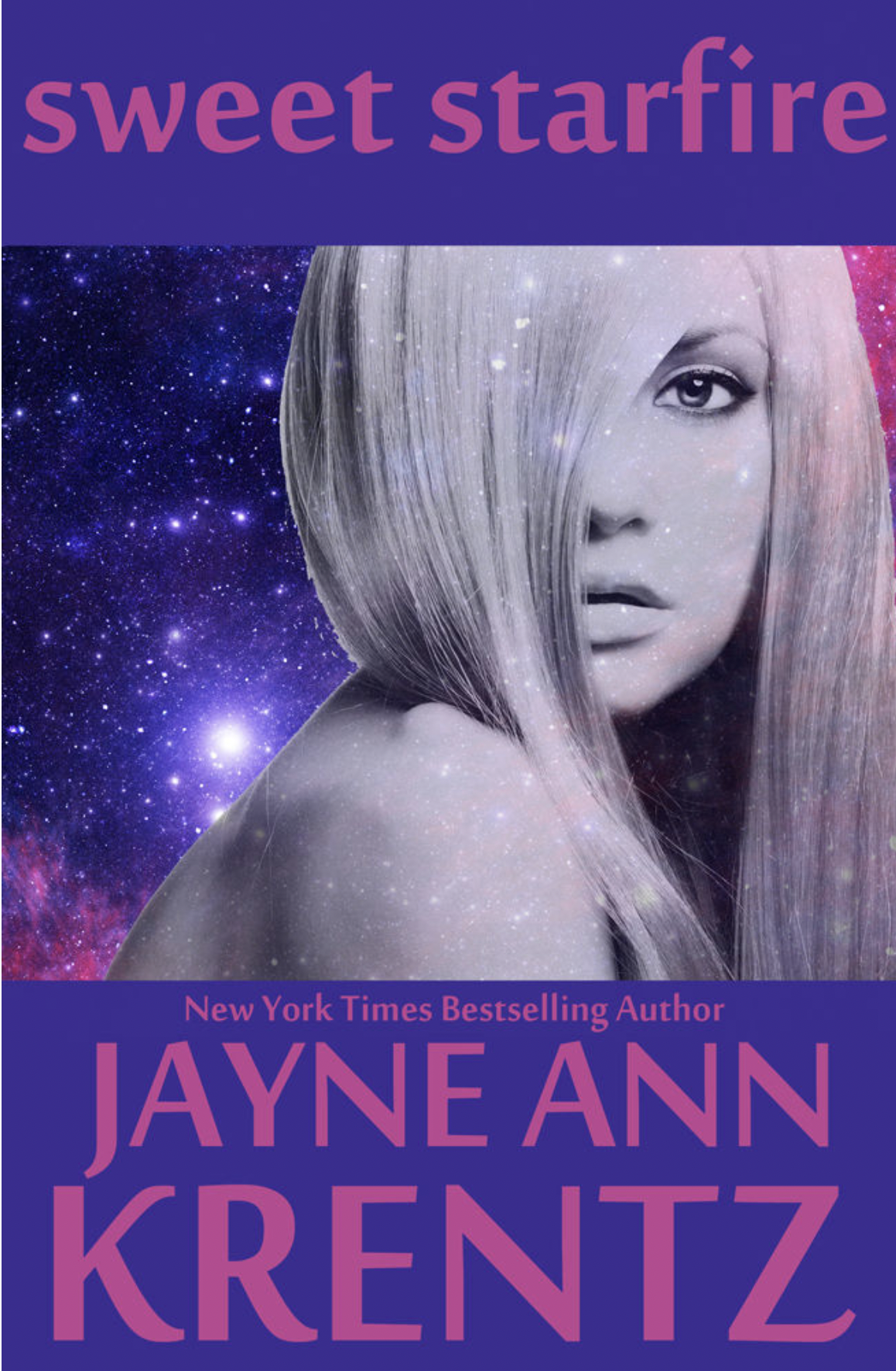


Jayne Ann Krentz 0:00 / #
The thing about genre, the reason it even exists at all, is because it's the device and the mechanism by which we send our values down to the next generation. It's the way we affirm them to ourselves throughout our life, and it's the way a culture keeps its culture intact. It's the myth of the core value of that civilization, whatever it may be, that is going to go down through history and it survives or it doesn't survive, and that's what genre does, it carries the myth.
Sarah MacLean 0:35 / #
That was the voice of Jayne Ann Krentz. I am so excited! (laughs)
Jennifer Prokop 0:42 / #
Jayne Ann Krentz has written, probably, hundreds of romance novels at this point. Her major pen names right now are Jayne Ann Krentz, under which she writes kind of contemporaries, Jayne Castle is where she kind of puts all of her kind of speculative fiction novels, and Amanda Quick is what she writes historicals under, but she has been around for a really long time. She's going to start off by talking about her many pen names, which also include Jayne Taylor, Jayne Bentley, Stephanie James and Amanda Glass.
Sarah MacLean 1:13 / #
Amazing. This conversation, I've had the absolute joy of, you know, sharing meals with Jayne Ann Krentz, and so she is, I knew she was going to be remarkable, but this conversation really, gosh, I felt better for it at the end. I felt smarter about romance at the end, and I felt motivated in a way that I haven't felt motivated in a long time.
Jennifer Prokop 1:13 / #
Yeah, absolutely. Welcome to Fated Mates, everyone. What you're about to hear is our conversation with Jayne Ann Krentz which we recorded last fall in 2021.
Sarah MacLean 1:52 / #
Thank you so much for coming on and making time to join us for this. We're really thrilled to have you! We are avowed Jayne Ann Krentz, Amanda Quick, Jayne Castle fans. Stephanie James fans here! (laughter)
Jayne Ann Krentz 2:09 / #
Wait, let's not name all the names, that just makes me feel like I've been around forever. (laughter) I will say that was never the plan at the start. That was not part, there was no plan to be honest, but if there are any aspiring writers out there, one piece of advice for your takeaway today is for crying out loud, do not use a bunch of different pseudonyms! (laughter)
Sarah MacLean 2:34 / #
Well wait, so let's talk about that, because why not? You have, how many were there? How many are there total?
Jayne Ann Krentz 2:43 / #
Too many and the reason was because back in the old days, a lot of the contracts tied up your name, and if you signed one of those contracts, which of course I did early on, because I just wanted to be published, and it was like no big deal. Everybody writes under a pen name. And then there were two pen names. Because once you leave that house, they've got the name. It stays behind. I don't, I doubt that that appears in modern contracts, I have not heard of that for a long time. But back at the start of the romance rush in publishing, that was not an uncommon feature in a contract. So that's how it started, but it got worse because at some point, I managed to kill off a couple of names including my own. And you do that by low sales, you know, bombed out sales, which we'll get to when we talk about what a fool I was to go into science fiction romance, but it was a good way to kill off your career that time and I did because I wrote under my Jayne Ann Krentz name. So when I destroyed that, I destroyed my contemporary career, and it was at that point that I had to really retrench and figure out how to restart and reinvent myself and that was when Amanda Quick came along. So Amanda Quick is a legitimately acquired pen name, I did that to myself. Jayne Castle happens to be my birth name. I managed to sign that away for awhile, and then Jayne Ann Krentz is my married name. So I'm just under those three now.
Jennifer Prokop 4:28 / #
Now it's just the three, right?
Jayne Ann Krentz 4:30 / #
Yup. (laughs)
Jennifer Prokop 4:32 / #
So I was just thinking, was this only in romance? Did this happen to mystery writers or other genres?
Jayne Ann Krentz 4:41 / #
I don't know, but I'm willing to bet that it was pretty common in the paperback side of the market.
Jennifer Prokop 4:45 / #
Yeah. Okay.
Jayne Ann Krentz 4:46 / #
I don't, yeah, I think it was just kind of a common thing. If you look back, a lot of writers who are writing mystery and suspense today acquired a pen name at some point along the way.
Sarah MacLean 4:57 / #
So I always wondered, you know, you and I have had a lot of conversations over the years, Jayne, about patriarchy and romance, and I always thought the pen names were because of the books, but I guess mystery and sci-fi writers also did the pen name thing.
Jayne Ann Krentz 5:14 / #
The thing about a pen name, if you can get, if the publisher can get that into the contract, all a writer has is her name, and if they tie that up, you're tied to the house. It was just hard business, hard business is what it was.
Jennifer Prokop 5:29 / #
Well and I remember is an early reader of romance in the '80s, when you finally figured out, "Wait, this person is this person?"
Sarah MacLean 5:38 / #
Oh, it would blow your mind!
Jennifer Prokop 5:39 / #
Yeah, because then you were like, "Wait, there's a whole new someone I can look for in the bookstore," or the used bookstore especially, right?
Sarah MacLean 5:47 / #
Wasn't there a Romantic Times, somebody published, every year there was a publication that was like an encyclopedia of the romance novelists and it would say the names, all the names that that particular person was writing under, which when I started, maybe I started 12 years ago, and that was the time when if you wrote in different genres, which I feel like is the Jayne Ann Krentz way, you write a different genre you start a different name, but yeah, now, it's far less common, I think.
Jennifer Prokop 6:17 / #
I think it's common now. I'll tell you how it's different. I think when people self-publish, they sometimes pick a different name, and I think if especially if the heat level is really different, right? So I've had author friends say, "Well I'm going to try my hand at maybe something more erotic, and you know, is this going to interrupt my brand?" So I feel like it's so much more in control of the author, as opposed to control of the house, so that's a big change.
Jayne Ann Krentz 6:47 / #
Yeah, I think that's very true now. This was the way it was just done in the old days, and the rules were different then.
Sarah MacLean 6:54 / #
Yeah, so let's go back before you were picking pen names. So tell us about, we love the journey, so tell us about the journey. How did you become a writer? And how did you become a romance writer specifically?
Jayne Ann Krentz 7:11 / #
You know I think I just, there was never a point along the way at which I felt I could write romance better than books I was reading. I loved the genre. I found the books, I didn't really find the genre in the way we, anywhere near what we would identify it as today, until I was in, after college, until I was in my '20s. And then that's when I stumbled into Harlequin. They were the only game in town and they weren't even in town. And that was, that did me fine for few, I don't know how long it was that when I was reading them intensely that, before I wanted to try writing one. And it wasn't that I thought I could do it better than the big names at the time, I just wanted to tell the story my way. Most of the stories I was reading, well all of them, looking back on it I think, were very much the British take on the fantasy. And that's a very specific and very tweaked different take than what most American readers respond to.
Sarah MacLean 8:16 / #
Well can you explain, can you talk about that? What does that mean?
Jayne Ann Krentz 8:20 / #
Okay, the quick and easy way to understand it, is that in the British romance, your heroine is marrying up. She's marrying the duke or some version thereof. In the American romance, it's much more of a partnership kind of approach to the romance, and what matters is the man's competence. It doesn't matter what he does, he just better be damned good at it, and that's what counts. So it's a different take. There's also more sass in the American romance, and that may come from our good old 1930s movies, you know, those screwball comedies, and the fast chatter-chatter back and forth from the the 1930s romantic, and often romantic suspense films. I don't know where it came from, but it's just, it was in the American romance almost from the get go. The voice is so different, and it's more of a conversational quick repartee. It actually isn't original with us. I mean that's what Georgette Heyer was doing, but it kind of fell away in the British romance that I was reading and came back big time in the American romance.
Sarah MacLean 9:35 / #
And so when you talk about this, the American romance, these books that you were reading, we're talking about categories, the early categories? Or are you talking about historicals from the '70s too?
Jayne Ann Krentz 9:47 / #
I didn't start reading - (laughs) confession time.
Sarah MacLean 9:51 / #
(laughs) Good! Let's do it.
Jayne Ann Krentz 9:53 / #
I never read historicals. I wanted the contemporary story. I wanted romantic suspense and that was to be found in a contemporary setting in those days. So I never was drawn to the historicals until I managed to kill off my Jayne Ann Krentz career and I had to reinvent myself as Amanda Quick, and then I was starting from scratch because I had no idea how those books worked.
Jayne Ann Krentz 10:18 / #
So, but I'm a librarian, so...
Sarah MacLean 10:21 / #
Okay, so were you a librarian when you were reading and writing?
Jayne Ann Krentz 10:25 / #
Yes.
Sarah MacLean 10:26 / #
And so tell us where you were, and you were?
Jayne Ann Krentz 10:31 / #
Well, probably the lowest point of my library career was one year I spent as a school librarian. That's a calling, not a career (laughs), and I was not called. And then spent the rest of my library career at Duke University Library, and then later, a couple of corporate libraries out West here.
Sarah MacLean 10:54 / #
We interviewed Beverly Jenkins for the series, and she, too, was a corporate librarian. So I feel like there are all these little connections.
Jayne Ann Krentz 11:02 / #
Yeah. Well, that was the most boring work, actually, the corporate work. I mean it was a job and I needed a job, but for me it was much more interesting to work with readers, scholars, students, you know, people who were actually after information, not just the latest drawing for that particular gadget that they got to dismantle. But that's just me. I just happen to like the public work better.
Jennifer Prokop 11:32 / #
Jayne, we read your book, Gentle Pirate, and the heroine was a corporate librarian, I think, right? Was that around the time that you had that job? I mean, this would have been like the very early '80s.
Jayne Ann Krentz 11:45 / #
That was the first book I wrote that sold.
Jennifer Prokop 11:47 / #
Okay.
Jayne Ann Krentz 11:49 / #
There was another book that came out, actually a few months earlier, but it was actually sold after Gentle Pirate. Gentle Pirate was sold into the beginning of the Ecstasy line. That was the line that...
Jennifer Prokop 12:03 / #
Vivian Stephens.
Jayne Ann Krentz 12:04 / #
Vivian Stephens founded, Vivian Stephens was, you know, she really turned the whole American romance industry, book publishing industry on its head. She just totally changed everything. If it hadn't been for her. I don't know how it would have developed, but she was a game changer, and because of her, a lot of what we now take as familiar voices in the genre got their start. It started with Vivian Stephens.
Sarah MacLean 12:32 / #
Yeah, it was that first class with Vivian was you and Sandra Kitt, and Sandra Brown and...
Jayne Ann Krentz 12:38 / #
Some other names that have come and gone that were big at the time...Barbara Delinsky. Yeah, but I was thinking of Amy Lauren.
Jennifer Prokop 12:49 / #
We read that one, too.
Jayne Ann Krentz 12:51 / #
She was Book One, in that line, yeah.
Sarah MacLean 12:55 / #
So you were writing, so you sat down, you put pen to paper. Did you have people who were encouraging you? Was it a secret?
Jayne Ann Krentz 13:03 / #
(laughs) Of course it's a secret.
Sarah MacLean 13:04 / #
Of course it's secret! (laughs)
Jayne Ann Krentz 13:05 / #
You're not going to tell anybody you're trying to write a book until you've actually...
Sarah MacLean 13:11 / #
I don't know. I told everyone. (laughs)
Jayne Ann Krentz 13:17 / #
Back in my day it was not something you said anything, you just, the closest you would have gotten. and I tried a couple times and it was disastrous, was to attend a writers group, a local writers group, but I wasn't really welcome there, because I was really flat out trying to write genre fiction. And romance at the time, was of all the genres, the least of them in terms of respect, and everybody else was trying to write a memoir.
Sarah MacLean 13:44 / #
Still, that's still the case. Everyone in the writing group is writing a memoir. (laughs)
Jayne Ann Krentz 13:50 / #
And I didn't see that as very helpful. What changed that landscape, the business landscape, so that I stopped signing stupid contracts that tied up my name was, again, Vivian Stephens, because she was the one that got us all together for the first Romance Writers of America meeting. And that changed everything for all of us in terms of finally being able to learn about the business.
Jayne Ann Krentz 14:16 / #
Because I'll tell you, the publishers did not want you to know about how it worked. We couldn't read contracts. I mean, it's just this gobbledygook. They still are but now, at least, you've got an agent, usually to help you, or you can get a lawyer to help.
Sarah MacLean 14:29 / #
Right, well, this is important. So you didn't have an agent in these early days selling Harlequins?
Jayne Ann Krentz 14:37 / #
I did eventually but not at the very...
Sarah MacLean 14:38 / #
But most people didn't. They just sort of packed up their manuscript and shipped it off?
Jayne Ann Krentz 14:43 / #
I take it back. I had an agent for the first couple of books and she really ripped me off. So I like to forget that, it was not a good experience. And after that I went solo because I didn't trust agents for a while. So I didn't calm down about agents until RWA. The first meeting of RWA when the agent showed up and you could talk to one and, you know, that's how I met my current agent Steven Axelrod. So...
Sarah MacLean 15:09 / #
Who is an agent for many, many, many of the big names of the genre.
Jayne Ann Krentz 15:14 / #
He was at the time because he was one of the few agents who took the genre seriously and saw that it was going to go big once the US publishers got into the business.
Jayne Ann Krentz 15:27 / #
And so he, he just jumped in early. It was timing, good timing on his part.
Jennifer Prokop 15:32 / #
So going back to these first books you wrote, Gentle Pirate you wrote first? Or did you have things in the drawer that didn't sell? What was that sort of journey to actually getting a contract or actually selling those first books? Where did those stories come from?
Jayne Ann Krentz 15:50 / #
Well, the very first book I wanted to write was actually what we would call futuristic romance, and I wrote a futuristic romance. And tip number two, for any authors out there, it does not pay to be too far ahead of the curve.
Jennifer Prokop 16:07 / #
Yeah, not in genre.
Jayne Ann Krentz 16:09 / #
Yeah, you've got to hit the wave just right to make it work. But, um, but that didn't sell. And then what I was actually reading was contemporary romance, because that's all there was. The reason, to backtrack, the reason I actually wrote the first futuristic romance and had hopes of selling it was because I came across, I was on a student cheap ass tour of Europe, and somewhere on some sidewalk, one of those book kiosks, had some American novels and I was out of stuff to read. And the book that changed my life was on that kiosk, and it was Anne McCaffrey's Restoree.
Jayne Ann Krentz 16:11 / #
Which was, yes, futuristic romance. And I don't think it did her career any good either, because she never wrote another. She moved on to dragons.
Jennifer Prokop 17:05 / #
To great success, right? To great success.
Sarah MacLean 17:07 / #
I mean, who didn't love a dragon.
Jayne Ann Krentz 17:09 / #
But she wrote a really, what we would call today is, you know, straight up what I'm doing with Harmony, and the Jayne Castle name, very much. So that was the life changing thing about that. But after that realized that I couldn't really make a living on the futuristic books, but the thing I was actually reading was contemporary. And that's what I backed off and plunged into.
Sarah MacLean 17:32 / #
So, then walk us through...I have lots of questions. So you're there with Vivian Stephens, and you're the first book, Stephanie James has the first book in one of the lines, right? You have one of the number ones, correct? Or am I making that up?
Jayne Ann Krentz 17:48 / #
I can't remember.
Sarah MacLean 17:49 / #
I might be making that up, but I'm pretty sure you're number one somewhere. So you're writing categories, and you're how many, I mean, this is one of the things that I love about people who were writing categories. How many books? How many publishers are you working for? How many books are you writing a year? What's this look like?
Jayne Ann Krentz 18:07 / #
Well, keep in mind the books are a little shorter than what we think of as a full-length paperback novel. They were probably about 68,000 words. They weren't novellas by any means.
Jayne Ann Krentz 18:18 / #
They were not as long as a full length novel. So and the other thing factored into it, is that you couldn't make a living unless you did three or four year. I mean, if you're trying to make a living at it, you're gonna, and you couldn't build a brand.
Sarah MacLean 18:33 / #
Right. You have to feed the beast. That's what we've been talking about so much. And then at what point do you think to yourself, alright, well maybe, does single title, the bigger books come later?
Jayne Ann Krentz 18:47 / #
Well, there was no market for single title except historicals.
Jayne Ann Krentz 18:51 / #
And I had resisted writing those because I didn't read them, with the exception of Georgette Heyer, which I had read those long in my teenage years, and I didn't think they were modern romances.
Sarah MacLean 19:01 / #
Sure. Well, and they're not, right. They don't have sex in them. They're not quite the same as the modern romance.
Jayne Ann Krentz 19:07 / #
No, not at all. So then after I was a success in category, category, as the publishers were starting to do one-offs. They were starting to experiment with the single title, and they wouldn't let me do it because I was not quite ready.
Sarah MacLean 19:26 / #
Oh, those words, that you're not ready. You hear that all the time from people because there was this idea, would you explain to everybody kind of how the system worked?
Jayne Ann Krentz 19:35 / #
I think the editors didn't have a sense of what really worked in the books with the exception of people like Vivian Stephens. But most of the editors I worked with were not real fans of the genre. They didn't read the books, it was a job and they did it as much as possible by the numbers, because they didn't know, they didn't react to the books themselves. I think that limits your vision of, and then they read outside the genre, and it wasn't romance. So they had a vision of what books outside the genre was and it wasn't romance. So they were probably, in hindsight, were looking for something more along the lines of what we would call women's fiction. You know, big, big book, women's fiction.
Sarah MacLean 20:18 / #
To kind of break you out of romance? The idea was eventually you would be "good enough" and I'm using air quotes for everyone, to get out of romance.
Jayne Ann Krentz 20:27 / #
Yeah, but I didn't want to get out of it. I wanted to write romance.
Sarah MacLean 20:29 / #
Thank you for that.
Jennifer Prokop 20:32 / #
Yeah, thanks.
Jayne Ann Krentz 20:34 / #
And then what happened was, it was a publisher. It was Simon and Schuster, Irwyn Applebaum. He was a publisher at Simon and Schuster. What was the name? What was the imprint?
Sarah MacLean 20:50 / #
Are you talking about Pocket?
Jayne Ann Krentz 20:52 / #
Yeah, Pocket books. Yeah, yeah. He took the first risk of publishing romance writers in big book format and in hardcover, and they just went through the roof. And so he really, eventually, I was published by him, but back at the start I didn't have that good luck. But he's the one that I think, in hindsight, really opened up that market and basically proved to New York publishing that, yes, these women readers will pay full price for a novel.
Sarah MacLean 21:27 / #
So what is your first single title? At what point do you make that switch?
Jayne Ann Krentz 21:33 / #
Well, I guess the first single title will be the one, the science fiction that failed.
Sarah MacLean 21:36 / #
Right. So I'm going to hold it up. This, Sweet Starfire, this is what we're talking about. This is, I'm sure you know about this, The Romance Novel in English which is a catalogue from Rebecca Romney. She's put together a collection of first editions and important works from the genre. She's a rare books dealer, and we're obsessed, Jen and I are obsessed with this.
Jennifer Prokop 21:55 / #
Yes, we are.
Sarah MacLean 21:57 / #
So Sweet Starfire is, I mean, it's not the first time anybody's ever written science fiction in romance, but this is it, right? This, this feels like a moment.
Jayne Ann Krentz 22:08 / #
I think because it was it was a true romance, in the American style. It had everything that the contemporaries had, just a different backdrop.
Jayne Ann Krentz 22:20 / #
And what that brought to the plate was you could do different kinds of plots. You could open up the plots.
Sarah MacLean 22:27 / #
Well, the argument being that Sweet Starfire opens the door to paranormal, as we know it, right?
Jennifer Prokop 22:34 / #
Well done.
Sarah MacLean 22:35 / #
I mean, which is a thing, it's major! There, and, you know, maybe we would have gotten there probably to vampires and everything else, but we got there, I think more quickly, because of you. So it's my podcast, so I get to say it. (laughter)
Jayne Ann Krentz 22:51 / #
I've always divided what's, okay, what Sweet Starfire had and what all my science fiction has is a very psychic vibe.
Sarah MacLean 23:00 / #
Mm hmm.
Jayne Ann Krentz 23:01 / #
And I have always drawn a very bright line between the psychic and the supernatural. So when you say paranormal, I tend to think of the supernatural, I tend to shapeshifters and vampires and witches, which I love to read, but I can't write. They're not, they don't fit my core story. So I've always thought of it as a separate area, and then there's the psychic romance or whatever you want to call it.
Jennifer Prokop 23:27 / #
Which you're still, I mean, those are still the Fogg Lake trilogy, which the, is it the third one comes out in January?
Jayne Ann Krentz 23:36 / #
I just want to take a moment here to say to anybody in the audience, this proves I can finish a trilogy.
Jennifer Prokop 23:42 / #
Well done. But that, it is psychic. It's you know essentially, everybody, the conceit is a fog goes over this town from a mysterious governmental entity and a whole towns full of people develop sort of psychic powers. And then it's like the next generation and the fallout. So it's interesting to hear you draw that line all the way back to books you're writing in the '80s.
Jayne Ann Krentz 24:10 / #
Yeah, I've always felt that difference, but I don't know that readers see it. It's just as a writer, I'm aware of it. But I think the reason I've been attracted to the psychic vibe from the very beginning, is because for me, it enhances the relationship. It gives that extra level of knowing between two people, and connection and bond. And it gives me other plots to play with. It gives me a little outside the box plot sort of thing, I think. But I also think it has a, it works because it's just one step beyond intuition, and most people can get into intuition. Most people believe in intuition. So asking them to take the psychic thing is just that one step beyond, whereas they may not be able to do the vampire thing or the supernatural thing, that may be a step too far for a lot of readers. But I think a lot of readers are fine with the psychic vibe, because everybody thinks they've got one.
Jennifer Prokop 25:10 / #
Right. Fair.
Sarah MacLean 25:12 / #
Wait, I want to go back to it doesn't fit my core story. So you might be the first person who ever explained core story to me, at a lunch at RWA, which I'm sure you do not remember. But I want you to talk about what core story is for, I mean, for everyone, but also, let's talk about yours. Because you seem to know very clearly what your core story is.
Jayne Ann Krentz 25:39 / #
I think I'm pretty familiar with it, because I had to understand it at that earlier point, when I killed off my science fiction career and had to reinvent myself as Amanda Quick, and I had never written a historical. So what I did was, I looked at that science fiction book, the last science fiction book, which was Shield's Lady. And I stepped back and I said, you know, duh, if you take out the rocket ships, and the funny animals and the other planet stuff, what you're really looking at here is a marriage of convenience. And then I thought, well dang, I know where those fit. So, so it was understanding a marriage of convenience, built on mutual trust, is what led me down the road to historicals. And then I realized it's what I always do. And I think it's important for writers to have a sense of their core story. And if you know your core story, you can sum it up in two or three words max. That's how elemental it is, because it has nothing to do with backgrounds, it has nothing to do with plots, it has nothing to do with the eras that you're writing in, it's all about the emotions you're working with, and the conflicts that you're working with. My core story is always founded somewhere on trust. And that's, like, I can write forever about it, because that's pulled from the inside. It's just a deep, deep thing that I am always curious about, interested in, everybody gets violated at one point or another, has their trust violated, everybody's been through that experience. Everybody has taken the risk of trust. You have to do it daily, basically. So it's a risk we're all familiar with, um, and it can wreck a life or it can change a life. And to me, that's all I need. That's just plenty to work with. So I think once you find the conflicts and the emotions that you love to work with, you're going to be able to explore, that's your universe, is what it comes down to. That is your universe, and you're going to write in every corner of that universe, some corner, every corner, for the rest of your career. I think. (laughs) That's my theory and I'm sticking to it.
Sarah MacLean 28:00 / #
I think it's a great theory. And it also makes so much sense that you weren't interested in leaving romance, because trust and love go hand in hand so well, that it makes sense. So when you, I want to get to Amanda Quick, the choice to do the Amanda Quick switch. So you say you've killed off your science fiction career. You're not writing contemporary single titles at this point. Is that because they don't exist generally, or you're just not?
Jayne Ann Krentz 28:31 / #
You know I don't think so. I think they were all historical.
Sarah MacLean 28:33 / #
Still at this point.
Jayne Ann Krentz 28:35 / #
Yeah.
Sarah MacLean 28:35 / #
Okay, and so you decide, because this is the late '80s?
Jayne Ann Krentz 28:40 / #
Yeah.
Jennifer Prokop 28:40 / #
Yeah, it feels like the only person I could think of who might have been writing an occasional single title...who wrote Perfect?
Sarah MacLean 28:45 / #
Contemporary.
Jennifer Prokop 28:50 / #
Yeah, contemporary. It was Perfect and...
Sarah MacLean 28:52 / #
McNaught.
Jennifer Prokop 28:50 / #
Yeah, Mcnaught had a couple. And there were a couple...
Sarah MacLean 28:58 / #
But that's a different angle into it, right, because McNaught was writing those big epic historicals and then, so the idea of her being asked to cut 100,000 words out of her books to write category is, I mean, she just wouldn't.
Jennifer Prokop 29:12 / #
Sure. Not going to happen.
Sarah MacLean 29:13 / #
I think Judith McNaught's amazing, but I doubt she'd be very quick to be like, "Yeah, I can write it in a third of the words." So you, at what point do you know you've killed your career?
Jayne Ann Krentz 29:27 / #
The same way you always know it. I couldn't get another contract with that publisher.
Jayne Ann Krentz 29:31 / #
When they stop giving you contracts, that's a pretty big sign.
Sarah MacLean 29:34 / #
Pretty good sign.
Jayne Ann Krentz 29:37 / #
And that's when an agent really earns their keep, in a sense, because it was my agent who sold me as, I had to come up with a proposal he could work with, and it was the Amanda Quick proposal, for my first Amanda Quick book. And he just did a dang good job selling it to Bantam Books at the time, and he sold them without telling who it was.
Sarah MacLean 30:02 / #
That is a story you hear all the time.
Jennifer Prokop 30:05 / #
Yeah.
Jayne Ann Krentz 30:07 / #
And then once they committed to the book, then he could say, "Well, that's Jayne. Yeah, that's Jayne." So, but that's, that's, you know, he did a miraculous job of resurrecting my career at that point.
Sarah MacLean 30:20 / #
Not just resurrecting your career, I mean, suddenly, Amanda Quick, you know, is everywhere. Amanda Quick is one of, Jen and I both...
Jennifer Prokop 30:29 / #
Oh, yeah.
Sarah MacLean 30:30 / #
This is one of the names that we came to romance with.
Jayne Ann Krentz 30:34 / #
I think, I think what I just realized too late, probably should have realized earlier, was that the Regency, which is where I started, it is the perfect background for my voice, and it works just like the '30s is working now for that voice. It's a very similar kind of voice or of conversation and dialogue, just suits my style. Both eras suit my style.
Jennifer Prokop 30:59 / #
So as a writer, you're choosing to do something that's really out of your comfort zone, it sounds like. So how was that experience for you? Was it generative? Did you find yourself really? Or was it always like a I would love to get back to my roots? How did that, how did it go for you?
Jayne Ann Krentz 31:19 / #
Well I hadn't been there, so there was no roots to go back to, except the realization that the story I was telling fit that Regency in the way that the old Georgette Heyer had, that I kind of, that's what I clung to. What I worried most about because I was, am, are a librarian, was the research. And that was, to tell you the truth, is the reason I hadn't gone into the historicals in the first place. I had majored in history. I knew how complicated it was, but the lesson I learned very fast, was that when you write, when you write genre, you are writing not the real history, but you're writing the myth. And the myth of the Regency was already there because Georgette Heyer had created it so I just wrote on that.
Sarah MacLean 32:12 / #
So one of the things, when we read Ravished on Fated Mates, we did a deep dive episode on the book, and you know, we love it. And one of the things that we talked about was how, you didn't invent the bluestocking, obviously, Heyer was there before you but there is a difference. Amanda Quick comes on the scene, and suddenly it's like a door opens on historicals. And I'm wondering if you, does that, I mean, first of all, do you think that that's a good read on what was going on? Because it feels like prior to that, you know, you had all of the big, you know, the four J's and you had kind of other historicals that were doing a kind of different thing. And then in comes the Amanda Quick historical with the smart, you know, savvy heroine, the bluestocking, the hero who is her true partner from the start. I mean, going back to your core story now that you've said that, of course, right.
Jennifer Prokop 33:15 / #
Of course. Exactly. That's how I felt too.
Sarah MacLean 33:16 / #
But at the same, and so I, you know, I reread all of your pieces in Dangerous Men and Adventurous Women in preparation for this conversation, and we'll get there. But one of the things that you talk about is this idea of the hero as both hero and villain. He plays both roles. And I think that is really true prior to you in historicals, but he doesn't become the hero until much later in those earlier historicals, versus, you know, when you think about the hero of Ravished, he's a decent dude from the jump. And I think that is really, it feels like a Jayne Ann Krentz or an Amanda Quick Regency suddenly was doing a little bit of a different thing. Was that intentional? Or was it you were just doing the different thing?
Jayne Ann Krentz 33:19 / #
It was just intuitive.
Jayne Ann Krentz 33:26 / #
Because that's, that's the kind of character I'd always written. If you read my books from the beginning, my heroes haven't changed much over the years. You know, pretty much my heroes, they do what they do, and that they're infused with my core values in what I think works in the hero and same with the heroines. And I think if you respond to my books or any author's books, it's because, you're not responding so much to the story, the plot, the characters, you're responding to the core values infused into the primary characters. And if and if you respond to those values, you're probably going to go back to those books, that author again and again. If you don't respond to him, it's a boring book, and I think that's how it works. So if you read my books, it's probably because you got my sense of humor. And you have the same, you share a lot of the same core values. The thing about genre, the reason it even exists at all, is because it's the device and the mechanism by which we send our values down to the next generation. It's the way we affirm them to ourselves throughout our life. And it's the way a culture keeps its culture intact. It's the myth of the core value of that civilization, whatever it may be, that is going to go down through history, and it survives or it doesn't survive. And that's, that's what genre does, it carries the myth.
Jennifer Prokop 35:40 / #
I love that.
Jayne Ann Krentz 35:42 / #
That's my theory.
Jennifer Prokop 35:46 / #
That I think is really true. And when I think about myself as a romance reader for 40 years, or however long it's been. It's not that quite that long. I feel like I really do see that, like those arcs. But at the same time, I feel like there's so many ways I can talk about how romance has changed. So for you, what are the things, like they're still the big things that are the same? What are the things that have changed in romance, do you think?
Jayne Ann Krentz 36:15 / #
Those dang cell phones. (laughter) You laugh, but I'm telling you. I know, I know what you mean. And one of the tricks to success in this business is trying not to tie your story down to a particular era, unless you're really telling that era's story. I mean, if, you know, when you do the 1930s, you do the 1930s. But, but if you want the books to have a long life, it's best not to put in any gadgets or...
Sarah MacLean 36:48 / #
Celebrity names.
Jayne Ann Krentz 36:50 / #
Celebrity names, politician's names, history, local ongoing history. Keep it, the more you limit it to the myth and the mythical side of the story, the longer that story is going to survive. But that's, that's a whole other issue here. Clearly, the surface changes all the time. And that's just true of any genre. But the underlying power of the genre that you love to read, whatever that genre is, doesn't change very much. And so I'm still writing relationships that have to overcome the hurdle of trust, and it's not going to change. You know, that has nothing to do with politics or history or social problems. I think the more you deal in social problems, the more you move away from genre, in a sense, because you're dealing with the superficial again, you're back to what's current now, but 20 years from now, that won't be an issue. Some things will be issues, because they're they're universal things. I'm thinking now about women's voting, getting the right to vote. It's an interesting historical detail, and it's an important historical detail. And you can tell stories around it, because the Suffragette movement was so important, but it is, it's a different take. It's, I think what happens when you do that is like, it's like, okay, it's clear to see it set in, in a war. Any book you write set in World War Two, no matter what you do, the war is going to be the primary character. Nothing. In the end, there will be sacrifices, and everything will be sacrificed to doing the right thing in the war. Because that's the other thing that genre does, which is call upon its characters at one point or another, to do the right thing. And we have a sense of, a sense of what a real hero does when the chips are down. We have a sense of what a heroine is supposed to do when push comes to shove, and they do the right thing. That's how, that's, that's all that matters. And that works big time if you're setting the story against an overwhelming backdrop like a world war. It's Casablanca. You never see, you never see any fighting or shooting. It was one gun but you know what I mean.
Sarah MacLean 39:21 / #
War is everything.
Jayne Ann Krentz 39:23 / #
Right. Everybody sacrifices for the war effort. And it's just, I'll never write that story because it's not mine. That does not fit. It doesn't come back to the trust between two people that I want to write about. I can admire it, you know, it's not that, but it's not my story.
Sarah MacLean 39:40 / #
As you're writing, in your career, you know, you've spanned, you know, you started with categories, you've written single titles, you've written sci-fi, you've written historicals, you've written, you write contemporaries now, still. At what point in this journey are you thinking, "Oh my gosh, romance is a big deal. I mean, it's really, there are millions and millions of women out there who are reading these books, largely women."
Jayne Ann Krentz 40:09 / #
Guess when the big checks started coming. (laughter) You know, once the American publishers got into the market, it became a big business really fast, because that's just how the American market works. If it works, it explodes. You know what I mean?
Sarah MacLean 40:22 / #
Everyone's throwing books out all the time.
Jayne Ann Krentz 40:25 / #
You can clutter up the market in a hurry, you know, but that's kind of a normal process. And yeah, I just think that the process of becoming a big business happened really quickly, and simultaneously, or concomitantly, or whatever, right along with it, came the foundation of Romance Writers of America, which gave the romance writer access to information about the business. So we grew up with it, in a sense, that first generation of romance, American romance writers grew up learning fast.
Sarah MacLean 41:03 / #
Because at the time Romance Writers of America was about the business, right? It was about professional writers coming together to share, to information share.
Jayne Ann Krentz 41:12 / #
It was networking.
Jayne Ann Krentz 41:14 / #
We didn't, we didn't have that word for it, but that's what it was. And a lot of the friends I have today, I made back in those early days of networking.
Sarah MacLean 41:21 / #
So talk about that. What was this community like? Who were they? What were you getting from them? How are you interacting?
Jayne Ann Krentz 41:30 / #
Back at the beginning, only published writers were in the group. It later opened up to unpublished writers, but back at the time, we all had the same interests because we were all published, we're all dealing with publishers, we're all dealing with contracts, we're all trying to find agents, you know, that there was a lot of business to discuss, and the other organization, Novelists, Inc., also came along about that time. And gradually, I think people realized that romance writers had a lot of, all the same concerns and interests as the writers in the other genres. So there was some cross networking there too. It wasn't always comfortable, but you knew that there were other writers groups out there that had the same issues and and you could learn from them. So I just think it was the networking thing that today happens online. So it isn't maybe so necessary to have the organizations that, that we just didn't have that online option. I didn't know any other published writers until I went to that first meeting of the RWA, the very first RWA.
Sarah MacLean 42:38 / #
Yeah. Who is the group of people who keep you going?
Jayne Ann Krentz 42:43 / #
Well, Susan Elizabeth Phillips. Kristen Hannah. A lot of it is, are friends I know here, like Debbie Macomber, because we have a lot of us happen to end up in the Pacific Northwest. Christina Dodd. More newer friends who've come along right now, for example, Rachel Grant, who is doing a really interesting, modern, very modern version of the heroine who is an archaeologist, and it's kind of the new Amelia Peabody, but except very modern. And Darcy Burke.
Sarah MacLean 43:18 / #
Were there editors who you feel were essential to the growth, your growth as a writer?
Jayne Ann Krentz 43:26 / #
Yes, and to the genre, because I said back at the beginning, a lot of the editors were not people who actually loved the genre. For a lot of editors, it was a starting point in their careers, which they hoped to move on to other kinds of books, I suppose. But years ago, it's been a few decades now, I can't remember when, editors started coming into the genre, who like Vivian Stephens just loved the books, just have a gut way to buy the books, they can buy them by intuition, because they read the books, they knew how they worked. So editors like Leslie Gelbman, and my editor today, Cindy Hwang, who pretty much invented the whole paranormal publishing industry.
Sarah MacLean 44:14 / #
We should say Leslie Gelbman also edits Nora Roberts. So you've you've probably read something by Leslie Gelbman's authors before.
Jayne Ann Krentz 44:23 / #
And those editors, and they have in turn mentored a group of younger editors coming up, and they choose their people now. They choose their editorial staff knowing that they need writers, they need authors, they need these editors to bring in authors who will work long term, and that takes an editorial eye that loves the basic story.
Sarah MacLean 44:50 / #
Right. So there's this, it feels like there's this editorial mindset of building a career, of buying an author and shepherding. them through the journey.
Jayne Ann Krentz 45:01 / #
Yeah. Yeah. It won't probably last a lifetime, but their careers and the writer's careers in that kind of publishing are very intertwined. There is no getting around it. On the other side of the coin is the self-publishing, the indie published authors, who don't have that kind of connection, and it's a very different publishing world for them. It's an interesting, it's an interesting thing that's happened in the industry, because I think between the two, the writers finding editors who love the books, and the independent writers who don't need gatekeepers, which basically New York editing is a gatekeeping job. And agents are gatekeepers too. But the indie crowd doesn't have to worry about gatekeepers. So between those two groups, they kind of have revolutionized the whole romance genre, in that they have allowed an almost unlimited variety of experiments. And that has kept the genre, keeps it fresh, it keeps reinventing itself because it keeps going new places. Some of the other genres can't say that. They're much more hidebound, much more rigid, in what's acceptable. If you put a vampire cop into a traditional murder mystery, it's not gonna sell. They don't want vampires in there. They know what they want in their murder mysteries and it ain't vampires, but a romance reader will look at it. She may not like that book, but she'll give that story a chance. So the readers were inclined to be experimental too. They'll try something new. And that's, that's just been an amazing thing for the whole genre, because it keeps churning, it keeps changing. It keeps adding and experimenting, and one of the reasons we were able to do that, even in the early days, was because nobody cared enough about romance to make any rules.
Jayne Ann Krentz 47:08 / #
We skated under the radar, and it was very useful for those of us who didn't know there were rules. It's like, "Oh, okay." (laughs)
Sarah MacLean 47:16 / #
So let's talk about this, Dangerous Men and Adventurous Women, because I would like to hear the story of how this came to be in 1992.
Jayne Ann Krentz 47:30 / #
I think at that point in my career, I was very successful. I knew a lot of other successful writers. And as the saying goes, we didn't get any respect. And it wasn't that I wanted people to love my books. I understood, I don't read a lot of other people's books too, you know. I have no problem that you don't want to read the books, but the criticism was not proper criticism. It was not literary criticism. It was blowing off not just the the writers, but the readers, and the implication was, they're not well educated. They don't have a lot of money. They're, it just wrote everybody off from from the consumer through the writer.
Sarah MacLean 48:10 / #
And are you talking about specifically academics at this point? Or because there's a very famous late '80s study that came out about romance readers that presents them in this way?
Jennifer Prokop 48:22 / #
Is this Radway?
Sarah MacLean 48:24 / #
The Radway.
Jayne Ann Krentz 48:25 / #
No, I read the book and it's, okay, one of the things I learned about going into academic publishing, which I did one time and we will never do it again (laughter), is that you are expected to take a, what would be the right word, of philosophical slant, and then bring in the proof that shows that your take on it is correct. I've always felt that didn't really, wasn't very helpful, because you can make anything look right, if you bring in the evidence that you want to bring. (laughter)
Jayne Ann Krentz 49:01 / #
Yeah, so I didn't, I didn't, and that was what passed for serious academic criticism. That was nothing compared to the jokes in the newspapers on Valentine's Day.
Sarah MacLean 49:11 / #
Sure. I mean, which still persist.
Jennifer Prokop 49:13 / #
Yeah.
Jayne Ann Krentz 49:14 / #
No, it ranged across the whole scale. So at that point, I was still in my feisty mode, I guess. (laughter)
Sarah MacLean 49:22 / #
I love it.
Jennifer Prokop 49:23 / #
We're still in our feisty mode, so pass the baton right over. (laughter)
Jayne Ann Krentz 49:28 / #
Just go. Run with it. Run with it. But I had been in the business long enough to know that there was one editor out there who straddled both the academic and the genre, and that was Patricia Reynolds Smith. I had met her while she was working for Harlequin. And then eventually she moved into academic, she went back to her roots, which was academic publishing, and was with the University of Pennsylvania Press. So I called her up, and I told her what I had in mind, and I said, "Where would I take a book like this?" And she said, "Right here."
Sarah MacLean 49:29 / #
Terrific.
Jayne Ann Krentz 49:29 / #
So she really is the one I give full credit to for that book, because she knew how to organize it so that it looked academic, so that it was acceptable to an academic reader, and that it met their standards, as well as told our side of the story.
Sarah MacLean 50:25 / #
And it's interesting, because at the beginning of this book, the first line of this book is, "Few people realize how much courage it takes for a woman to open a romance novel on an airplane." And it felt, I mean, I read that again, you know, this week, and it just felt like a shot to the heart because it, I mean, we've all been there, right?
Jennifer Prokop 50:44 / #
And people still feel this way, right? And this 30 years later.
Jayne Ann Krentz 50:49 / #
Why do you think romance readers were early adopters of ebooks? (laughter)
Jennifer Prokop 50:53 / #
Exactly. None of your business, right? None of your business.
Jayne Ann Krentz 50:57 / #
Yup.
Sarah MacLean 50:57 / #
But the idea, this kind of transformational idea of turning the text around and saying you're missing the point. This is for the reader. This is about these women, these, largely, women who are experiencing these books, the mythology of these books, the power of these books themselves, privately, had to have been kind of earth shattering for academics, because that's not what they were talking about in those other books, which I also have read.
Jayne Ann Krentz 51:27 / #
Interestingly enough, we have several warmly received reviews from female academics. The harshest critics for that book that I recall, were male.
Jayne Ann Krentz 51:41 / #
And they just didn't get it. It just, even with all our careful explaining, (laughter) apparently we didn't explain it to a lot of men very well, but most of the women I talked to afterward got it.
Sarah MacLean 51:57 / #
Yeah. So you get to, you send out an email, or well, you don't send out an email. (laughter) Wait, how do you get all these people?
Jennifer Prokop 52:08 / #
Exactly!
Sarah MacLean 52:08 / #
Oh my god, what is happening? (laughing)
Jennifer Prokop 52:10 / #
You don't text your friends?
Jayne Ann Krentz 52:13 / #
This, this is that thing called the telephone.
Jayne Ann Krentz 52:16 / #
You dial it.
Jennifer Prokop 52:19 / #
I remember now.
Sarah MacLean 52:20 / #
So you start picking up the phone and calling you know, the biggest names in the genre. Elizabeth Lowell is in here, Mary Jo Putney. Susan Elizabeth Phillips.
Jennifer Prokop 52:28 / #
Sandra Brown.
Sarah MacLean 52:29 / #
Sandra Brown. Stella Cameron. And you say what?
Jayne Ann Krentz 52:34 / #
I tried to explain what I was trying to do. But I've never been the best proposal writer. In terms of explaining, I can write a proposal, but pitching it verbally has always been hard for me. But I, after talking to Pat Smith, the editor, I had a sense of how how to phrase what I was asking for, which is I'm not going to give you a topic. I just want you to tell me what you think makes the books work. What is the appeal of the romance? And 19 authors came back with 19 different essays, that all went together very nicely. It just, they just worked across the spectrum. And that book is still in the libraries today, academic libraries today. And then that was what sort of Pat Smith told me going in, she said, after I was exhausted, because this took a year out of my life.
Jayne Ann Krentz 53:27 / #
You try herding 19 authors! (laughs)
Jennifer Prokop 53:29 / #
Yeah, right. Before email.
Sarah MacLean 53:32 / #
Before email. (laughter)
Jayne Ann Krentz 53:35 / #
And then having to be the one to pass along the edits .
Sarah MacLean 53:39 / #
The notes! How dare you! (laughs)
Jayne Ann Krentz 53:45 / #
Without losing any friendships in the process? You know, it was, but everybody came through and everybody was very gracious about it. So it was an interesting experience all the way around. But she said, "The one thing about this book is that it'll still be around 20 years from now."
Sarah MacLean 54:03 / #
And it is. I mean, it was, I mean, it's been on my shelf since the very beginning of my career. So...
Jayne Ann Krentz 54:09 / #
Thank you.
Sarah MacLean 54:10 / #
I'm really grateful for it. So we talked a lot about what your core story is and what makes a Jayne Ann Krentz novel. I wonder if we could talk about your readers? Do you, I mean, one of the things that really struck me in Dangerous Men and Adventurous Women in your introduction, as I said, was centering the reader. And you're, you have this conversation in the introduction where you talk about reader service. And I wonder, we all know, of course, as readers and writers of the genre that readers are really drawn to romance and it's a very different kind of relationship that writers have with romance readers. Do you have any moments that stick out from across your career of times when you've heard from readers or really understood the power of the genre with them?
Jayne Ann Krentz 55:02 / #
I think the thing that surprises me the most, and other writers I know have the same reaction, is how often a reader will take the time to let you know that your book got them through a tough time. And I think it speaks to the underlying communication of the emotional core of those stories. When you are sitting by a bedside of somebody who isn't doing well, you want you want to read something that is speaking to your heart, and speaking to your emotional core, and affirming your own deep core values. And romance does that for women. It does it for men too, I think, but we haven't really gone there, you know, acknowledge this. I am, I'm always surprised at how many male readers romance writers pick up along the way. That they do respond to the books, and often it's the wife buying the book. And then he reads it at home kind of thing. It's an interesting play. I remember asking one male reader who came through an autograph line, he was really, really into the books that he was buying, and he was very excited. And I asked him what it was he, what spoke to him in the stories and he said, and his son was with him, and he said, "My father just came back from the war." This was, he was a Vietnam vet. And the vet said, "I just don't want any more blood." And so he got a story with a little mystery in it, a little suspense in it, a lot of action, but no really grisly, horrifying things. So there may be more of that kind of reader out there than we realize, because so much of modern romance incorporates an element of suspense, which is also that romantic suspense is a, I think, also a really core American story.
Jennifer Prokop 57:08 / #
Yeah.
Sarah MacLean 57:09 / #
That's fascinating.
Jayne Ann Krentz 57:09 / #
It's just very popular.
Sarah MacLean 57:12 / #
Jen has a whole - Jen, I know you want to talk about Vietnam, and you should ask your question.
Jennifer Prokop 57:19 / #
So my dad fought in Vietnam. And you know, I read, looking back, I am fascinated by how, so I started reading romance when I was probably 12 or 13. And this would have been like the mid '80s. And so many of these heroes were men back from Vietnam. And I am just personally really - and Sarah's whole college thesis was about Vietnam.
Sarah MacLean 57:48 / #
Women on the homefront during Vietnam
Jennifer Prokop 57:50 / #
Right?
Sarah MacLean 57:51 / #
Probably because of romance novels, I mean, of course, because of romance novels,
Jennifer Prokop 57:55 / #
Sure, of course, right? And I think for both of us, I mean for me, it was just really personal. I still don't really understand my father. And when I read books about war by men, I'm reading about combat, but when I read romance about men coming home from war, I'm reading about my family. And I think that, I've always joked, I'm getting a little weepy. It's hard to talk about, because I feel like my dad's really broken and he still is, and no one, love didn't fix him, right? And I know that that's why I get so angry sometimes when people are like, "Women reading romance." I'm like, "Look, I wanted to live out a world where it was possible for my dad to be fixed by love." And romance gives me that. And I think that I'm just really fascinated by the way that those Vietnam heroes, to me, turned into romantic suspense in a lot of ways, right? Like we, we put it back on page. So I don't know if there's a question there. I think it's your heroes meant a lot to me, because I felt like here's somebody who's talking about how hard it was to live with these men who had come back from war, and didn't know how to be parts of families anymore.
Jayne Ann Krentz 59:12 / #
Now, and that is a common story after every war. It's not just Vietnam. It's every damn war that sent them home. And what happens is, these broken men came home, and the women are left to patch them up as best they can. Sometimes you just can't.
Jennifer Prokop 59:27 / #
Yeah.
Jayne Ann Krentz 59:28 / #
You know, the damage is too great. And I think the books acknowledge that. They give a happy ending because that's what we're in the business of providing, is a bit of hope at the end. But even with the happy ending, if you say that's unrealistic, and I don't know that it is for everyone. I mean, that in your case, obviously, it was, for the real life. But what those books gave you was the fact that you were not the only person dealing with this. Women across the country were dealing with this, and not always successfully, and they acknowledge that pain, they acknowledge the problem, they acknowledge the damage. Yes, they've tried to fix it with love, but in a way, that's not why you're...
Jennifer Prokop 1:00:13 / #
That wasn't it, right. It was just that it was there.
Jayne Ann Krentz 1:00:16 / #
Other people acknowledged it.
Jennifer Prokop 1:00:18 / #
I often say that, if you want to read about miscarriage, you should read romance. Because it's another place where it's like, these things happen to people and we go on. And I feel like that's one of the things, to me as a reader, it's the, and I just don't think romance gets enough credit for really...
Jayne Ann Krentz 1:00:38 / #
It doesn't.
Jennifer Prokop 1:00:39 / #
Really saying, "Look at what we go through and yet we still persevere or trust each other or find a way." That's why I read romance. Every every single romance gives me that.
Jayne Ann Krentz 1:00:52 / #
Because it is affirming a positive core value. It is affirming hope, which ultimately is all we've really got. (laughs) But on the respect side, I will tell you one story that has stuck with me for decades now. And that was years ago, I was at a conference, one of those book fairs. Remember the big book fairs? Seattle used to have a big book fair. And I was...
Sarah MacLean 1:01:22 / #
Remember when we all went places and stood with other people? (laughter)
Jayne Ann Krentz 1:01:27 / #
Those were the days. But I was standing with a crowd of local writers of all genres, because we just have a lot of local writers here. And there was a very well-known science fiction writer, a very well-known mystery writer, a very well-known memoir writer. I mean, there was just a bunch of us standing around. And somebody started whining about how they didn't get any respect. And I being the only romance writer, and I figured I had the biggest...
Sarah MacLean 1:01:57 / #
Oh boy. Was it a man?
Jennifer Prokop 1:01:59 / #
Bite me.
Jayne Ann Krentz 1:02:02 / #
I kept my mouth shut, because every single one of those genre writers had the same experience.
Sarah MacLean 1:02:08 / #
Yeah.
Jayne Ann Krentz 1:02:09 / #
They might, in turn, have been able to look down on me, but by golly, they felt looked down upon. (laughs) That sense, and that was another insight into the fact that by and large, our country, our culture does not give a lot of respect to genre fiction in general, not just romance. We might get the sharp end of the stick or whatever, but there isn't really a lot of respect for the genres compared to the literary novel. And that, I think, is a huge misunderstanding of the purpose of genres, which, as I said earlier, isn't so much to capture a moment in history, it's to capture values and core cultural beliefs, and affirm them and transmit them. And that's really crucial to a culture. That's more important to a culture, than a piece of snippet of time of that culture, which will never be, will never happen again. So you can write New York City problems or LA problems today or tomorrow, and that's a piece of history that you're doing, but it's the underlying core values that will decide whether or not it's the genre or literary. I think it just has a really important place in our culture. Every culture has a version of genre stories, and that's how humans tell stories, and why they tell them, I think. Because it's really kind of interesting, when you think about why do we tell stories, you know?(laughs) And we, even if you don't read, you're gonna be exposed to stories, you'll be inundated with stories on TV. I mean, it's just roll through.
Sarah MacLean 1:03:48 / #
Well, we talk all the time about, you know, how romance really scratches a kind of primordial itch. It feels, it hits you emotionally first, and then the story waves over you, crashes over you. And I think that's the power of all genre, is this idea that the stories have to be compelling, they have to keep you interested, and you know, keep you turning the pages, in a way that, and I don't, I'm with you. I don't understand why that's somehow less valuable. It feels more valuable in a lot of ways.
Jayne Ann Krentz 1:04:24 / #
RIght. I think it's because there's so much of it. Humans, just in general, tend to blow off anything that's got tons of it around. And there we are inundated with stories from film, from TV, from audiobooks, from books. It's just everywhere, so we tend not to give it a lot of respect.
Jennifer Prokop 1:04:43 / #
So back to your books. Are there books of yours that you're the most proud of or that you hear the most from readers about?
Sarah MacLean 1:04:52 / #
Maybe those are two different books.
Jennifer Prokop 1:04:54 / #
Yeah, could be.
Jayne Ann Krentz 1:04:55 / #
I've always heard a lot about Ravished. And that's because it is the most fundamental version of my core story.
Jennifer Prokop 1:05:02 / #
Yeah.
Jayne Ann Krentz 1:05:03 / #
And that's it's beauty and the beast thrown in with the trust thing.
Sarah MacLean 1:05:08 / #
For me, it's because Harriet says, "Well, it's not like I'm doing anything with my virginity." (laughter)
Jennifer Prokop 1:05:15 / #
A classic line forever.
Sarah MacLean 1:05:16 / #
It's the greatest moment in romance history when Harriet says that! (laughter)
Jayne Ann Krentz 1:05:21 / #
What is this doing, yeah? So I hear a lot about that one. But to tell you the truth, I, the book I love best is always the one I just finished. And I suppose that's because it's the one that I just most recently wrote my heart into, you know. And people tend to quote lines back at me. I'll hear lines from books and forget I wrote the line. I think the only line I really remember writing, and it's only because I heard it quoted so many times after the book came out, which was, "Good news. She doesn't need therapy." (laughter) That was from Perfect Partners, and I've heard that line my whole life. (laughs)
Sarah MacLean 1:06:05 / #
Proof Jayne Ann Krentz is not from New York City. (laughter) So that's great. Do you feel like there is a book that you, is there a book of yours that you wish would outlive you? If you could choose one?
Jayne Ann Krentz 1:06:25 / #
It isn't, I don't think of my own books as being that kind of book that would speak to future generations. I don't, it'd be nice if it did, but I don't have a strong sense, it's not part of what I'm trying to write for. But what I hope outlives and lives on is the genre itself. Because I think the romance genre is probably the core genre from which everything else derives. You can't write any of the other genres without that core story of relationships. At least they won't be very interesting stories if you don't. [include romance] So I hope we never, I hope as a culture, we never lose the romance genre, simply because I think it is, it's a critical voice and a critical kind of story that we need, because it's all about the foundation of a union, a family and a community. And that core value is what holds civilization together. So there we go. We need romance to keep civilization going.
Sarah MacLean 1:07:38 / #
Amen.
Jennifer Prokop 1:07:39 / #
So much pressure.
Sarah MacLean 1:07:42 / #
I think that's a perfect place to end. Jen, do you have anything else?
Jennifer Prokop 1:07:45 / #
No, this was unbelievable. I'm going to go lay in my bed and think for a long time.
Sarah MacLean 1:07:53 / #
It really, it's transformational this conversation. It makes you think. I mean, when she said, "genre carries the myth." Stop it. I just, I immediately wrote it down on a post-it note.
Jennifer Prokop 1:08:05 / #
Yes. Well, I mean, so I said at the beginning that we recorded this months ago, right? We're actually recording the topper the week before it airs and this part. And I have been thinking about that part of the conversation for so long. Not only because I think it's so smart about what genre does and why it works the way it does. You know, specifically the thing that she said too about in genre characters are called upon to do the right thing.
Sarah MacLean 1:08:33 / #
Aww, right! It just makes sense!
Jennifer Prokop 1:08:35 / #
It's just to make sense, right? Like this myth making aspect of it. But next week we are going to be talking about a historical romance called Passion. And one of the things that we ended up talking about and I think we've talked about over and over again, is why it is that so many readers will come after historical authors and say, "That's not true." I think a lot of people look at it about like historical accuracy. But it's, when you think about it instead as being no, they're fighting. They don't like the myth changing on them.
Sarah MacLean 1:09:06 / #
They don't like characters doing the right thing in a way that, you know, they aren't used to.
Jayne Ann Krentz 1:09:11 / #
Or they don't like valorizing characters that they've never thought of as being...
Sarah MacLean 1:09:16 / #
Worthy of valor. Yeah.
Jennifer Prokop 1:09:18 / #
Yes. And so I was thinking about it so much as I was re-listening because I was like, this, to me really helps understand these are not people that are going to be swayed by, "Oh, but the word cunt has been around for, you know, hundreds of years!" Because that's not, it's not about historical accuracy. It's about, "I don't like that I'm not the primary character in this myth anymore.
Sarah MacLean 1:09:42 / #
Right. The hero of it.
Jennifer Prokop 1:09:44 / #
And I think that that then if you think about these changing mores as being these conversations are a proxy for not just how romance is changing, but how society is changing and who we make a place for, and who gets to be the star of the show? Then those conversations just take on a new kind of relevance and importance. One that I think I would approach in a different way, in the future, after thinking about what what Jayne said.
Sarah MacLean 1:10:13 / #
Yeah. I think that there is such power, I mean, clearly we talked about this in the episode with her, but there's such a sense with Jayne that she carried the banner of romance for a while. And she carried that banner because of this, because of her bedrock belief that romance and genre fiction are the successors of the core stories of us as humans.
Jennifer Prokop 1:10:43 / #
And the core stories of us as a society. right?
Sarah MacLean 1:10:46 / #
Yeah.
Jennifer Prokop 1:10:47 / #
I mean, lay me down. Even just saying it I got covered goosebumps, like, "Oh, that's what it is! Of course!
Sarah MacLean 1:10:53 / #
Yeah. I mean, and that's without even talking about core story, which she is so brilliant about. I mean, she was the first person who ever said, "core story" to me, I think. And talk about somebody who just understands her work.
Jennifer Prokop 1:10:53 / #
Yeah.
Sarah MacLean 1:11:04 / #
And never deviates from her path. And even with all, I had no idea that so many of these pen names came because she was quote, "failing," right?
Jennifer Prokop 1:11:25 / #
Yes.
Sarah MacLean 1:11:26 / #
That she had to restart her career so many times. The idea that Jayne Ann Krentz/Amanda Quick/Jayne Castle/Stephanie James had to restart, had to reboot is bananas to me, because I do think of her as being the best of us in so many ways. You know, especially coming off the re-read of Ravished that we did.
Jennifer Prokop 1:11:50 / #
We have talked a lot about the Trailblazers in terms of, offline, what are the things that keep coming up over and over again? Vivian Stephens, the role of those, Woodiwiss, right? The things that really were markers for so many of these writers, but the thing that I keep thinking about is, but what about our listeners or the, you know, new, young, up and coming authors to hear that Jayne Ann Krentz was like, "Yeah, I was a failure." I mean I was like...
Sarah MacLean 1:12:19 / #
"My agent told me I should try historicals, and we didn't even tell them I was the author." That is, aside from just being almost unfathomable, the other side of it is so inspirational!
Jennifer Prokop 1:12:37 / #
Yes.
Sarah MacLean 1:12:38 / #
You know, not to be cheesy about it, but the idea that she, that this kind of rockstar, a true Trailblazer, struggled over and over again and had to reinvent herself over and over again, it's really amazing. Especially because, on the the New Year's Eve episode, I said my sister was looking for an old Stephanie James. Which by the way, we think we found. We'll put in show notes. But there's this idea that failure to the industry also, is, looks very different to readers.
Jennifer Prokop 1:13:19 / #
Yeah.
Sarah MacLean 1:13:20 / #
Then failure to readers, because my sister, who is in her fifties, and read that Stephanie James book in the '80s, does not believe that that book, or Stephanie James are...
Jennifer Prokop 1:13:30 / #
No.
Sarah MacLean 1:13:31 / #
In fact, I had to tell her that Stephanie James was Jayne Ann Krentz. So she was like, "Whatever happened to her?"
Jennifer Prokop 1:13:36 / #
You're like, oh, it's better for you.
Sarah MacLean 1:13:38 / #
She did okay. (laughs)
Jennifer Prokop 1:13:40 / #
She's doing all right. That's the part I think that is really, in a lot of ways, just really almost wildly inspiring. Because I think it is so easy in our modern world, or wherever we are right now to think, if I don't, that it has to be a steady, upward trajectory. And if it's not, you know, if it's not that...
Sarah MacLean 1:14:08 / #
You're not an instant bestseller.
Jennifer Prokop 1:14:10 / #
Then you're a failure, and it really speaks to no, this is a marathon, it is not a sprint, and there are going to be times you're going to fall down. There's going to be times you have to, you know, reinvent yourself come up with a new name, abandon a sub-genre you love because it is not the right time to be on that wave.
Sarah MacLean 1:14:31 / #
Fantasy, I mean, speculative fiction, speculative romance, it still doesn't have a strong foothold, and it's not out of line to suggest that Jayne Ann Krentz is the founder of that particular sub-genre, and you know, still, we're still fighting for that to claim space there.
Jennifer Prokop 1:14:52 / #
So, I mean, I think that that's sometimes the hard part about romance is, you know, I think I'm a deeply pragmatic person, and sometimes I'm like, you know, the things I personally, as an individual reader want, like and think are great, or not what the market will bear right now. And you know what? Oh, well, figure out what is going on in the market right now and enjoy it 'til your thing comes back around. I don't know.
Sarah MacLean 1:14:52 / #
Yeah. And I think that that's kind of what I took away from this conversation, what I have taken away from most of my conversations with Jayne is you can have both, right? You can both write what you love, and write to market. I mean, there is a space for both of those things. But her pragmatism, to use your word, is a lot about sustaining a career. I mean, sometimes you write to market, because that's what the market wants, and you know, you can deliver it and you know, you can succeed with it. And you know, every one of those books makes room for you to write the book, you know, in space.
Jennifer Prokop 1:16:03 / #
The book, that right, eventually you hope to make room for. There was a part where she was talking about, we were like how's romance changed? And she joked and said, "cell phones," and she was really talking about, essentially, if you are right now, if you're talking about celebrities, or politicians or technology that exists right now, that it really limits you, because your, it kind of almost takes away from that mythological aspect.
Sarah MacLean 1:16:34 / #
Sure.
Jennifer Prokop 1:16:34 / #
And one of the things I found myself, everyone has heard me ranting and raving at some point or another about how annoyed I am when people are using really old pop culture only in their books, and I'm like, well, if you think about it as mythmaking, I guess people our age are really trying to entrench Ferris Bueller's Day Off and the American myth or whatever. But it's really interesting to also think about, I personally think still, when we see that disconnect between the author, and their personal myths, or cultural myths versus their characters, and this, so I just, I found this conversation with her to be so generative in thinking new ways about things that I spend a lot of time thinking about.
Sarah MacLean 1:17:21 / #
Yeah. Well, it's also that piece of, you know, the balance of doing the important, romance doing the important work of society, right.
Jennifer Prokop 1:17:32 / #
Yeah.
Sarah MacLean 1:17:33 / #
And also romance placing a character and a love story in a specific time.
Jennifer Prokop 1:17:40 / #
Right,
Sarah MacLean 1:17:40 / #
That, you know, 40 years from now, hopefully, we don't, we don't have that conversation anymore. So I think, I of course, always think about, you know, that is a struggle, that is a particular struggle with contemporaries, but it also is so important for us who don't, for those of us who don't write contemporaries to think about that, because the conversations that our characters are having on page. You know, the the work of the genre is to figure out how to have those conversations without aging the book, dating the book. And maybe sometimes that's impossible, you know, I don't know. I think about that Nora Roberts book we read where the hero smokes all the time.
Jennifer Prokop 1:18:23 / #
Sure.
Sarah MacLean 1:18:24 / #
And it's like, how could she have known?
Jennifer Prokop 1:18:26 / #
Of course. Well, and I mean, I think that's the part where it's like working too hard to make your books out of time sometimes means...
Sarah MacLean 1:18:38 / #
But sometimes, yeah, then you get like, I've been thinking about The Hating Game a lot recently, right? Because as you know, I love The Hating Game so much. And the movie, and one of the things that I think Sally made a real choice about is you have no idea, it's in a city, but the city is very amorphus, right? There's no, there's no city, because she didn't want to place it in, she didn't want to ground it in a place. And I think that there is a reason, that's one of the reasons why The Hating Game is a global success, because everybody can place it in their particular, the city they love the most. And then the movie, put it in New York, and it was like, oh, huh. Now these are New Yorkers in a car, you know?(laughs)
Jennifer Prokop 1:19:25 / #
Right, it changes it.
Sarah MacLean 1:19:26 / #
Why are they driving? (laughs)
Jennifer Prokop 1:19:28 / #
It's and these are I think, really, I mean, I could have this conversation over and over and over again. But I just, like I said, I think the thing that was really interesting for me is, I sometimes get really stuck in this conversation. I'm just you know, annoying the shit out of people saying the same thing over and over again, and I found this conversation with her to really give me new avenues for these questions and new ways to think about the genre itself. Well, I guess I would say also, thank you to everyone for letting me have my Vietnam moment again.
Sarah MacLean 1:19:58 / #
Hey, listen, I will, I will have you and whoever you want to talk to about Vietnam talk about Vietnam anytime. Yeah, but it's interesting because it proves that we don't know what we're doing all the time. It's the Venn, it's that Venn diagram, right? What your English teacher says the author was sure what the author was doing. And we don't know, because we can't, we, you know, that Vietnam thing is a perfect example of we know what we're trying to do sometimes. But when something that massive, you know, and I think about Vietnam or you know, COVID is happening around us, and we're not overtly talking about it, but it's in there, it's in all the text. And so there it is, right, the genre carrying the myth.
Jennifer Prokop 1:20:51 / #
Last week, I ended up reading this book, I actually don't recommend, called Everything and Less: The Novel in the Age of Amazon, and I found myself really having that moment. It's a nonfiction book by a Stanford professor, really disagreeing with a lot of what he said. And of course, then you can just, you know, take it to Twitter. And one of the things that he ended up talking about was the difference between, he admits that genre essentially is working, you can tell what genre's interested in only by looking at the collective.
Sarah MacLean 1:21:27 / #
I don't disagree with that.
Jennifer Prokop 1:21:28 / #
I absolutely agree with it. I was like, okay, we agree with this, but where we disagreed was him saying, essentially, he talked about Virginia Woolf and how, you know, Mrs. Dalloway, of course, is just superior, because it's the singular work of art as opposed to the genre, and I was kind of like, but that's what I'm actually interested in, is how that collective works.
Sarah MacLean 1:21:54 / #
Yeah.
Jennifer Prokop 1:21:54 / #
How does it work, that there is a hive mind where everyone is somehow chewing on the same thing? And I think Jayne answers it for us, right? We're grappling with our own mythmaking. And that is interesting to me, where this guy was sort of like meh, that's, you know, not interesting to him. It's just this totally different perspective. Mrs. Dalloway and genre can exist together. There's no reason to choose one or the other, we can have both. That's what's amazing about it.
Sarah MacLean 1:22:25 / #
One of the things that I've been really struggling with over the last couple of weeks, is, you know, this best of the year lists, right? Not the sub-genre list, not the best mystery of the year, the best romance of the year, but best overall books lists, which a lot of the publishing media are, they're kind of culling together. They, at the end of the year, they cull together what they believe are the best lists, the best of the books of the year, by virtue of what other, what the big critics have all named their ten best books, right? So it's, you know, everybody makes their list of ten, and the ones that are on multiple lists rise to the top. And so of course, if you have, say, The New York Times make a list of the 10 best books of the year, there might be one romance on it. It's rare, but there might be, you know, and other places, too. But that romance or that thriller, or that mystery, or that sci-fi novel, never makes it to that sort of, "and these are the 10 best novels of the year." And so I often think to myself, there's so much missing from these lists, and we know that by virtue of making a list, there's going to be stuff that's missing. But the idea that whole segments of mythmaking text, of myth text, is, are the myths of this time and place and society and culture are missing from these lists and just lost, right? Without Rebecca Romney, they're lost.
Jennifer Prokop 1:22:33 / #
Yeah.
Sarah MacLean 1:22:43 / #
What are we doing?
Jennifer Prokop 1:23:10 / #
So that's it. I mean, I was essentially having the same thought to myself, right. And I think, look, we obviously are genre fans for a lot of reasons, that we love romance for a lot of reasons.
Sarah MacLean 1:24:12 / #
But empirically, right. I don't read sci-fi, but I do think that surely there is a science fiction novel from the year that is remarkable and deserves to be held up as one of the best texts.
Jennifer Prokop 1:24:26 / #
I think, here's my theory. I remember when Stephen King used to be genre, and now he's like literature. And maybe it's just that there has to be, I don't know, maybe you just have to put in your time. I'm not sure.
Sarah MacLean 1:24:46 / #
I don't know. I mean, it's not like Nora hasn't put in her time, you know.
Jennifer Prokop 1:24:51 / #
I think there's a lot of you know, the patriarchy.
Sarah MacLean 1:24:54 / #
Oh, really? Do you think that? (laughs)
Jennifer Prokop 1:24:56 / #
I don't know. Maybe.
Sarah MacLean 1:24:57 / #
Anyway, Dangerous Men and Adventurous Women, it's awesome. And it's, every time we have one of these conversations, I think to myself, we're never going to get them all, right. We're never going to get every person who held the banner. But I'm really, really happy we got Jayne.
Jennifer Prokop 1:25:14 / #
Yeah, me too.
Sarah MacLean 1:25:15 / #
And I hope you all were too. I hope you were all inspired the way we were, and you know, overwhelmed the way we were.
Jennifer Prokop 1:25:23 / #
Oh, god, yeah. Even listening to it again, I was like, I'm just gonna sit here for a while. So brilliant.
Sarah MacLean 1:25:29 / #
We're so, so grateful.
Jennifer Prokop 1:25:32 / #
So before we go, it's worth saying that Jayne has a new book coming out on January 18, called Lightning in a Mirror. It is book three of the Fogg Lake trilogy, of which I have read all of them. I mentioned it actually on the episode. And again, this is part of a series that has to do with intuition and you know, like sort of some of the very things that she was talking about. So if you would like to prepare for that you could read the first two books, The Vanishing and All the Colors of Night and then prepare yourself for Lightning in the Mirror which comes out in a couple of weeks.
Sarah MacLean 1:26:07 / #
We are Fated Mates, you are listening to a Trailblazer episode, which we've been doing for all of Season Three and will likely continue to do until we die. (laughter) And you can listen to all the other Trailblazer episodes at fatedmates.net. You can find us @FatedMates on Twitter and @fatedmatespod on Instagram. Please tell us tell us how you're liking the Trailblazer episodes, shoot us emails if you would like Sarah@fatedmates.net or Jen@fatedmates.net. And tell us what you're thinking and shout about these Trailblazers because they deserve it.
Jennifer Prokop 1:26:51 / #
Next week is Passion with Lisa Valdez
Sarah MacLean 1:26:54 / #
Get ready. It's a ride. (laughs)
S04.14: Elda Minger: Trailblazer
The Trailblazer series continues this week with Elda Minger—author of contemporary and historical romances, including Untamed Heart, which is the first contemporary romance to feature condom use on the page.
Elda talks about writing for Vivian Stephens, about writing about women’s bodies, about reproductive choice and about the way romance made space for women during the 70s and 80s. She shares a collection of gorgeous stories about her life as a reader and writer (and a particularly wonderful detour as a bookseller). About the boom of category and contemporary romance in the 1980s, and about the way writing made her who she is.
We are thrilled to have found Elda, and that she took time to speak with us and share her wonderful perspective on the genre with us. We can’t think of a better week to share this episode with you.
There’s still time to buy the Fated Mates Best of 2021 Book Pack from our friends at Old Town Books in Alexandria, VA, and get eight of the books on the list, a Fated Mates sticker and other swag! Order the book box as soon as you can to avoid supply chain snafus.
Thank you, as always, for listening! If you are up for leaving a rating or review for the podcast on your podcasting app, we would be very grateful!
Next week, we’re reading Nalini Singh’s Caressed by Ice, number three (and Jen’s favorite) of the Psy-Changeling series. Get it at Amazon, Apple, Kobo, B&N or at your local indie.
Show Notes
Welcome Elda Minger, author of over 30 romance novels, including Untamed Heart, Harlequin American Romance #12, the first contemporary romance with condoms used on page. In 1987, Elda wrote a column in RWR (the Romance Writer’s Report, an RWA publication) defending the use of contraception in romance novels.
Elda was selling Kathleen Woodiwiss's Shanna at the Chicago bookstore chain Kroch and Brentano’s.
Elda first Harlequin American Romances were edited by Vivian Stephens. In this interview with Vivian Stephens from the Browne Pop Culture Library archives, she describes the founding of RWA and her move to Harlequin.
Names Elda mentioned: Harlequin editor Evelyn Grippo, Harlequin editorial director Fred Kerner, writing coach Marilyn Lowery, Mills & Boon editor Frances Whitehead, Harlequin editor Randall Toye, Mills and Boon editor Jacqui Bianchi, Loveswept editor Carolyn Nichols, Harlequin editor Debra Matteucci, Harlequin editor Birgit Davis-Todd, Avon editor Nancy Coffey.







Thinking about those early days, it actually brought me such a sense of joy, and I was so grateful that I lived through it. And I was so grateful that I got to have this career. I still had this career where most of the people I know, my contemporaries, they hate their jobs, they're now retiring. They're kind of not knowing what to do. They're having bad retirements because they were like, all structured, going to job, coming home, you know, and I've been so darn lucky, because I literally would get up, make a cup of coffee, walk to my desk, start creating with all these people. And with all my animals, you know, my family, just, just home. I'm a real homebody too. And I just loved it. And then all I ever wanted and it's funny because people always say, “Do you think you're a big success?” All I ever wanted was to give to readers, what writers gave to me. That was it, and I got that.
Jennifer Prokop 0:58 / #
That was the voice of Elda Minger.
Sarah MacLean 1:01 / #
Author of Untamed Heart, which is known in romance history as the first contemporary romance to feature condom use on the page.
Jennifer Prokop 1:10 / #
Elda was edited by Vivian Stephens. She tells the story of working with Vivian and also Carolyn Nichols, another storied romance editor, and amazing, amazing perspective on Woodiwiss, on the early days of romance and what it was like to be a part of a company of women, for which she is still really proud to be part of.
Sarah MacLean 1:38 / #
This one is pretty perfect. Welcome to Fated Mates, everyone. I'm Sarah MacLean. I read romances, and I write them.
Jennifer Prokop 1:46 / #
And I'm Jennifer Prokop, a romance reader and editor. Off we go.
Elda Minger 1:55 / #
I grew up in a house of readers, all teachers, my mom, my dad, my grandmother. I knew how to read before I went to school. Books were always the most coveted, like Christmas was like ripping open, and it wasn't socks, it wasn't underwear, it wasn't toys. It was books. And I mean, I remember, I remember, my mother's family was so funny. They were like, "You let your kids read comic books?" My dad was like, "I don't care what they're reading so long as they're reading, you know?"
Elda Minger 2:23 / #
And we just read and read and talked books, and my great aunt and great uncle, they had a limited income. So they'd search all year for used books, that was our interest and tie them with twine. And I remember I had a girlfriend who said, "What a horrible gift. Those books kind of smell, and they didn't even wrap them with paper." And I remember thinking, "You just don't get it. You just don't get it, and that's cool."
Jennifer Prokop 2:46 / #
That's amazing.
Elda Minger 2:47 / #
But I always, you know, we had tons of books in the house. I remember when we lived in Illinois, a plumber came and he looked around, he goes, "You read all these books?" to my dad. And my dad said, "Nah, they're just really good insulation." You know against the snow, but I mean, you know, I just always loved the written word. I always loved books. And I never thought about being an author because my dad wrote three books, and my uncle wrote a biography of Mozart, and my mother published some poetry, but I always saw my dad when he would get like rejection letters, and he'd get so depressed, and he'd have a couple of drinks like, ah shit, this is awful, you know? And I just thought, "I never want to be that person." And so the biggest laugh in my family was when I started writing books, because it was, you know, a lot of us became teachers and I did do a lot of teaching of writing, but I never really thought about becoming a writer and then romance, the way it came to me, because I read Harlequins in high school, and I remember going to Reeves drugstore on Main Street in Antioch, town of 1200 people, right on the Wisconsin border, Illinois to Wisconsin.
Jennifer Prokop 3:53 / #
I'm in Chicago. I know where that is.
Elda Minger 3:55 / #
Okay, it's Chain O' Lakes, that big resort, you know. So there was a big metal spinner, and there was this book there, and I looked at it, it was something in Italy, and I thought that looks good, and I took it home, and I read it, I think I was like 12. And I was just like mesmerized. And of course, it was all like, "his taut thighs and his glowering" and you know, and I didn't know what half of what was going on, but it was a great story. And I went back and I said to the lady, I said, "Are there more of these?" And she said, "Well, there's four every month." And I said, "Oh boy!" And she goes, "I can save them for you." And she said, "I'll put them in a brown paper bag." And I was like, "Why?" And she goes, "Well, I'll put them in a brown paper bag."
Sarah MacLean 4:32 / #
(laughing) You'll understand when you get older!
Elda Minger 4:36 / #
Right away, and it was like, okay, somehow I'm not supposed to be reading these or something, you know, something's a little forbidden. So I kept them hidden in my closet, but I read Harlequins all through high school, and it was, I loved them! And you know, like Violet Winspear and Anne Mather. All the older names.
Jennifer Prokop 4:54 / #
Carole Mortimer was my favorite of those Presents authors.
Elda Minger 4:56 / #
Oh yeah. Oh God, she was great! And, and it was so funny because I remember I had a big box in my closet, I kept them hidden, and it was one of the reasons when I was in college I, when my dad said, he taught at Loyola University, so he said, "Hey, it'd be cheaper for you to go to Rome for a year than for me to pay for your college," because kids, you know, the professor's kids get free. And I said, "Italy, sign me up!" You know, I want to go to England. I want to go to all the places I'd read about in Harlequins. So it was part of my international travel. And so then, you know, my dad was really, there was my older sister, me and my little brother. My dad was great. As far as equality for women, like we sat around the dinner table, and it was like the rose and the thorn, best thing today, worst thing today, I always felt like I could speak up and have opinions and talk to people. And I'd go to friends houses, and this was the Midwest in the '70s, and I remember going to a dinner where the wife and the two girls did not talk at all.
Elda Minger 4:58 / #
And the father and the brothers talked and it took me a second to realize I wasn't supposed to talk. And then we all got up and cleared the table, and they sat and talked and the father lit a cigarette, and I was like, this was like being on Mars, because my dad would be like, "Okay, what'd you kids learn today? Anything funny? What's going on? You know, tell me what your friends are up to." So I always felt I could always speak up and not be a loud mouth, but just be articulate and have opinions. So I went away to school, I went to Kenyon College, got a degree in English Lit, and it had only been open to women for about five years, six years. And all this does tie into the condom scene, it really does. And I remember a professor who was a real bastard. And he said, "Women cannot write novels. Women cannot write novels." And this one woman in the front she was like, "Anne Bradstreet." And he said, "Poetry and a kind of an anomaly." And somebody else said, "Emily Brontë." And he literally said, "She was insane." This woman was insane. Wuthering Heights. And I'm sitting in the back row thinking, "What's wrong with this guy?" And I got really mad, and I screamed out, "Jane Austen!" And there's this dead silence, and you could see cognitive dissonance, like his face got real red, and he was, because how can you say, "This is a crappy writer," when the Prince Regent said, "The most perfect novel in the English language." Right? And so he's, "Ah, ah, ah." And he just couldn't, and it was great because it was just people were like, "Good for you." Just, "Jane Austen!" You know, so I took my English degree, and there was like women's studies classes back then. And there were women authors, like we were a separate category. We were not writers, we were women writers. And so it was really weird because I never read romance. You know in like '72, The Flame and the Flower came out. I was in college. So I knew nothing of historicals. I knew Harlequins, I knew category, I didn't know historicals.
Jennifer Prokop 7:53 / #
So did you read The Flame in the Flower? Was that?
Elda Minger 7:56 / #
Well, not in college. I mean I was so busy reading like all the male authors and all their point of view and everything, and not that they're bad, but it was like, let's have a little of everybody, you know. And so I read them in Italy. I found the Mills and Boons, that little British bookstore that was there. I came home, now I'd finished school and the worst part, worst part of my life, my dad died three months before I finished college.
Elda Minger 8:18 / #
So I was reeling, and I barely, I mean, my professor was great because we had to do orals, we had to, like stand up and really say we knew our stuff. And I remember standing there thinking, "I'm gonna flunk! I, my brain is like, I'm screwed." And he looked at me and said, "Miss Minger." And I said, "Yes." And he said, "Shakespeare." And I thought, "Thank you, God, because I know Shakespeare." I mean he knew that I loved and knew, so I managed to pass. So my sister and I both got a job at Kroch's and Brentano's in Libertyville, outside Chicago.
Sarah MacLean 8:47 / #
What is that?
Elda Minger 8:47 / #
It was a bookstore chain, a really nice bookstore chain, almost like, like Barnes and Noble, like gifts and things, but mostly books. And it was right outside Chicago, and Chicago, their readers, Phil Donahue, always advertised books. It was before Oprah, but I mean, talk shows would do books and you'd fix the table up front with that book, and all the women, the women were the great readers, they'd come in and buy the book. So I remember about three weeks after I got there to work there, our manager, Karen, who was just great, best boss I ever had. She said, "We are having a phenomenon. We need to talk after work. 15 minutes. You need to be prepared." So we go in back and there are all these crates marked "Shanna." (laughter) She said, "We are going to be selling this book. It's going to be very different." Than of course this was the killer. She goes, "Elda, you're the best cashier, you're going on the front register. You will be there all day. You will signal if you need a bathroom break."
Elda Minger 9:41 / #
"You will get a full lunch break, but we will not even sticker these books. You are going to memorize the SKU, it will be taped up on the register. And you will be like, your fingers will be flying, and you will be selling these books." And I was listening, but it wasn't that I was a smartass, but I was like, "Yeah, yeah. How bad can it be?" Okay.
Elda Minger 9:59 / #
We get there, we're there at 7:30 / # in the morning, by eight o'clock, it's like a rock concert.
Sarah MacLean 10:07 / #
(gasps) Wait, was she there? Or was it just the book?
Elda Minger 10:10 / #
No, no, no. This was just selling Shanna. And we had unpacked the book and Karen said, "Don't even shelve it. Stack it on your counter. Just stack it up." We're stacking it on the tables, and it's like, we literally had clerks, who their whole job was to give the book out, just give the book out. Here's Shanna. Here's Shanna. I was almost scared when they opened the door because it was like (she makes a whizzing sound) and this stampede of women came in and they were so alive and so excited in their eyes and their energy. And I was like, "What is this? What is this?" Now remember I'm here screaming, "Jane Austen. Come on women writers!" I have no idea what this is. So about 11 o'clock before my lunch break, I took a copy. I knew we were going to run out, and I hid it like under the counter. And on my lunch break I went back and put it in my locker because I thought, "I'm buying this, whatever this is. I don't know what it is, but it's something. It's something."
Sarah MacLean 10:59 / #
Had she described it to you?
Elda Minger 11:04 / #
She said it was a historical romance. And I was like, "What's that?" I've never heard of any of that because I was like in a bubble in Gambier, Ohio, tiny little college town. You know, there was barely a drugstore in Mount Vernon. And so where did you get books? You had your college bookstore and they sure didn't carry historical romance. So I go home, we make dinner. I crack open this book, and oh my god, I cannot stop reading. And I'm reading and I'm reading and I'm like, "I love this woman. She's not a nice girl. She's not a perfect woman. She's not a paragon of virtue. She's not the angel of the house. She's real. She doesn't want to get married. She's gonna pull a fast one over on her dad, which I was very, that was one of my specialties." And I was like, "Oh my God!" So I read and I probably got about half of it done and I fell asleep at four in the morning, dragged my ass to work, sold another whole huge day of Shannas. We were shipping them in from Chicago, because we'd run out. Unbelievable. I have never, I've never in my life seen a book sell like Shanna. It was unbelievable.
Sarah MacLean 12:03 / #
Well, just for our listeners, to give people a little bit of a frame of reference. Shanna is by Kathleen Woodiwiss, who wrote The Flame and the Flower. It was published in 1977, which is five years after The Flame and the Flower. So at this point, everybody who listens to the podcast knows that The Flame and the Flower sold two million copies in the first year. So Kathleen Woodiwiss is a rock star at this point.
Elda Minger 12:30 / #
She's a phenomenon.
Sarah MacLean 12:31 / #
Millions and millions of women and men who are waiting for that book to come out.
Elda Minger 12:37 / #
Yeah, it's a phenomenon. And so I finished the book, and I said to my friend, Janet, who worked at the bookstore, I said, "Are there more like this?" And she goes, "Oh, please!" She leads me down to the whole big bookshelf and she goes, "Get this, this, this." So number two I read The Wolf and the Dove. Loved it. Number three Sweet Savage Love. Loved it. I mean just, I went through everything. I went through Rosemary Rogers and Kathleen Woodiwiss, and Shirley Busbee, and Laurie McBain and I, oh my God, just on and on and on. And I'm like, "What is this?" I just fell in love. And I had a story in the back of my head. And this is really interesting because I was at the Writers Guild when Stephen Gaghan talked about Traffic, and how he wrote the movie script. And he is from St. Louis, and he said, "Three weeks after my father died, I started writing." And he said, "I don't know why. But that was it." And I was in the front row and I just stopped writing, I took little notes for friends, but I was like, "Oh my God, three weeks after my father died, I started writing the story that was in my head." And this is the weird part, it was a historical romance. And I didn't even know the genre. I did not know the genre. So I thought, "That's interesting." And he said, "I think it was my desperate attempt to control what I couldn't control." And I thought, "Yep. Bingo! You nailed me. Doesn't take Freud to figure that one out." So I'm writing this historical romance, I'm reading them like crazy. I end up driving to LA, because we ended up, after my dad died, we moved back to the west coast because all the rest of our family was there. And so Harlequin used to have an office on Sunset Boulevard. And the woman who ran it was named Evelyn Grippo. And she would have these things where she'd set up chairs and have cookies and coffee and talk about romance. And she'd say, "I'm always looking for writers." And I didn't think about writing a Harlequin then because I was writing my historical. So I finished it. And then there was a thing called the California Writers Conference. And Florence Feiler, a very ancient older lady, was there, an agent. And my, my claim to fame with her was that she had gotten the manuscripts beforehand, and she had read my first historical and when I came in to meet her, I was so nervous that I hyperventilated. Then she had to give me a bag and I was like breathing into the bag (makes frantic deep breathing noises.) And she was like, "Calm down, honey, calm down." And I'm like (makes frantic deep breathing noises again.) And she goes, "First of all, you can write. So that's the good news." She said, "Secondly, here's the bad news. The historical market is dead. Do you know what a Harlequin is?" And I said, "I do! I love them!" And she goes, "Good. Tonight at the dinner, go up to Fred Kerner and tell him I told you to tell him to send you a box of Harlequins." And I said, "Okay." So Fred Kerner was this very flamboyant guy at Harlequin who wore a white suit and they did those parties for women readers. This is like ancient history, but he was a nice guy. And I went up to him and I said, "Florence Feiler asked me to ask you to send me a box of Harlequins." He goes, he took a business card, "Write down your address, honey. Okay. It will be to you." So I told my mom and my mom was like, "Hmm." Because my mother was like a Capricorn and a very business oriented woman. So three weeks later to the day, this big box comes crashing down on my apartment step, like a huge 46 paperback count box, filled with Romance and Presents and my mother was like, "I'll be damned." The first one I picked up Janet Daily, No Quarter Asked. So I'm reading and I'm going and see I came from a theater background, so I'm like, "God, this is like a really intense one act play. This is harder than it looks."
Sarah MacLean 15:59 / #
Oh, it's so interesting that you frame it that way.
Elda Minger 16:02 / #
That was the way my mind worked, and I began breaking it down and breaking it down. And I was taking a writing class with Marilyn Lowery who was a great influence on me. You could not get in her Saturday morning class unless you had your 10 pages, no ifs, ands, or buts. So that really taught me discipline. But anyway, so I read them all and I wrote one and I sent it to London. And I remember I was so upset. I was like puking practically because I was so nervous. And I remember my brother said, "Why do you have to mail it? I'll mail it." I was like, "Good. Go do it. I can't do it. I'm too scared." So I got a little thin letter from England, from Frances Whitehead that said, "Dear Miss Minger, Though your story was entertaining, it is not suitable for our list, and we already have our American writer. But thank you so much for considering -"
Sarah MacLean 16:45 / #
Our American writer who is Janet Dailey.
Elda Minger 16:47 / #
Janet Dailey. And so I remember thinking, "Alright, our list. What does that mean?"
Sarah MacLean 16:50 / #
Wait, we heard this. Did we hear this story?
Jennifer Prokop 16:53 / #
Nora Roberts is famous for saying that.
Elda Minger 16:56 / #
Everybody got this letter. Everybody got this letter. Not right for your list. And I was like, "Not right for my list."
Sarah MacLean 17:03 / #
We have our American writer.
Elda Minger 17:04 / #
Well my brother was like, "I think it means they don't want it." And I was like, "Yeah, I think you're right." So I kept writing and then Orange County -
Sarah MacLean 17:10 / #
But if you have to be in a club, Elda, you want to be in a club with Nora Roberts and Jayne Ann Krentz.
Elda Minger 17:15 / #
Oh yeah. Oh my God. Exactly. Exactly. And so Orange County was exploding at that point, because I read a book about romance, and it was interesting because Vivian was a pivotal part of it. It was like these men did not know what they had. They did not know what they had. But they knew they wanted more of it because it was making money. And so all this exploded and editors were literally, every month major editors from New York were flying out to LAX. Now down in Orange County they're like, "We don't want to drive up into LA, but hey El, you live in LA. Can you go to LAX and pick up the editors?" And they were like, "Don't you dare pick their brains. You're like a chauffeur. We'll give you gas money, but you just drive them down."
Sarah MacLean 17:55 / #
Well you seem like the kind of person who wouldn't be chatty at all.
Elda Minger 17:59 / #
Exactly. But the funniest part was, I remember I picked up Jacqui Bianchi, who I adored, she was with Mills and Boon. And so she was like, "Okay, fire away!" With that little British accent. She's like, "Fire away. Ask me anything." And I said, "Well, I'm not supposed to ask you anything." And she was like, "Oh, bollocks. Just ask me whatever you want. You know, just, we're in the car for an hour. Let's go." And she was great. And so these editors would come and they would, they had like the tip sheets, and they had all this stuff. I mean they had, they were so well organized. It was like, "Here's what we want. Here's what we need." It was so exciting, because everybody and their mother wanted romance, and everybody was trying to write it. And like Orange County had up to three, four hundred members at a time. And they were wonderful presentations, like the morning would be a local author, but the afternoon would always be like an editor, or an agent, and they were great.
Sarah MacLean 18:46 / #
We should say that the Orange County Chapter of RWA, until you know recently, has been one of the most vibrant chapters of RWA from the very start.
Elda Minger 18:56 / #
Yeah, it is THE chapter. I think Texas, Texas is important. California. I mean not that the others aren't, but like they're the major chapters. But it was just an amazing time. And so I did get an agent. And then it was funny because I wrote one romance. And I remember my agent said, "The next book," she said, "I'll send this one out, but the next one, try to think of something really interesting, like unusual, that'll set you apart." So my sister at the time was training exotic animals, and I thought that's pretty interesting.
Sarah MacLean 18:57 / #
That's a perfect Harlequin job.
Elda Minger 19:05 / #
Nobody had done that, and so I got information from her, and I wrote Untamed Heart. And so I was working at UCLA managing Ackerman Union and it was a really difficult job because professors would make students buy their $60 textbooks that were just like good for doorstops and much not else. And we'd be shipping them back and forth to the publishers constantly, like shipping them over, then shipping them back. It was like the biggest waste of postage ever. So I was in charge of that, and I'm back there in my my camouflage pants and my gray t-shirt, my hair up in a bun with a pencil through, my army boots, you know, and I'm shipping these boxes back. And it was really funny because I remember my agent called and she said, "Okay, Silhouette turned it down." And I said, "Okay, what was wrong with it? What do I need to improve?" And she goes, "No. Elda, I don't want to read you this letter." And I said, "No, no, I'm, you know, I can learn from criticism. I want you to tell me what's wrong with the book." And she was like, "I really don't want to." And I began to get suspicious, and I said, "Read it to me." And she said, "Well, okay. "I hate this book.""
Elda Minger 20:32 / #
"I hate Hollywood people. I hate the industry."
Sarah MacLean 20:36 / #
(gasps) Please.
Elda Minger 20:36 / #
"This woman needs, this woman needs to stop. She should not consider a career as a writer." And I'm like, I'm like on the phone, before cellphones, gutted. Tears coming into my eyes, and I'm saying, "Okay, okay. Don't send it out. Don't send it out."
Sarah MacLean 20:51 / #
This is Untamed Heart that we're talking about, because Untamed Heart is about a Hollywood star.
Elda Minger 20:57 / #
Yeah. Yeah. It's about a director directing a movie in Puerto Rico. She's the animal trainer, and it was just like, "I hate these people. I hate Hollywood. It's a horrible, you know, tell her to stop." And see that was the part, I mean it's fine if you say, "We don't really care for Hollywood books. It's not our cup of tea." But tell her, "Stop the career." And I was like, "She's got to know. She's an editor."
Sarah MacLean 21:17 / #
Oh god. I hope you one day walked right up to her and said, "Look at me. I'm amazing!" (laughs)
Elda Minger 21:23 / #
Later on at this conference, this woman said to me, "Why have you never chosen to write for Silhouette?" And I thought, "Well if you only knew. If you only knew."
Sarah MacLean 21:31 / #
You know, we've heard, nobody will name this editor, and I'm not going to ask you to, but we've heard about this Silhouette editor before.
Elda Minger 21:37 / #
Yeah. Yeah. Bad letters.
Sarah MacLean 21:39 / #
I assume it's the same Silhouette editor that we've heard from other people.
Sarah MacLean 21:43 / #
So, you know.
Elda Minger 21:46 / #
Oh, yeah. And so I begged my agent. I said, "Please don't send it out. I'll give you another book. Please don't send this out." I was like crying on the phone, people at work, I mean it was like back in the bowels of the receiving and the docks and the trucks and all, but still, a couple of my students were looking at me like, "What's going on?" And she goes, "Well, I've already sent it out. Harlequin American Romance is looking for authors, and I sent it to Vivian Stephens." And I was so pathetic. I was like, "Get it back! Please get it back!" And she's like, "Oh, honey, one editor likes it, one editor doesn't." So literally two days later, she calls me at work, "You just sold your first book." And I'm like, "What?" This is like total cognitive dissonance.
Jennifer Prokop 22:25 / #
Like whiplash.
Elda Minger 22:25 / #
Cognitive dissonance. "What? The same book?" And she goes, "Yeah. Yeah. Vivian Stephens said, "Oh my God, I've just found my action adventure writer."
Sarah MacLean 22:25 / #
(gasps) Yay!
Elda Minger 22:27 / #
And I went -
Jennifer Prokop 22:43 / #
That's amazing.
Elda Minger 22:38 / #
And I hung up the phone, and at the time, it was a $6,000 advance, and that was close to what I made in a year at that time. And I thought, "I'm quitting my job, and I'm going to write the next book. I'm going to give it 100%." So I went to my boss to quit, to basically give her two weeks notice or a month's notice, and she goes, "Oh to hell with your notice." And she goes, "Shut that door. I'm ordering a pizza. How the hell did you sell a book? I want to sell a book." It's like every, every you know, we're all book people working in bookstores. We all love to read. Within the next two weeks, I was working there before I left, almost everyone in every department came up to me and said, "Tell me how you did this. How did you do this? How did you sell this book?" So it was hilarious, but Vivian was great.
Jennifer Prokop 23:20 / #
Yeah, tell us about working with Vivian.
Elda Minger 23:24 / #
She was so far ahead of her time, she and Carolyn Nichols both, and I think, they again, exuded that energy. They had that, just that magnetism. They were, they were almost like little rock stars in their own right, because like an editor would get up and talk about stuff, and you'd be kind of like, "Yeah, yeah, yeah." Carolyn and Vivian, they'd command the stage, they'd say, "This is what I want." They were absolutely 100% sure in what they were doing and what they wanted.
Jennifer Prokop 23:48 / #
At this time Carolyn was working for her Harlequin. Later, so for everyone who's listening, later, she goes on to essentially be the founding editor of Loveswept.
Jennifer Prokop 23:59 / #
At this point, she was a Harlequin editor.
Elda Minger 24:01 / #
I don't know, I don't remember Carolyn at Harlequin. But Vivian, I was working with Vivian, and she was starting this new line, American Romance. She had come to talk to us about it, and she said, "The hero can be 20 pounds overweight, you know, that they can be a little balding. She can be realistic, you know, make them real people." And I really kind of liked the concept. And so I remember she said to me, "I want the books to be you. You know, I want you to write what you want to write. I want it to be your voice, your ideas, your imagination, just go wild. I will, you know, tell me your idea and nothing is too crazy. I'll help you shape it, but just go. You know, just go." And she liked Untamed Heart a lot, and I remember the reason I put in the condom, and this is funny 'cause I hadn't thought about this in years, this will sound like the Stone Age to you guys because you're much younger. I grew up in a town, I went to high school in a town of 1200 people. It was still very much a, I would call it a boy's town, like lots of hunting, fishing, ice fishing, skiing, sledding. Women were, you know, married young, had their kids and kind of disappeared is the only way I can put it. They disappeared. And marriage, I remember Jessie Bernard once said, a sociologist, she said, "Marriage is a great deal for men and children, but not so great for women." And I remember reading that and thinking, "Yep." When women did not have access to birth control, and biologically, the sex drive is strong. I had numerous friends who got pregnant, and back in the day, there was no abortion. If you could find a doctor you could go, you could get someone to do the job, and then if you started bleeding out, you went to the emergency room. And I had two friends, older sisters, they told me later on, it was like the most terrifying experience of their lives, which is why abortion must always be safe and legal. But you had two choices. And I had two girlfriends in high school who, their beginning of their senior year or summer of their junior year, whatever, they went to visit their aunt, and they came back and they looked gutted. And I never forgot the look in their eyes, like dead eyes, because they had had their baby and given it up for adoption, because that was the option or you cornered the guy and married him, and if he thought he was trapped, it was not a good marriage, and it usually ended up in divorce. So birth control back then, I worked at a drugstore and the condoms were in a glass case behind the pharmaceutical counter. You could only buy them if you were married. This is how bad things were. You know, when I look back, it's like God, it was like the Stone Age. But the thing was, I couldn't in good faith, and all the romances, the historicals of course, they would have sex and then she'd be pregnant and there'd be a big brouhaha, but in the end he would love the baby. But with a contemporary I thought, "I can't do this. I can't do this." And I had interesting parents because my mother is from Puerto Rico, staunch Roman Catholic, could not have the sex talk with me. So my dad was like, "This is very embarrassing, but we're going to have the sex talk, and I don't think I can look at you while we do this, but you need to be protected." And I remember he told me, "Teenage boys will do anything. They would do a knothole in a plank. You have to understand this about male nature. And he said, "They will tell you, "I love you." They will promise you the moon and you are a very romantic girl, and you will have sex with him. And Monday morning he will be telling all his friends at school and you will be brokenhearted." And that did happen to one of my girlfriends, where she gave it up to a guy, and she was the town pump for the last two years of high school, and she never had a boyfriend because she didn't dare. And I remember thinking, "God, that's awful!" But you know, my dad taught college and he said, "Many a woman's college career was derailed because some guy said, "I love you. I'll be with you forever." And she ended up raising the baby with her and her mom and dropping out of school. And he said, "I don't want that for you. I don't know how more plainly to put it." And I was like, "Got it, Dad. Got it." Because he was pretty, I mean he said, "I don't expect you to be a virgin when you're married. It's different times, but pick a man who likes women." And I was at 16, so stupid, 14, "Daddy, all men like women." And he's like, "No, they don't. Pick a man who really does like and treasure women." So when I approached Untamed Heart, I thought, "Okay, I've got to somehow put birth control into it." And I said to Vivian, "Can I do that?" And she said, "If you can figure out a way to make it work, I'm all for it." She was like, what Vivian gave us more than anything was she trusted us as writers. She trusted our skill. I mean I was still a pretty raw beginner, but she gave me wings. You know she trusted me. She trusted me. She said, "You can do it." She gave you confidence.
Sarah MacLean 28:47 / #
I just want to say, I want to interrupt, because I re-read Untamed Heart this week, and I marked the page because I think it's important. I mean a lot of people, I bought a copy on eBay so that I could read it.
Elda Minger 29:04 / #
I have my copy.
Sarah MacLean 29:05 / #
There is this, I mean, first of all the hero, Ryan, is so, that first scene. Jen, I don't think you've read this book, and let me tell you, you're going to love it because they're in a sleeping bag in the first scene.
Jennifer Prokop 29:09 / #
Oh, I love that.
Sarah MacLean 29:20 / #
I mean, that's Jen’s kink.
Elda Minger 29:24 / #
(Laughing) I love it!
Sarah MacLean 29:25 / #
So they're in a sleeping bag, and it's very romantic, and he doesn't expect them to be in a sleeping bag together, and he says, “I can't, we can't have…” He brings her to orgasm, and then she's like, “What about you?” And he's like, “We can't have sex because I can't protect you.” And he says it just like that, “I can't keep you safe.” And it is great! And then when they finally do do it, it's so well done. I mean you basically begin what we have all done in contemporaries, where you know, the drawer opens and closes, and he turns away, and then he turns back and then they do it.
Jennifer Prokop 30:12 / #
Right.
Sarah MacLean 30:12 / #
And it's really, I mean you put it, you put it on page! So, Elda, I want to talk, so first of all, I mean Vivian was absolutely right to trust you. You did a magnificent job. It's so romantic and beautiful, and I want to ask, because I know that you also wrote, you ended up writing a piece about condom usage for RWA magazine, and I'm curious if you could talk a little bit about the response to it, because I know not every writer was super excited to put safe sex on page.
Elda Minger 30:50 / #
Well some women said, “It completely destroys the romantic fantasy.” And then a friend of mine quipped -
Sarah MacLean 30:56 / #
It’s so romantic.
Elda Minger 30:56 / #
Well the thing that was funny, a friend of mine quipped and said, “No, the real fantasy is that the guy would offer the protection.” And I was like, “Now, now, let's not go there, you know, let's not do that.” I just, I think I was lucky in a weird kind of way, because my mother being from the Caribbean, she had a different take on sex, she was very prudish and couldn't give me the talk, because she could not imagine me having sex in high school or even early college. But at the same time she was like, “It is a universal experience when you're with the right man. It's the most wonderful feeling in the world. It's fabulous. Don't be ashamed. Don't be, you know, don't have any shame or trepidation or fear. It's a wonderful thing. It gives you babies, you know, it's wonderful.” And so I think in some ways, I had a, a healthier attitude towards sex, because I had a lot of female friends who were like, and it really made me sad. It was like, “I can't even touch myself down there. It's so disgusting.” And I'm like, “What do you mean? What do you mean? That's you. That's you.” And then of course, Our Bodies Ourselves, and that was blowing up at the same time. And so we were all kind of learning at the same time, but I felt, I just kept saying, “I think it's intensely romantic if a man protects a woman, and if he looks out for her. It's intensely romantic and intensely beautiful, you know? And I never ever thought, it's so funny, and I'll tell you something you guys did for me. I wasn't going to put up my first four books on ebook, my first four Americans. And after I got your letter, I sat down and I thought, “No, I need to and I'm not going to.” Because people said, “Change and put in cell phones, make them different.” And I thought, “No.” I was going to call them “Blast from the Past”. And then I thought, “No, they're so badly written. I don't know if I want to put them up.”
Sarah MacLean 30:59 / #
They’re not badly written. They’re so romantic.
Elda Minger 31:03 / #
But then I thought, “Well, they're part of history.” I re-read Untamed Heart, and it was like, “God, Ryan's kind of a, God he's forceful!” But then I realized like halfway through the book he says, “I love you. It's different for me. This is different for me. Trust me and all the bullshit in the tabloids, you know.” So it was a very weird experience for me. And I thought, “No, I'm going to put these books up.” So you guys are responsible for that, the first four books.
Sarah MacLean 33:00 / #
I’m so glad to hear that!
Jennifer Prokop 33:01 / #
That’s amazing.
Sarah MacLean 33:02 / #
So they're coming soon.
Elda Minger 33:03 / #
Yeah, they're coming.
Sarah MacLean 33:05 / #
Oh, I'm so glad.
Elda Minger 33:06 / #
I will get Untamed Heart up really soon. The other thing about the back alley stuff was that a lot of girl’s first time out, couldn't have a baby, got abortions and became sterile. And that's a terrible thing for a woman to have to go through. They got infections. They got sterile. It's so unnecessary. And you know, people think like, I think a lot of people think it's like, "Well have an abortion! Have two!" And it's not like that. It's not that simple a thing because my girlfriend's older sister, she had three children, they were struggling, they could barely feed the third one. They were using birth control, she got pregnant and she said "It was most horrible decision of her life, because she's already a mother." She knows, you know, but she knew that they wouldn't survive with another child. And you know life can be very grim and very tough. And so you know, people who say women who have abortions, yeah, I'm sure they're women who use it as birth control. There are irresponsible women. Sure. But I think the vast majority, it's a really hard decision to make and it's nothing they take lightly, or think is just a walk in the park. You know it's not, it's not an easy thing. And so to me, birth control, have it there. You know, a young girl could read, I felt like a young girl could read Untamed Heart, the way I read those Harlequins when I was in high school. And she would be, when he says, "We're not protected." She would know what that, I'm sure she would figure out that's birth control, "Wow, that's what a hero does." And I've had women come up to me, like younger women and say, "I never knew men could be that way with women. When I read your books, I never knew men could care that much for women." And I'm like, "Oh, my God!" So you know a lot of authors go, "Eh, we're not curing cancer." But we are affecting people, we are affecting people who read our books.
Sarah MacLean 34:51 / #
You know that reader response, I never knew that this was a thing I could expect when we talk about expectations and romance. That's what we're talking about, is it shouldn't be a high expectation, an unrealistic expectation and should be -
Sarah MacLean 35:09 / #
An expectation.
Elda Minger 35:11 / #
Exactly. Exactly.
Jennifer Prokop 35:13 / #
It's funny, Elda, because I'm 47 and a lot of the stories you told about high school and no, this isn't about me, but I'm going to tell a story about my mom. And when I was in high school, I went to a Catholic high school, and there were a lot of girls who were pregnant, who got pregnant and like you, some of them gave the baby up for adoption. Some of them got married really young, and I will never forget this is a moment where, you have that moment where you're like, "This was when my parents did the best job parenting." So there was a girl in my neighborhood who was, I was a sophomore in high school and this girl was a senior. She was my older brother's age. And she was walking by, my mom and I were in our driveway for some reason, this girl walked by with her baby in a stroller, and my mom looked at me and she was like, "Look, I don't ever want that to be you. So if you're going to have sex, I want you to know I will take you to the doctor and you can go on birth control." And then there was this long pause and she said, "Okay, I'm not going to do it, but one of my friends will." (laughter)
Elda Minger 36:20 / #
What a great mom! What a great mom!
Jennifer Prokop 36:23 / #
I will never forget that moment, but this was, you know, this was almost 1990 when we would have had this conversation.
Elda Minger 36:31 / #
And we're still not protecting our girls. We are still not protecting our girls, because you look at rapes on college campuses. You look at girls going, oh, a great dad story. My dad was exceptional. I never knew it until I began talking to other women. When I went away to school, and again, because he was a college professor, he saw all this. He said, "When you go to a frat party, don't drink the punch." And I'm like, "What do you mean? Like Hairy Buffalo where they put all the alcohol, all the different bottles, right?" And he goes, "You don't know what's in it." And he said, "What you do is you ask for a can of Coke, and you watch them open it up. And honey, when you go to the bathroom, you take that Coke can with you." And I'm like, "Daddy, you are like, I'm going to be, I'm never going to be married. I'm going to be like a widow. I'm going to be like that maiden aunt up in the garret the way that you're doing my love life, you know." And he said, "Trust me on this." So my first frat party at Kenyon, I got, I remembered my dad, I got my Coke. Didn't take it to the bathroom. So I'm peeing in the bathroom, and I'm thinking, "I should have taken my Coke, but what the heck." So I come back and the guy hands it to me and he says, "Here you go." And I just had this weird, I always follow my gut, just had this weird feeling, and I said, "Why don't you take a sip first?" And he hesitated and I was like, "You bastard." And I went and I opened up another can of Coke, because you know, date rape drugs, maybe they weren't date rape, like the actual drug, but you know they could put stuff in to make you pass out or whatever. And I remember I cracked open another Coke, and I was just looking him like thinking, and then all of a sudden I thought, "Why am I here? Why am I here?" And I left and I never went to another frat party. But it's like, I have friends who, oh God, the stories I could tell you. And the two pregnancies that affected me the most were a girlfriend I had, two years ahead of me, senior year got pregnant. Her father made the guy marry her and they rented a house across the street from us, and during the summer, my bedroom window was open. And I was reading my Harlequins and I could hear them fighting, and they had been so in love. And they were fighting because they had no money. And her dad was paying for stuff. And her husband was like, "How do you think it makes me feel that your dad's paying for everything?" And you know, just endless fights. And I remember thinking, "This is so sad." And they did end up getting divorced. And the other one was my best friend from high school. She got pregnant, and her mom was like, "That's it. You're out." So she walked down to our house and looked at my mom. And I remember my mom said, "Elda, you need to leave the room, just for now." So I snuck over to the stairway and I sat in the stairway and I listened. And my girlfriend told my mom, "I'm pregnant." And my mother said, "Your mother loves you. She'll come around. Until then you'll stay here with us." And I still remember my dad grading papers, walking around, this, this was the era, a Lucky Strike hanging out of his mouth and rocking the baby because he wouldn't sleep. You know, but it's like, both lives derailed and not that children aren't wonderful, but the ability to time your family, and to be sure that the man is marrying you for the right reasons, you know what I mean? Like you're getting off to a good start. There are people who make it work and God bless them, but you know, a lot of times it doesn't. So it was so funny, I had never thought of this, but I just remember having a, it was like an ethical dilemma. I couldn't write a love scene where they just did it, and then nothing happened to her or she got pregnant, and it all worked out, you know, even though that's a huge romance trope, but I couldn't do it, you know?
Sarah MacLean 37:31 / #
Have you ever written a secret baby book?
Elda Minger 39:54 / #
Oh, yes. Oh, yes. In fact, I wrote, I, you know, I always challenged myself to do something, like Vivian would say like, "You always do these things that are so far out." I did Bachelor Mother and that was, I think it was the first book where a woman asked a man to get her pregnant, because she had a, I read a column in Dear Meg in the Star, and she said, "Dear Meg, I've always known I wanted to be a mother. I have problems with my ovaries. I have six months to get pregnant, and no boyfriend in sight. I'm thinking of asking my best friend to get me pregnant. What do you think?" And Dear Meg was like a staunch conservative and she said, "Do it, honey. Do it. You want that baby, you go for it." And I thought, "There's a book here." So that was one of my most popular Americans because she asked him to get her pregnant -
Sarah MacLean 40:41 / #
I can't wait to read that.
Elda Minger 40:42 / #
And then they fall in love. They fall in love. And then I actually did one for Temptation called Rescue Me. And the review I got on Amazon said, "Elda Minger has written a romance with absolutely no conflict and it works. And I don't know how she did it, but it works." And so I, you know, I like challenging myself. I did Daddy's Little Dividend. I did every other chapter in the past, like, present, past, present past, and then it all tied up at the end, and my editor called and said, "You know you didn't tell me if you were going to do this much. You didn't tell me you were going to do this much flashback." And I said, "Well, you know, what the heck." And she said, "But it does work, so we'll go ahead." And one of the ways I did my career, two things I did that were really crucial that I recommend to all authors. One thing I did was I always turned in full manuscripts, because I saw what happened to romance writers when they did a proposal and then they turned in, the book was sold, so the publisher had you. And then basically they had to rewrite it three and four times because it wasn't quite what they wanted, and it was just month after month after month. So and they were like, "Well, why would you write the whole thing? What if it's wrong?" And I said, "If it's wrong, I'll start another book, but I want the whole book to be there so they see what they see is what they get." And 90% of the time it was fine. And the other thing I've always recommended, my mom, God bless her, when I sold my first book she said, "Now darling, you need a lawyer." And I was like, "What are you talking about?" And she said, "You need a lawyer to look over your contract." And I said, "What?" You know, because I was down in Orange County. Nobody had a lawyer, you know. And she said, "You are now a small business, and you need to protect yourself. Find a lawyer. We're in Hollywood, I'm sure you can find an entertainment lawyer." I found a great lawyer. She did my first three contracts, my first 13 Americans. And she, there was all these clauses and it said, "The rights clause." She said, "Here's where the money is, and here's where you need to protect yourself." And it was very funny, because it was number F, which was appropriate, because it said, "And all other rights that may ever come into existence." And I said, "What the hell is that?"
Sarah MacLean 42:49 / #
I signed one of those, without an agent, first contract.
Elda Minger 42:54 / #
Yep, but it was funny because her name was Susan. And she said, "Honey, what if they somehow figure out a way to project your book on the moon, so that simultaneously everybody can read it? And you get no money from that?" And I was like, "Oh." And so book 14, I think was 13 or 14, Harlequin let my agent know, "We really like Elda. We really like her books, but we don't like her that much." You know, no more of this, like she can't push for anything else, but then when ebooks came into existence, everyone who had signed, "and all other rights that may come into existence," lost their ebooks. And I've gone to conventions, science fiction, fantasy, mystery people have come up to me, "How did you keep your books? How did you end up with all those titles to put up as ebooks?" And it was because of my mom. So good contract lawyer. Full manuscripts. That's, that's just the way I went.
Sarah MacLean 43:44 / #
This is incredible! I love all these stories! So Elda, just walk us through. So at this point you've written, you wrote for Harlequin American. Obviously, Vivian Stephens was only there for about a year and a half.
Sarah MacLean 44:01 / #
Then you moved to, you were moved to a different editor. Who was your sort of long standing editor? Did you have one?
Elda Minger 44:08 / #
I had Vivian, and then I had Debbie Matteucci. She was wonderful. Then I, American had a problem because the problem with American was they kept changing the focus, like one year was small town babies and apple pie. Then the next year, it was something else, and the next year it was something else, and it's really hard, you know, when they have this really distinct way you have to have the book, but they change it every year. Like Desire was like straight through, you could, you could know five years from now Desire would be basically a really sexy book, you know, and a good conflict. And so I remember I called, who did I call? I left a call, I think Randall Toye was, no, I called Debbie and I said, "I want to try and write for a different line. I feel like I'm getting stale. And it was really weird because Randall Toye called me up and said, "No, no, no, you will not go to Silhouette. Where would you like to go?" And I said, "Well, where could I go?" And he said, "How about Temptation?" And I said, "Good. I'll go there". So I loved working with Birgit Davis-Todd.
Sarah MacLean 45:08 / #
Would you explain to everybody the difference? What did Temptation mean at the time?
Elda Minger 45:12 / #
Temptation was like 65,000 words, so middling length, not short, not long, and really sexy. Temptation was like, you know, it's like Oscar Wilde, "I can resist anything but temptation." Right?
Jennifer Prokop 45:23 / #
It was kind of the precursor to Blaze, is what I would say.
Elda Minger 45:28 / #
Yeah. It was a great line. I wish they'd never destroyed it or cut it. I thought it could have gone, I would have written for them forever. But I loved Birgit, she was such a, she was probably at this point the best editor. Well, Vivian was, Vivian was the best as far as innovation and starting out. But as far as, as just editing and getting me to be the best writer, I could be, I would say Birgit Davis-Todd, because she went to McGill University and got a degree in editing. I mean, just an incredible woman, and she could always find that one piece in the manuscript that didn't work, and she'd point it out and you'd go, "Of course! Oh, my God! I didn't even think of that." But she was great. And then I did due two historicals and then I segued into bigger books for Berkeley, and then I went straight to ebooks. The last five or six years have been dicey, because I've had some death in my family and some family stuff. And so it's been a little slower than I would like, but it's like I, you know, it's not a self-indulgent thing. But it's like, when things, when the shit hits the fan, I'm not one who can just sit down and write, you know. But I've enjoyed putting the older books up online, I've gotten good response from them. And I really liked doing the longer books, and it's funny because I, I kind of had a little bit of a friction with Berkeley, as far as the bigger books, a lot of changes with editors and stuff. And I, with The Fling, I had wanted to do the other two women's stories. And now with ebooks, I'm thinking now I can, you know, and there's so many, there's so many people I know who had mystery series, and after three or four, when they didn't sell the way the publisher wanted them to, they're like, "Okay, you're done with that series." And now they're putting them all up online, and readers are buying them. So you know, I like that ebooks are giving publishers a run for their money. I like that.
Sarah MacLean 47:10 / #
Can you talk a little bit about readers? You talked a little bit about this when we talked about readers responding to your human, kind, decent men, but can you talk a little bit about the romance community of readers and how you found them and how they came to you?
Elda Minger 47:32 / #
It is so amazing! I went to my first few writers conferences, and there is no fan that loves you, and I don't even like the word fan, really, but there's no reader who loves you the way a romance reader does. And I thought about this, and I remember back in the day with Presents, I remember all my girlfriends who had babies, they were like, "I'm run ragged all day, but at the end of the day, when the kids are in bed, my husband's snoozing in the reclining chair, that's my time. I get to open my Presents, and I read a chapter or two, and that's my time." And I remember thinking, "Wow!" You know, because I'm a serial monogamist, but I never married, never had kids. But I remember thinking I always had my time. I always had reading time. I always had time. And what would that be like to be so busy during the day that you would read a little bit at night? We'd read a little bit at night, and that was your time and I thought what are these books giving women? And I have a real theory about The Flame and the Flower and the early romance books, because I think with the 50 year Woodiwiss anniversary coming up, we also have to really pay homage to Nancy Coffey, because that woman was a frickin' genius. And I love the story, slush pile, takes it home, can't stop reading, calls her up, edits it, but basically a 600 page, I mean this huge thing, and the thing that she did that was so genius was she said, "I'm going to put this out as a big spectacular." And it was a big print run, big cover, big everything so it was noticed.
Sarah MacLean 49:00 / #
Nancy Coffey was the editor who pulled The Flame and the Flower off the slush pile at Avon books and made essentially romance an Avon, historical romance and mass market romance would not exist -
Sarah MacLean 49:16 / #
Without Nancy Coffey at Avon at the time, which was not HarperCollins, it was a pulp publisher.
Elda Minger 49:22 / #
Well, it was funny because they go, "We wouldn't have careers without Kathleen Woodiwiss and Nancy Coffey." I'm always like, "And Nancy Coffey." Then Rosemary Rogers sends her manuscript, she addressed it to the editor who edited The Flame and the Flower, care of Avon books. And Nancy gets that and all these books start coming out and coming out so they have a bad rap. You know, the whole bodice ripper idea, the whole, the whole rape concept idea, and I think people were very uncomfortable with it and men were really uncomfortable with it. Because women were having sex and enjoying sex. And this was a, I know it sounds like I'm a dinosaur, but this was like such a new concept, like Frank Irby and Scarantino and all these guys who wrote before, they would fade to black when the door closed or the cave, you know, the firelight flickered and died or whatever happened, and then the next couple of scenes suddenly she'd be pregnant. And you'd be like, "Oh, I guess they did it." You know, I mean, you never got the sex and Woodiwiss blew open the bedroom door. And so the thing about the rapes, I gave this a lot of thought, and I thought, back in the day, and I'm in a weird generation, because the women before me, like if you got engaged, you could have sex with your, your engaged guy, because that was like you were already going to be married, "What the heck if the baby came a month early, who cared? Or two months early?" But it was like men were very much like, "Where'd you learn that? Where'd you hear about that? What's going on?" You have to remember no internet. no porn, except for guys like, projected in a garage on like a movie thing. Yeah, exactly. But I mean, it wasn't like it is now where everything's at the touch of a button. And so men were very much, "Where'd you learn that? Where'd you hear about that? Wait a minute, who've you been with? What's going on?" So women were very constrained, and they were put in this box, and I think a lot of women's depression is they don't get to be their authentic self. They don't get to be who they really are, because they're afraid that if they are who they really are mother, father, husband, even kids will abandon them. So I think that does cause depression. So then suddenly, this book comes out, and you know, Shanna especially, here's this woman who completely, even though some people found her horrible, she was her authentic self, and she did what she wanted to do. And God knows, you know, Sweet Savage Love, all of Rosemary Rogers' heroines were willful, and, and some spoiled and proud, and they just did what they wanted to do. But then we come to the sex and it's like, okay, how do you have women have sex in an era where nice girls do but may not enjoy it? Or you won't, see a friend of mine said it beautifully, because she said, "You know, we're so screwed up, El, because we're told, keep your knees together, don't have sex. Don't think about things. Even though you know, the hormones are raging, then suddenly a wedding ring's put on your finger and kaboom! You're supposed to turn right on and have multiple orgasms. It doesn't work that way." And I was like, "Yeah, it's true." So how do you get a woman to have sexual enjoyment? And I thought, "Well, you, have the hero." And I said this in Boston RWA, because people were saying these rape sagas are horrible. And I said, "Some of them are rape." I mean, there were books that had pretty awful rapes, but a lot of them I call them forced seduction, because it's like a gorgeous man will not take no for an answer. And then the other little tidbit I dug out from a sexologist was he told me, "The number one fantasy of men and women both is being forced to have sex with someone who's incredibly desirable." And I thought, "Works for me." And I mean, you know, like, okay. And so it made total sense, because it was, it was almost like, I know, it sounds crazy, but it's almost like, the only way women of slightly older than my generation, because it was starting to get liberated when I went to college, that women who were older than me who were the primary readers of the bodice rippers, I don't like the term, but it gave them permission, because it was, it wasn't their fault. They couldn't do anything about it. This guy was overwhelming. He overwhelmed them, and they're, and this is my favorite, every book had some kind of line along this line, "her body betrayed her." That to me was almost like a, not a trope, I'm trying to think of the right word. It was almost like code for we all know, we all want to have great sex. We all know the body is primed for it, your prime reproductive years. It's the whole purpose of nature, if you don't reproduce, I mean, it's like, I always think of Princess Diana, once she had those two boys, she was disposable, unfortunately, but, but it's like, that's the tooth and claw of nature. Once you reproduce, you are expendable. And so everything in nature goes toward making sure that happens. And so you have this incredible drive, and then you have a society that says, "Keep it in check. You're in charge. Don't you let things go too far."
Sarah MacLean 54:11 / #
Well, and it's your fault.
Elda Minger 54:13 / #
And yeah, exactly! And you're the temptress! That was, I think that was a big part of the witch trials, all of it. You're the temptress. You're the one that led him on. And I thought about it, I thought, "What is it like to have an erection when a beautiful woman walks by? Wouldn't you feel kind of out of control?" Because I remember guys I was close to in high school, they were like, "Oh, it's the worst. Oh my God, it's just horrible, it's like I have to wait. Everyone else is filing out into the hallway, and I have to sit there with my book in my lap." And I thought, "Oh, this poor guy!" You know, but, but that's my theory about those books, is that they, you know, we look at them with modern day sensibility, and we forget the condoms behind the counter that only married people can have. We forget the guy saying to the girl, "Where'd you learn that? What's going on here? Who've you been with?" We forget there was a girl who was raped by a guy in town and he got six of his friends to say they'd been with her, and it was all thrown out. And we forget, we forget the frat parties and the stuff still goes on, it's not, I don't think it's as bad, because I think women have more of a voice, but we need to remember. And Woodiwiss, in a sense, I think the reason she is so loved, is that this girl went from being penniless and pretty much an orphan, and scared to death, and the guy think she's a prostitute and basically does rape her, but she's like so scared, she can't even tell him what's going on. But in the end, she comes around to having his love, his respect, his admiration, and she has like her own dignity back. It's like the women were paid attention to these books, and I really think it's important. They were like a stepping stone. I don't think you could sell one now. I don't think the modern day audience would buy any of it, but I think they were a crucial stepping stone, and they need desperately to be looked at, in the context of the time. Because I remember thinking, "This is great. This book is so hot." I mean, now it's like there's stuff out there that's, you know, burn the house down, it's so hot! But back then we read them and were like, "Oh my God! Women actually having sex!" And there, well I remember arguing with a professor and saying, Every damn woman in a book written by a man, if she has sex, she dies." And he's like, "What do you mean?" I said, "Anna Karenina. Madame Bovary." I just, on and on and on. "Charlotte Gilman Perkins, you know, the Yellow Room. Every single book, you know, she has sex, she enjoys it, kaboom, she's dead. It's like the person who goes, maybe we should go into that basement and see if that killer's down there, you always know that person is going to die. It's the same with a woman." And he was like, "I never thought of it that way." But I thought women in all of literature, it's like, 90% of the time they have sex and they're punished. And now we suddenly have a genre where she has sex and no matter what else has happened to her, rape or not, she's not killed. She lives and she lives to tell the tale. So I think it's, you know, we're coming up on 50 years and Woodiwiss just wrote the story she wanted to read. That's what blows my mind. And it changed the world.
Jennifer Prokop 57:07 / #
Did you ever meet her?
Elda Minger 57:09 / #
No, and I wish I had. She had horses. She raised Morgan horses, and there was a big scandal where she had an affair with a stable master, and I love that.
Sarah MacLean 57:18 / #
Really.
Jennifer Prokop 57:19 / #
Good for her.
Sarah MacLean 57:20 / #
Left her left her husband and -
Elda Minger 57:23 / #
Yeah. Yeah. And she had this love affair with the stable master, and I thought, "Only Kathleen, I love her. Only Kathleen." And then of course, Rosemary Rogers was a wild child, so she was great, too, you know, but they were terrific women, you know,
Sarah MacLean 57:35 / #
When you wrote your historicals, so you wrote Harlequin historicals?
Elda Minger 57:43 / #
No, I wrote one for Zebra and one for Berkeley.
Elda Minger 57:46 / #
Big ones. Big fat ones. Oh, and I'll tell you a funny story about Velvet Fire. The editor there, who shall remain nameless, she said, "Just send it to me. It'll be fine." And I knew it wasn't terrific. I mean, I knew it was my first book. I wrote it, handwritten on legal pads with Bic Clics, you know, typed it up on a regular typewriter. I'm really dating myself. But I remember thinking," I've got to really go over it. I've written six Americans. I know a little bit more. I've got to go through it with a red pen." She was like, "No, no, no." And I said, "No, I insist." And so a friend of mine and I, we went through the whole thing, re-edited it, re-typed it, sent it in. So at that point, I think she was so frustrated with me at one point, she called me up and she said, "You know, you effing writers. You think it's what's between the covers that sells the books. Let me tell you something, it's the cover we make. It's the publicity campaign." It was everything, she listed everything but the actual writing. And I thought, "Oh my god, I cannot work with this woman again." So I just kept my mouth shut and the book came out and it did pretty well, but I never forgot that. And there's, there's, you have to be careful, like my dad said, "Find a man who likes women." Find an editor who likes writers, you know, find an agent who likes writers, you know, because it can be brutal out there. It can be tough. It can be tough. And the other thing with Velvet Fire was, the first sex scene she's sold in an auction. She's the Vicar's daughter.
Sarah MacLean 59:13 / #
I love it.
Elda Minger 59:13 / #
Into a bordello. Has to make her way to survive. This is like such a classic bodice ripper and so she's up on stage draped in this white silk and the candles are burning and of course, our hero goes against the villain to buy her and then the villain, that's it, it's a blood feud for the rest of the book. But the mistress of the household, the brothel owner, she looks and thinks, "Oh boy, this girl is going to put up a fight and this guy is not going to like this." So she drugs her. She gives her like an aphrodisiac and so this sex scene is wild in this bedroom, but it's like great sex, and of course she wakes up mortified, and then of course they go on to love each other, but -
Jennifer Prokop 59:51 / #
I'm ordering it now.
Sarah MacLean 59:52 / #
I'm literally going right now to buy it.
Elda Minger 59:56 / #
Well everyone in Antioch read this book, right. So a friend of mine, who shall remain nameless, well, she ran the beauty salon in town, and it was like Steel Magnolias. And she called me up and she said, "El, I know you're going to come home this summer," but she's like, "I don't think you should come home for a while." And I was like, "What are you talking about? What's wrong? What's wrong? I want to come see you guys." And she goes, "Well, um," and I won't say his name, "but you know, this guy, we both know, his wife has Velvet Fire on her bedside table." So she's taking a bubble bath, and he was like, "What's this shit?" You know, this, these horrible little books that my wife is reading, and that smartass Elda, and so the book falls open to the big sex scene, because of course, she's read it so many times and enjoyed it. So the book falls open, and he starts reading it, and I guess he went ballistic, and he called a bunch of his male friends who were married to her contemporaries and said, "Do you know this shit our wives are reading? Do you know what Elda to put in this book? Oh, my God!" You know, and so my girlfriend said, "You're kind of persona non grata around here for a while." And I was like, "Well, okay, I guess I'll come back, like next spring." And she was like, "It may have cooled down by then." But see, it's like there's such a, this is one of the things I think with romance -
Sarah MacLean 1:01:09 / #
This is the wrong way to deal with it, husbands.
Elda Minger 1:01:12 / #
Oh, I know.
Sarah MacLean 1:01:13 / #
If that book falls open to that page that has been read-
Elda Minger 1:01:16 / #
Read it!
Sarah MacLean 1:01:16 / #
Over and over again, read it, take notes, get it together and have a great weekend!
Elda Minger 1:01:23 / #
Exactly, exactly. But he was so, that was my era. Men would be very threatened by women having any sexual knowledge whatsoever, or any thoughts or desires. You know, like I had a girlfriend who told her husband a fantasy she had, and he goes "Where'd you come up with that?" He shamed her. And she said, "Never talked about fantasies again. Ever. Read them in my books, but not in my marriage." So I don't mean to be like, fuddy duddy here, but it happens. It happens. So that, that I thought was pretty funny, though. I did get a laugh out of that, because I know this guy, and I can picture him like, "Ah, what's this crap my wife's reading, and what the hell?" It was pretty funny. Made me laugh. Made me laugh.
Sarah MacLean 1:02:01 / #
Well, I just bought Velvet Fire, and I think we should do a deep dive episode on it. I'm just going to say it.
Jennifer Prokop 1:02:06 / #
We're going to have a great night. Elda, one question we really like to ask people is what's the book that you're most proud of, or a book that you hope outlives you, if there was sort of a, this is my best work?
Elda Minger 1:02:23 / #
I have three, out of my whole group of books, I have three that I really am fond of. I would say the first, Velvet Fire, because it was my first, my baby. When I finished that book, I felt I could conquer the world. And I know you probably know what I mean, Sarah, like, you're like, "Can I do it? Can I do it? Can I do it?" When you hit the end on that first book, so the second book is crucial, because there are a lot of one book wonders. But that first book, when you finish that book, you're like, "Oh my God." And that whole book came to me in a dream. I dreamed the entire damn book, and I just wrote it down. I take no credit. But I love that book. I mean, I was writing it while I was driving out to LA. I was typing it at night when I was, I mean, that I had such a passion for that book. I had to get it done, so I would say Velvet Fire for sure. The second one, strangely enough, is a very strange little book I did called Billion Dollar Baby, and it was about a bulldog that inherited millions of dollars, and I inserted kind of a mystery into an American. And I read it, again the National Enquirer, I read, I read the tabloids in line at the market, and it said, "Racehorse Inherits Millions of Dollars." And then it talked about all these animals that were left money and I thought, "Oh." And I had a bulldog as a kid, so I made it a bulldog. And I love that book, because it said a lot about what I feel about, I do animal rescue, and you know, it had a lot of my philosophy about animals and about broken people and about how anybody can heal. And then I would say the third book, I really, I felt like when it was done, it was like, "Yes! I got what I wanted to say down on the page." And that would be The Fling, because I, that was my first big contemporary, and I just loved it. That book was a joy from beginning to end. I just laughed my ass off writing it and had such a good time. And I had readers tell me, "I'll never make it to Hawaii, but I went there courtesy of The Fling. I've been to Hawaii now because of you." And you know, it's funny because you say the thing about the readers, there were two letters over the years that really touched me. One was Untamed Heart and this 17-year-old wrote me, like lined paper, cursive writing, "Dear Elda Minger," and she said, "I never knew that a girl could train wild animals. I never knew that a girl could even do this." And again, it's the time, you know, I'm dating myself. But she said, "I've always loved animals, and I'm going to find a way to work with them, like Samantha and thank you for showing me it is possible." I'm like bawling. I showed the letter to my sister and she's like, "Oh my God!" And the other letter I loved was, and I know this Midwest sensibility because I went to high school in Illinois and there's this woman in Minnesota and she said, "Dear Elda Minger, You don't know me, but I know you." And she said, "I want to thank you because I finished reading Daddy's Little Dividend." And she said, "Today was a hard day for me. Today was a very hard day for me. The five-year-anniversary of my mom's death." And then she said, "And my youngest son left for college." So she said, "It's all about being a mom and a mother and losing my mother and not being a mother anymore in the same way, and I was so depressed. So I had my TBR pile, and your book was on the top, and I started reading it, and a couple of hours later, you, you just," and this is the Midwest, I love this, I truly love this, "and you just perked me right up! You just perked me right up!" And I'm like reading this letter, bawling my eyes out, and that to me is worth thousands of dollars, any advance, to know that you've touched people. That's what it's all about. You know, that to me that's what it's all about. But I loved that, "You just perked me right up." So Minnesota.
Sarah MacLean 1:05:59 / #
Elda, I am so glad you answered my letter.
Elda Minger 1:06:04 / #
Oh, I am too! This has been so much fun.
Sarah MacLean 1:06:06 / #
Oh, I'm so happy, and I just know our listeners are going to be so riveted to these stories. So thank you so much for joining us.
Elda Minger 1:06:16 / #
Oh, thank you, you guys. I am so touched by the fact that you guys are doing this oral history because I don't want it to die. I want people to know the excitement, the fun, the privilege it was to work with these terrific women. And you know, both Carolyn and Vivian, they were powerhouses. They were women in a world, at that point, that was still pretty much dominated by men, and now publishing has a lot more women in it, and we're used to it. You know, we're used to the all the powerful women in publishing. But they were amazing. I mean, literally, when they got on the stage, it was like they were rock stars, and I'll tell you one Carolyn memory I have. I was at a convention and we were all setting up to autograph. And so you know how they have the U-shape, the U-shape and the bottom of the U is when the people come in the door, and then the two sides and the authors sit on the inside and you'd have your little placards and everything and your piles of books and then you go up to the register and it's for literacy. So a bunch of us were sitting around and there were there four seats on the bottom of the U and Carolyn came in and man, she was a powerhouse. Never mean, but my God, you did not mess with her. And she came up and she said to the women there, she goes, "You have to move. You have to move. You have to move." They were like, "What? What? Oh, okay." They move to the side of the U and she spread out, like remember how Loveswept was like that pinky-purple? She spread a pinky-purple, beautiful cloth and she put flowers up and everything, in all the different things. It was Iris Johansen, Kay Hooper, Fayrene Preston and I think it was Billie Green who might have been the fourth, but it was the four major Loveswept authors and she was, "You sit here. You sit here." There were candy bowls, bowls of candy, everything. It was like, it was like Patton orchestrating a big war. It was just like, it was amazing! And I was a couple of seats down and I just watched, this woman is amazing! They're right at the opening. People come in first thing they see, and I mean, like the big placards, you know what I mean? Like the posters and everything Loveswept! You know, right there. She was like, "Here, here, here, here. You sit here. Smile." You know, and she was like giving them confidence and all, and it was amazing. So they, but they were astounding women! Nobody really knew what they were doing, but they kind of took the ball and ran with it. They were amazing women. Amazing. So it's my honor to talk about them and to remind people of how wonderful they were and are.
Sarah MacLean 1:08:36 / #
Elda, are you still a romance reader?
Elda Minger 1:08:38 / #
Oh God, yes! I just finished - I like Lynne Graham.
Jennifer Prokop 1:08:42 / #
Lynne Graham still writes a lot of Harlequin Presents. They're terrific.
Elda Minger 1:08:45 / #
I love Presents. I will always read them for the rest of my life. But I will tell you, two of the all time greats, if your listeners haven't gotten these books, they need to get them used and read them.
Sarah MacLean 1:08:55 / #
Yeah.
Elda Minger 1:08:56 / #
Harlequin Presents by Roberta Leigh, who was a British writer who wrote for television and movies and Presents called Confirmed Bachelor, and it is one of the funniest books I have ever read. The premise is that she's an editor, and he is a misogynist who writes these horrible books about how men should be in the world. And the opening is his editor can't make it, you have to go to his Caribbean island and she's like, "Oh, no! No way!" (laughter) She is so wonderful! She's a Grace Kelly blonde, and she's a virgin, but she pretends like she's very knowledgeable, a woman of the world, and the funniest part of this book is she has two Scottie dogs. She lives with her parents in England, and they have a place in Scotland, and the dogs are called Alex and Hamish. And so at one point, she's desperate because he's like, "Oh, come on, go to bed with me, whatever." And she's like, "No, no, you're too tame for me. I'm used to two men at a time." And he goes, "Who are these men?" And she says, "Oh, my good friends, Alex and Hamish." And so he's like, "My God! And you won't sleep with me. You think I'm depraved and you're doing that." And so at one point, he's trying to track her down and he gets her mother on the phone, and her mother goes, "Yes." And she's a very nice British lady and blah, blah, blah. And he goes, "Do you approve of what your daughter is doing with Alex and Hamish?" The mother's kind of nonplussed and she says, "Well, I don't see why not. It's excellent exercise." (laughter) I mean you're peeing in pants laughing at this book. So that's a great one. And then the other one, that everyone loved back in the day, was A Candlelight Ecstasy called Video Vixen, and it was by Elaine Raco Chase, and she basically wrote Susan Lucci as a romance character. And this was back Ecstasy, like in the '70s, early '80s, maybe '82 or something. This guy's coming to interview everyone on the soap opera, and they're like, "Vicki, you have to be the one. I mean, you live in a barn in Vermont, you can fruit, you quilt. You're totally like, you have no stains in your past." And one of them was a heroin addict. One of them was an alcoholic.
Sarah MacLean 1:11:05 / #
It had to be Vivian Stephens' day.
Elda Minger 1:11:05 / #
Oh my God, I think it was.
Sarah MacLean 1:11:08 / #
I mean it had to be. You can really tell which books are hers.
Elda Minger 1:11:13 / #
Yes. She always goes further and it is one of the funniest damn books I have ever read. I re-read it like every two years, and then I love Lynne Graham. I love Betty Neels. And I know people think like, "Oh my God," you know, but I had a serious lung problem, and I found it very comforting to read romances where the hero was a doctor. I just love them, you know, so, but I will read Presents to the day I die. I love a good historical. I love Johanna Lindsey. I was brokenhearted, to hear she passed. And I'm so glad you guys are doing this, because my, the generation ahead of me, it's like the generation that's like five to ten years older than me, they are starting to go. And these days anybody can go, you know, I mean, age is not really, a you know, determinable.
Sarah MacLean 1:11:13 / #
We've lost the original Avon ladies, right? There's Bertrice Small and Joanna Lindsey and Rosemary Rogers.
Sarah MacLean 1:12:04 / #
I mean, they're not here anymore.
Jennifer Prokop 1:12:07 / #
Carolyn Nichols is not, right? There's people that we would have, I mean, Loveswept was like my line, and when I think about it, it would have been amazing to talk to her, so -
Elda Minger 1:12:19 / #
She was amazing. They were brilliant and they were tough. They had to be tough to survive in the world they were in. And oh, oh, there was something, I read an article about Vivian that was amazing. And she said she prepared the whole thing about this romance novel, and because Monday they'd have the book buying meetings, you know, and they'd say, "I'd like to buy this book. This is one I think would work." And so she did a whole big preparation, and she talked about the book and the guy interrupted her and said, "It's a romance. Just buy it." And I just thought, "Oh my God." I mean we thought we were up against stuff, you know, and I find the disparaging romance to be really, first of all people are stupid, because I always say, "Have you read one? Which one did you dislike?" And they go, "No, I've never read one. But I know they're stupid." And I'm like, "Oh, that's a brilliant informed opinion for you, you know." But when I find it coming from other women, that's when I really find it kind of disgusting, and especially sometimes other romance writers who somehow feel their books are better than say, a Harlequin Presents or a, you know, a category romance. So it's just, I think it's lessening though because you did ask me, "What do you think is happening in romance these days?" Nobody can deny that it's Amazon's number one best selling category. Nobody can deny that it's still making money and nobody can deny that it's still reaching women, and even back when I worked at Kroch's and Brentano's, they said 84% of the fiction was bought by women. And the funniest thing, I'll end with this because I can't keep you guys going forever, but I love this, I was at the Santa Barbara Writers Conference and I can't remember the guy who said this, but it was, he'd had a couple of drinks and we were all shooting the shit after dinner, and he goes, "Goddamn women getting into mystery, now we have to do fucking character." And I thought, "I've got to remember that verbatim." Because I mean, think about a lot of the hard-boiled stuff, it was good, but it wasn't real in-depth character. I never forgot that. "Goddamn women getting into mystery, now we have to do fucking character."
Sarah MacLean 1:14:25 / #
(laughter) I love that so much!
Elda Minger 1:14:28 / #
That just made me laugh. I mean I had to run to the bathroom and I always carry, oh, one thing for writers, always carry a notebook or have your phone, your memo pad ready. I would run in the bathroom, in the day it was like a little spiral bound two by three with a little Bic pen. And I would write down, "Goddamn women, now we have to do fucking character." (laughter) Yeah. That is too damn funny!
Sarah MacLean 1:14:48 / #
And perfect.
Elda Minger 1:14:49 / #
And they were pissed. He was truly pissed like, "Now it's a lot of work. Now we just can't smash it out. Now it's a lot of work." And I thought, "Oh please, you know." So. Anyway, this has just been a joy. Thank you so much.
Sarah MacLean 1:15:01 / #
Elda, thank you for coming.
Jennifer Prokop 1:15:02 / #
It's been amazing.
Sarah MacLean 1:15:06 / #
Man! Every one. Every one of them. It's like, I never know what to expect, and then, boom!
Jennifer Prokop 1:15:16 / #
I need you to say the story about how we got Elda.
Sarah MacLean 1:15:18 / #
So we heard about Elda Minger back in the day, when we did our bodily autonomy episode, we started to get really interested - we'll put links in show notes. We just re-ran it recently, but it's worth re-running it every time we're talking about abortion in the world. But when we did that episode, we were really interested in how contraception worked on page for romance novels, and Elda came up as the author of Untamed Heart and Untamed Heart came up as the first, which now in hindsight, and I mentioned this in the podcast in the conversation with Elda, but it makes sense that Vivian Stephens was a part of this book, right?
Jennifer Prokop 1:16:08 / #
Of course.
Sarah MacLean 1:16:09 / #
It really does start to feel like you can pick a Vivian Stephens book out of a lineup at this point,
Jennifer Prokop 1:16:17 / #
Someone's taking risks and someone's doing something interesting, and it was really amazing to hear Elda talk about how she felt trusted by Vivian.
Sarah MacLean 1:16:25 / #
A huge piece of that relationship of the editor/author relationship is about trust, and clearly that's what's happening here.
Jennifer Prokop 1:16:32 / #
What happened at that episode is that Steve Ammidown, who was still with Browne Popular Culture Library, ran actually, I think took some screenshots of the page with the scene, I believe they're in a Twitter feed, an old Twitter feed, and also pulled for us the RWA column that she wrote, sort of talking about why it was important to have condoms on page in romance. So that was kind of when she came on our radar. It was in that episode, but we also, then, actually could look at some of that documentation.
Sarah MacLean 1:17:06 / #
Right. And I would say at that point, I hadn't read Untamed Heart, but now that I've read Untamed Heart, it's so much more beautiful and romantic as I said in the episode, than a screenshot could possibly articulate. So but that said, so we knew, I mean, I don't know what, months ago I texted you and I was like, "We should get Elda Minger." And we have sent that text to each other many, many times, "We should get this person." And it's not always like we then immediately go get those people, because in this case, she was not easy to find. She does not have an easily accessible email address. I started, I asked around, I posted it to the Avon author group chat, "Is there? Does anybody know?" I went to Tessa Dare and I was like, "You're in Orange County. I'm told Elda Minger is in Orange County. Do you know how to find her?" And everybody kind of passed, people were super helpful but I got passed around and around and around, and no Elda. And then I (laughs) -
Jennifer Prokop 1:18:18 / #
I believe you Googled it.
Sarah MacLean 1:18:20 / #
I stalked her a little bit. I got online, and I Googled her, and I was like, well, if this is her real name and there is an Elda Minger in Orange County, California, lo and behold, and I wrote her a letter.
Jennifer Prokop 1:18:34 / #
A letter. Sarah showed it to me.
Sarah MacLean 1:18:37 / #
Jen was like, "What?" (laughter)
Jennifer Prokop 1:18:39 / #
I was like, "Oh, okay, we're doing that now." And it feels like a message in a bottle at this point.
Sarah MacLean 1:18:46 / #
I wrote her, I put a stamp on a fucking envelope, and I used the United States Postal Service.
Jennifer Prokop 1:18:50 / #
You did. Also everybody, it was a dark envelope with a silver sharpie, it was very nice looking. It was, anyone would want to open this letter.
Sarah MacLean 1:18:57 / #
Because I was like, "It can't just be a random, she's going to think it's junk mail." So I actually will tell you now, I'm going to show you, I bought a bunch of colored envelopes for this project, because I was like, if we have to do it again, I've gotta up my game on mail. So I sent her a fucking letter, you guys, in the mail, and that woman, that wonderful, magnificent woman who you all just met, texted me and was like, "Hey, Sarah. I'm Elda Minger.
Jennifer Prokop 1:19:30 / #
"I got your letter."
Sarah MacLean 1:19:31 / #
Yeah. "I'm a romance novelist. I got your letter. I would love to do the podcast." So here we are. So thank you postal service.
Jennifer Prokop 1:19:42 / #
We're the only people thanking the postal service right now but -
Sarah MacLean 1:19:45 / #
For this killer conversation. When she talked about women and reproductive rights, and why contraception is so critical on the page, I mean, it just, we are we are recording this, everyone, on the first day of the Supreme Court hearings on the Mississippi abortion law. And I mean, I just felt like this is what -
Jennifer Prokop 1:20:02 / #
It was a devastating day.
Sarah MacLean 1:20:15 / #
I needed to hear this woman talk about this work. My god, she was amazing. She had so many amazing stories.
Jennifer Prokop 1:20:24 / #
One of the things we like to do is sort of, what stuck with you from that conversation? Maybe it'll change over time, but at the beginning, kind of just as we were starting, one of the things she said is that she had gone back and was taking notes for herself, and how much joy it brought her to just remember. And I really was so moved by that because that is, romance and joy are synonymous for me. And so you know, to have someone who has loved romance for 50 years, and can, you know, tell stories about women buying Shanna in the bookstore? And I mean, I have goosebumps because I'm just so moved to hear that, and and also I think for me, her read of those books in in the context of her time.
Sarah MacLean 1:21:21 / #
Yes, which is so important, because we've talked about that, but what do we know? I mean, when you hear the voice from somebody who was there and who experienced it. I mean that Shanna story blows my mind, not because, I mean, of course if I thought about it, maybe I would have come up with it on my own, but I've never heard that perspective from a bookseller. What a cool experience to hear that! Can we also, Jen, I was so happy for you, in this moment, because when she was talking about jobs, the letter she got from the girl who had never thought that she could work with wild animals. I had a moment of a light bulb going on, because we, you have talked for so many seasons about these books and how these women have these magnificent jobs, these weird, curious, quirky, cool jobs. And we've talked about why that is and what is it about these books? And what is it about why these jobs? And of course, it made so much sense, again, like it just fit together.
Jennifer Prokop 1:22:31 / #
This was formative for me, that women had fascinating, interesting jobs in romance when I was coming up as a romance reader. And yet now, I'm also famous for being the person who's like fossils, jobs are fossils. I don't want to hear about it. I don't want to hear, you know, and it's different. And I think the thing that I have really come to, and the thing I think I'm sort of struggling with, is I feel like when we talk about jobs then, it really felt like these were books that really taught me I could do anything. I mean, you know what else I was thinking, Sarah, when she was talking about how he protected her, and how that was deeply romantic? That is the exact thing that you and I talked about when we did our, when we did that first episode, about tinctures, tonics and teas, and I was talking about a Melanie Greene book where he goes out to get her Plan B and I was like, "This is what caring looks like."
Jennifer Prokop 1:23:34 / #
This -
Jennifer Prokop 1:23:34 / #
It was deeply romantic to me and to that same feeling from a book that she read or wrote, you know, 45 years ago? Amazing.
Sarah MacLean 1:23:49 / #
Yeah. I mean, I think it's really fascinating. I I want to go back now and read all my favorite contemporaries and pay close, I can't imagine, I don't think I will ever in my life read a contemporary again and not pause for just a heartbeat on that contraception moment and think, "Who is taking care of whom here?" Because for me, her saying that was revolutionary. Like, that is exactly what I want from that moment. And she's so, I mean, Vivian Stephens was right. She can write, right? Because that moment on the page in Untamed Heart, and I'm so glad she's going to release them and ebook and we will, of course, explode all over everything when she does, so that you all know that you can run and buy it. But that moment in Untamed Heart feels like caretaking in a way that, I mean, it's perfect. And now I just want, so if you're out there writing a contemporary right now, think about that. Ask yourself that, in that moment, who is caring for whom? She was great! I would, she should just, her, Vincent Virga, let's just have a party!
Jennifer Prokop 1:25:06 / #
I right now am like, "Let's book our flights to Orange County." We'll crash at Lauren's house. She won't stop us and we'll just go kidnap Elda Minger!
Sarah MacLean 1:25:18 / #
No! Lauren and Christina will come with us.
Jennifer Prokop 1:25:20 / #
Oh my god. And I just want to talk about, I mean, I'm sure we've said this on the podcast before, but when Sarah and I first started kind of being friends on Twitter DM's, there was a point at which one of us said to the other, "All I want to do is talk about romance all day." And the other one of us was like, "Me too." And that is still like, that's what Fated Mates is for me, but also to hear, god, it feels like I climbed up a mountain and sat down at the foot of my elder and heard these amazing words and I just feel so inspired and I just love romance so much!
Sarah MacLean 1:26:04 / #
God, I'm going to go read Velvet Flame right the fuck now. We should do a read-along.
Jennifer Prokop 1:26:12 / #
I just ordered mine from Thriftbooks.
Sarah MacLean 1:26:15 / #
Oh, look at you!
Jennifer Prokop 1:26:16 / #
Because you know, I've got to get there before all the -
Sarah MacLean 1:26:19 / #
Did you find an original? Do you find a first?
Jennifer Prokop 1:26:20 / #
You never know, right, with Thriftbooks. You just never know what you're going to get.
Sarah MacLean 1:26:23 / #
Well, now I've got to go and do that.
Jennifer Prokop 1:26:25 / #
Well, and I didn't have a copy of Untamed Heart. I was buying Harlequin American Romances off of eBay, and I did get a couple of Elda Minger books. One where I think a cat goes missing and they go find it, and then another of her early, earlier Harlequin American Romances.
Sarah MacLean 1:26:42 / #
Well, Jennifer, don't count your chickens before they hatch in the month of December, is what I will say to you saying I don't have a copy of Untamed Heart.
Jennifer Prokop 1:26:54 / #
You know what else I'm about to do, Sarah, is I, okay, this is another thing everybody. I ordered 160 copies of Romantic Times from 1991 all the way to 2008. Sarah is going to get a couple years as her Christmas present. I spoiled it already. And I feel like now I'm going to go back and look through, especially in the '90s. Elda was still writing. So now I feel like when we do these episodes, I can go back and be like, "What was in RT about these authors?" It's going to be interesting.
Sarah MacLean 1:27:24 / #
Eric will love that. Take good photographs, because his whole thing now is that anytime I get a book, thanks Rebecca Romney, but anytime I get one of the books that I've been ordering, after all the Trailblazer episodes, he takes a high resolution photograph and puts it online.
Jennifer Prokop 1:27:42 / #
Yes!
Sarah MacLean 1:27:42 / #
So make sure you take good photographs of the review and stuff and we'll do that too.
Jennifer Prokop 1:27:47 / #
Amazing.
Sarah MacLean 1:27:48 / #
We're doing what we can, Steve and Rebecca. (laughter) We're out here.
Jennifer Prokop 1:27:54 / #
I, you know what, this was an amazing conversation. I could've listened to her, she kept apologizing and I was like, "No. Keep going."
Sarah MacLean 1:28:02 / #
No, she can keep going anytime. Anyway, yeah, let's all, when we go to Lauren's house we're -
Jennifer Prokop 1:28:09 / #
Oh, it's happening.
Sarah MacLean 1:28:09 / #
We're taking Elda out on the town.
Jennifer Prokop 1:28:11 / #
I'm clearing a whole day. We're going to start at brunch, just have it all 12 hours of Elda.
Sarah MacLean 1:28:16 / #
Exactly! Friend, I love you! I know that you're tired, so I'm going to let you go, but, everyone, you're listening to Fated Mates. These are the Trailblazer episodes. We are so incredibly proud to be able to bring them to you. We are so grateful to Elda for sharing her story. You can find us at Fatedmates.net, on Twitter @FatedMates, on Instagram @fatedmatespod. If you are listening to these episodes and enjoying them as much as we hope you are, as much as we're enjoying them, please let us know in all those places. Tell us who you wish we would talk to. We said we would only do a season of these but -
Jennifer Prokop 1:28:58 / #
They're going to be forever.
Sarah MacLean 1:29:00 / #
I think we're just going to do this forever. And next week we are, is it Caressed by Ice? Are we Caressed by Ice next week?
Jennifer Prokop 1:29:08 / #
Correct. We sure are.
Sarah MacLean 1:29:09 / #
Alright. So get reading. That's Nalini Singh. Do you have to read the first books in those Psy-Changeling series to get it?
Jennifer Prokop 1:29:15 / #
I mean, I don't think so. I think you'll be okay. There's a little gloss at the beginning that she gives, it's kind of, I think, what's going on. So unless you're a real completist, I feel like you should probably be able to just dive right into Caressed by Ice. I believe in you all. I believe in you. Elda believes in us, and I believe in you too.
Sarah MacLean 1:29:36 / #
Very exciting. All right. Thank you, everyone. Have a great week!
S04.11: Vincent Virga: Trailblazer
This week, we’re continuing our Trailblazer episodes with Vincent Virga—author of the Gaywyck trilogy, the first m/m gothic romance, and one of the first m/m romances ending with a happily ever after.
He talks about writing gay romance and about the way reading about love and happiness changes readers lives. He also shares rich, wonderful stories about his vibrant life as a picture editor in publishing, about the literary set in New York City in the 70s and 80s, about writing during the AIDS epidemic in the 1980s, about the times in a writer’s life when the words don’t come easily, and about the times when they can’t be stopped.
We are honored and so grateful that Vincent took the time to speak with us, and we hope you enjoy this conversation as much as we did.
There’s still time to buy the Fated Mates Best of 2021 Book Pack from our friends at Old Town Books in Alexandria, VA, and get eight of the books on the list, a Fated Mates sticker and other swag! Order the book box as soon as you can to avoid supply chain snafus.
Thank you, as always, for listening! If you are up for leaving a rating or review for the podcast on your podcasting app, we would be very grateful!
Our next read-alongs will be the Tiffany Reisz Men at Work series, which is three holiday themed category romances. Read one or all of them: Her Halloween Treat, Her Naughty Holiday and One Hot December.
Show Notes
Welcome Vincent Virga, author of Gaywyck, the first gay gothic romance, and one of the earliest gay romances with a happily ever after. It was published by Avon in 1980. He has written several other novels, including Vadriel Vail and A Comfortable Corner. He was also the premier picture editor in the book industry. He has been with his partner, author James McCourt, author of Mawrdew Czgowchwz, for 56 years. Their collected papers are housed at the Beinecke Library at Yale University.
Today is the 41st anniversary of The Ramrod Massacre in New York City, where Vernon Kroening and Jorg Wenz were killed. Six other men were shot and injured inside the bar or on the streets near the Ramrod.
Author Malinda Lo and Librarian Angie Manfredi sound the warning bell about the fights that we are facing around access to books and libraries and calls for book banning happening all around the country. Here is what you can do to help support your local library. Check out Runforsomething.net for ideas about local races where you live.
Want more Vincent in your life? Here is a great interview from 2019 on a blog called The Last Bohemians, and this 2011 interview on Live Journal.
Daisy Buchanan cries that she's never seen such beautiful shirts in The Great Gatsby, and We Get Letters is a song from the Perry Como show.
People Vincent mentioned: Susan Sontag, Maria Callas, opera singer Victoria de los Ángeles, editor Elaine Markson, Jane Fonda, Armistead Maupin, poets John Ashbery and James Merrill, Hillary and Bill Clinton, editor Alice Mayhew, Gwen Edelman at Avon Books, Gwen Verdon and Bob Fosse, publisher Bob Wyatt, John Ehrlichman from Watergate, author Colm Tóibín, poet Mark Doty, Truman Capote, poet and translator Richard Howard, Shelley Winters, John Wayne, Lauren Bacall, and Kim Novak.
The museum Vincent was a part of in County Mayo, Ireland, is The Jackie Clarke Collection.
The twisty turny secret book that made him a lover of Gothics was Wilkie Collins's Woman in White. Vincent is also a lover of Samuel Richardson's Clarissa, and Henry Bellamann's King's Row.
A few short pieces abaout the AIDS epidemic: the impact of the epidemic on survivors in the queer community, and how the American government ignored the crisis.
A transcript (genrerated by a human!) can be found at the bottom of this page.



Vincent Virga 0:00 / #
Genres have no gender, really. I mean, if you look at them closely the mysteries revolve around behavior and in Jane Eyre, the wonder of Jane Eyre, is the book is about finding out that I am my own person. When Jane says, "I can take care of myself", the book was banned. The book was condemned in pulpits. The book is considered revolutionary art because "I can take care of myself."
Sarah MacLean 0:43 / #
That was the voice of Vincent Virga, the author of Gaywyck, which is the first modern male/male gothic romance published by Avon in 1980.
Jennifer Prokop 0:53 / #
This is an amazing conversation.
Sarah MacLean 0:56 / #
Oh, it's so good. It's so good.
Jennifer Prokop 0:59 / #
Every conversation we have had has been so different and so varied, but talking to Vincent, who was really writing a romance kind of outside of the romance community and also outside of the literary community, but deeply rooted in the gay community, makes for a really interesting conversation. He is going to talk about his lifelong relationship with his partner, Jimmy.
Sarah MacLean 1:28 / #
Jimmy. Hey Jimmy! We love you.
Jennifer Prokop 1:30 / #
We love Jimmy. We've never met Jimmy but we love Jimmy a lot.
Sarah MacLean 1:34 / #
Look, I have plans. (laughs)
Jennifer Prokop 1:35 / #
Yes. He's going to talk about the experience of writing Gaywyck, of living through the AIDS epidemic in the '80s, about life in New York, and learning what it meant to be part of a literary culture that most of America had turned its back on.
Sarah MacLean 1:52 / #
Also about what's underneath Hilary Clinton's bed.
Jennifer Prokop 1:55 / #
Vincent's stories are unbelievable. The people he has known, the people he has met, the stories that he's going to tell, but most of all, his commitment to really making a space for queer, young people to see themselves in a happily ever after.
Sarah MacLean 2:14 / #
This one's fabulous. You're going to love it. Welcome everyone to Fated Mates. I'm Sarah MacLean. I read romance novels, and I write them.
Jennifer Prokop 2:24 / #
And I'm Jennifer Prokop, a romance reader and editor. Without further ado, here is our conversation with Vincent Virga.
Sarah MacLean 2:33 / #
Thank you so much for joining us on Fated Mates.
Vincent Virga 2:37 / #
It's been quite an adventure for me.
Sarah MacLean 2:40 / #
Tell us why.
Vincent Virga 2:41 / #
Because I haven't revisited Gaywyck, actually revisited it, since 2000. When it was reprinted in this edition with a hideous cover by Alyson books.
Jennifer Prokop 2:57 / #
Oh, sure.
Vincent Virga 2:57 / #
And with that edition, I wrote an afterword, explaining how the book happened. And essentially, as I say in that piece, my memory works visually. All of my information is stored in my memory visually. I'm totally visually literate. So basically when I think about the beginning of Gaywyck, where was I when I started it. I see myself, literally I see myself sitting in a house. Big house. On a hill. In Shinnecock. Which is the first town and the beginning of the Hamptons.
Vincent Virga 3:47 / #
Long Island splits at Hampton Bays and the east end begins at Shinnecock. And so I'm sitting in this house on a hill, and the question is, how did I get there? And that's where my partner, Jimmy McCourt comes in. We've been together 56 years. And he basically has flawless recall. So our pal Susan Sontag wrote in On Photography, she invented this phrase called "time's relentless melt." That is the history of me.
Jennifer Prokop 4:26 / #
Me too.
Sarah MacLean 4:28 / #
Same thing. (laughter)
Vincent Virga 4:28 / #
It's interesting, isn't it?
Jennifer Prokop 4:29 / #
My best friend is my own memory. I'll call her and be like, "Okay, so how did that happen again?" And she remembers, which is very nice.
Vincent Virga 4:36 / #
Yes. Well, I also would be great for you, because I remember how it happened. But you can't ask me, "When did that happen?" So essentially I walk in and I say, "Jimmy, when did this happen?" I said, "I remember I'm sitting in this house, and you went down to get the mail." And it was high on a hill. So he went down on a bike, and then he was coming up on a bike shouting, shouting at the top of his lungs, "I have a letter from Maria Callas."
Sarah MacLean 5:11 / #
Maria Callas the opera singer?
Sarah MacLean 5:15 / #
Okay. (laughter)
Vincent Virga 5:15 / #
Maria Callas. And then out he shouted (singing in the style of Maria from West Side Story), "Maria! Maria!" (laughter) Now Jimmy had published, this is 1975, so Jimmy had published his first book, Mawrdew Czgowchwz, which got stupendous, stupendous reviews. And basically, it was the first book to be published by New York Review Books of a living author.
Vincent Virga 5:16 / #
And I was sitting on the hill in Shinnecock because I had just been fired by the New York Review of Books. (laughter)
Vincent Virga 5:44 / #
I was the only person they have ever fired. And they fired me because I had been causing trouble. It's a long story, but I had been causing trouble. So they fired me. A client making some really absurd, absurd claim. However, they paid me unemployment. And so there I was, it was summer. I hate the summer. My whole life after being fired was based on getting out of the city and the heat. In fact, my whole career is freelance. And so I went out, Lenny, a friend of mine, gave us this house. And so there I am, 1975, Jimmy's got his letter from Maria, which was actually a fan letter.
Jennifer Prokop 6:35 / #
She was his fan?
Sarah MacLean 6:36 / #
Imagine getting a fan letter from Maria Callas!
Vincent Virga 6:39 / #
She was his fan. He adored her. But also, her colleague was Victoria de los Ángeles, one of the great opera singers from that period. And she, she has a great La Bohème and great Madame Butterfly recordings, and basically, Jimmy was 10 at the Metropolitan Opera, his mother took him. They'd been going because a friend had a box, and they would go on Saturday. He was 10. And he was really not very happy with most of the operas, but suddenly, there was the Marriage of Figaro. And there was Victoria de Los Ángeles. And when it was over, Jimmy said to his mother, "I want to meet her." So they went backstage, and this little guy with these big glasses, began to talk to her. And that was the beginning of the most profound friendship. Jimmy and Victoria. And when I joined, and me, we would travel around Europe with her, going to her recitals, going to her performances, being backstage and it was a truly great adventure. And that is basically how we got to Ireland, but that's later. So here I am, on the hill. And at this point you see, I had been, had access to publishing houses because the first chapter of Jimmy's Mawrdew was published in 1971. In the New American Review 13 it was the cover story. And we actually came home from London because Jimmy got a telegram from Ted Solartaroff saying Mawrdew Czgowchwz dazzling. So we came home and I went with him and we met the team at Simon and Schuster.
Sarah MacLean 6:47 / #
This is like the good old days of publishing.
Jennifer Prokop 7:40 / #
I know.
Sarah MacLean 7:48 / #
Get a telegram.
Vincent Virga 7:53 / #
Absolutely.
Sarah MacLean 7:54 / #
Fly home to New York to meet Simon and Schuster.
Vincent Virga 8:16 / #
That's exactly right. And we met Ted Solartaroff.
Sarah MacLean 8:26 / #
Vincent, in my life, I have never seen a telegram from my publisher, and I object. (laughter)
Vincent Virga 8:46 / #
Actually, Jimmy received that one and Jane Fonda, when I was working with her on her books, I was a picture editor, she would send me telegrams.
Sarah MacLean 8:55 / #
It was so civilized.
Vincent Virga 8:56 / #
It was absolutely tops civilized and so thrilling! I mean there we were zooming home for New American Review. And then the book was sold by Jimmy's agent, Elaine Markson, to Simon and Schuster. And while I was there I met the team, as I said, Rhoma Mostel and Gypsy Da Silva. Now, this is important, because Simon and Schuster at that point was publishing all of these gothic romances and I said to them -
Sarah MacLean 9:30 / #
Wait, I'm gonna stop.
Sarah MacLean 9:31 / #
At this point were you reading these gothic romances? Or were they just sort of -
Vincent Virga 9:35 / #
I loved the form, but I was not reading the the new ones. My gothic romance is what Jane Eyre -
Jennifer Prokop 9:43 / #
Frankenstein.
Vincent Virga 9:44 / #
Wuthering Heights. Frankenstein. Absolutely! And also Wilkie Collins The Woman in White.
Vincent Virga 9:51 / #
The secret in Wilkie Collins, I used to say, it's worth killing for. I would kill if that were my secret. So that when I was completing Gaywyck, I kept writing new endings until I had an ending, a secret that I would kill for.
Sarah MacLean 10:10 / #
Ohhh! That's great!
Vincent Virga 10:10 / #
There are basically three endings to Gaywyck.
Sarah MacLean 10:14 / #
Okay. Because that really is the cornerstone of the good Gothic, that there is a twist at the end. There's a -
Vincent Virga 10:21 / #
A real -
Sarah MacLean 10:22 / #
And you don't see it coming.
Vincent Virga 10:24 / #
Absolutely. So I began reading them. I would send them to my mother. And once I was out there, and I picked up, I think it was Cashelmara, or it was one of them, a mega bestseller! And I'm reading this puppy, and all of a sudden I discovered that the secret wasn't a crazy wife in the attic. (laughter) The secret was actually, the secret was the husband was a closet faggot. That was the secret. So the wife would swoon, faint, and then she would fall into the arms of her best friend who would say, "I never liked that guy." And so that's how they ended. And that, that became a form.
Sarah MacLean 11:20 / #
So that became a secret that you saw many times, over and over again.
Vincent Virga 11:24 / #
Over and over again.
Vincent Virga 11:25 / #
And I couldn't believe it! I thought this is totally unacceptable! And meanwhile my mother's reading this and meanwhile I'm living with Jimmy. And I'm thinking to myself, this is absolutely hideous. And at that point, I had not come out.
Sarah MacLean 11:40 / #
Vincent, I want to come back to that, but also, can you give us a sense of time at this point? What year are we in?
Vincent Virga 11:45 / #
We're in 1972 when New American Review 1973 -
Jennifer Prokop 11:51 / #
That's when I was born, Vincent. I just want to - (laughter) You know what, because I'm usually the oldest person on these calls. So I just want to enjoy being like, I'm the young one now. I'm the young one.
Vincent Virga 12:01 / #
Yes, yes. I just joined 79 and Jimmy just joined 80.
Sarah MacLean 12:05 / #
So this is the mid '70s, and Jen has just been born, which is the most important part of that! (laughter) You were saying you had not come out yet.
Vincent Virga 12:15 / #
I had not come out! I would visit my mother and my father and they would say to me, "Who's watching the cat?"
Vincent Virga 12:21 / #
I would say, "I live with Jimmy." And I kept saying that we met in 1964 at Yale Graduate School and basically, "I'm living with Jimmy!" And they would look at me and nod, and they never computed. So basically I thought, "I have to deal with this at some point." And I'm reading these books and my hair is on fire. I'm thinking this is disgusting! So there I am, in the house on the hill, and I'm reading Lolita. I'm reading Lolita and I thought to myself, "This could be a boy." And then the next thought was, "If Shakespeare had a sister, why can't Jane Eyre have a brother, John? And that was the point when I thought genres have no gender, really.
Jennifer Prokop 13:19 / #
Yeah.
Vincent Virga 13:20 / #
I mean if you look at them closely, the mysteries revolve around behavior. And in Jane Eyre, the wonder of Jane Eyre, is the book is about finding out that I am my own person. When Jane says, "I can take care of myself" the book was banned. The book was condemned in pulpits. The book is considered revolutionary art because "I can take care of myself." So basically that became the basis of this, and also the other basis was Rochester has to go blind in order to see the truth. I began to think about my boy, my narrator, and it all sort of came together pretty fast. Too fast. Because I settled in and I began to write very quickly. Now I don't how to write a novel. I never knew how to write a novel, but I knew what novels were. I had been reading them since I was very, very young. I started reading when I was five and basically, I started reading stories. And then in grammar school I was reading novels. I was reading Dickens. And I remember in the 10th grade, Miss Marsh, was a genius of a teacher, she assigned Jane Eyre. And then she assigned Vanity Fair, which I adored. But while other kids in my class were bored, I went on to read all of Brontë. And I went on to read all of Thackeray. And so when I later discovered Wilkie Collins, I read all of Wilkie Collins. And essentially that's a lot of books. And the same with Dickens. And so when I realized that I wanted to write a book, I said to Jimmy, "I think I want to write a book." And Jimmy said to me, "What took you so long?"
Jennifer Prokop 15:44 / #
Awww. (laughs)
Sarah MacLean 15:45 / #
What a good dude! (laughter)
Vincent Virga 15:47 / #
What took you so long? And also, we had a joke. VIrginia Woolf said, "You shouldn't start writing until you're 33." I was 33.
Vincent Virga 15:56 / #
It was perfect. I mean, the gods were all ordaining this.
Jennifer Prokop 15:59 / #
Did you read pulp? Was there fiction that featured gay characters at all? Or were you really steeped in these classics?
Vincent Virga 16:07 / #
I was steeped in the classics. And when, and remember now, we're talking 1970, and so I was pretty much reading the classics. And also, I'd never been to a gay bar. I mean I met Jimmy in New Haven, and I never went to a gay bar. And so basically I was reading the classics. And in fact, I wanted to become an academic. And Jimmy wanted to become an academic. Actually, he was in a PhD program at NYU, which he thought was, "This, this is the end of my life! This is so boring!" And so he announced that he was leaving NYU, that he was going to Yale Graduate School of Drama to find a husband. (laughter) That's what he told all of his friends. That was the reason he went to Yale. And so -
Sarah MacLean 17:00 / #
And it worked! And look at this!
Vincent Virga 17:02 / #
It did work! He also brought, in the beginning of the term, all of his gay friends from Manhattan. So basically, it was a total revelation to me. These queens were swanning around and they were laughing. They were all opera mavens,, and they would sit down at the piano and make up operas and it was a whole other realm for me. And so no, I didn't read pulps, I mean, I read Dragonwyck. I also must tell you my mother's, when she was young, she worked in publishing at Macmillan. So the house in Manhattan, and then the house, the apartment in Manhattan, and the house on Long Island was floor-to-ceiling books. And they were all bestsellers. So there were things like, you know, Kings Row, which in fact, I've just re-read. I love those mega best sellers!
Sarah MacLean 18:02 / #
That's the thing, right? Those mega best sellers feel - there's a reason why they are best sellers.
Vincent Virga 18:08 / #
Absolutely.
Sarah MacLean 18:08 / #
They appeal to a really intense of storytelling that we all have.
Vincent Virga 18:14 / #
Absolutely. So there I am, you know, reading Thackeray, and when I was in college, my professor assigned Clarissa.
Vincent Virga 18:26 / #
Clarissa. And so I went to the bookstore, and there was this tiny paperback called Clarissa, and also, it had in big letters on the back, "Abridged." And I remember thinking, "I don't think so." (laughter) So I went to the library, and I said to the librarian, who knew me at that point, and I said to the librarian, "I have to read Clarissa. I want to read the whole thing. Do you have the whole thing?" And he went into the back, and he came back carrying these three tomes.
Sarah MacLean 18:58 / #
Giant books! (laughter)
Vincent Virga 18:59 / #
The three volumes of Clarissa. And he said to me, "No one has checked this book out -
Sarah MacLean 19:07 / #
(laughing) No one has ever read -
Vincent Virga 19:08 / #
"For 100 years. This book has been here for 100 years, and no one has ever read the whole thing." So that basically tells you, you know, what I was like with my reading. And I think that's why I said in the beginning, "I don't know how to write novels, but I know what they are" So that when I read them -
Sarah MacLean 19:31 / #
The instinct is hardwired.
Vincent Virga 19:32 / #
Hardwired, not only with Clarissa, but also with Kings Row.
Sarah MacLean 19:36 / #
Mmmhmm.
Vincent Virga 19:37 / #
You know, and the whole idea of telling a story, and also I grew up in the movies, essentially. I mean, I was, I think I was four when I was taken to the Wizard of Oz. And so the movies, I became obsessed with the movies and I grew up literally in the movies.
Vincent Virga 19:57 / #
The narrative, visual narrative, and of course now when I look back, I realized that it was helping me develop my visual sensibility.
Vincent Virga 20:07 / #
And as Gaywyck, the first draft, I put it aside and I'm thinking, "Oy. I have to let this sit." And so I started a novel called The Comfortable Corner. And I started writing The Comfortable Corner, and I actually, over the next, I think, two years, completed the first draft of that and then I went back to Gaywyck, and I did the second and third draft of Gaywyck, but I must tell you, from the beginning, I knew that it was a game. I knew. I knew that I was going to take lines from the great novels and the great movies.
Sarah MacLean 20:48 / #
Am I wrong in thinking that it begins with this echo of Rebecca? Like, "Last night I dreamed I was at Manderley again."
Vincent Virga 20:54 / #
That's right, exactly. Exactly. So the game begins. I, throughout the book, at one point, when he has all of these, he gets all of these clothes from Donna, when he picks up all these shirts, and he says, "I've never seen so many beautiful shirts." That's probably the most famous one. That's also a key, it gives things away. And at one point, he says, "No one's ever called me "Darling" before." And that's Bette Davis and Now, Voyagers. So there are dozens of them.
Sarah MacLean 21:21 / #
I love that. I mean and that's why it's so appealing because when you think about the great romance novels, there is something that echoes media and pop culture and -
Vincent Virga 21:31 / #
Absolutely.
Sarah MacLean 21:32 / #
And culture writ large.
Vincent Virga 21:33 / #
Absolutely.
Sarah MacLean 21:33 / #
And that's why we love, we did a whole episode on retellings of Fated Mates and -
Sarah MacLean 21:39 / #
There's such an appeal to retellings because we know the story, and also we like the game, as you call it.
Vincent Virga 21:45 / #
Yes, it's the game, and I think when the book came out and was reviewed by Armistead Maupin, he said, he goes on and on with such delight, the tone is perfect, and the last line is, "I wonder if Robert and Donough saw Judy at Carnegie Hall?" (laughter)
Sarah MacLean 22:06 / #
Perfect! Ohhh! Did you frame it on your wall?
Vincent Virga 22:08 / #
And then he says, "Read the son of a bitch."
Jennifer Prokop 22:12 / #
Yeah.
Vincent Virga 22:13 / #
"You'll love it!"
Vincent Virga 22:14 / #
And that became the key word. And when I was re-reading it now, I though of Armistead and I thought to myself, "Yeah, I get it." I really like this book.
Sarah MacLean 22:27 / #
Yeah, it's really fun!
Vincent Virga 22:28 / #
I really like this book!
Jennifer Prokop 22:29 / #
Yeah.
Vincent Virga 22:29 / #
And I read the son of a bitch! (laughter) And I loved it!
Vincent Virga 22:34 / #
So essentially, I'm here today with this sense of celebration. And it's delightful to me that I'm now getting all of these, I'm getting all these fan emails from people of all ages again. And there's a question you ask, and I want to tell you, first of all, I had no community. None.
Sarah MacLean 23:02 / #
And that is the thing that we talk about, is the question that we ask all the time, who was your community? So -
Vincent Virga 23:07 / #
I had no community as a writer. None. Also, Jimmy's success, you know, he was published by Knopf, his books got fabulous reviews. And it brought me into a very high voltage literary community in Manhattan. And I, when Gaywyck was published, I didn't really care. I did my job, and it got wonderful reviews, and people were reading it, but that community, that community, it became their dirty secret.
Sarah MacLean 23:43 / #
Very familiar.
Vincent Virga 23:44 / #
So I would go to these events and John Ashbery would come up to me and tell me, "I love your book." And I remember Tim Duclos calling me over and saying (in a whisper), "I love your book. It really shocks me how much I love your book."
Sarah MacLean 23:59 / #
Oh, that's my favorite. "It shocks me. I couldn't believe it was good." (laughter)
Vincent Virga 24:02 / #
No, they couldn't believe it, and it was this game. And there I was, and I remember being at a party at James Merrill's house and him saying, "My nephew says Gaywyck saved his life. He was in the most profound despair and he read Gaywyck."
Sarah MacLean 24:23 / #
So before we go much further down this, people reading the book, can we talk a little bit about how the book came to be?
Sarah MacLean 24:31 / #
It's written. You've edited it. Where does it go from there?
Vincent Virga 24:34 / #
No, no.
Vincent Virga 24:35 / #
No, no. I wrote it, and Jimmy's editor, Elaine Markson, read it and loved it. And she said to me, "I will sell this book. This is unique. It's actually beautifully written. And I love this book!" So she sent it around. She sent it to Knopf. She sent it to all her friends and it was rejected. Boing, boing, boing, boing, boing. She gathered 35 rejections. At this point I had this huge career in publishing as a picture person. Eventually, I'm the only person who ever researched, edited, designed and cached picture sections. The last couple of books I did were by the Clintons. I did Hillary's book, Bill's book. I've got an eight page resume, 163 books, right. So this is also going on, and my mentor is Michael Korda, who is the head of publishing at Simon and Schuster, and Elaine sent it to everybody. Everybody.
Sarah MacLean 25:38 / #
Were the rejections because it was happily ever after? Was it because it was Gothic? Was because it was gay?
Vincent Virga 25:43 / #
I think it was gay, and no one could cope with it. They couldn't figure out what was I doing defiling this genre that was making fortunes for them. And meanwhile, I'm taking the villain and making him the hero?
Sarah MacLean 25:59 / #
I love it!
Vincent Virga 26:00 / #
So essentially -
Jennifer Prokop 26:01 / #
What are you? Milton?
Vincent Virga 26:03 / #
Exactly! And they could not cope. So Simon and Schuster, I worked with all of them, and one of the great divas was named Alice Mayhew. She did the Woodward Bernstein books. I mean, she was the great diva of the political book. I did many, many books with her. Her assistant was a woman named Gwen Edelman. okay? When Gwen left Alice, she went to Avon books.
Sarah MacLean 26:33 / #
To this point, Avon books is not a part of HarperCollins. It's a pulp publisher.
Vincent Virga 26:39 / #
Absolutely.
Sarah MacLean 26:39 / #
And they do mass market reprints and pulp fiction -
Vincent Virga 26:43 / #
Absolutely.
Sarah MacLean 26:43 / #
And just for the last few years, have been doing paperback originals like -
Sarah MacLean 26:50 / #
Rosemary Rogers and Kathleen Woodiwiss.
Sarah MacLean 26:53 / #
And those kind of big romance names.
Vincent Virga 26:56 / #
Yes, all the romances. So I sent it to Gwen, and she called me and she said, "I love this, but I can't publish this book." And I remembered Gwen was a friend, when we were in East Hampton, where we went every summer to get away from the heat. And it was also East Hampton BC: East Hampton before computers.
Sarah MacLean 27:24 / #
No helicopters flying back.
Vincent Virga 27:26 / #
No. Absolutely. And Gwen's daddy, owned what we in the romance novel realm would call, "an estate."
Sarah MacLean 27:37 / #
(laughter) I'm for it.
Vincent Virga 27:38 / #
So essentially, and we were on different sides of the highway. He was south of the highway. I was north of the highway, but my neighbor -
Sarah MacLean 27:47 / #
East egg and West Egg,
Jennifer Prokop 27:49 / #
Yeah, right! (laughter)
Vincent Virga 27:49 / #
Right. And my neighbor was Gwen Verdon, whom I worshipped! I mean the first musical I ever saw as a kid was Redhead, she and Bob Fosse. And she was my neighbor. So basically, it was, that was East Hampton, you know. So Gwen came to see me, and she sat down, and she said to me, "I have to tell you, I really love this book. And I'm so sorry, I can't publish it." And I said, "Why can't you publish it?" And Gwen said to me, "Gay people don't want romance."
Sarah MacLean 28:22 / #
Why wouldn't you know that, Vincent? (laughter)
Vincent Virga 28:25 / #
Gay people don't want romance and obviously I wouldn't know that because I wrote this book called Gaywyck. And had I known that I wouldn't have written that book. And it was also one of the reasons it had been rejected by everybody. Gay people don't want romance.
Sarah MacLean 28:37 / #
What nonsense!
Vincent Virga 28:38 / #
I said to Gwen, "Gwennie, you've known me and Jimmy for years. Years! You know, you know our lives. You've been with us at parties. You've been with us at dinner. You know, you know our lives, Gwen. In fact, you even know I came out in Paris. What is more romantic than coming out in Paris?"
Jennifer Prokop 29:03 / #
Nothing.
Vincent Virga 29:04 / #
So she said to me, "I live over a leather bar in the West Village." And she said to me, "I know gay people don't want romance."
Sarah MacLean 29:15 / #
Because of the leather bar in the West Village?
Vincent Virga 29:17 / #
The leather bar. Because she's in the West Village and all she saw -
Sarah MacLean 29:20 / #
That's the source she's citing.
Vincent Virga 29:22 / #
She only saw cruising. She only saw New York City in that period of time. Pre AIDS and she only saw that. That's all that she knew about the gay community. So basically I said, "Gwen, look at Jimmy and me as I said." And she said, "Right." So she went back and she presented the book to Bob Wyatt, who is gay. (laughter) He was the publisher. And so he loved it! And so they said, "Yes, they loved it." They loved it. The only caveat they had was I had to change the title. [AD BREAK]
Sarah MacLean 30:07 / #
So the original title was Gaywyck? Or -
Sarah MacLean 30:51 / #
Gaywyck. They said, "You have to change the title." And I said, "But it's a game, you know. Dragonwyck. It's a game. This is all part of the game." "No, no, no no. We want something more in the romantic line."
Jennifer Prokop 32:00 / #
Right.
Vincent Virga 32:01 / #
So I started. I started making these lists of romantic titles and when our papers went to Yale, to the Beinecke Library, I scooped up everything that had to do with Gaywyck, all the different drafts, everything. And that list is there.
Jennifer Prokop 32:16 / #
Oh, wow.
Sarah MacLean 32:17 / #
You've got to get it back!
Vincent Virga 32:19 / #
I wish I could remember what they were.
Sarah MacLean 32:21 / #
Attention Yale University. (laughter)
Vincent Virga 32:24 / #
When I was reading, someone, two summers ago, someone got a scholarship to go work with Jimmy's papers at Yale for his PhD. And he also went through my diaries because they're all there. Everything is there. Jimmy still shocked by everything. It was the perfect way to clean out in New York City apartment. And my sister's -
Jennifer Prokop 32:45 / #
(laughing) You're like, "Yale, would you like my things?"
Sarah MacLean 32:46 / #
(laughing) "Do you want my paper?"
Vincent Virga 32:48 / #
Everything went to Yale. Every single thing. And so I tried and I tried, meanwhile thinking, "Ugh, I can't bear changing the title of this book. I just can't bear it." And so then they created the cover.
Sarah MacLean 33:02 / #
Which is -
Vincent Virga 33:02 / #
And of course the cover -
Sarah MacLean 33:03 / #
It's stunning!
Vincent Virga 33:04 / #
It's flawless! Stunning!
Sarah MacLean 33:06 / #
It's stunning. The first time I ever saw it I gasped out loud.
Vincent Virga 33:09 / #
Yeah, me too.
Sarah MacLean 33:09 / #
And then I called Avon and I was like, "How do I get a copy of this?" The answer was, "You can't have one." (laughter)
Jennifer Prokop 33:19 / #
That's fine.
Vincent Virga 33:19 / #
It's intriguing, intriguing, intriguing, because people, when they got out into the bookstores, it was mistaken for a straight romantic novel.
Jennifer Prokop 33:29 / #
Ohhh.
Sarah MacLean 33:29 / #
Because it looks just like all the other gothics, which is how it should look.
Vincent Virga 33:33 / #
Absolutely.
Sarah MacLean 33:33 / #
It's how it should look. House on the hill. Brooding men.
Vincent Virga 33:36 / #
And at first glance - Absolutely. Absolutely.
Jennifer Prokop 33:39 / #
Crashing waves.
Vincent Virga 33:40 / #
Right! It was perfect. I loved it. And so out it went into the world. And then bookstores started to put warnings on it.
Vincent Virga 33:49 / #
Saying you need to know this is a gay gothic, a gay romance. And one of my clients, my picture editing clients, at that point was John Ehrlichman from the Watergate years. And I loved him. And I would come home and say things to Jimmy like, "Oh god, John Ehrlichman is a sweetie!" And Jimmy would say, "Get a grip!" And so basically -
Sarah MacLean 34:15 / #
(laughing) John Ehrlichman, about to go to jail!
Vincent Virga 34:17 / #
Actually, yes! And what happened was when I read his manuscript, he went to jail! And when I read his manuscript and said, "John, you told me everything, but you don't tell me why you went to jail." And so he wrote a chapter Why I Went to Jail. So he and I became really good friends. And he read Gaywyck, and he loved it. And when he went out on the road, he would call me and he would say, "I'm in Oklahoma. I'm in Mississippi. I'm in bookstores selling my book, and I'm asking them why they don't have Gaywyck, and many of them do have Gaywyck." And then he went to Texas, and he called me and he said, "I was just in a bookstore in Texas, and that that bookstore has a bullet hole in the window, which was put into Gaywyck!"
Sarah MacLean 34:59 / #
(gasps)
Jennifer Prokop 35:00 / #
Hmm. Wow.
Vincent Virga 35:02 / #
We mustn't forget this.
Jennifer Prokop 35:04 / #
Yeah.
Vincent Virga 35:05 / #
Mustn't forget this. The night of my party, my Gaywyck party in 1980 November, was the night of the Ramrod Massacre. And I know it happened because we were at my party at Lane's West Village apartment and we heard gunshots.
Vincent Virga 35:24 / #
And then we heard police. So we must not ever forget this. And then I went out on my tour. And I was, I was invited to meet the editor. He was Brent Harris. He loved the book. I went to see him, but before I got in the house, I got a phone call, telling me he was very sick. He was dying. And he was, in fact, I would be the last person he would be seeing before he went into this hospice. And when I got there, he loved the book and he loved Mawrdew. And so we were talking about that, he loved Callas, he loved Victoria. And we got all engaged with all of this stuff. So my short visit became hours. And while we were talking, his friends were packing up his apartment, because he was being moved out. And he was one of the first, he said, "I know of five of us. They're calling it the gay cancer. They don't know what it is yet, but there's this thing happening." We mustn't forget that either, because I - this is difficult. One of my best friends is Colm Tóibín. I've read all of his books. I met him when we were both young in Dublin. And he wrote a book called The Story of the Night, which I never read because it was about AIDS. When Gaywyck came out, and then two years later, it was followed by A Comfortable Corner, which is a book about recovery from alcoholism, written from the point of view of the other, used to be called the codependent. And basically those books were picked up all over the place. They were picked up by the 12 Step groups, they were picked up by the gay men, all over the place. And then, then I started getting invited to the hospital. And Jimmy was invited to the hospital. He could go. I could go, but I would faint. Literally, I would faint. And I was in analysis at that point. I had given myself analysis for my 40th birthday. And Jimmy always said to me, "Oh, you'll just love this. You get to talk all about yourself." And so my analyst said to me when I said I'm, "I'm fainting." He said to me, "You're having the correct response." So I realized this was a problem. And I couldn't go to wakes either, but I was invited because of the books, because the men loved the books. And so I went. I did the best that I could. And basically I couldn't write. The reason there's such a gap between Gaywyck and A Comfortable Corner and Vadriel Vale was because I actually suffered from what we now recognize as PTSD. It was, it was PTSD-ville. That's all I can say. And lost so many friends. And when years later when I met, when I met my friend, Mark Doty. When I met my friend Mark Doty for the first time, he said to me, "When my partner was dying, in Provincetown, we would read your books over and over." And so then also, when I was doing Capote with Gerald Clarke, he said to me, "Truman reads your book aloud every Christmas."
Sarah MacLean 39:46 / #
Oh my god.
Vincent Virga 39:47 / #
So there was that going on.
Sarah MacLean 39:50 / #
And you're also you're getting telephone calls in the middle of the night.
Vincent Virga 39:54 / #
I am getting, yes to telephone calls, and the most stunning, remember now the year, so I was still in the phonebook.
Jennifer Prokop 40:03 / #
Sure.
Vincent Virga 40:03 / #
And I would get, I would get telephone calls.
Sarah MacLean 40:06 / #
Phonebook! (laughter)
Vincent Virga 40:08 / #
Imagine? Phone? I actually had someone come to my apartment, this kid, and I still have a black hanging phone because I love it as a souvenir. And the kid said to me, "What's that?"
Sarah MacLean 40:16 / #
What's that?
Jennifer Prokop 40:17 / #
Oh, yeah. I teach middle schoolers and a kid was like how? And another kid was like you put your finger in and you -
Vincent Virga 40:25 / #
Yes, yes, yes. So the phone rang in the middle of the night. And it's this young boy calling me from the Midwest because he had read Gaywyck and he had been going to kill himself. He was going to shoot himself. He was in love with his gym teacher. And he said to me, "I found Gaywyck. I found it in the A&P." Because of that cover! Because it had been stacked in all of these places. So he found it. And he said to me, "Is it true that men can be together?" And I said, "I'm together. I'm together with Jimmy." We've been together since 1964 and we're very together. And we have a completely together relationship, and it's also exclusive. We never opened it. It's been exclusive for 56 years for me. And so I said, "Of course, yes, it is." And then I said to him, "If ever you need to talk about this, if ever you get frightened, call me." And he said to me, "I won't have to call you. I just have to re-read Gaywyck." I -
Sarah MacLean 41:45 / #
(laughs) I'm a mess.
Jennifer Prokop 41:46 / #
I know. I'm fine.
Vincent Virga 41:48 / #
And so AIDS hits and I am paralyzed. And I mean, paralyzed. And I was paralyzed. So what happened then was my career just became huge. Huge. I was, I became literally America's foremost picture editor.
Jennifer Prokop 42:09 / #
Right.
Vincent Virga 42:09 / #
Michael Korda christenened me the Michelangelo of picture editors. So I was all over the place. And Jimmy's editor at Farrar, Straus said, "Oh, dear. Hair by Kenneth. Pictures by Vincent." And meanwhile, I'm going to these posh events, and all of these people are coming up to me and saying, (in a whisper) "I love your book. I love your book." They'll never talk about it. And I said, you know, I would say to Jimmy, "I don't give a shit. I did what I did. I achieved what I did. I'm proud of the book. I don't care if they like it or not." And Jimmy said, "That makes it more difficult for them. Really makes it more difficult for them. So I would go to all the parties and inevitably one of them, some mega star would come up to me and say, (in a whisper) "I love your book." And that became a joke that Jimmy and I had.
Sarah MacLean 43:10 / #
You kept a list on the fridge.
Jennifer Prokop 43:11 / #
Yeah, right.
Vincent Virga 43:12 / #
Love your book! I can't tell you. And then my mother and father, we're sitting having lunch, and they are listening to the radio, and they begin fiddling on the dial and all of a sudden, they discover NPR, with bells ringing, and bats screeching and scary music. And the announcer says, "Our guest today is Vincent Virga, the author of the first gay, Gothic."
Sarah MacLean 43:47 / #
And so at this point, to be clear, you have not come out to your parents.
Sarah MacLean 43:52 / #
And your parents don't know that you've written a book.
Sarah MacLean 43:56 / #
But you did write it under your actual name.
Vincent Virga 44:00 / #
In fact, I wrote it under my actual name.
Sarah MacLean 44:01 / #
This is amazing.
Vincent Virga 44:03 / #
And my youngest brother, who is today a devoted Trumpster said to my oldest sister, "I have to change my name. I have to change my name. How can I go to school with this?" And meanwhile my sister is giving it to all of her friends and my middle brother was a deacon of the church, upstate New York. They spoke out against homosexuality. So when Gaywyck was published, my brother bought the number of copies that he needed and gave one as a Christmas present to each deacon, and resigned from the church. So that's my brother and my other brother saying "I have to change my name."
Sarah MacLean 44:42 / #
Love that story too! So your parents stumbled upon NPR -
Jennifer Prokop 44:46 / #
Outed by NPR seems like a very niche way to come out, (laughter) you know.
Vincent Virga 44:52 / #
My parents also, they never listen to NPR! They were probably looking for some talk show. Some dish show that they could have over lunch. So I went out the next weekend.
Sarah MacLean 45:06 / #
So they said nothing, or did they summon you?
Vincent Virga 45:09 / #
No. They said nothing, nothing, nothing. And I didn't even know they'd heard it. Nothing. So we go to Abraham and Straus, which is a huge supermarket, a department store in a mall, where I had worked as a kid. That's where I worked as a kid, for all of those years, between college and between Yale. In fact, the year between Yale, I was actually reviving trout, because they had built this huge trout field, you paid $5, and you went shipping, but the trout were coming up in the heat. So my job was wearing pit boots and reviving trout. (laughter) So we went to A&S and we're going up the escalator and there is a banner over the bookstore that says, "Gaywyck! Vincent Virga." And I say, "Oh, my God, look at that." And my parents ignored it.
Sarah MacLean 46:04 / #
Like it didn't exist,
Vincent Virga 46:05 / #
Didn't exist. Didn't exist. I finally at one point, soon after that, they said to me, something like, "Who's minding the cat?" And I said, "Jimmy. I live with Jimmy. I've been living with Jimmy, and basically, I wrote a book called Gaywyck." And that's when they admitted hearing it on NPR. That's when they talked about the banner. My mother read it. And she said to me, "I thought there was too much sex."
Sarah MacLean 46:33 / #
My mother said the same thing. (laughter)
Vincent Virga 46:36 / #
I said, "How could you tell? It's written in all of that prose, that Victorian prose. It's buried in the prose." I said, "How could you tell? It means, aha, that you've been reading those books I'm sending you. You've been reading those romances." And then basically, I went to sleep.
Sarah MacLean 46:58 / #
So now is this happening because Avon is just behind this book?
Vincent Virga 47:04 / #
Avon was behind it, but actually, the world was behind it.
Sarah MacLean 47:11 / #
That's great.
Vincent Virga 47:11 / #
Armistead Maupin was behind it. It was time. It was time. And so Richard Howard, who's a great poet and translator, he tells me the story that he was driving across the United States with his partner, and they were listening to NPR. And all of a sudden, this thing appeared. The bells chiming, and there I am! And the two of them started screaming at top of their voice with joy. Years later, I picked up, I'm still constantly reading right, and I picked up Madame de La Fayette The Princesse De Cleves, which is considered the first French psychological novel. It's about a woman, an aristocratic woman, who marries an aristocratic man, and then falls, she falls in love with another man. She falls in love with this man, and in Roman Catholic fashion, she has a nervous breakdown, she's hysterical, and basically, at the end of the book, she goes into a convent and dies. So I thought to myself, "You know, what? Why couldn't a man fall in love with a woman and marry her? And then fall in love with an aristocratic man?" Why can't, since I took the John reform, why can't I take the psychological novel? And so I flipped it around, of course, we meet Vadriel Vale in a monastery, which he leaves for various reasons to go out into the world to actually discover himself. And he discovers himself, he marries this wonderful woman, and he falls in love with Armand de Guise. Now the name Armand de Guise is actually a name that's in The Princesse De Cleves. And I plot that book, along the lines of The Princesse de Cleves, but I hook it into Robert and Donough Gaylord. I make Robert and Donough Armand's best friend.
Sarah MacLean 49:27 / #
Ahh! Perfect! Series, a series is born!
Vincent Virga 49:30 / #
And they also live across from each other in Gramercy Park and when I wrote Gaywyck, the first draft, I was the superintendent of the building on Gramercy Park. A little building. I was the super under a fake name, because it was a rent stabilized apartment, and Jimmy and I needed a place to live and we were walking down the street, we bumped into our pal from Yale, Bob Landorff, and he said to me, "I'm getting married and I have this tiny studio apartment at Irving Place. Do you know anybody who wants it?" And I said, "Yeah, we want it." And he said, "But you have to be Bob Landorff." And I said, "Okay. That's fine."
Vincent Virga 49:30 / #
This is the most New York thing I've ever - I mean, everybody does it.
Vincent Virga 50:08 / #
Then the landlord came because he needed a new super, and I answered the door as Bob Landorff, and Jimmy was in the bathtub. So in comes the super and he sits down, and he says to me, "Will you be the super of the building?" And I said, "I can't do anything!" "No, no, no, no. All you have to do is wash down the halls, sort the trash, and when anything goes wrong, you just call somebody." So we talked and talked and talked, and then he got up and he said, "Okay, it's a deal. Free rent." I said, "No, no, no. No free rent." I'm thinking, "Free rent. He's gonna find out I'm -"
Jennifer Prokop 50:41 / #
You're not Bob Landorff!
Vincent Virga 50:42 / #
I'm not Bob Landorff and I'm out the window! So basically, I said, "No, no, no." So he said, "I have to go to the bathroom." So we went into the bathroom, and there is Jimmy in the bathtub, and the landlord pees and then he leaves and Jimmy is freezing in the bathtub and I said, "Just think here we are with the frozen rent and I'm now the super." So basically, it's on Irving Place, and on the corner of Irving Place and Gramercy Park -
Sarah MacLean 51:12 / #
Which is one of the most beautiful places in the city! For those of you who are not New Yorkers, it's gorgeous, that block.
Vincent Virga 51:19 / #
Gorgeous. Yeah. And that's where Robert, that's where Robert and Donough, on the corner.
Sarah MacLean 51:25 / #
Perfect.
Vincent Virga 51:25 / #
And across the park, I then moved to 22nd Street and Lexington, around the corner from Gramercy Park. And Armand and Vadriel live on the other corner. So for me, they are, that's where they live, and that's where they'll always live.
Jennifer Prokop 51:46 / #
So what year was this? I mean, clearly, you were still doing picture editing and still had that whole outlet for your creativity, but writing novels was a little different, right?
Vincent Virga 51:58 / #
Yes. And I only wrote in the summers.
Jennifer Prokop 52:00 / #
Yeah. Okay.
Vincent Virga 52:00 / #
Because I discovered that I couldn't do, I couldn't do both. I could research in the winter. I could do some re-writing in the winter, but I was doing these mega best selling books. And I mean, I was working with these, you know, I was working with the President of the United States. And I was working with Jane Fonda, whom I love and all of these wonderful people on these mega books. And that took a lot of time. And also, if I'm doing your book, I read your manuscript, I then make a list of everything I want to see, and then I meet with you, and I go through your sock drawer. (laughter) And we wander through what's under your bed. Shelley Winters had these incredible pictures under her bed. And so that's what I do. I enter your life. With Hillary and Bill Clinton, I entered their lives, and I moved into the house. And it's hard to write fiction when you've got this mishegoss going on. (laughter) Impossible. And so I would write in the summer. So always the summer. For decades it was East Hampton until East Hampton became too expensive. Then it was one summer in Woodstock, which I hated. All these rich people pretending to be poor. And they were also too many mosquitoes! And so as the gods would have it, Victoria was giving a performance in Dublin and Jimmy traveled all over the British Isles with her and then they went to Dublin and a woman who was in control of this whole creative project fell in love with Jimmy and said, "You should come and spend summers in Ireland." So that's how we got to Ireland. We spent four years in Dublin, that's where I met Colm Tóibín. And then we went out to the west of Ireland, County Mayo, and I actually created a museum out there. Co-founded a museum in the west coast of Ireland, in Ballina. And then I would have, we would come back to New York, and then I got a call from the Library of Congress asking me, my very first book, my very first book was for John Wayne. And it was 12 songs. Michael gave me 12 songs and said, "You have to make a book out of this. You're a picture editor, right?" And I lied, and I said, "Sure!" Thinking, "How hard could it be?" So one of the tenants in my building was Agnes Maya, who was in charge of all the picture research at Simon and Schuster at Random House. And I said, "Agnes." She says to me, "You can't do that. I couldn't do that." So she gave me a copy of picture sources, and I kept playing the songs over and over again, and thinking to myself, "Oh my god, this is such a hoot! It's such America. It's all about America!" So I called the Army, the Navy, and the Marines, and the Air Force and I said, "Listen, I'm working on a project with John Wayne. Can I come and go through your files? And they said, "John Wayne? Sure."
Vincent Virga 53:10 / #
For him anything. (laughter)
Vincent Virga 54:55 / #
Anything! And also, and this is my first book, so I don't even know you're supposed to pay people. And then I thought to myself, all those pretty pictures of America, all of those advertisements for Oldsmobile and Ford. And so I started calling the mega companies and saying, "Listen, all those beautiful pictures of America." And they said, "We don't - no one can have them." And I said, "Well, I'm doing a book for John Wayne."
Sarah MacLean 55:24 / #
(laughter) Oh, John Wayne!
Vincent Virga 55:26 / #
And I will give you a credit. I'll give you a credit in a book by John Wayne called America, Why I Love Her. And then I thought, "I need more." So I thought to myself, you know, all those Farm Security Administration pictures, Dorothea Lange, all those people I love, they're very America. So I went to the Library of Congress, and the curator I met, became the head curator, 15 years later, of prints and photographs. And so they called me and said, "We need to do a book. We're having a major anniversary, 100 years. All of the curators have been working in their different divisions. We need a book. What do you think we should do?" And I said, "We need to do a book about a history." And I called it Eyes of the Nation, because that's what the Library of Congress is. And also the Library of Congress is America's memory. So I said, "Let's do this." And I did that. I said to Jimmy, "We're only going to go for Eyes of the Nation." He didn't want to come here. He hated it. From the beginning, he said to me, "You walk past people. You don't want to fly over there." And so we came, and then I did a book called Cartographia -
Jennifer Prokop 56:38 / #
Right.
Vincent Virga 56:38 / #
Which took seven years.
Jennifer Prokop 56:41 / #
I have a copy of it. It's beautiful!
Vincent Virga 56:43 / #
Isn't it beautiful?
Jennifer Prokop 56:44 / #
Cartographia is really your book. You are the author of record,
Vincent Virga 56:50 / #
I wrote that book. Meanwhile, remember, I had already done Eyes of the Nation, and I had done all these other books. So everybody knew me, I had full access. And when I would go in, I always had an idea of what I wanted. And I divided the book. This is what we call in the theater "a two o'clock in the morning idea." You're supposed to wake up in the morning and say, "What a stupid idea!" I didn't. I went in, and I said to Ron Grim at the Library of Congress, and he adored me because he was my guy in Eyes of the Nation. And so I said, "I have this idea." And so we began. And since I was going all over the world, the book is about maps as cultural documents. I tell the story, the history of the country, and the civilization through the map. So I say in the very beginning, it took me forever, and I was under contract to Little, Brown, and I went to this big, big event, a publishing event, and Jimmy was hosting a table. And there I was, in my tux, surrounded by all of my friends who were editors-in-chiefs and all these wonderful kids, people who had grown up with me. And the editor-in-chief of Little, Brown came over and said to me, "Vincent! We were talking about you in an editorial board meeting." And I said, "Oh?" And he said, "Yes! If you don't finish this book in six months, we're canceling the book."
Sarah MacLean 58:15 / #
(gasp) Not fun! Not cool at a gala! (laughter)
Vincent Virga 58:20 / #
No, not cool!
Sarah MacLean 58:22 / #
I object!
Vincent Virga 58:25 / #
I had been all over the Library of Congress for six years, and all these people explaining what the map meant. And I then went back to library and I thought, I have six months and I have, I have 1000's of pages. And so I wrote the introduction. What is a map? I wrote the basic introduction. And then as I went through, I thought to myself, you have one day for each map, if you can have one day for each map, will then come to the end of it. And meanwhile, I was surrounded by all these scholars who kept wanting to read my stuff, and they just adored my stuff. And they would say, "Oh, but you have to do this. You have to do that. You have to explain to me why was this huge thing going on in India?" And I would say, "No."
Jennifer Prokop 59:17 / #
(laughter) I've one day.
Vincent Virga 59:19 / #
One day. And so I did it. I did it. And essentially, it's a wonderful book.
Jennifer Prokop 59:26 / #
Yeah.
Vincent Virga 59:26 / #
I think. And also I invented this thing where I said, I create a metaphor. Map as A. Map as B. And when the book came out, now remember, I have no, no, I'm not an academic, and when the book came out, it was accepted because of Ron Grim and but I was the key name on the thing and they behaved abominably. Then it went to be reviewed by THE great journal Imago Mundi, and it was assigned to the head of the maps division in the British Museum.
Sarah MacLean 1:00:02 / #
Oh. No pressure. (laughter)
Vincent Virga 1:00:05 / #
He reviewed the book and he begins with, "You know, when I first started reading this book, I thought to myself, "It's very relaxed.""
Sarah MacLean 1:00:15 / #
Unlike the British Museum,
Vincent Virga 1:00:16 / #
All of sudden these metaphors begin. "It's beautifully written, but he creates these metaphors for each map. And my first reaction, it's awfully simplistic. And it's awfully American." He writes this.
Sarah MacLean 1:00:31 / #
Terrible scathing review! (laughter)
Vincent Virga 1:00:33 / #
Then he turns around and says, "This book is magnificent. Absolutely magnificent. It is a total triumph. It is so inventive, it is so brilliant. And it's magnificent!" Well that, of course, did not help me in the academic world. Imago Mundi, I started reviewing for Imago Mundi and the academics were freaked, because I was going to all these conventions and asking all these questions. And, um, it was a great, great experience. And then it became number one on Amazon and five different -
Jennifer Prokop 1:01:13 / #
Wow.
Vincent Virga 1:01:14 / #
Sections.
Sarah MacLean 1:01:14 / #
Great.
Vincent Virga 1:01:15 / #
So, and then I stayed on, you know, Jimmy said, "Oh, we can go home now." But then the books kept coming, kept coming. So ultimately, I think there are now 29 books from the Library of Congress with my name. And also I did movie calendars, because I had all these friends. And you know, and I would call these people in, the publisher would say to me, "The Library of Congress is 1000 pound gorilla." So I very boldly, you know, I would call people. And I, first of all, I called my pal who was the head of 20th Century Fox legal, and he gave me permission to use the images without pay. But I had to get permission from everyone in the image. That meant I had to -
Sarah MacLean 1:01:59 / #
Wow, that's rough.
Vincent Virga 1:01:59 / #
Had to bring in people. There were all those people. I couldn't do it. I mean, basically, two brilliant brilliant people did that for me. But I had to call the difficult ones. I had to call Lauren Bacall, because her agency screamed at me over the phone. Four letter words. So I called her as the, you know, the 1000 pound gorilla. And I explained that we wanted to do this for Humphrey Bogart, because he wanted to use a picture. It was for Film Preservation Society, which I know she loves. And so she said, "Oh, sure, you can do it." So she called the people back and said, "Yeah, he can have this. He can do this." They call me back and every four letter word, "You know how she treats us? Do you know what she does to us?" And then with Kim Novak, which was the joy of my life, because I worshipped Kim Novak. And basically I put her on the back of Eyes of the Nation. So her people said no. I called Kim Novak. And Faye Dunaway. I called Faye Dunaway. And Jimmy had just reviewed her book in the New York Times which she loved. And I said basically, "When are you going to play a Long Day's Journey into Night?" She said, "Yes." So essentially, that was what I was doing at the Library of Congress.
Sarah MacLean 1:02:02 / #
Amazing.
Vincent Virga 1:02:02 / #
Then comes The Princesse de Cleves and then comes Vadriel Vale. And then I was thinking again, and I was alive again to my book. And I started thinking, what's next? I want the Gaywyck trilogy, so what's next? Next is to take the 19th century melodrama. I've taken the gothic romance. I've taken the psychological drama. Let's do the melodrama. So basically I created Children of Paradise, and I will never forget the moment sitting in the west coast of Ireland, and starting that book, and standing in the front room, with Robbie, in his house in Gramercy Park. And there I was, back with my crowd. And then I took the characters from Morris because at the end of it, Foster says, "They go off into the greensward." And then he says in the final, in his afterward, "They could not have lasted in the greensward." So I bring them, I bring them to Gaywyck. The whole point, when I look back on it, is about queer spaces. Now, when I'm reading all this stuff, and I realize my goal was queer spaces. Gaywyck is in 1900. All those people, he's at the opera, all of these people, Vadriel Vale, queer spaces. And so I go epic in Children of Paradise, queer spaces, and we invent the movies! Robbie becomes a movie director. If I'm going to do it with melodrama, I have to invent the movies! So basically, it cannot be published until, it exists in the Beinecke Library, and it exists in William and Mary, because William and Mary did a celebration of Gaywyck, and I asked them if they wanted the third volume of the trilogy. And basically they said, "Yes!" The reason it can't be published is because it was sent out, and the rejections were basically, "Oh, this book doesn't stand alone, and it's too long ago."
Sarah MacLean 1:02:02 / #
Vincent!
Vincent Virga 1:02:20 / #
"No one remembers Gaywyck."
Sarah MacLean 1:05:36 / #
We have to get it published!
Vincent Virga 1:05:38 / #
My goal is to have the trilogy published in uniform volume.
Jennifer Prokop 1:05:44 / #
Yeah.
Vincent Virga 1:05:45 / #
That's my goal. And my other goal is either Netflix or Amazon. I want a, I want a series.
Sarah MacLean 1:05:59 / #
Vincent, we're going to get this done. We're going to get - well, I can't, I mean, I can't get the Netflix deal for you, but we're going to get this publishing done. We can do this! We're going to do this. Fated Mates is going to come together, we're going to work together, we're going to do this. We're going to get this done.
Vincent Virga 1:06:14 / #
I would really love that.
Sarah MacLean 1:06:15 / #
We're going to get it done.
Vincent Virga 1:06:15 / #
It's my dream!
Sarah MacLean 1:06:17 / #
Everyone, listen up! We're getting it done. Stay tuned. So did you even know, it was a romance?
Vincent Virga 1:06:26 / #
I knew it was out there, but I wasn't interested. I mean, it was heterosexual, and I thought to myself, "I don't want to read these." Also, the few I picked up when I was at Avon, I thought, "I prefer The Lord Won't Mind." I'm a snob! I mean, you know, I'm a snob! And also, I long, long for romance novels, and I simply am old, and I can't find the ones that - the genre is problematic for me.
Sarah MacLean 1:07:04 / #
In the years since your books were published, have you heard from other gay romance writers who were inspired by you? Do you feel like you've left a mark in that sense? A trail?
Vincent Virga 1:07:18 / #
That was always very moving, because at one point, there was a book published, a Rainbow novel, won the award, I loved it. And in this sense, my note to this writer, and he, he sent me the most wonderful letters, and I got letters, letters, we get letters. We get stacks and stacks of letters. When the book was published, I was getting letters from Japan. In fact, there was a huge review for the book in Japan, and they sent a film crew over to interview me. Yeah, I got a lot of letters, very moving, very touching letters from people who said it helped them come out. That is who said they hid the book. And they loved the book so much, that they were passing it around. In fact, this week I got a letter from a man who 20 years ago, bought it in a bookstore in Florida. And then he lent it to someone and never got it back. So he wanted it, and he recently tracked it down in the original edition, and he loved it more than ever. And I think last week I got, older men who are moving and downsizing will write me and say their partners died and they're moving, and they're bringing very few books, but they must have mine. They must have mine. So that happens as well. I love this book. And then I just get letters randomly saying, "This is my favorite novel, and I just want you to know that." I have no idea why! I got a letter from a young boy. 24 years old, and he said, "I'm a goth, a gay goth, and I love your books. I'm sure you get letters like this all the time." And I wrote back and I said, "No. I do not get letters from 24-year-old gay goths." I'm always saying to Jimmy, "It's so touching to me." And now to be in that book, you know, The History of the -
Jennifer Prokop 1:09:35 / #
Yes! The Romance History from Rebecca Romney.
Vincent Virga 1:09:35 / #
Oh, my god!
Sarah MacLean 1:09:39 / #
Well, I think the thing about Gaywyck that resonates so much with so many people is that you really did knock down the doors of the Gothic, which is a genre that many of us love so much. Many of us cut our teeth on those early Gothics and you re-wrote the rules of it. I'm sad to hear that you you never had a writer community, but I know for a fact that many writers were inspired by you.
Vincent Virga 1:10:10 / #
Several years ago there was a convention, and there was a panel about the gay books. I wasn't invited, and just assumed, you know, I've never gone after this. I did it, as I've said, and I just sort of cruised along with it amused, and knowing what I did,, but at the same time, I remember a book that came out about gay fiction. And there was a little footnote that said, "Oh, and then there's Gaywyck, which is really a footnote, and it will never be anything but a footnote." That's what this thing said, and I thought to myself, "Okay, so maybe there were others before me." And of course, now I've read - I have a whole library of the gay novels before me.
Sarah MacLean 1:10:52 / #
Well I do think that it's worth saying that you are, as far as any of us can tell, you are the first gay Gothic romance, the first gay, possibly the first gay historical Modern romance with sex in it and everything!
Jennifer Prokop 1:11:07 / #
And a happy ending!
Vincent Virga 1:11:08 / #
The happy ending. That was the thing that I think even shook Gwen a bit. And I had been told, Michael Korda said to me, "I want you to write a book. I want you to write a story based on the best of everything." Because he had published that mega bestseller. He said, "I want you to write a best of everything with/for men. I want the gay men to die." And I said, "No." Now when I look back on it, I thought to myself, "You know, I could have killed him in Vietnam. He could have died as a great American hero." But at that point in my heart, I wanted to write this gay Gothic, and I'd already started it. I'm getting statements from Amazon, that people are buying it again. What, what caused this resurgence?
Sarah MacLean 1:12:05 / #
It's a book that people are aware of now. There are many, many more of us now who believe that those paperbacks from the '70s should not have disappeared. They should have been honored in a way that, you know, in the same way that other books from the '70s remain honored. So people are starting to think about the Modern romance, the happily ever after, with sex on the page, what does it look like? What are the roots of the genre? Who are the people who built the house? And we believe that you are a person who has built the house.
Vincent Virga 1:12:43 / #
And now you know, I've been writing, and I wrote a book called He Cooks, I Clean, which is a joke Jimmy and I had. It's a novel, He Cooks, I Clean. And my novels are now very, very erotic because D.H. Lawrence said, "You can't possibly create a fully rounded character, if you don't have their love life." That was his argument for Lady Chatterley's Lover. And basically, I always agreed. I mean, I pussyfooted through Vadriel and through the other ones. I'm a little, little bolder in Children of Paradise, but it was inappropriate for that period, and for my tone. So it's sort of a hidden, though my mother sniffed it out.
Sarah MacLean 1:13:32 / #
(laughter) Moms will do that.
Jennifer Prokop 1:13:34 / #
Mothers. They know.
Vincent Virga 1:13:33 / #
Mom. And now of course, in these new novels of mine, they're very, very passionate and graphic. But, you know, I've sent them to editors, and they say, "No, but we're supposed to be, we're supposed to be married now. You know what I mean? It's supposed to be all over, but it's not all over. For me, it will always be the Ramrod shootings on the publication that, I don't know that I can ever move beyond that.
Jennifer Prokop 1:14:09 / #
Yeah.
Vincent Virga 1:14:10 / #
So that's where I am, and I'm sad. Deeply saddened. I'm waiting to see what's waiting for me, because I'm now reading The Prophets. I've just started it. And I don't know what's going to happen in that, but I think it's going to be very unhappy. But of course, they're slaves and I've already started to cry, like, in the first chapter, by what he describes, but I'm, I'm in this, you know. I'm in this. And I live in hope.
Sarah MacLean 1:14:44 / #
Wow! That was so amazing!
Jennifer Prokop 1:14:53 / #
Sarah, before we talk about our feelings, I want you to tell our listeners about the story of how Vincent came to be on the podcast.
Sarah MacLean 1:15:04 / #
Ohhh.
Jennifer Prokop 1:15:05 / #
Because it's a good one. Everybody listen, we had a list, and we didn't hear back. A lot of people we just didn't hear back from.
Sarah MacLean 1:15:13 / #
Yeah! You will hear - we will do this: whenever there is an interesting story related to how we found a person, we will tell the story at the end. Vincent Virga. We discovered him - I think Steve Ammidown rang my bell about him when we were doing the Trailblazer thing for the RITA's in 2019, which keeps coming up because it was a really important piece of my learning about the history of the genre, which I thought I kind of knew, and then suddenly there were all these names that Steve really, Steve helped with that. And he kind of rang my bell about it, and so when we made our list of Trailblazers, he was an obvious choice.
Jennifer Prokop 1:15:59 / #
He also, Gaywyck appears in Rebecca Romney's romance catalog.
Sarah MacLean 1:16:05 / #
That happened after we started looking for him. What's interesting about the Rebecca Romney catalog and Fated Mates' Trailblazers episodes is they really have, I think we and Rebecca are often like, "Oh, that's great. That person is on our list. Or our person is on her list." So it's a really cool marriage of the two projects. But I went looking for him, and I found he has a website that hasn't been updated very recently, and I sent him an email that just introduced us, because at this point, you know, I don't expect people know who we are.
Jennifer Prokop 1:16:45 / #
Sure.
Sarah MacLean 1:16:46 / #
So I introduced us and I sort of said, "Well, I'm in New York, and I think you're in New York, and I'm happy to come. I'm vaccinated." A lot of these emails are very, "If you can't do this, we're happy to come and be with you. We're vaccinated." And my phone rang, and it was a weird number from New York. so I let it go to voicemail, because, obviously, I let it go to voicemail. Who answers the phone?
Jennifer Prokop 1:17:12 / #
Nobody.
Sarah MacLean 1:17:12 / #
And I had a voicemail from him. And I will say this, you guys, I have had a couple of really great voicemails over the course of this project, because what I've discovered is many people who are of a certain age, are very happy to make a telephone call. So Vincent and I chatted a couple of times before we recorded.
Jennifer Prokop 1:17:34 / #
The first time Sarah talked to him, she called me. You actually called me, I don't know if it was catching. And you were like, "We're a Vincent Virga stan podcast."
Sarah MacLean 1:17:44 / #
Basically, we're just going to have Vincent Virga on as our third forever. Like, you can just join us all the time. And here's the thing, I had heard some of those stories already, because we've had a couple of really great conversations, but this episode. Jen.
Jennifer Prokop 1:17:58 / #
Yeah.
Sarah MacLean 1:17:59 / #
I cried twice!
Jennifer Prokop 1:18:01 / #
So for those of you listening in real time, usually we release on a Wednesday. And here it is, it's an unusual day. We released Beverly Jenkins a couple of days ago, and here we are releasing another Trailblazer. And that's because this date is very special. This is actually the 41st anniversary of the release of Gaywyck. And the reason we know that is because, if we remember, Vincent mentioned that the night of the party, that essentially was celebrating it, there was a massacre at the Ramrod bar, and that happened on Wednesday, November 19, 1980. I will put some of these articles in show notes. This is for many people, maybe little remembered, part of gay history. A former police officer entered a gay bar called the Ramrod and opened fire. And so, you know, this was a point in the interview where all of us, I think, but Vincent especially, got really teary because here it was, this kind of height, of kind of a career and a moment for him, and it was this really brutal reminder of how unaccepting some people would always be of love stories and happily ever afters for gay and lesbian, and at that point, probably those were the only categories of Americans. So that's the reason we really wanted to release today's episode on the anniversary because -
Sarah MacLean 1:19:33 / #
We wanted to say it same. The Trailblazer episodes are about speaking the names of the people who built the house, and in this particular case, it felt important to say the name of the Ramrod massacre and to talk about this today. In shownotes we'll also put the names of the victims -
Jennifer Prokop 1:19:34 / #
Yes.
Sarah MacLean 1:19:34 / #
Of the shootings, and you know, we're our thinking Vincent today, but we are so, so happy to have had him on the podcast. I was - what a remarkable life!
Jennifer Prokop 1:20:10 / #
Oh, yeah.
Sarah MacLean 1:20:11 / #
He is living! I think it's amazing how much he had to say about the work and about writing love stories, for somebody who we have not heard from. As a genre, we don't talk about Vincent as much as I think maybe we should.
Jennifer Prokop 1:20:32 / #
Yeah. I think one of the other things that is especially poignant, is how people would whisper to him. This really stuck with me. "I loved your book, but I can't really talk about it publicly." I think Rebecca's catalog has a lot of really interesting information about the evolution of gay romance from Gaywyck. And I'm going to include a thread from a librarian I follow, Angie Manfredi, who talked about how the assault on putting LGBTQ+ literature in libraries is more intense than ever. And how vital it is for kids, for teenagers, I mean for all kinds of people, but kids especially, to be able to see themselves in literature portrayed in a positive way and having the potential for happiness and joy, and all kinds of stories. And she gives in this thread, some really specific things that you can do as a regular person, as simple as calling up your local library and saying, "I hope that you are keeping these materials on the shelves for kids and teenagers in our community." So I just want to say how urgent it is that, you know, we not take this for granted. I was very, it's sometimes really overwhelming to feel like we've made no progress, but the way we make sure we keep the progress we have made is by fighting for it, and not just assuming. Right? Not just assuming that they'll always be gay and trans and lesbian romance, or bisexuals in romance, and that especially if we want those materials to persist and be around for everyone, that we make it clear to our local libraries that, and our school libraries especially, that we support having those materials on the shelves.
Sarah MacLean 1:22:30 / #
And on top of it, purchasing those materials if you are able to, making sure that those materials pass through bookstores. And requesting those materials from your local bookstore, making sure that when you're in Barnes & Noble, you're asking for books that represent all marginalized communities, but especially those in LGBTQIA+ community. This is a second piece of the library struggle, but we all saw what happened on Election Day in Virginia, and we know that the critical race theory piece was a HUGE piece that swung Virginia red, particularly with white women. And I want to just say that there's another great thread that went around last week that basically underscored that libraries are going to be the frontline for so much of this. Anybody who was following that story in Virginia knows that it started with a mom, a white mom, who was horrified that her son was forced to read Beloved in class, and traumatized by the content in Beloved. So when we're talking about books being banned, we're talking about it happening right now, all over. So we'll throw that into show notes too.
Jennifer Prokop 1:23:58 / #
Yes. And that's it. These are, I think it's really also important to say it seems so easy to think it's happening somewhere else. It's happening everywhere.
Sarah MacLean 1:24:09 / #
Everywhere.
Jennifer Prokop 1:24:10 / #
It is happening at a school board in your town. Someone is going after books that they think are you know, and I just think as romance readers, if we care about happily everyone after, we have to care about, we have to be literally willing to stand up and say, because they're going to come at, you know, romance will be first, right? But when I think about children, when I think about the kids in my room who need to see books about themselves on the shelves, this, this is urgent work, that we as listeners and we as readers have to be a part of, because it starts with censorship, right? It starts with banning books. It starts with saying, "We shouldn't be teaching these things because they make me uncomfortable."
Sarah MacLean 1:25:08 / #
Yeah. And books are world changing in the sense that when you read a book, when any kid reads these books, it changes the way they look at the world. And that's what we need.
Jennifer Prokop 1:25:20 / #
And that's why they want to get rid of them.
Sarah MacLean 1:25:22 / #
I also just want to say and this is, you know, we're down a little bit of a Fated States rabbit hole now, but I just want to say listen, school boards too, I mean, we saw that on Tuesday, on the Election Day this year. The battle for this country is happening in school board races.
Jennifer Prokop 1:25:43 / #
Yes.
Sarah MacLean 1:25:44 / #
So if you are out there, and you are like, "What could I do? I don't want to, I can't run for Senator. How could I help?" Check out runforsomething.net where you can learn more about running in your town to be on the school board. You know, right now school boards are really front lining this.
Jennifer Prokop 1:26:05 / #
Yes. And I would just say, like I said, if you can't do that you can call your principal. I mean that's the thing, there are things, you can call the principal of your school and say, "I support having books that talk about race and racism and have gay and lesbian characters in them. There are lots of things that you can do. And I think it's just really important. We're big believers in, you know, civic action. So it doesn't have to be running for Senate, but it can be calling your kid's principal and saying, "Don't you dare take these books out of these classrooms. I want my kid to be learning the truth about who we are as a country. I want my kid to be reading stories about people that are not like them. I want my kid to see the whole world out there in their classroom."
Sarah MacLean 1:26:55 / #
In the meantime, we hope you enjoyed our interview with Vincent. We hope you head out and pick up Gaywyck on what you can get in print or in ebook, and we hope that you enjoyed this conversation as much as we did. We thought, I mean, I don't know if I've said this on the recordings yet, but it really does feel like every single conversation is so different from all the others.
Jennifer Prokop 1:27:17 / #
Oh, absolutely!
Sarah MacLean 1:27:18 / #
And this was really a delight! And I told Eric when we finished, I was like, "We have to have him for dinner because he's amazing!" (laughter)
Jennifer Prokop 1:27:28 / #
Honestly, I mean and that's the thing, let alone from Gaywyck, the story of his life doing images and the other work that he did, this is someone who had a long and distinguished career in publishing.
Sarah MacLean 1:27:40 / #
Yeah, and I want to hear all about Watergate! (laughter) Tell me everything!
Jennifer Prokop 1:27:44 / #
I want to hear about Bill and Hillary. Everything!
Sarah MacLean 1:27:47 / #
Going through pictures that were like under the bed in Hillary Clinton's house.
Jennifer Prokop 1:27:51 / #
Sure.
Sarah MacLean 1:27:51 / #
Sounds like, first of all, if I had known that job existed, I would not be sitting here with you, dummy. (laughter)
Jennifer Prokop 1:27:58 / #
Fine. My goodness.
Sarah MacLean 1:27:59 / #
Anyway, that was remarkable! I'm so glad that we did that.
Jennifer Prokop 1:28:04 / #
Me too.
Sarah MacLean 1:28:05 / #
And I hope you all loved it. Tell us how you felt about it on Twitter @FatedMates or on Instagram @FatedMatespod. You can also send Vincent an email the same way we did at his website vincentvirga.com. I think Vincent would probably be really thrilled to hear from all of you, if you felt moved by his stories. And otherwise you can find us at fatedmates.net. We will be back on Wednesday on proper schedule, but today we hope you're being kind to yourself and others.
S04.10: Beverly Jenkins: Trailblazer
This week, we’re continuing our Trailblazer episodes with Beverly Jenkins—the first Black author of historical romance featuring Black main characters. We talk about her path to romance writing, about how librarians make the best writers, and about her role as the first Black historical romance novelist. We’re also talking about writing in multiple sub genres, about lifting up other authors, and about the importance of the clinch cover.
Thank you to Beverly Jenkins for taking the time to talk to us, and share her story.
There’s still time to buy the Fated Mates Best of 2021 Book Pack (which includes Beverly’s Wild Rain!) from our friends at Old Town Books in Alexandria, VA, and get eight of the books on the list, a Fated Mates sticker and other swag! Order the book box as soon as you can to avoid supply chain snafus.
Thank you, as always, for listening! If you are up for leaving a rating or review for the podcast on your podcasting app, we would be very grateful!
Our next read-alongs will be the Tiffany Reisz Men at Work series, which is three holiday themed category romances. Read one or all of them: Her Halloween Treat, Her Naughty Holiday and One Hot December.
Show Notes
Welcome Beverly Jenkins, the author of more than 50 romance novels, and the recipient of the 2017 Romance Writers of America Nora Roberts Lifetime Achievement Award, as well as the 2016 Romantic Times Reviewers’ Choice Award for historical romance.
You can hear Beverly’s interview on the Black Romance History podcast, and last February, Jen interviewed her for Love’s Sweet Arrow when Wild Rain was released. Wild Rain was also one of our best of 2021 romance novels.
Beverly Jenkins's first agent was Vivian Stephens. You can listen to Julie Moody-Freeman's interview with Vivian in two parts on the Black Romance Podcast.
Some of the people Beverly mentioned: sweet romance author Laverne St. George, author Patricia Vaughn, author Anita Richmond Bunkley, publisher Walter Zacharius, editor Ellen Edwards, editor Christine Zika, cover designer Tom Egner, author Shirley Hailstock, author Donna Hill, author Brenda Jackson, editor Monica Harris, author Gay Gunn, marketing expert Adrienne di Pietro, editor Erika Tsang, agent Nancy Yost, Romantic Times owner Kathryn Falk, and Gwen Osborne from The Romance Reader.
Here’s more information about 1994, the summer of Black love, and here’s a PDF of Beverly Jenkins’s 1995 profile in People Magazine.


Transcript
Beverly Jenkins 0:00 / #
The idea that I was out in the marketplace, the African American readers were just over the moon. Some of the stories they told me of going in the bookstore and seeing Night Song, and you know, the first thing they did was flip to the back to make sure it was written by a Black woman, and one woman said she sat in the bookstore right there on the floor, and started reading.
Sarah MacLean 0:30 / #
That was the voice of Beverly Jenkins. We are thrilled to have Beverly with us. We've been working on getting her to join us on Fated Mates since Season One, and pandemics and busy-ness got in the way, but we're finally here and it feels right that the first time we talked to Beverly, we're talking to her as part of the Trailblazers series. You will hear her talk about her life, her time beginning writing her work, her research, publication, her editors and her readers, and we think you'll love it. Welcome to Fated Mates.
We are so thrilled to have Beverly Jenkins with us today. Welcome, Beverly!
Beverly Jenkins 1:18 / #
Thank you! Thank you! I'm thrilled to be here. This is - you know we've been trying to hook up for a while, so thanks so much for the invite!
Sarah MacLean 1:26 / #
We really have! And obviously, for many, many reasons, Jen and I have been wanting you to come on Fated Mates to talk about all sorts of things. I don't know if you remember this, but you and I were together outside of the National Book Festival, what feels like 1000 years ago when we could be with each other, and you started telling me stories about the beginning of your career and the early days and it was one of the most magnificent afternoons of my life, and so I am basically just here to make you tell those stories on tape.
Beverly Jenkins 2:09 / #
I've got a million of them, so you'll have to let me know which one -
Sarah MacLean 2:12 / #
I love it! No, I want to hear them all.
Sarah MacLean 2:14 / #
So we are - the conceit of this whole - the work that we're doing right now with our Trailblazer guests is to really get the voices of the genre and the voices of the people who built the house on tape, and to also say the names of the people who maybe we have not heard of. The not Beverly Jenkins'. So that's why we're doing this. That's why we think it's important and that's why we are so grateful to have you with us.
Beverly Jenkins 2:48 / #
I'm proud to, proud to represent. So hit me up with your first question.
Jennifer Prokop 2:55 / #
Well, I think one of the things and this is true for all romance writers, readers, everybody, which is how did you come to romance? How did you become a reader and a writer of romance?
Beverly Jenkins 3:08 / #
I tell the story about I grew up reading everything. You know I was one of those kids that read everything in the neighborhood library, from the kiddie books to the teen books to the adult books. This would be late '50s, early '60s. I think I got my first library card when I was like eight. So that would have been like 1959, right, but there was nothing in the books that represented me in the classics, of course that my mom would make us read or insist we read Langston Hughes and Bontemps and you know those folks. But for popular literature, there was nothing, but it didn't stop me from reading. You know I love a good story. So in my journey through Mark Twain Library, that was the name of the library, eastside of Detroit, Gratiot and Burns, it's no longer there, and I'll tell you a terrible story about that eventually, but they had when I got to the teen books, I read Beany Malone. I don't know if you're familiar with the Beany Malone books. YA, family, small town. Beany was the the youngest kid, so you had her adventures. They had Seventeenth Summer which I think everybody my age read and then I moved to Mary Stewart, you know, This Rough Magic, all those great books. So then that brought in Victoria Holt and Phyllis Whitney and Jane Aiken Hodge.
Sarah MacLean 4:37 / #
Victoria Holt is one of those names that comes up every time you talk to a group of romance novelists who started, you know, young.
Beverly Jenkins 4:44 / #
Yeah, she was there. So read her. Charlotte Armstrong. I don't know if you're familiar with her. She's got a great book. What is the name of that book? The Gift Shop, I think! Awesome! It's you know, a sweet romance but it's a young woman who is on a quest with this guy. Somebody left some kind of, if I can remember correctly, some kind of a secret something inside of a gift shop. They were, it was inside of a little glass pig, [laughter] so she and this guy are traveling all over. I don't know if it's the world, I think was a country, trying to run down these pigs to get whatever it was that was inside and it's just a great story and probably holds up pretty well. I haven't read it in a 1000 years, even if it's still in print?
[Laughing] I'm gonna report in. I'm gonna find this.
Jennifer Prokop 5:35 / #
I know me too. I'm down, so yeah.
Beverly Jenkins 5:38 / #
Yeah, Charlotte Armstrong, The Gift Shop, great! Then you had stuff like Cash McCall, that they made the movie with Natalie Wood and James Garner, I think. So I had always loved a good love story. You know you had Doris Day and James Garner and all of that. You know, my sisters and I, I have five sisters, four sisters, three of us are stairsteps. So you know, we loved you know that kind of stuff. So reading and pop culture, but like I said, there was nothing that reflected us. Then you've got the Toni Morrison quote, you know, if it's not out there, and you want to read it, then you need to write it, but I was just writing for me. I wasn't writing for publication because the market was closed. So that's sort of how I got started, I guess, a long winded answer to your question.
Sarah MacLean 6:36 / #
So when you say you weren't writing it for the market, walk us through kind of putting pen to paper and then -
Sarah MacLean 6:45 / #
I mean, now you're in the market, so how did that happen?
Beverly Jenkins 6:47 / #
Now I'm in the market, now I'm in the marketplace. There were you know, other than, and I did not read those because I didn't even know they existed. Elsie Washington and Vivian, who really started this industry for us, the American side of it. Have you heard her interview with?
Jennifer Prokop 7:07 / #
The Black Romance Podcast.
Beverly Jenkins 7:08 / #
Oh my gosh!
Sarah MacLean 7:09 / #
It's fantastic! We'll put links to it in show notes, everybody.
Beverly Jenkins 7:12 / #
Just amazing. So Elsie and Sandra and I had no idea they were out there. But I was writing for me, and this was like, God, BC, Before Children. [laughter] You know me and Hubby, we were like "No, we're not having no kids. We are having too much fucking fun!" [laughter]
Sarah MacLean 7:35 / #
Were you writing historical or were you writing contemporary? What?
Beverly Jenkins 7:39 / #
I was writing Night Song.
Beverly Jenkins 7:42 / #
I was writing Night Song, didn't know I was writing Night Song at the time though you know, I had no title for it, but it was just a story for me and I would come home from working at the Michigan State University Graduate Library. And I'd come home, he had played tennis in high school, so he would come home, 'cause he was a printer back then, so he'd come home, clean up from all that ink. You know, he had ink in his fro and all of that. Ink in his nose, man had ink coming out of the backs of his hands for years because there's no OSHA back then you know.
Beverly Jenkins 8:13 / #
So he'd come home, clean up, grab his tennis racket and go play tennis, and I would read because you work at a Graduate Library and the little old ladies in cataloguing loved me. So I can go through the back halls of the library and grab stuff off people's carts, mainly science fiction which is what I mainly read back then, take 'em home. So if I wasn't reading, I was working on this little story just for me. Buffalo soldier and a school teacher. I had no idea it was going to be published or would get published because I already had my dream job. I was working in the library. That's all I ever wanted out of life, you know. And then I met LaVerne, I was working in Parke-Davis.
Sarah MacLean 8:56 / #
Who's LaVerne?
Beverly Jenkins 8:57 / #
LaVerne? LaVerne is the reason we're here today. Her and my mama. She writes under LaVerne St. George. She's a sweet romance writer. This is probably, oh, let's see if I was working at Parke-Davis, this is probably somewhere between '85 and '90, and LaVerne had just gotten her first book published. We were working at the Parke-Davis pharmaceutical library, which was a whole different story, that's a whole different conversation. Parke-Davis was probably one of the, maybe one of the first big pharma companies. It started in Detroit and they moved from Detroit to Ann Arbor, which is where I was working. So she had just gotten a sweet romance published by a small publisher here in Michigan. So we're celebrating her and I was talking about this little manuscript I was working on and she wanted to see it and I knew she was a member of RWA back then and I didn't know anything about any of that. I'm just writing a story, right? So I bring it in and she says, "You really need to get this published!"
Jennifer Prokop 10:03 / #
Did you hand write this manuscript? Is it typed?
Beverly Jenkins 10:06 / #
Yeah!
Jennifer Prokop 10:06 / #
What does this look like?
Beverly Jenkins 10:08 / #
Oh, okay, it was...I had [she chuckles] this little what we used to call close and play typewriter.
Jennifer Prokop 10:16 / #
Okay.
Sarah MacLean 10:17 / #
Mmmhmm.
Beverly Jenkins 10:17 / #
You know, you could carry it.
Jennifer Prokop 10:18 / #
Oh yeah.
Sarah MacLean 10:19 / #
They were very lightweight, right?
Beverly Jenkins 10:21 / #
Very lightweight, [laughter] you opened it, you open it like you open a laptop
Sarah MacLean 10:24 / #
Giant. [giggles]
Jennifer Prokop 10:25 / #
Yeah.
Beverly Jenkins 10:26 / #
Yeah. I mean, it's little and I had one of those. So it was very bad because I couldn't type back then at all, very badly typed. In fact, my husband's secretary wound up typing it once I got it ready for publication, but most of it though, at the beginning, was handwritten.
Sarah MacLean 10:45 / #
I mean nobody, this is one of those minor little things, but nobody realizes how much work it was -
Sarah MacLean 10:51 / #
To write a book at this point.
Beverly Jenkins 10:53 / #
OH...MY -
Sarah MacLean 10:54 / #
If I had to do this, there would be no -
Sarah MacLean 10:56 / #
We would not know each other. [laughter]
Beverly Jenkins 10:58 / #
Oh, girl!
Jennifer Prokop 11:00 / #
Right! That's why I was so curious. It had to be -
Beverly Jenkins 11:04 / #
It was so, you know, once we got published, right, there was no - we were using word processors 'cause this is before computers.
Beverly Jenkins 11:13 / #
And it was all cut and paste, for revisions, and I mean actually cut and paste. [laughter] I mean, you would have to, okay, when you did revisions, you had to cut pieces out, tape 'em in, and then tape them to the pages. So you may have some - and then you have to fold it up. So you may have something that unscrolls from me to you in Chicago. [laughter] You know, fold it up.
Beverly Jenkins 11:43 / #
You know when you - then you've got tons of Wite-out.
Jennifer Prokop 11:47 / #
Oh yeah.
Sarah MacLean 11:47 / #
Oh, remember Wite-out?
Beverly Jenkins 11:49 / #
Put it in a mailer. Oh God, Wite-out, yeah, I saved them.
Sarah MacLean 11:51 / #
Our young listeners are like, what's Wite-out?
Beverly Jenkins 11:54 / #
I know. I guess they're using Wite-out now for something else, but yeah, it's a little thing that you could, [laughter] paint over your bad mistakes and you can type over it once it dried. You had to wait for it to dry though.
Sarah MacLean 12:06 / #
Yes! Oh and if you didn't then it gummed up the typewriter!
Beverly Jenkins 12:10 / #
Yeah, it would get, occasionally get all gunky.
Sarah MacLean 12:13 / #
We'll put it in show notes. Learn about Wite-out in show notes.
Beverly Jenkins 12:16 / #
Oh God, yeah. Lord have mercy. You know, and then you'd have to call FedEx to come get it.
Sarah MacLean 12:22 / #
Yeah. There was no - I mean me sliding in -
Jennifer Prokop 12:25 / #
To drop off -
Sarah MacLean 12:26 / #
Two minutes before midnight on the day.
Beverly Jenkins 12:28 / #
No, no. You had to send it. Well you know, you had to have an account 'cause they'd come pick it up from your house.
Beverly Jenkins 12:37 / #
Umm, it was a mess!
Jennifer Prokop 12:39 / #
Sorry. I know, that's a digression, but I was curious.
Sarah MacLean 12:41 / #
No, but Jen it's so important -
Beverly Jenkins 12:42 / #
It's a great question, a great question.
Sarah MacLean 12:44 / #
It sort of, it speaks to this kind of mentality -
Jennifer Prokop 12:47 / #
The time!
Sarah MacLean 12:48 / #
The time, but also the commitment. You have to commit to being a writer at this point.
Beverly Jenkins 12:55 / #
'Cause it was a lot of work. Oh my God! You know, the folks that are using Scrivener and even Microsoft Word, you have no idea what a joy!
Sarah MacLean 13:07 / #
[laughing] Living the high life!
Beverly Jenkins 13:09 / #
We old hens, oh God! So yeah, we had all that to do.
Sarah MacLean 13:14 / #
So anyway, so LaVerne had published her first book.
Beverly Jenkins 13:16 / #
Right. She had published her first book.
Sarah MacLean 13:18 / #
And you had Night Song.
Beverly Jenkins 13:19 / #
And I had Night Song. And she, I just tell folks, you know, she harassed me everyday. She and I laugh, we're still good friends. She laughs about me telling people that she harassed me every day at work, but I think she did. At least that's my story, and I'm sticking to it.
Sarah MacLean 13:33 / #
Mmmhmm.
Beverly Jenkins 13:34 / #
And I don't know how I found Vivian? I cannot tell you how I found Vivian. I think maybe by then I was reading Romantic Times?
Sarah MacLean 13:43 / #
Mmmhmm.
Beverly Jenkins 13:44 / #
And maybe, you know, she showed up in there or something? Anyway -
Sarah MacLean 13:49 / #
So wait, this is a good point. There used to be a romance magazine and it was called Romantic Times and you could subscribe to it. If you were romance fan, you subscribed to it and there were reviews in it and interviews with your favorite authors and if you were a romance author, it was like Time Magazine for romance authors. If you ended up on the cover of Romantic Times, stop it, you were on your way.
Beverly Jenkins 14:09 / #
You were on your way. They were some of my biggest supporters at the beginning. I will always -
Sarah MacLean 14:14 / #
Mine too.
Beverly Jenkins 14:15 / #
Be grateful to Katherine Falk. But I don't know how I found Vivian. So I sent her my little raggedy manuscript, just to get LaVerne off my ass.
Sarah MacLean 14:25 / #
At Harlequin at this point?
Beverly Jenkins 14:27 / #
No, she's - no she was -
Sarah MacLean 14:28 / #
That's right, she was gone!
Beverly Jenkins 14:29 / #
She was freelance. She was gone, they'd let her go by then.
Sarah MacLean 14:31 / #
That's right! Okay.
Beverly Jenkins 14:32 / #
Yeah, she was on her own.
Sarah MacLean 14:33 / #
So we're in the late '80s.
Beverly Jenkins 14:35 / #
We're late '80s and we're almost at '90. We might be even at '90 because they bought the book in '93. Sent in my little raggedy manuscript, 'cause it was baaaaaddd. Oh my God.
Sarah MacLean 14:47 / #
I don't believe it.
Beverly Jenkins 14:48 / #
Girl, let me tell you stories. It was baaaddd. Anyway, so she called me at work because I was working at the reference desk.
Sarah MacLean 14:59 / #
On the phone.
Beverly Jenkins 15:00 / #
On the phone! And said, you know, she wanted to represent me. So me not knowing anything, you know, about this whole process, I was like, "Sure! Okay!"
Beverly Jenkins 15:13 / #
Right. I don't think we ever -
Jennifer Prokop 15:15 / #
Seems like a nice lady calling you at work.
Sarah MacLean 15:16 / #
Was she running - she was running an agency at this point.
Beverly Jenkins 15:19 / #
Right, a small agency out of her house. And she had me and she had Pat Vaughn, Patricia Vaughn.
Beverly Jenkins 15:29 / #
Who just sort of disappeared. I don't know whatever happened to her. Murmur of Rain, which came out right after Night Song did. I don't think Vivian and I even signed a contract. This was just a -
Sarah MacLean 15:40 / #
Sure, handshake deal.
Beverly Jenkins 15:41 / #
Just a verbal kind of thing. So, umm, took us a while to sell it. I got enough rejections to paper all of our houses because they didn't know what to do with it!
Jennifer Prokop 15:53 / #
Well and my question is how clear was it to you that, "We don't know what to do with it?" means, "We just aren't going to carry Black romance?"
Beverly Jenkins 16:02 / #
No, there was no box for it.
Jennifer Prokop 16:04 / #
Yeah.
Beverly Jenkins 16:05 / #
You know and even with romance and I didn't care, I mean, probably, if I had been set on getting published, all of those rejections would have probably broken my heart.
Sarah MacLean 16:17 / #
Of course.
Beverly Jenkins 16:18 / #
But I had a dream job! I was getting up every morning going to the library! I could care less about a rejection letter, but the interesting thing was, they all said the same thing basically: great writing but, great writing but.
Sarah MacLean 16:34 / #
What do we do with it?
Beverly Jenkins 16:36 / #
Yeah and 'cause 19th century...
Sarah MacLean 16:38 / #
America.
Beverly Jenkins 16:39 / #
American history. Even 1990, if it's a 19th century story involving Black people, it should have been about slavery.
Jennifer Prokop 16:50 / #
Right.
Beverly Jenkins 16:51 / #
So here I come with -
Jennifer Prokop 16:52 / #
We know how to sell it if its Roots.
Beverly Jenkins 16:54 / #
Right. Yep, its Roots. Barely. We know how to sell it if its Roots, and you have to remember that there were only, maybe, three Black romances out there. I mean, Vivian had the connections to send it to everybody.
Sarah MacLean 17:08 / #
So let's talk about who that is. Who were the other names who were writing Black romance? And they certainly, they weren't writing historical. You were the -
Beverly Jenkins 17:19 / #
No. Anita Richmond Bunkley had written Black Gold, which was not really a romance more like women's fiction, but it was historical, about a woman in an oil field family in Texas. And she had also written Emily...Emily The Rose. It's about a free Black woman in Texas in the 1820s and 1830s and her journey, and it wasn't a romance either. I mean, there was rape and -
Sarah MacLean 17:46 / #
Emily, The Yellow Rose.
Beverly Jenkins 17:48 / #
There you go. Okay. Yeah, yeah. We don't talk too much, we don't talk very much about Anita very much. In fact, I've neglected to talk about her for years. You know, I was going through some stuff last night, just so I could be prepared for this, and came across a bunch of stuff I was like, "Oh man, I forgot about this! I forgot about that! I forgot this!" Anyway, nobody was writing historical romance. So they're looking for a book, slavery. That's the box. So here I come with a story with a Buffalo Soldier and an overly educated school teacher in a free Black town, on the plains of Kansas, 1879, and they're like, "What the hell is this? What are we supposed to do with this? We don't know what to do." So, I do remember one editor at - I don't know what house she was at, but she sent me a very, very encouraging letter. And she said she really, really wanted and she was just, I think she's like an executive editor now and she was just a baby, baby assistant back then. And she said, she really, really, really wanted to publish this. She said that she could not convince the higher ups to take it. You know? And like I said, I didn't care! You know, I was working at a library in the morning. You know, hey! Hello! Then came, I guess, the news and I didn't know anything about this, that Walter Zacharias was going to be putting out the Arabesque line.
Jennifer Prokop 19:22 / #
Oh, sure.
Beverly Jenkins 19:23 / #
And it was my understanding that Avon didn't want to get left behind because you know they were the number one publisher of romance back then and you couldn't find anybody. So Ellen Edwards, who used to be Vivian's assistant back when Vivian was working in that closet, you know with the candle lights, called her and said, "Do you have anybody? Do you know anybody?" And she said, "Well I just happen to know this little lady in Michigan." And so she called me on June 3, 1993. I told the story about my husband and I having this hell of a fight that day. I don't, like I said I don't know what we were fighting about, something stupid probably, and the phone rang, and it was Ellen, and she said she wanted to buy my book. So of course, I stopped the fight. [laughter]
Sarah MacLean 20:17 / #
Some things are important. [laughter]
Beverly Jenkins 20:19 / #
Oh yeah! You know, he was like, "I guess I got to take your little ass to dinner." "Yes, you better take my ass to dinner!" [More laughter] So they kept sending me contracts.
Sarah MacLean 20:29 / #
This was 1993.
Beverly Jenkins 20:31 / #
This is 1993 and the book came out in '94. Summer of Black Love is what we called it, because that was also the summer that Arabesque released their first four or five, and so, on you know, on the road from there.
Jennifer Prokop 20:48 / #
So once you sold Night Song, did you immediately start working? I mean at that point how did you start to balance the idea of I have my dream job, but now I also have a writing job?
Beverly Jenkins 21:02 / #
Yeah, I didn't know what I was doing. It was all - [she laughs]
Sarah MacLean 21:06 / #
Feels very real. [laughter]
Beverly Jenkins 21:09 / #
I had no idea what the hell I was doing because I had the writing. I had the job. I had the kids. I had the hats that I was wearing in the community. The hats I was wearing at church. I had a Brownie troop. [laughter] You know and because I was a stay-at-home mom, you know, after we adopted Jonathan, my son, early on too in the career, so as a stay-at-home mom, so then I'm doing field trips and I'm doing snow cones on Friday at school and you know, all of this stuff. The kids are in the band. And luckily, all praises to my late Hubby, because that first deadline, Ellen sent me a 14 page revision letter.
Sarah MacLean 21:58 / #
On Night Song.
Beverly Jenkins 21:59 / #
Yeah. 'Cause it was bad. She was like "Bev, -"
Beverly Jenkins 22:03 / #
"We love the love scenes. We need a story." [laughter] I was like, "Yeah, you need a story. Really?"
Sarah MacLean 22:12 / #
I just want to say something about Ellen Edwards because we have sort of danced around her in the past on Fated Mates, but you are the first of her authors who we've had on. She was editing in the heyday of the '90s authors.
Beverly Jenkins 22:28 / #
She was amazing!
Sarah MacLean 22:29 / #
At Harper. She edited, for our listeners, she edited Lisa Kleypas' Dreaming of You. She edited -
Beverly Jenkins 22:35 / #
She was amazing.
Sarah MacLean 22:37 / #
Loretta Chase's Lord of Scoundrels. She edited you.
Jennifer Prokop 22:41 / #
Wow. I mean that's amazing.
Sarah MacLean 22:42 / #
This woman was, SHE was building romance too.
Beverly Jenkins 22:46 / #
Right, yeah.
Sarah MacLean 22:47 / #
And really setting -
Beverly Jenkins 22:48 / #
Yeah, yeah.
Sarah MacLean 22:49 / #
A lot of things in play. So what, so talk about that a little bit. What was the feeling like right around then?
Beverly Jenkins 22:55 / #
You know it was interesting because she taught me how to write commercial fiction. I will always be grateful for her, because of, and we had some, we had some bumps.
Beverly Jenkins 23:12 / #
We had some bumps and she's the reason I'm here. She taught me the differences in writing a romp as opposed to a period piece to - she was absolutely amazing! And when she left, her assistant, Christine Zika was amazing, 'cause Christine edited Vivid, and she edited Indigo.
Jennifer Prokop 23:39 / #
Okay.
Beverly Jenkins 23:41 / #
Will always be grateful to her for those two. So I guess I was doing okay, they kept offering me contracts.
Sarah MacLean 23:48 / #
You were doing great. [laughter]
Beverly Jenkins 23:50 / #
You know, wasn't a whole lot of money and wasn't making a lot of money, but the idea that I was out in the marketplace, the African American readers were just over the moon. Some of the stories they told me of going in the bookstore and seeing Night Song, and you know, the first thing they did was run to, flip to the back to make sure it was written by a Black woman, and one woman said she sat in the bookstore right there on the floor, and started reading.
Sarah MacLean 24:22 / #
That's amazing.
Beverly Jenkins 24:23 / #
You know.
Sarah MacLean 24:24 / #
Well these also, the cover, it had that original cover? That burnt orange cover with the clinch on it.
Beverly Jenkins 24:30 / #
Mmmhmm. Right, yeah.
Jennifer Prokop 24:31 / #
Oh, it's so good.
Sarah MacLean 24:31 / #
I mean, it's such a beautiful cover.
Beverly Jenkins 24:34 / #
Tom, Tom Egner gave me just, you know, always grateful to him. He gave me some just fabulous, fabulous covers. And you know, a lot of times I would win Cover of the Year and all of that and I always sent the awards to him.
Jennifer Prokop 24:52 / #
Oh, that's nice.
Sarah MacLean 24:52 / #
What a decent person.
Beverly Jenkins 24:55 / #
And he said, "Nobody's ever done this before." I said, "Well, I didn't do the cover. You did!" [laughter] "So put it on your, on your whatever." You know.
Sarah MacLean 25:03 / #
For those of you listening, Tom Egner was the head of the art department at Avon. He basically designed all those clinch covers.
Beverly Jenkins 25:11 / #
I know. He was amazing. I miss him a lot. But then Avon's always got great art, you know, so, but I do miss him. So yeah, so then we got the People magazine spread, right after Night Song. I think it was in February of - book came out in '94. The spread, five pages!
Beverly Jenkins 25:33 / #
In People Magazine in February '95 and -
Sarah MacLean 25:38 / #
And what was that? About you?
Beverly Jenkins 25:40 / #
It's about the book and me, and you know, pictures of my husband, and pictures of my kitchen, and all of that. And the lady who did the article, her name was Nancy Drew. That was her real name.
Jennifer Prokop 25:51 / #
Amazing.
Beverly Jenkins 25:52 / #
And I got calls from people all over the country, "I opened my People magazine and there you were!" [laughter] And I'm like, "Yes! It is me! It is I!" You know, "I have arrived!" Umm, but very, very heady days, in the beginning.
Sarah MacLean 26:09 / #
Yeah. When did you know that romance was a huge thing and that you were making waves? I guess that's two questions. [Ms. Bev gives a throaty laugh] So -
Beverly Jenkins 26:22 / #
Yeah, it is, you know, and I have girlfriends who told me that I really don't know how influential I have been. You know, I'm just writin'. I'm just trying to tell the stories that I would have loved to have read as a teen or a young woman in my 20s or even my 30s. But I don't...I'm still amazed that people are buying my books! My mom used to tell me, she said, "Well, that's a good thing!" You know, so that you're not jaded or whatever and entitled, and all of that. I'm still amazed.
Sarah MacLean 27:00 / #
Did you feel, at the time, something was happening in the world though? Did it feel like - or was it just sort of, you know, life?
Beverly Jenkins 27:09 / #
It was just sort of life! I mean, yeah, you know, we were changing, in the sense that you had more Black women writing. Brenda and Donna Hill and Shirley Hailstock and -
Jennifer Prokop 27:22 / #
Now did that feel like it was because of Arabesque? Was it just sort of an explosion? Or -
Beverly Jenkins 27:29 / #
I think it was Arabesque.
Jennifer Prokop 27:31 / #
Okay.
Beverly Jenkins 27:32 / #
Because they were doing Contemporaries and these Black women were eating those books up.
Sarah MacLean 27:36 / #
Mmmhmm.
Jennifer Prokop 27:36 / #
Sure.
Beverly Jenkins 27:37 / #
And plus they had a great editor in Monica -
Sarah MacLean 27:41 / #
Monica Harris?
Beverly Jenkins 27:42 / #
Monica Harris. Yes, and she was just an amazing editor for those women. Rosie's Curl and Weave. She edited those anthologies, and they all absolutely loved her. Just loved her. So it was, it was sort of like an explosion.
Sarah MacLean 28:00 / #
But on the historical side, it was just you.
Jennifer Prokop 28:04 / #
Still just you.
Sarah MacLean 28:04 / #
There was no one else.
Beverly Jenkins 28:06 / #
It was just me and then the two books by Patricia Vaughn.
Beverly Jenkins 28:11 / #
Murmur Rain and I don't remember what the second title was. Gay Gunn had done Nowhere to Run, or was it nowhere to hide? Nowhere to Run. So, you know, Martha and the Vandellas. [laughter]
Sarah MacLean 28:23 / #
So at this point, who is your - whenever we talk to people who came up through the 90s in romance, there is such a discussion of community. Who you turn to as your group?
Jennifer Prokop 28:36 / #
Your people.
Sarah MacLean 28:39 / #
Who was that for you at this point?
Beverly Jenkins 28:42 / #
The readers.
Sarah MacLean 28:44 / #
Talk a little about your readers.
Beverly Jenkins 28:46 / #
It was the readers. I mean, all this fan mail I was getting and then we had two young women here who wanted to start the Beverly Jenkins Fan Club.
Sarah MacLean 28:54 / #
Amazing.
Beverly Jenkins 28:56 / #
Gloria Walker and Ava Williams and so they were, you know it was all snail mail back then. So they were sending out applications and they were sending out membership cards and newsletters and all of that. I was doing a lot of local touring, a lot of local schools and stuff, and so when I told them that I wanted to have a pajama party, they sort of looked at me like, really? [laughter]
Jennifer Prokop 29:24 / #
What was the first year that you did that? Do you remember?
Beverly Jenkins 29:28 / #
Ahhhh, shoot - maybe '99? Maybe '97?
Jennifer Prokop 29:33 / #
So, a long time.
Beverly Jenkins 29:34 / #
It's been awhile, yeah, but Brenda and I would switch off years. I would do the pajama party one year and then she'd do her cruise the next year, but we sent out letters, because like I said, there was no computers back then, at least that I was using.
Jennifer Prokop 29:51 / #
Right.
Beverly Jenkins 29:52 / #
And 75 women showed up, from all over the country.
Sarah MacLean 29:55 / #
Amazing.
Jennifer Prokop 29:56 / #
It is amazing.
Beverly Jenkins 29:57 / #
And we had a hell of a time! And we talked books and my husband came, because you know, these were, "his women" he called them. [laughter] They loved him, he loved them. These women, Saturday night, when it was time to go home, everybody cried. We had formed this sisterhood, "a sistership" as we call it, and nobody wanted to go home. So we started doing it every two years. They were my, they were my bottom women. You know in the pimp world, your bottom woman is your original hoe, right? [laughter] And she's the one that keeps everything together and all of that, when he starts bringing in new women. So they were my foundation and a lot of them, most of them, are still with me today. So in the meantime, you know, online is growing.
Beverly Jenkins 30:52 / #
And people are telling me, "You need to be online" and I'm like, "No, I don't." [laughter] I don't need to be online.
Sarah MacLean 30:59 / #
I have my pajama party ladies.
Beverly Jenkins 31:01 / #
I have my pajama party ladies.
Jennifer Prokop 31:02 / #
I don't need a TikTok.
Beverly Jenkins 31:03 / #
Don't need a TikTok, don't need a 'gram. [laughter]
Jennifer Prokop 31:08 / #
This was even before social media. This would have been more like a web page or -
Beverly Jenkins 31:12 / #
Yeah, and it was a, we started with a -
Sarah MacLean 31:15 / #
A blog.
Beverly Jenkins 31:17 / #
No, we started with a Yahoo group.
Sarah MacLean 31:18 / #
Oh, sure!
Jennifer Prokop 31:19 / #
Sure. Okay, that makes sense.
Beverly Jenkins 31:21 / #
So little did I know that there were other Black women reading groups online, and one of them was, and I cannot remember what the real name was, but they called themselves The Hotties because they read hot stuff. And this was a group that was connected to Gwen Osborne and Gwen is sort of like the griot of Black romance. She was one of the early reviewers for The Romance Reader. She knows where all the bodies are buried. [laughter] We sort of combined her group and my group, and that's when we started doing the traveling, going to all these different places and all that for African American history kinds of stuff and books! So it, you know, so I'm trying to build my own little empire, because I'm not getting a whole lot of support from my publisher. I mean, I guess they were just, one of the young editors said, "Well, they just like the cachet of having you." So I'm like okay, well I can handle that. I'm still gonna go out, do my thing and all of that, but (she sighs) then after my husband passed away in '03, I met Adrienne di Pietro, and she was the marketing director for Avon and we were at one of those Avon dinners in Dallas.
Sarah MacLean 32:46 / #
Those famous dinners.
Beverly Jenkins 32:48 / #
Mmmhmm! She and I were outside smoking. I didn't know who she was, she didn't know who I was. So we hit it off really well and we got to talking, and when we got home, about a week later, I got a call from her and she said, "You know what? I have looked at your file - " she said, "and we have not done a damn thing for you." She said this is getting ready to change. And it did. 'Cause I got a lot of support in the beginning, the first couple of years.
Jennifer Prokop 33:19 / #
People Magazine.
Sarah MacLean 33:20 / #
Five pages in People.
Beverly Jenkins 33:21 / #
Yeah, right, you know, and then nothing. I think too, I tell people, I said, "You know what? When my husband passed away, you know, it's like God says "Alright, I've taken something very, very precious from you. So how about try this as a replacement?"" And my career took off. So I don't know if it was the Spirit or I don't know. Whatever. Everything in its own time and place is also how I deal with it. So Adrienne just started pushing to want a lot more for me. I mean, she sent me a box of bookmarks that had to have 20,000 bookmarks in it. What am I going to do with these? [laughter] I still have half of that box somewhere in the house.
Sarah MacLean 34:04 / #
[Laughing] Oh my god! Bookmarks! Remember bookmarks?
Beverly Jenkins 34:07 / #
Oh God, girl, oh no, Lord have mercy. But she was amazing, and I was very, very sad when she was let go.
Sarah MacLean 34:17 / #
I only knew her - she was let go almost immediately after I started at Avon.
Beverly Jenkins 34:21 / #
Yeah, she was amazing as a marketing director.
Jennifer Prokop 34:25 / #
At this point, with the big RWA implosion, there was a lot of talk about how Borders in particular, which is a Michigan -
Beverly Jenkins 34:37 / #
Right.
Jennifer Prokop 34:37 / #
Didn't buy Black romance. So how aware were you of the impediments at the bookstore level?
Beverly Jenkins 34:47 / #
I didn't have that issue.
Jennifer Prokop 34:49 / #
Okay.
Beverly Jenkins 34:50 / #
Because I knew the people. Borders did my books for my pajama parties.
Jennifer Prokop 34:55 / #
Okay.
Beverly Jenkins 34:55 / #
Okay. In fact, one of the ladies, Kelly, who was supervising that, she and I are still friends. She's out on the coast doing something with books somewhere, but Barnes and Noble I had issues with.
Jennifer Prokop 35:11 / #
Okay.
Beverly Jenkins 35:12 / #
Still do. But Waldenbooks, Borders, you know and that whole thing with Borders and the Black section of the bookstore started at one of the stores near me, and the store was run by a Black woman. And this was at the height of the hip hop stuff, the urban stories. And from what I heard, she said the kids didn't know how to use a bookstore. And they would come in and they would ask for, you know, their favorite titles, and she would have to have her people, take them by the hand and show them where the spot was. And she got tired of it. So she put them all in one spot, so all she had to do was say, "Over there." Her sales went through the roof. Corporate, doing nothing but looking at the bottom line instead of the purpose behind it -
Jennifer Prokop 36:01 / #
Yeah.
Beverly Jenkins 36:01 / #
Said, "Okay, let's put all the Black books in one spot."
Sarah MacLean 36:04 / #
Everywhere.
Jennifer Prokop 36:05 / #
It worked here.
Beverly Jenkins 36:06 / #
So now we've got this, you know, Jim Crow kind of section in bookstores. I had a reader tell me one time she said, "Miss Bev, I found your books in men's health." [laughter]
Jennifer Prokop 36:22 / #
Good for them. That's where it should be. Leave those books there. [laughter]
They should really be put together. Romance and men's health. [laughter]
Beverly Jenkins 36:31 / #
Yeah, I mean, Brenda and I, and the early Arabesque women were always shelved with romance. We were never not shelved with romance. Only in the last, whatever, 20 years or so, and it's such a disadvantage for the young women of color who are coming up to not be in the romance section, because it cuts down on discoverability.
Jennifer Prokop 36:56 / #
Of course.
Beverly Jenkins 36:57 / #
I would be nuts if that was happening to me right now. But luckily for me, because you know, people didn't know any better back then, I was in romance. I was in historicals. I was in African American fiction. I was in men's health. [laughter] I was all over the store, which was great, and then my readers were fierce about making sure the books were available. I would get emails and Facebook messages from women who said, "Well, I went to, you know, five different stores in LA and your book's not there." or, "I made them go in the back and get the box out and put your books out." [laughter]
Jennifer Prokop 37:42 / #
Amazing.
Beverly Jenkins 37:43 / #
So you know, they were amazing. And then my mother! Bless her heart! She'd go into a bookstore and just move books around.
Sarah MacLean 37:51 / #
That's what mothers are for, no?
Beverly Jenkins 37:53 / #
Right! Exactly! Right. You know, she said, "I had to run out!" We lost her two years ago. She would carry around one of those little bitty spiral notebooks, purse size and it'd have all my books, every page had all my books on it. And she'd go to the mall, and she'd just hand it out to people. "This is my daughter's books! This is my daughter's books!" She was marketing when I had no marketing. She was director of marketing back then. [laughter] I remember her saying one time she was in Target, and you know, I had to tell her, "Mom, they were alphabetical." She said, "I don't care. Your books are on the bottom." And she said, "and I looked up in the camera was on me!" She said ,"and I ran out of the store!" [laughter] I don't think they're gonna put you in jail.
Sarah MacLean 38:36 / #
For re-aarranging shelves!
Beverly Jenkins 38:38 / #
For moving books around.
Sarah MacLean 38:40 / #
So there obviously has been a shift from when you started in 1993 'til now in romance. There have been tons of shifts, seismic shifts, I feel like romance moves so quickly.
Beverly Jenkins 38:53 / #
Yeah.
Sarah MacLean 38:53 / #
Can you speak to the way that you have seen the genre shift over time? You know, both as a writer and as a person who knows a lot about romance.
Beverly Jenkins 39:05 / #
Yeah. First we had the hardware shift from cut and paste and Wite-out and all that to computers and Scrivener and Google and, you know, I had to use libraries, of course, when I did my first book.
Jennifer Prokop 39:24 / #
Sure. For research.
Beverly Jenkins 39:26 / #
Yeah, 'cause none of the Master Goo, Mr. Google, Aunt Google, whatever people are calling her today, was not available back then. So that's been a seismic shift. The model is no longer blond and blue eyed and a size five. Everybody gets to have a HEA now no matter who you are, how you identify, who you love, because love is love. And that's been an amazing thing. Books are no longer rapey!
Jennifer Prokop 40:01 / #
Yeah.
Beverly Jenkins 40:03 / #
You know, which was a big issue back in the day. A lot of women didn't want to read romance. "Oh, they're rapey!" "Well, yeah." "But it's not really rape." "Yes, it is." That's changed. We're now all about consent and consent is sexy! And then, you know, but we have fewer houses, too!
Beverly Jenkins 40:26 / #
When I started out, God, it had to be like 25 different houses. Now we got what? Four? Three?
Beverly Jenkins 40:33 / #
One maybe? Coming up?
Sarah MacLean 40:34 / #
Fewer and fewer it feels like every day.
Beverly Jenkins 40:36 / #
I know, it's such an incestuous business you know. They're eating their young all over the place.
Sarah MacLean 40:42 / #
What about book selling? What about stores? And discoverability?
Beverly Jenkins 40:47 / #
There are fewer stores. You don't have, we don't have book signings like we used to. Yeah, where people would be lined up outside for books and for autographs, and all that. And what I was going to say, is the biggest seismic shift for me, has been the rise of indie writers.
Sarah MacLean 41:08 / #
Mmmhmm.
Beverly Jenkins 41:09 / #
Their refusal to be told "no." Their bravery and stepping out there on faith and saying, "My story has value." I don't think romance would have opened up the way it has in the last 10 years without them.
Jennifer Prokop 41:26 / #
Agree. Absolutely.
Beverly Jenkins 41:28 / #
I take my hat off to them because they were like, "Fuck this! You don't want my stuff? Fine!" And now publishing, realizing how much money they've been leaving on the table. They're still not on board all the way, but now they're saying, "Oh, well you were successful over there. So how about you come play with us now?" And the ladies are saying, "Sure, but I'm not giving up my independent and I'm still gonna do, you know, I'm still gonna do hybrid."
Sarah MacLean 41:57 / #
Mmmhmm.
Beverly Jenkins 41:58 / #
And they learned the format, and they learned the marketing, and they learned the distribution, how to do the data and looked at the metadata. I'm just amazed, and, you know, I bow to them for - 'cause they changed the industry.
Sarah MacLean 42:14 / #
Mmmhmm.
Beverly Jenkins 42:14 / #
They changed the industry. So those are some of the seismic changes that I have seen.
Jennifer Prokop 42:20 / #
Do you think your relationships with fans are different because of social media? I mean, you've always had such a strong fan base that you built.
Beverly Jenkins 42:29 / #
I don't think it's changed. I think it's expanded my -
Jennifer Prokop 42:33 / #
Okay.
Beverly Jenkins 42:34 / #
My base, because you know how much I love Twitter. [laughter]
Jennifer Prokop 42:40 / #
Same.
Beverly Jenkins 42:43 / #
I think it's given me access to more readers who are like, "Oh! She's not a scary Black woman! Let me read her books." You know, and then they realized, "Oh, these are some good ass books! So let me buy more!" I think my readership has probably expanded a good 35%.
Sarah MacLean 43:03 / #
Oh, wow.
Beverly Jenkins 43:03 / #
Just from from social media. And you know, and I know it's a cliche, but I always tell my fans, when I count my blessings, I count them twice. Because they have been - I wouldn't be here without them! Books are expensive!
Jennifer Prokop 43:22 / #
Yeah.
Beverly Jenkins 43:23 / #
And they're taking their hard earned money and they're buying me or going to the library and borrowing me when they can be using that money for something else. So I'm very, very grateful, and that's one of the things that I always tell new writers and aspiring writers is to, "treat your readers like they're the gold that they are" because they are gold. So, but yeah, I never met a, never met a stranger! So you know, I'm loving the love that I get from social media. People keep telling me I need to be on Instagram, and I'm like, my editor would slap me if I was on another [laughter] social platform.
Jennifer Prokop 44:05 / #
Write the book.
Beverly Jenkins 44:05 / #
Right, right.
Sarah MacLean 44:07 / #
So now I do want to talk about, I'm bouncing back a little to your career, but you moved from, you didn't move, you added contemporaries, at some point along the way.
Beverly Jenkins 44:19 / #
Yeah.
Sarah MacLean 44:20 / #
And sweeter romance. So can you talk about that choice? The choice to sort of expand? You write a lot of books!
Beverly Jenkins 44:29 / #
They asked me! Erica asked me if I had any contemporaries.
Sarah MacLean 44:34 / #
That's Erica Tsang, everybody. The editorial director of Avon books.
Beverly Jenkins 44:38 / #
Yeah, she is awesome. She's been my editor since she was 12. [laughter]
Jennifer Prokop 44:44 / #
Doogie Howser, editor M.D.
Beverly Jenkins 44:48 / #
I always say "you never say no."
Beverly Jenkins 44:51 / #
You know, you never say no. So basically, what I gave her was (The) Edge of Midnight, but it was my first manuscript that I sent to Avon, in probably the late '80s?
Sarah MacLean 45:07 / #
Oh! Wait now, see? This is a new piece of the story!
Beverly Jenkins 45:11 / #
Yeah, this was my contemporary. It was so bad. [laughter] God! You know, I tell people, I said, "That book was so bad, that the rejection letter almost beat me home from the post office." [laughter] That's how bad it was. It was awful, but I put it away.
Sarah MacLean 45:31 / #
Wait! I'm sorry I have to stop. I have to put a pause on this. So you did write a contemporary?
Beverly Jenkins 45:36 / #
Mmmhmm.
Sarah MacLean 45:37 / #
While you were, was this simultaneous to writing Night Song? Like were you writing them at the same time?
Beverly Jenkins 45:41 / #
Mmmhmm.
Sarah MacLean 45:42 / #
And so, so why did you write a contemporary? Was that because that was what romance was?
Beverly Jenkins 45:49 / #
That's - because the stories started coming.
Sarah MacLean 45:52 / #
That's what it was for you.
Jennifer Prokop 45:53 / #
Yeah, right.
Beverly Jenkins 45:54 / #
The stories started coming. So I put it away, and then when she asked if I had a contemporary, I brought this very, very bad manuscript out again, and I looked at it, and I realized what it was. The reason it was so bad, was number one was I didn't know what the hell I was doing. I didn't know how to write. And number two, the characters were the descendants of Hester and Galen from Indigo.
Sarah MacLean 46:25 / #
Aaahhhhh.
Beverly Jenkins 46:25 / #
So that book could not have been published until after Indigo was written. So I went in, I cleaned it up, now that I know how to write, right? You're like -
Jennifer Prokop 46:37 / #
Sure. You've learned how to write commercial fiction now.
Beverly Jenkins 46:40 / #
Right. Right. You know, it's like 14 books in, I know what I'm doing now. I guess. And I realized, like I said, who the characters were. So that kicked off the, I think the five, the five romantic suspenses that I had. So it's (The) Edge of Midnight, (The) Edge of Dawn, Black Lace, and then the two Blake sisters, Deadly Sexy and Sexy/Dangerous. And then I did, I don't know how many, six or seven little novellas for Kimani in the middle of all of this. And then I realized, you need to take a step back, 'cause you are wearing yourself out writing all - 'cause I was doing like, you know, two big books and a novella, or and two novellas a year. So doing four books a year and I was no longer a spring chicken. So I had to put those away for a while. So the characters in my Avon romantic suspense, are descendants of my historical characters. And then the YA was something else that they asked me to do. I think there were five or six of us that they asked. We did two apiece. So I did Belle (and the Beau) and I did Josephine (and the Soldier). I think it was Meg Cabot and Lorraine Heath, and I'm not sure who the other ladies were.
Jennifer Prokop 48:11 / #
And then when did the Blessings series? Was that something you wanted to do? Or something they suggested?
Beverly Jenkins 48:18 / #
[She laughs] Nancy sold the series without telling me.
Sarah MacLean 48:20 / #
[Gasp] Oh, Nancy! What are you doing?
Beverly Jenkins 48:29 / #
She had been on me for years about writing a small town series. And I'm like -
Sarah MacLean 48:36 / #
Well, let's be honest. For a long time it felt like small town was where the money was in romance. If you could pull off the big small town where lots of people, there's just always a cupcake shop and a veterinarian.
Beverly Jenkins 48:49 / #
I know. I know, but I didn't want to do that.
Sarah MacLean 48:52 / #
Nancy was like "Beverly, you like money." [laughter]
Beverly Jenkins 48:55 / #
Well, I do. I do, but I was content to continue to write these award winning African American historicals, right?
Beverly Jenkins 49:06 / #
So after Mark passed away, I was up north was his mom, and got a call from Nancy on my cell phone. She never called me on my cell phone. In fact, I didn't think she had a cell phone back then. And she said, I was like I thought somebody had died! You know, I'm like Oh God, is Erica okay? You know, that kind of thing. And she said, "Well, I sold the series." I'm like, "what are you talking about?"
Sarah MacLean 49:34 / #
What series?
Beverly Jenkins 49:36 / #
Exactly. She said, "Remember that small town series I've been trying to get you to write?" And I'm like, "Yes." [laughter] She said, "Well..." I (Ms. Bev laughs) I love Nancy to death. She's just, she's so in charge of me and I really need somebody to be in charge of me and she is just THE best. She said, "Well, I sold, they only want a paragraph. Here's the money."
Sarah MacLean 50:01 / #
Since then [laughing] 25 books.
Beverly Jenkins 50:03 / #
Right. They only want a paragraph to get it started and here's the money. And I'm like okay, well, I guess I'm writing a small town series.
Jennifer Prokop 50:12 / #
Well, and it's how many books now? I mean, 12 or - ?
Beverly Jenkins 50:15 / #
Ten. I'm at ten.
Sarah MacLean 50:15 / #
And a television show in progress, I mean.
Beverly Jenkins 50:18 / #
If Al Roker would, you know, get it together and call us [laughter] maybe we could figure out what we're doing, but -
Sarah MacLean 50:25 / #
I mean, that's an interesting piece too, Bev, because you started publishing in the early '90s, which felt like a real time in romance and now you are thriving in this new - it feels like we're in another new time in a lot of ways.
Beverly Jenkins 50:40 / #
Yeah. We're in a different era now.
Sarah MacLean 50:42 / #
You have a film that is complete and out and everybody can watch now.
Beverly Jenkins 50:47 / #
Yep, yep. Iris, bless her heart, she did such a great job and she made that movie with safety pins and rubber bands.
Jennifer Prokop 50:57 / #
And a very handsome man.
Beverly Jenkins 50:58 / #
Oh yeah. Travis is pretty good, easy on the eyes!
Sarah MacLean 51:02 / #
And then you have Forbidden.
Beverly Jenkins 51:04 / #
Then I had the Sony thing. We sort of got a green light and then the damndemic hit and the people who had been so gung-ho about it scattered. Yeah, we're now back out on the block again, looking for a home. And then Al Roker's, I didn't even know he had an entertainment arm. Frankly, I had no idea. My girlfriends are like, "Well, didn't you ever see the Holly Robinson Peete stuff on - " I'm like, "No. I don't watch Hallmark." [laughter] So you know, back then Black people didn't have Christmas on Hallmark. You know, no brown people and Black people did not have Christmas on Hallmark or Lifetime. So why would I watch that? Umm. Sorry.
Sarah MacLean 51:48 / #
No, it's real.
Beverly Jenkins 51:50 / #
It is what it is, you know. So, but now things have changed, which is awesome. Supposedly they're in talks with Hallmark. I'm not, you know, we're still waiting to see what is really going on, but if that is the case, I'm pretty, pretty excited and all that. So we'll see, hopefully soon, what we can talk about is going to happen. So.
Sarah MacLean 52:14 / #
Can we talk a little bit about legacy? I know that you still think about, you're still surprised people buy your books but - [laughter]
Beverly Jenkins 52:24 / #
I am! I am!
Jennifer Prokop 52:25 / #
We're not.
Beverly Jenkins 52:26 / #
Are they gonna throw tomatoes at me this time? [laughter]
Sarah MacLean 52:30 / #
I mean I'm really curious, I'm curious about a couple of things. I'm curious about, one of the questions that Jen and I, we've sort of been dancing around this. What's the question, the really, the best question to ask? So we have a few.
Beverly Jenkins 52:42 / #
Okay.
Sarah MacLean 52:42 / #
The first, the one that sort of came to me this week, is when did you know you could do this thing? When did you feel like I'm a writer? I can do it. This is my - I feel good about it.
Beverly Jenkins 52:56 / #
After I survived the first deadline.
Jennifer Prokop 52:59 / #
Okay.
Beverly Jenkins 53:01 / #
14 pages of revision.
Sarah MacLean 53:04 / #
Wite-out and tape.
Beverly Jenkins 53:04 / #
That they wanted in 35 days. I didn't know what the hell I was doing, but I did it. Hubby did all the cooking. He did all the, you know, grabbing the kids from school. He did all of the mom stuff. Fed me. And after that first book, and then when I saw it in the stores! One of the best things about that first book was that some of my elementary school teachers were still alive, and they were at those first signings, when I did signings in Detroit, and they just wept. They just wept. Because, you know, my mom always saw me, my momma always said, "You know, you're gonna be somebody special." And the teachers dealt with me that way. They put me on a stage in the fourth grade, and I've been on stage ever since. [laughter] Never, never met a microphone I did not like. [laughter] But the idea that they were there to see my success meant a lot. So I don't know, you know, legacy, girl... I don't know. I think your legacy should be written by somebody else, not yourself. I think the readers could probably tell you what the books mean to them more than than I can. I just like the idea of writing it and elevating our history and poking holes in the stereotypes, like you would do with a pen and a balloon. And always, always portraying the race in a positive way. So I don't know, is that a legacy? [laughs]
Sarah MacLean 54:35 / #
I think so.
Beverly Jenkins 54:37 / #
Standing on the shoulders of the actual historians who, are actual historians, and not kitchen table historians like me. [laughter] I owe a lot of people a lot for where I am today.
Jennifer Prokop 54:52 / #
I don't think there's ever been a time, Bev, when you and I have talked or when I've heard you speak where you haven't named the names of the people who have been a part of it.
Beverly Jenkins 55:02 / #
You know, it's so important because, you know, I didn't just show up and show out. [laughter] You know, this was - I've been a project all my life. My mother pouring stuff into me. My dad pouring stuff in me. My aunts who taught me style, wit and grace, pouring stuff into me. My teachers, people in my neighborhood, my church, my siblings. We all just don't start out as the sun, you know, issuing, gotta wait for the Earth to cool and all of that kind of stuff, so.
Jennifer Prokop 55:41 / #
When you think about your body of work, what do you think of as being the hallmarks of a Beverly Jenkins novel?
Beverly Jenkins 55:53 / #
Entertainment. Education. Heroines who know who they are, and the men who love them madly. I like the banter. I like that they all have the three gifts that I've talked about with Dorothy Sterling and the sense that they all work. They all have a commitment to community and they all in different ways push the envelope on gender and race. And they're fun!
Jennifer Prokop 56:22 / #
Yeah.
Beverly Jenkins 56:23 / #
You know, they're inspiring to many people. They're uplifting. My stories center dark-skinned Black women in ways that have never been centered before. I'm just a little Black girl from the east side of Detroit trying to write a story [laughs] that I can be proud of and that those who read it can be proud of.
Sarah MacLean 56:45 / #
Do you feel like there was a book that turned the tide for you in terms of readership?
Beverly Jenkins 56:51 / #
I think my books are being discovered every day, which is an amazing kind of thing. Indigo, of course. Everybody talks about Indigo. And then we had a whole group of people with the Blessings series. That's a whole different group of folks. And then the YA, because there's nothing for young women that's historical that way, and in fact, I got lots of - this is why I had to add an extra chapter when we did the re-publishing. The girls wanted to know did they get married? [laughter]
Jennifer Prokop 57:25 / #
Sure.
Beverly Jenkins 57:27 / #
So I added the weddings.
Sarah MacLean 57:29 / #
Oh my gosh. What a gift!
Jennifer Prokop 57:32 / #
Yeah.
Beverly Jenkins 57:32 / #
At the end of each book, and I got a lot of letters from the moms that were saying that she wanted her daughters or daughter, however many, to know that this is how they should be treated by a young man. Old school. I mean, so okay, so we got milestones. We've got Night Song, which is first, and then we've got the YA, and then we've got (The) Edge of Midnight, because that was my first -
Sarah MacLean 57:59 / #
Contemporary.
Beverly Jenkins 58:00 / #
And then from that very, very awful manuscript to my first romantic suspense, to the Blessings. So what is that? Four or five different milestones?
Jennifer Prokop 58:13 / #
So we talked a little bit about your covers.
Beverly Jenkins 58:16 / #
Mmmhmm.
Jennifer Prokop 58:16 / #
Okay, I have to ask about Night Hawk because it's hot. I mean, [laughter] I mean, look, I'm a simple woman.
Beverly Jenkins 58:26 / #
Hey, I'm with you.
Jennifer Prokop 58:27 / #
I don't know the order, because I my brain is full. Night Hawk is, I mean, obviously he's so handsome, but it's not a clinch cover.
Beverly Jenkins 58:36 / #
Nope.
Jennifer Prokop 58:37 / #
Right. So is that something you asked for, or is that something where they gifted you this present?
Beverly Jenkins 58:43 / #
Tom did that on his own.
Jennifer Prokop 58:46 / #
Okay. Okay.
Beverly Jenkins 58:47 / #
He sent it to me, and I tell the story, I was on deadline. I booted up the laptop and that was the first thing I saw.
Jennifer Prokop 58:58 / #
Okay.
Beverly Jenkins 58:58 / #
And it was just the picture. It didn't have any of the printing on it. There's no letters, just this very hot guy, and I went, "Oh hell, that'll wake a sister up!"
Sarah MacLean 59:08 / #
Yes, please.
Beverly Jenkins 59:10 / #
Yes, more please! Then I put him on the, because I was like okay, the ladies gotta see this. So I put it on the Facebook page and they went insane. [laughter] I told them around noon, "Okay, I'm taking him down now, so he can get a towel from y'all slobbering all over him and licking him everywhere and all of that. Right?" So then I got a request, a Facebook friend request from him. I don't remember his name now, it's been -
Jennifer Prokop 59:40 / #
Oh, the model.
Beverly Jenkins 59:41 / #
Yeah. It's like I said my head's full, just like yours is full. But yeah, no, that was you know, that was Tom's gift.
Jennifer Prokop 59:51 / #
Okay.
Sarah MacLean 59:51 / #
Tom. Tom knew.
Jennifer Prokop 59:53 / #
Yeah.
Beverly Jenkins 59:54 / #
And then it's, and that whole thing with Preacher is so interesting because if you read his Introduction to his character in (The Taming of) Jessi Rose, he's very underwhelming. Very underwhelming.
Jennifer Prokop 1:00:08 / #
He just wasn't ready yet.
Beverly Jenkins 1:00:09 / #
I know and the women were like, "Preacher! Preacher! Preacher!" and some of my girlfriends were like, "Why in the hell do they want a book with him?"
Sarah MacLean 1:00:15 / #
But isn't that amazing? Romance readers, they just, they know. They know.
Jennifer Prokop 1:00:20 / #
We know.
So I had to give him a makeover [laughter] in order to make him, you know, Jenkins worthy or whatever, but I always, that always tickles me because, he was not, he was just a bounty hunter. He wasn't even -
Listen, romance. Just a bounty hunter. Come on.
Beverly Jenkins 1:00:40 / #
I know. I know. I know.
Jennifer Prokop 1:00:42 / #
Well and that's it. It's interesting and that was, let me look, I'm going to look here, 2010, oh, 2011.
Beverly Jenkins 1:00:50 / #
Okay. Okay.
Jennifer Prokop 1:00:51 / #
Okay, so I mean, and that's the thing to me, it feels like, but he really is the star of that book. You know what I mean?
Beverly Jenkins 1:00:59 / #
He is the star of that book.
Jennifer Prokop 1:00:59 / #
Right. He's such a fascinating character.
Beverly Jenkins 1:01:02 / #
Yeah, he's the star of that book, and then Maggie. I met the real Maggie. I was in Omaha, Nebraska for a book signing, and this young woman came up to me, and she was in tears. She was Native and Black. And she said, nobody's writing for me, but me. Nobody's writing for her but me and we really, really had a nice bonding kind of moment. This was before I wrote the book. So when we decided to do Preacher's book, I named the character Maggie. That was her name, Maggie Chandler Smith, and gave Maggie the real Maggie's ethnicity. So she does exist. Somebody told me this, "Oh, Ms. Bev, you know, all your characters really existed in life sometime." I'm like, okay, that's kind of scary, but Maggie does exist. She's in Nebraska.
Jennifer Prokop 1:02:09 / #
Wow, what a gift, Bev. Wow. Well, this is fabulous. [Ms. Bev laughs] Thank you so much.
Sarah, I love listening to Beverly Jenkins talk.
Sarah MacLean 1:02:23 / #
I mean, I could listen to her all day, every day. She's fascinating.
Jennifer Prokop 1:02:27 / #
I've been lucky enough to interview her when Wild Rain came out. I did a YouTube interview with her for Love's Sweet Arrow. So, you know, I have had the pleasure of talking to Ms. Bev, you know, several times, but I still think hearing someone's longitudinal story? Right? You know, the focus is different when it's like, oh, you've got a new book out.
Sarah MacLean 1:02:49 / #
I think it's worth listening to Bev's interviews on the Black Romance (History) podcast.
Jennifer Prokop 1:02:55 / #
Yes.
Sarah MacLean 1:02:56 / #
As well, we'll put links to those in show notes. Over there, you'll get a different kind of history from Bev, and I think the two together will be really interesting if you're Beverly Jenkins fans like we are. You know, one thing we should say is that she in fact does have a new book coming out.
Jennifer Prokop 1:03:14 / #
This month Bev is returning to romantic suspense.
Jennifer Prokop 1:03:18 / #
And she has a book out with Montlake called Rare Danger, which, listen to this: a librarian's quiet life becomes a page turner of adventure, romance and murder!
Sarah MacLean 1:03:29 / #
Doo doo doo! Also, now you know that all that librarian stuff will be properly sourced from her own life.
Jennifer Prokop 1:03:40 / #
I mean, Rebecca Romney is gonna love this. For Jasmine Ware, curating books for an exclusive clientele is her passion. Until an old friend, a dealer of rare books, goes missing and his partner is murdered. You know, I really love Ms. Bev's romantic suspense. So I think it's really cool to see her returning to this. To have an author still be experimenting, you know, she's written YA, she writes romance, she writes historical. She's returning to romantic suspense. I love that there's - I think it's a real model for you can keep doing whatever it is you want to do.
Sarah MacLean 1:04:14 / #
Yeah. What's amazing to me as a writer, is we all kind of have quiet stories in our head that we think oh, maybe someday I'll write that book.
Jennifer Prokop 1:04:22 / #
Yeah.
Sarah MacLean 1:04:23 / #
But it seems to me Bev has just an endless supply of them and I don't feel like that. I always sort of know what the next couple are, but -
Jennifer Prokop 1:04:33 / #
Yeah.
Sarah MacLean 1:04:33 / #
But I feel like she's, she's got romantic suspense. She's got the Blessings series. She's got all of her glorious historicals. I feel like someday there's gonna be some epic sci-fi or fantasy something from her.
Jennifer Prokop 1:04:46 / #
Yeah.
Sarah MacLean 1:04:46 / #
And I just, every time I talk to her, I just feel really blessed to know her. And the other thing I really like from an author perspective, Bev always reminds me how valuable readers are. And what I mean by that is, I mean obviously, I love, I love the people who read my books, and I feel really honored to have them all read my books, but what Beverly reminds me of, every time we talk, is how important, how the relationship between author and reader fills us both.
Jennifer Prokop 1:05:21 / #
Yeah.
Sarah MacLean 1:05:22 / #
And that is something that you can lose sight of when you're kind of deep in the manuscript, like in the weeds, you forget sometimes that the well is filled by readers in the end, and that is always a good, a good reminder. And I really value my friendship with Beverly because every time we talk, that's a piece that always comes through.
Jennifer Prokop 1:05:46 / #
And we heard her describe how different it was back in the day, right? Where you're like sending actual newsletters, were not just emails or -
Sarah MacLean 1:05:58 / #
Yeah. In print.
Jennifer Prokop 1:06:00 / #
[laughs] Right? And I mean, I think that's a part of it too. One of the things I really have loved about the Trailblazers, I mean obviously just hearing people's stories, but also hearing what it was like. I mean, okay, this is everybody, you and me, we've seen Romancing the Stone, and at the beginning of this movie, and she's a romance novelist in the '80s. She's packing up her manuscript, is, you know, is a bunch of papers in a box!
Sarah MacLean 1:06:27 / #
We can't talk about it, but there's another Trailblazer episode where we fully forgot that, or I fully forgot that the world the technology did not exist.
Jennifer Prokop 1:06:36 / #
Yes!
Sarah MacLean 1:06:37 / #
Back in the day.
Jennifer Prokop 1:06:38 / #
And that's I think, part of what's cool about that, is anytime you hear a story where people talk about how the technology has changed, it just goes to show you how fast the world moves. I really love those stories too. Thinking about what it was like to curate a group of passionate readers, who are your devoted fans and doing it without social media.
Sarah MacLean 1:07:06 / #
Yeah.
Jennifer Prokop 1:07:07 / #
And so that's the thing that I also found, that reader connection with Bev is so strong, so -
Sarah MacLean 1:07:13 / #
We're avowed stans of Beverly Jenkins here at Fated Mates. It will surprise none of you. So we are really, it's just one more week of feeling incredibly lucky -
Jennifer Prokop 1:07:25 / #
Yeah.
Sarah MacLean 1:07:25 / #
To be able to do this thing that we love so much. You've been listening to Fated Mates. You can find us at fatedmates.net, where you'll find all sorts of links to all sorts of fun things like gear, and stickers, and music and other things. You can find us on Twitter at Fated Mates or on Instagram at Fated Mates Pod. Or just you know, you can find me at sarahmaclean.net, Jen at jenreadsromance.com, where you can learn more about getting her to edit your next great masterpiece, and we are produced by Eric Mortensen. Thanks so much for listening!
S04.05: Radclyffe: Trailblazer
This week, we’re continuing our Trailblazer episodes with Radclyffe—author of lesbian romances and founder of the LGBTQIA+ publisher, Bold Strokes Books. We talk about her path to romance as a reader and an author, and a publisher, about the early days of queer romance, about the importance of independent booksellers to the queer community, and about how readers find themselves in books.
Thank you to Radclyffe for taking the time to talk to us, and share her story.
Our next read along is Uzma Jalaluddin’s Hana Kahn Carries On. Find it at: Amazon, Barnes & Noble, Apple Books, Kobo, or at your local indie.
Show Notes
Welcome Radclyffe, romance author and founder of Bold Strokes Books. The internet archive has preserved her fanfiction site.
Bookstores mentioned: Giovanni’s Room in Philadelphia, Womancrafts in Provincetown, and an article about the current state of Queer bookstores in America.
Publishing and Distributors Radclyffe mentioned: Naiad Press, founded by Barbara Greer, Sarah Aldridge, and Muriel Crawford; Regal Crest Enterprises is now Flashpoint Publications; Fawcett; Bella Booksfounded by Linda Hill; and Alyson Books.
Awards mentioned: Lambda Literary Awards, and the RWA Prism award
Further Reading: Creating a Literary Culture: A Short, Selective, and Incomplete History of LGBT Publishing, Part I, Part 2, and Part 3 by Michael Neva in the LARB,


TRANSCRIPT
Radclyffe 00:00:00 / #: What we're seeing in romance fiction has changed unbelievably from 50 years ago in terms of sexual content, gender diversity, the issues that are dealt with, the power of romance that most people do not appreciate is that you can write about anything. You can write about all the challenges of human life in a way that readers will find approachable, that they will relate to, they will think about, there's nothing else that does that. I'm a little prejudiced, but still it's an incredibly powerful genre.
Sarah MacLean 00:00:38 / #: That was Radclyffe the next in our Trailblazers series. Welcome everyone to Fated Mates. I'm Sarah MacLean. I read romance novels and I write them.
Jennifer Prokop 00:00:49 / #: And I'm Jennifer Prokop. I am a romance reader and critic.
Sarah MacLean 00:00:54 / #: And Radclyffe is the founder of Bold Strokes Books, which is an important LGBTQ publisher. She is a writer and one of the important and long-time voices for lesbian and queer romance.
Jennifer Prokop 00:01:12 / #: Today we'll be talking about her journey to romance, the founding of Bold Strokes Books, why it is important for LGBTQ publishers to exist, and how the romance landscape for queer literature, queer bookstores and queer romance has changed in the many years that she has been reading, writing, and publishing.
Sarah MacLean 00:01:33 / #: Here's our conversation. Thank you so much for joining us, Radclyffe. We're thrilled to have you.
Radclyffe 00:01:41 / #: Well, thank you for asking me. I'm really glad to be here.
Sarah MacLean 00:01:44 / #: So we're really interested in journeys and we've talked so much over the years about our journeys as romance readers and writers. So could we start there? Let's start with how you came to write and write romance.
Radclyffe 00:02:01 / #: I think that part of my story, I'm sure you've heard many times before, which is almost and probably experienced yourself, which is anyone who writes has always written things. For me as a small girl growing up, I will say this, in the '50s, there were very few things that I saw in the world around me that reflected what I wished I could do on television or the books that I read, the games that people played. Although I was fortunate to have an older brother, so I learned to play a lot of sports.
00:02:39 / #: So I started writing things when I was really young, putting girls and then women in the scenarios that I didn't get to see anywhere, including in the books that I read. But I didn't really think about writing anything, "Big," quote, unquote, until I was actually a surgery resident, and I was really, really busy and pressured. And it was a world where I also felt like a little bit of an outsider because I was a woman in surgery when there weren't a lot of women in surgery either. So I started writing just to kind of express the parts of myself that weren't being expressed.
00:03:19 / #: So I wrote my first full-length, what I would now call my first lesbian novel in 1980, with absolutely no anticipation that it would ever become anything except this thing that I had written that pleased me. No one ever read it, no one ever saw it. And I just put it in a drawer. And as the years went by, I did that again and again when I had free time, often on my vacations, I would write another one of those until I had eight of them in my drawer. Maybe my girlfriends of the time would read them or one of my best friends, but no one else ever read them and I never anticipated that I would be a, quote, unquote, "Author."
Jennifer Prokop 00:04:00 / #: The difference between growing up in the '50s and the '80s, did you still feel that there was this dearth of stories that you wanted to read? Even then, there was no little change between growing up and then being a doctor?
Radclyffe 00:04:14 / #: That's a great question. And the answer is there was a change, but it wasn't enough of a change or a big enough of a change. And that's another part of my story, a cool part of my story, actually, when I was 12, I used to read everything I could find. And mostly they were paperbacks that came out of the drug stores and supermarkets and whatever my mom was reading.
Sarah MacLean 00:04:34 / #: Same.
Radclyffe 00:04:34 / #: And I somehow-
Jennifer Prokop 00:04:37 / #: One of us.
Radclyffe 00:04:37 / #: Yeah, I somehow, I don't know how, found this book written by Ann Bannon called Beebo Brinker, and I was 12, and it's the first time I ever read anything that had two women involved in it. And I was 12, and I was starting to realize that I wasn't like everyone else. And this book really made a huge impression on me, but I also knew it was probably something that I wasn't supposed to show anybody else. And I kept it behind the other books in my bookcase.
00:05:10 / #: And I didn't hear the word lesbian until I was 18 years old. So it wasn't that, it was a sense in the world around me that what I was feeling was probably not what I ought to be feeling. But that book made a huge impression on me. And I went to school in Philadelphia where one of the country's oldest gay and lesbian bookstores was established, Giovanni's Room.
00:05:35 / #: And in 1973, I discovered in this bookstore that had two shelves and about 10 books, the first lesbian romance that Naiad Press ever published called The Latecomer by Sarah Aldridge. And it was the first lesbian romance I had ever read, although interestingly from a historical point of view, they did not call them romances. They called them lesbian novels at the time for about another eight years. And I read that book like a million times.
Sarah MacLean 00:06:08 / #: Can you ground us with a date for this?
Jennifer Prokop 00:06:12 / #: Now that's when you found it. Was that also when it was published?
Radclyffe 00:06:15 / #: That's when it was published, 1973. Naiad Press was established in 1972 by Barbara Grier and two other women.
Sarah MacLean 00:06:24 / #: Was Naiad exclusively publishing lesbian novels?
Radclyffe 00:06:27 / #: Yes, Barbara Grier and Sarah Aldridge and Muriel Crawford were the three women who established it. And that went on to be the premier lesbian press until the late '90s when Barbara sold it and it changed names. So I would go there every week looking for another book, and there was never another book. They published one nine months later, and then maybe another nine months, and then eventually they would do three or four a year and then two a month, which was like, but that took years to get there. So I started writing my own and I didn't really think about publishing them.
Sarah MacLean 00:07:05 / #: Can you tell us what kind of stories were these?
Radclyffe 00:07:08 / #: My very first one was a western, of course, because when I grew up, I wanted to be a cowboy. I had a little star and I had six shooters, and I played soldiers a lot too, which actually when I tell you about what I write, you'll probably understand exactly why I write what I write. But I was the girl on the block with all boys, and I had an older brother, so I had six shooters and rifles and badges, and I wanted to be a cowboy. So I wrote a western, and it's called Innocent Hearts. And it's the first one I wrote, it's not the first one that was published. I think it was published probably fourth, and it took place in the west around the 1860s or so.
Sarah MacLean 00:07:57 / #: So like historical western?
Jennifer Prokop 00:07:58 / #: Yeah.
Radclyffe 00:07:59 / #: Yeah. It features an 18-year-old rancher. No, she's about 20. And the young woman she gets involved with came from Boston with her family, and her father was going to start a newspaper there. They're both very innocent. When you write in that era with two young women in particular, you really can't use the language we use today. So anyways, that's the first one I wrote because I wanted to be the one with the horse, the guns and the girl.
Sarah MacLean 00:08:30 / #: Nice.
Jennifer Prokop 00:08:33 / #: And so at the time, you said you started with Ann Bannon, and was there a sense of romance as a genre? Did you know you were writing something called a romance?
Radclyffe 00:08:45 / #: I knew I was writing a love story. I didn't really think of it as a genre because I wasn't really thinking about writing and publishing at all. I was just thinking about writing the stories that really moved me and with the kind of characters and the kind of situations that really touched me and I was writing the characters that I wanted to be. One of the next book I wrote was a police officer, which is Safe Harbor, which was the first book that was published. And so that's the next one I wrote. Then I did a police procedural stories, the Justice series with cops.
00:09:28 / #: So throughout the '80s I was writing these books. And I'll tell you a story, which I have told a couple times. In 1988, I decided I would try publishing one of them. So I sent it to Naiad Press, and the submission procedures was a lot different then. You had to send them a little query and tell them about your book and your writing experience and all that sort of thing. And my only writing experience was medical papers. But the publisher at the time would then call you and say, "I would like to read your manuscript." So she called me on a Sunday morning at 7:30 in the morning.
00:10:03 / #: And I should preface the story by saying that I have a tremendous amount of respect for this person. And without her, many of us would not be here. So she called me 7:30, and I told her I had read every book that they'd ever published. And she said, "Well, send your manuscript and let's see if you've been washed in the blood of Naiad." So, "Okay." And I sent it, right?
Jennifer Prokop 00:10:30 / #: Wow. I'm going to start using that phrase with people, "Have you been washed in the blood of Fated Mates?" "Fine."
Radclyffe 00:10:36 / #: Yeah. So I waited and waited and waited, and I'm doing my office hours one afternoon at the hospital, and my secretary gives me this message and it says, "Barbara Grier called." And I'm like, "Oh." So I run to my office and I call her back and she says, "Well, we're interested in publishing this book." She said, "But it's really not very good." And she said, "You're kind of a mediocre author and you'll probably never be anything more than a mediocre author." And I thought-
Jennifer Prokop 00:11:07 / #: My face right now. I know. I'm like, "Ah."
Radclyffe 00:11:11 / #: Please remember what I said about Barbara Grier.
Jennifer Prokop 00:11:13 / #: No.
Sarah MacLean 00:11:13 / #: Yeah.
Jennifer Prokop 00:11:13 / #: Sure, of course, of course.
Radclyffe 00:11:13 / #: She's one of my heroes, okay? And they didn't like the fact that I opened the book with a scene where the major character is at a party and she is drinking a little too much and has a history of using drugs. Now, this was 1980, right?
Jennifer Prokop 00:11:31 / #: Right.
Radclyffe 00:11:32 / #: Because me, I write dark heroes who are wounded and because eventually the process of falling in love allows them to heal those wounds, they have to start there. She wanted me to change that. And I thought about it, and I didn't want to do that. And I said, "I am really honored that you called me, but I don't think I want to do this." And there was complete and total silence on the line for like 30 seconds. I don't think anybody had ever said, "No."
Sarah MacLean 00:12:06 / #: "Barbara, hello?"
Radclyffe 00:12:07 / #: And so that was that. And I was so mad.
Jennifer Prokop 00:12:08 / #: Yeah.
Sarah MacLean 00:12:08 / #: Of course you were.
Radclyffe 00:12:10 / #: I was so mad that I went home and I wrote another book, so that was really inspiring.
Sarah MacLean 00:12:19 / #: Yeah. Well, but I think this is really interesting. I think for a lot of romance writers, often this story is told, this kind of, "I gave it to a gatekeeper, and the gatekeeper said, 'No, no, you can't come in here with this.'" And I mean, it happens with, "You can't have a character who has a history with drugs." It happens with, "You can't have characters who look, love, et cetera, the way that these characters do." And these gatekeepers often say, "Well that, it just doesn't sell or that's just not what romance is."
Jennifer Prokop 00:12:55 / #: There's no market for it.
Sarah MacLean 00:12:56 / #: It doesn't follow the rules. And those of us who have succeeded, many of us have succeeded because we've said, "No, that's not a good rule. I don't want to be gate kept in that way."
Radclyffe 00:13:08 / #: I think the other thing is if you really believe in what you've written and you've written it because you have something to say in a particular way, then that's not the right place for your book. I think in 1988, maybe it wouldn't have sold. Maybe it wouldn't have appealed. She certainly felt that way, and Barbara was very successful. And in later years we were good friends and she was kind enough to tell me once that I was a mistake on her part. So that was really nice of her.
Sarah MacLean 00:13:39 / #: That's nice.
Jennifer Prokop 00:13:40 / #: Yeah, that is nice. You're the one that got away.
Sarah MacLean 00:13:43 / #: Vindication.
Jennifer Prokop 00:13:44 / #: Yeah.
Radclyffe 00:13:47 / #: So I began sharing the things that I had written through fan fiction which is a roundabout way to answer your question. And that was the first time I had really started sharing the things that I had written with people I didn't know with people that I had no idea how they were going to respond to the things that I wrote. But it was a really energizing kind of exhilarating experience to put the things I had written out there and have people comment on them and like them and I became enthusiastic and developed a big fan fiction following. I was writing X-Files fan fiction.
Jennifer Prokop 00:14:23 / #: Oh, right on. Yeah, sure.
Sarah MacLean 00:14:25 / #: Perfect. A good fandom too to be a part of.
Jennifer Prokop 00:14:30 / #: Sure, right.
Radclyffe 00:14:30 / #: Yeah, it was great. It suited me really well. And I had created fan fiction with an original character called Marshall Black who became Scully's lover. And people afterwards have said, "I started reading watching the X-Files, but I couldn't find Marsh in the stories," because they were looking for her. So I started a website and I put the original fiction that I had written all those years ago on my website.
Sarah MacLean 00:14:56 / #: Does this still exist?
Radclyffe 00:14:58 / #: Yes, it does, on my RedFic.com website. It's still there. Three publishers contacted me and wanted to publish my original fiction just out of the blue. And I really, well, naively number one, I said yes to everybody, which was a bad mistake. And number two, I had to think really hard about whether I wanted to do that. Whether I wanted to hand it over. Whether I wanted to sort of give away ownership of this work because I understood that being published, that's what happens and that is what happens.
00:15:32 / #: And I think that as authors, we have to understand that, that we enter into a partnership that isn't always a partnership because we have similar goals, but not always the same goals. But I said yes, and I loved the process. As soon as I started publishing, I wanted to understand everything about it, and that's what led to me eventually starting my own company.
Sarah MacLean 00:15:55 / #: Yeah. So talk a little bit about Bold Strokes Books and how that came to be?
Radclyffe 00:16:02 / #: It pretty much grew out of my experience with publishing with these small publishers. And I call them small publishers, mostly because of the model, and it's not in a negative way at all, but they were POD publishers, relatively small.
Jennifer Prokop 00:16:16 / #: So that, everybody, means print-on-demand.
Radclyffe 00:16:18 / #: Which is not what it is today. Today print-on-demand pretty much rolls right over into all of the pretty much normal distribution, but at that time it didn't.
Jennifer Prokop 00:16:27 / #: What year do you think this was?
Radclyffe 00:16:31 / #: About 2000. Yeah, and Safe Harbor was published in 2001.
Sarah MacLean 00:16:34 / #: Do the publishers still exist?
Radclyffe 00:16:36 / #: One of them does. That was Regal Crest Enterprises, and it's just this past year changed hands and I believe changed names, but some of the same authors. But the other two, one went out of business very quickly and the other one went out of business after she failed to pay anyone royalties.
Jennifer Prokop 00:16:54 / #: Well, some things-
Radclyffe 00:16:56 / #: That happens.
Jennifer Prokop 00:16:56 / #: That will happen [inaudible 00:16:57 / #], yeah.
Radclyffe 00:16:58 / #: That does happen. So I very quickly realized that the model wasn't going to work because it limited distribution and it limited exposure of the titles. And I learned that from going to some bookstores, particularly in Provincetown. And one of my first books was set in Provincetown, it's Safe Harbors, the first in the Provincetown Tales, and they wouldn't order it or couldn't order it because of the way it was being produced. And I thought, this is not right.
Jennifer Prokop 00:17:27 / #: And it's worth saying Provincetown is like a premier vacation destination in the summer for many gay and lesbian Americans.
Radclyffe 00:17:37 / #: That is true.
Jennifer Prokop 00:17:37 / #: This is like my brother and his partner were there this summer. It's ground zero.
Radclyffe 00:17:41 / #: So was I, everybody went back as soon as we could get out.
Jennifer Prokop 00:17:44 / #: And that's it. So what I'm saying, this is what I want people to understand, if Provincetown couldn't get their hands on this book. So I just think it's really important to place that in-
Radclyffe 00:17:53 / #: Yeah, the context. And that said to me that this model is not going to work. And it wasn't just about my books, it was about all of our books because if queer authors didn't have access to the same kind of distribution and exposure and marketing that everyone else got, we would not reach our readership. And that to me has always been critical.
Sarah MacLean 00:18:17 / #: To that end, can we talk about what we would call traditional publishing today? The kind of big five, at the time there were many more than five, but the big houses.
Radclyffe 00:18:27 / #: Now there's like four and a half or something.
Jennifer Prokop 00:18:27 / #: Yeah.
Sarah MacLean 00:18:30 / #: Right, it's just the numbers are dwindling. What did romance look like there?
Jennifer Prokop 00:18:36 / #: Or queer fiction even?
Sarah MacLean 00:18:37 / #: Or, yeah-
Jennifer Prokop 00:18:38 / #: I mean maybe-
Sarah MacLean 00:18:38 / #: ... I mean-
Jennifer Prokop 00:18:38 / #: ... queer romances and even-
Radclyffe 00:18:40 / #: In the mainstream?
Jennifer Prokop 00:18:40 / #: Yeah.
Sarah MacLean 00:18:41 / #: Yeah.
Jennifer Prokop 00:18:41 / #: Or did it exist at all?
Radclyffe 00:18:43 / #: Not much. I mean, if I think back to that time, I will say this, in the late '60s and early '70s, mainstream publishers were publishing mostly in paperback. And there were a lot of works featuring both lesbians and gay men for a brief period of time. Fawcett and the paperbacks, that's where Anne Bannon's books were published. One of the very first lesbian romances, a Place of our Own was actually published, and I don't remember which mainstream publishers, but then it disappeared and I'm not sure why.
Jennifer Prokop 00:19:22 / #: When was Sarah Waters writing? When was Tipping the Velvet?
Radclyffe 00:19:26 / #: I would say in the '90s. Remember, it's also British and-
Jennifer Prokop 00:19:31 / #: Not short.
Radclyffe 00:19:32 / #: ... not traditionally romance. Her books are historical works, and that's how they were marketed well.
Jennifer Prokop 00:19:38 / #: That's how they kind of... okay.
Sarah MacLean 00:19:38 / #: And then Anne Allen Shockley was writing for Avon before Avon was HarperCollins, but when Avon was a pulp fiction house?
Radclyffe 00:19:47 / #: Yes. And that was 1971, I think.
Sarah MacLean 00:19:51 / #: The early '70s. Yeah.
Radclyffe 00:19:52 / #: Right, so it was a very small window. And I don't know what actually happened culturally, socially, at around that time to basically say to publishers, "We're not going to sell enough of them." Maybe they just didn't sell enough of those books. I do know that over the years when there were several very, very, very popular lesbian authors, for example, particularly writing mysteries, and they got picked up by mainstream publishers, they didn't make it. They didn't sell enough to continue to publish with them. And I think part of it is audience size, and I just think it's a smaller audience.
Sarah MacLean 00:20:35 / #: Okay. So we have these small publishers in the early thousands, early 2000s that are trying to make a go of it, but they can't get the print on demand books into stores. And then you think to yourself, what?
Radclyffe 00:20:50 / #: I think we need the same model that everybody else has. So I very naively, since I don't know anything about publishing except what I've been doing, decide I'm going to start a publishing company, but the very first thing I did was figure out how to get distribution. And I was very fortunate that at just about the same time, another lesbian publisher of size had decided that she wanted to start a distribution company. So she said-
Sarah MacLean 00:21:17 / #: And who is that?
Radclyffe 00:21:18 / #: Bella Books, Linda Hill. And I'm just a small fry. So Linda said, "If you're interested, I'm going to start this distribution company and we can, essentially, umbrella your books into our distribution system." And I said, "Yes," which from the get-go gave me mainstream distribution.
00:21:37 / #: So all of our print books have always been distributed like everybody else's. And then the challenge became getting the people at the other end to actually buy them. That's a different story.
00:21:50 / #: So we've had mainstream distribution from the beginning and that gave the authors that I signed I think, the best chance for international exposure and to get into bookstores and libraries and places that they couldn't at the time.
Sarah MacLean 00:22:04 / #: So how were you finding authors at this point? Because obviously there's no shortage of authors to find, but what's the vision at this point for you?
Radclyffe 00:22:14 / #: I'll tell you the mission statement. There were two things that I wanted to do. I wanted to publish quality queer fiction, and I did not want to only publish lesbian fiction. So my goal was always to publish queer fiction. That was good stuff, and I wanted to create a platform to support authors and help them with their careers. So those were my two goals, and that's what we've worked on since the company has started.
00:22:47 / #: Early on, most of the authors that I signed were people that I had met at conventions and FanFic places, so a lot of them came out of fan fiction that first year. I think every single one of the authors I signed had been writing fan fiction.
00:23:03 / #: And then as we began to create a profile and our books were out there and we were going to events and people were getting to know us, we began to expand. And it's been years since and some of the authors still write fan fiction, because they really like it, but they're not coming out of the fan fiction community anymore. Not in any large numbers at all for at least a decade, probably more.
Jennifer Prokop 00:23:27 / #: I think one of the things that's really changed is if you had asked me in 2000 if a lesbian romance was for me, I probably would've said like, "No." But now I do feel like that romance readers who love romance read all kinds of romance as those times have changed. Or maybe you feel like they haven't. Do you still think there's the perception that the queer fiction and romances that you are publishing are only for queer readers? Do you see that that's changed on your end or is that just me being like pie in the sky?
Radclyffe 00:24:00 / #: It's hard because as you know, from a demographic point of view, you can't pinpoint who is buying a book. But I think overall, there's not very much crossover. I know that there is some, there's certainly, when I was writing fan fiction, I know that there were people who would write and say, "I'm straight," so that I would know that and say, "But I love it."
00:24:21 / #: People tell me that they give their books, my authors tell me they give their books to people in the office, and some of them really like it. But I don't know that those are people who are seeking out these works. But it's very much like if you look at how do people find books, it's very often word of mouth or personal recommendation. And I think that you're probably far more aware of what's out there. I think the average reader would still think, "This is not for me. I won't to understand it, or I won't relate to it, or it's not my life."
Jennifer Prokop 00:24:56 / #: And I just want to say, I don't want to suggest that you should be writing for the straight gaze, but I just was curious if in the 20 years you have seen a difference. So I just wanted to not sound like a [inaudible 00:25:09 / #].
Radclyffe 00:25:09 / #: I mean, I can tell from our reading community because we have a really vibrant web store and we sell a lot online, and we've really pushed for direct to customer sales, that it's mostly still queer. But again, I don't know, but I think it's probably a tiny percentage. I would love it if it wasn't, I mean, people have often said, "Oh, well, probably it's men buying your books." Hallelujah. I would love for men to buy my books. Please buy my books. But it isn't, it's lesbians and other queers.
Sarah MacLean 00:25:44 / #: We're sponsored this week by Radish, Romance that Feels You. Radish is a comprehensive romance fiction library penned by talented, popular writers, bottomless content, one cute app. So what I think is interesting about Radish is that aside from being a kind of huge catalog based on many, many, many tropes, it's really, really well-structured.
Jennifer Prokop 00:26:06 / #: Oh, it is a romance reader's dream. I mean, honestly, if you haven't played around with it, it has everything so clearly organized and really easy to understand. And I feel like at Radish, they really have the finger on the pulse of what a romance reader wants to read and the most popular tropes.
Sarah MacLean 00:26:27 / #: Yeah, I mean, I think there's a lot of conversation right now in romance, in the romance ether about tropes and why we love them so much and why we're also compulsively brought to them. And I think Radish gets that, but also I think it's a pretty cool system. So the way that Radish works is you pay per episode, which is a little bit like a chapter, but you don't actually pay for the whole book. You just pay for usually about the first 10 or 15 chapters or 10 or 15 episodes are free. And then there are coins to pay for the rest of the book if you want them to go quickly or you can just wait.
Jennifer Prokop 00:27:06 / #: Right, or you can just wait because the new episode will release every hour. And that's really great. I think I found that I really love Radish when I'm running errands, I'm waiting for the car wash, things where I can just, I only have a minute or two to read something and I can get to the end of the chapter. But oh, then I'm home and the next chapter is available for me.
Sarah MacLean 00:27:26 / #: Yeah, and if you are a chaotic reader like me and you read lots of books at the same time, this is actually pretty great because Radish will remind you when a new chapter is available of any of the 25 stories that you're reading. So anyway, if you're a romance reader and we know you all are and you've never tried Radish or you've been thinking about Radish, give it a try.
00:27:49 / #: Our friends there are offering 24 free coins when you sign up through the special link radish.social/fatedmates, you can use those coins to read a book that we've recommended here on another episode, or you can try one of their exclusive episodic series that just go on and on like soap operas. Either way, we think it's something any enthusiastic romance fan will want to check out.
Jennifer Prokop 00:28:15 / #: Thanks again to Radish for sponsoring our show.
Sarah MacLean 00:28:21 / #: At this point, you're really starting to leave a mark, right? I mean, this is your one of Bold Strokes becomes a premier queer publisher, one of the ones that people in the industry have heard of and know and trust. And so I'm curious at this point, who's your community here? Who are the authors who you are feeling are your family here? Who are the other people in publishing who are supporting you?
Radclyffe 00:28:53 / #: There are. When I started, there was a lot of support. I think there was when I started Bold Strokes Books, it was 2004. So queer publishing was still very fragmented and small. There was one big gay male publisher, Alyson, and then there was Naiad out here, and then Bella was Naiad's. Naiad became Bella when Linda bought it, and little here and little there.
00:29:18 / #: So everybody kind of felt like more of a community than we do today in a different way. It was fragmented then because we were geographically separated and probably financially separated, and we didn't have the avenues of marketing that we have today. So there was a fair amount of support from other publishers. Most of the authors came out of the reading community, they were reading these books, they wanted to write these books, and that's where they came from.
00:29:47 / #: Now they're coming, I think, primarily, again, they're all readers, but they're coming internationally, not people that I have individually met early on. Many of the authors I met at events and conferences and could talk to them and they would pitch to me. So there was a much more one-on-one very early. But now we're bigger and we get lots more submissions. So I don't personally know everyone. Our authors are super tight.
00:30:14 / #: When we have a newbie, all of our authors contact them, we put them in contact right away. It's really important, as I'm sure you know, when you write, it's a very solitary experience and we really try to create a community. I want them to know that this is a real company. It doesn't exist out there in the ether somewhere. This is a real entity. There are people behind it that work to help them publish their works, help them better their craft. We introduce them to everyone.
00:30:48 / #: For me personally, my wife, who basically when I said, "Well, I think I'm going to retire from medicine and start this company, and I have no idea if it's going to do anything." And she was just finishing her postdoc. And so we had to move. So we sold our car and we sold our house, and I didn't make any money from the company for almost three years. Just put money in because you got to put money in to publish those books and nobody pays you for a long time.
00:31:18 / #: And I was really fortunate, the people that are with me now have been with me from the beginning. Many of them, my editors, my graphic artists, the authors, we have a very low attrition rate. People do not leave. Thank you. I mean, people stop writing, their life moves on, or they find that maybe the model doesn't suit them, but not many. I mean, I looked at our attrition rate and it's really low.
Jennifer Prokop 00:31:46 / #: So you've talked about the authors, but what do Bold Strokes' readers tell you about what it feels like to have this space for them?
Radclyffe 00:31:55 / #: I know that they're very devoted. All of the authors and myself have really active social media platforms, so we hear from them all the time. But more importantly, we try to do as many in-person events as we can so that we can meet the readers. And it's really important to do that. And for example, every Women's Week, which is a week in Provincetown, starting with Columbus Day, we do a book event for five days.
00:32:23 / #: And we have many readers who come back year after year after year. It's all free. We do readings, we do panels, we do signings, we do chats, whatever we can do that they enjoy, it's for them. So we get a lot of positive feedback. And for me personally as an author, I've received countless emails from people of all ages who've said how important it is for them to see in fiction the life they wish they had or the life they do have that others don't know about.
00:33:03 / #: It's tremendously important for marginalized communities to be able to see themselves in a positive way. Probably one of the earliest and neatest experiences I ever had was I was in Saints and Sinners, which is an event in New Orleans, and it was one of the first erotica readings I did in public, and it was okay. It was a mixed group too. So, "Okay, I'm reading to the guys and I'm reading to women."
00:33:25 / #: And afterwards this young woman who was probably 15, came up to me with her mother to tell me how much she loved my books. And she said, "Oh, Above All, Honor, is one of my favorites." And I'm thinking, "Oh man, it starts with this graphic sex scene in chapter one." And it was awesome. I mean, it was so incredibly gratifying to know that this young person was there with her mom and had found this book and it meant something to her. And all of us, all the authors that I publish have experiences like that.
Sarah MacLean 00:34:03 / #: So let's talk about challenges though. So it's not easy to start a business. It's not easy to start a publishing business, that is for sure. And then you have on top of it, starting a romance business in a romance world that can be very gatekeep-y and conservative, I think we would say, in a lot of ways. So can you talk a little bit about how it is to be Radclyffe in the world of romance?
Radclyffe 00:34:34 / #: Well, first of all, I was nobody to start. I think that almost everyone has to adjust their expectations. And I didn't have any. I didn't set out to be a bestselling author. What I wanted to be was a good author. I wanted to get the books to people who wanted to read them. That was my goal. My goal was not to sell 50,000 books or 500,000 books or to make a lot of money, because I honestly did not think that I would.
00:35:05 / #: So I didn't have the expectations that I think sometimes other authors do, particularly today. I think that a lot of authors think they're going to sell a whole lot of books and make a whole lot of money, and generally that doesn't happen. I wanted my company and my authors, and I'm being a little possessive here, to have everything that everybody else had. So I thought, well, I should be part of the RWA. So that's one of the first things that I did.
00:35:33 / #: One of the very first things that I did to get exposure was join the RWA and go to the RWA, which was terrifying because I didn't know anybody. I didn't look like everybody else for the most part. I didn't write what everybody else was writing. Nobody was talking about what I was writing. And this was just another one of those experiences where you don't fit.
00:35:58 / #: But it was also exhilarating because I went to the classes and the seminars and this is the stuff that I needed to know. So it was amazing. And so then I went through all the hoops so that the RWA would recognize Bold Strokes as a legitimate publisher because we ticked all their boxes. And I made sure that we ticked all their boxes so that we could begin to build a profile as a legitimate, significant publisher of queer fiction.
00:36:31 / #: And every chance I got, every venue that I could go to, I fronted the company. I went there and I said, "This is who we are. This is what we do. We're really good at it." And I think that's my job. My job is to create a profile for this company so that the authors who sign here will have that benefit.
Jennifer Prokop 00:36:54 / #: So looking forward then, do you feel like we're on the precipice of anything? What are your hopes for what romance will look like in five or 10 years? I mean, have you seen positive change that you think will continue?
Radclyffe 00:37:09 / #: Oh, I think romance has changed tremendously. I mean, and as historians, if we're looking at the history of romance fiction, we can go back to Jane Austen, but really it's very compressed in terms of what we as contemporary readers are looking at 50 years maybe. I mean certainly for queer romances, we're looking at 50 years. That's just a little tiny piece of time. And yet so much has been crammed in there.
00:37:36 / #: And for us, for queer romance writers and queer authors in particular, our entire industry really parallels social change. I mean, the more visibility, the more exposure, the more authors, the more work, the more things we're writing about that are relevant to the community. So I think that what we're seeing in romance fiction has changed unbelievably from 50 years ago in terms of sexual content, gender diversity, the issues that are dealt with.
00:38:08 / #: The power of romance that most people do not appreciate is that you can write about anything. You can write about all the challenges of human life in a way that readers will find approachable, that they will relate to, they will think about, there's nothing else that does that. I'm a little prejudiced, but still it's an incredibly powerful genre.
00:38:35 / #: And that's been very true in terms of queer romances where initially we were dealing with the challenges of coming out. What it meant professionally for someone to be queer, to have a queer relationship that wasn't hidden. How do you deal with families? How do you deal with religious prejudices? And then that began to change, and you don't see as many coming out stories. We still do. We still write them because people are still coming out and people are still coming out in places where it's not safe.
00:39:07 / #: But romance has expanded and now we deal with gender diversity and challenges for YA, queer youth. And I think that's only going to continue. I mean, nothing is ever going to stop the romance genre because it deals with human relationships. It deals with what's most critical in our experience are the relationships in our lives. So it's never going to stop, but I think it will continue to transform as the issues that we face as a community, as a civilization change too.
Jennifer Prokop 00:39:44 / #: We say all the time, that romance really iterates on the time that it's in. When it was the AIDS crisis, was queer romance responsive to... I mean, again, did queer romance even exist in the same way? Especially as a doctor, did you see the way that there was fear about HIV? Did that play out in queer romance?
Radclyffe 00:40:12 / #: It played out in queer fiction, but I think that if you look at queer romance, it's just like romance in the mainstream. It's predominantly female oriented. Predominantly written by women with the expectation that the readers will be women. So that the men were writing about it, but that you were seeing it more in the context of the mysteries that they were writing or the general fiction that they were writing.
00:40:38 / #: And I'm not going to say that I didn't see a lot of it in lesbian fiction. Certainly I think in the non-fiction, in the essays and the other works. But in the fiction per se, I would say, it was secondary. And there is that divide, but there's that divide always in romance, what women are writing about and what men are writing about or what women are writing for men to read.
Sarah MacLean 00:41:05 / #: So you said earlier that, "I didn't have expectations," but I'm curious because at some point you did become a name that people know in the world of romance. And I wonder if there's a moment or at what point did you realize like, "Oh, I'm Radclyffe, I'm doing a thing and people know who I am?" And I asked this, and I've asked this of several of the people who we're interviewing for this series, when did you know you were amazing? Because we are, right? You are.
Radclyffe 00:41:42 / #: Okay. I don't know that I'm amazing. People tell me that I am one of the most determined and self-directed people that they know. And I think that that is true. I also have a sense of my own worth, which I think is probably why I said no to Barbara Grier back in the 1980s. But I didn't know what I would become as an author or a publisher. I only knew that I would do my best to do it right and that if anyone could do it, then I could do it.
00:42:14 / #: I mean, that's like we have a saying in surgery, "There's always room at the top," and I believe that. It's hard for someone who didn't train to be a writer, who doesn't either have no background in writing or literature or any of those things to believe. You kind of have that imposter syndrome a little bit at the beginning because I came out of a totally different world. So external recognition of my work for me personally was important and it bothered me. Now, do you know what the Lammy's are?
Sarah MacLean 00:42:55 / #: The Lambda Literary Awards?
Radclyffe 00:42:58 / #: The Lambda Literary Awards are like The RITAs. And it really bothered me the first few years that I was publishing that I didn't get nominated, really bothered me.
Sarah MacLean 00:43:06 / #: So can you explain how does the Lambda work? Because we of course in romance know how The RITA works and it has a lot of problems along the way. But how do you get nominated?
Radclyffe 00:43:18 / #: Well, you can submit your book just like you do to The RITAs, which are now the Vivians. And then basically, if you nominate it, they'll review it pretty much the same way.
Jennifer Prokop 00:43:31 / #: Was there always a romance category? Because that was my question, if this is a category they had to add?
Radclyffe 00:43:37 / #: There wasn't at the very beginning, there were only a few categories, but there has been for many years. And there's always been a little bit more of a literary event, a literary bent as opposed to genre fiction bent in those awards. But they do have genre categories. So if you send your books in, they will review it and then you become a finalist and then you win.
00:44:06 / #: And so I never got to be a finalist, and I couldn't figure out why that was. And it wasn't until really the company got bigger and the company had some recognition and more of my titles were out there and they knew who we were that I won a Lammy. I can't remember the first year, 2005, 2006. That meant a lot to me. Now, some people say those things, you know what they say about awards.
Jennifer Prokop 00:44:36 / #: They are great. That's what they say about them.
Sarah MacLean 00:44:38 / #: It's fun to put them on your shelf.
Radclyffe 00:44:40 / #: It meant something to me because it said to me, at least the people who are looking at similar works see this, they see me. I became visible. So that was important.
Sarah MacLean 00:44:51 / #: And I also have to say that I think that there is a massive difference between the Lambda Literary Award and The RITA or the Vivian in that the discoverability of queer, if I'm looking for great queer romance, I'm going to go to the Lambda Award and look at the winners there. I don't really feel like romance readers feel like, "I'm looking for great historical romance, I'm going to go check out the Vivians." Not because those books aren't maybe great, but-
Jennifer Prokop 00:45:21 / #: Right. They're going to go to the bookstore and look at the table. Right.
Radclyffe 00:45:25 / #: Well, I will tell you that one of the things that made the biggest impression on me was winning The PRISM because that's not my audience. That made a difference to me. They didn't know me at all, I'm a name on a book that they would not recognize. So I knew that when I won that, that said that my work was a good work. And that meant a lot to me as an author.
00:45:54 / #: In terms of, I guess, the thing that makes me feel like I've made an impression in the publishing and the world of queer fiction is all the authors that I've published and how well they've all done. They have surpassed me on every level hundreds of times. And when people say, "What's your legacy?" That's my legacy. They are. And so it doesn't matter if I'm forgotten, they won't be, because there's too many of them.
Jennifer Prokop 00:46:28 / #: When we do think about your books though, do you think there's a hallmark of what makes a Radclyffe romance?
Radclyffe 00:46:35 / #: I've thought about that because we talk about branding a lot, and I think so. I remember that I read at the York Lesbian Arts Festival in the UK or in the mid-2000s I guess, and I read, and the person who was moderating said, "Oh, it's all about the characters for you, isn't it?" And I looked at her and I said, "Of course," because I think that is, to me, what it's all about is the characters. And I think that that's what pulls the reader in and holds the reader.
00:47:11 / #: So I think that they remember. I know that readers remember my characters because they write to me and they talk about them by name, like they're real people. I think that when I think of my work, then I don't know that readers will actually recognize it, but I write archetypes. I specifically write hero archetypes, and I always have. And that gets back to the little kid who wanted to be the sheriff and who wanted to be the one.
00:47:39 / #: I wanted to put women in positions of authority and power. So I write about positions of responsibility more than power. I like to write about people who are responsible for others at cost to themselves. To me, that makes a hero. So many of my works, and they're not all military or law enforcement, but they're people who have assumed responsibility and they're generally wounded. So I write wounded heroes who are saved by love.
Sarah MacLean 00:48:10 / #: I love it.
Radclyffe 00:48:11 / #: Because that to me is a romance. That's what I wrote, read as a kid, and that's what I write. I mean, is there anything better than that?
Jennifer Prokop 00:48:18 / #: No.
Jennifer Prokop 00:48:20 / #: I'm a simple woman.
Radclyffe 00:48:21 / #: Yeah, totally.
Jennifer Prokop 00:48:22 / #: No, is the answer.
Sarah MacLean 00:48:24 / #: So do you have a book that is the most popular with your readers? You have one that is a fan favorite?
Radclyffe 00:48:33 / #: I totally do. I totally do. I mean, they always-
Jennifer Prokop 00:48:36 / #: And we all do. We all make that face.
Radclyffe 00:48:39 / #: And is it like one of the first ones you ever wrote?
Jennifer Prokop 00:48:40 / #: It's the first one.
Radclyffe 00:48:43 / #: Because mine is, yeah. And it's like, "What happened after that? You just fell apart?"
Jennifer Prokop 00:48:48 / #: This makes me feel better.
Radclyffe 00:48:50 / #: Mine is Fated Love. I wrote it. It was one of the first ones that was really widely disseminated, so that may be part of it, but it was published in 2004 and absolutely almost everybody picks that book.
Jennifer Prokop 00:49:07 / #: I'm going to tell you two why you all are crazy. It's because when a person who has been reading for a long time decides to finally write a romance what they are doing, and every single person who has gone on to write many books after that first one has said, "I wrote in this book the things I wanted to see."
Radclyffe 00:49:30 / #: It's true.
Jennifer Prokop 00:49:32 / #: And I am going to tell you right now, that is why they resonate with readers, not because it's the best book you've ever written, because it is the book of your heart. And our hearts are all looking for a lot of similar things. So it's not that we don't think you've grown and changed and written great books. It's that first book is often so steeped in the kind of longing for the story that you desperately wanted to read. That is why we love them.
Sarah MacLean 00:50:02 / #: It is, it's a love letter.
Radclyffe 00:50:03 / #: So why can't we do it again?
Jennifer Prokop 00:50:04 / #: I know, "What have you done for me lately, Jen?"
Radclyffe 00:50:06 / #: Why aren't we doing that every time?
Jennifer Prokop 00:50:07 / #: Well, because, look, then you all are like, "Okay, but now there's a market and now there's the possibility of disappointing readers. And now I have to find new readers." It's, right-
Radclyffe 00:50:16 / #: And I have to write better sentences.
Jennifer Prokop 00:50:18 / #: Yes.
Sarah MacLean 00:50:20 / #: That's nonsensical.
Radclyffe 00:50:20 / #: And I have to pay attention to my point of view.
Sarah MacLean 00:50:22 / #: Exactly.
Jennifer Prokop 00:50:23 / #: Sorry.
Sarah MacLean 00:50:23 / #: Head hopping, what's that?
Jennifer Prokop 00:50:24 / #: Sorry for explaining the world to you two. I don't know what is even going on.
Radclyffe 00:50:30 / #: It's the first book I wrote with a kid, and I think that it was one of my earliest books, but I didn't want to write children because I was absolutely certain that I couldn't write children, but I decided that I would. Not a young child, but I think when I started, she was nine. I've written five in this universe since then because these characters are so popular.
00:50:51 / #: And it was a book about family, and I think that that's what people really loved. I mean, it was a romance, a really emotional romance, but it was also about family and community. So it hit a lot of buttons. That's the one that people like the most. I think one of your questions was, if I could pick one book to be remembered by, I think it would be one of the ones I wrote most recently, because I think it's better written. So I'd rather be remembered by that. And it also kind of comes full circle for me. It's my take on du Maurier's Rebecca, which is one of the most formative books of my life. I read a lot of gothic romance when I was young.
Sarah MacLean 00:51:38 / #: That's why you love a wounded hero, Radclyffe.
Radclyffe 00:51:40 / #: Totally.
Jennifer Prokop 00:51:41 / #: Serious, hello?
Sarah MacLean 00:51:41 / #: Right there. That's imprinted on you.
Jennifer Prokop 00:51:46 / #: Okay, is the cover a woman running away from a house? Because-
Radclyffe 00:51:47 / #: It should be.
Jennifer Prokop 00:51:47 / #: ... that is my paragram.
Radclyffe 00:51:47 / #: No, it isn't. As a matter of fact, it's this one right here. It's this one.
Jennifer Prokop 00:51:56 / #: Unrivaled, yeah.
Radclyffe 00:51:56 / #: It's a medical romance, but it has many of the themes of Rebecca. Actually, the other one is Jane Eyre. And one of the first books I wrote is called Love's Melody Lost. So one of the very first ones I wrote is based on Jane Eyre, and this one is du Maurier, 66 books just there in between. But yeah, I really like gothic romances.
Sarah MacLean 00:52:22 / #: Well, the book is Unrivaled. Because you feel like Bold Strokes is such a part of your legacy, I wonder if you could talk... I have the same question about Bold Strokes that I did about your own books. Is there one moment of Bold Strokes that you can point to as, "This is the time when we knew we would succeed at this, we knew that we could make this work. This is the book that we knew or the author?" Is there some sort of turning point for you that you can point to? The answer may be no, but-
Radclyffe 00:52:57 / #: I think the answer is no. Really. It's an organic sort of body of people and work that simply has grown and never stopped. But from the very beginning when there were just five of us and then there were 10 of us, and then 25 of us, we were connected. And I think that that's what made me realize and our books were really good and people really liked them. And I think the success of our early titles sort of confirmed for me that we were on the right road.
00:53:36 / #: And we've continued to really push and have a lot of the most popular authors that are publishing, writing queer stuff today. And we're expanding all the time, and we have many more diverse authors and diverse stories. So we're growing. We never have stagnated.
Jennifer Prokop 00:53:54 / #: So you talked about the discoverability problem and print on demand. And so when the Kindle came online, when eBooks really became a thing, and for those of you who are five years old or whatever, I'm sorry, I don't mean that I'm old. I remember for years they were like, "There's going to be digital books one day," and we were all like, "Whatever." And then boom there were. Did that help with discoverability? Did that change your business model when books became available directly to people?
Radclyffe 00:54:25 / #: Yeah, totally. Actually, I'm a big numbers person. I believe in the numbers. And so I've looked at a lot of these things and presented some of these things. And when the Kindle came out, and then the iPad shortly after, it became very apparent to me that we needed this platform. And I asked our eBook tech, who at the time was just making PDFs that we were selling from a web store. So I got a contract with both Amazon and iTunes right away, and I said, "Tony," I said, "We need to convert our catalog." Well, we had 800 titles then, and she did it in six weeks.
Sarah MacLean 00:55:06 / #: What?
Jennifer Prokop 00:55:07 / #: Oh, wow.
Sarah MacLean 00:55:08 / #: That's unbelievable.
Jennifer Prokop 00:55:09 / #: And there you go, right? There you go.
Radclyffe 00:55:13 / #: And see, when you're an independent publisher, you can move.
Sarah MacLean 00:55:15 / #: So nimble. Yeah.
Radclyffe 00:55:15 / #: The next year, we saw a 30% increase in our backlist sales, in our backlist title sales.
Sarah MacLean 00:55:21 / #: Now what year do you feel like this was?
Radclyffe 00:55:25 / #: 2010, 2011.
Sarah MacLean 00:55:26 / #: Yeah, it was right. I mean, that felt like that it was electric that time.
Jennifer Prokop 00:55:30 / #: It was electric.
Sarah MacLean 00:55:30 / #: And it was the Wild West in a lot of ways in that if you had a Kindle or if you had a Sony eReader, which is what I had to start, you were just reading whatever there was. I mean, I think people who now come to romance and come to independent publishing have no frame of reference for how little there was at the beginning, which is why so many of these authors and publishers who were on the early crest of this wave-
Jennifer Prokop 00:56:02 / #: Early adopters.
Sarah MacLean 00:56:03 / #: ... were making so much money. I mean, because we would read everything.
Radclyffe 00:56:09 / #: The thing that was so important for us is that we could reach the community that didn't have access to us before. It's been both a blessing and a curse for queer publishing because I think that digital publishing has destroyed the network of queer bookstores. In the '70s and '80s and '90s, there were probably 1,200 feminist and queer bookstores in the United States, and now there's probably less than 10. I mean, they just cannot survive because there's not enough concentration of readers.
00:56:48 / #: Womencrafts in Provincetown is one of the oldest still existing, and I mean, they're still going strong, but Giovanni's is gone. I mean, in all the major cities, they're gone. Because there's not enough in that one place to buy print. So we're reaching more readers, but it's flipped the paradigm. So eBooks are selling much more than print, which is true for genre fiction and romance in particular, which everybody knows. And that's a loss. That's a tremendous loss for us not to have those bookstores anymore.
Sarah MacLean 00:57:23 / #: Where is the community finding books?
Radclyffe 00:57:26 / #: Well, they find them online like most readers, but very fortunately for us, they find them with us because we have our own web store. We send out all our new release newsletters, we discount our titles so that they can find them. We do daily bargains. We do every possible thing we can to get our books to our readers. But interestingly enough, the vast majority of readers are still getting them outside of our direct connections. They're still getting them. They're looking on the internet. They're hopefully going to bookstores and finding them there, because we still do release all of our titles in print and libraries. We have a pretty good library distribution, both eBook and paperback. So they find them the way everybody else finds them.
Sarah MacLean 00:58:19 / #: Yeah, but it is sad to lose the community of booksellers.
Radclyffe 00:58:23 / #: It's very tough.
Sarah MacLean 00:58:25 / #: And also, we didn't talk about this, but you have one of the largest collections of lesbian romance in the world, in your house, behind you.
Jennifer Prokop 00:58:35 / #: [inaudible 00:58:35 / #] behind you.
Radclyffe 00:58:35 / #: There's 2,000 books right there behind me.
Sarah MacLean 00:58:38 / #: I feel like we should take a picture of this. I'm going to take a picture of you. Let's take this, yeah.
Radclyffe 00:58:42 / #: This is a little tiny piece of the set, eight bookcases, that I started collecting every single one that I could find throughout the country after that first book in 1972. And then I went back and found some of the older ones. And then very honestly, probably eight or nine years ago, one, I ran out of space. Number two, very happily, there were so many coming out that I couldn't read them all at once.
Jennifer Prokop 00:59:08 / #: You couldn't do it anymore, yeah.
Radclyffe 00:59:08 / #: And so a lot of them now, I just read on Kindle or I read on the iPad, but I have them, they're 40 years old now, some of them. But this is the lifeblood behind me. This is what, for our community-
Sarah MacLean 00:59:28 / #: This is what you've bathed in the blood of?
Radclyffe 00:59:29 / #: ... this is life giving. That's I am bathed in the blood.
Sarah MacLean 00:59:31 / #: I love that.
Jennifer Prokop 00:59:35 / #: Well done. What a way to end.
Sarah MacLean 00:59:38 / #: Radclyffe, this was amazing. Thank you so much for joining us.
Jennifer Prokop 00:59:38 / #: It was amazing.
Sarah MacLean 00:59:41 / #: Thanks for telling us your stories.
Radclyffe 00:59:43 / #: I hope it was enjoyable for everybody who's listening too.
Jennifer Prokop 00:59:48 / #: If people aren't interested in this, then they just aren't us because I can't get enough of it.
Radclyffe 00:59:53 / #: I know, I could talk about it forever.
Jennifer Prokop 00:59:53 / #: Forever. Forever.
Sarah MacLean 00:59:56 / #: Yeah, yeah. I have a feeling that every one of these interviews is just going to be-
Jennifer Prokop 01:00:03 / #: They're amazing.
Sarah MacLean 01:00:04 / #: ... better than the next. It's crazy how great they all are.
Jennifer Prokop 01:00:07 / #: It really is amazing. I think one of the things that really struck me, there are so many about this conversation is once again, the real importance of representation.
Sarah MacLean 01:00:18 / #: Yeah, and also the idea of how she thinks about her own books and the archetypes that she writes, reflecting herself and other people. And talk about somebody who understands why she's sitting down every day. And I think that is a struggle for some of us, but it's not for her. And interestingly, I mean not to spoil who else we have coming and what else we have planned, but I think one of the things that I'm already seeing just so early in the conversations that we're having is these people all know why they sit down every day, and that is a huge piece of the puzzle, I think.
01:00:56 / #: I do just want to shout out, also, we talked about this during the Sandra Brown episode or after the Sandra Brown episode, but again, this sense of community. This idea that the work for so many of these trailblazers is to lift up other voices and to help other people come to the table. And that's really cool.
Jennifer Prokop 01:01:15 / #: This question of the losing of queer bookstores, we talk a lot about, okay, the Kindle revolution has meant that your reading can be private, but that in this particular case, it has also taken away a space that has been so powerful in the queer community.
01:01:37 / #: And when she talked about not being able to put books on the shelves in P-Town, right? And so that whole question of books on the shelves is one, I think, that you and I offline talk about all the time, "Where are people finding romance on the shelves?" And that is something that is even more urgent. And I think really is so interesting to hear that perspective from Radclyffe.
Sarah MacLean 01:02:04 / #: Well, and this idea of losing queer bookstores being scary in a lot of ways. Like this idea that these bookstores, and we all know this intuitively as readers, that bookstores, libraries, these are usually safe spaces for us to do our exploration around identity. But for queer kids, for LGBTQIA+ kids, these are spaces that when they're lost, they are a loss, a more powerful loss.
Jennifer Prokop 01:02:36 / #: This is also one of our first Trailblazer episodes where someone had a really different full-time job and was writing on the side. So you don't know who else we've interviewed or those people didn't talk about their other job. But being a doctor and then becoming a romance writer is sort of just for-
Sarah MacLean 01:02:58 / #: And publisher.
Jennifer Prokop 01:02:59 / #: And publisher, right? And so that journey, I think also just goes to show that romance is so powerful for so many people that it's a way of really expressing something that's deep in our hearts. And I was just really interested in hearing that, I really liked that.
Sarah MacLean 01:03:21 / #: Can I also say Radclyffe was the first writer we've had who we've talked across all four seasons where we talked about writing, and she spoke about it as something that she did to relax that she never expected anybody to look at?
Jennifer Prokop 01:03:40 / #: Right, right.
Sarah MacLean 01:03:41 / #: And I'm really charmed by that. And I know that she's not the only one out there, but often we fall into this mythology of like, well, people write in order for other people to read. But Radclyffe was really writing for herself first. And I think that also gets back to this question of representation and identity and experience. But I think that's really fabulous. And I think if you're out there and you're just writing for yourself, that's fine too.
Jennifer Prokop 01:04:08 / #: Yeah, and I think one of the things, and we have had Christina and Lauren on to talk about FanFic. We have talked with Adriana and Alexis who are also big FanFic people. And Adriana especially has talked really explicitly about how fan fiction, these are spaces where marginalized characters can get the full treatment of their humanity.
01:04:33 / #: And so it was also really interesting to think about the ways in which those are avenues where we are going to have so many amazing writers coming up through as, "I wrote this for me, because I wanted to see these characters have a happily ever after, or I wanted to see them experience love the way I feel love." So just really, I think, that was not a surprise to me at all to hear that she'd had a little dabbling in FanFic also in her story.
Sarah MacLean 01:04:59 / #: Yeah, those cowboy books. I love it, I want them. Anyway, everyone, this is Fated Mates. You have been listening to a Trailblazer episode. We're doing those in addition to our regular read-alongs and interstitial episodes over the course of season four and maybe beyond.
01:05:16 / #: We're trying very hard to add to the romance history here, along with other podcasts that are doing the same thing. You should head over, speaking of other podcasts that are doing the same thing, to Julie Moody-Freeman's Black Romance podcast where she has been doing this for several seasons with Black romance writers.
01:05:34 / #: And you can otherwise hang out with us, FatedMates.net. You can find us on Twitter and Instagram at FatedMates and at FatedMatesPod respectively. You can find gear and stickers and links to other cool stuff at the website. And otherwise, head over to your pod catching app, your favorite one, and like and follow us there. And you will never miss an episode of us in your ear holes.
S04.02: Sandra Brown: Trailblazer
The Trailblazers conversations begin this week with the brilliant, fearless Sandra Brown—aka Erin St. Clair and Rachel Ryan. We talk about everything from her first books, acquired by Vivian Stephens for Candlelight Ecstasy, about how Slow Heat in Heaven was her personal game changer, about the beginnings of romantic suspense, and about what makes a Sandra Brown novel, the most recent of which, Blind Tiger, was released last month.
Thank you to Sandra Brown for taking the time to talk to us, and share her story.
We’ve got an interstitial episode coming your way next week, but our first read along (in two weeks) is Amanda Quick’s Ravished—which Sarah describes as “Harriet, in a cave, with a rake.” It’s great. Get reading at: Amazon, Barnes & Noble, Apple Books, Kobo, or at your local indie.
You have two weeks to read, but in the meantime, sit back, relax, and let us give you a preview of what's to come! Don't forget to like and follow in your favorite podcasting platform!
Show Notes
Welcome to our first trailblazer, romance legend Sandra Brown. Her latest release is Blind Tiger, which was her 73rd book on the New York Times bestseller list. Blind Tiger is a thriller set in Texas during the 1920s.
Prohibition went into effect on January 1, 1920. In Texas, the town of Glen Rose was the Moonshine Capital of Texas.
The Ford Model T was the first mass produced American car. Here’s a video of the actual driving experience of the 1915 model. If you’d like to see a bunch of Model Ts in the same place, you can visit the winter home of Thomas Edison in Fort Myers, Florida. Henry Ford visited so often that he eventually bought the home next door. Prohibition and moonshining gave birth to NASCAR.
Sandra’s first books were bought by Vivian Stephens for Candlelight Ecstasy under the pen name Rachel Ryan. She wrote for Silhouette under the name Erin St. Clair, and for Pocket as Laura Jordan. Carolyn Nichols at Loveswept wanted authors to use their real names, and now all of Sandra's books have been rereleased under her own name.
Sandra appeared on the cover of one of her own Loveswepts, The Rana Look, with actor Mclean Stevenson.
Some of the romance authors Sandra mentioned: Paris Afton Bonds, Candace Camp, Mary Lynn Baxer, Nora Roberts, Jayne Ann Krentz, Barbara Delinksy.
Some of the thriller/mystery writers Sandra mentioned: Helen MacInnes, Evelyn Anthony, Gayle Lynds, David Morrell, and Lee Child.




Sandra Brown 0:00 / #
I think there were several of us who say, hey, we have romance roots, but we still love the mystery. We still love the suspense, we still love wartime books, or we still love, you know, spy novels, and so the way I felt about it was that the attraction heightens both elements of the story, because you're never more afraid than when someone you care about is in danger.
Jennifer Prokop 0:28 / #
That was the voice of Sandra Brown.
Sarah MacLean 0:32 / #
Welcome, everyone, to Fated Mates. I'm Sarah MacLean. I read romance novels, and I write them.
Jennifer Prokop 0:37 / #
I am Jennifer Prokop. I am a romance reader and editor.
Sarah MacLean 0:41 / #
And this week, for our first Trailblazer episode of Season Four, we are absolutely beyond thrilled to have had a conversation with absolute fucking legend, as Tom Hardy would say, Sandra Brown.
Jennifer Prokop 0:59 / #
We recorded with Sandra, in August, I think.
Sarah MacLean 1:04 / #
That sounds right.
Jennifer Prokop 1:05 / #
And we will be talking with her today about her life in romance, about her new novel Blind Tiger, about her many, many, many New York Times bestsellers, and just about all the amazing history and story she has, as a romance writer, and how she started in the business and where she is now.
Sarah MacLean 1:28 / #
I think that was the best part of the conversation. This sense that we were talking to somebody who knew everything. Had been there from the start, and really had a lot to say about how the genre has grown and where the genre was and where it could be.
Jennifer Prokop 1:45 / #
So without further ado, here is our interview with Sandra Brown. Enjoy it as much as we did everyone.
Sarah MacLean 1:57 / #
Well, we are thrilled to have with us Sandra Brown. Welcome Sandra.
Sandra Brown 2:02 / #
Thank you very much, Sarah and Jen, I've looked forward to this.
Sarah MacLean 2:07 / #
Well, we're super excited about Blind Tiger, which is, did I see correctly on your Instagram? It is your 73rd New York Times bestseller?
Sandra Brown 2:16 / #
As of yesterday, I found out that it will be on the Times list a week from Sunday, but we find out like 10 days before, as you know, and so yeah, like last night, we had a little celebration here because it's officially my 73rd New York Times bestseller.
Sarah MacLean 2:38 / #
Wow! I mean, living the dream!
Sandra Brown 2:41 / #
Well, thank you. I've been very fortunate and all the people that I've worked with, and my fans have followed me from, you know, one genre to another, one type of book to another, shorter books, longer books and Blind Tiger was the longest book I've ever written.
Jennifer Prokop 3:00 / #
Oh, interesting.
Sandra Brown 3:02 / #
Yeah. So it and in itself, it was so different because I kind of switch, you know, time periods. I went back 100 years. So that was kind of a, you know, leap of faith and a trust that my readers would follow me, and so I'm pleased to say so far it looks like as though they are.
Jennifer Prokop 3:24 / #
So what was it like to go back and do research for a historical again, especially in 1920? Which is, you know, you wrote historical historicals in romance, but to have 1920 be the year.
Sandra Brown 3:38 / #
It was hard, actually, but the reason I did is because when it got time last year, to begin my next book, I thought, how do you write a book where people are wearing masks and the news was so bad every night and I hated even watching the evening news because it always left me so depressed and in a bad mood, and I thought, you know, I want some escape, and I figured if I felt that way that readers would feel that way. So that what was happening 100 years ago, and lo and behold, things aren't that different. (laughter)
Sarah MacLean 4:15 / #
I was going to say, so you went back to a different pandemic.
Sandra Brown 4:17 / #
Right, a different pandemic. There was another women's movement that resulted thankfully and separate. Soldiers were coming home from a very unpopular foreign war with post traumatic stress, but they didn't even know the name -
Jennifer Prokop 4:34 / #
Have a name for that.
Sandra Brown 4:35 / #
At that point in time, and as if things aren't bad enough, nobody could buy a drink because Prohibition had gone into effect January 16th of 1920. So then I did, I just researched what was happening prohibition in Texas, which is where I live and who knew, but 50 miles down the road from where I have lived most of my life, was a town that was nicknamed the Moonshine Capital of Texas. (laughter)
Sarah MacLean 5:09 / #
Perfect!
Sandra Brown 5:09 / #
I thought, Little Glen Rose? And you know, had all these bawdy houses and speakeasies and a lots of moonshining, because geographically, it was perfect for it. So I started doing research on that, the more I got into it, the more fun I started having, but Jen, you asked me about the research. It was so fun in one way, but in another way, it's very time consuming, because I would have to stop and look everything up, you know, it was like, and at one point in time, I said, Laurel, my heroine, floorboarded her Model T. She drove a 1915 Model T, so after I'd written that scene, and I went back thought better do some deeper research how to drive a Model T.
Sarah MacLean 5:55 / #
Sure, because someone is going to email you about this car.
Sandra Brown 6:00 / #
And so, lo and behold, a Model T 1915 model had three pedals on the floor. One was the clutch on the left, in the middle was reverse, on the right is the brake. The accelerator was on the steering wheel. So you actually controlled your velocity, your speed, by levers on how much, you know, gas you gave it, was controlled by a lever on the steering wheel. So I could have made that really terrible mistake had I not gone back and checked that.
Jennifer Prokop 6:34 / #
Done that research.
Sandra Brown 6:36 / #
So I couldn't say that she floorboarded it. (laughter)
Sandra Brown 6:39 / #
My dad lives in Florida and we went to visit, I think it's Edison's Florida home, and there's a huge collection of Model T's there.
Jennifer Prokop 6:47 / #
And the whole time I was reading this book was really thinking, I wonder what it would be like if these moonshiners had access to a Ford F 150 instead? (laughter) Because these things, they really are small. I mean, it's really kind of a miraculous to think about, I mean, it seems so big and fast to them, but you know, to us.
Sandra Brown 7:10 / #
Well, one thing they did, and this was also interesting, Ford would sell the chassis, the main chassis, but people would adapt. Before they started making pickup trucks, per se, people would add beds onto their Model T and kind of customize them. So customizing your automobile is not a new science that we figured out this century. They were already doing it, and so they were very innovative even before Ford started manufacturing all these things. So all of these little facts, you know, came out and then the part about moonshining was really fun to research because most of the stories, the tales that people had to tell, I would just laugh out loud because you'd be like, you can't make this up! I mean it was wild, and in terms of the speed with which they had their cars to go, that's where NASCAR started was because the moonshiners.
Sandra Brown 7:18 / #
That's right. So our NASCAR came to be because moonshiners would soup up their engines to outrun the cars that lawmen had, and that's where NASCAR was born, in the Carolinas, actually, but yeah, so all of this was just fun. You know, it was, it was a fun departure, and I think from a creative standpoint, it's good for writers to try something different, to go at a different pace. I've always, throughout my career, just spanned 40 years now, but just to try something different to challenge myself. And I think the worst thing that a writer can do is to become complacent, and just rely on you know, their history in the marketplace, because the market is constantly changing. It's an evolution every day and it's a learning curve every day. So in order to keep up and to remain vital in the marketplace, I think it's good for writers to challenge themselves. I've never tried this, you know, wonder if I can do that, and at the same time, maintain the expectations of their readers. You know, so I think Blind Tiger, yes, it's set in another century, and yes, I had to do a lot of research on historical facts, but the bottom line is it still has, I believe, the trademarks of a Sandra Brown novel, that when one opens it and starts reading, they more or less know it's still a Sandra Brown novel.
Sarah MacLean 10:02 / #
Oh, 1,000%. We were talking about that before the interview, that we just, I felt like I just fell right into it, to the Sandra Brown world. One of the things that I think is really interesting about this, and you've written historicals before, this is not your first historical. People who listen to Fated Mates know that, and one of the things that I think about a lot as a historical writer is we tend to be judged. There's often a sense in the world that, oh well, when you're writing historicals, you're just writing, you're closing the door on current day and just writing the past, and I mean, we know that's not true. And one of the things that really echoed for me in this book was how current it felt in the sense of, as you said, a hero coming home from war, the Spanish flu. These kind of large scale things that felt so, it's almost impossible to read the pieces where, because Thatcher, our hero, has had the Spanish flu, and it's impossible to read that without thinking, oh my gosh, we're -
Sarah MacLean 11:06 / #
We're doing that now. So I wonder if you could talk a little bit about how modern the book is, too, in that sense. How are you thinking about the world that way?
Sandra Brown 11:16 / #
Yeah, well, thank you for that, but that's how I made my pitch to the editor. (laughter) Guess what? I want to do a historical, you know, and it kind of took him aback, and because he's only edited my contemporary, thrillers or suspense novels, and he said, "Well, like where to?" (laughter) "Where are you going?"
Sarah MacLean 11:44 / #
What are you doing, Sandra?
Sandra Brown 11:46 / #
And so I started drawing for him all of the parallels that we've talked about, and I said, and when you really get down to it, I said, Shakespeare would have made the same pitch to his editors, because the human condition does not change. It hasn't for millennia, you know, and so, when you, when you start talking about human emotions, they're all still there. Greed, lust, jealousy, rage, you know, sorrow, grief, all of these things are still identifiable by every human being, and so I think if you tell a story correctly, and if you reveal to your characters, the emotions, you know, to your readers, the emotions of the characters, then they're going to relate to that. Because if you have, if you lose someone dear to you, beloved to you, you're going to feel the same thing that someone did hundreds of years ago. You know, that hasn't changed. Human heart has not changed. And so even though our devices certainly have, and I can't tell you what a relief it was to write a book without everybody's cellphones. (laughter)
Jennifer Prokop 13:11 / #
I bet. I bet.
Sandra Brown 13:13 / #
Because I think technology, in some ways, has ruined suspense, because you can't make people disappear as easily as you used to. But in answer to your question, Sarah, the emotions, human emotions, if you tell a story well, and you really explore the mind and the heart of your characters, then the story should be relatable, no matter where it's at and what time period. And so I wouldn't give too much credence to someone who says well, you're leaving contemporary life behind, because when you strip it all away, we're people and we've been people for a long time, and we've experienced the same emotions at one point in our lives or another.
Jennifer Prokop 14:02 / #
Okay, so, my dad was a soldier in Vietnam, and one of the things Sarah and I have talked about, sort of over and over again, and I joke that if I ever got a PhD in romance, it would be about the Vietnam hero returning home. Is a lot of your early romances - most of them, featured men who were, who had been in Vietnam, and Thatcher is a man coming back from World War One, so is this something that is of particular interest to you? Or do you, like me, sometimes think this is just an American story? I mean, maybe it's a story everywhere, but a particularly American story, about a man coming home from war and not knowing where he fits in. Thatcher can't even afford to get home. They've taken his uniform from him, and I was really fascinated to think about that in parallel with some of your early romances.
Sandra Brown 14:57 / #
Well, that and that's true and I have to confess, I guess that's an accidental thing, Jen, because I don't really set out to make any kind of, you know, political statement. That's not my role. I'm a fiction writer. I tell stories, but it's interesting, now that you mentioned it, because I really, really hadn't thought of that. But I suppose because the Vietnam War was so, you know, part of my development, as when I was in, well, I guess, junior high, high school, college, and then early adulthood, I knew people that were lost, you know, in that war and, and it was so much of our culture, and it was so much of a culture change in our country. So I guess, in the background in my mind, that was omnipresent, didn't even recognize it, and it's interesting that you should say, because even recent books, the hero in Thick as Thieves is an ex-soldier. There have been many who have served. The character in Lethal, what was his name? Oh dear? Coburn! (she laughs)
Jennifer Prokop 16:23 / #
73 bestsellers later, you're gonna forget some names, right?
Sarah MacLean 16:26 / #
It's really fine.
Sandra Brown 16:27 / #
I have a little glitch every now and then. (laughter) Yeah, and so that influenced, you know, his character and how he was very tough and cold toward the world until he meets this little five-year-old girl who totally disassembles him. So it's, I think in the back of my mind, possibly, it's kind of that injured male, whether the injuries are physical or emotional or mental. It's kind of that, you know, the beast, that by the end of the book is more or less tamed, but there's a reason for the way he acts. And I think that war and war experiences, you know, play into that in some regard. But it's a subconscious thing. I really never had thought about it until you mentioned it, but now that you do, I can see, oh, there's a pattern there! Thanks for pointing that out.
Jennifer Prokop 16:32 / #
You're welcome.
Sarah MacLean 16:48 / #
It's interesting, because as I was reading Blind Tiger, and knowing we were going to have this conversation, I was thinking a lot about heroes in thrillers and mysteries versus heroes in romance and how that sort of loner archetype really fits both worlds, and what you, I think, do so beautifully, in all of your books, is you deliver your loner hero a community, in a lot of ways. And Thatcher, for me, feels like your romance roots, kind of delivering these thriller heroes a different kind of happiness at the end, a different kind of satisfaction.
Sarah MacLean 18:09 / #
But I also want to talk about your heroines, because for me, a Sandra Brown heroine always has a purpose outside of the hero. That has, I mean, as a reader that inspired me, as a writer. I said on Twitter the other day that you were one of the reasons why I write romance. I think your heroines have really kind of imprinted on me in a lot of ways, the DNA of the Sandra Brown heroine. You know, the heroine who is backed up against the wall, we love, Jen and I love a heroine backed up against a wall -
Jennifer Prokop 18:35 / #
100%.
Sarah MacLean 18:43 / #
Who ends up a bootlegger because that's the avenue and also she's super badass!
Jennifer Prokop 18:56 / #
The minute she learned to drive, but the whole part where she says too, I mean, there's a part, I wish I would have marked it, where she says, once she decided this was her task, she was going to be the best at it, and I was like, "There is a Sandra Brown heroine!"
Sarah MacLean 19:10 / #
That's the Sandra Brown heroine.
Sandra Brown 19:12 / #
Well, I have to admit, when I first pitched the book to my editor, and it was going to be Thatcher's story. It was going to be his story, but once I started writing it, as my characters typically do, they took over, and the book actually turned out to be Laurel's story. Because beyond not, you know, he changed careers from that of a cowboy, and we see the potential in him early on to do more than just go back to the ranch, you know, and do that and he would have been happy to do that for the rest of his life, but he didn't. When the book is ended, he's more or less the same individual that he was. He still thinks the same way, still got that laconic cowboy nature, that code of honor that he lives by. You know, I'm not gonna look for trouble, but you don't mess with me or somebody I care about, or you're going to be in trouble, and so we get that early on, and we still feel that at the end of the book. Laurel is the one who has the character arc. It became her book when she said, "You are teaching me how to drive." And her father-in-law starts sputtering and she says, "Today."
Jennifer Prokop 20:47 / #
Today. (laughter)
Sandra Brown 20:51 / #
We weren't going to and I thought, huh, she's kind of taken over this, and then I loved you know, all of the things that she does. The limbs that she goes out on.
Sarah MacLean 21:06 / #
I mean, the whole operation being her brainchild, the pies and the -
Sandra Brown 21:10 / #
It's not just to survive now, it's not just to put food on the table. It's I'm going to thrive, and if I'm going to do, if I'm going to be a lawbreaker, I'm going to be the best at it. And of course, and another element, which I believe it was one of the questions that that you were going to ask me, what makes a good romance, and we can get to that, but one of the main elements is that they need to be forbidden to each other. And so in every Sandra Brown book that I've ever written, I've tried to make it if he's a fireman, she's got to be an arsonist. For whatever reason, this cannot happen. They cannot possibly get together because they're on opposite sides of something. And in this instance, it was so obvious, you know, when I first started plotting it, and I thought, Okay, can I really do that with a heroine? Can I really do that? And yes -
Sandra Brown 21:21 / #
Laurel was like yes, you know, hell yes, if you're going to write me, then I'm going to take over. And she did. And, you know, I think every reader, I hope every reader, male and female, will admire her gutsiness. You know, they might not admire the enterprise, but they, I think they will admire and can identify with somebody who says, "Okay, I've been knocked down twice, really hard." And that doesn't even count her upbringing, her parents, you know, her domineering father. So, she's refusing and resolved never to depend on anyone to take care of her again, and I think that is a lesson in what contemporary women in our society are learning, is that you know, as much as you love somebody, as kind of someone is to you, but you need to be able, because you don't know what fate is going to throw on your path, you need to be able to take care of yourself. Not depend on other people, anyone.
Sarah MacLean 23:41 / #
It was a joy to read Blind Tiger, and to return to your books, to your historicals. I mean, as an adult, as an avowed, we did a podcast where I said it out loud, as an Another Dawn fan, here we go, yeah! A dusty Texas. I'm ready.
Sandra Brown 24:04 / #
So funny, a little backstory on that. I wrote Sunset Embrace, and I sent it into my editor at the time. They were published by Bantam, and my editor at the time, after a month or so had gone by and the book was in production, and she called me one day and said, "The ladies here in the office have a request." And I thought, you know, signing books for their aunts, their grandmothers, their moms, and she said, "They want you to write another book and make Bubba the hero." And I went, "Ah! Well, let me see what I can do."
Jennifer Prokop 24:54 / #
The ladies in the office always know.
Sarah MacLean 24:58 / #
They know.
Sandra Brown 24:59 / #
So I set out to plot Another Dawn, and it was difficult because I had to age him 10 years because, in Sunset Embrace, it was really kind of a coming of age book for him. So I had to age him 10 years, and I thought, "Do I really want a hero named Bubba? I think I'm going to have to give him a new name." (laughter) And so I did that, and then thinking of the plot, and the plot broke my heart, actually, and I think it broke the heart of a lot of readers.
Sarah MacLean 25:39 / #
Of a lot of readers.
Sandra Brown 25:40 / #
It was essential to his and Banner's book, you know, the plot development there. So anyway, thank you for the compliment. I love cowboys. I'm from Texas. I'm a sucker at cowboys, as Thatcher, as Thatcher is, you know. I loved his bow-legged walk and his cowboy hat and his spurs and all of that.
Jennifer Prokop 26:08 / #
Everything.
Sarah MacLean 26:11 / #
Same. Well, I would love to hear about your journey into romance, because we've talked on the podcast about how you were really there at the start of Harlequin American with Vivian Stephens. We talked about Tomorrow's Promise on the podcast.
Jennifer Prokop 26:25 / #
Loveswept.
Sarah MacLean 26:26 / #
Yeah, the early Loveswept books. So I wonder if you could give us a sense of, paint us a picture of those early years and how you became a romance writer.
Sandra Brown 26:36 / #
My first five books were for Vivian Stephens in another house in another line. It was called Ecstasy, and it was published by Bantam Doubleday Dell. And how all of that happened, first of all, I got fired from my job. And I was working in television, for the ABC affiliate here in Dallas, and they came through one day and fired all of us who were on-air contributors for this magazine show. They said they needed fresh faces. So God bless my husband, who's still my husband. He's put up with me all these years, but he said, "You know, you've always said you want to write fiction, and now you've got time and opportunity to do it." And I had two babies at home. I mean, they were toddlers, my children. And I said, "Gosh, but you know, I don't know how to, I don't know how to do that." He said, "You won't know if you don't try. And you can either keep talking about it or you can do it." So I sat down and proceeded to start writing, and he had a talk show. This is a long story. But anyway, he had a talk show in the morning. He interviewed all the authors who came in on tour. So one was a local woman who wrote romances. Her name was Paris Afton Bonds. She volunteered as a favor for him having her on his show, to read one of my manuscripts, and she said, "You ought to be writing romances." And I was like, "What's a romance?" I didn't know, but you know, and she said, "Well, like a Harlequin romance." And that Harlequin was the only show in town, and they were, of course, a British company, so most of their writers are British, but I went bought 12 or 15 of them, started reading them, I thought, "Yeah, I think I can do this." So I proceeded to and Paris invited me to go with her to Houston to a writer's conference.
Sarah MacLean 28:44 / #
Oh my gosh.
Sandra Brown 28:45 / #
And there I met a woman named Candace Camp.
Sarah MacLean 28:48 / #
Oh my god!
Jennifer Prokop 28:49 / #
Of course!
Sandra Brown 28:51 / #
Who had first published The Rainbow Season, and that was one of the best books I had ever read, and I loved it! I couldn't speak when I met Candace, Candy, I called her. I was just like, "Uhhh!" She wrote that book under a pseudonym, Lisa Gregory. So I met her at that cocktail party, and also at the cocktail party, I met a woman from a small East Texas town, that had a bookstore, Mary Lynn Baxter, who later wrote for Silhouette. And she said, "Well, I've read everything ever written, and I have the ear of every editor in New York. So when you get a manuscript you like, send it to me, and I'll read it and I'll tell you whether or not it's any good." So about three months later, she had given me your phone number, three months later, I called her and said, "Do you remember meeting me and dada - " and, "Yes! What have you written?" And I said, "Well, I'm going to send you something." And she called me a few days later and said, "This is exactly what a woman named Vivian Stephens is looking for, for a new line of romances called Ecstasy."
Sarah MacLean 29:56 / #
Oh my gosh!
Sarah MacLean 29:58 / #
I have shivers.
Sarah MacLean 30:00 / #
I know, this is the greatest story! Do you have five or six hours to stay with us? (laughter)
Sandra Brown 30:06 / #
Vivian bought my first book about two weeks later, and then 13 days, she said, "Do you have another one?" And I said, "Yeah, I'm finishing it up." And she said, "Well send it. Is it same orientation?" And I said, "Yeah." "Same level of heat?" And I said, "Yeah." So she, I sent it to her, and she bought my second book 13 days after the first one. So I sold my first two and then she bought the next three, and then she moved to Harlequin, and that's when she she bought Tomorrow's Promise. And so, by then, at that point in time, every publisher was developing their own line. Jove had a line called Second Chance, and I later wrote for them. Silhouette had a line - Pocket had a line called Silhouette, and then Silhouette Desire, and then, what was the other - anyway, ultimately, I was writing for four different houses under four different names, including my own.
Sarah MacLean 31:12 / #
The pseudonyms. I'd love to talk a little bit about that because, was it four different houses under four different names, because each House wanted a different name?
Sandra Brown 31:20 / #
Right, right. My first pseudonym was for Vivian for the Ecstasy line, and I used Rachel Ryan, because those are my children's names.
Jennifer Prokop 31:32 / #
Oh, okay.
Sandra Brown 31:33 / #
And it was a bribe. If you let mommy work, (laughter) and leave me alone -
Jennifer Prokop 31:41 / #
That's awesome.
Sandra Brown 31:42 / #
We'll go get ice cream, and I'll put your name on every page of the book. (laughter)
Sarah MacLean 31:49 / #
Oh my god.
Jennifer Prokop 31:51 / #
Perfect.
Sandra Brown 31:51 / #
I also felt Rachael Ryan sounded a whole lot more like a romance writer than Sandra Brown, but when I started writing for Carolyn Nichols, for the Loveswept line, Carolyn wanted to, instead of featuring the series, or making the series the selling point, she wanted the authors to be more spotlighted. She wanted the authors to be the prominent name and develop the trademark, of course, but also to really emphasize the individuality of the authors. And so she said, "I want to use your real name." And I said, "It's about time, too." You know, that idea. So that's the history.
Sarah MacLean 32:39 / #
So as we're talking about that question, I feel you you must know what's coming, but the Loveswept line, and them wanting readers to know authors, can we talk about this? Which is that Rana Look!
Sandra Brown 32:53 / #
You mentioned that to me. I had forgotten that. (laughter)
Sarah MacLean 32:57 / #
First of all, I love that you have forgotten this.
Jennifer Prokop 32:59 / #
Imagine being so cool that you forgot that you are your own cover model. That's all I have to say about that.
Sarah MacLean 33:07 / #
And we have lots of serious questions too.
Sandra Brown 33:10 / #
How did that come about? Honest and truthfully, I cannot remember. I just remember being asked.
Sarah MacLean 33:17 / #
I don't think you were alone, because I think Nora Roberts was also on one around the same time. I feel like they they did this with a few people.
Jennifer Prokop 33:25 / #
There were a of couple people, I think. There was another one, I can't remember the name though.
Sarah MacLean 33:28 / #
Beautiful writers got to play model.
Sandra Brown 33:31 / #
My hair has never been that long. (laughter)
Sarah MacLean 33:35 / #
I was going to say is this your actual hair?
Sandra Brown 33:39 / #
And I never had a dress that gorgeous either! So what I think they did, I think what they did is take our picture in that pose, and then they had, you know, the painting done, and it was a really pretty good rendition -
Sarah MacLean 33:57 / #
It's beautiful!
Sandra Brown 33:57 / #
Of my face, but I didn't have the hair -
Jennifer Prokop 34:00 / #
Flowing, locks.
Sarah MacLean 34:03 / #
We've talked about this on the podcast before, but this is McLean Stevenson from MAS*H, right?
Sarah MacLean 34:09 / #
Did you get to pick? Was he a favorite? Or were they just like, "Sorry, Sandra, you're going to have to be here with this guy."
Jennifer Prokop 34:14 / #
He's our local hottie.
Sandra Brown 34:17 / #
I don't know. I don't know how he got selected either.
Sarah MacLean 34:24 / #
He needed the press. He needed to hang out with you. He needed the glow up of Sandra Brown. So going back to those kind of early days, because we always think about that as it must have felt a little like there was an explosion of popularity, because prior to that it was so historic. We know that in the '70s it was big historical times, but this is really the burst of contemporary romance.
Sarah MacLean 34:48 / #
Did did it feel like it to you? Did you feel like you were on the precipice of something?
Sandra Brown 34:53 / #
Yes. In a way, because as I said, all of it up to that point in time, Harlequin published in London and in Toronto, and they had, I think the first American author that they bought was Janet Dailey. And I could be wrong on that, but I think that's right. And so it was like, well, duh, you've got a whole continent over here of women writers yet untapped. The competition among the houses, this is a great time to be starting, I've often said that I hit it at exactly the right moment in time, because the competition among the houses to sew up, you know, the Nora Roberts, the Jayne Ann Krentz, the Barbara Delinski, the -
Sarah MacLean 35:57 / #
Sandra Brown.
Sandra Brown 36:00 / #
I could go on and on and on, all the writers that, you know, came up out of this. And so it was very competitive among the houses to publish quickly. Well, I wrote like a frenzy all the time. I mean -
Sarah MacLean 36:18 / #
I was going to say -
Jennifer Prokop 36:19 / #
It must have been.
Sandra Brown 36:20 / #
When my kids got old enough to go to kindergarten and they were in school, because it was like I need to write without - so I think the year 1983, I think, which, oh gosh, that sounds so long ago. It was so long ago, but I think I had 11 books published.
Sandra Brown 36:46 / #
I had one a month except for one month, and so it was a juggling act. Each line, whether it was Silhouette, Loveswept, Second Chance, the American Harlequins, whether each line had nuances that were uniquely theirs, there was just something you know, a little bit different. And so I would tailor a story, if I thought of a plot, I would kind of tailor the story, oh, that would make a good Desire. Or, oh, that would make a good Loveswept. And then there were some differences in the lengths, so if a story was going to be a little bit longer, you know, I would tailor it. But it was a, kind of a juggling act. And I have to say, one lesson I learned early on, is I didn't talk about my business with anybody. I wouldn't share anything that I had spoken about with one editor with another. I kept very close counsel, and I wound up on speaking terms with everybody with whom I've ever worked. (laughter) I think one reason was because I didn't discuss my business, nor anyone else's with, you know, with anyone. So that might be a word of advice for a starting author. You know, hold your cards close to your vest and concentrate on your business and nobody else.
Jennifer Prokop 38:30 / #
One of the things that's really interesting, is you were just talking about how fertile a time it was for authors, but this is when, Sarah and I both kind of came up reading at this time. I mean, we were young. It's fine. It doesn't matter.
Sarah MacLean 38:45 / #
Barely even born.
Jennifer Prokop 38:46 / #
Doesn't matter. We were reading romances when we were 10, and I don't, I'm not sad about it. But I also think this was an incredibly, then fertile, time to come up as a romance reader. So can you - are there - do you have stories? Do you get letters from fans? These books mean something to people!
Sandra Brown 39:05 / #
Yeah, and it's so humbling. It really is. But before we had email and social media, you know, fan letters, I would collect them from the mailbox. And I would dedicate, you know, like one day a month to answer, you know, by hand, all of these letters. It took a lot of time, but right now social media takes a lot of time. So, you know, but I was always so touched by the stories that people would tell me about how my story affected them. And to this day, it's really humbling and gratifying and validating because I can bang my head against the wall, think nobody is going to read this crap. (laughs) This is just a, just another, unhhh! You know, trying to get it right. And I struggle with that. I struggle with the insecurity of I'll never write another, you know, sentence again. Every day I do that. But when you get a letter that says, "This touched me. It's such a needful time in my life." Whatever it is: an illness, the loss of a partner or child, or something really tragic. And they say, "Your books just saved me through this." And that's when it's like, you know, if that one person is the only person who took something from that labor that I put in, it was worth it. You know, it makes those long hours and days at the keyboard really, truly worthwhile.
Sarah MacLean 40:54 / #
We'll get to the shift, the way that you moved from romance, to thrillers, but I'm curious, particularly about readers and the separate genres, because it often feels when I'm at events, or you know, when Jen is at events, it often feels like people always say, "Oh, romance is totally different than everyone else." The thriller audience isn't like this. It doesn't become as personal. Do you, have you had that experience? Or because you're sort of still Sandra Brown? Your books still feel Sandra Brown-y. Do you still get the feedback?
Sandra Brown 41:28 / #
Sometimes, from really dumb people. (laughter) And I, you know, if someone says, "Well, I don't read those kinds of books." And I say, "Well, have you ever read one?" "No." "Well, then how do you know what kind it is?" (laughter)
Jennifer Prokop 41:46 / #
Right.
Sandra Brown 41:48 / #
You know, I'm less sensitive to it than I once was, because then in the same breath, they'll say, "Gosh, it but it must be really, you know, how do you write a book?" And I'll go, "Yeah, that's, that's kind of tricky." You know if it were easy everybody would be doing it, because the writer's life is a great life. So I kind of dismiss that anymore, you know, and, but because I know how hard it is, and my husband knows how hard it is, and my children and grandchildren know. And my colleagues that I care about deeply know how hard it is, and we commiserate. Sarah, you know how hard it is. And so it's, it's really, I just, I don't bother with that anymore. And also, I fall back on a book that really inspired me, and I thought, "You know what? You can combine thrillers and sex." And the book that did that for me was Eye of the Needle by Ken Follett. That was one of the sexiest books, because you talk about forbidden, and you talk about the isolation, which I always tried to build. You said you bring your character into a community and form a community around that character, is very insightful of you, because I do try to create a world where the rest of the world is kind of just disappeared. It's that world and the characters, it's a microcosm. They have good people, bad people, but their lives are really uninfluenced by much that's going on. It's within that tight community that they're orbiting. And so when I read Eye of the Needle, I thought, here they are. It's got all the elements I loved. They're alone on this island, nobody knows where. The communication is gone. The weather is prohibitive. They're forbidden to each other, and yet that allure, you know, just that allure, and of course, he's an assassin. He's a horrible person, but the love scene -
Sarah MacLean 44:30 / #
We're for it.
Sandra Brown 44:32 / #
You know, it's just great. And so I thought now if somebody like Ken Follett can do this - (laughs)
Sarah MacLean 44:41 / #
What if you did it!
Jennifer Prokop 44:42 / #
What if you did, right?
Sandra Brown 44:45 / #
So that book really influenced me a lot, in terms of you can mix the two, and it has to be, integrated into the story and when people are running for their lives, it's a little bit impractical and implausible to think, "Oh, timeout. We've got to have sex." You know, so - (laughter)
Sandra Brown 45:06 / #
We have a name for that, Sandra, "the danger bang!"
Sandra Brown 45:10 / #
(laughter) I've never heard that term before.
Jennifer Prokop 45:16 / #
You're welcome.
Sarah MacLean 45:18 / #
It's yours now.
Sandra Brown 45:21 / #
Here's the thing, and I've done questionnaires and things on this before and asked, did you realize you were creating a genre or helping create a genre? No. No. It was a subconscious thing and I'm given far more credit than I deserve, because I read Helen MacInnes. I read Evelyn Anthony. I read all of these writers, again, mostly British, who were writing basically books during the Cold War. It was after World War Two, but still that influence, you know, the Nazis, the spies, the all that, and they had wonderful sexy books! Especially Evelyn Anthony was a big influence on me, her books are amazing! And the tension, because here again, the forbidden, and so I really get more credit than I deserve, because I felt like I borrowed, you know, so much from them, from other writers, and from my contemporaries. I think there were several of us who saw, hey, we have romance roots, but we still love the mystery. We still love the suspense, we still love wartime books, or we still love, you know, spy novels, and so the way I felt about it was that the attraction heightens both elements of the story, because you're never more afraid than when someone you care about is in danger. Even more than yourself. So it heightens that suspense. It heightens please don't let anything happen, and it heightens the urgency. If this is going to be the only time we have, then we're going to make the most of it. So it heightens both elements. It heightens the relationship and it heightens the danger, because they work against each other, with each other.
Sarah MacLean 47:35 / #
As you're talking about this community of these other writers who were doing it at the same time as you, because there were, it felt like something broke, meaning the tide broke, and suddenly there was romantic suspense everywhere in the genre. Did you have a community of other writers who were doing the same thing? Who were the members of that community?
Sandra Brown 47:56 / #
Well, I have to say, I have to give credit to International Thriller Writers. I was asked very early on, Gale Lynds asked me, and David Morel, who I didn't know at the time, Lee Child, some of these that were saying, "Would you like to become part of this - we're going to form a league of writers called International Thriller Writers and we're breaking barriers." They did. I mean, it was like, we wanted to incorporate mystery. We wanted to incorporate suspense, it can incorporate fantasy, it can incorporate romance, but every book should be a thriller, no matter what book you're writing, it should thrill your readers. So they were very democratic, you know, in this organization, and I think they possibly as much, if not more, went out of their way to include writers from another genre that wasn't so steeped in espionage, or so, you know, which we called a mind thriller. They had horror writers. It was everybody, and so I really have to credit that organization a lot with bringing everybody in, and recognizing the contribution that women writers had made to the marketplace. They were really a fundamental group that brought to the publisher's attention, "Hey, we got all these great writers over here and guess what, you know, they're women!" (laughs) What a concept!
Jennifer Prokop 50:00 / #
When you look back on your career, is there a book that you can point to where you thought, "Oh, I, I'm feeling my direction change, and I'm moving away from straight romance." Or was it just really a smooth continuum for you? There's not a Slow Heat in Heaven was the one or whatever.
Sandra Brown 50:21 / #
Yeah, well it was Slow Heat in Heaven. (laughter)
Sarah MacLean 50:24 / #
There it is. That's the one we hear about all the time.
Jennifer Prokop 50:28 / #
All the time.
Sandra Brown 50:28 / #
Yeah. Yeah.
Sarah MacLean 50:29 / #
I mean, it's the book you hear about when somebody says, "Sandra Brown," if you're not us going, "Another Dawn! Tomorrow's Promise!" (laughter)
Sandra Brown 50:37 / #
It was kind of a breakthrough for me, but apparently for a lot of romance readers, it was like, "What happened to that nice girl we used to know?" (laughter)
Sarah MacLean 50:53 / #
Yeah! It was so gritty.
Sarah MacLean 50:54 / #
I can still remember where I was when I read Slow Heat in Heaven. I was in my sister's apartment in Waltham, Massachusetts, sleeping on an air mattress, and there I was.
Sandra Brown 51:06 / #
I've been to Waltham, Massachusetts! Anyway, I remember, I had finished the Texas! Trilogy. Lucky, Chase and Sage, who were the most, they were the most fun books I'd ever written, and they are in their 45th printing domestically. And so they have resonated with a lot of readers, and I love those characters, and they were so much fun. And I think I only wrote one other Loveswept after that. And then I had signed a contract with, it was the Warner books at the time, and they, I had kind of gotten to where I was, like, you know, I've got to stretch. I've got to do - I had written like 45 romances, and I thought I really want to kind of get past these boundaries that you know now, anything goes, but back then it was like, you know, you can't do this, you can't do gun play, you can't, you know, language had to be controlled, and there were certain plots, I was, as I said, always giving my editors heart attacks, because they were going, "(gasp) Sandra!" and you know, one of the characters in Texas! Trilogy, the plot, she was married, and when I told my editor I was going to do that, well, when I told my editor, who was Carolyn Nichols, and when I told her, I said, "I want to do these books from a male point of view." And she said, "Well, you can't do that." And I said, "Well, you kind of can." (laughs) I can!
Sarah MacLean 52:52 / #
Let me show you.
Sandra Brown 52:55 / #
They're thinking such wonderful things. I think this would be and I want to make them longer, and I will throw in a third book. I'll give you a woman point of view, I'll give them a bratty younger sister, and so that's where that came about and -
Sarah MacLean 53:14 / #
That's so fascinating. I mean, that changed the game!
Sandra Brown 53:18 / #
I had to fight for that, and when I told her that the heroine, you know, in Lucky was going to be married, she said, "Your readers will never forgive you, if you use, if you have an adulterous, you know." and I'll go, "Carolyn, how many books have I written for you? You're just going to have to go out on a leap of faith on this." And so, you know, made it that way. But when I, after I finished all those romances, I thought, I want to do something where I don't have any kind of parameter. I'm having to stay with that. No borders. No fences. So I signed this book with, this deal, with Warner, to write a standalone novel, and it was Slow Heat in Heaven, what became Slow Heat in Heaven. And from the get go, I loved Cash Boudreaux. And I said -
Sarah MacLean 54:15 / #
Same. Obviously.
Sandra Brown 54:17 / #
I said, "This is gonna be the Sandra Brown hero. It's the one that needs redeeming.
Sarah MacLean 54:24 / #
And did you know in the moment? Were you like, "Oh, I knew I was writing "the book.""
Sandra Brown 54:30 / #
The minute he showed up with that hoe across his shoulders and then he kills the snake. And I thought, "This is the Sandra Brown hero." And it's the one that, you know, needs love, that needs to be loved. It's hardened by life and the -
Sarah MacLean 54:54 / #
Poor baby. Poor baby. Also, someone else kills a snake.
Jennifer Prokop 54:58 / #
Thatcher kills a snake too. So you're going back to your roots. You might not know, but we do. (laughter)
Sarah MacLean 55:05 / #
We're paying close attention here.
Sandra Brown 55:07 / #
I thought it the minute he walked on the page, and a lot of people, you know, it took them so aback. The sexuality was a whole lot more graphic and everything, but I remember you had Susan Elizabeth Phillips on.
Sandra Brown 55:24 / #
And I definitely remember a, I guess it was Romance Writers of America, some writer's conference, where she and I were both attending, and I think that's first time I met her. I think it was. Maybe not, but anyway, we were both there, and we were very friendly. Love her. Still love her. Sterling lady. And she was making a speech at lunch. She was the keynote speaker. And she was going on about she said, "We as writers have to be fearless. We have to be fearless. We can't be inhibited by our own timidity." And that was her point, you know, be fearless. She said, "I have a post it note on my computer screen, "be fearless."" You know, take the chance. And she said, "Sandra Brown." (laughter)
Sarah MacLean 56:26 / #
She called you out.
Sandra Brown 56:27 / #
Strawberry shortcake is - (laughter) and she said, "She shocked us all with Slow Heat in Heaven." And she said romance readers all over the country were saying, "(Gasp!) How dare she?" And she said they couldn't get enough of it.
Jennifer Prokop 56:53 / #
How dare she. Can I have some more? Yeah.
Sandra Brown 56:56 / #
And so she said and it was kind of, it was definitely a turning point in my career, but it was also a book, that as you both have mentioned, kind of put readers back on their heels with what, I didn't know you could do this, you know.
Sarah MacLean 57:13 / #
It felt different.
Jennifer Prokop 57:14 / #
It did.
Sarah MacLean 57:14 / #
It was different. It's interesting because you brought up the Texas! Trilogy, and I feel like in Texas! Chase, which we did a deep dive episode on, so we read it and thought about it. You were moving into romantic suspense. There are too, there's a whole stalker -
Sarah MacLean 57:34 / #
Threadline through that book, and it's clear that that was the path you were on, even before.
Sandra Brown 57:42 / #
Yeah. I never felt like I've deserted the romance genre. I felt like I learned so much from writing the romances. First of all, when they were, when your page count was dictated you know, you had to be, I had to learn to get into the action immediately, join the scene in progress, and that didn't come with the first several books. I spent a lot of time you know, tiptoeing through the tulips and describing everything and showing off to the reader how much research I'd done about a place. Really what they wanted to know was when are they going to meet, what, you know, what's going on?
Jennifer Prokop 58:25 / #
When are they gonna kiss?
Sandra Brown 58:27 / #
I was learning.
Sarah MacLean 58:28 / #
It feels very real.
Sandra Brown 58:29 / #
And I got better at it, but little tools like that, that I had to learn when writing romance, I brought with me. I don't feel like I deserted anything, and as you say, the books always had shadings. I remember even my fourth book, A Treasure Worth Seeking, was about an FBI agent having to move into the heroine's apartment because her brother is escaped jail or something like that, and they're kind of hiding out hoping he's gonna show up. So there was always that, that thread in there.
Sarah MacLean 59:06 / #
So you move to Warner to publish Slow Heat in Heaven, and so I guess my question is, did you move to Warner because you knew Warner would let you do something that maybe romance wouldn't let you do?
Sandra Brown 59:20 / #
My agent kind of threw the idea out there, and they were the first to, you know, to really bite. I think I did a three book contract, my first one. The first two books, Slow Heat (in Heaven) and Best Kept Secret had basically had a terrible cover on it, and we had a meeting and I said okay, and what they had suggested is that if I was going to establish myself as as a, you know, more suspense or mystery, then perhaps I would rethink writing category romances. And that was a tough, that was a, it was a, that was tough to leave that safety net, than it was, you know, on the high trapeze without one, and I couldn't, you know, I had to make up my mind, and I thought, yeah, this is where I want to go. So that was a career decision. So we had this meeting, and it was so, it looked like a historical recycle cover that had been recycled from historical because you've got the heroine lying back with the bosoms falling out, and the shirtless hero with the biceps and everything, and so, and I said, "This is set on a horse training ranch. I haven't seen any body in West Texas who dresses like this." (laughter) And so I said, "No more bosoms and biceps." I said if you're going to ask me to kind of start edging away from the romance elements into more mystery and suspense, then you've got to give me covers. that also indicate that.
Sarah MacLean 1:01:24 / #
You have to help me succeed.
Sandra Brown 1:01:26 / #
That's exactly right. And so on Mirror Image, they did a completely different type of cover, and guess what? It was my first book on The New York Times bestseller list. So I made my point. And from then on, I didn't have to, you know -
Sarah MacLean 1:01:43 / #
Fight for it.
Sandra Brown 1:01:44 / #
I had a little bit more cool.
Sarah MacLean 1:01:47 / #
Was there any discussion of changing your name?
Sandra Brown 1:01:50 / #
No. No. I wanted to publish under Sandra Brown.
Sarah MacLean 1:01:54 / #
That's great. You hear other people having to, you know, make that switch. It still is a thing that people say in romance. You know, well, if you want to write something else, you need to change your name. I'm just going to tell everybody, "No. Sandra Brown didn't."
Jennifer Prokop 1:02:07 / #
Sandra Brown didn't, you shouldn't have to either.
Sandra Brown 1:02:10 / #
And that also is my real name.
Sarah MacLean 1:02:14 / #
That helps too. So let's talk about Sandra Brown, because we've already talked about you know, what makes the Sandra Brown romance a little bit, but what do you think, kind of is the hallmark of the Sandra Brown romance? What do you think saying to readers?
Sandra Brown 1:02:27 / #
Well I don't know about the same two readers, but I had a, I've worked this out over time. I have four elements to me that are critical, and in every book, and I've carried it over into the suspense novels, but the romance aspect of that. The first one is that the hero and the heroine must be codependent to solve their problem. In other words, they share a problem that each has to try and overcome. They're coming at it from different angles, and willingly, they have to work together in order to solve it. That's the first thing. So build in, if I can, a problem they're going to share, and they're dependent on each other. Not liking it at first, but that's the way it is. The second thing is they've got to share space, and this is the hardest thing to do. Because you got to keep them together. And that, you know, all of the peripheral characters in Blind Tiger, were a lot of people, but I tried as much as possible, even though Thatcher and Laurel were not living with each other. He kept showing up. He was always showing up.
Sarah MacLean 1:03:59 / #
I love it.
Sandra Brown 1:04:01 / #
And so I kept them together as much as possible, but in a romance novel, I think it's almost essential that they're on every page together. The desire is a given. It's going to be chemistry from the get-go. First time they see each other sparks are gonna fly, even though they don't demonstrate it. Sparks can fly in anger. but there's going to be that static electricity, you know, automatically. So that's a given. And then the one that we've touched on in this, I think is as important as any if not the, it can't be easy. They've got to be forbidden, for one reason or another. So you've got them a problem they've got to solve together. You've got them to share space. They're gonna have the desire but they can't give into it.
Jennifer Prokop 1:04:54 / #
This explains everything about the kind of romance reader, I mean, it's just hard wired right into my system. Because I say that a lot, a thing I struggle with, I think, in modern romances, they aren't trying to solve the same problem. They have separate problems, and I'm always like, okay, but I don't care. What are they doing together? And I know that makes me old-fashioned maybe, but I don't care. Solve a problem together. That's what I want to see you do.
Sandra Brown 1:05:18 / #
I think old-fashioned works, if it, you know, if it's written correctly. A contemporary book by contemporary writer and I read them and I love them, eat 'em up. And as I said, the human emotions have not changed. So, you know, we can go back and we can read, you know, books written hundreds of years ago, Dickens, Shakespeare, you know, Wilkie Collins, anybody, and those, those emotions are still there, identified.
Sarah MacLean 1:05:56 / #
I would love to hear - one of the questions we sent you, and I think it's so important for these interviews and for women in general, in publishing, is, when did you know you were Sandra Brown? Right? When did you know you were a big deal? Was there a moment when you were like, oh, no, I'm a thing. I'm leaving a mark.
Sandra Brown 1:06:17 / #
I can't wait for that day. Because I still feel, I mean, very much, a yeoman. I mean, I am, I work hard. And every day when I come to this computer, it's like, I've never done it before. I start from scratch every day. And so I know, I don't think of Sandra Brown as Sandra. In fact, my friends have heard me say before, my family has heard me say, frequently, I've got to go be Sandra Brown today.
Sarah MacLean 1:07:03 / #
A separate entity. Sure.
Sandra Brown 1:07:06 / #
It's like, you know, I don't fluff up every day. And so it's, it's like, I still consider myself, you know, just a, someone who works very, very hard, and has been blessed with the opportunities that I have been given and, and to be able to do what I love doing and, and make a living at it. And I know that a lot of people, you know, just take their jobs, but they're necessary. And I get to do what I love doing and get to have a job out of it. So I'm grateful every day and I never, I think the you know, it's really bad for a writer to start reading the press releases, because when you start getting complacent about what you are, you can get really lazy and so I face, I am very paranoid and very fearful that whatever talent, I don't even like to use that word, but I guess that's the word that has to suffice, but whatever storytelling ability that I may have had or forming a sentence or creating a character yesterday will have left me last night, and I live in the fear of being exposed as the biggest fraud that ever pulled off, you know, a hoax.
Sarah MacLean 1:08:39 / #
That just sounds like you're a writer. This is all very comforting for me, but I think we, Jen and I, will say you are obviously a legend to us and to many.
Sandra Brown 1:08:52 / #
Well, thank you. Thank you. That means a great deal, and I love to, to hear other, I mean, you know, I'm buddies with a lot of other writers and some are, you know, very fearful the same way I am. Some are very, you know, laid back something, you know, gosh, you know, isn't this fun, and I remember being, it was actually at George and Barbara Bush's home in Houston for a luncheon, for one her foundation's literacy programs. And Harlan Cohen and I were there and we had our spouses with us, this lovely lunch. And so we were outside in their garden, having our picture made with him and everything and he, you know, he's very, very tall, and he leaned down and he said, "Do you believe we get to do this?" And I said, "You know, I pinch myself all the time." I mean, telling my stories, writing my stories has enabled me to do amazing things, meet sports stars and movie stars and rock stars and go on two USO tours, an opportunity that would not have been afforded me, had I not been, you know, a writer. And so I'm forever grateful. But yeah, I don't look at you know, Sandra Brown the mom is just mom, believe me, Sandra Brown, the grandmother is just that, you know. And Sandra Brown, the one that goes to work every day is the different one that shows up to make a speech.
Jennifer Prokop 1:10:43 / #
So as we wrap up, though, one question that I think, it's just a reflective question, and you've seen this in advance is, when you think about your body of work, especially romance, since this is a romance podcast, although you're welcome to talk about any one of your books. Do you have a favorite? Do you have a book that you are especially proud of, or that you hope will outlive you?
Sandra Brown 1:11:08 / #
Well, I make, when I'm asked this in a public speech, public arena, I always say my favorite is the one that you're about to buy.
Jennifer Prokop 1:11:23 / #
Great answer.
Sarah MacLean 1:11:24 / #
But let's say you're asked for posterity.
Sandra Brown 1:11:29 / #
I think if, if I hadn't, well, of course, and this is not, I'm not being facetious on this, I was very proud of Blind Tiger. Because it was a, it was a different kind of book, and I hope it has long legs. I hope it, you know, lasts for a long time, I hope that word of mouth will spread, because it is a different kind of story, and it's kind of a yarn, you know, in a way and I want people to read it. I thought there was some very interesting character development in it and social implications in it, and so I'm proud of it. A book that comes around a lot is Envy. People - there's a lot of fan base that say Envy, you know, was one that I really loved. And so I think it might, it might live a longer time. And I think the trilogy will, just because they're so much fun. And they're still wanting an e-book. I can't get them an e-book, and because -
Jennifer Prokop 1:12:41 / #
Oh, yeah! 'Cause we had to order, I had to order paperbacks.
Sarah MacLean 1:12:44 / #
We had to read them in print. Why can't they be an e-book?
Sandra Brown 1:12:47 / #
Well, it's all contractual stuff. I hate that side of it, because, you know, well, I could comment more, but I'm not.
Jennifer Prokop 1:13:02 / #
I'm sure.
Sarah MacLean 1:13:03 / #
That's fine. You can come again, when you're ready.
Sandra Brown 1:13:06 / #
Let's put it this way. As soon as it becomes feasible, I would love to have them available to readers in e-book. Yeah. And I love people that read them. You know, in the whole volume, the one volume, because then they can read it like one thousand page book. Yeah.
Sarah MacLean 1:13:26 / #
I love, I mean, this is such a tiny, tiny thing, but that exclamation point really does a whole lot of work!
Sandra Brown 1:13:33 / #
You know what, I heard you comment on that.
Sarah MacLean 1:13:39 / #
Did you hear me call them sex-clamation points!
Jennifer Prokop 1:13:44 / #
We're teaching you all the good stuff.
Sandra Brown 1:13:47 / #
I may be wrong, but I think you attributed that to the publisher, and that was me! Because I thought when I can't just say "Texas Trilogy" because that doesn't say anything, and so I thought what if I put an exclamation point? And I did and so when I sent the manuscript in -
Sarah MacLean 1:14:08 / #
It's perfect.
Jennifer Prokop 1:14:09 / #
It is.
Sandra Brown 1:14:10 / #
I said now, the exclamation point is part of the title, and it's gonna be on all of the books. So yeah, that was my idea.
Sarah MacLean 1:14:18 / #
We're going to put, I'm going to put a special beginning on the text of that episode to make sure that we get this correct.
Jennifer Prokop 1:14:18 / #
Get it right.
Sarah MacLean 1:14:18 / #
I want to correct the record. Those exclamation points are glorious, and I love them very much.
Sandra Brown 1:14:30 / #
Thank you.
Sarah MacLean 1:14:31 / #
So this is sort of a separate question that I would love for you to answer. But is there anybody lesser known in romance, who, from, you know, who you think, as we're, Jen and I are planning to interview, you know, as many people as we can over the next few years for this kind of a conversation? Is there anybody who you absolutely think we have to talk to? And not just authors.
Sandra Brown 1:14:53 / #
I don't know who you have lined up? I think the contemporaries of mine that I mentioned before, I think Jayne Ann Krentz, because she writes multi-genre, and she does them all extremely well. Nora Roberts, of course.
Jennifer Prokop 1:15:13 / #
We'd love to get Nora Roberts, of course.
Sandra Brown 1:15:16 / #
And Candice Camp, because she has written contemporaries and historicals, and she's been around more than 40 years, and still turning out great books. And so she would be one I would suggest, because they do have that history, you know, they do have that longevity. And recently, not too recently, but someone asked me, "What are you most proud of?" You know, and it can't be your children, and it can't be your long marriage, and it can be anything easy like that, but from a writing standpoint, from your, what, what's the thing you're most proud of? And I said, "My longevity. It's not easy to maintain." And I respect authors, like, you know, like the Dean Koontz's and the Stephen King's, and they were all, they had all just started, you know, when just years, a few years ahead of me. And I read their works as inspiration when I first started out, and, and Dean Koontz is a great plotter. I mean, he just, and he wrote a book on how to write fiction and it became a bible early on. So all of these writers who year after year and decade after decade are still on the bestseller lists. That speaks well of not just their talent, but their work ethic.
Jennifer Prokop 1:16:54 / #
Well, I also think it's nice as a genre reader, to see people I deeply respect becoming more widely respected. I mean, when I was younger, Stephen King was just a horror writer. But now Stephen King is Stephen King.
Jennifer Prokop 1:17:10 / #
And I think that there's a way in which, I appreciate deeply, this, the idea that great storytelling and great writing is isn't just found in literary fiction, right? It's found in thrillers and horror and romance, and I think that that's one of the things that's so nice about seeing those people on those lists and seeing that longevity, is there's readers now who read Sandra Brown that wouldn't read, you know, Demon Rumm, and that's too bad, right?
Sandra Brown 1:17:40 / #
Yeah. You're right. You're exactly right. And so I think there is a, sometimes there is a prejudice there, you know, but it speaks well of a storyteller who can come up with that many stories and over a period of decades, I mean, just decades, and remain a marketable commodity to publishing houses. And so I'm proud of that longevity, and it's work. I mean, it's just work, and it speaks not just to, you know, sit and wait to get inspired, you really have to put your butt in the chair, you know, and get your head out of the clouds and put words on paper. That's the only way I know how to do it. There's no other way that I know to write a book except one word at a time. And I had another brilliant thought, now it's left me, but back to the longevity and just working at it, just working at it. I never aspired to do anything except entertain. I don't care if I win prizes, but my books are collecting dust on somebody's bookshelf. I want to be the book they take to the beach, into the bathtub, you know, to bed with them at night, that have the coffee stain, the Coca-Cola stain, the suntan oil, you know, they're frayed from taking on the subway, because, you know, that's the one you don't want to put down. That's the one you're carrying around with you, and that's the one that keeping you engrossed, and so if I entertain my reader than I can go to sleep at night, that I've done my job for the day. That's, that's the one thing that I always set out to do, is entertain my reader. Tell the reader a story.
Sarah MacLean 1:19:43 / #
Well, you have done it very well. Thank you so much for so many years of fabulous books and writing.
Sandra Brown 1:19:52 / #
Thank you. Y'all are so sweet! I'm very honored.
Sarah MacLean 1:19:56 / #
On a personal level, thank you for inspiring, I mean, you are the reason I write romance, so it is a huge honor to talk to you.
Jennifer Prokop 1:20:06 / #
It is an honor.
Sarah MacLean 1:20:07 / #
We just learned that we have, you have imprinted on our on our reading.
Jennifer Prokop 1:20:13 / #
I was trying to be real cool, but when you described you meeting Candace Camp that was me meeting you. It's fine.
Sarah MacLean 1:20:23 / #
Sandra, this was an absolute delight. Thank you so much.
Sandra Brown 1:20:27 / #
Thank you. It was my pleasure.
Sarah MacLean 1:20:31 / #
Man, when that was over, I was like, that's why that's Sandra Brown. That's why she's Sandra Brown. She was the best.
Jennifer Prokop 1:20:42 / #
I'm like not even really making words. I'm surprised I did when we talked to her because I don't think people realize, this was such a formative author.
Sarah MacLean 1:20:53 / #
We were really, I mean, I think longtime listeners will not be surprised to hear that we were very stressed out about doing this right.
Jennifer Prokop 1:21:03 / #
Y'all, we prepared. We prepared so hard for it.
Sarah MacLean 1:21:06 / #
Almost too much. I was a little worried by how much we prepared.
Jennifer Prokop 1:21:08 / #
Yeah.
Sarah MacLean 1:21:09 / #
I was like, uh-oh, what if we lose our mojo? But it was so great. I loved her. I love just how she - I loved her wisdom. I loved that when she, when we asked her about the hallmarks of a Sandra Brown novel -
Jennifer Prokop 1:21:22 / #
She had a list.
Sarah MacLean 1:21:23 / #
She knew exactly what she wanted, what she was. And she knew exactly how Sandra Brown novels feel. And I mean, the second she said, "And they're pretty fearless." I was like, that's it. That's the whole ballgame. And we've talked so much about that over the last three years, not just about her, but about all the books that we've loved.
Jennifer Prokop 1:21:43 / #
Yes.
Sarah MacLean 1:21:43 / #
Just that there's this sense of fearlessness in them, and so it just reminded me that as writers, our work is to swing for the fences, and maybe we clear them and maybe we don't but you swing.
Jennifer Prokop 1:21:57 / #
We're going to talk a lot this year about the history of romance, and you know, The Flame and the Flower was this really important kind of marker. Romance existed before in a lot of different iterations and a lot of different ways, but you know, sort of genre romance. And the thing that I have been thinking a lot about is, the romance reader you are is really formed by your primordial romance texts. And when Sandra Brown talked about what makes us Sandra Brown romance, it was so, this is what is romance is to me.
Sarah MacLean 1:22:37 / #
Yes! Like she unpeeled you, straight to your core.
Jennifer Prokop 1:22:40 / #
Right there, she made me who I was. But I think the other thing that's really interesting is that can be true at the same time that I can see how romance has really changed.
Sarah MacLean 1:22:40 / #
Yeah.
Jennifer Prokop 1:22:52 / #
And so that's the part that I think continues to astound me, is outsiders to romance are kind of like, aren't the books all the same? And I was like, no. Yes and no, right? Yes, there's something that delivers to me every time and hearing Sandra Brown verbalize what she wants to do in her books really made that clear to me, but also, so much has changed.
Sarah MacLean 1:23:18 / #
Yeah. Well, it was interesting because reading Blind Tiger, which is probably 60% mystery/thriller, 40% romance really gave me a feel for it. There were so many moments where I thought, oh, that's Sandra Brown. That's it. This feels, it's a lesson in authorial voice reading that book, you know, 30 years after I read my first Sandra Brown novel, because I can still hear her in it. And then after meeting her, you sort of have this moment where you're like, oh, it all connects in this really cool way. But also, it feels like the romance there is a Sandra Brown romance, not a romance of an author who just started this year, and that is also very cool. I think, the work of what we have talked about, us wanting this season to be, feels like we're really, in that first interview, it just felt like okay, we're starting to see already the long road, and I'm really excited about that.
Jennifer Prokop 1:24:23 / #
I think one other thing I've been thinking a lot about is, I think I've mentioned a couple times here and there, there's a podcast I really enjoyed listening to with my husband called Hit Parade, which is about pop music. And it talks about, sort of opens with, we're going to talk about disco and Donna Summer, but then it traces back all of the people that sort of influenced that music, and then there's sort of a part where it's like, who has Donna Summer influenced, right? That's a really good episode, everybody, by the way. One of the things I was thinking about as we talked to Sandra Brown was Tia Williams. So we interviewed Tia Williams about her book, Seven Days in June -
Sarah MacLean 1:25:03 / #
Last season.
Jennifer Prokop 1:25:03 / #
Last season, but Tia Williams talked about her love of Slow Heat in Heaven and Sandra Brown. And when I thought about it, it made perfect sense, because I could see sort of the influence. And I think that's the part about knowing I mean, you know, my brain's got to be good for something, I guess, is it is really fascinating. We talk about like the romance family tree and sort of how, who influences who. I think that's another thing we are hoping that these Trailblazer episodes can do is really show you the people who, you know, these things are all connected. Every romance has that common DNA, but some people tune in more to some authors than others, and it's really, that was another fascinating thing for me.
Sarah MacLean 1:25:51 / #
What's remarkable to me is how all of these people that we've talked to have been able to name other authors who inspire them, push them, kept them moving, you know, helped them in the early days of their career. And I think that is, when, as I think about this piece of it, I keep coming back to this heroine's journey question that we've talked about so much when we're talking about the actual books, but the heroine's journey is really the journey of a lot of these writers too. Just finding community, in general, writing is such a lonely road, but I don't think any of us in romance or out of it, get anywhere without a community. So it's really wonderful to hear those names spoken.
Jennifer Prokop 1:26:36 / #
Yes. Yeah. So I hope everyone enjoyed this conversation as much as we did.
Sarah MacLean 1:26:42 / #
It was the best.
Jennifer Prokop 1:26:43 / #
There are some - we have a lot of awesome things teed up for you. We have written some - talk about swinging for the fences. If you even knew the emails we've been sending to people.
Sarah MacLean 1:26:54 / #
We're not clearing all the fences, but we sure are trying.
Jennifer Prokop 1:26:56 / #
We're trying. And you know what? I think the other thing that I will try and do in Show Notes is maybe put some of our favorites of these authors. So they're talking, we've asked about their favorites books that they love, but so, Show Notes I hope will be something else.
Sarah MacLean 1:27:15 / #
That's right. I did just have a moment where I was like, should we read Slow Heat in Heaven when we read the Texas! book, but -
Jennifer Prokop 1:27:21 / #
You know what, I did when we read that book.
Sarah MacLean 1:27:24 / #
Did you reread it?
Jennifer Prokop 1:27:25 / #
That's one re-read when we did Sandra Brown, so I will make sure we link to that episode as well.
Sarah MacLean 1:27:31 / #
That's right. Oh, also, how cool was it that she clearly listened to our Sandra Brown episode?
Jennifer Prokop 1:27:36 / #
I don't even want to talk about it.
Sarah MacLean 1:27:37 / #
It was amazing! It was amazing! She had prepped information about our favorite books and honest to god, what a class act.
Jennifer Prokop 1:27:47 / #
Yeah.
Sarah MacLean 1:27:49 / #
Sandra Brown. You're the best. Thank you so much. Come back anytime. And that's that. You've been listening to Fated Mates. I'm Sarah MacLean.
Jennifer Prokop 1:28:02 / #
I'm Jennifer Prokop. You can find us on Instagram @FatedMatespod, on Twitter @FatedMates and in your earholes every week.
Sarah MacLean 1:28:09 / #
Every week at FatedMates.net or on your favorite podcatcher. You can like and follow us on your favorite podcatcher and you won't miss a single episode. We've got a lot cooking for Season Four. Also at FatedMates.net you can buy merch and stickers from Best Friend Kelly and Jordandené. There's also, ooh, you guys, for Season Four there's a Fated Mates tote bag now and a Fated Mates mug, so don't say we never do anything for you. Have a great week. We hope you're reading something great. Next week is an interstitial week. We haven't talked about the trope yet. We're going to do that now.
Jennifer Prokop 1:28:42 / #
We'll figure it out everybody.
Sarah MacLean 1:28:50 / #
We prepped for Sandra Brown and not for next week. So.