
S06.01: Trailblazer Jackie Collins
Season Six! How is this even possible!
Season One gave us a full lAD deep dive (if you’ve never read Kresley Cole’s Immortals After Dark, general existential malaise is a really good reason to start), and Season Two gave us The Books That Blooded Us, the books that made us the romance readers we are. Season Three was during a pandemic, and celebrated that thing we were all desperate for—joy. Season Four introduced the Trailblazer episodes, where we featured interviews with the people who have built the romance house over the last fifty years.
Season Five built on all of that, deep diving on books that are new and fabulous, old and transformative, and generally celebrating the vast and magnificent romance pool. Season six will do the same. We’ve got interstitials, trailblazers, read alongs and interviews planned, so head over to your favorite podcasting app and subscribe so you don’t miss a minute.
The season launches today with what we thing is an absolute banger—a trailblazer episode about Jackie Collins, legend, juggernaut, author and lady boss, who was gone too soon.
We’re so lucky to have had a chance to talk to Collins’s daughters, Rory Green and Tiffany Lerman, who were immensely generous with their time and storytelling, to talk about their mother’s life and work. We love this conversation, and are so grateful to Ms. Green and Ms. Lerman for their time.
Remember: Girls can do anything.
Our first read along of the season will be Laura Kinsale’s Flowers from the Storm, available at Amazon, Barnes & Noble, Apple Books, Kobo or from your local indie.
If you want more Fated Mates in your life, you are welcome at our Patreon, which comes with an extremely busy and fun Discord community! Join other magnificent firebirds to hang out, talk romance, and be cool together in a private group full of excellent people. Learn more at patreon.com.
Show Notes
Jackie Collins died in 2015. You should watch the Netflix documentary Lady Boss for more about Jackie’s life, as well as her YouTube channel.
Chels wrote a great essay about the infamous interview between Barbara Cartland & Jackie Collins.
Authors and publishing professionals mentioned: Enid Blyton, Harold Robbins, Sidney Sheldon. Collins's editor was Suzanne Baboneau at Simon & Schuster.
Books Mentioned This Episode


Sponsors
Angelina M. Lopez, author of Full Moon Over Freedom,
available at Amazon, Barnes & Noble, Kobo, Apple Books, your local independent bookstore, or wherever you get your books
and
Max Monroe, author of Best Frenemies
available at Amazon, or with a monthly subscription to Kindle Unlimited
and
Pocket Books Book Shop
a queer, feminist, anti-racist indie bookshop
online and in Lancaster, PA
Shop online at pocketbooksshop.com


Jackie Collins 00:00:00 / #: It's only the people who have never read me, they'll say, "Oh, it's full of sex and lust, and it's just trash." When they read me and they haven't before, say somebody's come to interview me from a serious newspaper.
00:00:11 / #: They will go, "Well, I read the book and I wasn't looking forward to it. But really, it's so funny, it's witty and perceptive, and it's a good story, and I couldn't put it down."
00:00:20 / #: That kind of reaction is great. I don't care what they say about me, because I know that the people who are buying my books, understand what I do and enjoy what I do. To me, that means everything.
Sarah MacLean 00:00:31 / #: That was the voice of Jackie Collins. Juggernaut, is that how we describe her?
Jennifer Prokop 00:00:38 / #: Lady Boss.
Sarah MacLean 00:00:39 / #: Lady Boss and author of many terrific books, including Hollywood Wives, which has just celebrated its 40th anniversary with a brand-new edition.
00:00:51 / #: We were so lucky to be able to speak to Rory Green and Tiffany Lerman, Jackie's daughters, about their mom's legacy, about her books, about her writing, and about what it was like to live life with Jackie Collins.
Jennifer Prokop 00:01:10 / #: This is Fated Mates. I'm Jennifer Prokop, a romance reader and critic.
Sarah MacLean 00:01:14 / #: And I'm Sarah MacLean. I read romance novels and I write them.
Jennifer Prokop 00:01:18 / #: One thing we'll be talking about today, along with Jackie's legacy as an author and her life as a writer, is the Netflix documentary, Lady Boss, which tells the story of Jackie's life. After she died, Tiffany and Rory and Tracy found their mom's extensive diaries, letters and everything.
00:01:43 / #: It's a really terrific viewing experience. If you want to pause and go watch that and come back or listen in on the conversation, I think you'll be really inspired to watch it after. Without further ado, here's our conversation with Tiffany and Rory.
Sarah MacLean 00:02:03 / #: Welcome, Rory Greene and Tiffany Lerman, Jackie Collins' daughters. We are so excited to have you with us on Fated Mates. Thanks for joining us.
Tiffany Lerman 00:02:11 / #: Oh, thank you, Sarah and Jennifer. We're very excited to be here.
Rory Green 00:02:15 / #: Yes, thank you for having us.
Jennifer Prokop 00:02:17 / #: For our listeners, we really recommend that you watch the Netflix documentary about Jackie Collins called Lady Boss.
00:02:24 / #: Tiffany and Rory, can you tell us a little bit about before we start talking about your mom as a writer, how did that documentary come into being?
Tiffany Lerman 00:02:33 / #: Well, that's very interesting because she's been gone, gosh, almost eight years now, and it's been really hard for us. She left us with this incredible treasure trove of an archive.
00:02:47 / #: When Rory and I and our other sister, Tracy, were going through everything, she literally had kept every single piece of correspondence and just anything that she had received.
00:03:01 / #: It was this beautiful archive, and we all looked at each other and we just said, "A documentary needs to be made about her. There is so much life here, so much more that people don't know about her." It was so important for us to see if we could get this story made.
Rory Green 00:03:18 / #: This is Rory. One of the things that when the director came on for the documentary, she realized that there was a whole story that our mother, who was just naturally just a storyteller. That was her lifeline was telling stories, but that she'd never actually told her own story.
00:03:36 / #: I think that was also why the director was so inspired by the project, because she thought there's a much more complex story behind this woman than most people who knew of her or had heard of her would ever imagine. She really wanted to make a film that showed our mother as a dimensional person, and the extraordinary trajectory that got her to where she was.
Sarah MacLean 00:03:57 / #: Well, and I think that that's what's so fascinating about it. Obviously, we're a romance novel podcast, so many of the things that Jackie Collins was saying on tape in this documentary felt like things that we have heard before. We have been screaming for years as a genre. It felt like this wonderful experience of seeing somebody who just was such a huge legend, a huge force in publishing, saying it long before Jen and I have been saying it on the podcast.
00:04:34 / #: I wonder if we could start at the beginning with your mom? I know that you weren't there at the beginning, but I'm so happy to hear there was such a lush archive. One of the things that I really wish, and obviously this is because I'm a nerd and a writer, and I want to talk about books all the time. I wish there was a little more of is, could you paint a little picture of how books and your mother came to be? Because it feels like you don't tumble into being a writer of Jackie Collins' caliber.
Tiffany Lerman 00:05:06 / #: Yeah, that's true. Well, this is Tiffany. We knew that she loved books from a very early age. She read a lot when she was growing up. There's articles where she talks about that.
00:05:19 / #: But for us, the reason we knew that she loved reading so much, was that one of her favorite authors was an English author called Enid Blyton.
Sarah MacLean 00:05:27 / #: Of course.
Tiffany Lerman 00:05:28 / #: Yeah. One of her favorite books growing up that she read growing up, was The Magic Faraway Tree, and she read that to my sisters and I when we were growing up. We have these incredible memories of this specific book, The Magic Faraway Tree. We even read it to our children when they were growing up. I think it holds such importance in her life, because she loved the cast of characters that was part of this book.
00:05:58 / #: It goes into her writing with her cast of characters too, but there was always something happening that was always very exciting. They would go up into the top of the tree and they'd be in a different land. She used to read it to us, she used to do all the character voices too. It was really special because it holds such importance for us. We knew it was very important for her too.
00:06:23 / #: Enid Blyton was definitely one of the authors who influenced her growing up, but then there were others. I know Rory, you can speak about that.
Rory Green 00:06:30 / #: Well, yes. What was interesting is that she was always so character focused, and she would say that the characters wrote her rather than she writing the characters. I think that, as Tiff said, in the Enid Blyton book, there was a different character on every branch. Our mother wrote 31 novels, and one of her expertise was weaving all these different characters together.
00:06:54 / #: She was also good at just painting this brushstroke, like one brushstroke, and you got exactly who she was talking about. I think we know that when she was growing up, she was fascinated, she loved those magical fantasy books, but she also loved crime fiction. One of her favorite books of all time was The Great Gatsby. She loved The Godfather by Mario Puzo, which really influenced her work, particularly when she wrote her epic novel, Chances.
00:07:19 / #: She was very interested in male authors. Particularly, Enid Blyton was a female author, but most of her favorite authors were male, because there weren't that many female authors for her to refer to, which was interesting. She also loved Harold Robbins and Sydney Sheldon, who were her contemporaries at the time.
Jennifer Prokop 00:07:38 / #: I remember those names. I didn't read your mom's books, I was a little too young in the '80s, you know what I mean? But I definitely was super aware of Jackie Collins' books.
00:07:48 / #: They were glamorous in a way that Sidney Sheldon and Harold Robbins. It felt like this trifecta of these are glamorous writers, writing about glamorous people doing glamorous things.
Rory Green 00:07:59 / #: Yeah, exactly. But what she'd say about Harold Robbins was that she loved his books and she loved the plot line and she loved the characters. She's like, "But the women were always in the kitchen." The women were not at the forefront.
00:08:11 / #: They were not the ones who were being bold and brave, and making the strides and calling the shots. I think that she was so driven to write in a different kind of way, to write essentially at that time how she felt a man could write. She wanted to give herself full permission.
Sarah MacLean 00:08:25 / #: I love this because I feel like you just named all those authors, and I feel like it's so not a surprise, because every one of those authors is such a plot. They're such a story, a storyteller. That's the word that we kept coming back to in the documentary. You've said it already, and those books are big, exciting, interesting stories and so it doesn't surprise me that she was drawn to them.
00:08:52 / #: I wonder if you could talk about the writing piece, because we're obviously fascinated by that process here. Also, it feels like she lived this big, glamorous life. She was a voyeur of sorts in this Hollywood world, this glamorous world. Clearly, was going to parties and meeting people and having this elaborate life, but we know the truth here, which is the books don't write themselves.
00:09:22 / #: What was a day like for her? When did she write and how was writing for her? What was the experience of writing for her? Did she talk a lot about that with you? Were you able to intuit it? I will say my daughter likes to say, "No one knows how hard it is to be the child of an author."
Rory Green 00:09:38 / #: I love it.
Sarah MacLean 00:09:42 / #: If you'd like me to hook you up with her, to mentor her through this challenge.
Rory Green 00:09:47 / #: We'd be more than happy to.
Tiffany Lerman 00:09:47 / #: We can relate. We can relate on so many levels. In every house that we lived in, she always had her dedicated study and that was her workroom. If the study door was closed, you really couldn't or shouldn't go in, but it didn't stop us from going in. We would still always go in. But even from when we were very small, growing up in London, she had the study, but she was very disciplined because she was always there for us.
00:10:15 / #: She'd wake up, she'd make us breakfast, she'd take us to school, and then she would go home and she would write all day. She didn't usually break for lunch either. She would write all day and then she would get back in the car, pick us up from school, and then she was back on mom mode. Yeah, so she was very disciplined. Later on, when we were adults and not living in the house, she still had the beautiful study.
00:10:38 / #: This time it was a little bit bigger and more glamorous because she'd moved to Hollywood, and it was the same thing. If that door was closed, we knew that she was working, but sometimes we'd always go in. It was always fun because sometimes we'd go in and she'd be in the middle of a chapter or a middle of a sentence and she'd say, "Ah, perfect. Sit down. I need to read you this."
Jennifer Prokop 00:11:00 / #: Oh, I love it.
Tiffany Lerman 00:11:02 / #: If she could ever grab any of us, including the grandchildren too, she'd do it all. She'd say, "Sit down, I need to read you this." Then she would read an excerpt from the chapter that she was writing and she'd read in the character voices. I'm sure there's listeners who have listened to her books on tape.
00:11:20 / #: She would do her character voices really, really well. She'd really get into them. It's almost like it is like acting. We knew exactly what the character sounded like and it was very fun for us, because we'd get an idea of what she was working on, and she'd always love our input. What did you think?
Jennifer Prokop 00:11:40 / #: One of the things that was really striking about the documentary was her handwriting. They showed several times, it looked like she was writing it.
00:11:50 / #: Do you remember her writing in longhand or was she the type of person to keep notes places? Obviously, at some point she transitioned to more modern technology.
Rory Green 00:12:02 / #: No, she really never did. Jennifer, she never transitioned to more modern technology. She always wrote in her own handwriting. She had really beautiful script.
Jennifer Prokop 00:12:12 / #: She did.
Rory Green 00:12:13 / #: It's almost like for us, it's so evocative when we see our mother's handwriting, it's like hearing her voice because it was everywhere. Her handwriting was everywhere. She had certain notebooks that was only certain pens that she liked to use. She kept a little spiral notebook in her purse and her handbag. Whenever we went out, I remember going shopping for school uniforms or something.
00:12:35 / #: She'd be taking notes of dialogue of people that she'd be listening to while we're waiting to get our shoes fitted. She was always taking notes. Also, as you say, as a voyeur at parties, she was hiding in plain sight, right? She was but she was doing her research. She was always researching her characters. It was almost like method acting, as Tiff said.
00:12:58 / #: She did have a background in acting, but she brought that, I think, to her whole creative process. The other interesting thing about her space, we're so accustomed to that, to thinking about guys having a man cave, but our mother always had this dedicated space that was her working space. It was like her lady boss cave essentially. She always made sure that she had a space in the house, as Tiff said.
00:13:26 / #: What was so beautiful about it, was she had her desk and she had her chair. There was always a chair opposite her. As Tiff said, she'd welcome us in and we could sit and we could read. But when I remember my childhood, it's almost like what was special was that there was a chair on the other side of the desk, so that we could become part of that process alongside her. She was incredibly disciplined.
00:13:47 / #: She used to say she never got writer's block, but she did get getting to the desk block. Sometimes that was difficult. She marketed herself. She went through seasons. She always had her season of writing a book, would take about a year, maybe a year and a half. But then she had her publicity season and I think the film really delved into this, how she put on almost different personas for those different parts of her life and the different seasons in her life.
Tiffany Lerman 00:14:14 / #: Even up until she passed away, she had handwritten every single one of her books.
Sarah MacLean 00:14:19 / #: Amazing.
Tiffany Lerman 00:14:20 / #: She would sit and she would handwrite everything, so that's why she only released one book a year. There were other authors out there who were coming out with books every couple of months, and she just didn't want to change her process. That was her process. She would hand it over to an assistant who would then type it, and then she would go back to the typed, written manuscript and then she would make corrections.
00:14:41 / #: She had a really interesting and different process that I don't think a lot of authors have. I think everybody is on computers and doing it that way. Hers was just that because she used to say she didn't map out anything, she never wrote outlines. She said her characters would take her there, so she had to handwrite it because it was almost like they took over her whole persona as she was writing.
Jennifer Prokop 00:15:10 / #: This week's episode of Fated Mates is sponsored by Pocket Books Shop in Lancaster, Pennsylvania.
Sarah MacLean 00:15:16 / #: Pocket Books Shop is one of my favorite places in the universe. It's an anti-racist, feminist, queer, women-owned business in Lancaster, which is right now perfect for fall visit with pumpkin patches and rolling Golden Hills. It's amazing. It's exactly what you want in the fall. But Pocket has launched this very cool thing called Pocket Picks, and it is a monthly subscription exclusively available through them.
00:15:42 / #: The books are curated by the staff at Pocket. You fill out a questionnaire and tell them who and what you love to read. They send you every month, a handpicked book for you and your reading taste, including, Jen, this is amazing. An introductory letter explaining why they're so excited about the book.
Jennifer Prokop 00:16:02 / #: So cute.
Sarah MacLean 00:16:03 / #: A sealed letter for when you're finished containing their thoughts.
Jennifer Prokop 00:16:08 / #: A spoiler letter.
Sarah MacLean 00:16:09 / #: And analysis.
Jennifer Prokop 00:16:11 / #: I love it.
Sarah MacLean 00:16:11 / #: Signed copies when you can get them, letters from the author if you can get them, stickers, bookmarks, et cetera.
00:16:18 / #: If it's a new release during the first week of publication, you get 15% off. What is not to love about this?
Jennifer Prokop 00:16:26 / #: You're going to be there this weekend.
Sarah MacLean 00:16:28 / #: I am. If you're listening to this episode this week, September 13th, on the weekend, Joanna Shoop, Adriana Herrera and I are road tripping to Lancaster, to have a day of talking about romances and meeting romance readers, and hanging out at the bookstore.
00:16:44 / #: We are so excited. Tickets are still available. You can get them all at pocketbooksshop.com. That's books plural, pocketbooksshop.com, or as always, you can check links in show notes. We hope to see you there.
Jennifer Prokop 00:17:00 / #: Yeah. Thanks to Pocket Books Shop in Lancaster for being an awesome store and for sponsoring the episode.
Sarah MacLean 00:17:08 / #: Once the book is finished, did she have an editor who was a partner in this, or do you know about this part, I guess? Was there one? Were there more than one? That relationship is always interesting.
Rory Green 00:17:23 / #: It is, it's a fascinating relationship. There were always multiple editors. She also over the years, had multiple publishers, but to be perfectly honest, her first reader always was our father. Again, the Lady Boss: The Jackie Collins Story, tells the story of how our father was the one to encourage her. She'd always been writing.
00:17:43 / #: One of the things that we didn't mention but we were just completely delighted by, is that after she died when we were going through everything, we found these books that she had started to write when she was 13 years old. They were these things called teenagers, and then she had different installments. There was the French and the America.
00:18:07 / #: Our Aunt Joan did illustrations, which she would then cut out and paste into these books. They're these beautiful books, but the most amazing thing about them, was that there was Jackie Collins on the page at the age of 13. Her voice was right there. That was just astonishing to see at such an early age how she'd been developing that voice.
00:18:26 / #: But she didn't have the confidence when she was a young woman and finishing her novel. It was our father who just adored her and was really just a huge proponent of an advocate for her work, and he encouraged her. Throughout his lifetime, whenever she wrote a book, they were partners in that.
00:18:45 / #: He would be her first reader and he would make notes to begin with, and not extensive notes, because to be perfectly honest, she really didn't like anybody's notes.
Jennifer Prokop 00:18:54 / #: That seems fair. If your characters are speaking right to you, it does seem like a bit of an imposition to have someone else think they know better.
Rory Green 00:19:03 / #: Exactly. But he had some comments. Then she had an editor in London called Suzanne Baboneau at Simon & Schuster, who worked with our mother for many, many years, and they had a very close, connected relationship.
00:19:15 / #: Suzanne likes to say that she wished she could run a university called Jackie Collins, because she was so enamored by our mother's creative process. Again, she would give a few comments here and there, but there was very little editing that happened.
Sarah MacLean 00:19:31 / #: But this is so fascinating to me because one of the things that we hear so much, especially in genre fiction and romance especially, is that the books aren't art so much as they are just craft. They're a very nice chair, but you wouldn't hang them on your wall as a painting. I don't mean your mother's books. I mean all of the books in the romance genre and many books in genre in general.
00:19:57 / #: I wonder would your mother have agreed with that assessment that, "I'm a craftsman, not an artist"? Or what was her relationship to the actual creativity process? I know that obviously she put on a persona of Jackie Collins, but Jackie the writer, how did she feel about the work?
Tiffany Lerman 00:20:18 / #: It's going back to what we said at the beginning, she just felt she was a storyteller and she wanted to entertain her readers. I think that was the most important thing for her. She used to say, she'd turn on the television and see the news and see these awful things happening in the world.
00:20:34 / #: She just wanted to give this escapism to her reader, to take them to another level. To just let them not worry about all these terrible things that were happening in the world, and have this escapism moment where they could just enjoy themselves and go on this ride with her. That's what she used to say.
Rory Green 00:20:56 / #: I think it's fair to say that also that she had gone through a lot of terrible things in her life. She'd had a lot of trauma. Her creative sense was that it was her lifeline. I think that writing kept her alive, and that's why we hear from so many readers, and she did over the years. But in the years since she's died, we've heard from so many readers.
00:21:16 / #: Honestly, that's why we get so frustrated when people are so dismissive of our mother's work and say, "Oh, trashy beach read," because it kept her alive. I do believe that, but it also has been a lifeline for so many of her readers. We've heard from so many people who said, "I changed course of my life, or you gave me hope, or you helped me find the strength that I didn't know I had."
00:21:40 / #: I think that that really came through her work, because that was the same impact it was having on herself as the writer.
Sarah MacLean 00:21:48 / #: Right. Lucky was such an inspiration, I'm sure.
Tiffany Lerman 00:21:51 / #: Yeah. I say this in the documentary, I say, "We heard from so many people, they are in a bad situation." They say, "Well, what would Jackie Collins do? What would Lucky Santangelo do?" Channel the Lucky Santangelo energy but it's true. Because like Rory said, we have so many messages and we read them. We're like, "Oh my goodness."
00:22:15 / #: The way people describe how just reading this novel and making them feel empowered and making them feel confident, that they can make changes in their life, because of a character in a book or because of something that our mom said in an interview, it's really special.
Jennifer Prokop 00:22:31 / #: There's a lot of public ways in which her books, and even her as an author for bringing it, for writing this way, was really publicly pilloried.
00:22:42 / #: There's a really shocking scene where she has to sit there and let an audience full of people just tell her she's terrible.
Sarah MacLean 00:22:48 / #: Awful.
Jennifer Prokop 00:22:51 / #: And yet, when watching it and afterwards when Sarah and I talked, were sure that many, many more readers had the experience of like, "No, this changed my life." How did she balance?
00:23:04 / #: Did she ever talk about the public perception of her work versus the way that many other readers contacted her? Or was she just like, "This is what I have to put up with because it's the '80s"? I don't know.
Rory Green 00:23:20 / #: Yeah. I think in some ways, she understood that it was just what she had to endure, and she did endure it.
00:23:27 / #: She was very rebellious, our mother, but she was gracious with it.
Sarah MacLean 00:23:32 / #: She is immensely gracious in these interviews.
Rory Green 00:23:36 / #: Right. She was a gracious rebel, so she had to take a lot of shit. But you'll see on so many interviews, and so often, particularly in the '70s and '80s, she's being interviewed by men. They showed some of that in the documentary, and they are being so condescending and so disparaging. She was vilified for being provocative, because she was writing about predominantly men's objectification of women.
00:23:58 / #: She had been objectified as a young woman and continued to be objectified throughout her career, so she was always pushing back against that. I think she knew that would come with some pushback as well, but she was human and she was a sensitive person. She was a creative person, and a lot of creative people are highly sensitive. I think it definitely hurt her, but she was also incredibly resilient.
00:24:22 / #: She had just learned over the years how to bounce back or otherwise, she wouldn't have been able to continue in her career in the way that she did. Also, at the end of the day, as you said, she understood that in fact, that was only a small percentage, the critics, the haters who were lashing out. The majority, she adored her readers, and she was so open to connecting with them and hearing their comments.
00:24:44 / #: Tiff and I always say, "It's such a shame. She would love to be here now, particularly with the rise of all the ways that you can connect via social media." She was tweeting and getting really into Twitter and a little bit on Instagram, but there's so much more now that she would love to be engaged in, because she loved that relationship between her and her readership.
Sarah MacLean 00:25:04 / #: Did she have a group of other writer friends who were in the world with her, who she talked about writing with or who she interacted with?
Tiffany Lerman 00:25:18 / #: Well, she had her contemporaries like Danielle Steel and Judith Krantz. She wasn't in any writing groups or anything with them. She would see them socially, really only socially, and I don't know how much they talked about work, but I do know that they would mingle. They were at dinner parties together, and they definitely emailed. She was very supportive of other authors, especially female authors.
00:25:47 / #: She was always being sent new manuscripts and being asked, "Would you mind giving us a quote about this?" She would always give a lovely quote. She would always read them too. At book signings, lots of the questions from people and fans who would show up at book signings was, "How do I become an author?" She would love to tell people how to start.
00:26:12 / #: She used to say, she'd say, "Pick up a pen and write a chapter, or write a few sentences every day. At the end of the year, you'll have a book."
Sarah MacLean 00:26:24 / #: So simple, so easy.
Rory Green 00:26:28 / #: Exactly, I know. Yeah. But she was encouraging, but she also would laugh about it because she said she had so many people come up to her and say, "Oh, let me tell you about the book that I have in me. I want to write my story." She was like, "That's good. Thank you."
Sarah MacLean 00:26:41 / #: I have my own ideas. It's funny that way.
Jennifer Prokop 00:26:44 / #: One of the things that struck, I think both of us when we are watching is that in the new edition of Hollywood Wives, which is its 40th anniversary edition, Colleen Hoover writes the introduction. Colleen Hoover in a lot of ways shares a very similar, I actually wrote it down. There's a part in the documentary where it says she turned women who weren't readers into readers.
00:27:08 / #: I think Colleen Hoover has that same exact profile. We see many people who are like, "I didn't even know I liked reading until Colleen Hoover." I also think there's a way in which she was capturing something about the way in her time, about how women and girls interact with fiction, that does tell us women's stories and girls' stories are stupid or silly. She really taps into that, but she was such an astute business woman in that way.
00:27:39 / #: Was she aware at some point of, "I've harnessed something in the business of writing that no one else is really doing"?
Tiffany Lerman 00:27:49 / #: That's very interesting. Yeah, it's incredible the trajectory that Colleen Hoover has had. I mean it's unbelievable. I think she really would've enjoyed meeting with her and getting to know her now.
00:28:05 / #: But you're right, it's the same. She's given women and readers who never have read before, this opportunity to really enjoy reading when they've never had that inclination to pick up a book before.
Sarah MacLean 00:28:21 / #: Colleen says very clearly that women need to be stronger. Well, this is the quote from Jackie, "Women need to be stronger. Women have always been pushed into positions in the bedroom, the kitchen, the workforce. My books are successful because I'm turning the double standard on its head."
00:28:38 / #: Then Colleen says, "To say that she paved the way for writers like myself, is an understatement. Jackie Collins' daring, unapologetic stroke of the pen, combined with her glorious wit, has single-handedly given creative license to new generations of authors and storytellers."
00:28:53 / #: I think Colleen, it's fair to say she means women and other people who have not been heard over the years and have not been storytellers.
Rory Green 00:29:02 / #: Yes, I think that's absolutely true. I love that sense of giving voice to the voiceless. I think that's why, again, coming back around to the theme of her being a lifeline, I think that's the sense. Because so many people, when they open up the books, it's like they discover, they see themselves reflected.
00:29:21 / #: Or they get lost in this fantasy world and they see possibility. I think she did this beautiful balance of juggling what felt very real and then what felt very fantastical in a way. Because when people think of our mom, they think of, "Oh, it's just glamorous Hollywood." But she actually wrote a very diverse spectrum of characters.
Sarah MacLean 00:29:42 / #: This real sense of women, the heroines of her books being women who thrived, who could thrive. I was talking to somebody in publishing the other day about your mom. We were talking about how the business of publishing referred to your mom and Judith Krantz, and Barbara Taylor Bradford and Danielle Steel as sex and shopping books.
00:30:08 / #: That's how they called them in the back room when they were talking about them in marketing. That often she was mentioned in the same breath as Jacqueline Susann, who of course, was the generation before her. But in Jacqueline Susann's books, people die, the heroines die. In your mom's books, heroines thrive.
00:30:30 / #: Of course, the books are far more than sex and shopping, but publishing was all men at the time, everybody making decisions. There was also this sense of this was so new and such a fresh idea, that we might live this kind of life and also survive. It feels so simple, but transformative.
Rory Green 00:30:54 / #: She was allowing women to take control of their lives through her writing, and they hadn't had this expression or way of being able to do it before. She was allowing this confidence, building this confidence in her readers, and that's what they came away from reading the books with, "Wow, I can do that." That was her motto, "Girls can do anything."
00:31:16 / #: She really instilled that in my sisters and I, that girls can do anything, so we grew up thinking we could do anything basically. Realized there's a much harder world out there, but she raised three very confident young women, and as we grew up, we knew that. I think it relates to her readers too. They felt that they could gain this confidence after reading.
Jennifer Prokop 00:31:48 / #: This week's episode of Fated Mates is sponsored by Angelina M. Lopez, author of Full Moon Over Freedom.
Sarah MacLean 00:31:56 / #: Well, Jen, as you know, After Hours on Milagro Street, which is the first book in this series, was one of my very, very favorite books of the last year. Now Full Moon Over Freedom is the book that I have been waiting for. It's finally out, it was out earlier this month.
00:32:10 / #: I'm so excited to finally get to talk about it because, all right, our heroine, Gillian Armstead-Bancroft, was the perfect child. She was class valedictorian. She was like town darling. She was a perfect witch, a wife and a mother.
00:32:29 / #: Then she left Freedom, Kansas full of hopes and dreams and having been perfect in every way. Problem is sometime after leaving Freedom, she got cursed.
Jennifer Prokop 00:32:42 / #: Oh, no.
Sarah MacLean 00:32:44 / #: This is not a small curse. This is a pretty big curse. She's not able to do any magic at all. She's lost her whole magical life.
00:32:51 / #: In order to fix it, she has to go back to Freedom to work it all out. By working it all out, through the structure of the book, she has to do a bunch of bad stuff.
Jennifer Prokop 00:33:03 / #: Oh, boy.
Sarah MacLean 00:33:04 / #: One of the bad things she wants to do is just cut loose and have some no strings attached sex. Nicky Mendoza turns up and she thinks this is all great, because Nicky and she were together a long time ago.
00:33:19 / #: He was her first when they were younger, and now he's back for just one weekend. He is the ideal man to launch her down the path of ruination, except Nicky is also cursed. He was cursed from the moment they touched back in the day, when he was cursed to love her forever.
Jennifer Prokop 00:33:38 / #: The best kind of curse.
Sarah MacLean 00:33:40 / #: Stop it, stop it. It's so good.
Jennifer Prokop 00:33:44 / #: Yes, and we love Angelina here on the podcast, so please check out Full Moon Over Freedom. It is available in print, e-book and audio wherever books are sold.
00:33:55 / #: You can also subscribe to Angelina's monthly newsletter and get some fun, cool flashback chapters from Full Moon Over Freedom on her Patreon.
Sarah MacLean 00:34:05 / #: While you're at it, read After Hours on Milagro Street too.
Jennifer Prokop 00:34:08 / #: Yes. Thank you to Angelina M. Lopez for sponsoring this week's episode.
Sarah MacLean 00:34:15 / #: I have a question for you both. Were you, I guess, A, interested in reading your mom's books when you were children?
00:34:22 / #: Were you allowed to read your mom's books when you were children? Once you did, what did that feel like? What does that feel like now?
Tiffany Lerman 00:34:35 / #: Well, she asked us to wait until we were 18. She said, "Just wait until you're 18," so I did. I said, "Okay, I'm going to wait until I'm 18."
Jennifer Prokop 00:34:46 / #: You were the rule follower.
Tiffany Lerman 00:34:48 / #: Yes, yes. I don't know about my sisters. I remember we were living in Los Angeles at the time, but I'd gone back to London to visit family and relatives. I remember starting one of the books while I was in London and I didn't know what to expect. I myself, I'm like a hopeless romantic.
00:35:11 / #: I love good romantic stories, but I also love adventure and all of that, so it was right up my alley. I started reading it, took it on the plane with me, couldn't put it down. Came home, had jet lag, was up until two o'clock in the morning because I had to finish it.
Jennifer Prokop 00:35:29 / #: Listen, your mom loved this.
Tiffany Lerman 00:35:32 / #: Yeah. She was so thrilled.
Jennifer Prokop 00:35:33 / #: I'm sure she was.
Tiffany Lerman 00:35:34 / #: When I could finally start talking about it with her, she was so, so thrilled. An instant Jackie Collins' mega fan immediately. It was crazy. I was like, "What's happening next? When are you doing this?" Lucky was one of my all-time favorites. I like to say nobody really knows this, I like to say it though. At one point, she wanted to kill off Lennie.
00:36:00 / #: Lucky Santangelo was married, his second marriage was to Lennie Golden, and she really, really wanted to kill him off. I begged her, I said, "Please." I said, "I love them so much. They have such a great marriage. You cannot do this to me. You cannot do this to the fans."
Sarah MacLean 00:36:18 / #: That is some misery. That is serious misery choices.
Tiffany Lerman 00:36:23 / #: I know, I know. I said, "People are going to go crazy if you do that, you can't do it." She wasn't happy with me. She's like, "Okay." I can't remember which book it is, but it's the book when Lennie gets kidnapped.
00:36:33 / #: He's in the cave, he's held hostage in a cave, and that's when he was supposed to die but he didn't. She brought him back and I was like, "Thank goodness."
Sarah MacLean 00:36:44 / #: Yes, that's a great story. Good job.
Jennifer Prokop 00:36:47 / #: That's a great story. Gosh, imagine that's like, "My mom did that."
Sarah MacLean 00:36:52 / #: Well, but it makes sense. From a storyteller perspective, Lucky and Lennie were together for a long.
00:36:59 / #: That is a way that you could shake things up and force Lucky, Jen loves a heroine against the wall and who doesn't? But there it is, a dark moment for Lucky but Tiffany saved it.
Tiffany Lerman 00:37:16 / #: She wasn't happy with me, but I think she knew. I think she knew, that's why she did it.
Jennifer Prokop 00:37:20 / #: Yeah, you were right.
Tiffany Lerman 00:37:22 / #: Yeah.
Jennifer Prokop 00:37:24 / #: That's what happens when there's a seat on the other side of the desk. You get to have that influence.
Tiffany Lerman 00:37:28 / #: Exactly. That was one of my big moments. What about you, Rory?
Rory Green 00:37:32 / #: Well, it's interesting because Tiff and our mom, they were much more aligned in their personalities. We all had a great relationship with her, but I was this highly sensitive, kind of like a fragile child. There's always one in the family. I just feel like I was drawn, I was writing poetry and I was reading Judy Bloom. I had a sense of what mom was doing down the hallway, but I wasn't exactly sure what she was doing.
00:38:04 / #: I think she was quite protective of me particularly, because she knew that she had to hold things back. I also read her work when I was 18. I thought it was fun and fabulous, but it wasn't necessarily be what I would've been drawn to read at that time. It was interesting. We read every single book she ever wrote, of course. We were hugely supportive of her work.
00:38:33 / #: I'm also a writer, so we used to have conversations about writing, which was also really fun for me. But I know as a kid, like probably everybody else around me, was fully getting their sex education from my mother.
Jennifer Prokop 00:38:47 / #: Yeah, I'm sure.
Sarah MacLean 00:38:48 / #: Well, you were getting yours from Judy Bloom, like many other girls.
Rory Green 00:38:52 / #: Judy had my back covered. Yeah.
Jennifer Prokop 00:38:56 / #: Were there books that were favorites with readers? This is always really interesting. Lucky Santangelo, I think clearly.
00:39:04 / #: I heard that name and felt like I was like, "Oh, I remember this," or were there ones that were her favorite?
Tiffany Lerman 00:39:12 / #: Well, definitely Lucky. That's why she continued her in so many books, for sure, Lucky. But one book that really stands out that she loved was called American Star. It's like this epic love story, and it's a fan favorite as well, reader favorite as well. Actually, I need to reread that because I haven't read that in several years, and so I really want to go back to that.
00:39:37 / #: Then also Lovers and Gamblers, it happens to be one of my favorites, but it was also one of our mother's favorites. That was an earlier book, 1978. Yes, so it was before Chances and before Hollywood Wives. It was really when she started writing this epic genre where it took you all over the world and so many stories weaving into each other.
00:40:05 / #: We're so excited right now because it's being adapted to be made into a television show, a television miniseries. We know that she would be thrilled, so we're really excited about that. We can't wait for that to happen.
Jennifer Prokop 00:40:21 / #: Sure. Bring these characters to a new generation.
Tiffany Lerman 00:40:26 / #: Yes. Yes, exactly.
Jennifer Prokop 00:40:27 / #: I have a question that's also related, which is she recorded her own audiobooks, which audiobooks are so big now.
00:40:37 / #: They just say that this is a sector of publishing that is booming, but she didn't, as far as I can tell, record all of them.
Sarah MacLean 00:40:48 / #: Was there a reason behind the ones she chose?
Tiffany Lerman 00:40:51 / #: Yeah. To be honest, we don't actually know. I was shocked to discover that Hollywood Wives, that she hadn't recorded Hollywood Wives in audio. It has been recorded and it will be, and it's coming out in July for this 40th anniversary by a fantastic narrator called Emily Tremaine.
00:41:06 / #: But we were quite surprised, and we don't know why that particular one. It might've been a contractual thing, I'm not sure. We don't know why that didn't happen. The other audio that she did record, because of course, at the time she was recording when it was cassette tapes and then it was CDs.
Sarah MacLean 00:41:22 / #: Sure. You would get them in those weird cases.
Tiffany Lerman 00:41:29 / #: Exactly, like 25 tapes or 10 CDs. They often had to abridge the stories, which I'm sure didn't help. But it is super fun to be able to listen to the ones that she did record.
Sarah MacLean 00:41:41 / #: I'm sure.
Rory Green 00:41:41 / #: The other fantastic thing that's happening now is that our niece, India Thain, has been rerecording some of our mother's titles for Simon & Schuster in the UK. She actually did an audio of Lovers and Gamblers, and I believe Lucky was the other one that she did.
00:41:56 / #: It's just such a beautiful thing to see it come full circle because she was the first grandchild. She had a very clear [inaudible] with our mother, and she really had listened to also, as Tiff said, she'd been on the receiving end of hearing our mother read. That's a reflection, hearing her reread the stories now.
Sarah MacLean 00:42:14 / #: That's lovely. I guess that this leans into or leads into a conversation about Jackie Collins, the business woman, because the documentary is called Lady Boss. There's a book called Lady Boss, Lucky is a Lady Boss. Everybody's a Lady Boss in her books and I love it. I'm very much there for that core story, but I'm really fascinated particularly by women in this '70s and '80s in publishing, when publishing was so dominated by men.
00:42:47 / #: Having the really keen business acumen to hold control of their empires and run the show. I wonder if you could talk a little bit, was that intuitive for your mother? Was she always thinking about business as well? I know that she obviously had a business manager who was in the documentary, but it seemed very much like Jackie called the shots. What was the balance between Jackie the writer, and Jackie the business woman, and Jackie the brand? Were they all one thing?
Tiffany Lerman 00:43:25 / #: Well, she was a huge promoter of her books. She worked tirelessly to promote. What we have heard from so many people at the publishing houses, of how she would go out of her way to go in and meet everybody, even people with very small, not necessarily important jobs. She would go into every room, introduce herself, she would take photographs with them.
00:43:54 / #: She was always working and creating these connections at the publishing houses, but also in the bookstores too. She was constantly going in. Rory and I are doing an event at Book Soup in Los Angeles in July for the publication of Hollywood Wives, for the republication, for the new reissue. He was telling us a story how she was always in there saying, "Where are the new books? Where are you placing them?"
00:44:26 / #: But she had relationships with all of the booksellers across the country. She would always go in and either sign books or, "How are sales going? Do you have enough?" When we look back and we see email and correspondence between her and her publisher, she's asking all the important questions, "How many books are being sold? When are they going to be there?" She'd put us to work too.
00:44:48 / #: Whenever we were in a bookstore, we'd have to go and we'd have to look and see how many titles were there. If they were, take it out, put it up on a prominent place on a shelf, so that someone perusing would see, "Ah, Jackie Collins."
Rory Green 00:45:03 / #: But she did have an extraordinary attention to detail, and you can see that in her work. That, of course, spilled over into as you say, Jen, her business acumen. She would proudly say she didn't even finish high school. She didn't consider herself at all well-educated or intellectual in any way whatsoever, but she had this business savvy. It was definitely intuitive.
00:45:29 / #: It was definitely instinctual. She also had a steep learning curve. She learned on the job. She had a good partner in our father who also, again, was alongside her, but she would read every single contract. She'd be asking questions, she'd always stand up for herself. She always would hold her ground and ask for more. She was never in that situation where she was like, "Oh well, I'll just accept what they've given me," no.
00:45:55 / #: I think that she got some of the highest, particularly, certainly for a female author. I think in the '80s, she was awarded some of the highest advances ever in publishing. We have a letter from her agent at the time, Morton Janklow, who passed away recently. They had this longstanding, fascinating relationship where he wrote to her. I think it was the first deal for Hollywood Wives, in fact, and Hollywood Wives was her ninth book.
00:46:23 / #: She was not at the beginning of her career. She had been working her butt off to get to where she was with Hollywood Wives, and she got a million dollar advance, which was unheard of.
Sarah MacLean 00:46:31 / #: No, huge.
Rory Green 00:46:34 / #: It was unheard of. She was quite extraordinary in that she set the bar very high for herself and she kept pushing.
Jennifer Prokop 00:46:42 / #: She's so clearly a feminist. Was that tied into the way she thought of herself as a feminist, and also the way in which she taught you and your sisters all to think about yourselves as women in the world?
Tiffany Lerman 00:46:56 / #: Yeah, absolutely. Yes. Like I said, she taught us to be strong women, to make decisions, not based on being with a man. It was to think for ourselves. She always used to tell me growing up, "I think you should be a director. There's no female directors in the world."
00:47:15 / #: She was looking at that. She was such a trailblazer. She was so ahead of her time in that way of thinking. I think she hadn't liked what she'd seen growing up. She didn't like the chauvinistic tendencies that her father had, and she knew that she didn't want that for herself or for her daughters.
Sarah MacLean 00:47:37 / #: But simultaneously, what a gorgeous representation of how feminism can exist alongside partnership, which is really a big piece of your mother's life, personal life, and also her books.
00:47:51 / #: There is space to be a strong lady boss, feminist, and also have love and partnership, and support and be equal with that partner.
Rory Green 00:48:02 / #: Yes. She was just very focused on equality. That was incredibly important to her. She was so frustrated by the injustices that she saw, particularly around women and the way that women were demeaned or diminished.
00:48:16 / #: As you say, she was walking through these worlds that were just populated by men. She had continued to have a felt experience of that life and she did. She was hugely respected in the publishing industry, but I'm sure she still encountered sexism at every gate.
Jennifer Prokop 00:48:32 / #: Well, as you can see, the way that a lot of men seem to think they knew what she was doing or trying to do, or attempting to do or achieving.
00:48:42 / #: It's really watching that documentary, it was just really, it was bracing is sometimes the word. It was bracing.
Tiffany Lerman 00:48:48 / #: Yes. The other thing that we haven't actually mentioned is that she was, in terms of her writing sex, like putting sex on the page, she was defiant about that.
00:48:57 / #: She was not going to be shamed for that, because that was definitely where she saw the inequality. That men could write whatever sexual experiences they wanted, even from the point of view of the woman.
00:49:08 / #: Yes. That was something that she felt so strongly about, and she refused to be shamed. I never saw her feel any shame around that whatsoever. That, for me, was very inspiring.
Jennifer Prokop 00:49:19 / #: A queen.
Rory Green 00:49:20 / #: Also, exposing these men, these Hollywood types. She was exposing them, and she used to say people didn't believe what she was writing. She had to tone down the truth in order to put it in a book.
00:49:34 / #: But since she's been gone, since she died, the scandals that have come out that she literally wrote about. The sleazy producer, the sleazy politician, the corrupt TV producer.
00:49:48 / #: It's one after another scandal that she literally had to tone down in her books, because people wouldn't believe it.
Jennifer Prokop 00:49:56 / #: Yeah. I found myself really thinking that. That there's a way in which if you have any question about #MeToo being real for a long, long time, read Jackie Collins' books. There's no question that interest in power and money and the privilege.
00:50:14 / #: Especially, I find it very moving to think about taking on the industry that tells you how to see the world. Think about how it filters into we watch TV and movies, and that's how you see the world. To be a woman to say, "I'm going to tell you about that world in a different way." It's a visionary, it really is.
Rory Green 00:50:38 / #: Yeah, she was a visionary. Also, having reread Hollywood Wives, it had been many years since I had read it, but I was just so struck by that when I was reading. I was, "Oh my God, she had named all of it." It was again, right there in those chapters on the page, and she was very exposing. I think that's why at the time, it was quite shocking. Nobody had ever written a book like that, and she would say still that people would still come up.
00:51:07 / #: There was something, she was so interesting with it because she wasn't threatening with it. I do think she threatened men, but somehow I think she also used her own sexuality and her own power. Because she was a very beautiful woman, so she would still attract men, but she told these horrifying. My skin was crawling sometimes reading Hollywood Wives at some of these scenes. I knew they were true.
00:51:27 / #: I knew there were some things that she had experienced personally. She also had a fabulous sense of humor, our mom. A lot of people who have read her books don't know about that. At times, they're just hilarious, so she always had this balance.
Sarah MacLean 00:51:44 / #: This week's episode of Fated Mates is sponsored by Max Monroe, author of Best Frenemies.
Jennifer Prokop 00:51:51 / #: Katy Dayton is a hardworking teacher and it is spring break, and you know what? She is going to treat herself right. She books herself a vacation rental.
00:51:58 / #: She's going to go have a great time for the week. The last person she wants to get stuck with, especially is her arch-nemesis from work, Mack Houston.
Sarah MacLean 00:52:09 / #: Perfect.
Jennifer Prokop 00:52:10 / #: Yet, somehow this man has been accidentally booked into the same spot as her for the week.
Sarah MacLean 00:52:17 / #: No.
Jennifer Prokop 00:52:17 / #: Now they're going to have to figure it out, but this involves things like him accidentally seeing her naked.
Sarah MacLean 00:52:27 / #: Isn't that always the way?
Jennifer Prokop 00:52:29 / #: Of course. All she wanted was relaxation, wine and fun in the sun, and instead, she is probably going to go to jail after dealing with this man the way she wants to. Are they going to figure it out?
00:52:42 / #: Is this workplace romance going to be only be one week long, or are they going to take it back to their real world? This is the perfect kind of spicy, standalone romcom readers will love.
Sarah MacLean 00:52:56 / #: You can read Best Frenemies in print, e-book, audiobook, or with a monthly subscription to Kindle Unlimited. Thanks to Max Monroe for sponsoring this week's episode. I think that if we can talk a little bit about Hollywood Wives, because would we say this is the book that launched her into the stratosphere, the stratosphere of publishing it feels?
00:53:22 / #: I think we've touched on why it was so amazing for readers and why readers came to it. Obviously, there's all the things that come with a Jackie Collins' book. It's fun and it's lush, and it's lavish, and it's full of all these stories and people who we see and idolize. It brings them all down in a lot of ways to real life.
00:53:47 / #: But it also feels like normal people like me, would read this book and say, "Oh, wait, I know this guy. I don't know this guy at all. I've never been in Hollywood, but I do know a guy like that." I wonder was that a piece of its appeal, or why were we all so drawn to this book?
Tiffany Lerman 00:54:14 / #: I think she exposed Hollywood in the way it never had been exposed before. I think at the time she wrote it, it was the mid '80s, and movie stars were huge. Well, they always have been. I recently saw an interview with her where she said she was sitting at a lunch with a bunch of friends, and she looked around. It was one of those nice restaurants in Beverly Hills.
00:54:43 / #: She looked around and she saw woman after woman after woman with the same designer purse, designer outfit, nails, perfect hair. She'd say, "Perfect work on their face," or whatever it was. She said, "Who are all these women?" Then she said, "They are the Hollywood wives." She was fascinated by seeing all of them in this restaurant. That's how the impetus, the idea for Hollywood Wives came about.
00:55:08 / #: Because she felt like they were all of the women who were taking care of the men who were in the forefront of Hollywood. There were no producers, directors. The actors were either bimbettes, as they were called, or starlets or on the casting couch or all of that. She just wanted to bring it all to the forefront. From her own personal experiences, we're sure she had experienced a lot of this.
00:55:35 / #: It was very interesting to expose it, and I think that's why people just lapped it up, because they were. They would have these parties when the miniseries. The miniseries was one of the number one miniseries in the '80s, and they would have these watching parties because people would sit there and they'd want to guess who the actor was. There was never anyone specific.
00:55:56 / #: She would just take different characteristics of different actors, different stories that she'd heard from people, whispers here and there. She would make them into one general character and it was a guessing game. She loved to create this guessing game for her readers. I think that's why people just loved it, because it really exposed this other side of Hollywood that hadn't really been written about before.
Sarah MacLean 00:56:19 / #: Yeah.
Tiffany Lerman 00:56:20 / #: She had infiltrated it. She was an insider. Yeah. She did that very deftly because people would trust her. She used to, because we've been watching old interviews with her.
00:56:30 / #: There was one where she says, "Oh, I'm like a bartender and a psychiatrist. People are just drawn to me. They just come and sit themselves down and tell me everything." Meanwhile, she's surreptitiously taking notes under the table.
Sarah MacLean 00:56:44 / #: Yeah, knowing she's Jackie Collins.
Tiffany Lerman 00:56:46 / #: Exactly. That's kind of hiding in plain sight, but her personality was like that. She was such a warm and welcoming person, and people did feel incredibly comfortable with her, but I think that also comes across just her narrative voice. I think that's why readers feel so comfortable. As you said, Sarah, like, "Hey, I know that guy."
00:57:07 / #: Because again, she could just encapsulate a certain character on the page. Whether it was somebody in Hollywood or somebody that you are working with in your office, or a fool or whatever. It's like she was able to just in a short sentence really, they would just jump off the page and you knew exactly who she was talking about.
Sarah MacLean 00:57:28 / #: Right. The ultimate 1980s working girl fantasy is to see that guy taken down, right?
Tiffany Lerman 00:57:34 / #: Absolutely.
Sarah MacLean 00:57:35 / #: She showed us that.
Jennifer Prokop 00:57:37 / #: Everyone knew this was Joan Collins' sister, and that she had really experienced so many of the things that were in her books. It really feels to me like it was a double-edged sword for her too, because then the assumption was that anything she had written about she had experienced. She was never able to also just take credit for being an amazing writer of fiction.
00:58:02 / #: It was always just the assumption that somehow because she had been to Hollywood parties, that she was just reporting. I think that's another reason why I really respected in the documentary, especially seeing her defending her work as a storyteller. You can sit in a Hollywood party and you're not going to be able to tell the story the way Jackie Collins is.
Sarah MacLean 00:58:27 / #: Yeah. Yeah, that's so true. We often end these conversations asking writers to talk to us about what endures from their books, what the mark is that they've left on fiction.
00:58:43 / #: I feel like this is one of those questions that we're so happy we have you, because often writers, they don't think of it that way. But you all have thought about it this way, I think. What is the mark that your mom left on fiction?
Rory Green 00:59:01 / #: Oh, wow. That's a broad question. You go first. You go first.
Tiffany Lerman 00:59:06 / #: I'll go first. Yeah. What is the mark that she left on fiction? I want to say that it's like she was a door opener, that she was brave enough to open doors that were closed. We talk about the glass ceiling, but somehow I'm thinking about doors with our mother. That she kept opening doors. Even doors that seemed like they were locked, she was like, "I'm going to figure out how to pick this lock. I'm going to get in and I'm going to find my space in that room."
00:59:34 / #: I feel like that's part of her legacy for female authors who have come before her. That's something that Colleen really, as we said, really acknowledges in her forward. I think she was a door opener. She gave women permission to find their voice, to be bold, to be brave. To also not have to contort themselves into what they imagine other people expect for them to be or expect them to write. I think part of her legacy is that she offered people freedom, like creative freedom.
01:00:07 / #: I don't know if she would be able to name that herself if she was still here, because again, it was so intuitive to her. It was just what moved through her, but it's interesting being able to take a step back and think about it objectively. But I would say it was about permission, freedom and door opening.
Rory Green 01:00:24 / #: I agree. I completely agree with what you say. I also feel that she wrote stories that she really wanted to inspire women, and to make women see that there were other options available for them. That they could believe in themselves and believe in their own confidence. I think she used her writing to send a message to women that they could do anything that they put their mind to. That's why she wrote such strong female characters.
01:00:55 / #: That's why Lucky Santangelo is timeless. Look at James Bond. She used to say, "Why do you have to put an age on Lucky Santangelo when there's no age on James Bond? He's gone on for decades, so can Lucky Santangelo." Her message is timeless for her readers, that they really can believe in their own confidence because she did. She said she was a high school dropout and look at what she did. It's a really positive message that she sends.
Jennifer Prokop 01:01:27 / #: That's amazing. What a legacy for all of you.
Rory Green 01:01:30 / #: Yeah, we're so lucky. We miss her so much every day. It's such a loss not having her in our lives anymore, it really is.
01:01:38 / #: But her inspiration lives on and her legacy lives on. It's our mission to make her bigger than she ever was before, even bigger than she was. That's really our mission.
Sarah MacLean 01:01:48 / #: Yeah. Well, we are so happy to help do our part.
Rory Green 01:01:52 / #: Thank you.
Sarah MacLean 01:01:53 / #: After you've watched Lady Boss, if you like me, would then like to spend the next 48 hours of your life just watching interviews with Jackie Collins being amazing.
01:02:03 / #: You can do that on the Jackie Collins' YouTube channel where you are uploading, or I assume have uploaded and are continuing to upload, incredible interviews where Jackie is just being amazing.
Rory Green 01:02:19 / #: Yeah, they're brilliant. There's so many interviews and you go down this rabbit hole, you could sit for hours. I could be sitting all day watching these incredible interviews. Now what we've started to do with her social media, on her Instagram and her Facebook channels and TikTok as well.
01:02:33 / #: We've started to take these amazing snippets of parts of the interviews with these great soundbites, that I feel like they could go viral. There's definitely a soundbite in there that we've got that's going to go viral where she's saying everything that we spoke about.
Jennifer Prokop 01:02:48 / #: Yeah.
Tiffany Lerman 01:02:50 / #: It's super fun for us to be now running the social media channels because we get to still interact with fans, or at least see comments every single day about the impact that she's had. If we ever ask questions like, "Tell us how Jackie Collins changed your life," it's so fun reading the stories.
01:03:07 / #: For us, like this September, she will have been gone eight years, but her energetic presence still feels very vivid because we get to continue her work and work with the estate and the social media, and it's a joy for us.
Sarah MacLean 01:03:24 / #: Well, we'll put links to all of the social media accounts in show notes so our listeners can find them easily. The book is Hollywood Wives. The 40th anniversary edition comes out July 11th in the United States, and I assume all over, but we are so excited.
01:03:42 / #: It is such a romp. I had the best time reading it. Thank you to Rory Green and Tiffany Lerman for joining us today. We are so thrilled to add your mother to the Trailblazer Series. It's beyond exciting for us.
Tiffany Lerman 01:04:00 / #: Thank you so much for the conversation.
Rory Green 01:04:02 / #: Thank you.
Sarah MacLean 01:04:04 / #: That might be my favorite Trailblazer episode so far.
Jennifer Prokop 01:04:09 / #: What's interesting is, and you and I have talked extensively about, we were reading when Jackie Collins was writing books, right?
Sarah MacLean 01:04:18 / #: Yeah.
Jennifer Prokop 01:04:18 / #: One of the things though is I was very aware of Jackie Collins when I was a teenager, but I didn't really read a lot of Jackie Collins' books. I don't think.
01:04:29 / #: I knew that they were romance adjacent, not necessarily like mainstream romance. I was so inspired by that conversation, all I want to do now is go read every Jackie Collins' book.
Sarah MacLean 01:04:44 / #: I definitely read at least one Lucky Santangelo book, and I remember Lucky Santangelo. I remember the miniseries. I remember my mom, my parents watching that.
01:05:00 / #: I was clearly too young to be watching those, but I was also too young to watch The Thorn Birds and those two are somehow interconnected in my mind as viewing experiences from my childhood.
Jennifer Prokop 01:05:14 / #: Watching the documentary, it felt like I was very aware of Jackie Collins as a superstar.
Sarah MacLean 01:05:21 / #: Like a personality.
Jennifer Prokop 01:05:23 / #: Yes. I think part of it is there was less channels. The part where she was on with God, who was that guy who did all the interviews with the glasses? I think watching those, like those were shows I watched.
01:05:41 / #: So Dynasty and Joan Collins, all of that was a big part of the ether of that time period. Watching her, I was like, "Oh yeah, I remember seeing this woman. I remember her whole vibe."
Sarah MacLean 01:05:57 / #: Of course, as a romance writer and as a romance person, you stumble across that Barbara Cartland, Jackie Collins' interview periodically. Over the course of the last of my career, I've seen that a few times.
01:06:09 / #: It's so horrifying that someone who arguably was so committed to stories of manners in Barbara Cartland, that clown, would come onto a stage, sit next to someone on a couch, and then just shred them. Jackie comes off as so graceful and gracious, and intelligent.
Jennifer Prokop 01:06:38 / #: Yeah, she's not backing down.
Sarah MacLean 01:06:40 / #: Just brilliant. There's no question who wins that, even though Barbara Cartland, if you watch the whole video, we'll put it in show notes, the whole video. Barbara Cartland just talks over her the whole time, it's gross. But Jackie comes off looking amazing, as she always does.
01:06:57 / #: She's so good at the job at taking the questions that we've all fielded over the years. The comments that we've all fielded over the years, and just making people seem small without making, I think, them feel small, which is hard.
Jennifer Prokop 01:07:15 / #: Yes, what a trick.
Sarah MacLean 01:07:16 / #: Impossible to do. Listen, I said this at the end of the interview with Rory and Tiffany, but do not miss the YouTube channel where they have curated all of these interviews.
01:07:33 / #: And where we got the clip from Jackie for the beginning of the show. I'm so glad we got to talk about writing.
Jennifer Prokop 01:07:41 / #: Yes. That was the one part of the documentary, the documentary is about her life and her influence. Of course, it's a lot easier to show that with the footage at hand, but we were really interested in hearing about her life as a writer. Sarah and I had a big list of questions.
01:08:02 / #: We are going into it thinking like, "We're not sure that anyone could answer these questions for someone else." But I was so thrilled, they love their mom as their mom, but they are so respectful of her work. I thought that that really came through and it really impressed me so profoundly. I don't know, I was really moved by that episode in just that conversation.
Sarah MacLean 01:08:27 / #: Yeah. Because there was a real sense, and I think this is something that you find when you think about authors like her, who are personalities. It's hard to imagine them in yoga pants unwashed on deadline, because it seems like Jackie Collins never ever was writing without a full face of makeup, but I'm sure that's not the case.
01:08:54 / #: I was really thrilled to hear about not just process, but her clear dedication to craft. I loved even the little moments where there's just a heartbeat of a moment in our interview where I think Tiffany says, "Oh yeah, she emailed back and forth." Or emailed, "She corresponded with Danielle Steel. She corresponded with Judith Krantz."
01:09:20 / #: It makes sense that those names, that those people would find each other in some way, because who else but Danielle Steel could possibly understand what it was to be Jackie Collins?
Jennifer Prokop 01:09:32 / #: When we talk about to authors about their early life as a writer or a reader, imagine coming across the treasure trove that must be all of your mom's letters and diaries.
Sarah MacLean 01:09:45 / #: Incredible.
Jennifer Prokop 01:09:47 / #: The fact that she wrote in longhand, I thought that was like a throwaway question. Then they were like, "Oh, no, no, that's actually what happened."
Sarah MacLean 01:09:53 / #: She literally never used a typewriter, which is amazing.
Jennifer Prokop 01:09:57 / #: Lady Boss, that's all I have to say about that. I just think there's some people for whom writing, it's about storytelling, and I think the Netflix documentary says that over and over again. I feel like there's a pathway to coming to writing that's not about like, "I love books, but I love stories."
01:10:20 / #: It was really fascinating to hear about her life, her writing process, and the way that she worked and the way they perceived that as children. But the story about her reading to them and there was always a chair across the other side of the desk. That was amazing.
Sarah MacLean 01:10:38 / #: I'm literally going to put a chair in my office so that when my daughter comes in, I can say, "Sit, sit here." It was a wonderful experience listening and watching. You all, of course, will have just heard the conversation, but it's clear how much these women just loved their mom and were committed to her legacy in a really interesting, powerful way.
01:11:11 / #: Also, I think it's so amazing how the books spoke so much to readers, and being able to hear Rory and Tiffany talk about how readers come to the genre or came to her books, especially at this moment in time. You said this related to Colleen, Colleen Hoover, who wrote the introduction to Hollywood Wives, the 40th anniversary edition. But this real sense of readers coming to these stories for the first time and finding joy.
Jennifer Prokop 01:11:52 / #: Something they didn't know they wanted in these books.
Sarah MacLean 01:11:55 / #: I think you can't, as much as we all, I think Jackie Collins lives as this huge, huge overarching personality for so many of us. But I just want to call out 500 million copies of her books have been sold, 40 countries, 32 New York Times bestsellers. I'm reading from the press release from Gallery, the publishers of Hollywood Wives.
01:12:24 / #: She was awarded an Order of the British Empire by the Queen of England in 2013 for her services to literature and charity. When accepting the honor, she said to the queen, "Not bad for a school dropout." A revelation capturing her belief that both passion and determination can lead to big dreams coming true/.
Jennifer Prokop 01:12:45 / #: Amazing.
Sarah MacLean 01:12:46 / #: I really couldn't say it any better. It feels like these women that she wrote were so aspirational for so many people.
01:12:55 / #: There was something really powerful about being able to tell a story about somebody who, no matter how down on their luck they got, was definitely going to become a lady boss.
Jennifer Prokop 01:13:06 / #: Yeah. Well, and I think the other thing that struck me was, especially again, in watching the documentary, is how many of the things that romance readers are still hearing today. It seems times have changed. Then you go back and you're like, "Nope, same old."
01:13:29 / #: The way that makes me feel is, for me personally, is I don't apologize for it. But that scene where an audience full of... In the Netflix documentary, there's a scene where she's on a talk show and people in the audience just stand up and essentially pin a scarlet A to her, person after person, after person.
Sarah MacLean 01:13:52 / #: If you haven't seen the documentary, watching it it's a shock to see. I watched it with Eric, and Eric turned to me and said, "If you had told me about this scene, I wouldn't have believed you, that it was as bad as you said."
01:14:07 / #: Still, just she took one. Listen, Jackie Collins walked so the rest of us could run on that front.
Jennifer Prokop 01:14:14 / #: Right. I think that that was the part that was very, I don't know. I think it's funny.
01:14:21 / #: I think that sometimes there's a conversation about the cultural way in which romance readers are always in a defensive crouch. I feel like I'd be like, "See exhibit A, B, C, D, E."
Sarah MacLean 01:14:37 / #: If you think about it, Jackie Collins, Danielle Steel, Colleen, Emily Henry, we are seeing it even today, the big giants of whatever the year is, whoever the giant is that year, having to defend. But I do want to say the other thing that really was interesting to me, is I've been thinking over the last couple of weeks since we knew we were going to interview them.
01:15:08 / #: I've been thinking a lot about how we don't talk about Jackie Collins' book as romances, and I don't think they are romances. That's not what they're trying to do. That's not the story or the fantasy that they're selling. They're selling a very different kind of fantasy than romance does, but it sure feels like they're cousins.
Jennifer Prokop 01:15:30 / #: Yes, absolutely. Well, and I think it's interesting. I found myself thinking so much about books that were written contemporaneously with Hollywood Wives or in the wake of Hollywood Wives, I would say.
Sarah MacLean 01:15:46 / #: Especially categories.
Jennifer Prokop 01:15:47 / #: Yes. That's what I was thinking. I bet that the categories I was reading in 1984 and 1985 about sexual harassment at work, were directly influenced by Jackie Collins.
01:16:07 / #: There's a way in which the things that are happening in the culture always, always trickle into romance. It was really interesting to think, "Oh, I hadn't realized that this was an influence, until we talked to them and heard about it." Then I was like, "Oh, of course."
Sarah MacLean 01:16:28 / #: Right.
Jennifer Prokop 01:16:28 / #: Of course, because here is someone who's opening the doors, as Rory said at the end. Opening the doors to here's a new conversation we get to have about what it is like for women at work.
01:16:40 / #: Of course, then once you open the doors, romance is like, "Ooh, there's an open door. Let me step through. Let me see what I can do in that space."
Sarah MacLean 01:16:48 / #: It's hard to imagine. You think about say, Judith McNaught's Perfect, or a number of Sandra Brown books during that time, where they walk right up to the wealth line to these jobs that glitter. It's hard to imagine that they weren't also aware of the dialogue with these books that, as I said my editor told me, were called the sex and shopping books on the other side by the men in sales and marketing.
01:17:29 / #: They weren't, again, not romance, but definitely the wealth piece, the fascination with extremely wealthy, powerful men in those categories and single-title contemporaries of a particular, it's a particular voice that you can see it through line in romance. It had to have been the influence of Collins and Steel, and Krantz and Barbara Taylor Bradford.
Jennifer Prokop 01:17:56 / #: Absolutely. Yeah, absolutely. We continue to talk about how every single trailblazer is a gift. This one was so different, but you know what? It was just really fascinating to think about what was the landscape out there.
01:18:12 / #: For sure, it is a fact, I think to say, that many a romance author probably looked at Jackie Collins for the model of, "Here's how I am going to move through the world with these questions. Here's how I am going to talk about my work to a hostile and patriarchal audience. Here's how I am going to ignore them and focus on my readers." It was inspiring.
Sarah MacLean 01:18:44 / #: Yeah. We didn't talk with Rory and Tiffany very much about the armor of Jackie Collins, but one of the things that I was really drawn to was this idea that she put on Jackie. Obviously, her sister was Joan Collins. She basically grew up in Hollywood. Once she was, what, 16, when she came to Hollywood to be with her older sister.
01:19:12 / #: Obviously, she comes by a lot of this glitz and glamour naturally. But the idea of nobody wore leopard print until Jackie Collins started putting on leopard print every time, because she had this affinity with the leopard or the panther or whatever. She has them all, there's this great photograph in the documentary. Maybe we can find it to share here.
Jennifer Prokop 01:19:34 / #: But look down, you'll see it.
Sarah MacLean 01:19:36 / #: With her just surrounded by cheetahs and birds and it's fantastic. I just think this idea of dawning armor to face the world when this is the work that you're doing. When you are constantly shining a light on misogyny and the double standard, and the way women are treated and the way power is passed on from person to person in these places. I think the armor is there because she was literally going to war every time she sat down.
01:20:13 / #: She didn't know what Merv Griffin was going to ask her or what Oprah was going to ask her. When you look at all these interviews, there's always the same. It always dances up to the, "Well, the scenes are so sexy and how do you do it? Who are these salacious people? Can you name names and what did happen with Marlon Brando?" I imagine to field those questions, which are so critical to your brand, and your readers are asking them.
01:20:43 / #: Also, hold to your firm belief that you're doing a thing and that you're a kick-ass writer, as she described herself.
Jennifer Prokop 01:20:52 / #: Right. Absolutely.
Sarah MacLean 01:20:54 / #: You got to put on the leopard print to do it.
Jennifer Prokop 01:20:57 / #: Sure. I think the other thing I was really struck by is outside of Oprah, it was so many men. It was Larry King. I finally remembered his name.
Sarah MacLean 01:21:06 / #: Larry King, that's right. Yep.
Jennifer Prokop 01:21:07 / #: I was like, "You know, the glasses?" That it was so many men. You know what, though? I think often about when Stacey Abrams went on the Stephen Colbert show.
Sarah MacLean 01:21:19 / #: Stephen Colbert, and he made her read or was going to.
Jennifer Prokop 01:21:23 / #: Yeah. This men calling women to task in this way, it has not changed.
01:21:34 / #: I think I cannot say enough about how if you've not watched this documentary, you should. It is terrific.
Sarah MacLean 01:21:44 / #: Yeah. I'm now a Jackie Collins evangelist. After I watched it, I then spent 48 hours just with that YouTube channel autoplaying in the background, because she's amazing.
Jennifer Prokop 01:21:54 / #: Yeah.
Sarah MacLean 01:21:56 / #: Yeah. That was the first trailblazer we've done with somebody who knew a person, because of course, tragically she passed away six years ago.
01:22:10 / #: But it opened up a whole new world for me in terms of like, "Well, who else could we talk to who would be able to speak like this?"
Jennifer Prokop 01:22:22 / #: About their person.
Sarah MacLean 01:22:24 / #: About their person, yeah. What a joy, was a real joy.
Jennifer Prokop 01:22:31 / #: We hope you enjoyed it. We hope you are going to read some Jackie Collins' books and mainline the '80s, and get out there and watch that documentary.
Sarah MacLean 01:22:41 / #: Yeah, put on your shoulder pads. Don't take any shit.
Jennifer Prokop 01:22:45 / #: Don't take any shit from anybody anymore.
Sarah MacLean 01:22:46 / #: What would Lucky Santangelo do?
Jennifer Prokop 01:22:49 / #: Kick your ass, that's what she'd do. Find her happily ever after.
Sarah MacLean 01:22:52 / #: Oh, and how about that story from Tiffany about how she was like, "You cannot kill Lennie."
Jennifer Prokop 01:22:57 / #: Oh yeah, talk about someone who understands the importance of the HEA.
Sarah MacLean 01:23:04 / #: Tiffany, there's a whole world of romance novels waiting for you when you're ready.
Jennifer Prokop 01:23:07 / #: I loved it. I loved the entire thing. It was terrific.
Sarah MacLean 01:23:12 / #: Don't forget to check show notes for all of the information that we talked about just now. Head over and watch Lady Boss. It's on Netflix right now. Pick up Hollywood Wives, which is really deliciously fun.
01:23:30 / #: Yeah. Just ask yourself every day, all day long, "Well, what would Jackie Collins do right now?" That's my new mantra, a different kind of JC.
Jennifer Prokop 01:23:44 / #: I don't know how else to end but there, everybody. Thanks for listening. You can check us out at fatedmates.net.
01:23:51 / #: You can join our Patreon to discuss this and other things with our listeners and with us.
Sarah MacLean 01:23:57 / #: Find out more at fatedmates.net/patreon.
Jennifer Prokop 01:24:01 / #: Thank you, Sarah, for that save. You can also find us on Instagram @fatedmatespod, and on Twitter, if it still exists, @FatedMates.
Sarah MacLean 01:24:09 / #: Welcome to season six, everybody. We're starting with a bang.
Season Six Starts This Week!
Here’s a short one — our first episode of Season 6 is a trailblazer (AND A GREAT ONE) — so here’s a little glimpse of where we’ve been during hiatus, and where we’re going this season!
Thanks, as always, for being with us!
Hiatus: Sarah on Failure to Adapt
Season six is almost here, but not quite yet. To keep you entertained, we’re sharing Sarah’s latest appearance on the excellent Failure to Adapt podcast. FM listeners will thoroughly enjoy this discussion of the 1933 short story Night Bus and the 1934 film adaptation It Happened One Night.
Listen to Failure to Adapt on Overcast, Podcast Addict, Apple Podcasts, Spotify, and anywhere you enjoy podcasts. You can also keep up with the show on Instagram.
Maggie’s next book The Siren, the Song, and the Spy drops later this month.
Hiatus: Jen and Sarah's Likewise Chat
We’re still on hiatus, but we’ve got more goodies for you. We recently stopped by Likewise for a chat, and we’re so happy to share it with you! We talked about romance novels and recommended books, if you can imagine. There’s no host. It’s just us. So give it a listen!
If you’re looking for more fun stuff to fill the time between now and next week’s season six premiere, we’ve got plenty of Bantr+ and Five Minute Firebird at fatedmates.net/patreon.
And check out Likewise to get great recommended TV, film, podcasts, and BOOKS!
Hiatus: Five Minute Firebird with Christina Lauren
We’re on hiatus this week (next week, too!), but we miss you, so we’re bringing you treats! On our Patreon, we host a short-video conversation series with our favorite people, sometimes about romance, and mostly about other things they are into. We’ve had Adriana Herrera, Dani from Ice Planet Pod, Maureen Lee Lenker, Eloisa James and Jen’s friend Ernie, among others! This week we thought we’d share the audio from our chat with Christina Lauren, which, as you can imagine, is more than five minutes.
Enjoy this fun chat with our friends and stay tuned for more goodies over the next two weeks…and learn more about our Patreon at fatedmates.net/patreon.
S05.49: Knockout: #TommyGoBoom
Sarah has a new book out, so as is tradition for our last episode of the season, Jen is playing host, and Sarah is playing guest, and we’re talking about this gorgeous cover, about secrets and power, about Exasperated Man vibes, about characters having to learn lessons, about writing propulsive stories, about how bored Sarah gets by ballrooms and about how fun it is to write in a big fictional, fantasy world. Jen talks about how Bruce Springsteen understands romance novels better than most people.
It’s mostly a spoiler free episode, but you might prefer to finish your read before listening. Enjoy! And don’t miss the first two chapters of the magnificent Knockout audiobook, narrated by the incomparable Mary Jane Wells, at the end of the episode!
If you still haven’t got a copy of Knockout, you can get it signed, with exclusive FM swag, from Book Club Bar in NYC, or at Amazon, Barnes & Noble, Kobo, or Apple Books, or in print from your local independent bookseller.
If you want more Fated Mates in your life, you are welcome at our Patreon, which comes with an extremely busy and fun Discord community! Join other magnificent firebirds to hang out, talk romance, and be cool together in a private group full of excellent people. Learn more at patreon.com.
Show Notes
Lil Romance is in Europe, and apparently will become very familiar with Eurail. Why because Europe is so small compared to the US, for example, check out this map of the Great Lakes basin compared to the continent of Europe.
Imposter syndrome explained.
Join us in New Haven CT at the Yale Romance Conference Sept 8-9, 2023. We are both very excited to meet Carole Bell, a romance advocate and a crackerjack reviewer. If you are listening to this the day it released, you can tune into Likewise tonight and hear us chatting about Knockout and recommending books.
Read Adriana's An Island Princess Starts a Scandal.
Sounds like if you need to learn more about explosions, gunpowder, nitroglycerine, and TNT, the person to call is Elena Armas. Preorder The Long Game, which comes out on Sept 5, 2023.
Other pirate ship desks include: Chase's desk in Never Judge a Lady By Her Cover, Whit's desk in Brazen & the Beast, and Max's desk in A Duke Worth Falling For.
In 2005, Bruce Springsteen was on VH1’s Storytellers, and his description of the work of Thunder Road is exactly how we think of the work of romance. Watch all the way until the end, when he says, “Nothing left but the ride. So this was my big invitation to my audience, to myself, to anybody that was interested. My invitation to a long and earthly, very earthly journey, hopefully in the company of someone you love, people you love, and in search of a home that you can feel a part of.” A perfect description of the romance genre, Bruce!
The Hell's Belles playlist got a major Knockout update. Listen on Spotify and Apple Music.
Sponsors
Jess Bryant, author of Unbreakable Bond,
available at Amazon, or with a monthly subscription to Kindle Unlimited
and
Nikki Sloane, author of The Good Girl,
available at Amazon, Barnes & Noble, Kobo, or Apple Books.
and
Austen Tea Party A Historical Romance Collection
for Charity, Inspired by Jane Austen
available at Amazon, or with a monthly subscription to Kindle Unlimited
all proceeds go to breast cancer research


05.48: Grumpy/Sunshine Romance: Exasperated Man™️
We’re talking about a classic trope that we’ve somehow missed over five seasons — Grumpy/Sunshine! Of course our favorite brand of this particular trope is what our friend B.andherbooks calls “Exasperated Man™️,” but we’re talking about the whole continuum of grumps and sunshines, including grumpy women (because it’s 2023, and aren’t most women pretty grumpy, honestly). Check out this list of books, and share your own faves!
Next week, we’re reading Knockout! Get it signed, with exclusive FM swag, from Book Club Bar in NYC), our next read along will be Laura Kinsale’s Flowers from the Storm, available at Amazon, Barnes & Noble, Apple Books, Kobo or from your local indie.
If you want more Fated Mates in your life, you are welcome at our Patreon, which comes with an extremely busy and fun Discord community! Join other magnificent firebirds to hang out, talk romance, and be cool together in a private group full of excellent people. Learn more at patreon.com.
Show Notes
AI is for scamming, and scamming, and more scamming.
Perhaps you, too, would like to see Denzel Washington not as the enforcer, but as the Equalizer. The 3rd installment will be released on Sept 1, 2023.
Books Mentioned This Episode




Sponsors
Meghan Quinn, author of The Way I Hate Him,
available from Amazon, or with a monthly subscription to Kindle Unlimited.
and
Pocket Books Book Shop
a queer, feminist, anti-racist indie bookshop online and in Lancaster, PA
Shop online at pocketbooksshop.com or get tickets to see Sarah, Adriana Herrera and Joanna Shupe in person on September 16th!
and
Lumi Labs, creators of Microdose Gummies
Visit microdose.com and use the code FATEDMATES
for 30% off and free shipping on your order


S05.47: Fairy Tale Retellings with Zoraida Córdova
We’re talking fairytale retellings today with Zoraida Córdova, the author of Kiss the Girl, a new retelling of The Little Mermaid. We talk about the responsibility of authors when they tackle retellings, about the relevance of fairytales in the world, about the history of fairytales, and about why they resonate so powerfully with us as authors and readers.
After Sarah’s Knockout (preorder it signed, with exclusive FM swag, from her local bookstore), our next read along will be Laura Kinsale’s Flowers from the Storm. Get it at Amazon, Barnes & Noble, Apple Books, Kobo or from your local indie.
If you want more Fated Mates in your life, you are welcome at our Patreon, which comes with an extremely busy and fun Discord community! Join other magnificent firebirds to hang out, talk romance, and be cool together in a private group full of excellent people. Learn more at patreon.com.
Show Notes
Welcome back, Zoraida Córdova. She was on the podcast back in Season 3 talking about fantasy romance. Kiss the Girl is a Little Mermaid retelling, and the third book in the Meant to Be series. You can check out her other mermaid books, a YA series that starts with The Viscous Deep, or the forthcoming anthology Mermaids Never Drown.
Are we billionaires from winning the MegaMillions? Probably not. But if we did, Jen is planning to renovate the Jackson Park Beach House. The great thing about helping refugees and immigrants is you can do something about that even if you haven’t won the lottery.
Books Mentioned This Episode




Sponsors
Chloe Angyal, author of Pas de Don’t
available now at Amazon, B&N, Kobo & Apple Books.
Use the code FATED25 at chicagoreviewpress.com for 25% off your order.
Jess Bryant, author of Unbreakable Bond,
available at Amazon, or with a monthly subscription to Kindle Unlimited.
Melanie Harlow, author of Hideaway Heart,
available at Amazon, or with a monthly subscription to Kindle Unlimited.
Preorder Sarah’s Knockout at
Amazon, Barnes & Noble, Kobo, Apple Books,
at your local independent bookstore, or signed with goodies and
special edition Fated Mates stickers from her
local independent bookstore, WORD in Brooklyn.


S05.46: Fast, Incendiary, Burns: Romance Novels that Start with a Bang!
It’s a million degrees and no one has time for slow burns right now, y’all. This week, we’re talking books that start with a bang — and we mean literally. We talk about how difficult it is to thread the needle on romance that starts with sex, about the tropes that lend themselves to this particular theme, about sex work, one night stands, about erotic romance vs. romance, and about how pulling this set up off takes masterful skill with character. There are so many great books for you in here. Enjoy!
After Sarah’s Knockout (preorder it signed, with exclusive FM swag, from her local bookstore), our next read along will be Laura Kinsale’s Flowers from the Storm. Get it at Amazon, Barnes & Noble, Apple Books, Kobo or from your local indie.
If you want more Fated Mates in your life, you are welcome at our Patreon, which comes with an extremely busy and fun Discord community! Join other magnificent firebirds to hang out, talk romance, and be cool together in a private group full of excellent people. Learn more at patreon.com.
Show Notes
Jen using the phrase “fast, incendiary burn” to refer to books that start with a bang dates all the way back to season 2. The Twitter thread where Funmi compared slow burns to crockpots is here. If I could figure out how to save it (screenshots, I guess, sigh), I would.
We had Nikki Sloane on to talk about taboo romance, but we also like Jennifer Porter’s definition of erotic romance from a 2019 twitter thread, where she said, “I don't think the sexual relationship has to be the conflict. But sex/sexual interaction/etc has to be critical to the development of the relationship….I think their has to be some type of sexual journey for the main characters for a book to be erotic romance…Ultimately, if there is sex in a romance, it should be important to the couple's journey, but maybe in erotic romance, the main characters need to have a sexual or erotic journey of some sort.”
Knockout arrives on August 22! Join Sarah at her NYC launch party (a real party!) and meet new friends at a romance-specific hang on August 24th. Tickets and details here.
Take Sarah's Mastering the Art of Great Conflict the week of August 6th. More info here.
Head to Yale University to take Sarah & Adriana's writing romance class, and to hear Fated Mates & The Black Romance Podcast talk about oral history and romance.
Books Mentioned This Episode





Sponsors
Rebecca Hecking, author of The Romance Reader’s Wellness Journal
available now on Amazon.
Find more about Rebecca at rebeccahecking.net
and
Avon Books, publishers of Eloisa James’s new Not That Duke,
available at Amazon, Barnes & Noble, Kobo, Apple Books
and your local independent bookstore
Preorder Sarah’s Knockout at
Amazon, Barnes & Noble, Kobo, Apple Books,
at your local independent bookstore, or signed with goodies and
special edition Fated Mates stickers from her
local independent bookstore, WORD in Brooklyn.


S05.45: Emotional Navy SEALs: Divorced Main Characters in Romance Novels
After literal years of requests for this one, we’re finally tackling the divorced main characters in romance! We talk about romance between grown ups, about bad exes and good ones, about marriages that were mistakes and ones that help characters learn. This one is full of contemporaries and historicals, and you definitely don’t want to miss it.
After Sarah’s Knockout (preorder it signed, with exclusive FM swag, from her local bookstore), our next read along, the first of Season Six, will be Laura Kinsale’s Flowers from the Storm. Get it at Amazon, Barnes & Noble, Apple Books, Kobo or from your local indie.
If you want more Fated Mates in your life, you are welcome at our Patreon, which comes with an extremely busy and fun Discord community! Join other magnificent firebirds to hang out, talk romance, and be cool together in a private group full of excellent people. Learn more at patreon.com.
Show Notes
Jen saw Beyonce for the Renaissance Tour at Solder Field this week for the Renaissance Tour, and also Barbie and Oppenheimer, although not on the same day, so not the full Barbenheimer experience.
Divorce is becoming less common in America, but it might not be a good thing.
A folder with PDFs of this week's articles.
Books Mentioned This Episode





Sponsors
Andie James, author of Lost and Found by the Duke,
available in print and ebook, or with a monthly subscription to Kindle Unlimited
and
Delphine Ross, author of The Poetics of Passion,
available at Amazon, Barnes & Noble, Kobo, Apple Books
and your local independent bookstore


S05.44: New Romance Novels For Summer 2023
Today, we’re talking about books we’re excited about this Summer! We’re toppling TBRs with books you can get now, books you can preorder, books that are terrific beach reads, books that gave us big feelings, and books that made us really very happy. Enjoy!
For the readers in the group, preorder Sarah’s book, Knockout, now. For the writers in the group, register for her conflict class, at her website.
Our next read along, the first of Season Six, will be Laura Kinsale’s Flowers from the Storm. Get it at Amazon, Barnes & Noble, Apple Books, Kobo or from your local indie.
If you want more Fated Mates in your life, you are welcome at our Patreon, which comes with an extremely busy and fun Discord community! Join other magnificent firebirds to hang out, talk romance, and be cool together in a private group full of excellent people. Learn more at patreon.com.
Books Mentioned This Episode


Sponsored By
Alyxandra Harvey, author of The Duchess Games,
available in print and audio, or with a monthly subscription to Kindle Unlimited
and
Lumi Labs, creators of Microdose Gummies
use the code FATEDMATES for free shipping and 30% off your order
S05.43: Twilight by Stephenie Meyer with Christina and Lauren
We go back to the OG DNA of the contemporary boom of the early 2010s today, with a read along of Stephenie Meyer’s Twilight, with fabulous fan fic writers turned brilliant romance novelists, Christina Lauren. Christina and Lauren talk about the way the books inspired them to write, helped them find a community, and their fated mates (each other). Jen talks about reading Twilight as a middle school teacher, and Sarah talks about never reading it at all…until now.
Within, we’ll talk about characters feeling big feelings, about how Twilight inspired romance novelists across the board, about third acts that go hard, and about how Alice is unquestionably the best character in the whole thing.
Get Christina and Lauren’s most recent book, The True Love Experiment, wherever books are sold, and this week from Bookshop.org, where you get free shipping and help your local independent bookstore.
If you want more Fated Mates in your life, you are welcome at our Patreon, which comes with an extremely busy and fun Discord community! Join other magnificent firebirds to hang out, talk romance, and be cool together in a private group full of excellent people. Learn more at patreon.com.
Show Notes
Welcome back Christina and Lauren! After listening to them talk about Twilight, don’t forget to pick up their latest book, The True Love Experiment. We’ve had Christina and Lauren on a bunch of times to talk about FanFic, The Soulmate Equation, and the forced proximity trope.
Not sure of the exact article that Lo read about brain scans and married couples, but this seems like a good overview.
And a selection of some of our favorite articles about Twilight:
From The Atlantic: At Its Core, the ‘Twilight’ Saga Is a Story About
From Entertainment Weekly: The Twilight Effect
From The New York Times: Love and Pain and the Teenage Vampire Thing
From Slate: All 349 “Murmurs” in the Twilight Saga, Charted and Ranked
From Salon: Meet the Twilight Dildo Inventor
From Vogue: 56 Thoughts I had While Rewatching Twilight
From Vulture: The Most Horrific Twilight Character Backstories, Ranked by Absurdity and a video about The Rise and Fall of the Vampire Romance Craze in Film and TV.
A Google Folder with PDFs of this week's articles.
The Twilight Series




Sponsored By
Alyxandra Harvey, author of The Duchess Games,
available in print and audio, or with a monthly subscription to Kindle Unlimited
and
Lumi Labs, creators of Microdose Gummies
use the code FATEDMATES for free shipping and 30% off your order


S05.42: The Bride by Julie Garwood: A Primordial RomCom
We were devastated to learn of the passing of Julie Garwood, honest to God romance doyenne, last month. Garwood installed many of our buttons, and the buttons of so many romance readers who came up reading “The Four J’s,” and, more importantly, paved the way for romcoms with her wonderfully funny historicals. She was, without question, a trailblazer. While we were unable to interview her for our trailblazer series, we couldn’t let her passing go without an episode, so please enjoy our read along of The Bride, which is a nearly perfect book even now, decades after she wrote it.
While our thoughts are with with Julie Garwood’s family, her friends, and the legions of readers she delighted over her long and legendary career, our endless gratitude is with Julie Garwood herself—for the laughter, the sighs, and the absolute bangers that were her books.
If you want more Fated Mates in your life, you are welcome at our Patreon, which comes with an extremely busy and fun Discord community! Join other magnificent firebirds to hang out, talk romance, and be cool together in a private group full of excellent people. Learn more at patreon.com.
Show Notes
We were devastated to learn about the death of romance great Julie Garwood. You can read her obituaries in the New York Times and the Washington Post. In 2022, Julie Garwood was a guest on the Smart Bitches Trashy Books podcast.
Are we at the end of the usable internet?
A google folder with PDFs of this week's articles.
Books Mentioned This Episode


Sponsors
Trilina Pucci, author of Knot So Lucky,
available now from Amazon, or with a monthly subscription to Kindle Unlimited
and
Jessica Martin, author of The Dane of My Existence,
available now in print, ebook and audio from
Amazon, Barnes & Noble, Apple Books, Kobo,
or from your local independent bookseller.
and
The Smut Lovers Conference,
September 21-24 in Orlando, FL
Use the code FATEDMATES for 15% off all available tickets


S05.41 Worldbuilding in Romance Novels
We’re talking about worldbuilding this week, and you’re getting a glimpse into Jen and Sarah’s everyday non-podcasting romance chatter.
This one is for everyone — we talk about paranormal and historical romance, about what we think fantasy means when it comes to romance, and (most importantly) about how contemporary romance just might require the most worldbuilding of all of it?
Separately, Eric points out the irony of us referring to “two people in a phone booth” in an episode where we talk about how kids today don’t know about cassette tapes.
If you want more Fated Mates in your life, you are welcome at our Patreon, which comes with an extremely busy and fun Discord community! Join other magnificent firebirds to hang out, talk romance, and be cool together in a private group full of excellent people. Learn more at patreon.com.
Show Notes
Donald Trump was indicted and was storing his documents, including some with nuclear secrets, in his bathroom at Mar-a-Lago.
Thread by Angus Johnson about ChatGPT and writing, which was in response to this article at PW about how AI will soon replace editors.
Sarah’s editor Carrie Feron says, “Your opening has to tell a story and leave the reader asking a question.”
A classic reaction video from Tim and Fred Williams to In the Air Tonight, Questlove was nervous about In the Air Tonight, and a terrific episode of Hit Parade about how Phil Collins changed the sound of drumming.
NPR did a terrific piece about Kennedy Ryan and why she’s so big right now, and we were briefly interviewed talking about her legacy.
Jen tries to make as many of those links as possible into PDFs! Thinking of you in the future times, wondering wtf we were talking about.
Books Mentioned in this Episode






Sponsors
Victoria Lum, author of The Coldest Passion,
available now from Amazon, or with a monthly subscription to Kindle Unlimited
and
Avery Flynn, author of Anger Bang,
available now from Amazon, or with a monthly subscription to Kindle Unlimited
and
Lumi Labs, creators of Microdose Gummies
Visit microdose.com and use the code FATEDMATES for free shipping and 30% your order


S05.40: STEM Heroines in Romance Novels
It’s heroines in science week here at Fated Mates! STEM heroines are having a resurgence in romance, in no small part because of the rise of “STEMinist romcoms” (citation: Ali Hazelwood and Elena Armas), but we’re talking about everything from astronauts and archeologists to explosives experts and healers and we’ve got a list of books we love throughout romance history. That, and we already talked about The Love Hypothesis earlier this season, so we’re filling your TBR with books you might not have found already. You’ll find historicals, contemporaries, and paranormals on this episode — pick your pleasure!
If you want more Fated Mates in your life, you are welcome at our Patreon, which comes with an extremely busy and fun Discord community! Join other magnificent firebirds to hang out, talk romance, and be cool together in a private group full of excellent people. Learn more at patreon.com.
Show Notes
The Canadian wildfires have been exceptionally bad this year, and here’s why.
Climate change continues to impact the way we live now, including announcements from State Farm and other insurance companies that they will not be writing new homeowner’s insurance policies in CA. This was already happening in Florida.
What is a portmanteau?
What is a bluestocking?
A link to our episode recommending read-alikes for The Love Hypothesis, including some other recommendations for STEM heroines.
On Variety’s Actors on Acting series, Ellen Pompeo talked about how humiliating she thought it was to give the “pick me” speech.
A link to a folder with PDFs of links in this week's show notes.
Books Mentioned This Episode







Sponsors
Cara Dion, author of Undeniable,
available now from Amazon, or with a monthly subscription to Kindle Unlimited.
and
Sonia Hartl, author of A Touch Magical,
available now from Amazon, or with a monthly subscription to Kindle Unlimited.

S05.39: Trailblazer Mary Balogh
The Trailblazers conversations continue this week with historical romance juggernaut Mary Balogh, whose decades-long career has shaped the Regency romance in both category and single title. We talk about historical accuracy, about research, about love, about staying true to your voice and your purpose, and about who Mary Balogh thinks is writing at the top of the game (spoiler: we agree).
We are so grateful to Mary Balogh for making time for us, and for her beautiful books.
If you want more Fated Mates in your life, you are welcome at our Patreon, which comes with an extremely busy and fun Discord community! Join other magnificent firebirds to hang out, talk romance, and be cool together in a private group full of excellent people. Learn more at patreon.com.
Show Notes
Welcome trailblazer author Mary Balogh. She has written over 80 bestsellers and 37 of her books have been New York Times Bestsellers. Her forthcoming book, Remember Me, will be released next week on June 20, 2023. Preorder now!
Authors Mentioned Catherine Coulter, Barbara Hazard, Edith Layton, Joan Wolf, Mary Jo Putney, Joan Johnson, Jo Beverley
Publishing Professionals Hilary Ross at Harlequin and Claire Zion at Berkley.
Books Mentioned This Episode


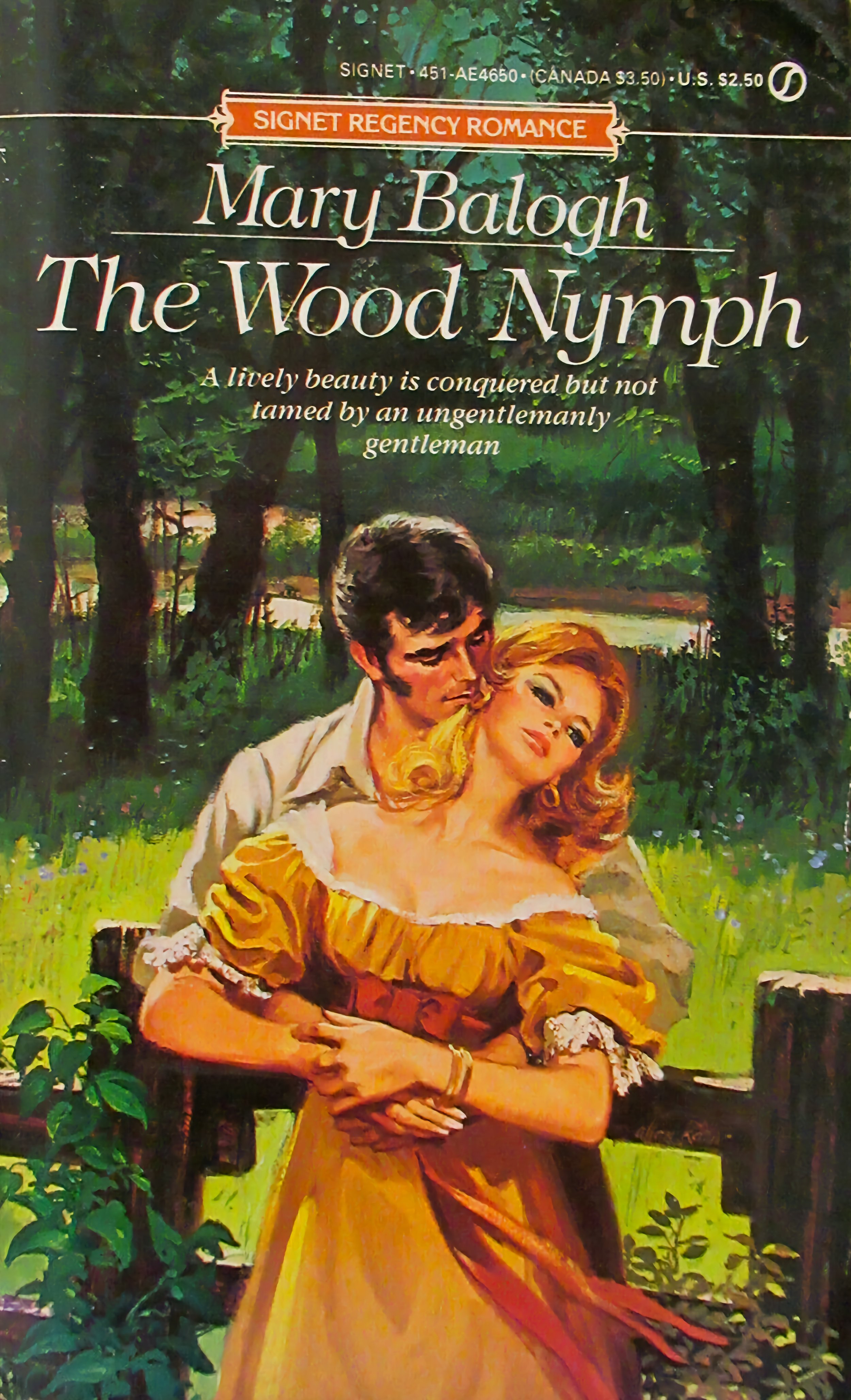


Sponsors
Megan Frampton, author of His Study in Scandal,
available now from Amazon, Barnes & Noble, Apple Books, Kobo
and your local independent bookseller.
and
Stephanie Rose, author of The Marriage Solution,
available now from Amazon, or with a monthly subscription to Kindle Unlimited.


S05.38: Prologues & Epilogues in Romance
It’s hard to believe it’s taken us this long to do a prologue and epilogue episode! We talk about beginnings and endings and why they exist and why writers should ignore every piece of broad strokes nonsense advice people want to throw at them. Jen says “Prologues are plot and epilogues are character,” and blows Sarah’s mind with her genius (jk, Sarah already knew she was a genius). And yes, we talk about babies. Fair warning!
This interstitial idea came from the Fated Mates Discord, which all of our patrons have access to. Join other magnificent firebirds to hang out, talk romance, and be cool together in a private group full of excellent people. Learn more at patreon.com.
Show Notes
You know, Animal Farm is a good book and King Lear is a good play.
There is a very cute family of foxes living in Chicago’s Millennium Park
Apparently this dogs and rosetone thing is a known issue.
Here is an example of the hardline “Prologues are Bad” stance. || ed note: I’m not mad about it, since I have some known hardline stances myself. Ahem. ||
Our list of things good romance prologues do: provide needed backstory, historical information, an inciting incident in the past, an unusual set-up, and showcasing the relationship between the primary characters.
Our list of things romance epilogues do: fan service, bringing the whole gang back together in a series,providing a glimpse into the other character’s POV, The HEA fulfilled, the babylogue, and surprise motherfuckers!
A link to a folder with PDFs of links in show notes.
Books Mentioned this Episode








Sponsors
Adriana Herrera, author of An Island Princess Starts a Scandal,
available now from Amazon, Barnes & Noble, Apple Books, Kobo
and your local independent bookseller.
and
Juniper Butterworth, author of Bewitched,
available now from Amazon, or with a monthly subscription to Kindle Unlimited.
and
The Noveltea Shelf Assured Book Box,
available at novelteabooks.co


S05.37: Fated Mates Live
In March, we had the absolute best time with some of our favorite people at Fated Mates LIVE in Brooklyn! Here, for your enjoyment, is the recording of the wacky, wild night, which we spent with 250 Magnificent Firebirds, including: Tessa Bailey, Andie Christopher, Adriana Herrera and Joanna Shupe, who took the opportunity to announce that evening that she also writes mafia romance as Mila Finelli (*GASP!*)!
We cannot stress this enough: Headphones in!
We were also joined by Amanda Litman, the co-founder and co-executive director of Run for Something, and by Erin Leafe, the host of our sister podcast, Learning the Tropes! Special shout out to Producer Pat from Learning the Tropes, who helped Eric get the whole event recorded beautifully. You can read more about the whole event at Brooklyn Magazine! [PDF here]
We’re approximating the experience of Fated Mates Live every day over on the Fated Mates Discord, which you can access by becoming a Patron of the podcast! Find out more at: fatedmates.net/patreon.
Books By Our Guests


Books Recommended By Our Guests


S05.36: The Best Kisses in Romance
We’re talking kissing today! So simple and so powerful, there’s no doubt that that first kiss in romance is always an important one. This episode was inspired by our recent readalong of Her Best Worst Mistake, but we talk about some other great books (most of which we’ve talked about before) with truly excellent kisses. Enjoy…and tell us about your favorite kisses in books, movies, tv shows…wherever you get your superior smooching.
We have a Patreon now, and it comes with an extremely busy and fun Discord community! Join other magnificent firebirds to hang out, talk romance, and be cool together in a private group full of excellent people. Learn more at patreon.com.
Show Notes
Kissing is the best, and we are obsessed with the first kisses from the following movies and TV shows: Maddie and David from Moonlighting, lots of Angel and Buffy kissing, jump in the wayback machine for Sam and Diane from Cheers, and more recently Jim and Pam from The Office.
The first gay kiss on network TV was on LA Law back in 1991.
In the 80s and 90s, we imprinted hard on movies with great kissing scenes: The primordial kiss that was Han Solo and Princess Leia in The Empire Strikes Back, the “No Kissing on the Mouth” from Pretty Woman and Jen forgot to mention another 90s classic, Poetic Justice with Tupac and Janet Jackson. Hello to that last scene from Never Been Kissed with Drew Barrymore. People have made entire YouTube videos of great movie kisses.
Why did people use a metaphor about [“Rounding the bases”][11] to discuss sex back in the day? Who knows!
Most of today's links are YouTube videos, but here are PDFs of the things that are text-based links. [11]: https://www.glamour.com/story/lets-settle-this-baseball-and
Books Mentioned This Episode




Sponsors
Meghan Quinn, author of Royally in Trouble,
available from Amazon, or with a monthly subscription to Kindle Unlimited.
and
Megan Frampton, author of His Study in Scandal,
available now from Amazon, Barnes & Noble, Apple Books, Kobo
and your local independent bookseller.
and
Lumi Labs, creators of Microdose Gummies
Visit microdose.com and use the code FATEDMATES
for 30% off and free shipping on your order


S05.35: Trailblazer Loretta Chase
The Trailblazers conversations continue this week with the brilliantly talented Loretta Chase, who we adore, and not only because she wrote one of our favorite romances of all time. We obviously talk about Lord of Scoundrels and Jessica and Dain, but we also talk about writing, about the challenges of writer’s block, about the glorious rabbit holes of research, and yes…we ask hard hitting questions about The Mummy. We are so grateful to Loretta for making time for us, and for writing such glorious books.
If you are in New England, you can meet Loretta and Sarah at the Ashland Public Library Romance Festival this Saturday, May 20th in Ashland, MA. Attendance is free! Learn more and register at Eventbrite.
We have a Patreon now, and it comes with an extremely busy and fun Discord community! Join other magnificent firebirds to hang out, talk romance, and be cool together in a private group full of excellent people. Learn more at patreon.com.
Show Notes
Welcome author Loretta Chase, author of over 20 historical romance novels. We did a deep dive on Lord of Scoundrels back in season 2.
Authors mentioned: Jayne Ann Krentz writing as Amanda Quick, Susan Holloway Scott, Mary Jo Putney, and Caroline Linden.
Publishing Professionals: Gail Fortune at Berkley, Walker & Co. Publishers and editor Ellen Edwards
Books Mentioned This Episode


Sponsors
Desirée Niccoli, author of Called to the Deep and Song of Lorelei,
both available for $0.99 this week in celebration of MerMay
and
Avery Maxwell, author of Your Last First Kiss,
available now from Amazon, or with a monthly subscription to Kindle Unlimited.


Loretta Chase 00:00:00 / #: The main thing about that book was that it was in me. I did not have to find it. It was there and it was demanding to be written. The characters were in my mind very clearly from the beginning, and that never happens. I'm always struggling. I'm always fumbling. It takes me a while to get to know who they are and what do they want and what's the goal, et cetera, et cetera. In this case, it was all very clear to me. The main thing I saw in the beginning was this child who had had this horrible, horrible childhood, badly traumatized, that turned him into this person who's a sort of monstrous. And I thought, what do you do for this person, or what's needed here for some kind of a balance?
00:01:02 / #: And the heroine was there instantly. It was like, okay, she's someone who just gets it. She gets the thinking, she gets the guy thinking, she gets whatever it is. And why is she that way? Because she grew up with boys all the time, and she's just smart and paying attention. I needed someone who could see through him, and Jessica just came to my mind. So they really formed in themselves on the stage, and the rest of it, the rest of that book, I know it sounds mystical and it's like writers shouldn't wait for this to happen because it doesn't usually, but it just wrote itself. It was like a movie and all I had to do was write it.
Sarah MacLean 00:01:47 / #: That was the voice of Loretta Chase, author of Regency Romances single title Historical Romances, and as everyone knows, Lord Of Scoundrels. This is Fated Mates. I'm Sarah McLean. I read romance novels and I write them.
Jennifer Prokop 00:02:08 / #: And I'm Jennifer Prokop, a romance reader and editor. You are about to hear our trailblazer episode with Loretta, where she talks about how she came to writing romance, her research process, and why she believes in historical research and folding it so well into her books and her life in romance.
Sarah MacLean 00:02:32 / #: And how it is that Lord of Sundress came to be. Without further ado, let's get into it.
Jennifer Prokop 00:02:44 / #: Here we are with the Loretta Chase. I'm just going to make words now, just they're going to flow out of me in a rush, because I'm so overwhelmed.
Sarah MacLean 00:02:52 / #: Loretta, we are so thrilled to have you.
Loretta Chase 00:02:56 / #: Oh, thank you for having me.
Sarah MacLean 00:02:58 / #: It's a delight. I don't know that you know this, but we are avowed Loretta Chase fans here at the podcast. We reference your characters all the time.
Loretta Chase 00:03:09 / #: Oh, thank you.
Sarah MacLean 00:03:11 / #: And of course, we've talked a lot about Lord of Scoundrels, so I'm sure we'll get into that as well. But in general, I'm just so thrilled to have you here. Thank you.
Loretta Chase 00:03:20 / #: I feel honored to be here, because I know about your podcast and I think it's just very cool.
Sarah MacLean 00:03:26 / #: Thank you. So we start all of these conversations the same way, and that is to say, how did you come to this genre?
Loretta Chase 00:03:36 / #: I came in a very weird way because I was never a romance reader. My mind was poisoned by my English professors, so I thought very scornfully of romance. And the way I came to it was after I had been writing professionally, and my husband said to me, "Do you want to write video scripts for the rest of your life? What do you really want to do?" And eventually, after much weeping, I admitted that I wanted to write a novel, but I had never been able to. I would write and write and write, and it just went on forever and it didn't have a story, and it didn't make any sense.
00:04:23 / #: And I realized just in that conversation, I made the connection with what I was doing in video and what could be done in a novel. And I realized all I needed was structure. So when you're writing scripts for video, you have a specific structure, you have a message that you want to get across. And I would always ask the clients, "What's the message? Can you tell me in one sentence what you want the audience to come away with?" And I realized the genre fiction does that.
Jennifer Prokop 00:04:54 / #: It sure does, bless.
Loretta Chase 00:04:55 / #: Yes. So I'm looking at mystery. I'm looking at science fiction. I'm looking at various genres, but it was like, oh, wait a minute, love stories. That's the part of the books that I really like, and maybe that's where I should be working. And yeah, love conquers all. Yes, please. Because it doesn't, in so many of the classic novels, the women are victimized. They die if they have sex. And so, I thought, oh, well, this is a great way to correct that. And I have a structure. I have a structure. I have something I like, which is a love story. And that gave me my start, and it worked nicely.
Sarah MacLean 00:05:47 / #: When you talk about the books or the parts of the books that you always love, the love story, what were you reading before you came to the genre?
Loretta Chase 00:05:59 / #: Well, a good example would be like Charles Dickens, Bleak House. All right. So there's Lady Dedlock and she's had an illegitimate child, and there's no forgiveness for her, she has to die. Anna Karenina, she has an affair, she has to die. Women who follow their sexual inclinations or fall in love outside of the norms of the time, they're punished. And I wanted to rewrite those stories. So actually, I did that with one of mine, not quite a lady, I took Lady Dedlock story as a starting point and said, "Okay, here's a person who had a child out of wedlock. It was kept a big secret, but she's going to have a happy ending."
Jennifer Prokop 00:06:52 / #: So at some point, did you read romance as research, or did you just-
Loretta Chase 00:06:57 / #: Oh, yes.
Jennifer Prokop 00:06:58 / #: Okay. So I mean, once you decided, wait, I might want to write this, did that happen concurrently or did you stop and think, okay, I'm going to give myself permission to read these books now?
Loretta Chase 00:07:09 / #: I approached it the way I would've approached a project in an English class. I started doing the research.
Sarah MacLean 00:07:15 / #: Do the reading, Loretta.
Loretta Chase 00:07:19 / #: Yes, exactly. So I read maybe hundreds of romances because I was also looking to find where would I fit. So at that time, there was Kathleen Woodiwiss and Johanna Lindsey, and they wrote those big sprawling romances, and I didn't think that was me. And then, I encountered the traditional regencies and I thought, oh, this is perfect. This is a time period I'm very interested in. I love the witty banter. And it was like there were smaller books, so I felt like I could handle that for my first thing. So that was how I ended up there. But there was a lot of research before I actually started trying to write a book.
Sarah MacLean 00:08:14 / #: Your first books are traditional regencies and they're category regencies, right?
Loretta Chase 00:08:20 / #: Right. I wrote for Walker & Company.
Sarah MacLean 00:08:24 / #: Now, wait, that's a name we haven't talked about at all.
Jennifer Prokop 00:08:27 / #: I know. I don't don't think we've ever talked about that.
Sarah MacLean 00:08:28 / #: What is that?
Loretta Chase 00:08:30 / #: Wow. When I started writing, there were so many places that were publishing regencies. There were so many lines. I made a big list and I went with Walker because they published hard cover, and I thought that was cool, but I was not expecting to be accepted. That was my thing. And they accepted the book.
Jennifer Prokop 00:08:53 / #: So this is Isabella?
Loretta Chase 00:08:55 / #: Yes, yes. And then, I later discovered it was primarily they were publishing for libraries. And that worked out fine because my agent ended up selling the paperback rights to Avon. And it was through Avon that I met my editor, Ellen Edwards, and she was the person who got me to write historical romance, longer books.
Sarah MacLean 00:09:21 / #: How many books did you do with Walker?
Loretta Chase 00:09:24 / #: Six.
Sarah MacLean 00:09:25 / #: Okay. Walker was publishing the hardcovers, and Avon was publishing the paperbacks?
Loretta Chase 00:09:29 / #: Mostly, except for one book. I think Fawcett had published one book. The rest of it were Avon.
Sarah MacLean 00:09:35 / #: And Ellen was always your editor at Avon?
Loretta Chase 00:09:39 / #: Yes, yes.
Sarah MacLean 00:09:40 / #: So obviously Ellen Edwards is a name that we have talked about before and heard many people talk about. Can you give us a sense of what that editorial relationship was like with Ellen? Because it does feel like she had a really special eye.
Loretta Chase 00:09:57 / #: Oh, my gosh. She was amazing. I loved her so much. She would write a little note, three words in the margins, and a whole idea would open up for me, or I would see how I had gone astray. But she wouldn't say, "You've gone astray." She would just ask a little question. And she was so perceptive. When she invited me to write historical romance, I said, I don't think I can do that. I don't think I can write those big books. And she said, "It's just like what you're doing only bigger." And then she said, "Read Laura Kinsale."
Jennifer Prokop 00:10:41 / #: Oh, sure.
Sarah MacLean 00:10:44 / #: A perfect beginning for you, yeah.
Loretta Chase 00:10:46 / #: Yes. So she knew that I would connect with what Laura Kinsale was writing, and she was absolutely right. She was just so insightful. I can't say enough about her. I think she was a fabulous editor.
Sarah MacLean 00:11:02 / #: So you moved from Walker over to Avon for single titles, and that's the early '90s?
Loretta Chase 00:11:11 / #: Yes.
Sarah MacLean 00:11:11 / #: Yeah. And that's sort of what we always clock here as the heyday of there was a really, or maybe not the heyday, but there was a really remarkable sea change in historical right then in the early '90s. And it was led largely by, it seems like Ellen there. And I wonder if you could talk a little bit about what was going on during that time period. Did it feel like readers were just drawn to historicals? Now, we look back and we say, "Okay, well, Ellen, she'd acquired you and you put out Lord of Scoundrels," which we'll get to. And then she acquired Beverly Jenkins, who was doing what Bev does over there. And Lisa Kleypas' books from the early '90s really were changing the game. And was there something?
Jennifer Prokop 00:12:06 / #: Was there in the water?
Loretta Chase 00:12:10 / #: I'm not sure, but there was something else. I mean, Avon wasn't the only place. This is the interesting thing. A lot of the friends that I made early on were writing regencies for Signet, and then Signet started doing what they were calling Super Regencies, so it was like the traditional Regency, but a bigger story, more sex. And that's a lot similar to what was going on at Avon, although Avon's weren't quite so much in that Regency, not precisely in that Regency mode. So there was definitely something going on in other places. It was just that-
Sarah MacLean 00:12:45 / #: Across the board?
Loretta Chase 00:12:46 / #: Yes, yes. And that Regency sensibility, I think was, for some reason, it ebbs and flows. I've been around for so long because I'm so ancient that I see these ebbs and flows of what people are reading and what they're not reading. I really can't account for it. It's hard to account for what happens with tastes. And I'm not that analytical to begin with. I write what I write and cross my fingers. That's okay.
Jennifer Prokop 00:13:20 / #: If you had six books before, oh my God, I've already spaced on the name of that-
Loretta Chase 00:13:25 / #: Walker.
Jennifer Prokop 00:13:26 / #: Walker.
Loretta Chase 00:13:27 / #: Yes.
Jennifer Prokop 00:13:27 / #: Does that mean Lord of Scoundrels was the first Avon book? I'm sort of looking at FictionDB, but it maybe-
Sarah MacLean 00:13:35 / #: No, it was The Lion's Daughter, right?
Loretta Chase 00:13:36 / #: The Lion's Daughter, and then Captives of the Night. And I've always forgotten to tell this story about that transition, but right around the time, I think when I had written Captives of the Night, Jayne Ann Krentz started writing as Amanda Quick, and I think she sort of triggered a sea change in the way we were approaching historical romances because she came with that contemporary romance sensibility, and she was writing romantic suspense.
00:14:15 / #: And when she turned to writing these historical sort of Regency Victorian set, they had that feel to them, and they weren't quite the sprawling books that we were working on at that time. And I'm sure that fed into my thinking when I was writing Lord of Scoundrels, because it's quite a different book from Captives of the Night and The Lion's Daughter. And I think that's part of it was that influence of, wow, this is another way to do this. And there are things that you absorbed by osmosis. And it was only, I mean, actually really, the other day when I was thinking about that, that I remembered about Jayne Ann Krentz and that Amanda Quick thing and how that seemed to have changed things.
Jennifer Prokop 00:15:09 / #: I vividly remember as a reader reading Amanda Quick and feeling like this was different. I could tell it was different. And I just was so drawn to those books. And it's not that I didn't love, I of course loved it all, but I vividly remember really feeling like everything about those books was different. And so, it doesn't surprise me to know that that was apparent to the authors at the time as well. New rules almost, for what could be done.
Loretta Chase 00:15:40 / #: Yes.
Sarah MacLean 00:15:42 / #: It felt like heroines especially were shifting at the time.
Loretta Chase 00:15:46 / #: Yes.
Sarah MacLean 00:15:47 / #: Amanda Quick brought a very different kind of heroine to the Regency.
Loretta Chase 00:15:51 / #: Yes, absolutely. And it was more clearly feminist and more clearly aware of differences in communication between women and men, and addressed some really interesting aspects of male-female relationships that I did not feel as though we had or I was dealing with anyway, in my earlier books necessarily. And then, I started reading some other things. One of the books that was very influential was You Just Don't Understand.
Jennifer Prokop 00:16:28 / #: Oh yeah, I remember that. Sure.
Sarah MacLean 00:16:30 / #: I don't remember that.
Jennifer Prokop 00:16:34 / #: It was like a pop culture kind of psychology book.
Sarah MacLean 00:16:38 / #: I see. Women and men in conversation.
Jennifer Prokop 00:16:39 / #: About women and men in conversation. And it was like the first time I was ever, and this was when I was in college. I was in college from 1991 to 1995, and it was this take, I remember about topping people when you're talking and someone comes along and just talks over you, which I feel like I'm kind of doing now. Sorry, everybody. And it was really a real take at this is how people communicate differently based on how essentially they were raised in their gender identity.
Loretta Chase 00:17:12 / #: So that was very enlightening. And then, that also led to my having conversations with my husband about that, about communication styles. So I think that also influenced the way I dealt with the relationships in my stories.
Jennifer Prokop 00:17:27 / #: This week's episode of Faded Mates is sponsored by Desirée Niccoli, author of the Haven Cove duology, Called to the Deep, book one, and the Song of Lorelei, book two.
Sarah MacLean 00:17:39 / #: Jen, did you know that in many circles, it is not in fact the month of May. It's the month of Mermay.
Jennifer Prokop 00:17:47 / #: Amazing. I feel better for knowing this.
Sarah MacLean 00:17:50 / #: Listen, if you're out there and you are enjoying all the drawings of mermaids that are being posted on social media and all the talk about mermaids that's happening, and you're just cannot wait for this new live action Disney movie, we have the series for you. This one is pretty delicious. And I use that word intentionally because it features Killian Quinn, the captain of an offshore fishing boat that receives a distress call from a sailing ship in a terrible storm early in the book in the Duology. He and his crew head out. They make a big save, they save the crew. And a woman who does not know who she is and has no knowledge of how she got on the boat, turns out this is Lorelei Roth who is not just a normal woman, she is actually a mermaid. And in the world building of this series, mermaids eat people.
Jennifer Prokop 00:18:49 / #: I'm not even mad about it.
Sarah MacLean 00:18:50 / #: Listen, at one point in the blurb it says, "The handsome captain begins to look like a tasty snack in more ways than one."
Jennifer Prokop 00:18:59 / #: Perfect. No notes.
Sarah MacLean 00:19:00 / #: Are they going to get together? What happens when he finds out she's a flesh eating mermaid? Does she eat him and not, I mean, I'm sure-
Jennifer Prokop 00:19:09 / #: Sure. We all know what you're about to say. Here's the thing, everybody, in celebration of Mermay, you can get both books in the Haven Cove duology between May 15th and May 22nd for only 99 cents wherever you buy your eBooks. It's also available in print. Thanks to Desiree for sponsoring this week's episode.
Sarah MacLean 00:19:29 / #: And happy Mermay to all who celebrate. So Ellen brings you over to do these kind of single titles for Avon. You write two, and then you write Lord of Scoundrels, and let's get into it. I mean, because we have to. Tell us about the writing of it, the conception of it, and then because you say, "Well, they weren't like these big sprawling books from before," but Lord of Scoundrels is a epic store. I mean, it covers a lot of ground. So I wonder if you could talk a little bit about how it came to be.
Loretta Chase 00:20:15 / #: Okay, I had to make myself some notes about this because-
Jennifer Prokop 00:20:19 / #: Long time ago.
Loretta Chase 00:20:22 / #: Well, yes, long time ago, and I write intuitively, so I'm not quite sure what I'm doing most of the time. There were some things that fed into that, but the main thing about that book was that it was in me. I did not have to find it. It was there and it was demanding to be written. The characters were in my mind very clearly from the beginning, and that never happens. I'm always struggling. I'm always fumbling. It takes me a while to get to know who they are and what do they want and what's the goal, et cetera, et cetera. In this case, it was all very clear to me.
00:21:08 / #: The main thing I saw in the beginning was this child who had had this horrible, horrible childhood, badly traumatized, that turned him into this person who's sort of monstrous. And I thought, what do you do for this person or what's needed here for some kind of a balance? And the heroine was there instantly. It was like, okay, she's someone who just gets it. She gets the thinking, she gets the guy thinking, she gets whatever it is, and why is she that way? Because she grew up with boys all the time, and she's just smart and paying attention. So I needed someone who could see through him, and Jessica just came to my mind as... So they really formed in themselves on the stage. And the rest of that book, I know it sounds mystical, and it's like writers shouldn't wait for this to happen because it doesn't usually, but it just wrote itself. It was like a movie, and all I had to do was write it.
Sarah MacLean 00:22:22 / #: That's how it feels.
Jennifer Prokop 00:22:24 / #: It is how it feels reading it.
Sarah MacLean 00:22:25 / #: When you read it, you just feel like it's just perfection.
Loretta Chase 00:22:29 / #: Thank you. But I consider it a gift. I got a gift from the writing gods with that book.
Jennifer Prokop 00:22:38 / #: You were talking about Dain's like trauma, right?
Loretta Chase 00:22:41 / #: Right.
Jennifer Prokop 00:22:41 / #: So what's interesting to me about that is I think a lot of people kind of, I don't know, write about trauma without doing a lot of research on trauma. And at one point, we have a friend who is an expert on trauma, and she was like, "This book does it so perfectly." I mean, was that part also intuitive, or was that something where you really did think like how can I write about his trauma? I mean, I don't know, maybe it all was mystical, but it's hard, I think, to write about traumatized characters without feeling like you're taking advantage of traumatized people. I don't know if that makes sense.
Loretta Chase 00:23:22 / #: It's an empathetic thing, and it's also, if you look back at your own childhood and the way children treat one another, that wasn't so hard for me. I knew quite a bit, I had done quite a bit of research, so I understood about the bullying at Eton, and it wasn't that hard to imagine a child who's been rejected by his family and has dealt with abandonment. I think it was just, I don't know, this is something that writers do. You try to put yourself in the other person's shoes, or you think back to your own childhood and maybe your friends, what happened to them or things you saw in the playground. You're drawing on all of that. So it wasn't as though I studied trauma, I was just imagining, trying to imagine what kind of torturous childhood would make a person just shut everything off.
Sarah MacLean 00:24:32 / #: So obviously, this book struck a chord across romance. I mean, it is a book that was talked about then, it continues to be talked about. It is on every list. It is a book that is held up by so many of us, including us as the best of it, the best of the genre. And I wonder if you could speak to the reception at the time, and it sounds like it was electric for you in the writing, but what happened after?
Loretta Chase 00:25:08 / #: Well, that's what's so funny, it's like when I wrote it, I felt, and I said this to Ellen, I said, "I think this is a pretty strong book."
Sarah MacLean 00:25:19 / #: Sure. That sounds exactly right. I mean, writers are always like, "I think it's okay."
Loretta Chase 00:25:25 / #: And the thing about Ellen-
Sarah MacLean 00:25:27 / #: Oh God, I loved her so much.
Loretta Chase 00:25:29 / #: She used to write 40-page notes on your books, which no one has time to do anymore.
Sarah MacLean 00:25:37 / #: Whoa.
Loretta Chase 00:25:37 / #: But they were so wonderful. Well, she had two little notes on this book. That was it. For Ellen, that never happened, that never happened. So I felt like, okay, this book really holds together, so that was great. But in terms of reception, they sent it out for blurbs, and I got really nice blurbs from various writers, but the book didn't take off or anything. It was just, it did okay. And then, it did win an RWA RITA, but that book took 12 years to earn out its advance.
Jennifer Prokop 00:26:19 / #: Oh, wow.
Sarah MacLean 00:26:19 / #: Wow. Really?
Loretta Chase 00:26:21 / #: Yes.
Sarah MacLean 00:26:23 / #: And it just was the little engine that could, or did something happen that-
Loretta Chase 00:26:28 / #: I don't know. It started appearing on that All About Romance List as a top book. And then, I think that it might've been really, a lot of word of mouth started so more and more people started reading the book and then it built up momentum. But initially, it was no big deal.
Sarah MacLean 00:26:51 / #: It was just a very good book.
Loretta Chase 00:26:55 / #: Right.
Jennifer Prokop 00:26:56 / #: I'm not surprised by it, because I think one of the fascinating things about romance readers, and we've talked about this before, is there are books I love when I read them, but I never want to revisit them. And then, there are books that grow on me over time, and I think that maybe there's something special about romance in that way. And so, it doesn't necessarily surprise me because there are books that when I first read them, I'm like, "It was okay." And then I'm like, "Wait, why have I reread that book now seven times?"
00:27:29 / #: So it surprises me the way things have a hold. I don't know, like a romance, the keeper shelf is no joke. And I think that the cumulative effect of it being on the keeper shelf for so many people, that word of mouth is really powerful. I mean, when I first started talking to people openly about liking romance, I would say to them, they would ask for recommendations. And I'll be like, "I have two for you. And one's historical, one's contemporary. And if you don't like either of them, then you don't like romance." Which you guys, that seems dramatic, but that's what I would tell people. And it was Lord of Scoundrels and Bet Me by Jenny Crusie.
Loretta Chase 00:28:11 / #: Oh, that book. Yes, yes.
Sarah MacLean 00:28:14 / #: Just like terrific.
Jennifer Prokop 00:28:15 / #: These books are what romance is all about. And if you don't like them, then you don't like romance. And that's okay, more for me.
Sarah MacLean 00:28:23 / #: But I also think there's something too, Jessica, I mean, not to keep coming back to the heroines, but I feel like Jessica Trent holds up however many years later, we don't need to count them, Loretta, but I feel like we read Lord of Scoundrels for one of our deep dive episodes a couple of years ago, and did a big episode on it. And if Jessica walked off the page of Lord of Scoundrels right now and walked into a modern historical written this year, she remains as relevant, as amazing, as aspirational as any heroine ever. And I think that is a hallmark of a book that just will forever be one that we hold up. But I'm fascinated to hear that it took 12 years to earn out. Wow.
Loretta Chase 00:29:32 / #: Yep.
Sarah MacLean 00:29:32 / #: Okay. So you've written what is arguably, I mean, not here arguably, but arguably the greatest romance of all time, but we still have to, it hasn't earned out, so you still have to make a living. And I want to talk a little bit here. I think this is a good place to talk about it, because one of the things that we have loved, or that I have loved about your books over the years forever is how much research goes into them, how much love and care you give the worlds that you create. You used to have a blog that I loved very much called Two Nerdy History Girls, which you had with your friend, whose name is now escaping me.
Loretta Chase 00:30:14 / #: Susan Holloway Scott.
Sarah MacLean 00:30:16 / #: Yes. And in that blog, you used to tell these great stories about how dark the ballrooms would actually be in romance novels, or the legendary scene from Lord of Scoundrels is that is the glove scene with the button hook. There's so much discussion where a fan, right, or remember the dueling book with the bird pistols?
Loretta Chase 00:30:45 / #: Yes. Yeah, the bird pistols.
Jennifer Prokop 00:30:47 / #: Right. Which has like, wait, this is a real thing. This is fascinating.
Sarah MacLean 00:30:51 / #: And then, my other favorite, Mr. Impossible, all the Egypt stuff. And I do want to know if that came from The Mummy or not, because that is a discussion that comes.
Loretta Chase 00:31:01 / #: Yes. No, it did.
Sarah MacLean 00:31:04 / #: You heard it here.
Loretta Chase 00:31:05 / #: The Mummy absolutely inspired that book, yes.
Sarah MacLean 00:31:09 / #: You just made a lot of people really happy.
Jennifer Prokop 00:31:11 / #: Exactly. This has been speculation for a long time, and now we have confirmation. Amazing.
Loretta Chase 00:31:18 / #: Oh, yeah. I was like, oh, wait, I can do this. And I always wanted to write about Egypt. I had been so fascinated by that, particularly what happened in the early 19th century and the discoveries that were made then. But I mean, there were these intrepid women who were involved in that discovery. So yeah, I loved doing the research for that. I have way more books than I ever needed to write that book, something like 50 books on Egypt. And no, having them in the library wasn't enough. I had to own them.
Jennifer Prokop 00:31:55 / #: We support you. Everyone just buy the books they want.
Sarah MacLean 00:31:59 / #: So talk about the research, because I do think that that is one thing that often historical romance novelists get. People don't realize quite how much research goes into the books because it does feel so invisible a lot of the time.
Loretta Chase 00:32:14 / #: Well, the goal is to make it invisible. You read books and books and make tons and tons of notes and look at all these images, and you're digging into historical newspapers and two lines appear on the page that have to do with that topic. But as Susan and I have often said, we really have to understand it. We have to be able to visualize. We have to feel like we're there in order to make the reader feel as though she's there.
00:32:45 / #: And I love it. I love reading the old newspapers, and it's like, this has been one of the fascinating and positive aspects of technology from the time when I first started writing, when we had no access to anything, and trying to find information on the Regency. We're so dependent on what Georgette Heyer wrote and a limited selection of books and memoirs that were not very accurate. And now, we can get primary sources. And I just love that. I love reading the newspaper and finding an event that happened, say, "Oh, wait a minute, I'm going to use that in a story." It's like, I did that in the last book, Ten Things I Hate About The Duke. I read about this fancy fair that was so crowded with people, and people were fainting because it was crowded. I said, "Oh, I have to set a scene there."
Sarah MacLean 00:33:48 / #: So tell us about the research process. As you said, you're an intuitive writer. Are you researching as you go? Do you sort of have a sense of what you're going to tackle in the book? Do you have a file? How does it work?
Loretta Chase 00:34:04 / #: Initially, what I was doing, I was taking, I think it was Stephen King's advice, and I was, or maybe it was Lawrence Block, somebody. I was researching what I needed to know for the scene. But now, and over the last maybe 20 years, I feel as though I need to get some sense of where I'm going to be with the story, what's the location? And then, I sort of build from there. And I kind of like that method better. I like going through the newspapers and looking at what's happening, say in May of 1832, and thinking about what can I do with that, because there are tons of ideas there for me. So now, it's a little more of a little bit some of the work in advance, but then most of the work as I'm writing.
Sarah MacLean 00:35:04 / #: At some point, Mr. Impossible, that series is not with Avon, that is with Berkeley.
Loretta Chase 00:35:12 / #: Right.
Sarah MacLean 00:35:12 / #: Right. So what happens in that world? How does the shift happen?
Loretta Chase 00:35:21 / #: Well, what happened was I finished The Last Hellion, and I had writer's block. My father had died, and I didn't realize that that was what was going on. It was grief. And I had very bad writer's block, and I couldn't write. And I bought back my contract, and I did not think I was going to write another novel.
Sarah MacLean 00:35:48 / #: Oh, my gosh.
Loretta Chase 00:35:50 / #: And then, what I did, I went back to writing video scripts and that sort of thing for a few years. And then, things change in our personal circumstances, and it became necessary for me to actually get a real job. And I've got myself a new agent, and she put me in with Berkeley. There had been an editor there who had been courting me all during my mental block period, because I was still going to conferences, Gail... Oh, I can't remember her name. Anyway, she had been courting me. She said, "Whatever you write, just can I look at it." And so, she ended up being the editor. So I was at Berkeley for a few years, but then she left Berkeley and my agent wasn't really thrilled with how the books were being sold. And so she-
Sarah MacLean 00:36:46 / #: When was that? That had to have been-
Jennifer Prokop 00:36:49 / #: Early 2000s, yeah?
Loretta Chase 00:36:52 / #: It was early 2000s when I went to Berkeley. And then, let's see, so I wrote Miss Wonderful, Mr. Impossible, and Lord Perfect. Oh, and then I had breast cancer.
Jennifer Prokop 00:37:05 / #: Oh, it's a small other thing.
Loretta Chase 00:37:09 / #: Oh, yeah. So I was finishing that book. I was finishing Lord Perfect when I had breast cancer, and I had to take a little time off from writing. And then, by that time I was getting ready to go back to work, that was when my agent was saying, "I think we can do better at Avon." And Avon welcomed me back. And the last couple of books in that series were through Avon. Some of these things, it's like your personal life messes things up for you or makes them better or whatever, but that's what happened.
Sarah MacLean 00:37:46 / #: Yeah. I want to go back to this intuitive writing piece too, because it feels like we've known each other for a while, and it feels like one of the magical things about your books is that you write them and you write until you're done, and then the book comes out. It feels like you really do honor the text and the story in a way that many of us, because of the way romance works, don't do. So I wonder when you sort of come to a new series or to a new book, are you waiting for inspiration to strike before you start?
Loretta Chase 00:38:31 / #: No. I start writing, and this has to do with my training in art, which my art professor always said, "If you wait for your inspiration to start, you might be waiting forever. Just start doing the work." So I start doing the work, and I find my way in the course of doing the work. So sometimes, I've been able to write a nice long outline, and that works beautifully, and that did work beautifully for me for a number of books. Other times, I just have to do it by the seat of my pants, because that's the way the book wants to be written, so I have to do whatever. It's hard to say, again, intuitive. I'm doing whatever is working at the time.
00:39:21 / #: And lately, it seems to be sit down, start writing, see where it goes, figure out the things as you go along, and then it's like go back and make it come together. So it's a construction process. It's not linear at all. And I don't think my mind really is linear. And I don't think even my earlier books were all that linear, but I was able to work out plots in advance in a way that made my life much easier. But I just can't do that lately.
Jennifer Prokop 00:39:54 / #: No. I mean-
Loretta Chase 00:39:55 / #: I wish I could.
Jennifer Prokop 00:39:55 / #: I'm the same way.
Loretta Chase 00:39:56 / #: But I can't.
Jennifer Prokop 00:39:57 / #: Have to.
Loretta Chase 00:39:59 / #: Yeah, you have a vague idea of what you want to do. It was like when I did The Dressmaker Series, for instance, I thought, all right, I'd like to have three sisters. I have some idea of what they're trying to accomplish. I know what they want to do. They want to rule the world. And then, it would be a matter of figuring out, okay, who are they? What are the differences between them? And then, the plots start coming together, but they arise very much out of the characters. So if I don't know the characters, I can't get a story. I would love to be able to write a plot and have the story go with it. Never.
Sarah MacLean 00:40:44 / #: Does that happen for anyone?
Loretta Chase 00:40:46 / #: Never.
Sarah MacLean 00:40:46 / #: I don't believe it.
Jennifer Prokop 00:40:49 / #: I think character is really king in romance. I think that's, for me, at least as a reader, I feel like when people start with a plot, sometimes I'm like, yeah, but why are these characters here? Right. Wait, yeah, that's not enough. I need to really believe that how they got there.
Loretta Chase 00:41:10 / #: Yeah, they're not puppets.
Sarah MacLean 00:41:13 / #: This week's episode of Fated Mates is sponsored by Avery Maxwell, author of Your Last First Kiss.
Jennifer Prokop 00:41:20 / #: Penny Mulligan is a mess. She has had a disastrous first marriage. She's basically the single mother to three perfect but rowdy boys and an ex-husband who is a bunch of trouble. The only thing she has going for her is the perfect eye candy who shows up bringing coffee to her boss every Wednesday, Dillon Henry. He is just perfect fantasy material, handsome, charming, thoughtful. But she's just not in a place for this.
Sarah MacLean 00:41:51 / #: No. She has three boys and an ex-husband. Nobody has time for new people.
Jennifer Prokop 00:41:55 / #: So she is just like, "I'm going to have fantasies about Mr. Wednesday." But then Dillon freaking Henry shows up at her doorstep, and he's totally into her, and he is ready to just figure out a way to take the perfect chaos of her life and turn it into HEA.
Sarah MacLean 00:42:16 / #: Oh, I love it. This is great for anybody who loves a small town romance, for people who are interested in single moms as heroines, friends to lovers, second chance, found family. If you want to read Your Last First Kiss, what a title, you can find it in print or in eBook, or with a monthly subscription to Kindle Unlimited. Thanks as always to Avery Maxwell for sponsoring the episode.
Jennifer Prokop 00:42:49 / #: We talk a lot. I think I know Sarah experiences at a deep level that romance readers connect with the books in such a way that almost everyone we've had on talks about letters they've received from readers. So what do readers tell you about your books?
Loretta Chase 00:43:13 / #: Oh, my gosh. Particularly during COVID, but before, I have had so many messages from people telling me the books help them get through cancer. The books help them get through grief. The books help them get through COVID. And I mean, from the time I started writing romance, I really understood the value. But I think it's had much more of an impact in the last few years of what we do when we write romance. What we're doing for other people when we write romance is we're giving them a place to be where things are, okay, you know it's going to come out right in the end.
00:44:08 / #: And the more difficult the world around you is, the more important it is to have this place where you can go. And I'm all for escapism, and I'm never going to hesitate to say that my books are escapist because they are. And I feel like they should be. Yeah, I've had messages that just made me cry. And I think the last couple of years have been so hard on people that it makes, in my view, romance more important than ever because we're giving them that safe place to be for the time of reading the book.
Sarah MacLean 00:44:52 / #: So you have people who have inspired you over the years, and it sounds like you've had a group of other writers who you've connected with and who love research as much as you. But I wonder if you could talk about who are the people who you have spent who have really kept you going? Because I know that this isn't always an easy job, right?
Loretta Chase 00:45:23 / #: Yeah. Well, Susan Holloway Scott and I have been friends for a million years now, and we talk on the phone a lot. We go to Colonial Williamsburg. We meet up at Colonial Williamsburg almost every year, and she's really important part. She's just been, well, a really good friend, and we can talk. And that's part of the thing too. It was one of the great things I discovered when I started writing romance and I started going to conferences. It's like, oh, wow, I found my tribe. We're talking to other women mostly who are writers, and we're living in that same environment and we're having the same struggles. And that's not something I'm going to be finding in my everyday life. I love my husband, I love my sisters, and I can talk to them about stuff, but not the way you can talk to other writers. So Susan's important.
00:46:27 / #: There have been a lot of people over the years. When I was first starting out, Mary Jo Putney was very, very encouraging to me. She reached out to me, sent me a letter early in my career with my first or second book. There was a little cabal of writers sign, Regency Writers with whom I was friends, and we would get together at conferences. And then, over the years, I've met more people. It's like now I chit-chat with Caroline Linden, so it's evolving. But yeah, that's one of the great things that the great discoveries for me, when I started writing romance, it was finding all these women and they were feminists like me, and we had similar goals, and same kind of fights and the same kinds of... People don't understand what I'm doing, that sort of thing.
Sarah MacLean 00:47:30 / #: Do you feel like that's thing shifting now, or do you feel like we're still getting the same kind of response?
Loretta Chase 00:47:41 / #: I'll tell you, I missed the conferences.
Jennifer Prokop 00:47:43 / #: Yeah, me too.
Loretta Chase 00:47:48 / #: It's like, yeah, Zoom is nice, but it's not person to person sitting in the bar or outside a meeting place and hanging out with your friends and talking or meeting new people that way. The personal direct conversations are something I miss very much. I mean, my local writers group, it's like they haven't been able to have a conference because well, once COVID simmered down, and it was possible, it's like, well, we need volunteers and people don't have time and people are overworked. So that's something I... I miss that community, in other words. And with the crash and burn of RWA, that was bad, and romantic times for all the craziness, that was a great way to connect, wasn't it?
Sarah MacLean 00:49:00 / #: It really was. Jen never experienced it. It was a whole ride.
Loretta Chase 00:49:07 / #: So I only did it once, but it was such a trip. I was exhausted afterwards. But it was really wonderful. It was fun.
Sarah MacLean 00:49:15 / #: So this is one of the hard questions, I think, but what do you think is the mark that your books have left on the genre or are continuing to leave on the genre?
Loretta Chase 00:49:35 / #: I don't know.
Sarah MacLean 00:49:36 / #: Maybe.
Loretta Chase 00:49:38 / #: I don't know. Someone else would have to tell me what mark they're leaving, because I-
Sarah MacLean 00:49:43 / #: Well, maybe we can try it this way. What do you think is the hallmark of a Loretta Chase novel?
Loretta Chase 00:49:52 / #: Okay. When I first started writing, the one thing that was very, very clear in my mind was that my heroines were going to be strong. They were not going to be victims, so there was that. The second thing was I was never going to write down to my readers. I was always going to assume everyone was smarter than I was. So that's informed what I've done. And then, the other thing is, but the other thing has evolved, which is the research. And I feel as though it's possible for historical romance to get closer to that historical novel approach to research and ground people in the world that you're writing about. But that doesn't mean that it has to be, but that's what I need to do.
00:50:56 / #: So I think it's that the three things is the very strong heroin, the not talking down to people, and the world, trying to create a historical world as close to accurate as I can, but still without violating the trust my readers have that I'm going to keep them in a safe place where things are going to come out right. So I might touch on some ugly aspects of history, but I'm not going to force my readers to live in that because things are crappy enough around them for most people, and that's not what they come to my books for. It's the escape. I want them to have a lovely escape, feel like they're time traveling and dig the heroine the most.
Jennifer Prokop 00:52:01 / #: I mean, Sarah and I have both been readers. She's been writing now for-
Sarah MacLean 00:52:05 / #: We don't have to count them.
Jennifer Prokop 00:52:05 / #: ... however, 20 years, whatever it is. Okay, sorry. We've been reading for a long time. One of our questions is sort of about the ebb and flow of the genre. So how do you think you've seen romance change over time, or do you have thoughts about where you see romance going in the future?
Loretta Chase 00:52:27 / #: There has been ebb and flow for sure, starting out in a world where traditional Regency romances were a big thing, and there are dozens and dozens of lines, and then they kind of lose their popularity. And then, every few years we hear historical romance is dead. So I've heard that a bunch of times, and in fact, I'm hearing it lately.
Sarah MacLean 00:52:53 / #: Me too. But it doesn't die, right?
Loretta Chase 00:52:59 / #: Yeah. It doesn't seem to die. And the readers say they like going there. They want to go there. They want to be transported. They want that time travel aspect. They want to be taken farther away from current reality, and that's what historical romance does. I mean, contemporary romance also takes you away, but there's still that element of the real world's there, and there's some real world things we have to deal with. Whereas my people are going around in their little carriages and they don't know anything about cell phones and YouTube or Facebook or TikTok or any of those things. So it feels like it's an escape to a quieter time.
00:53:49 / #: And I think that, I believe that will continue to be something that people like, people have always read historical books for hundreds of years. They don't always read books that are set in their own time period. So I think that's a continuing interest, but I really am not sure what's going to happen. Things are in an uproar right now. There's a lot of upheaval in the publishing industry, so it's a little puzzling.
00:54:24 / #: In terms of other changes that I have seen, well, there's definitely been one big change for the better, which is when I started out almost pretty much like 99% of the books were by white authors and they were about white people. And now, we have books that have different cultural slants, and we have books that are dealing with different kinds of sexuality. Early in my career, one of my gay friends said to me, "Are there any gay romances?" And I said, "I don't know about any." But now, that's there. So I think those things are great that we have evolved to that point.
Sarah MacLean 00:55:12 / #: So we always like to ask two questions to wrap up. And the first is, which of your books do you hear the most about? Which is the book that readers come to you the most to discuss? And the second is, which is the book that you as the writer feel the most connection to, whatever way that means?
Loretta Chase 00:55:46 / #: Obviously the one I hear the most about is Lord of Scoundrels.
Sarah MacLean 00:55:48 / #: That was an easy, that's a softball.
Loretta Chase 00:55:54 / #: Right. So if we do an in-person thing, and we have a bookstore there and they want to order books, I always have to have Lord of Scoundrels there because people want it. Which is, I mean, that's a gift that people still want to read my book that I wrote a long time ago, particularly in a genre that seems to have such a short shelf life. And in terms of what books I feel the best about or strongest about or love the most or whatever, incredibly proud of Lord of Scoundrels. How can I not be? On the other hand, my favorite book is always the latest book, the one I most recently finished, because I like to feel that I'm getting better as a writer. So I felt very proud of the last two books. I especially felt very proud of Ten Things I Hate About the Duke, and I hope I'm going to feel even better about this next book if I ever get it finished. So my favorite-
Jennifer Prokop 00:57:08 / #: Would you care to talk about that one at all? No pressure.
Loretta Chase 00:57:11 / #: I'm happy to talk about. No, no, it's good.
Sarah MacLean 00:57:13 / #: Jen knows already.
Loretta Chase 00:57:14 / #: People ask.
Sarah MacLean 00:57:15 / #: She's been around me long enough, Loretta. I know I'm like, she knows that these are sticky questions.
Jennifer Prokop 00:57:23 / #: I know, exactly. I would never have brought it up if you had not mentioned it first. I just want to put that-
Loretta Chase 00:57:28 / #: Thank you. I appreciate that. But I've done a couple of blog posts because I just get so many. "When's the third book coming out? Is there a third book? What happened to the Blackwoods?" So I had writer's block again. And it started, let's just say there was a political situation going on in the world.
Sarah MacLean 00:57:54 / #: Gosh.
Loretta Chase 00:57:55 / #: That just depressed the daylights out of me and made me crazy, and it was just so incomprehensible, so there was that. And then, in the middle of that comes COVID. And you're thinking, oh wow, this is such a great opportunity. I'm isolated, I can't go anywhere.
Jennifer Prokop 00:58:17 / #: No, seems wrong.
Loretta Chase 00:58:17 / #: I'll write a book. Nothing, blank. So I'm sitting in front of the computer every day dutifully, because you don't wait for inspiration, you start writing. And I'm writing every single day, and I'm writing complete garbage, just boring crap day after day after day after day after day. So yeah, that's what happened. And I had to tell my publisher and my agent, I thought, "I'm sorry, I can't deliver. The book's way over." It's like over a year overdue. And I'm just now starting to make it get together, but it's still a struggle. I feel like I'm emerging from the writer's block, but it's not coming the way it should be. So it's been hard. This has been a really tough time. It's not any comfort to know I'm not the only one either. That's no comfort.
Sarah MacLean 00:59:16 / #: I mean, one of the questions, this is a question we get so often, I mean, we writers, and I'm sure you've gotten it a million times, but this question of writer's block, what do you do? How do you come out from underneath it? And now, because you sort of feel like maybe the shroud is being lifted, is there some piece of advice that you have for those of us out here who are also feeling weighted down by the world?
Loretta Chase 00:59:54 / #: I've done a couple of approaches. So the first time I had writer's block, I just walked away and did something completely different, which was writing video scripts. It wasn't all that satisfying, but boy, it pays really well.
Sarah MacLean 01:00:13 / #: Sure, good.
Loretta Chase 01:00:15 / #: But this time, I just felt like I had to keep writing because then I felt like if I didn't keep writing, I would succumb to despair, and I didn't want to go there. So I kept writing. A couple of times, I said, "Okay, I'm going to just stop for two weeks and see if that refreshes my brain. I'm going to go do this. I'm going to go do that." And we have traveled, so refresh the brain. But this time, I've just kept at it. I just keep writing it in the hopes that things will start becoming clear and it's actually working.
01:01:01 / #: The hero and the heroine have very gradually and reluctantly started letting me know who they are and what they want. And so, that's incredibly encouraging to me. And also, it helps if you have someone to talk to that's a trusted professional. And I am very fortunate in my agent and editor, so I can talk to them about things and bounce ideas off them, show the material, and have them come back and give me little bits of inspiration here and there. I think we each have to find our own way out of this. I've heard of people say, "Well, I just walk away for a couple of days and it comes back."
Sarah MacLean 01:01:47 / #: Days?
Loretta Chase 01:01:48 / #: It's like, oh, I'm [inaudible 01:01:50 / #] what happened.
Jennifer Prokop 01:01:51 / #: Is that writer's block or is that just like a writer's burp? I mean.
Loretta Chase 01:01:54 / #: Exactly. That's a good analogy. So I think for me right now, what's been working is to just keep writing, just keep writing because I'm a writer. Even if it's crap, it's something, and you never know what's going to come out of it. And that's happened a few times. It was like, I'm writing crap, I'm writing crap, I'm writing... Oh, okay, I can work with this. So that's been the approach. I would not wish this on anybody. It sucks, but there is going to be a book.
Sarah MacLean 01:02:28 / #: Great, we're ready when you are.
Loretta Chase 01:02:30 / #: It's like a terminate. No. I told my agent, I said, "I'm going to write this book. I have to write this book. I need to write this book. I want to write this book." It's going to get written one way or another.
Jennifer Prokop 01:02:44 / #: I just want to say this was amazing because I tried to keep my cool the entire time. I want everyone to appreciate that.
Sarah MacLean 01:02:54 / #: If you live in New England or feel like coming to New England, Loretta is going to be at the Ashland Public Library in Massachusetts on Saturday, May 20, 2023, for the RomCon up there. The Ashland Public Library has a great romantic romance novelist event, and it's outdoors, and it's a whole day long, and I'll be there too, and so will Megan Frampton and Caroline Linden, so historical writers. And Sandra Kitt will be there too, who was also a trailblazer. So you can join us there. We'll put ticket information in show notes for everyone, but you can get your copies of all your favorite Loretta Chase books signed.
Loretta Chase 01:03:40 / #: Yes, I'm looking forward to that. I did it last fall and it was so fabulous.
Sarah MacLean 01:03:44 / #: I'm looking forward to it too.
Loretta Chase 01:03:46 / #: So Sarah, you're going to have a great time. You're going to have a great time.
Sarah MacLean 01:03:50 / #: I will hopefully not have COVID this year.
Loretta Chase 01:03:51 / #: Don't have that again.
Sarah MacLean 01:03:53 / #: I'm going to try my best. Loretta, this was amazing. You are always amazing. I love hearing you talk.
Loretta Chase 01:04:03 / #: It's wonderful talking to you both. It really is. You have just such a great sensibility and sensitivity about the genre and about the authors. It's really a pleasure. Thank you.
Sarah MacLean 01:04:20 / #: Listen, it was special. It just came to her fully formed like Athena.
Jennifer Prokop 01:04:27 / #: Or like J.R. Ward. I'm also fascinated by the dichotomy between the way Lord of Scoundrels came to her, and then she didn't say it, but I would imagine that then struggling with writer's block would be all that more painful if you'd had that kind of experience, right?
Sarah MacLean 01:04:45 / #: Yeah, presumably. I mean, I was really grateful to hear her talk about writer's block, actually. I mean, a lot of this, for those of you listening, you probably got the sense that this was more about the writing this conversation than really I think any of them have been, which was obviously really wonderful for me and for probably every writer out there who's listening. But listening to somebody talk about how they struggle with writer's block is really interesting because as I said in the conversation, we get a lot of questions as writers about writer's block, and the instinct is always to just sort of wave it away and say, "Oh, I don't believe in writer's block. Writer's block isn't real. Just keep pushing." It's not a fun job. It's not that you're blocked, it's just that you have to sit your ass in the chair. And so, it was really good to hear her say, "No, it is real". And for those of us who have gone through serious issues, serious grief, anxiety about the world, it can be debilitating.
Jennifer Prokop 01:05:54 / #: Yeah. Well, and I was also really fascinated to hear that she's essentially grappled with it twice and that it presented in a different way both times, because I think that's the other, what I feel like is sort of that writer's block is just its own thing. It's a thing, and it's like, no, just like anything, it can manifest itself in lots of different ways. And so, one time she just kind of put everything down and walked away from it and just did something totally different. And then, this time, she really is taking the put your butt in the chair and move through it. And I think that that is also probably really great to, because how you have to be able to say to yourself, "This is what I'm struggling with." It's that it looks different than someone else's block, for example, or it looks different the last time I struggled with this. And I think that's got to be really powerful.
Sarah MacLean 01:06:50 / #: Think about the kind of bravery it takes to say, "I am experiencing this thing. It is related to my, in the original case, grief, and to solve this problem, I'm going to walk away, and buy my contract back." I mean, we haven't talked about that. Nobody has talked to us about that, but that does happen. You can't finish. And so, to get out from under it, you pay the publisher back.
Jennifer Prokop 01:07:21 / #: Right, your advance. Right.
Sarah MacLean 01:07:22 / #: And take the book away. But what also just brilliant person she is, I mean, just somebody who clearly thinks so much about the writing. I was not at all surprised when Ellen Edwards said, "Go read Kinsale."
Jennifer Prokop 01:07:44 / #: Of course, we've all, many of us have experienced the way the genre is sort of shamed and the way that people allow themselves to say like, "Oh, I like this." I have a friend who's a reader who mostly read fantasy, and then when she finally said to me, "I like romance too," it came in a very similar way, which was like, I always like those subplots in books, the love story part. So what would it be like to just allow myself to read that part, or write that part.
Sarah MacLean 01:08:23 / #: In Loretta's case, to rewrite those stories and provide them with happily ever afters. Also, what a cool way of coming to it and thinking, I want to write a novel, but I know my brain requires limitations and scope and a strategy, and therefore I'm going to turn to genre.
Jennifer Prokop 01:08:50 / #: Because it's going to give me that structure. Yeah. I thought that was fascinating.
Sarah MacLean 01:08:53 / #: We are releasing this episode much later in time than when we recorded it, but it made me think about what, there was a sort of silly article that floated by and social media yesterday about a person who decided they going to write romance, because clearly that's where the money was. Spoiler alert, there was no money for this particular person because they weren't very good at the job. But what's fascinating is the difference between those two avenues. This was Loretta saying, "I have creativity in me. I have the chops to write a novel, but I just need guidelines because if I don't, I'll never tell a story." And what a cool way of coming to romance, and then dominating it. I mean, also what was wrong with readers in 1995, the Lord of Scoundrels was amazing.
Jennifer Prokop 01:09:57 / #: That also was a year where there were not, I mean now with the rise of self-publishing, literally thousands of books being released a year more than that. Thousands a week, it feels like, a month. So I'm fascinated to think too, what are the books that are coming out now that it's going to take everybody 10 or 12 years to discover? I mean, that's also what I think of as being the best part about romance is things... Don't get me wrong, I think we all know that things can be dated, or you can read an older book that feels dated in a way. But there is something magical about picking up a book from 25 years ago in romance and having it be just as sort of powerfully moving as it was what the year was published.
01:10:49 / #: And I think that could be true of all of genre fiction. People have heard me talk about Jack Reacher. I've been re-listening to Jack Reacher when I drive, and the biggest change is about technology. And so, it's really fascinating to sort of think, well, what are the things that date a book, and when it's historical, especially when it's rooted in historical research, that doesn't get triggered the same way often.
Sarah MacLean 01:11:19 / #: You're absolutely right. I loved a lot of this conversation. I love that she clocked Jayne Ann Krentz's powerful impact on historicals, which we talked a little bit about in the Jayne Ann Krentz Trailblazer episode. But hearing it from the mouth of Loretta Chase, Jayne Ann Krentz became Amanda Quick and gave us all a blueprint for how to write these books differently. It just makes me smile. It makes me really happy that it was all interconnected in such a powerful way.
Jennifer Prokop 01:12:00 / #: Those first Amanda Quicks were late '80s, '88 or '89 maybe.
Sarah MacLean 01:12:07 / #: Yeah, sounds right.
Jennifer Prokop 01:12:08 / #: And Dangerous Men and Adventurous Women was 1992.
Sarah MacLean 01:12:15 / #: Yeah.
Jennifer Prokop 01:12:16 / #: It was both the books and the explicit naming of what romance was trying to achieve.
Sarah MacLean 01:12:25 / #: Yes.
Jennifer Prokop 01:12:26 / #: And I was also really fascinated here to talk about that kind of pop culture book. I can't remember the name of it now, but talking, like the way people talk to each other. I remember reading that book. I remember it wasn't quite like Men Are From Mars, Women or from Venus, like that old dumb thing. And it was really fascinating I think also to think too just about, and we say this all the time, romance is so responsive to what is going on in society, and it was really interesting to hear Loretta name some of those things really explicitly.
Sarah MacLean 01:13:01 / #: She's remarkable. If you have not read a Loretta Chase book, now is your chance. You should read Lord of Scoundrels and then go back and listen to the Deep dive episode that we did. We'll put links in show notes, or go off and read Mr. Impossible set in Egypt. And then, do yourself a favor, give yourself a treat, and watch Brendan Frazier's Mummy and know why romance Twitter.
Jennifer Prokop 01:13:28 / #: Sarah, can I confess something?
Sarah MacLean 01:13:31 / #: Yeah.
Jennifer Prokop 01:13:31 / #: I've never seen that movie.
Sarah MacLean 01:13:34 / #: Jennifer.
Jennifer Prokop 01:13:36 / #: Wait, what year did it come out? Could someone-
Sarah MacLean 01:13:38 / #: 1999.
Jennifer Prokop 01:13:41 / #: Okay.
Sarah MacLean 01:13:41 / #: I know you and I have a little thing coming, a little thing that actually might have already been announced, but if it has not already been announced, we have this little thing happening and maybe a rewatch of The Mummy is a thing that we can do.
Jennifer Prokop 01:13:54 / #: A rewatch for you, a watch-watch for me.
Sarah MacLean 01:13:56 / #: A watch-watch for you. Maybe we should have B and her books join us.
Jennifer Prokop 01:14:02 / #: I'm writing this down on my... Look, I have a little pad of paper everybody, and it says bad ideas. And I write things down that are good ideas.
Sarah MacLean 01:14:10 / #: Oh, it's ironic.
Jennifer Prokop 01:14:11 / #: It is. This note paper does not boss me around. The Mummy. That's a great idea.
Sarah MacLean 01:14:19 / #: You will delight in it because it is part of our mutual favorite genre, beautiful people blowing things up.
Jennifer Prokop 01:14:28 / #: I mean, yeah, hello. I mean, I'm sorry, we should be talking about Loretta Chase, but she wouldn't mind. Loretta would understand, I think.
Sarah MacLean 01:14:36 / #: I mean, she wrote a whole book based on it. So I think she's okay.
Jennifer Prokop 01:14:39 / #: God, I love those Brennan Frazier movies. I love the one where he's trapped underground with his fusty parents because they think nuclear war is coming.
Sarah MacLean 01:14:48 / #: I know that one.
Jennifer Prokop 01:14:49 / #: And then he pops out onto the surface in modern times and it is hilarious. It's so good.
Sarah MacLean 01:14:56 / #: I mean, he was a treat.
Jennifer Prokop 01:14:59 / #: Yeah. And he's like a great swing dancer, but you know what I mean? And that was like when swing was really popular.
Sarah MacLean 01:15:04 / #: Cutie pie.
Jennifer Prokop 01:15:06 / #: It was, oh my God, I can't remember the title. It's great.
Sarah MacLean 01:15:08 / #: The way I wept when he won the Oscar this year and gave a speech that was just about still being here, just still being here along with the guy from Everything Everywhere All At Once, who was also in Indiana Jones and Goonies. These are, look, our childhood.
Jennifer Prokop 01:15:27 / #: Yeah, I think I loved listening to Loretta Chase. I especially really like one of my favorite questions is what is the hallmark of your books. And I loved her answer. In particular, the answer about, I always assume my readers are smarter than me. I pledge to never write down to them. And I think romance readers know. I think we know when that's the case because we are so fine-tuned, so calibrated to hear that those discordant notes of when someone is trying, as you said at the beginning, right to market, I can make money here. These people I can make money off of versus these people have a similar interest in the same stories as me, and I want to write books for them.
Sarah MacLean 01:16:18 / #: And also, when she said that it made me realize that, I mean, and this is not just a hallmark of historicals, but it is a hallmark of historicals that often historical writer, that is something that happens in historicals, where we sort of trust the reader to come along with us on this ride, and we're going to show you the world, and you're going to know the history, and you're going to know what's happening. And if you don't, it's going to be okay. God, she just made me, every time I talk to Loretta, I just feel good about writing historicals. I feel like it's nice to be sort of even remotely in the room breathing the air of someone like her.
Jennifer Prokop 01:17:01 / #: Yeah. Well, it sounds like you guys are going to have a great time.
Sarah MacLean 01:17:04 / #: Oh, yeah. So come see us in... Oh, gosh. We have to make sure this gets out before then.
Jennifer Prokop 01:17:10 / #: It's on my bad ideas list, don't you worry.
Sarah MacLean 01:17:12 / #: Oh, all right. Good. So this will be out, it will probably be in the next couple of weeks, this event in Boston. And we hope that you'll join us.
Jennifer Prokop 01:17:24 / #: Thanks for having us, everybody. Thanks for having us in your ear holes. And thanks to Loretta Chase for just being... That was a really inspiring conversation. I loved it.
Sarah MacLean 01:17:33 / #: God, for making me just want to put on a murder dress every day.